Previous – The Veluwe
We had another rest day after all that hiking in the Veluwe, and that was the day I ordered Japanese food for dinner from Diemen’s new Japanese restaurant, because Tharash’s family doesn’t eat Japanese food a lot, and I wanted to show them what I like to eat, like unagi (and also see if Japanese food is any good in the Netherlands). In person, it’s an all-you-can-eat, but we decided to get it as delivery and eat it at home (with our own alcoholic beverages etc). So… I accidentally got too much, partly because I can never estimate how much food I’m getting from a Japanese place (since it’s lots of little things) and partly because their website has super tiny pictures and minimal description, and sometimes the description is just plain wrong. Also they only take cash, so I had to paypal Tharash for it instead of paying the restaurant directly. : /
So for ~$200 CAD, I got: 4x miso soup – but each miso soup was enough for two servings. I got some edamame for those who like it (not me). The sushi amount was perfect, I got a tray with 8 cucumber/8 tuna/8 salmon/8 avocado maki, and a second tray with 4 unagi/4 tamago/4 salmon roe (the unagi was indeed excellent). And it came with tiny bottles of soy sauce, and tiny tubs of wasabi, which was of a medium heat. I got some gyoza, which said it came in 2 pieces per serving, so I got 4 servings… it came in 4 pieces per serving, so again that’s twice as much as I wanted. This much would probably have been good, but then I also got some seaweed salads (seaweed on top of a green salad with a mayo dressing, not quite what I was expecting) and some tempura prawns and fried zucchini and fried mushrooms, so we had enough for the next day’s dinner as well. Which was fine in the end, the total cost worked out to about $25/person/meal, which was a lot cheaper than eating in the restaurant. But… it would be nice for the website to be easier to use, too. Oh yeah, and it also came with some Indonesian cassava chips, because Dutch people expect these chips whenever they eat ‘Asian’ food I guess? It also made a lot of plastic recycling. >.>
On the following day, we headed on another nature hike. Tharash and I both like nature and culture, but I, privileged to live in one of the most naturally beautiful places in the world which is also short on recorded history, enjoy having 60% culture/40% nature in my vacations, and Tharash, living in a place with 1000s of years of recorded history but only small areas of carefully conserved nature, likes about a 60% nature/40% culture split. Anyway, I was still tired, so I needed coffee as we took the 2-hour train ride to Assen. I wasn’t expecting it to do much, but maybe it would make me more cheerful in the afternoon.

I know I’m supposed to be boycotting America, but… they had the first caffeine-filled object I saw, and this little cup? It’s cheaper and less classy than a bottle but I just haven’t seen something like it before. It’s got a foil seal under the cup top, and that’s a paper straw on the side.
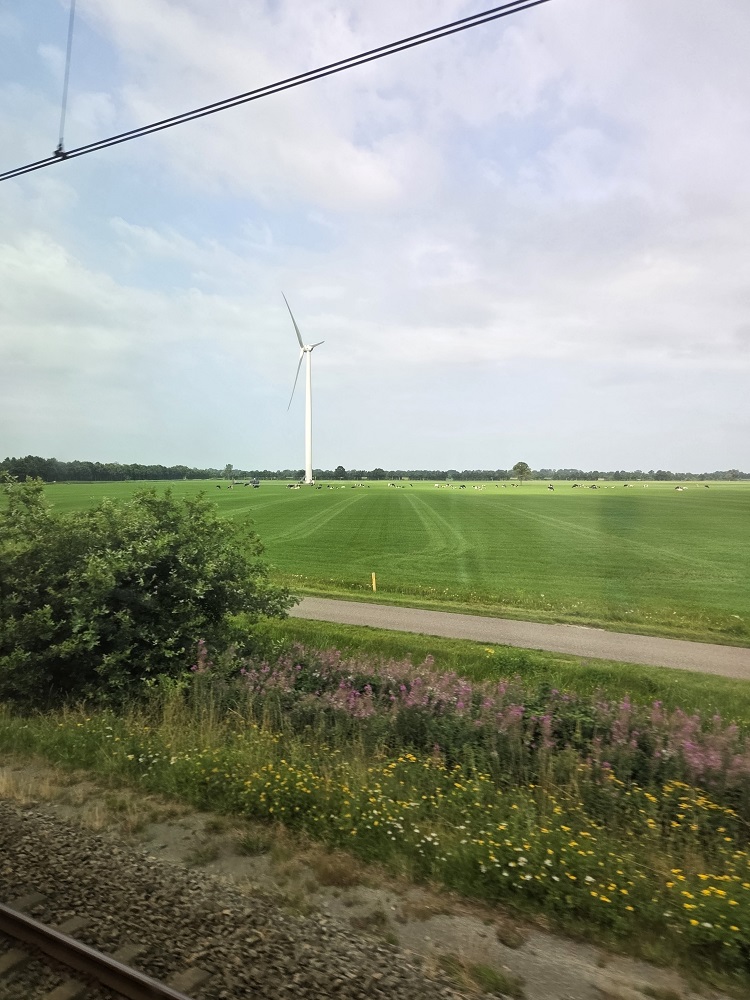
Typical countryside
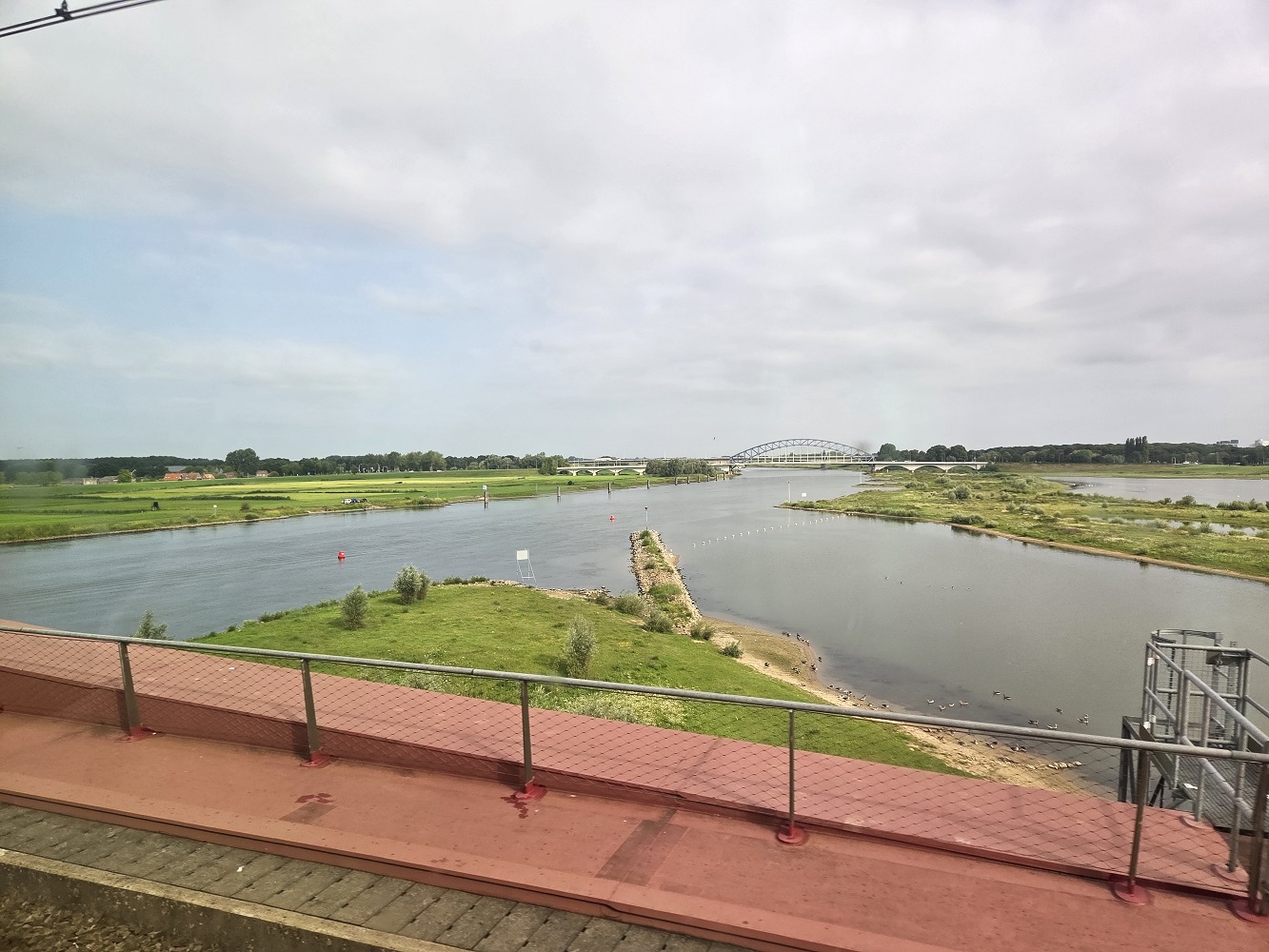
Crossing the Ijssel, I think, near Zwolle. That sticky-out bit is to help maintain a deeper, less-silted main waterchannel for ships.
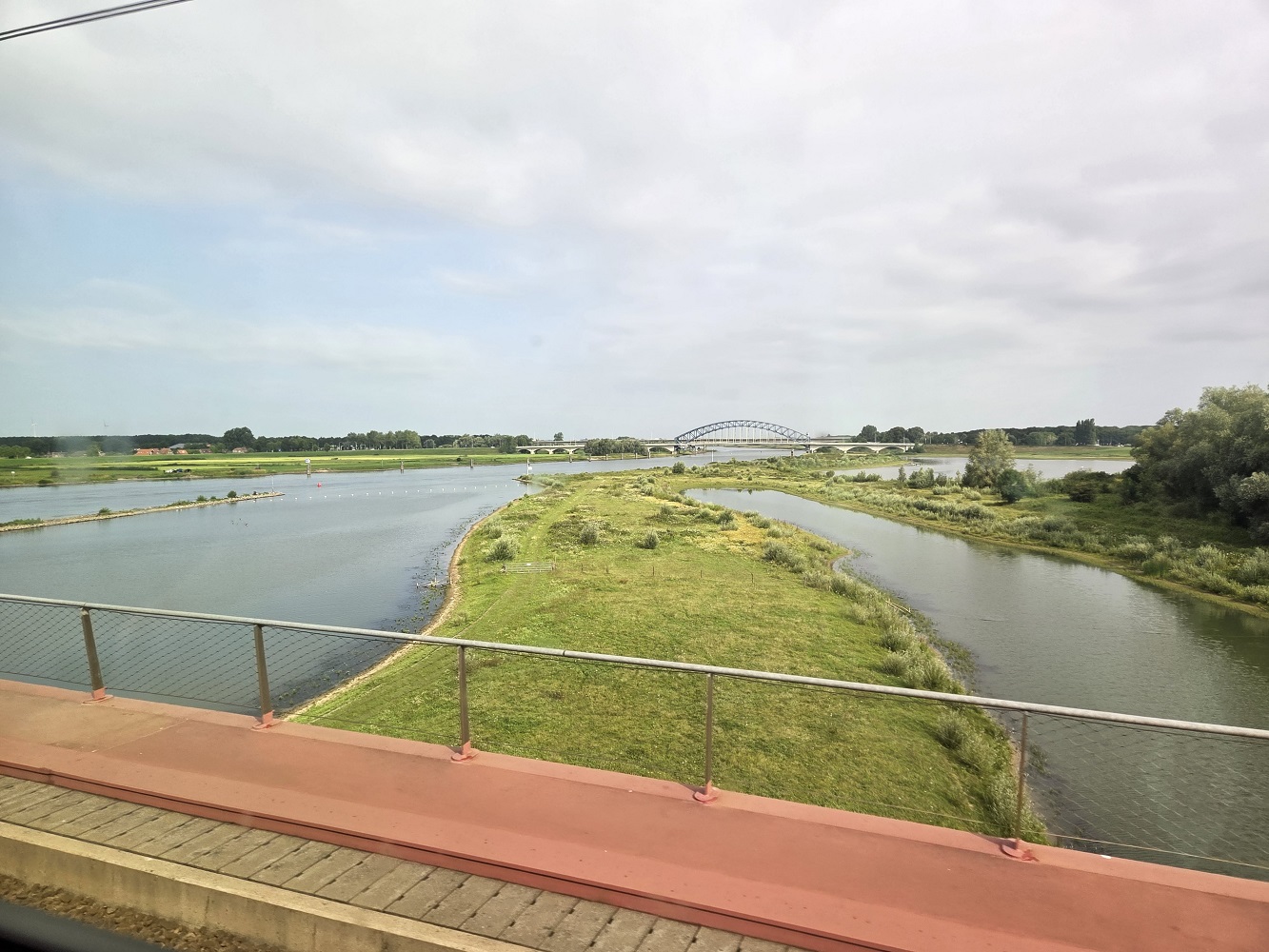
Technically there are two Ijssel rivers, in completely different parts of the country, but this one is the bigger one.
From Assen in Drenthe, we took the bus to the town of Rolde.
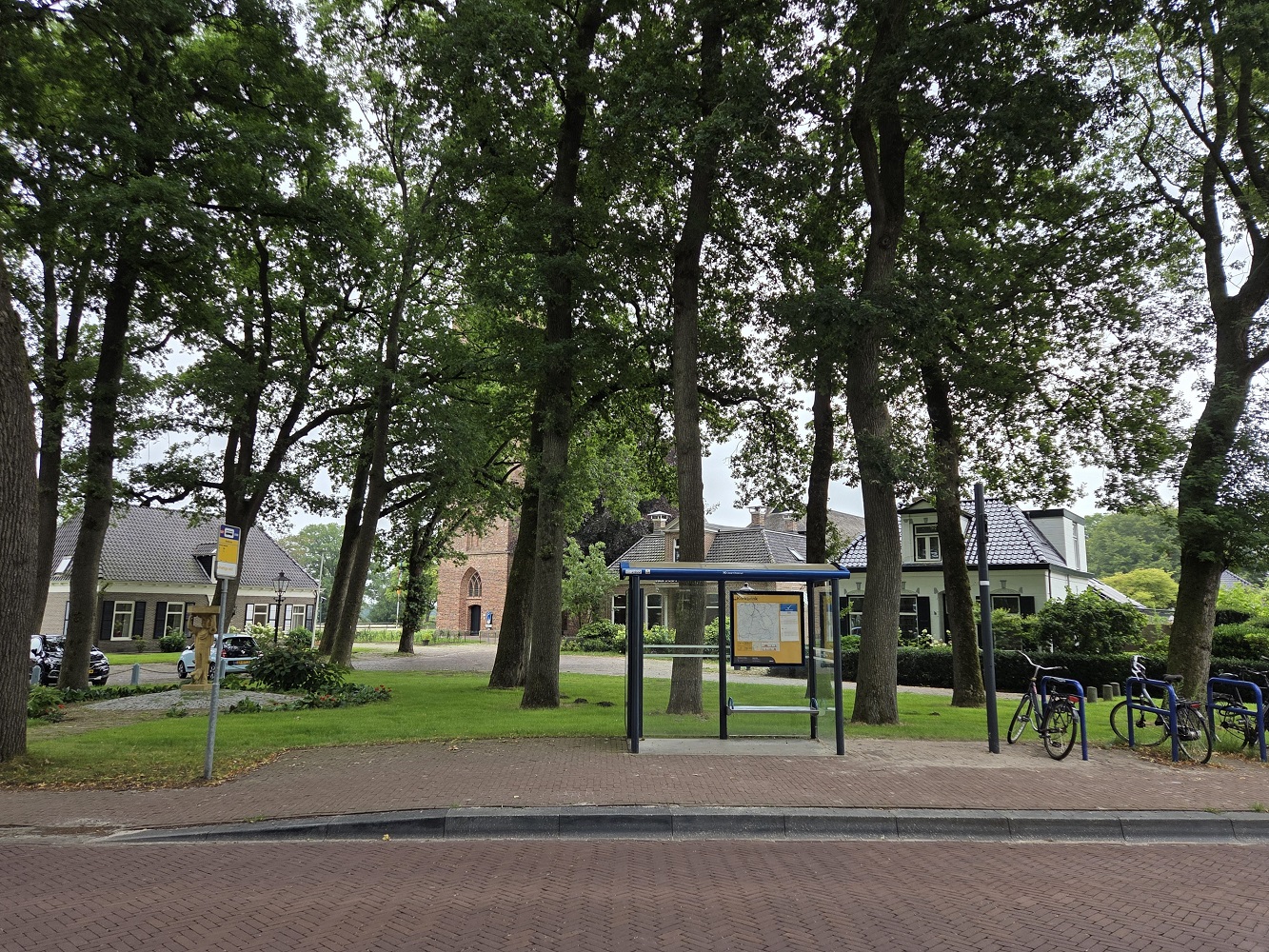
Bus stop in Rolde by the Jacobus Kerk
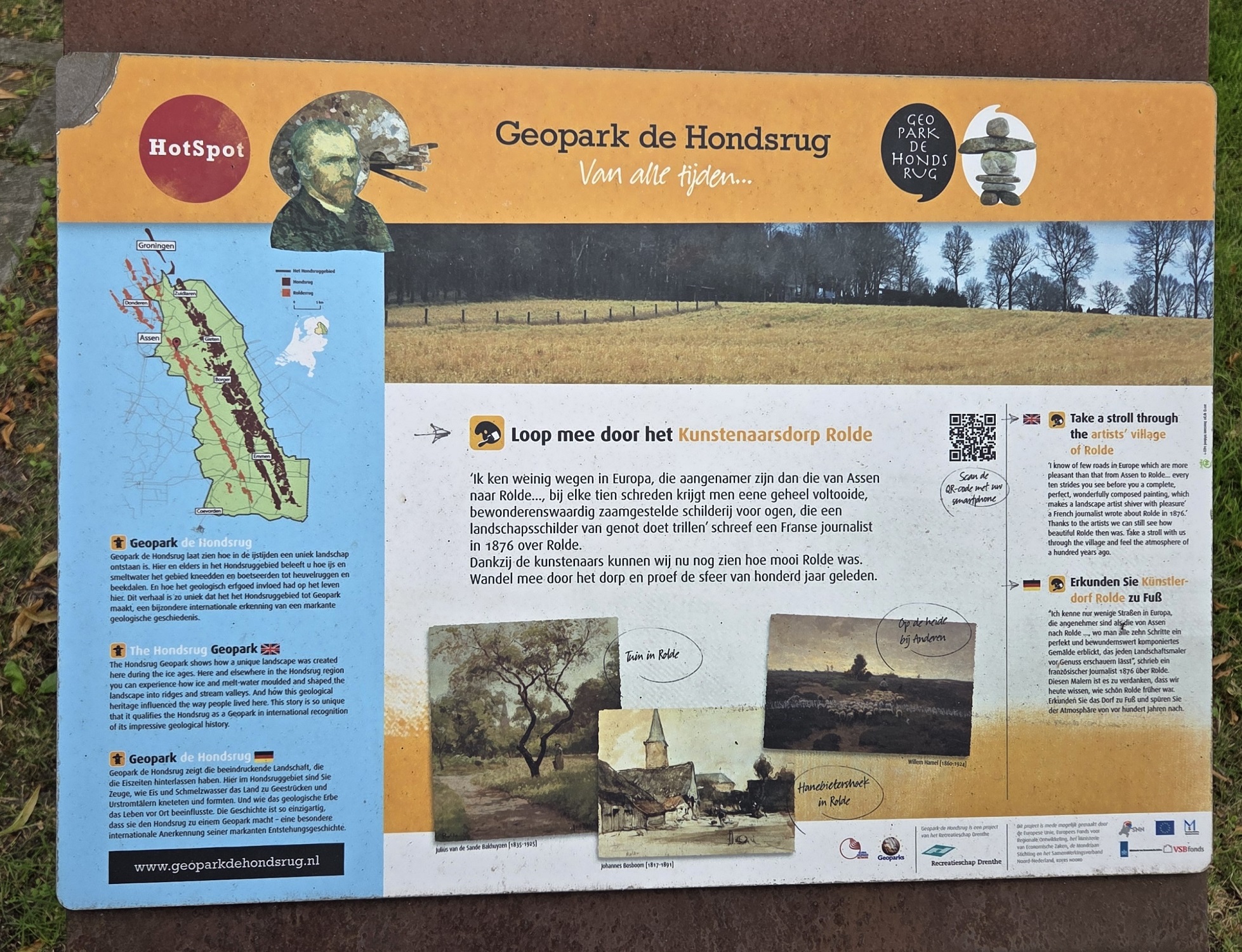
The area we are going to is part of what is known as the Hondsrug, which looks like it means the Dog’s Back but Wikipedia suggests it is not. These parallel ridges are also formed by glacier activity. The glaciers in the Saalien period reached as far south as Haarlem-Amersfoort-Nijmegen. This is also when the Rhine and Meuse took their abrupt westerly bends instead of continuing to flow north like normal, blocked by ice.
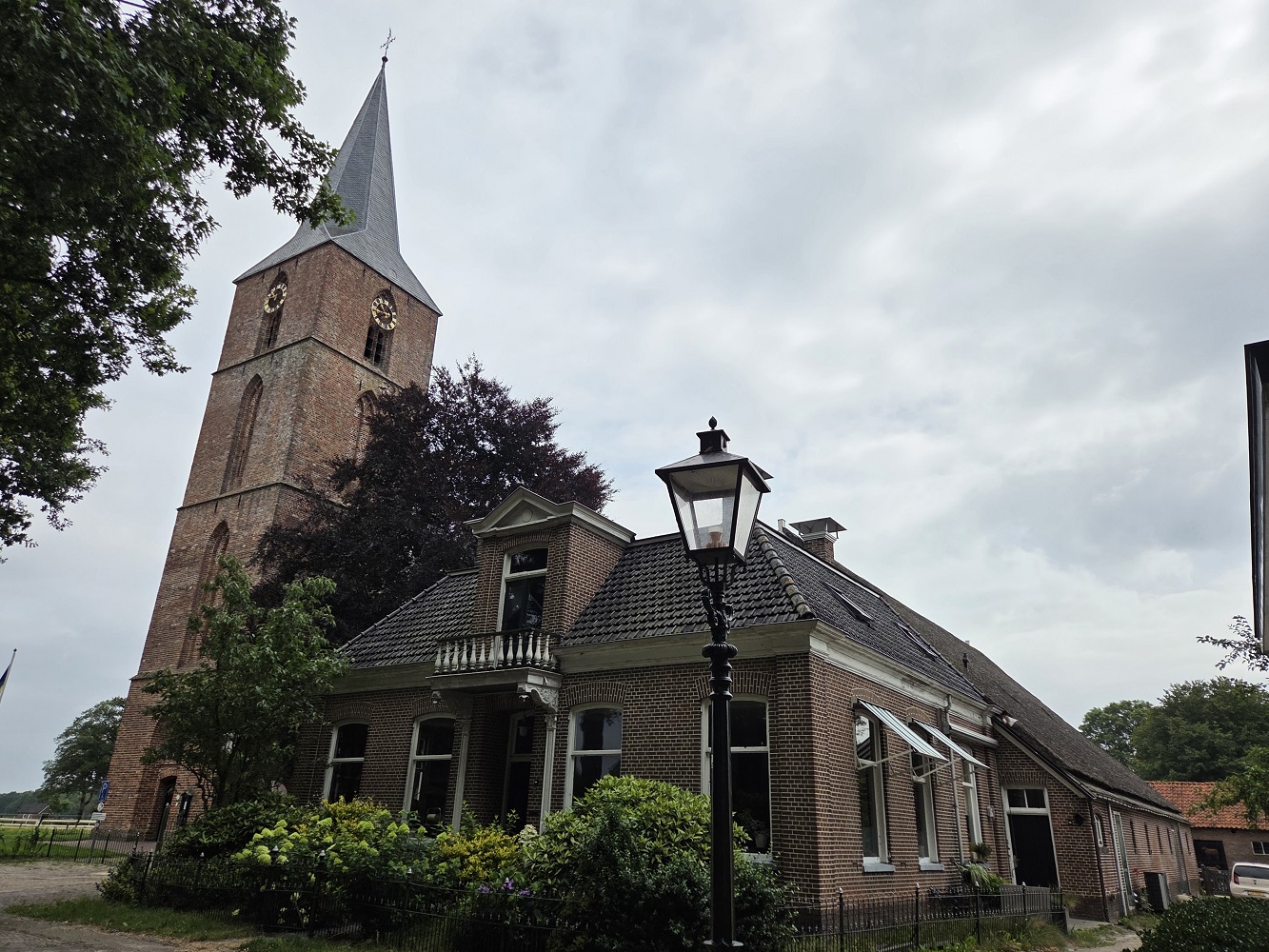
This building in front of the church has both tile roof and thatch. I saw a few like that.
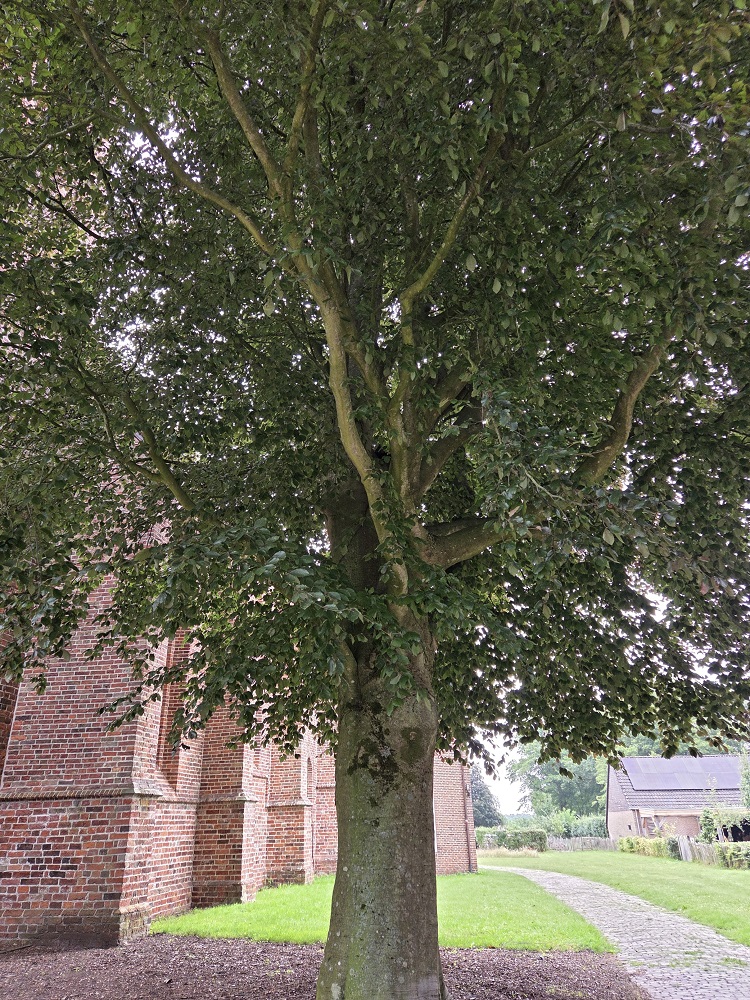
The Juliana tree at the church, planted in 1948 to celebrate the ascension of Queen Juliana to the throne after her mother Wilhelmina stepped down after a 50 year reign.
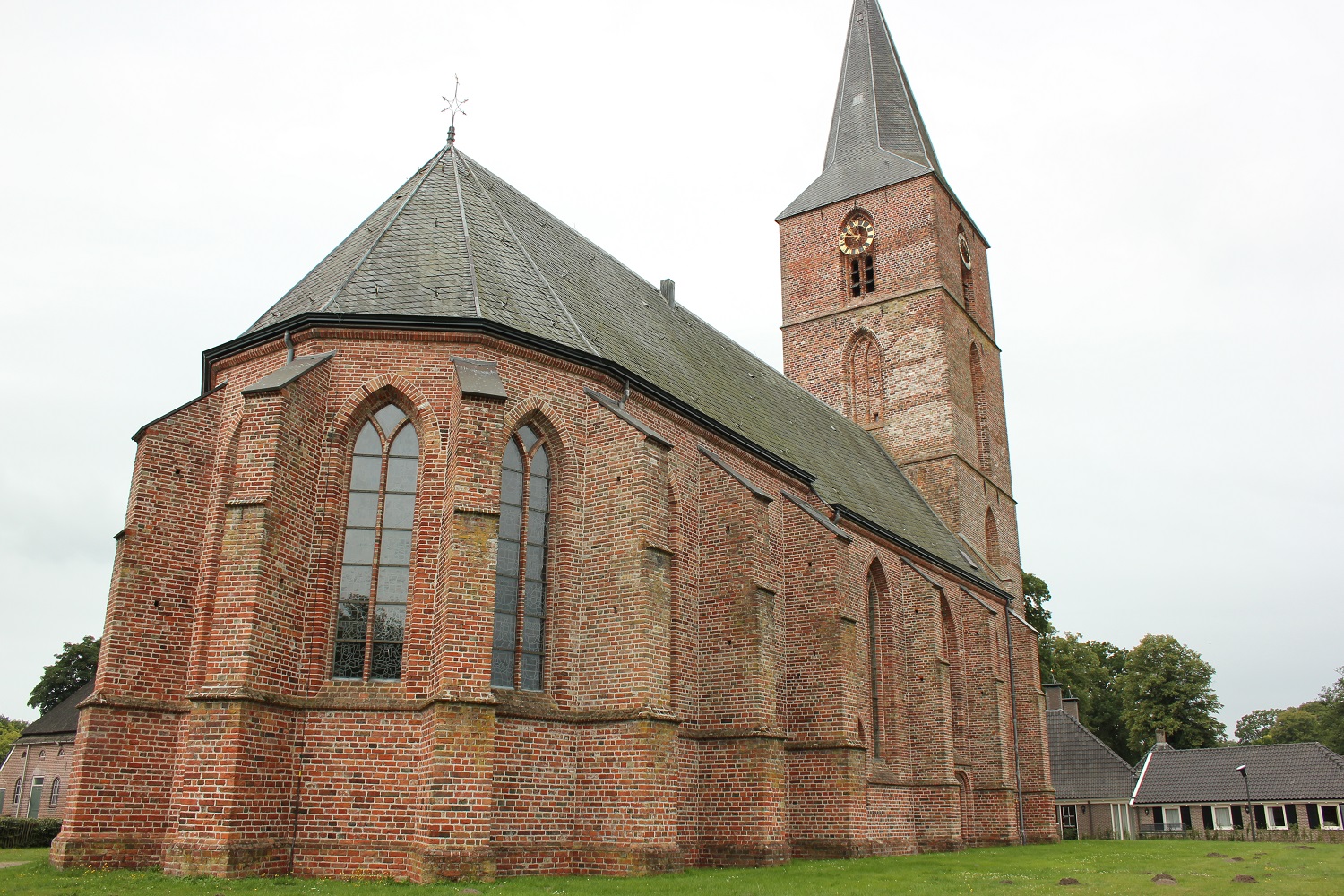
I bet it’s full of bats. : D Photo by MH
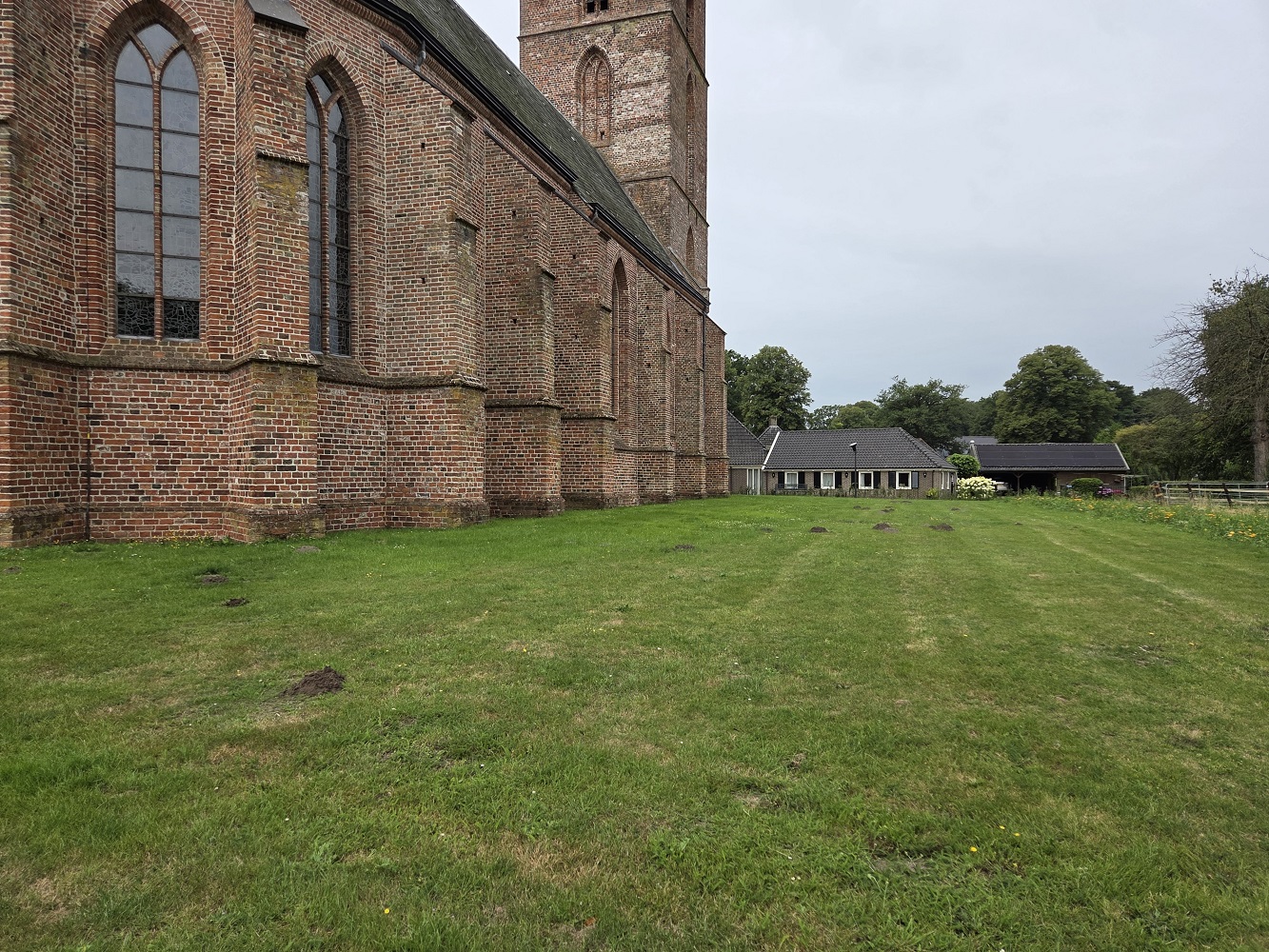
It’s certainly surrounded by moles?
After the church you walk through a cemetery, and then you reach… a prehistoric cemetery. Just like that, so close.
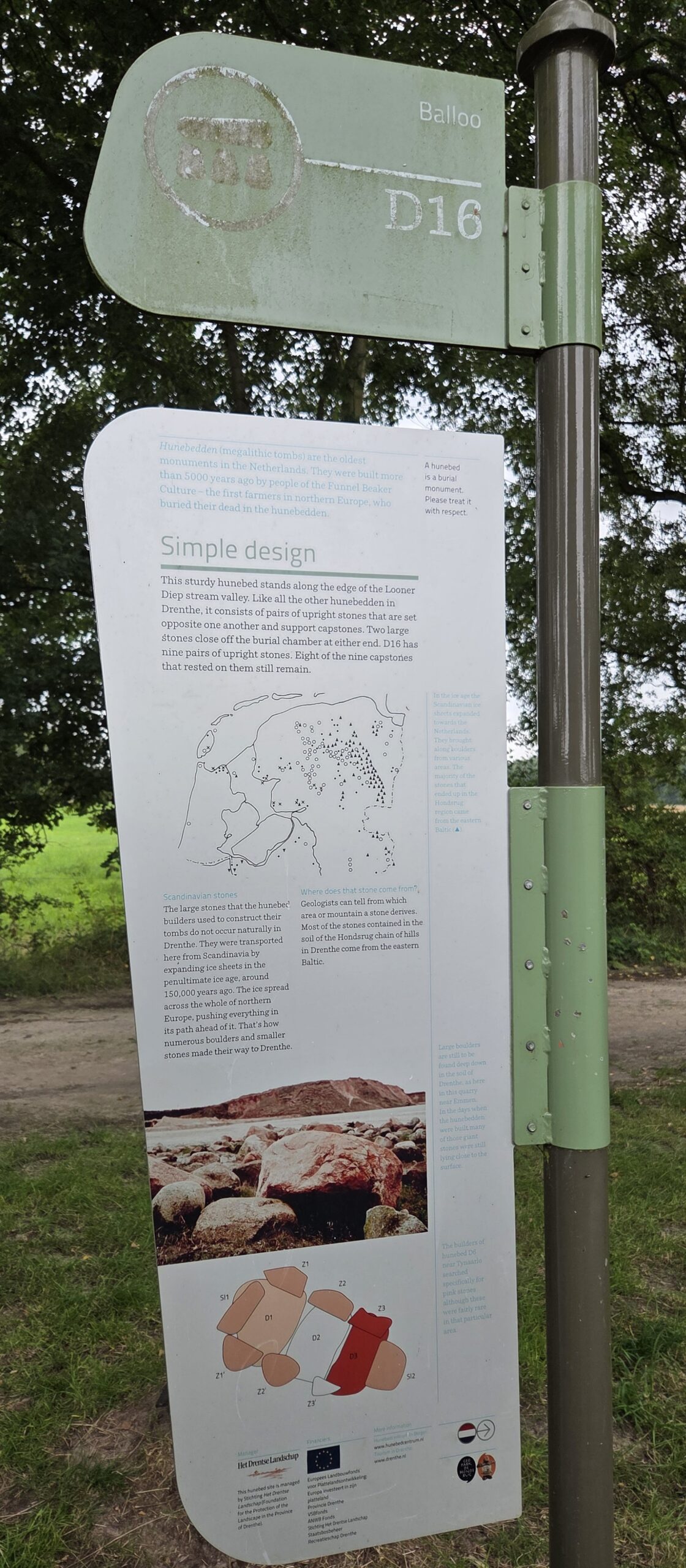
‘Hunebed’ is an old word meaning ‘giant’s bed’, from when people had forgotten what they were. They were built by the Funnel Beaker People, which is a terrible name for a group but we don’t know anything about them besides their pottery I guess. Hunebedden can also be called dolmen, though the Dutch Wikipedia page on hunebedden suggests they are not interchangeable to archaeologists (I used Google translate, my Dutch isn’t good enough to just read this yet).
They were composed of stone imported from Scandinavia… by the glaciers. Which explains why there are so few (54-ish) in the Netherlands, compared to hundreds if not thousands in Germany and Denmark. Stone just isn’t native to the Netherlands! All the ones in the Netherlands are identified by a letter and a number, mostly the letter D.
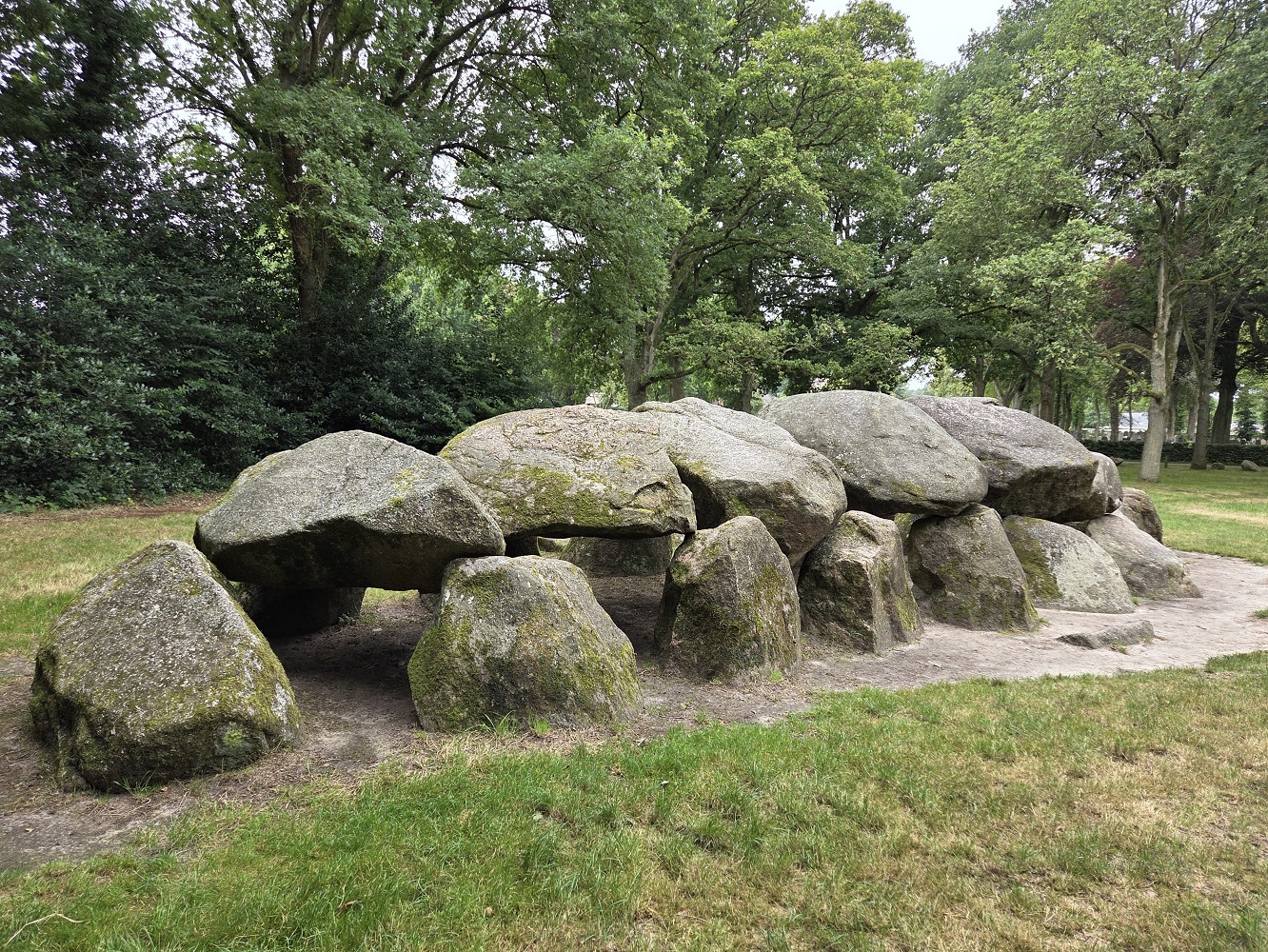
D18. Some of the stones appear to have been bolted down to prevent vandalism.
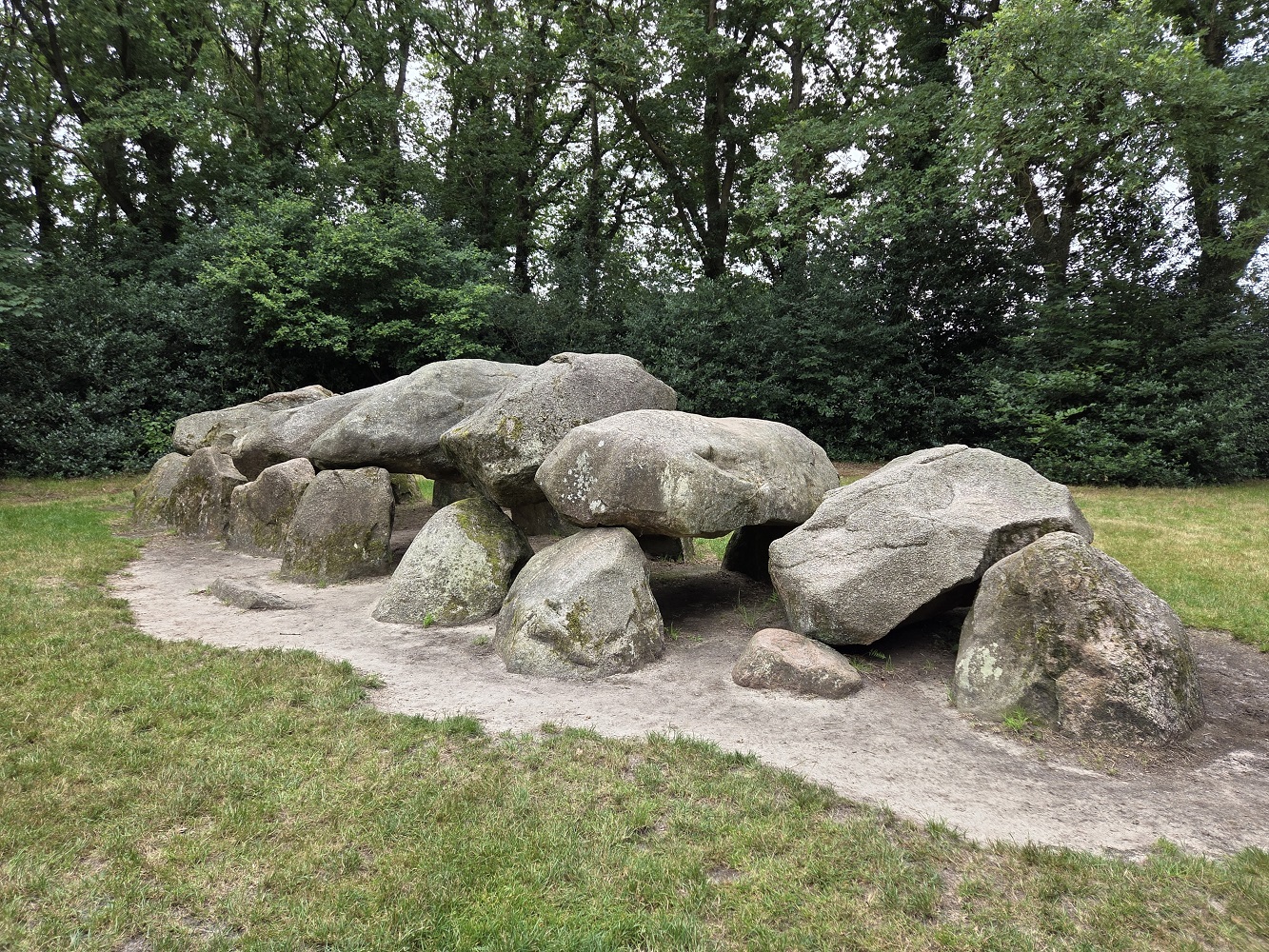
It looks like a spine. Like a stone caterpillar. The bare ground around it is not a natural feature, it’s been kept that way.
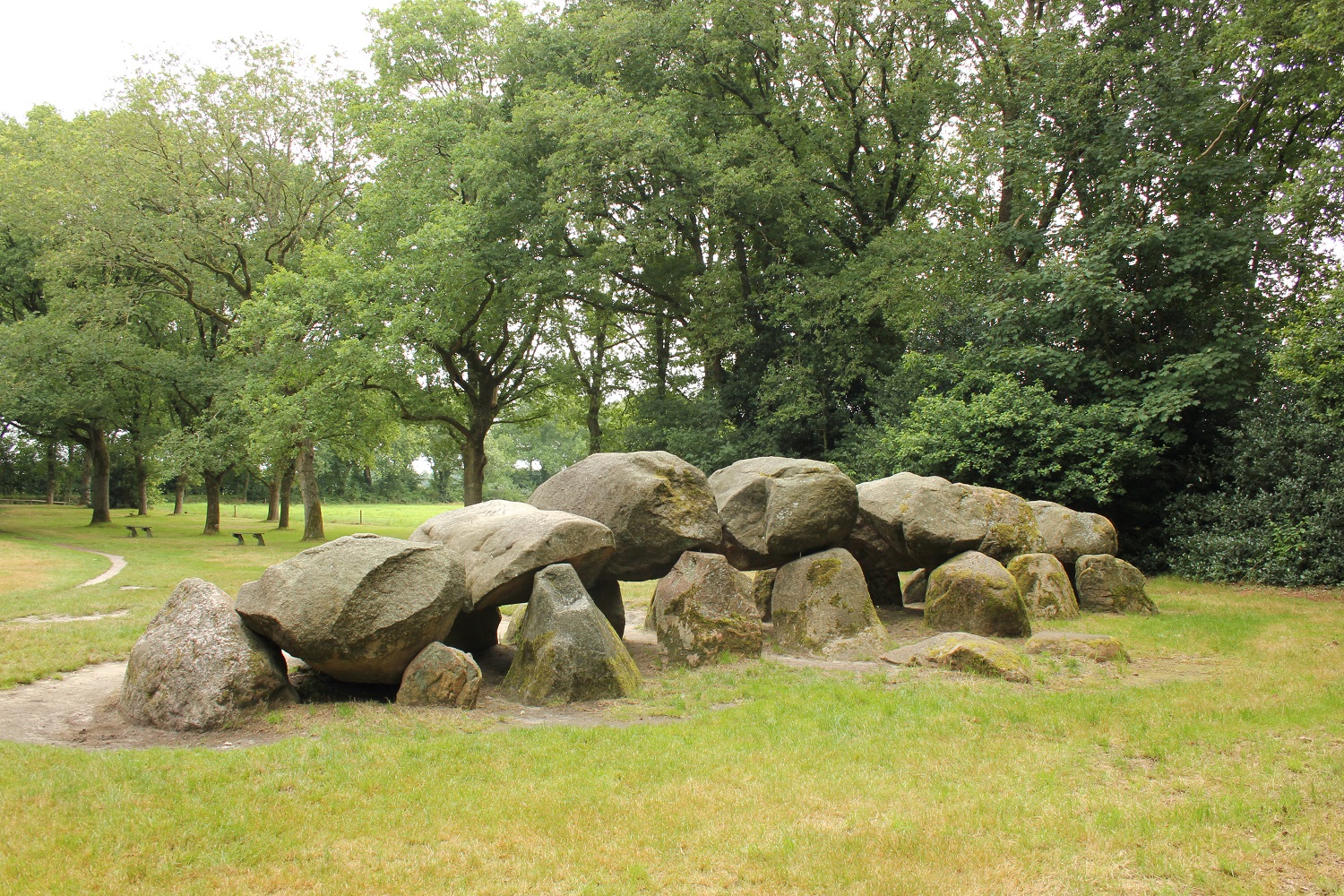
Photo by MH
I didn’t actually understand what the dolmen were supposed to look like until I went to Archeon on my second-last day. : P But imagine this structure covered with earth until it makes a little hill; inside the bones of the ancestors would have been laid to rest, not whole bodies. I think that’s what the idea was. Now all we have are the bones of the chambers.
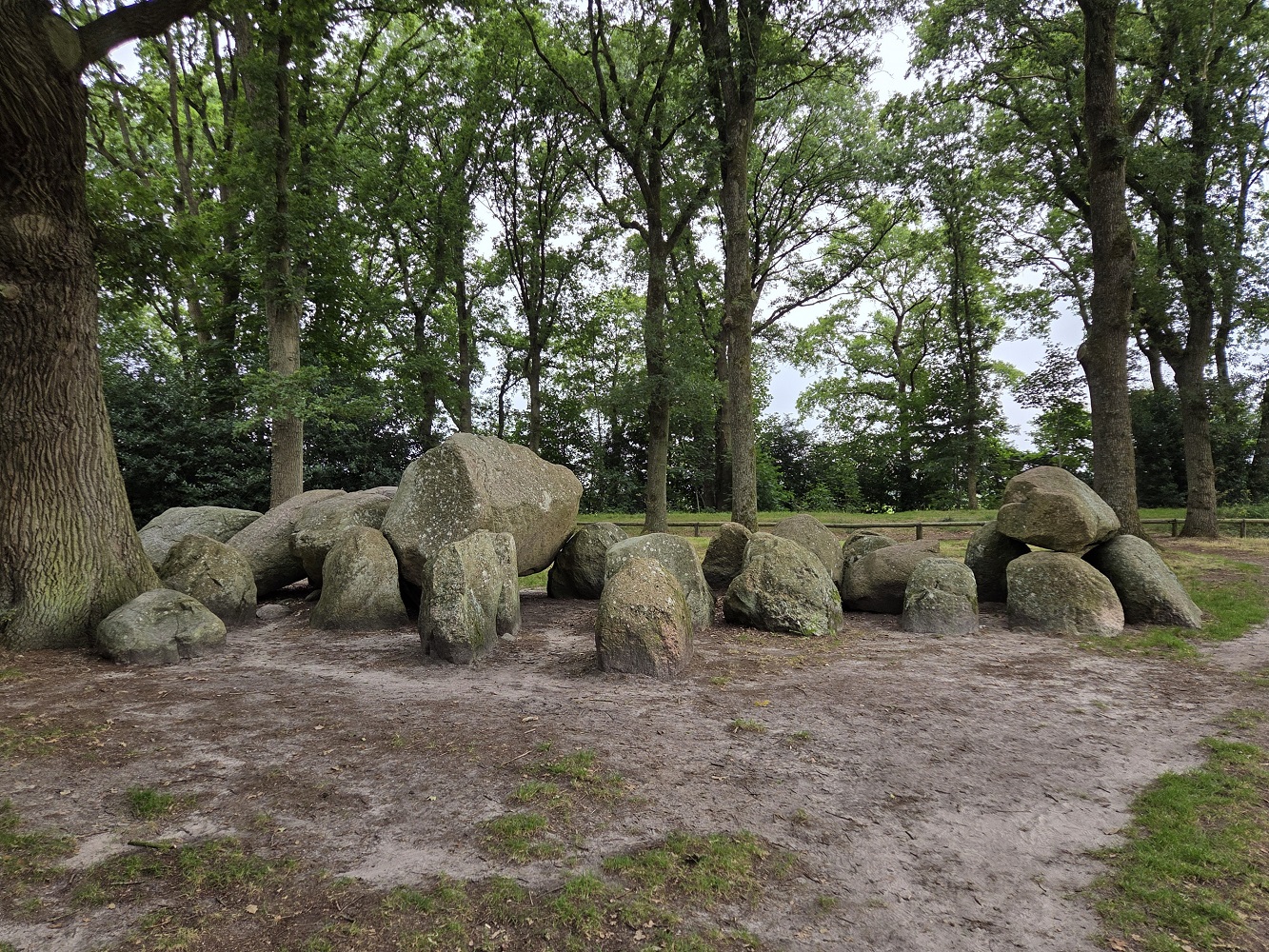
D17. How the hecc do you lift that big one?
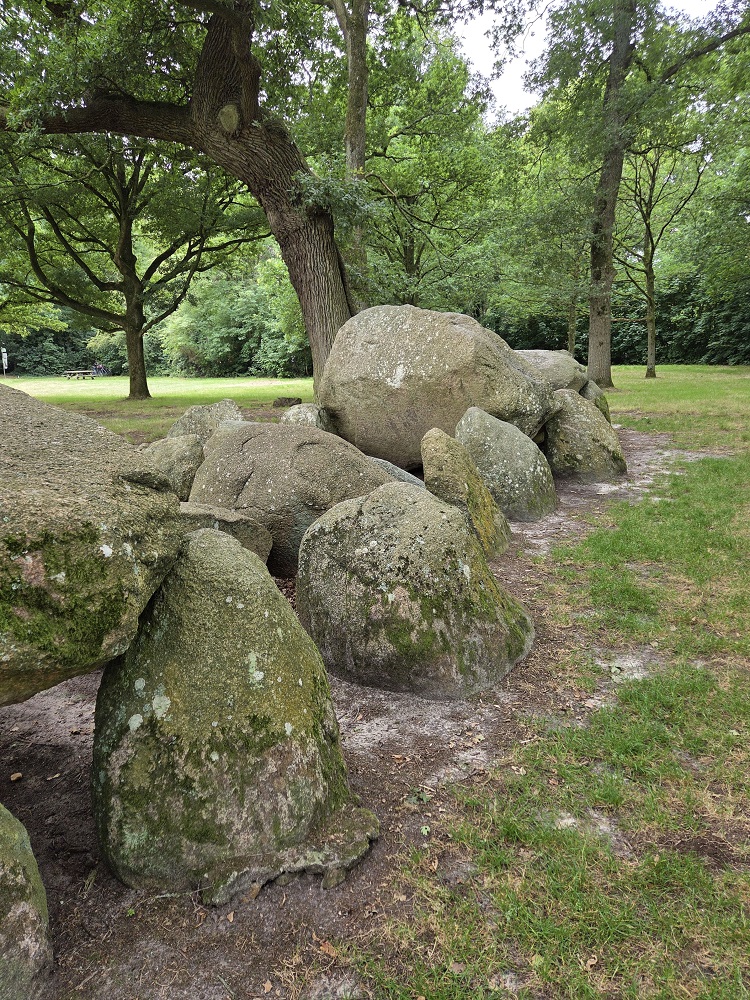
Archeon offered a solution; the side stone would have earthen ramps built up to them, and then the top stones would have been put on log rollers and dragged up to the top.
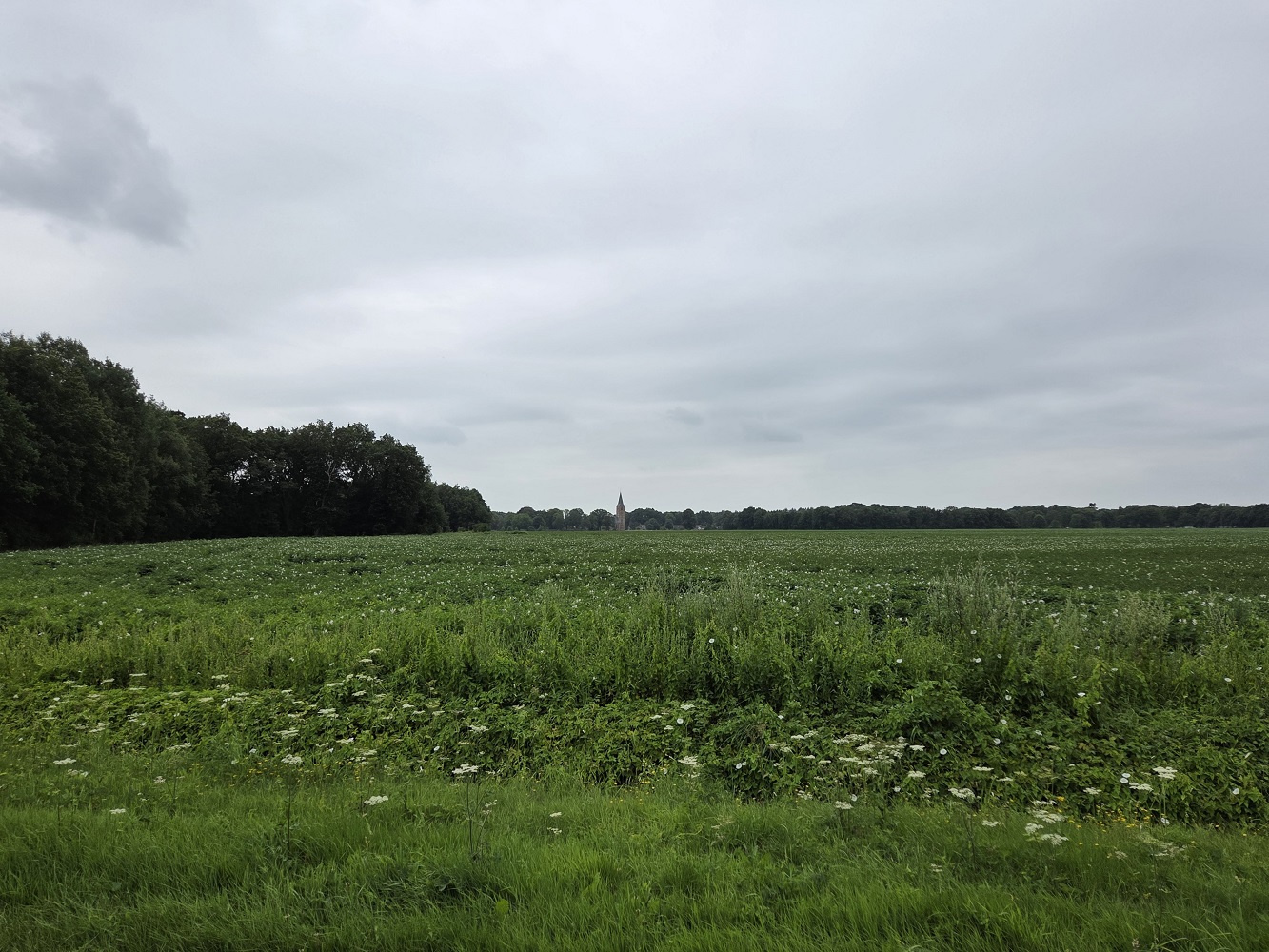
We could see the church tower from nearly our whole walk, if trees weren’t in the way. We walked through many farm fields to get to the natural part.
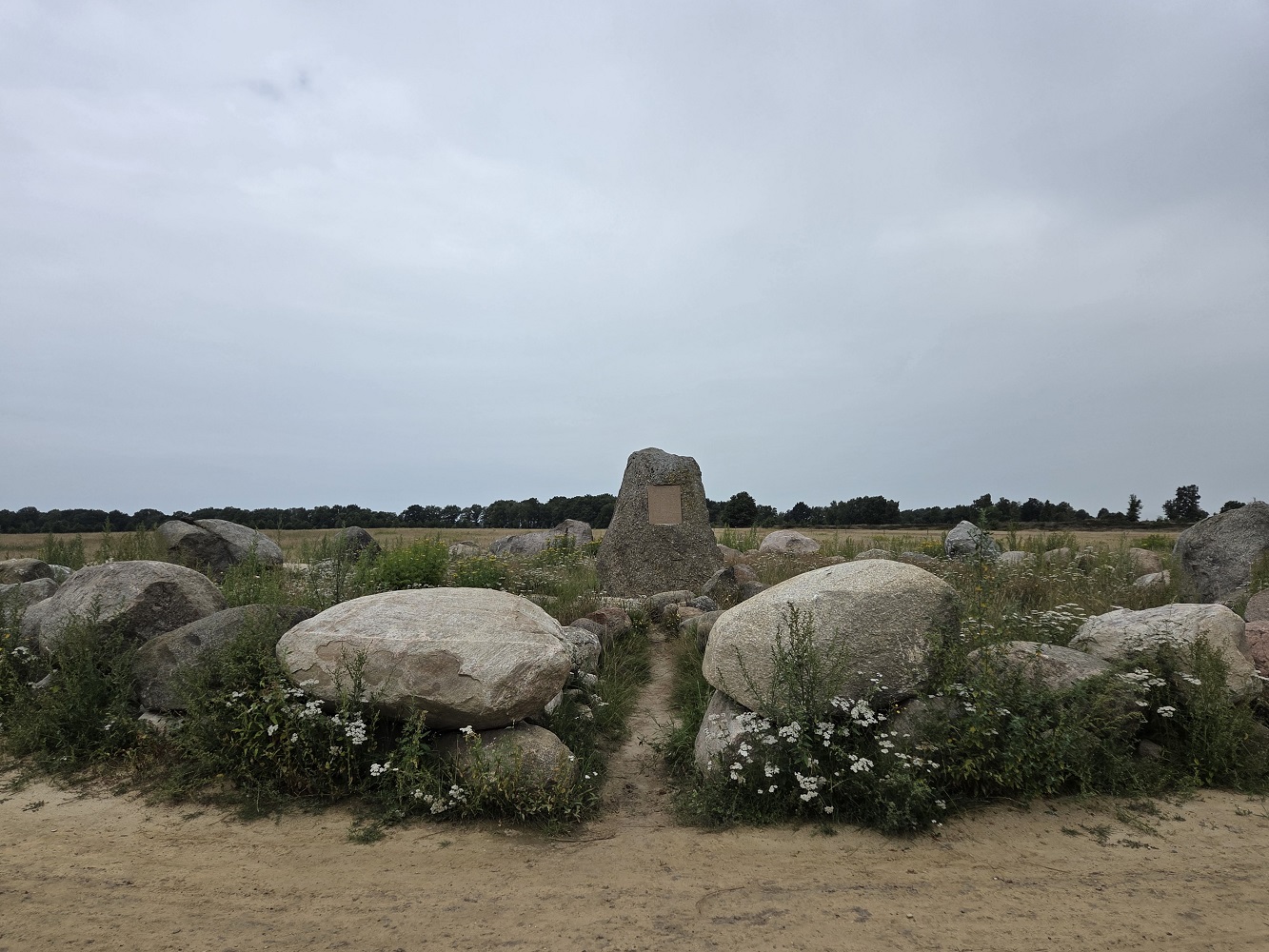
The plaque was unrelated to history so I didn’t take a picture. It is a modern sculpture.
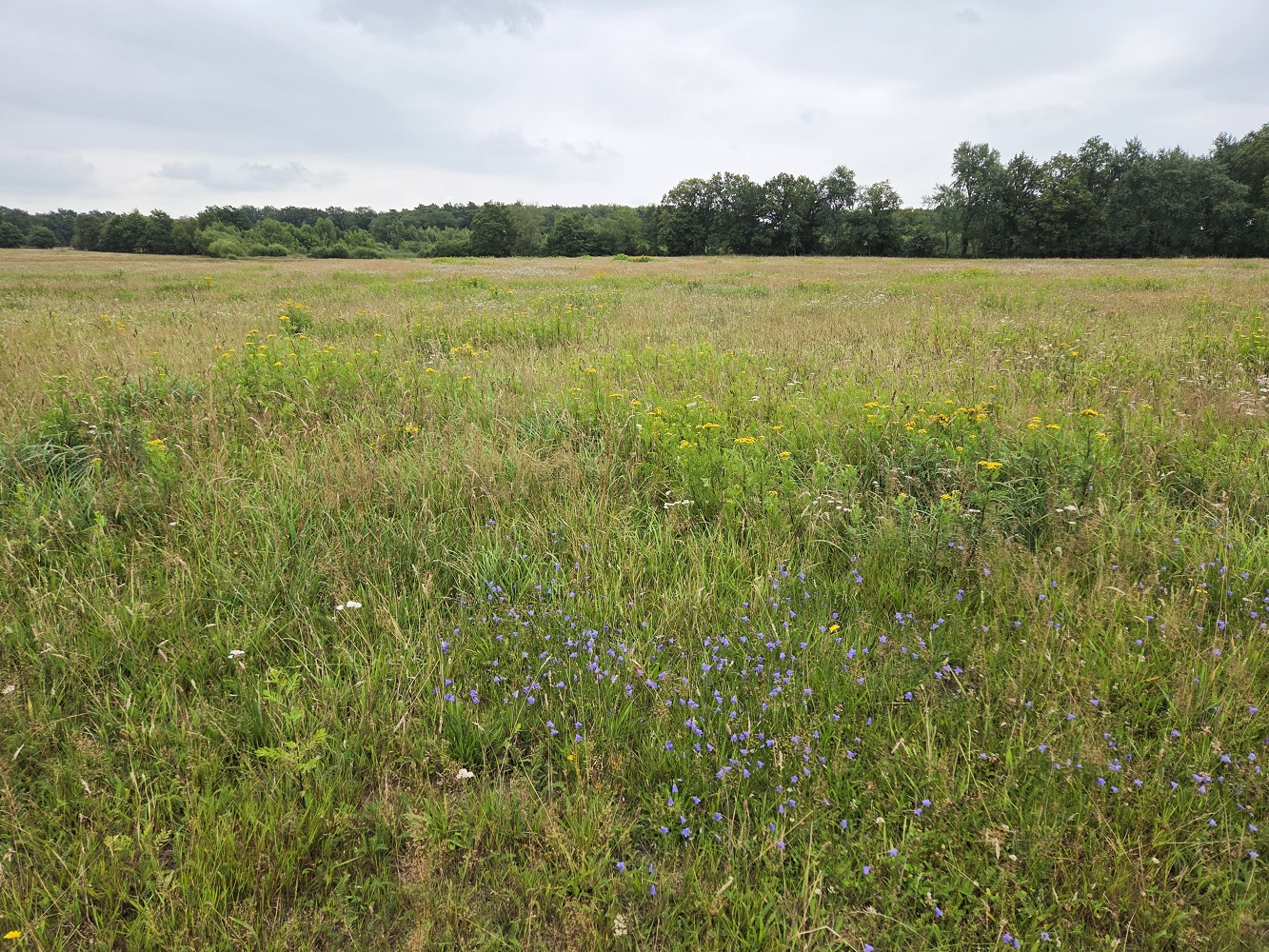
Field of wildflowers! It looked better in person.
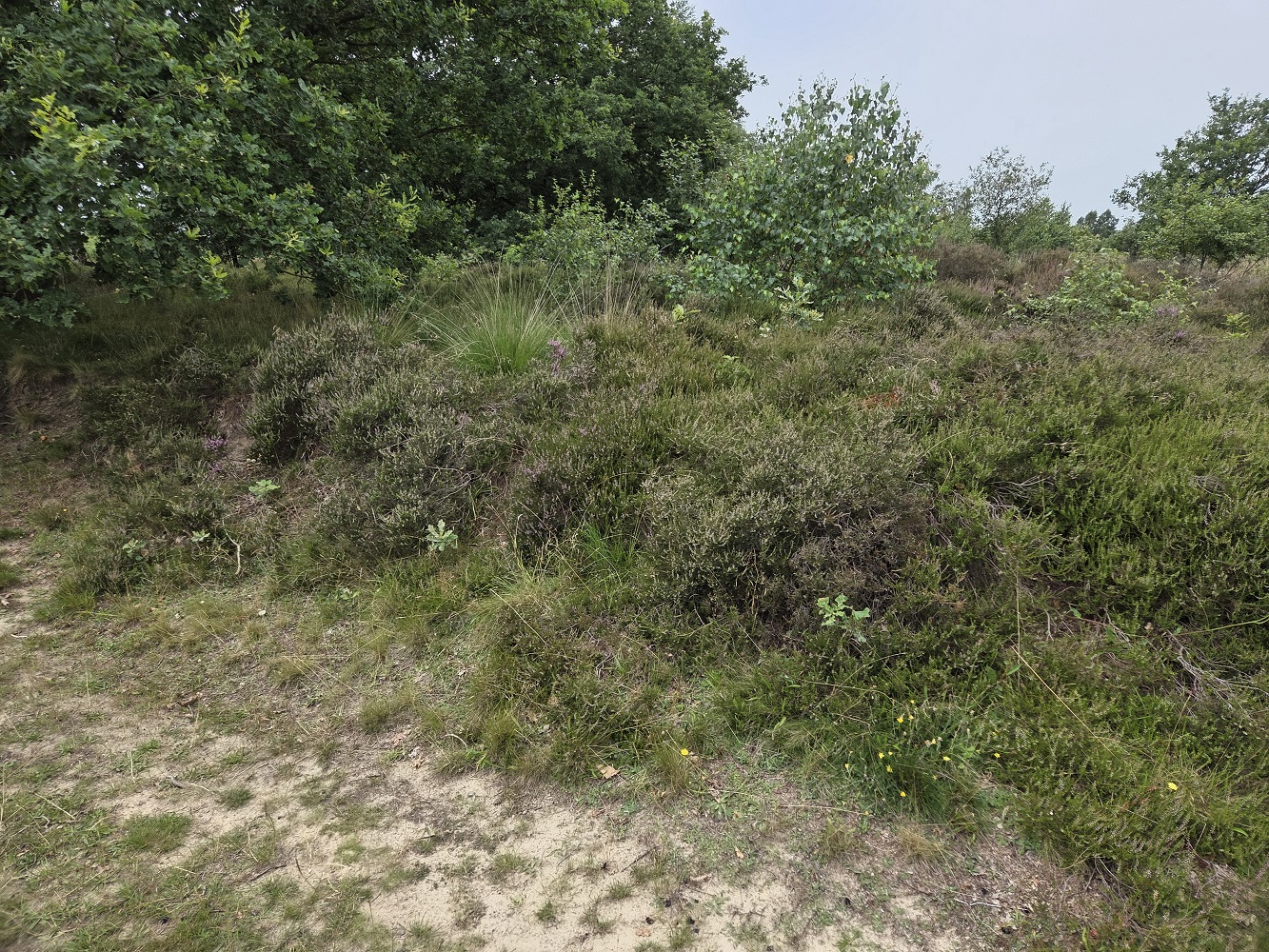
Cross an anti-livestock fence and suddenly surrounded by heather.
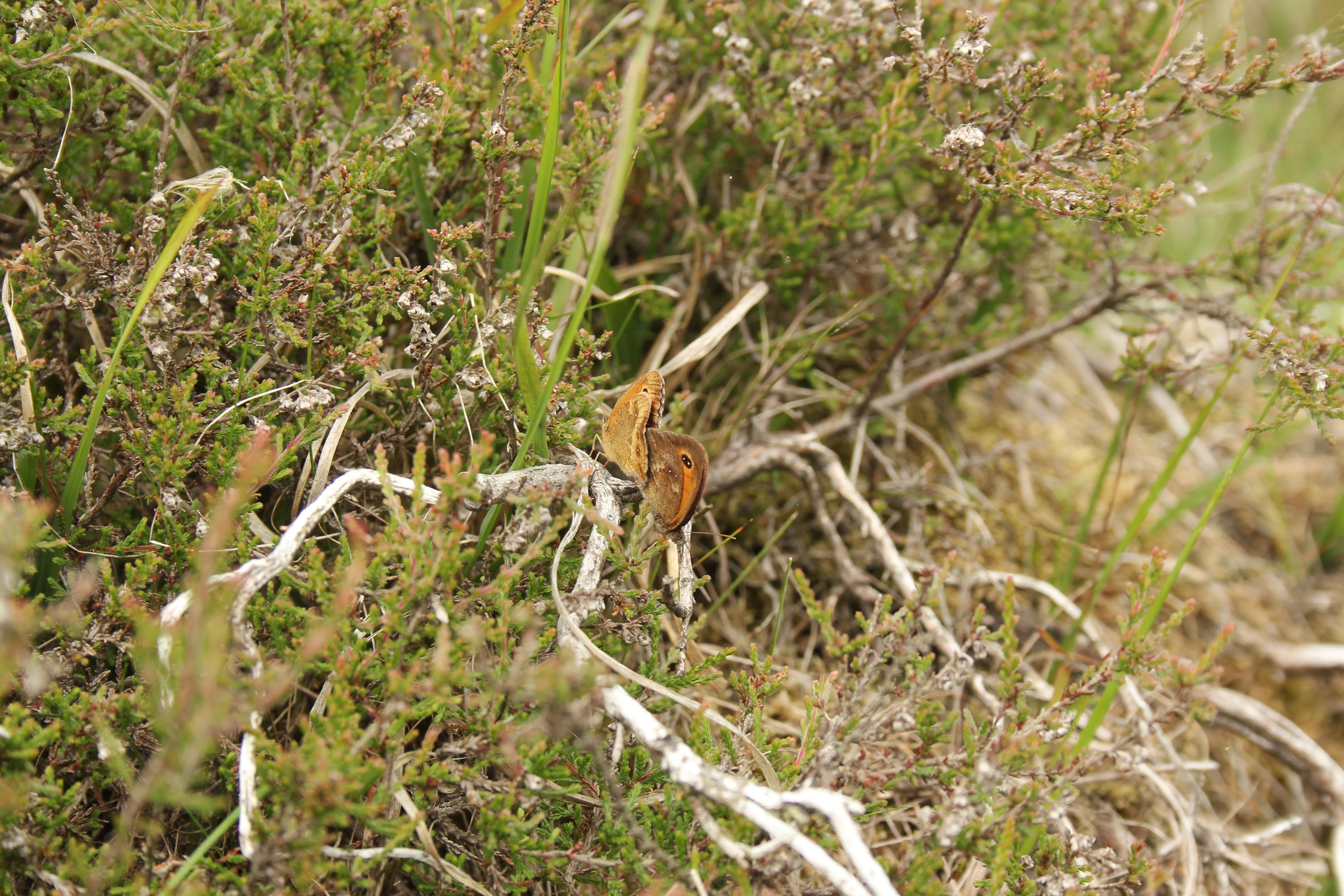
Got super lucky and found these mating butterflies that actually sat still long enough to be photographed. Photo by MH.
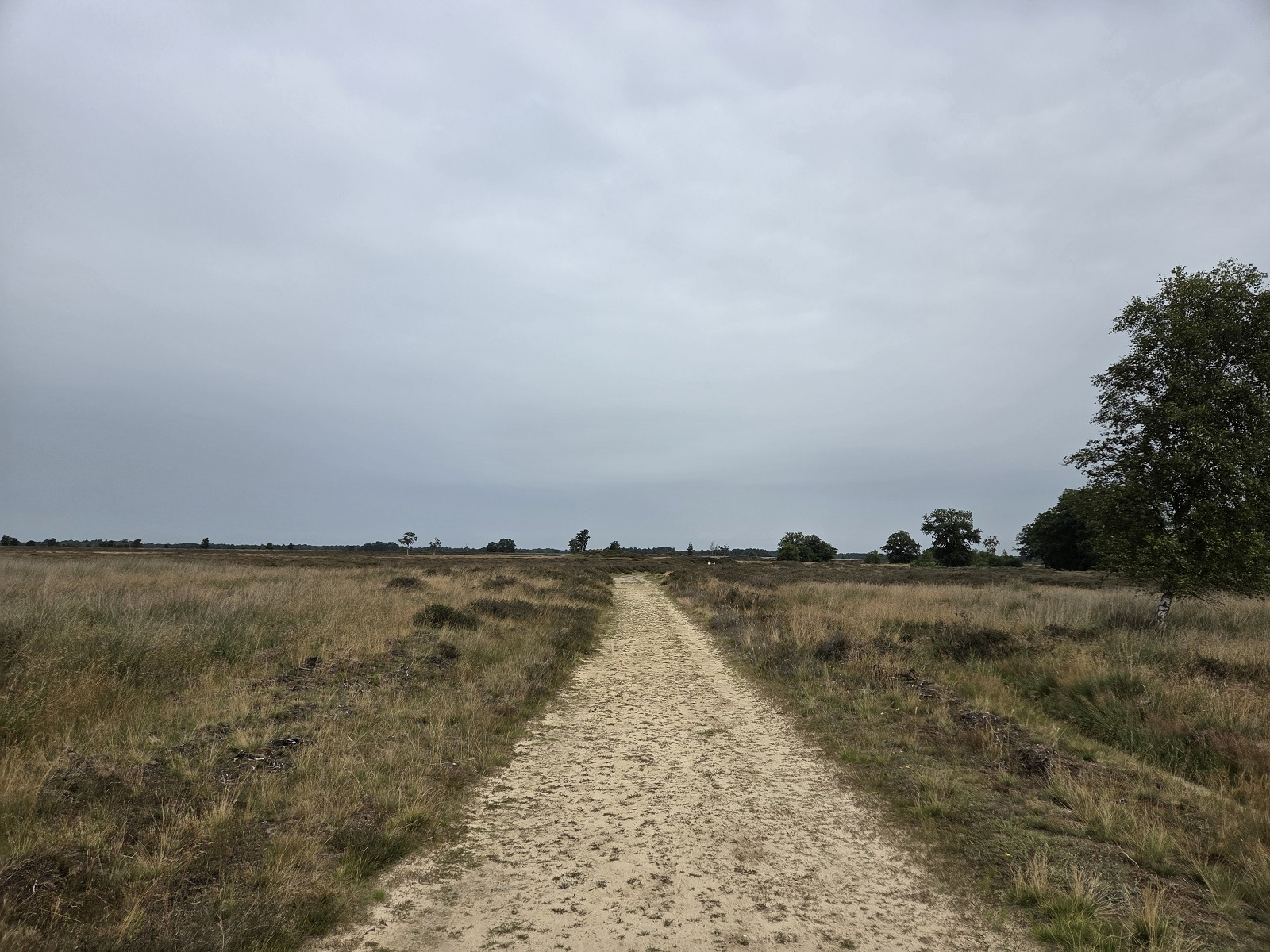
Those two white dots in the distance are people. The road goes down a bit, or else there’s a grave mound behind them. Grave mounds are dotted all over this region.
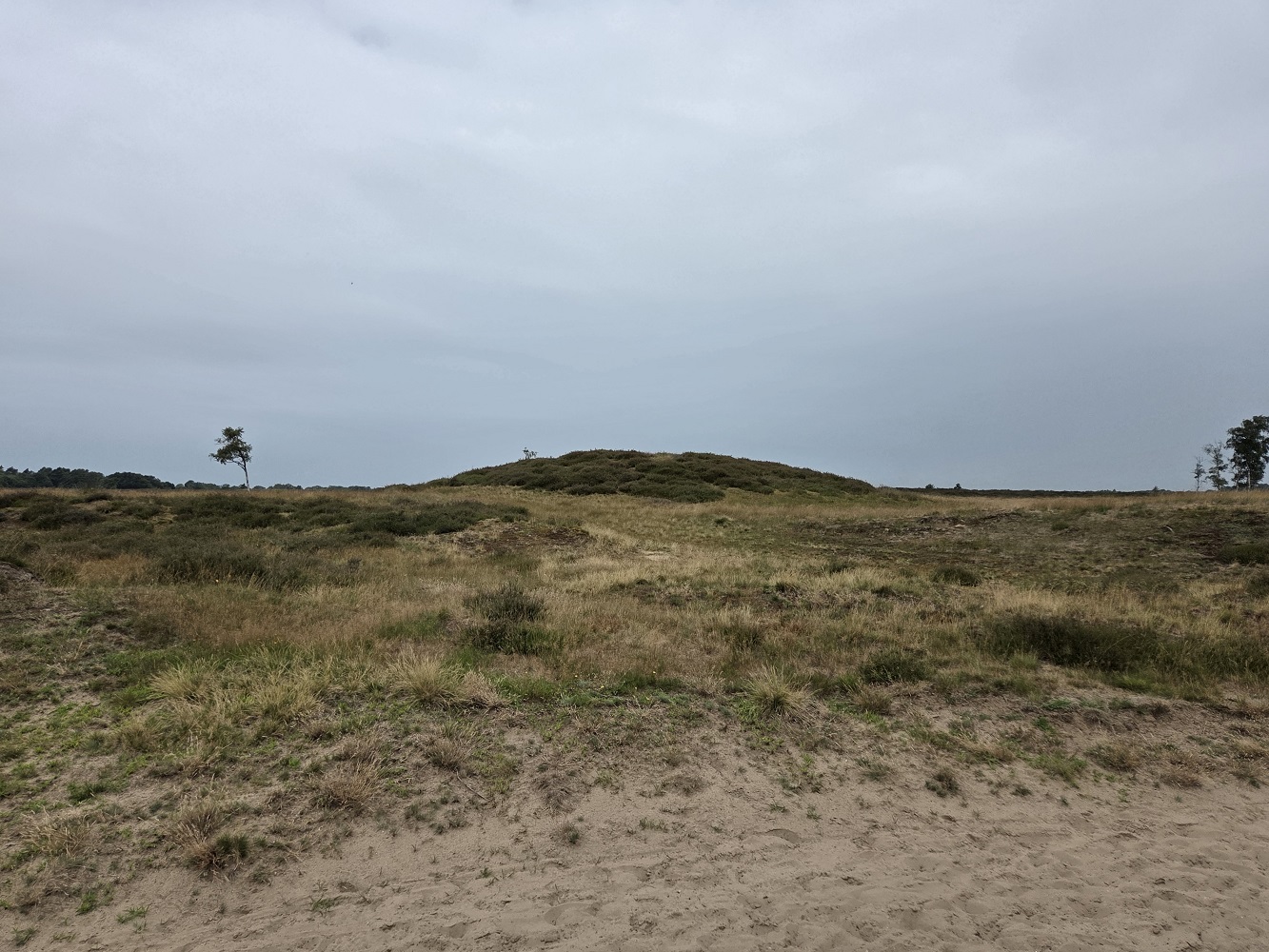
A big one!
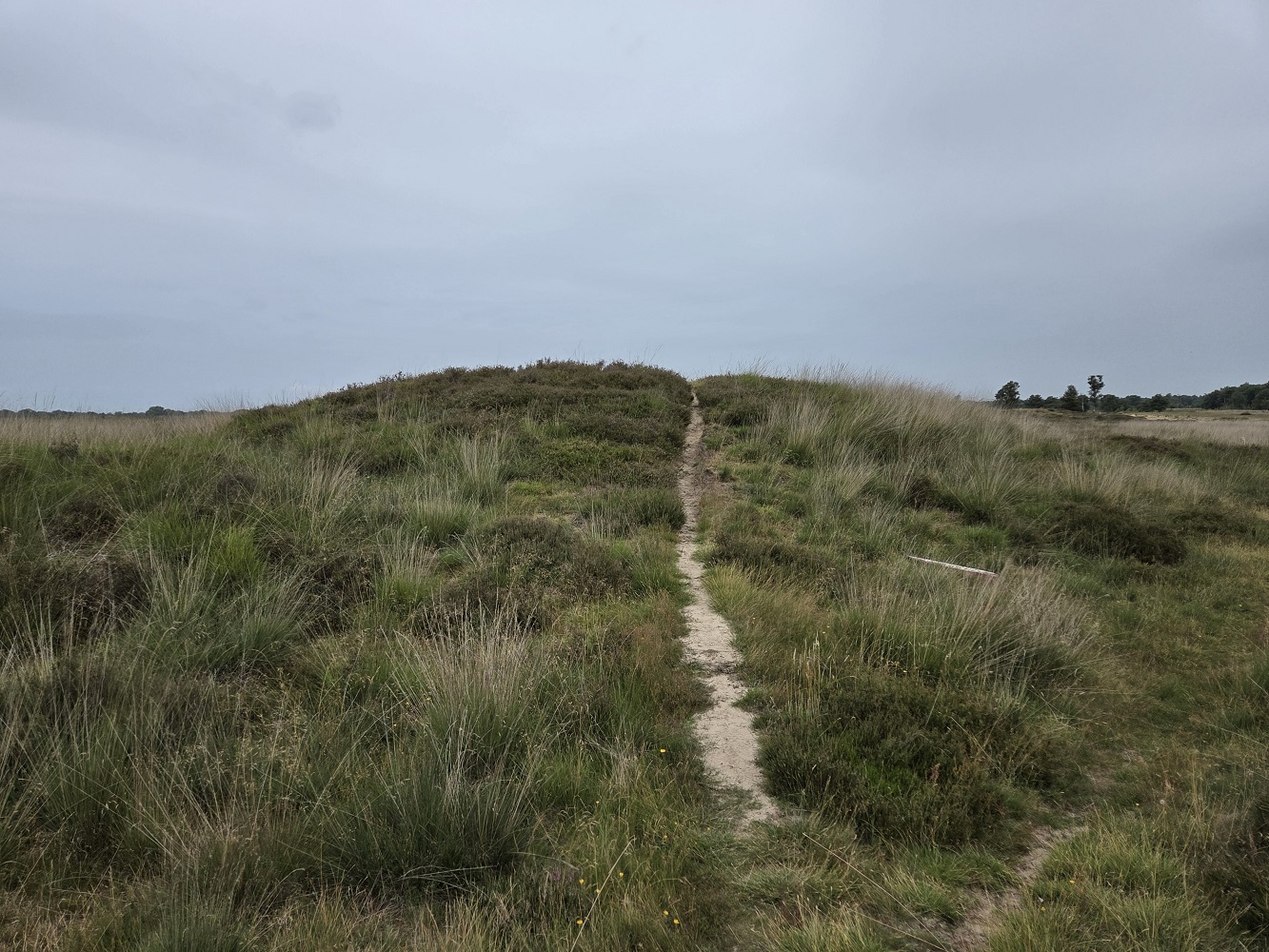
The trail goes right over it, seems rude : /
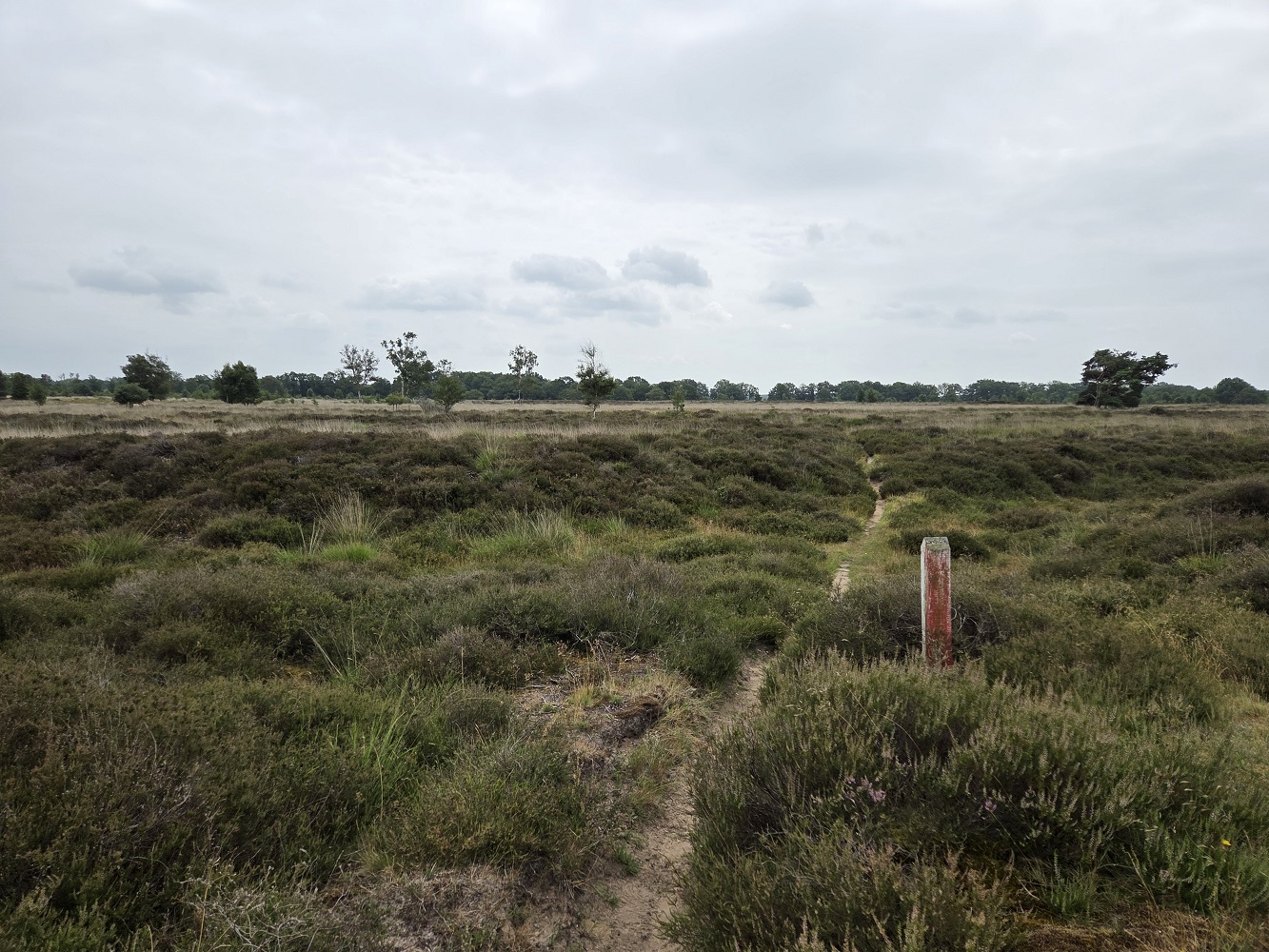
Long ridges could be other barrows?
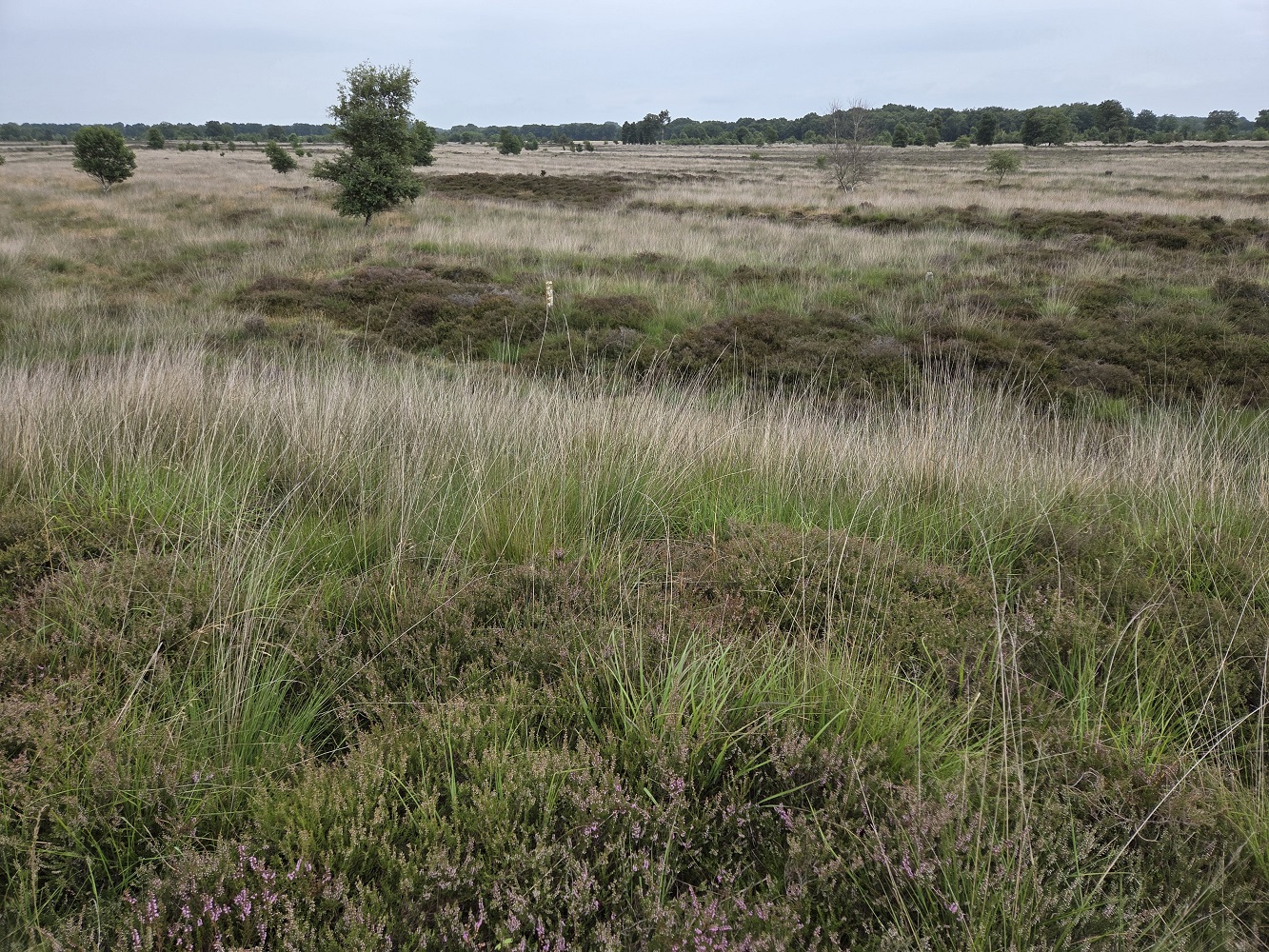
You can’t really see the elevation of the top of the mound in the photograph but it’s actually pretty high
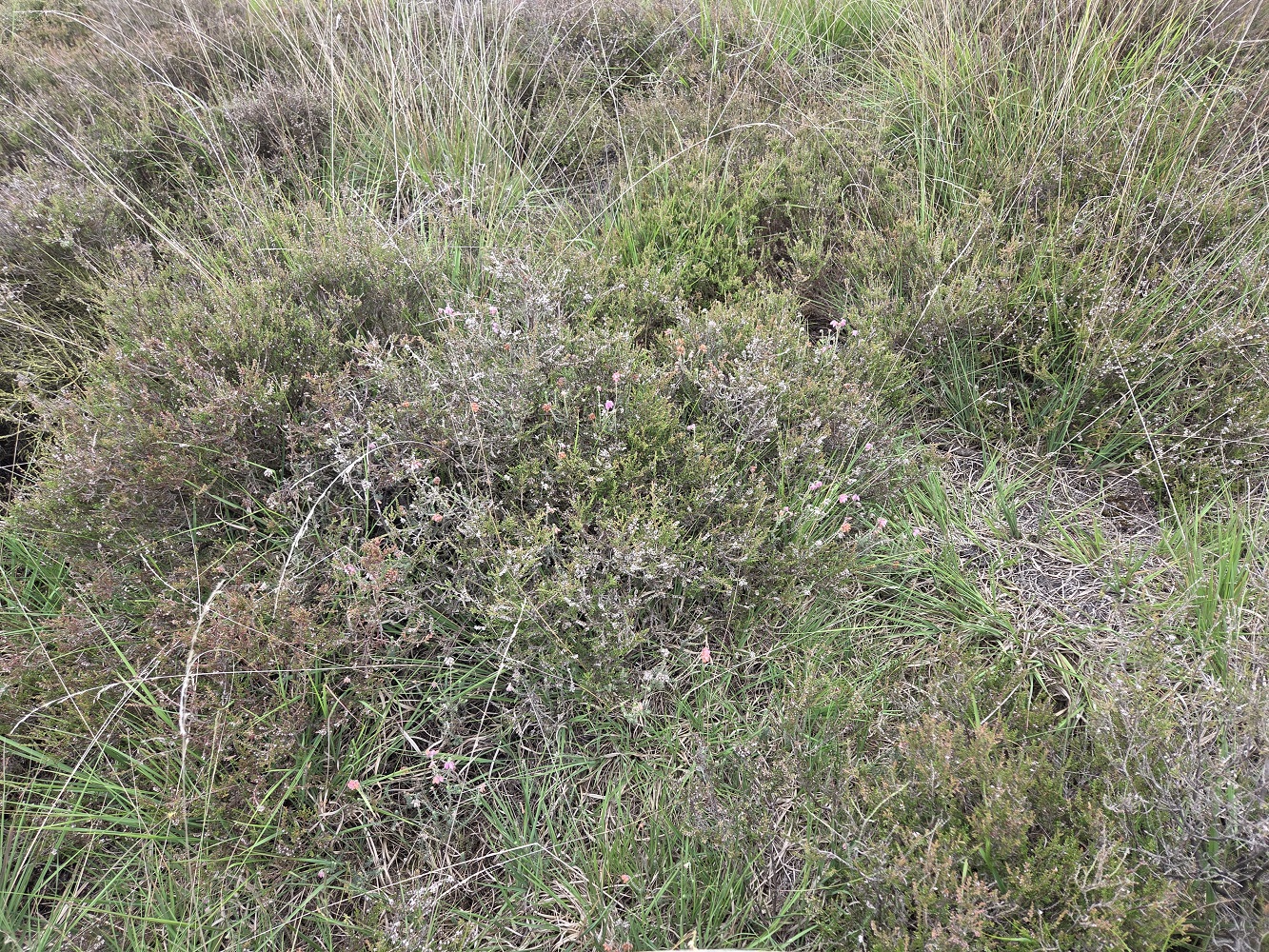
This is a different kind of heather which thrives in wetter conditions than the other heather, so we called it “wet heather” when we saw it.
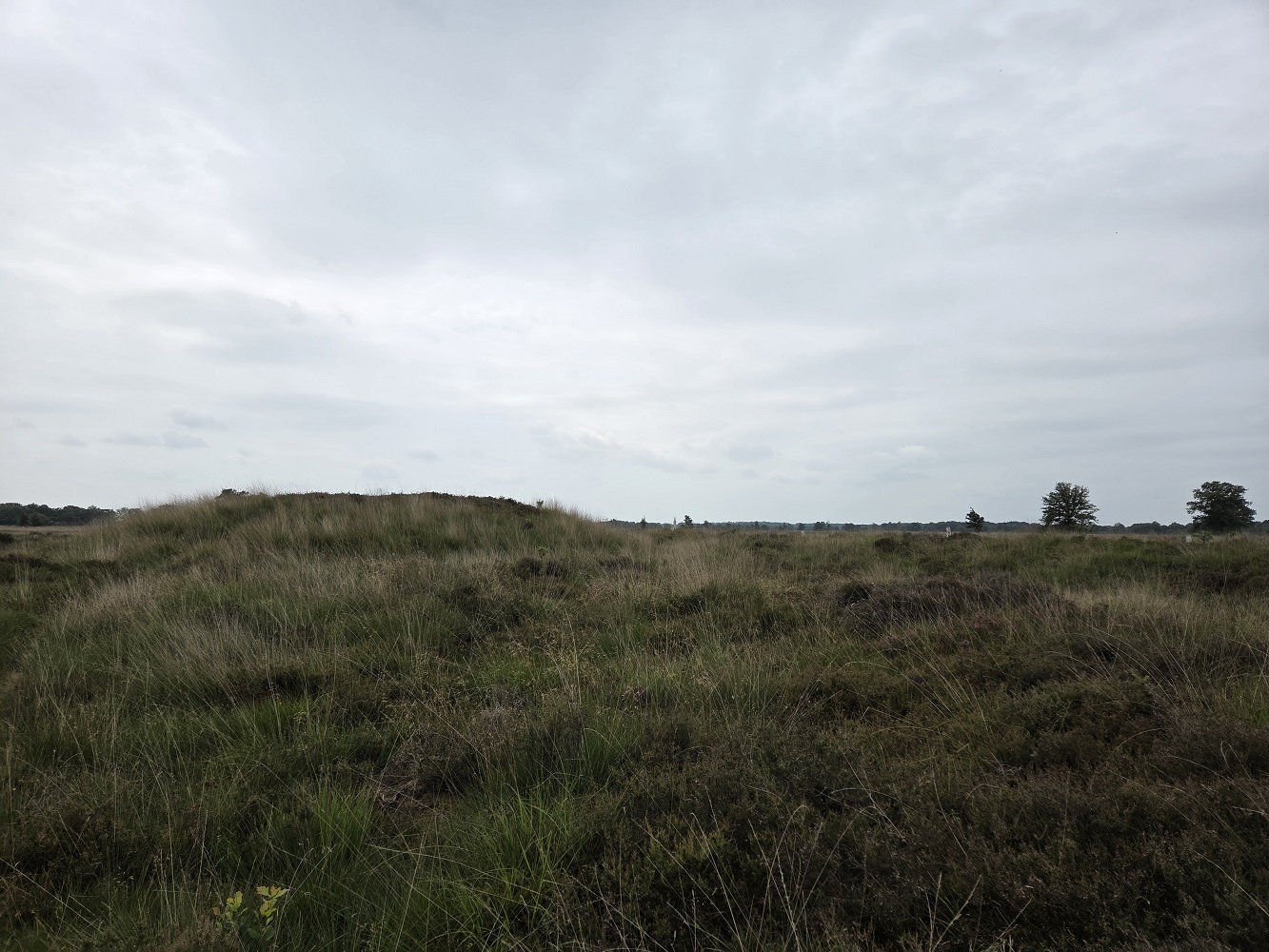
The back of the barrow
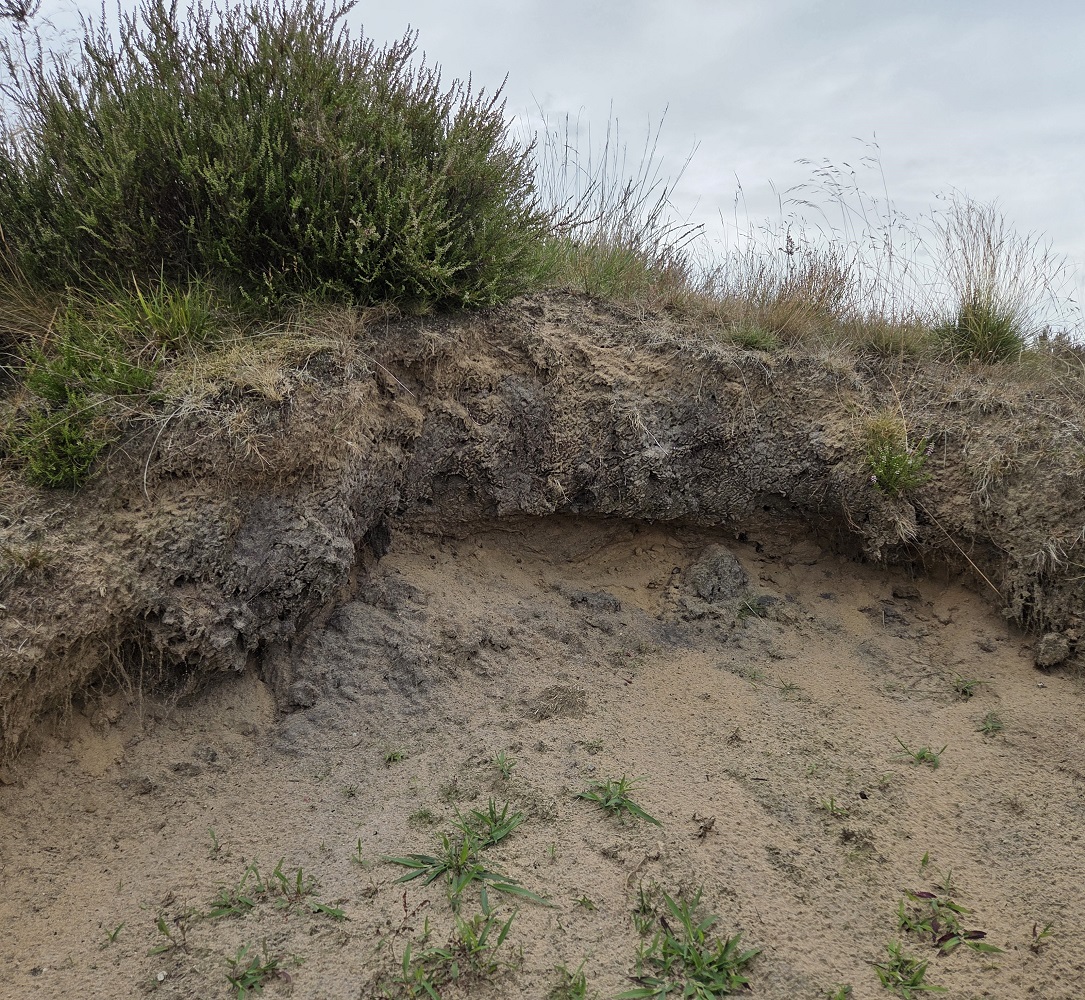
Organic layers again
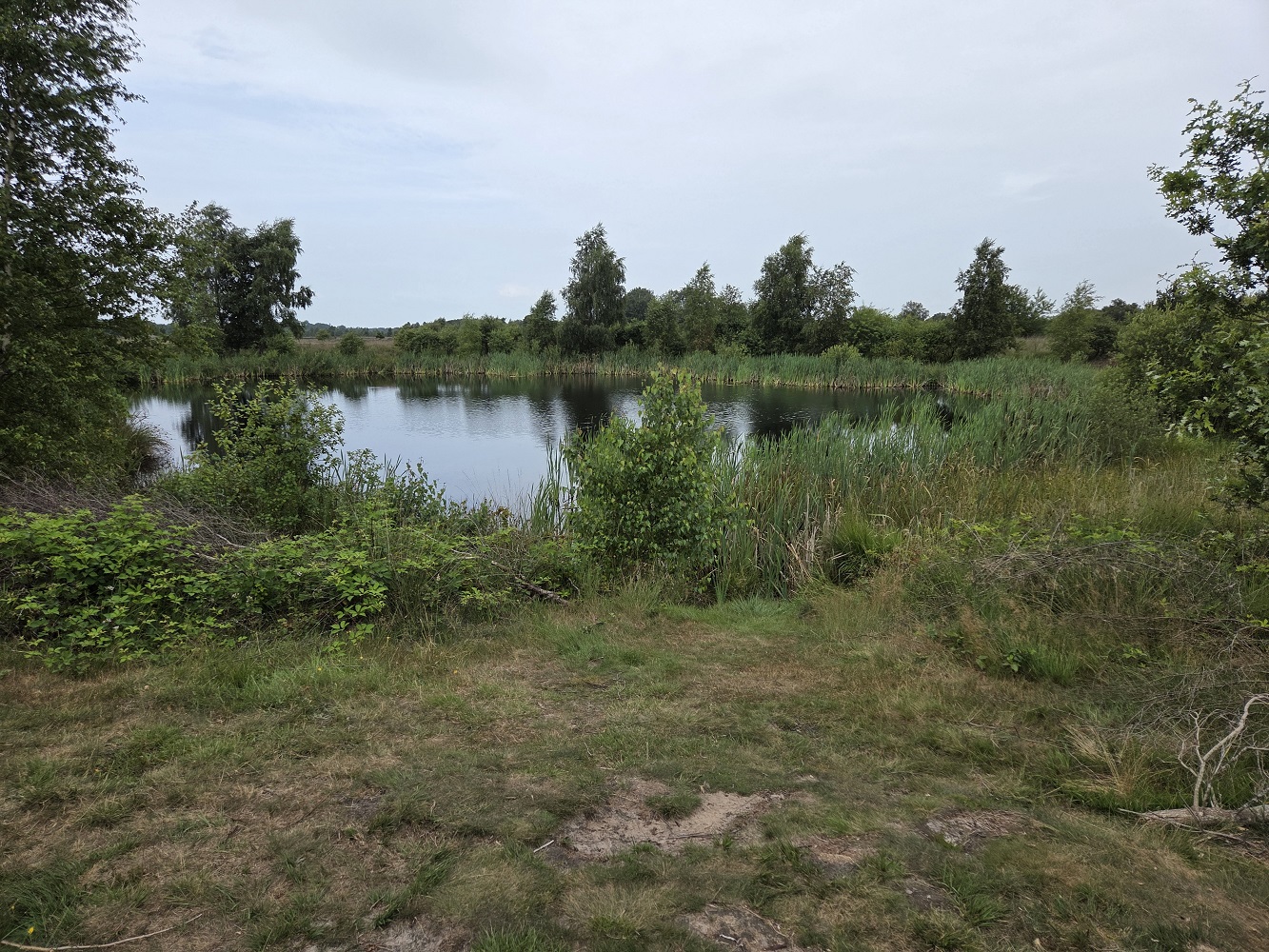
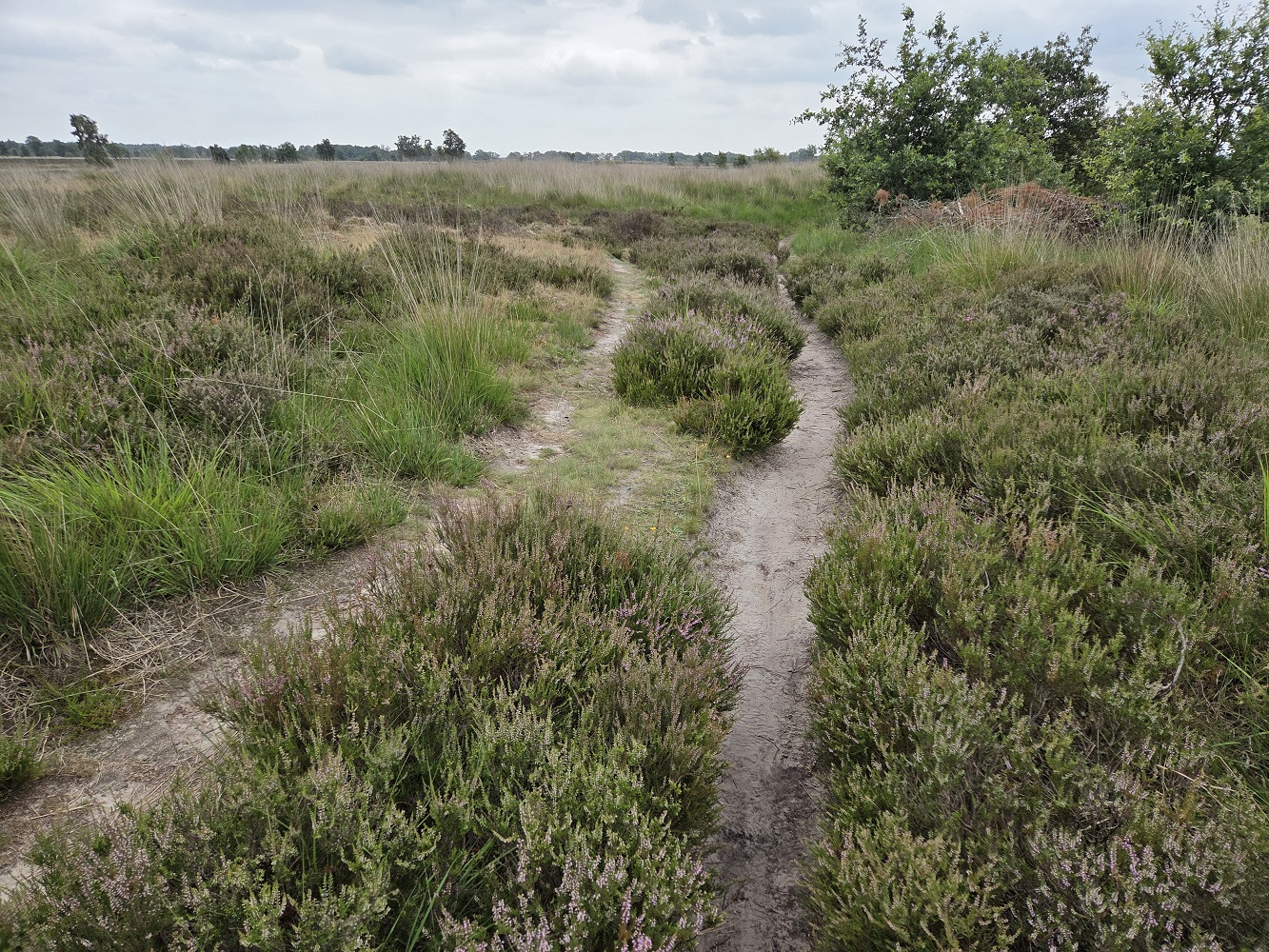
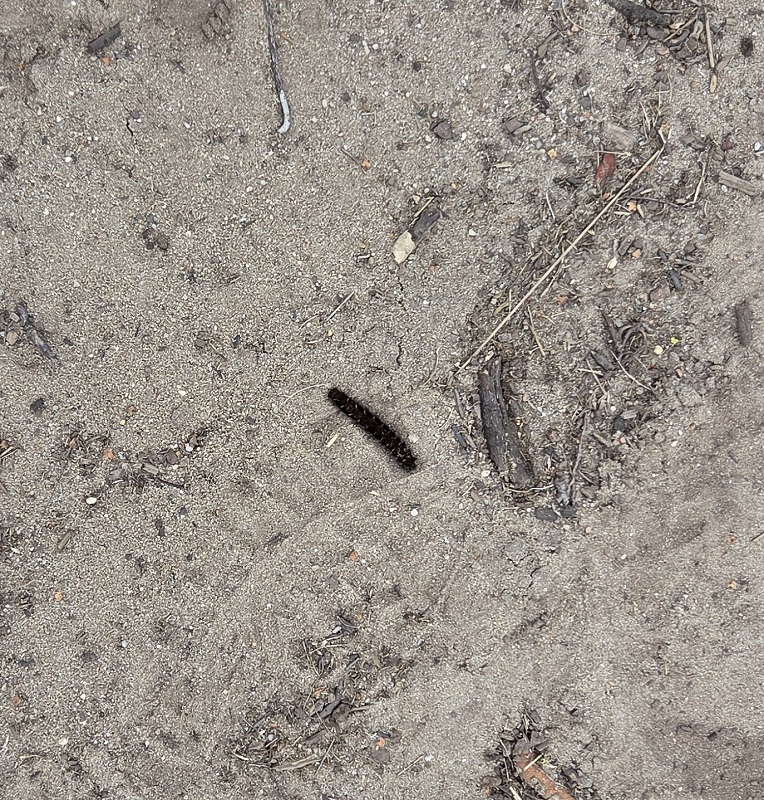
Where’s this little guy going??
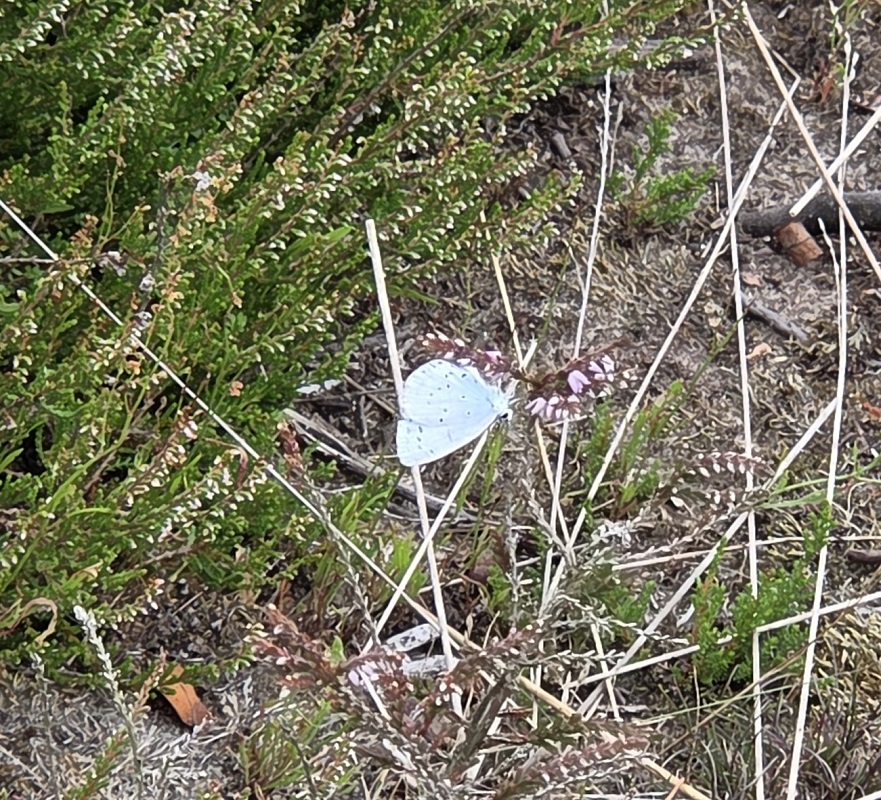
The butterflies WOULD NOT sit still for us. I was lucky with this uncommon blue one.
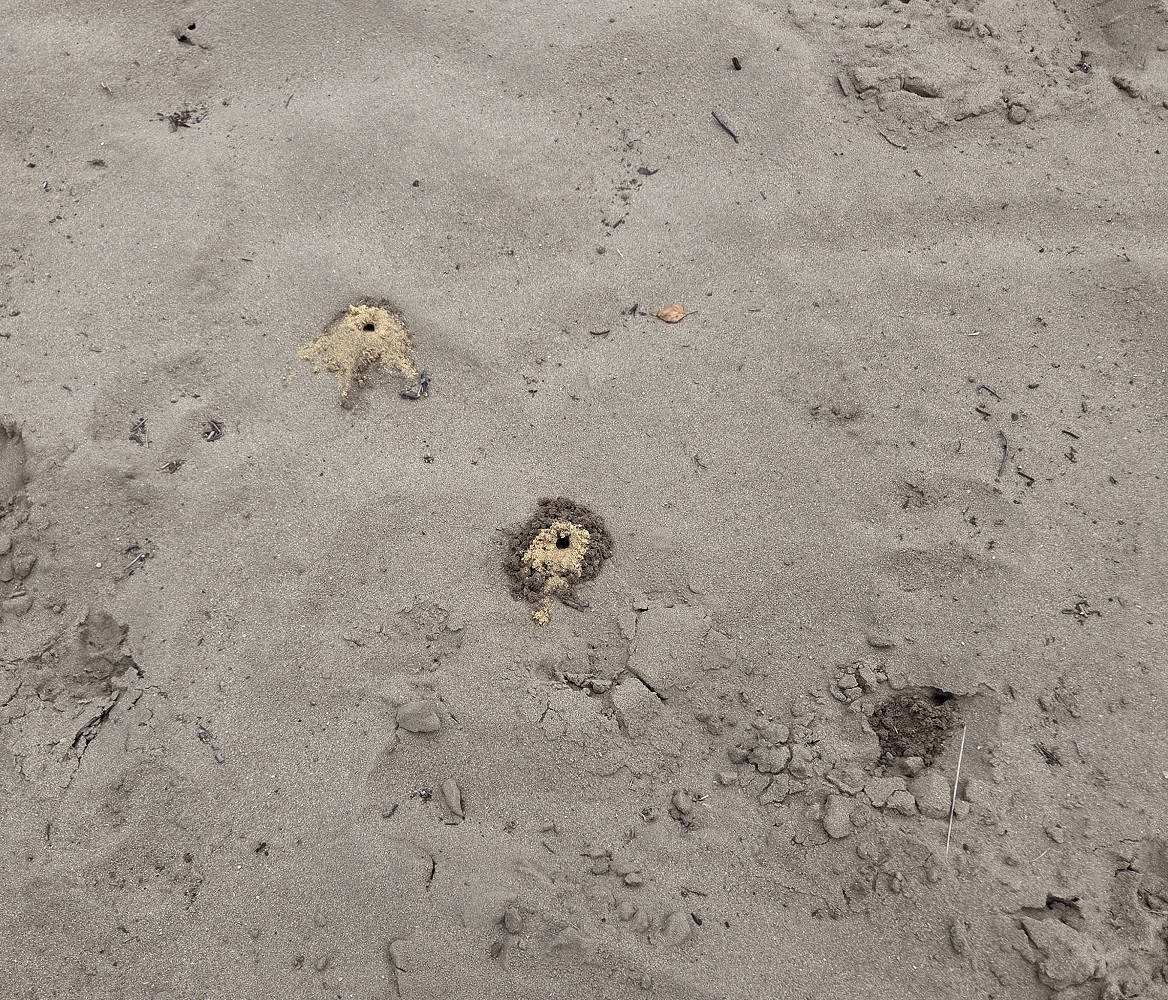
More insects burrowing to lay eggs? And showing what colour of soil is underneath, look at this weird progression.
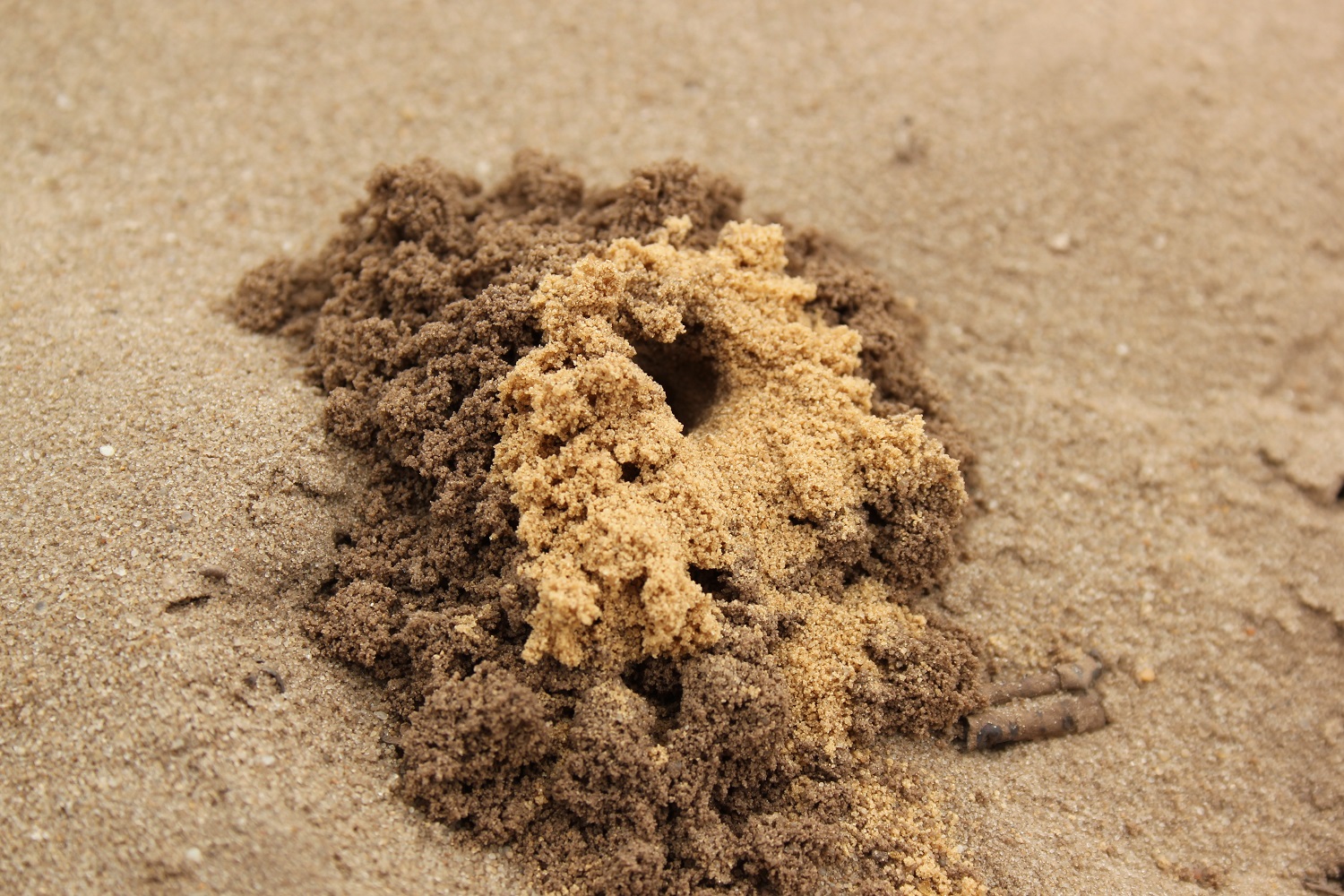
Photo by MH
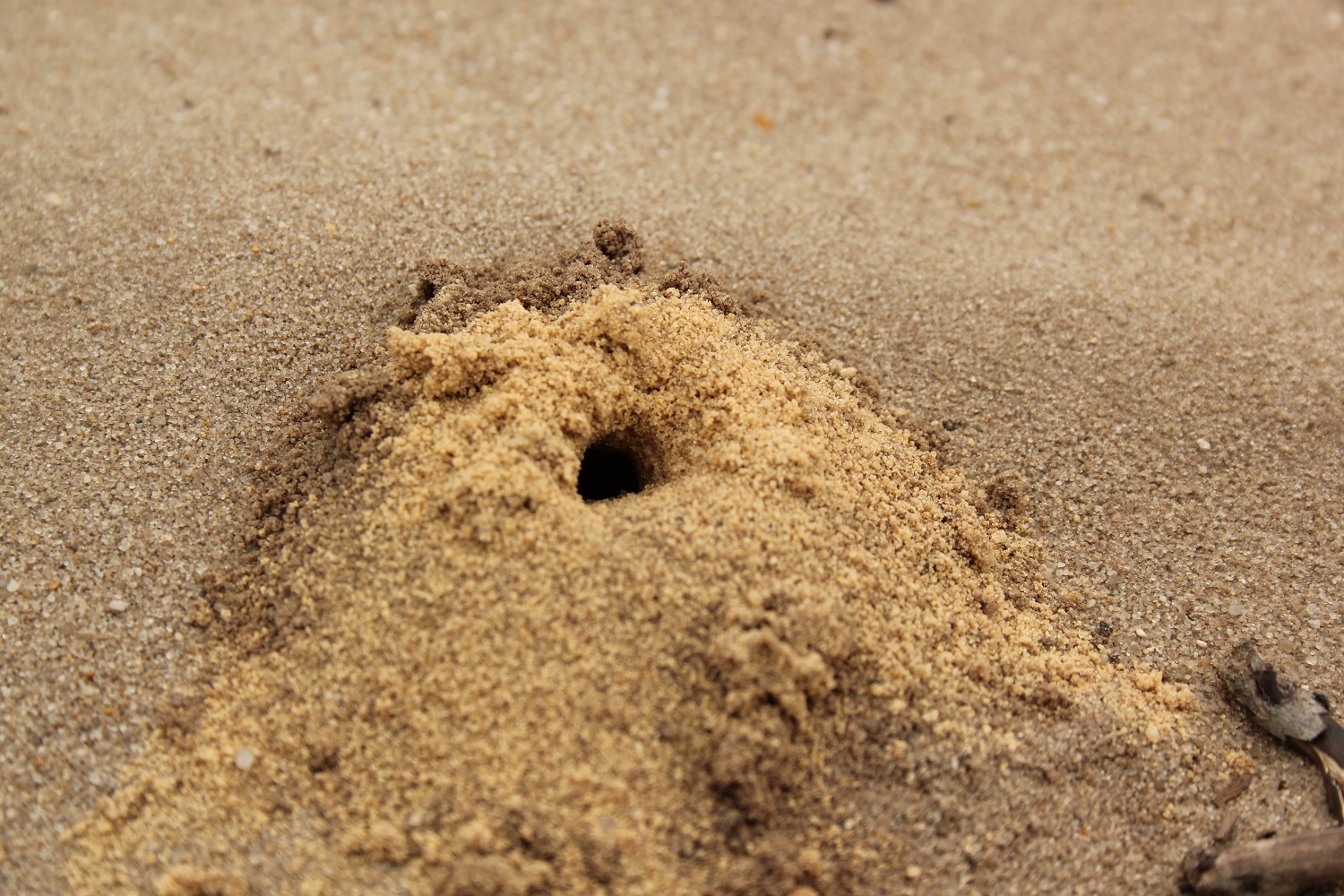
Photo by MH
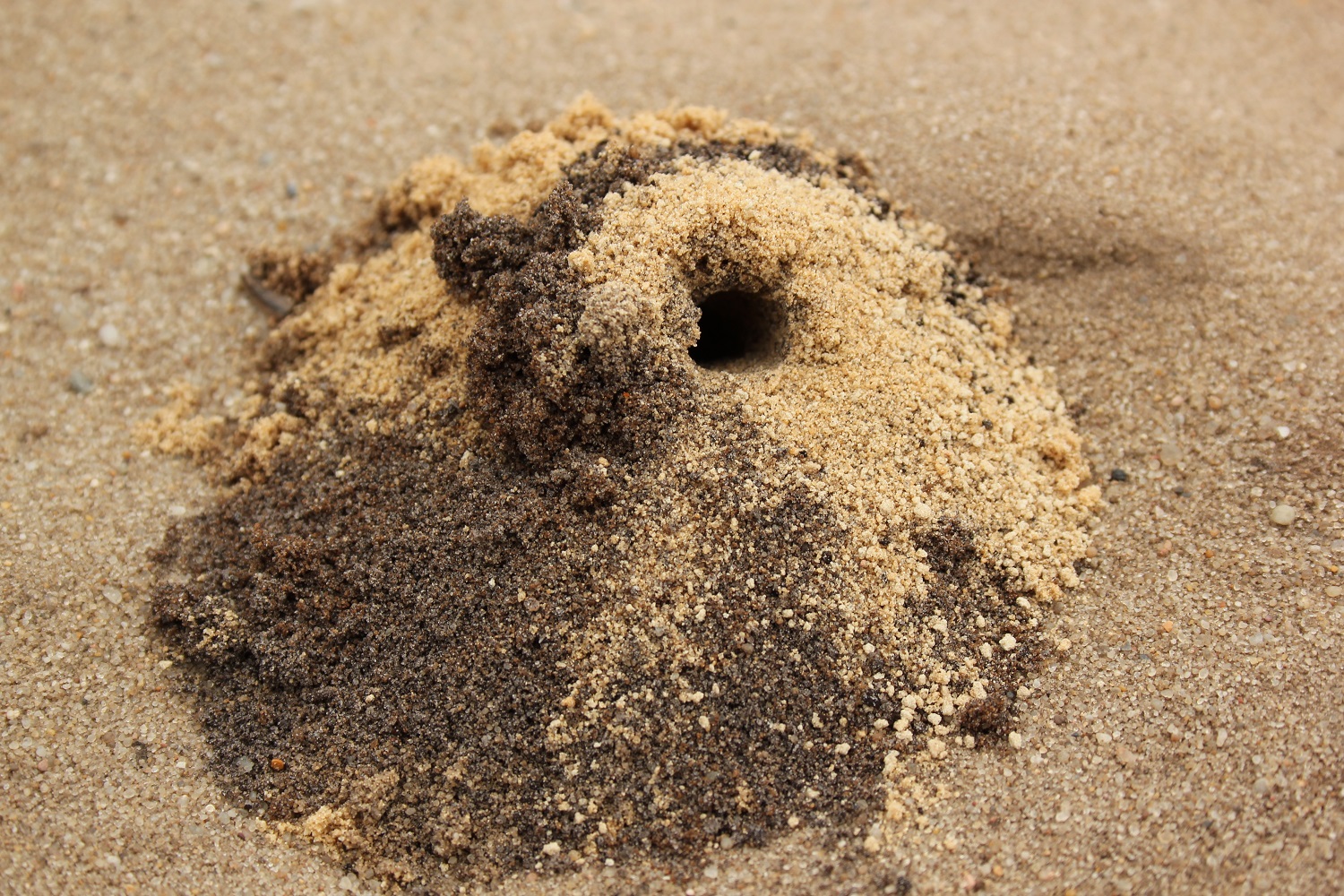
Photo by MH
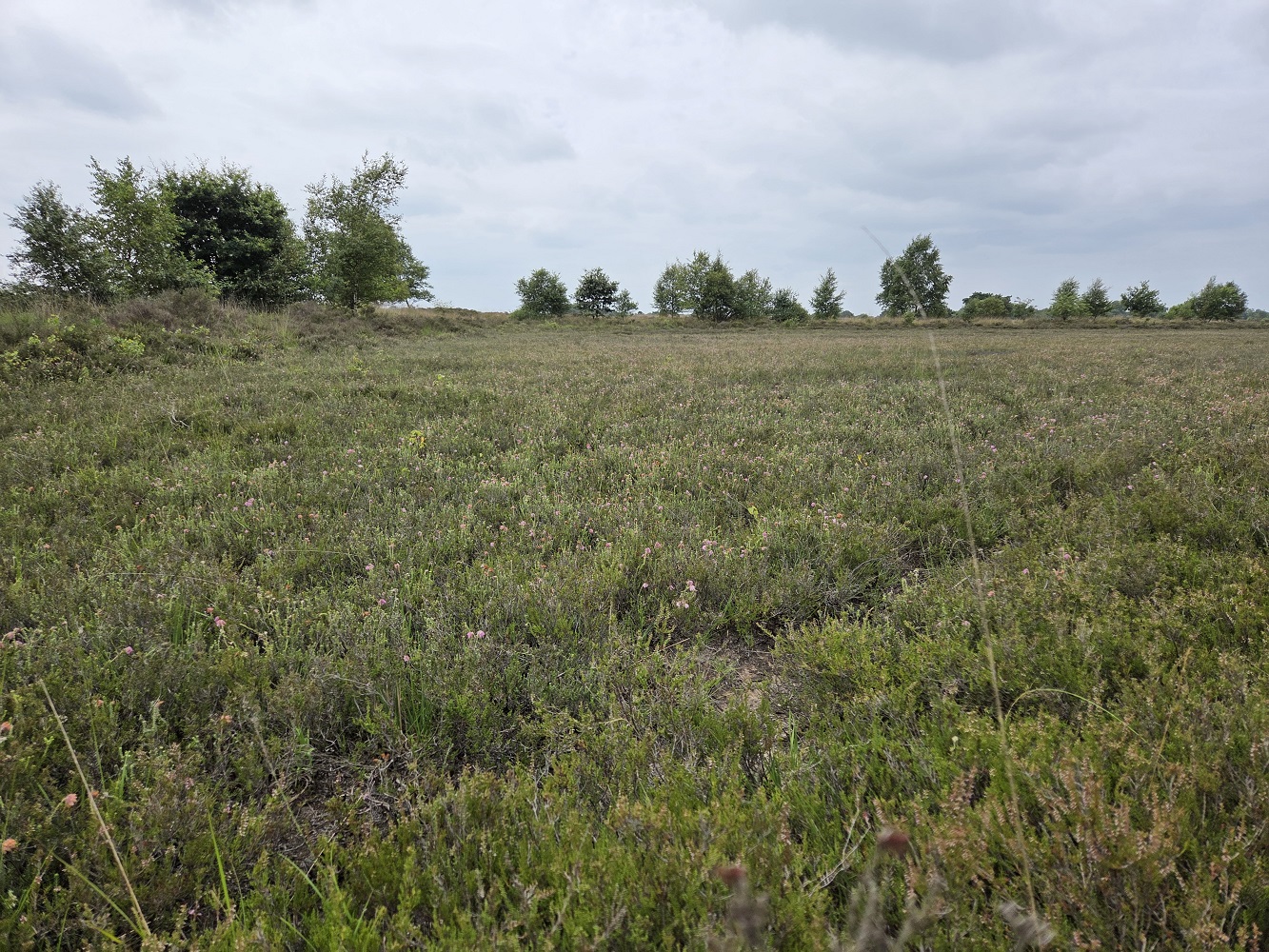
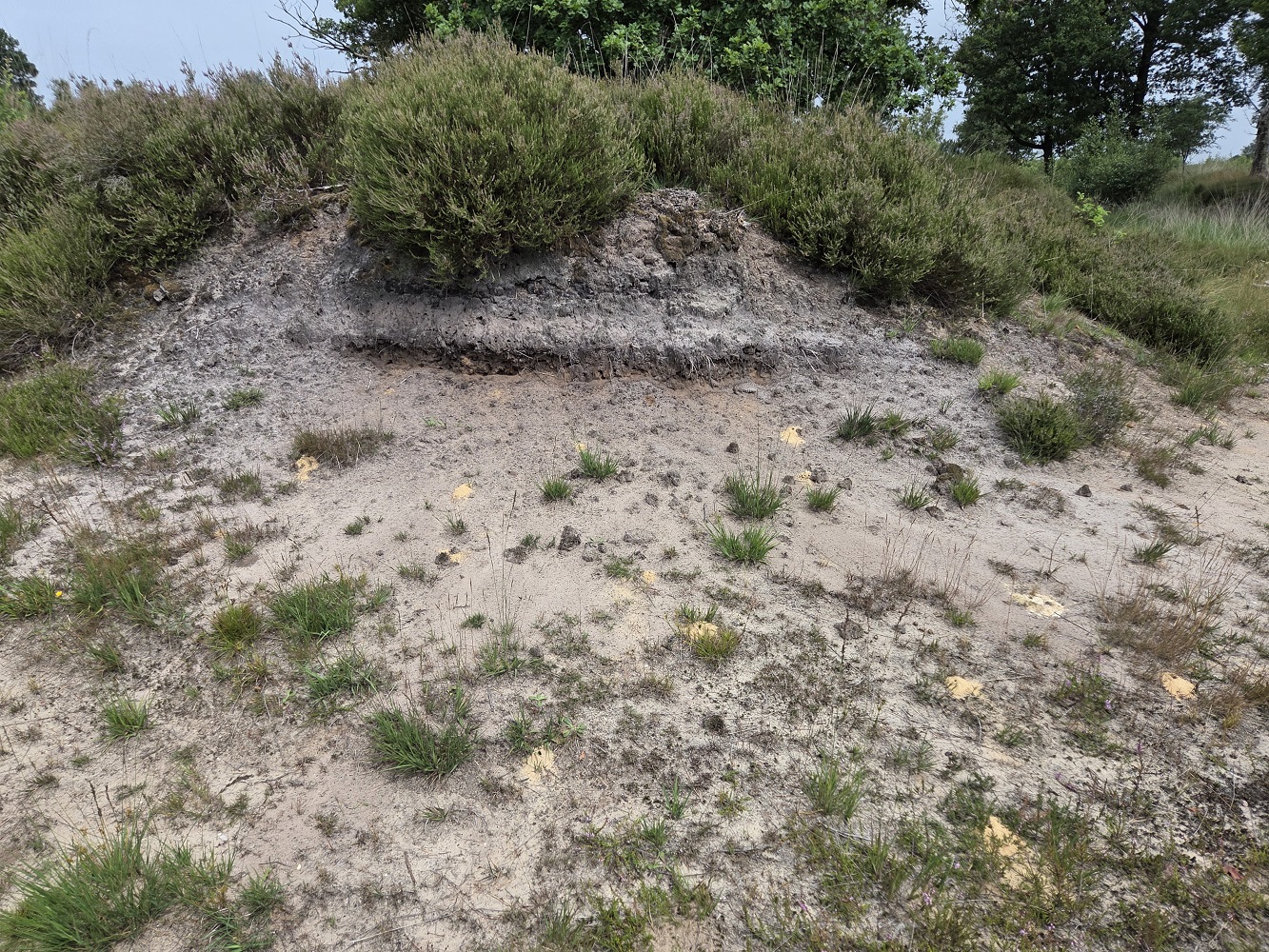
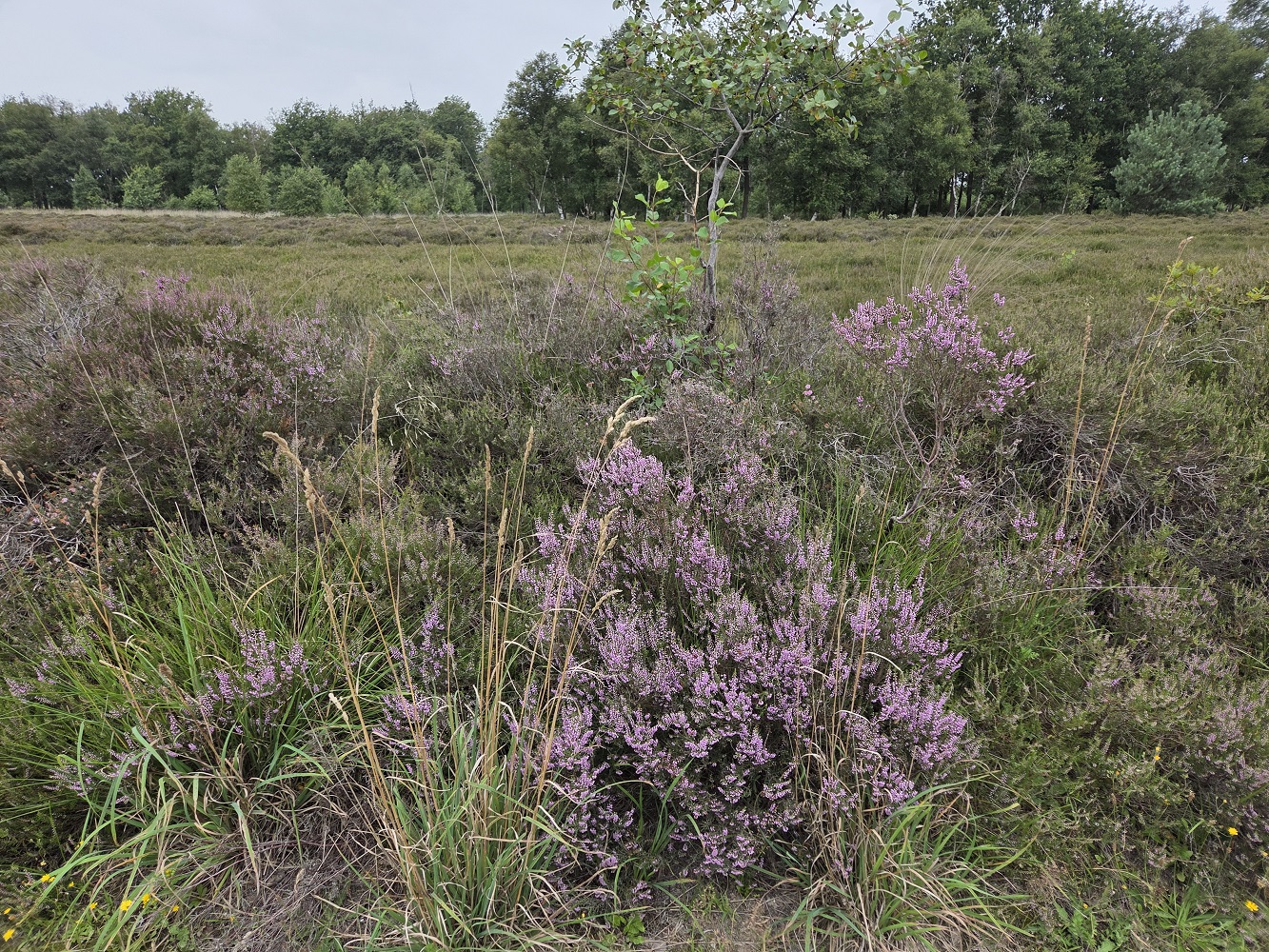
Blooming heather, huzzah!
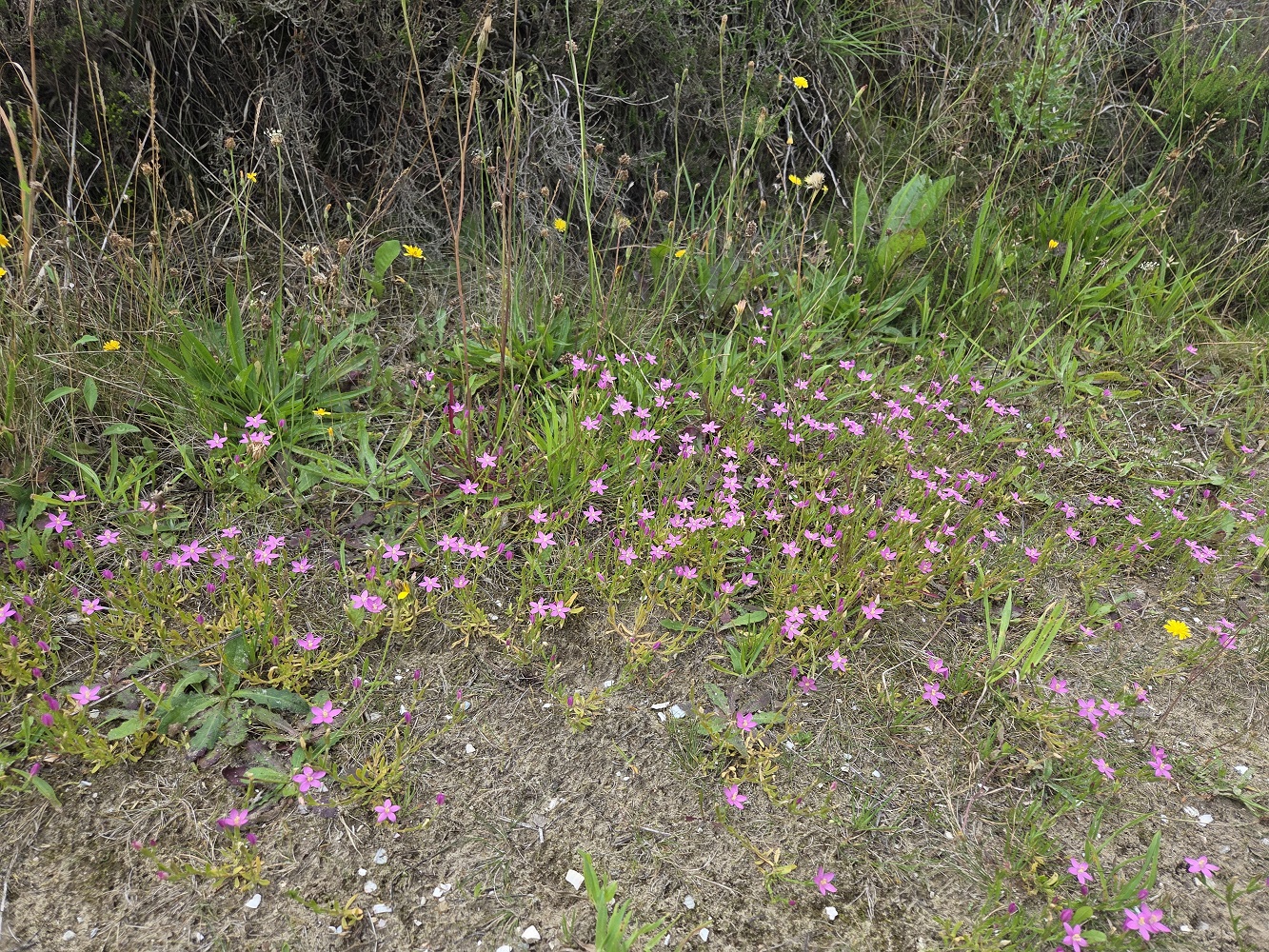
This unassuming little pink flower is apparently very rare.
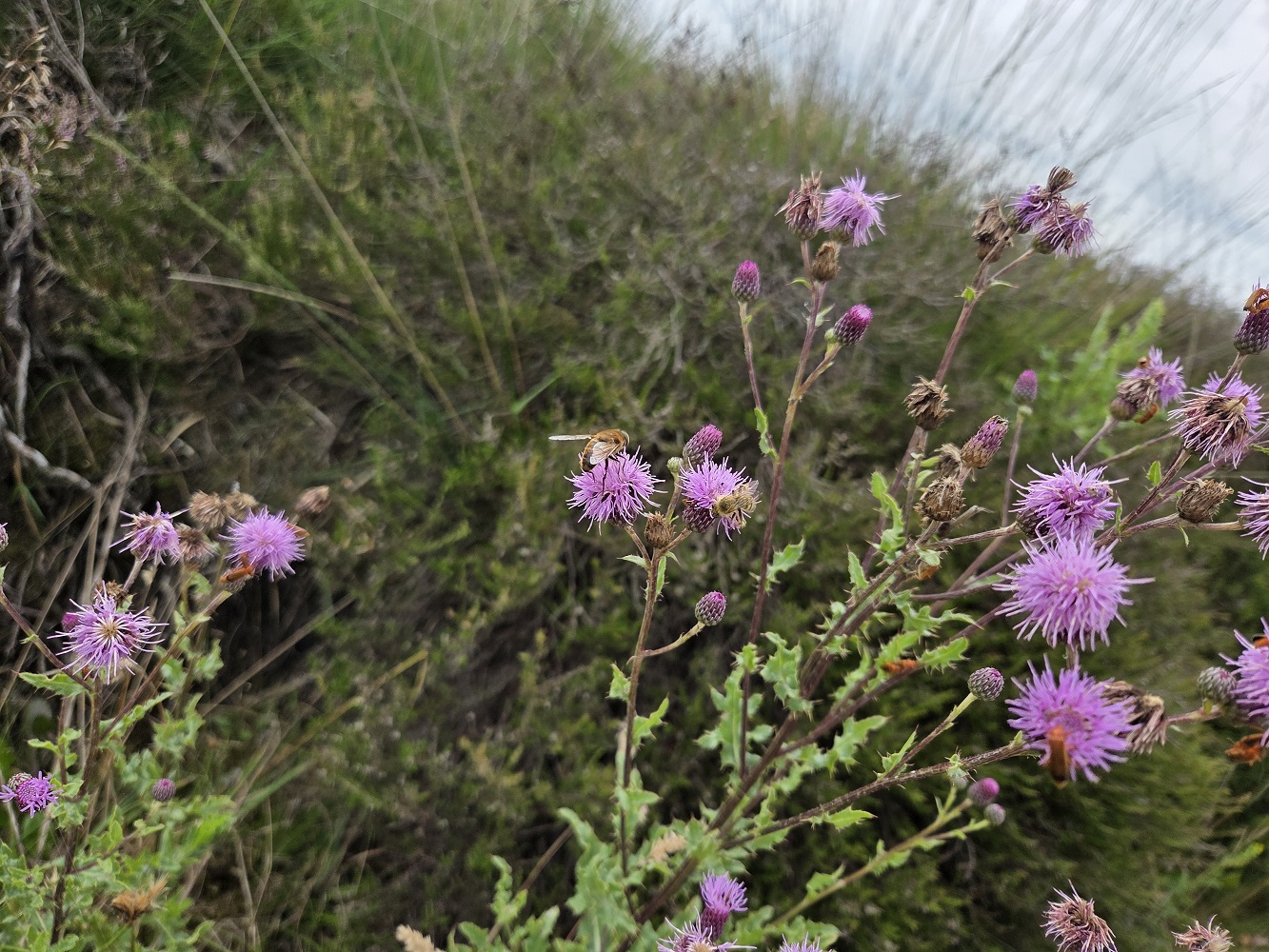
This bee is actually a fly disguising itself as a bee. Also nice thistles.
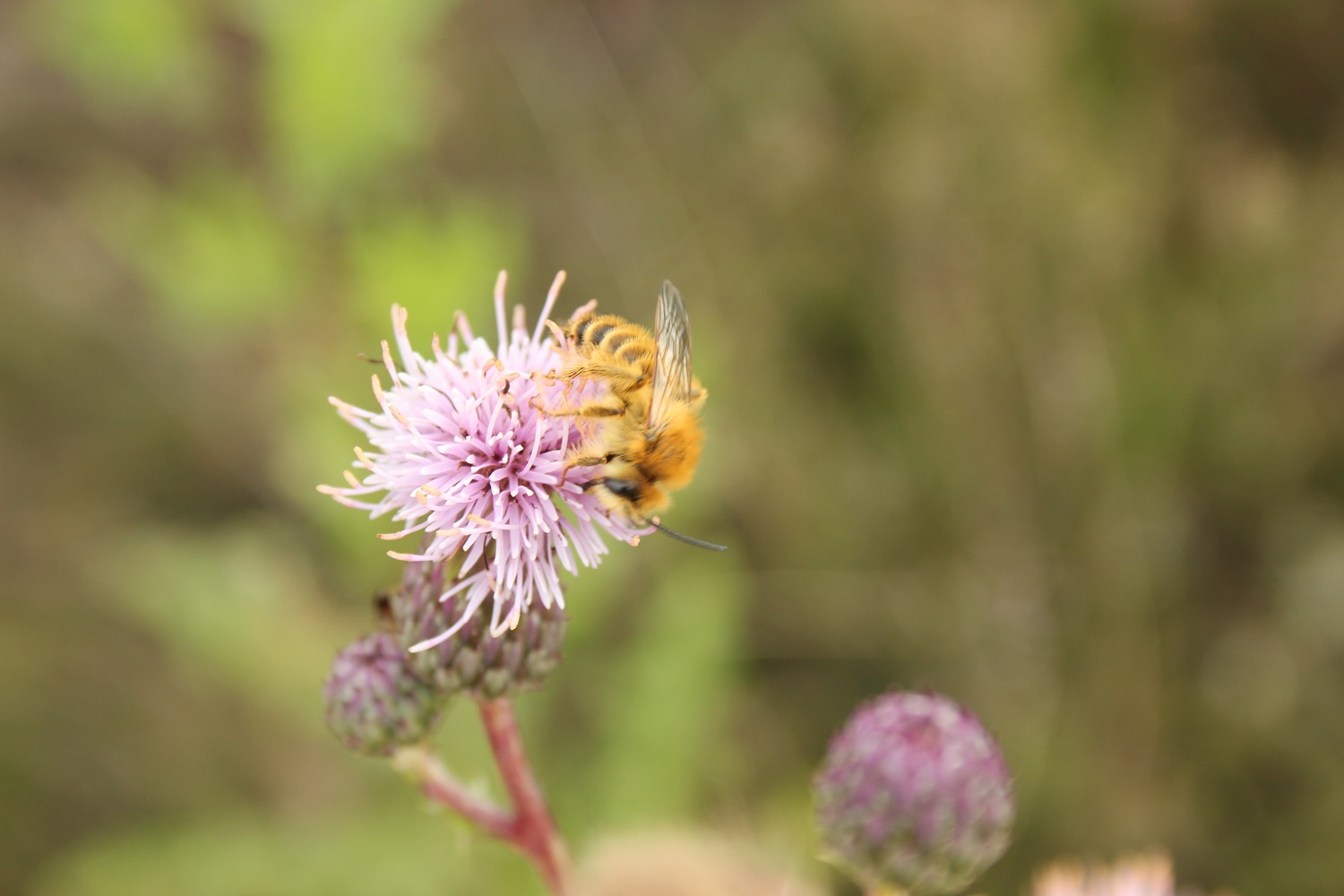
Photo by MH
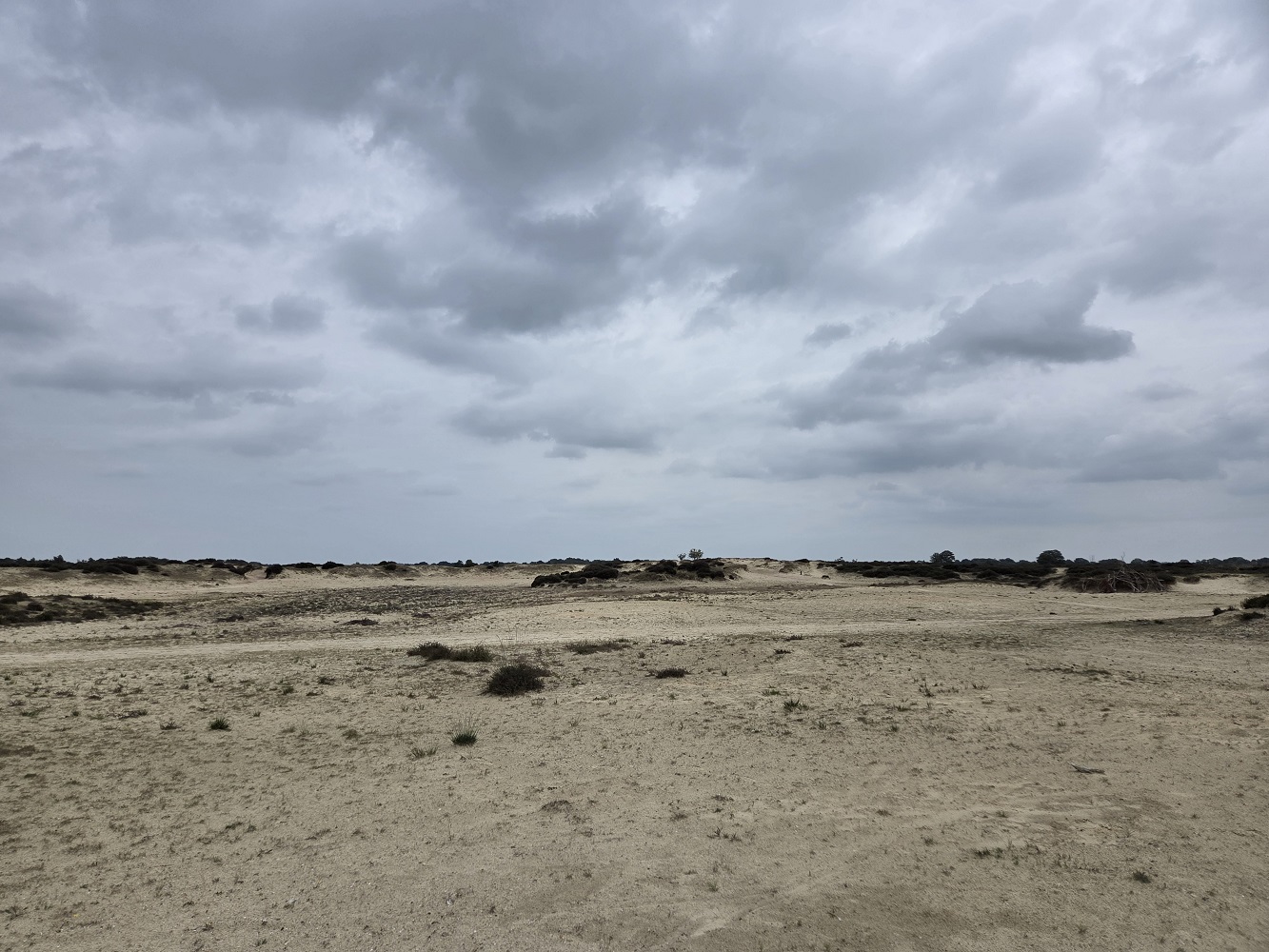
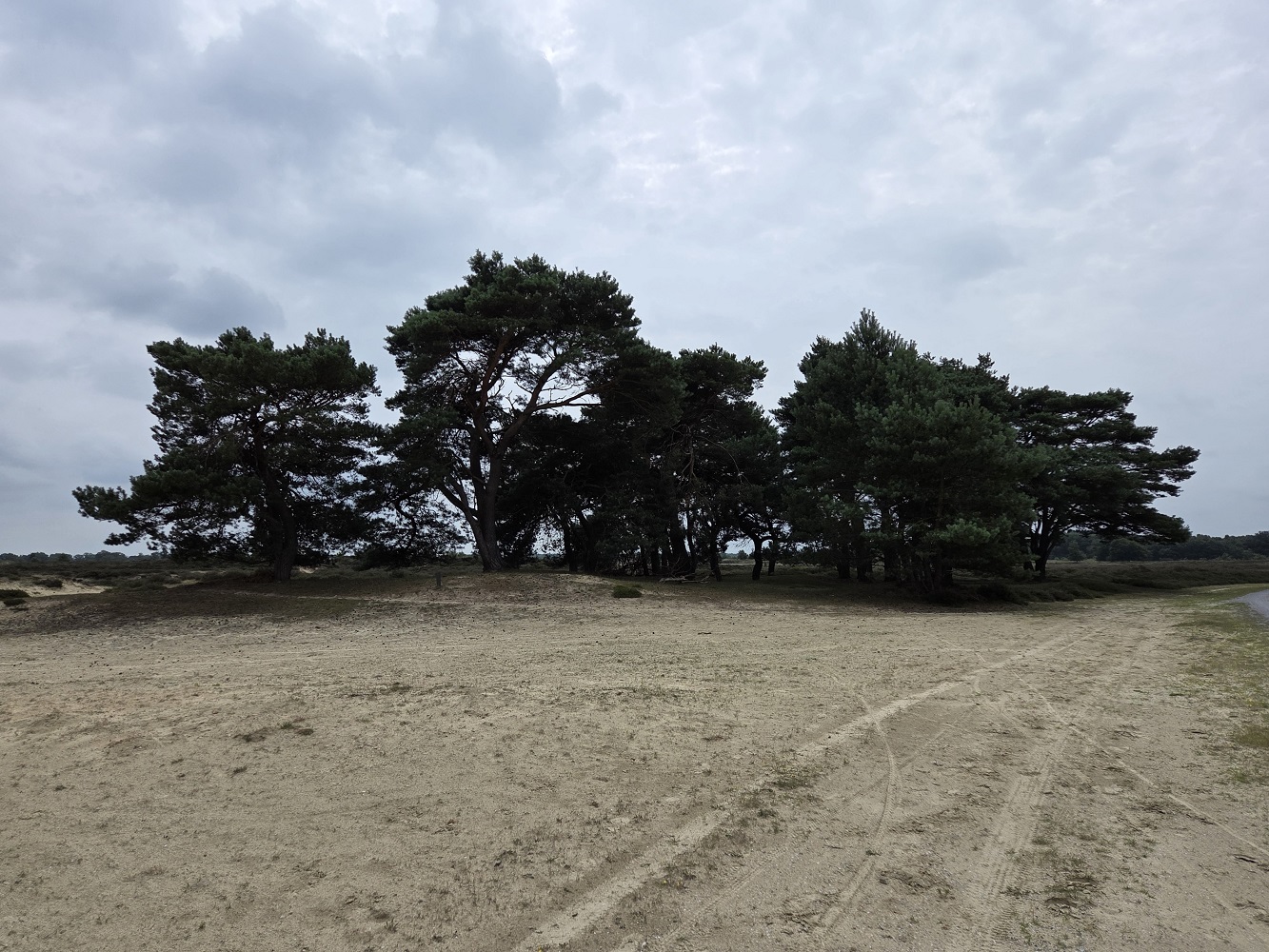
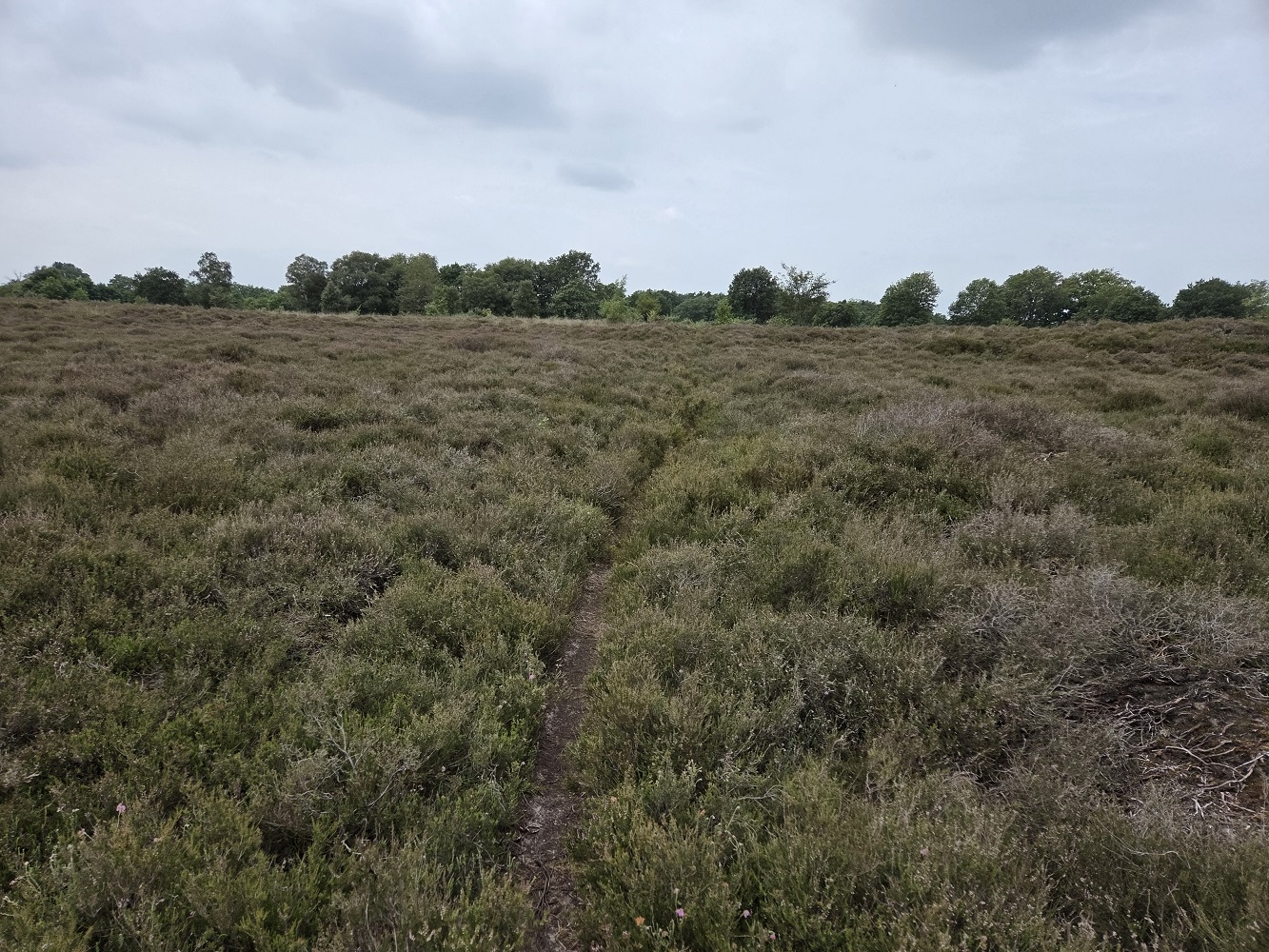
You call this a path??
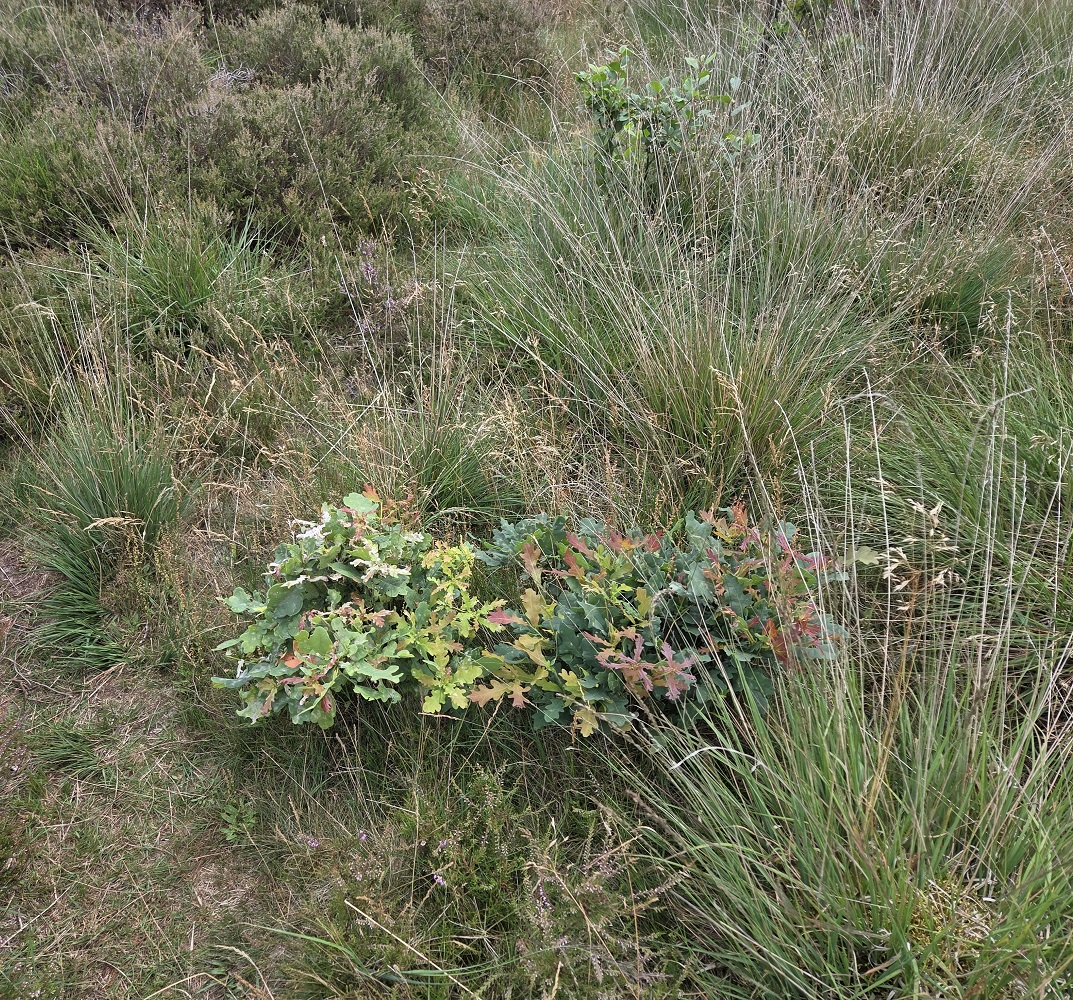
The smallest oak tree I’ve ever seen.
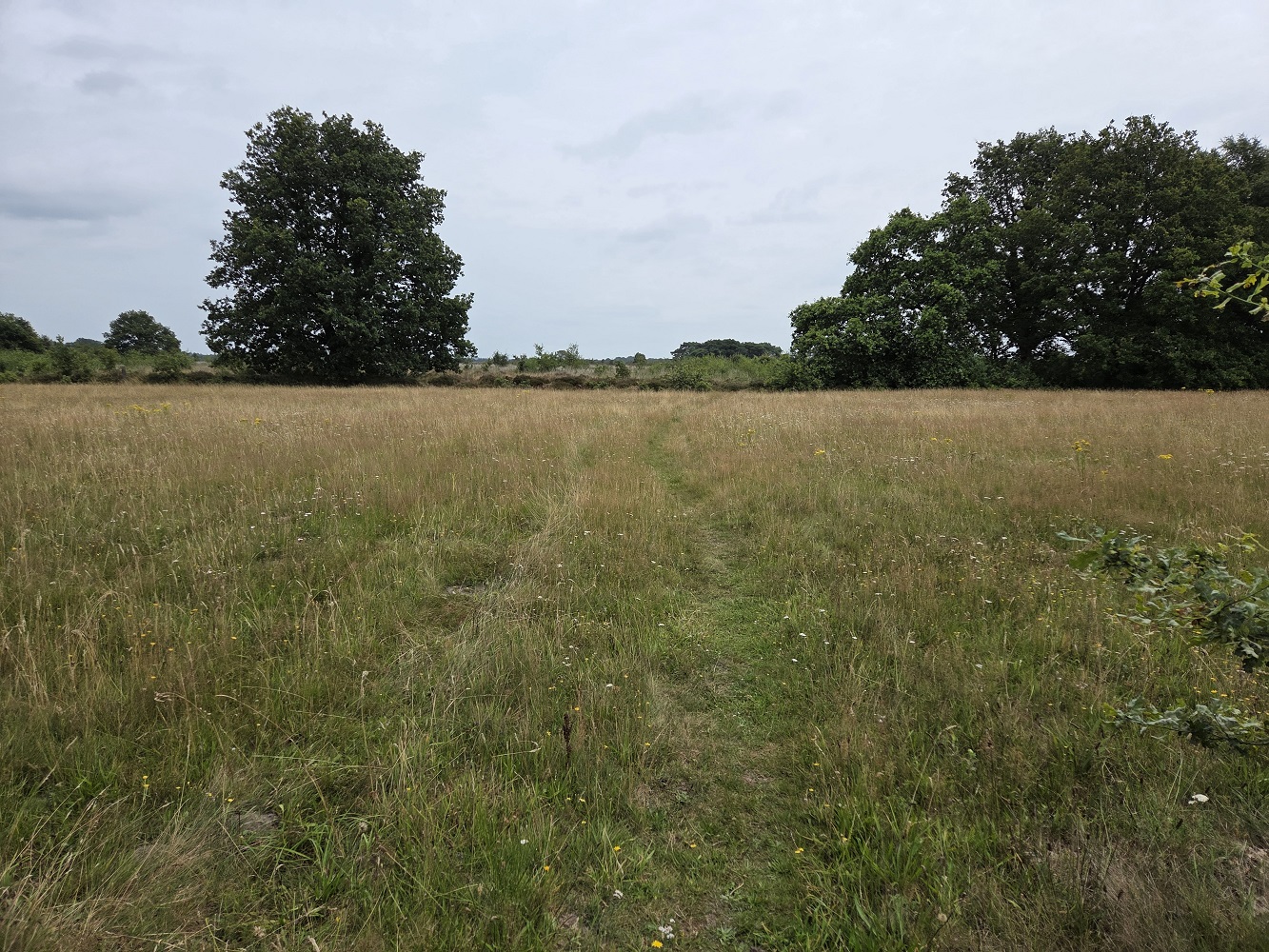
Looking back after crossing from the wilderness back to fields again.
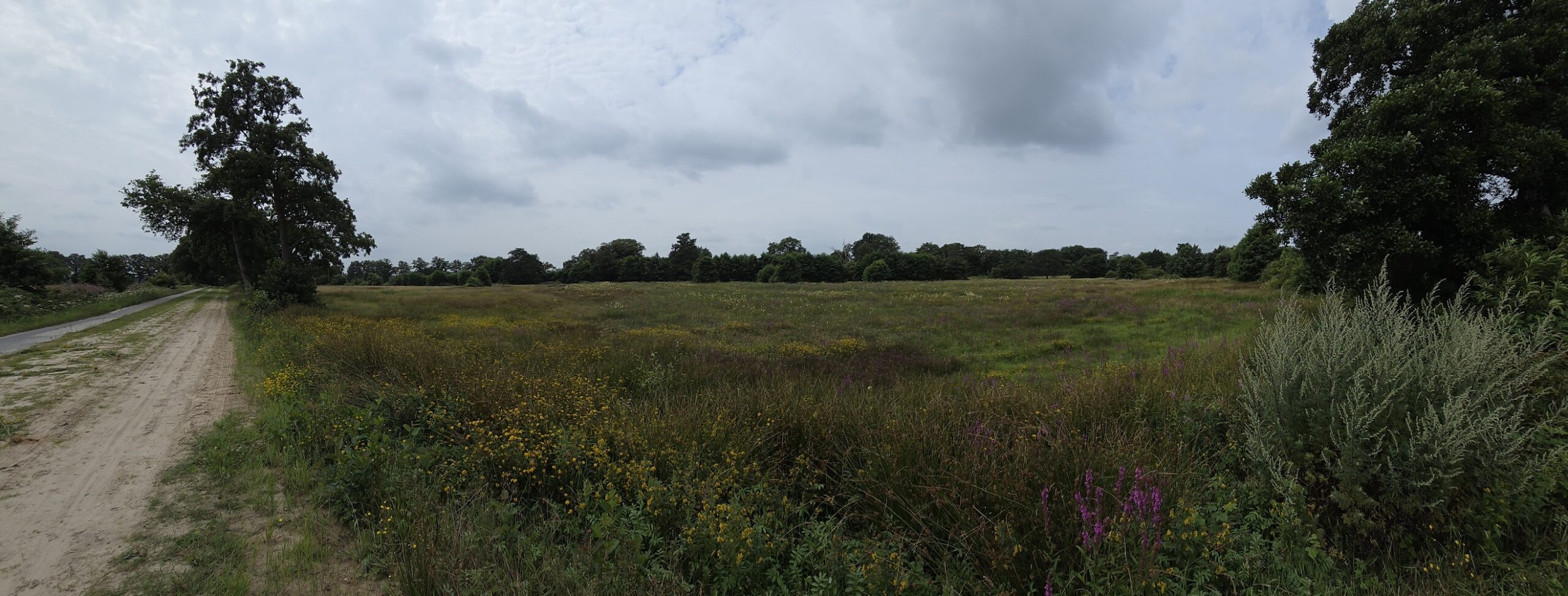
IIRC there is a stream running across the field to the right, but I didn’t take the picture at a good angle to see the brighter green streak of plants bordering it.
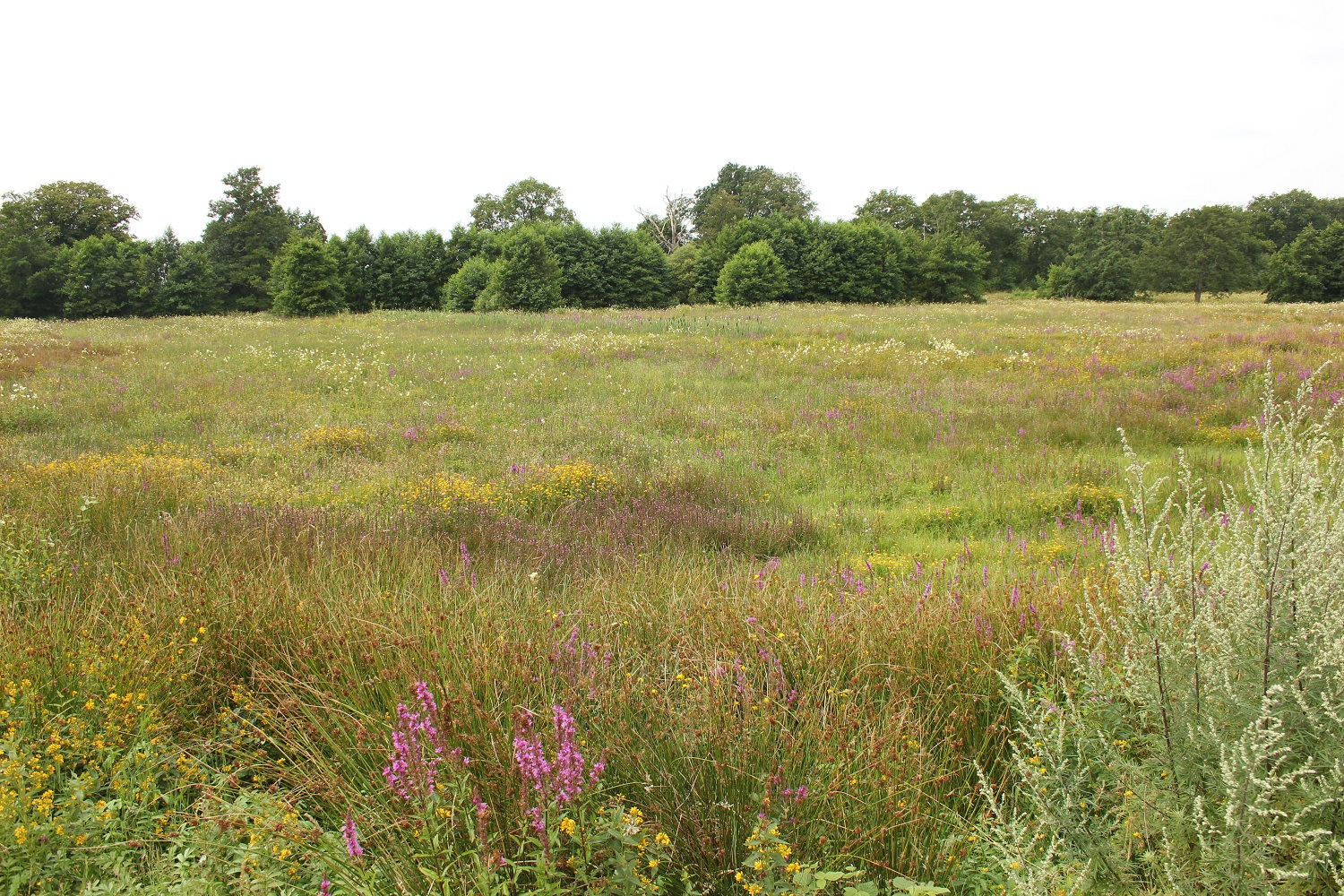
Photo by MH
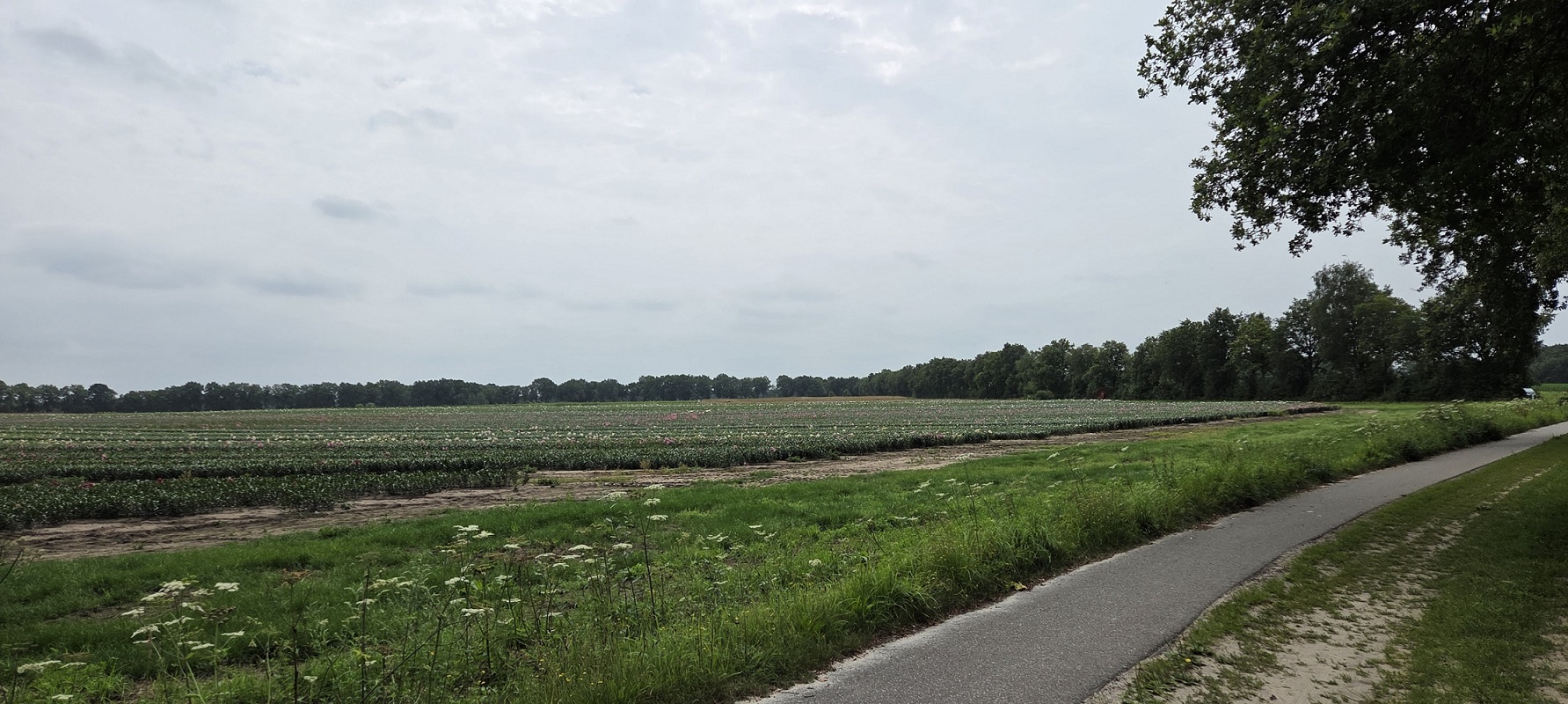
Farmed lilies
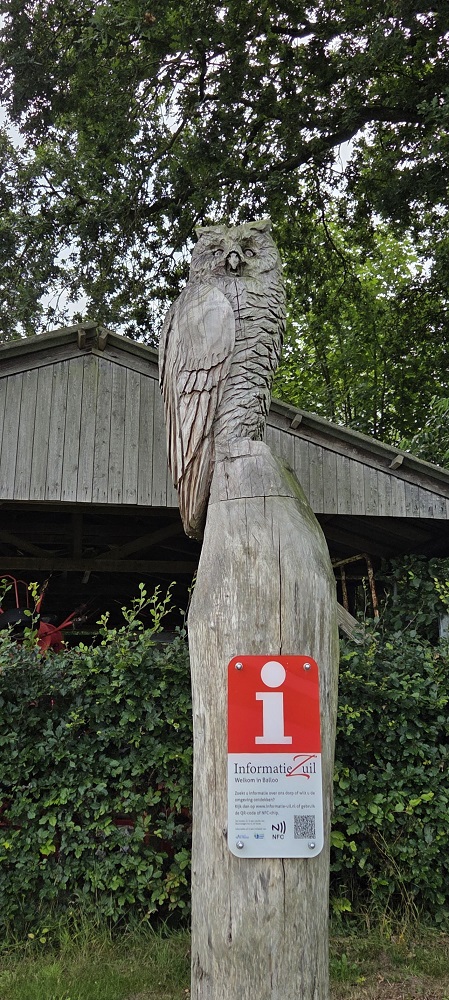
This sign has a pun: “Informatie-zuil” = information column. “Informatiez-uil” = informationz owl.
So after much walking we came to the ancient village of Balloo, which is not much bigger now than it was hundreds of years ago. It still maintains its ancient ring structure, you can see it quite clearly on Google maps.
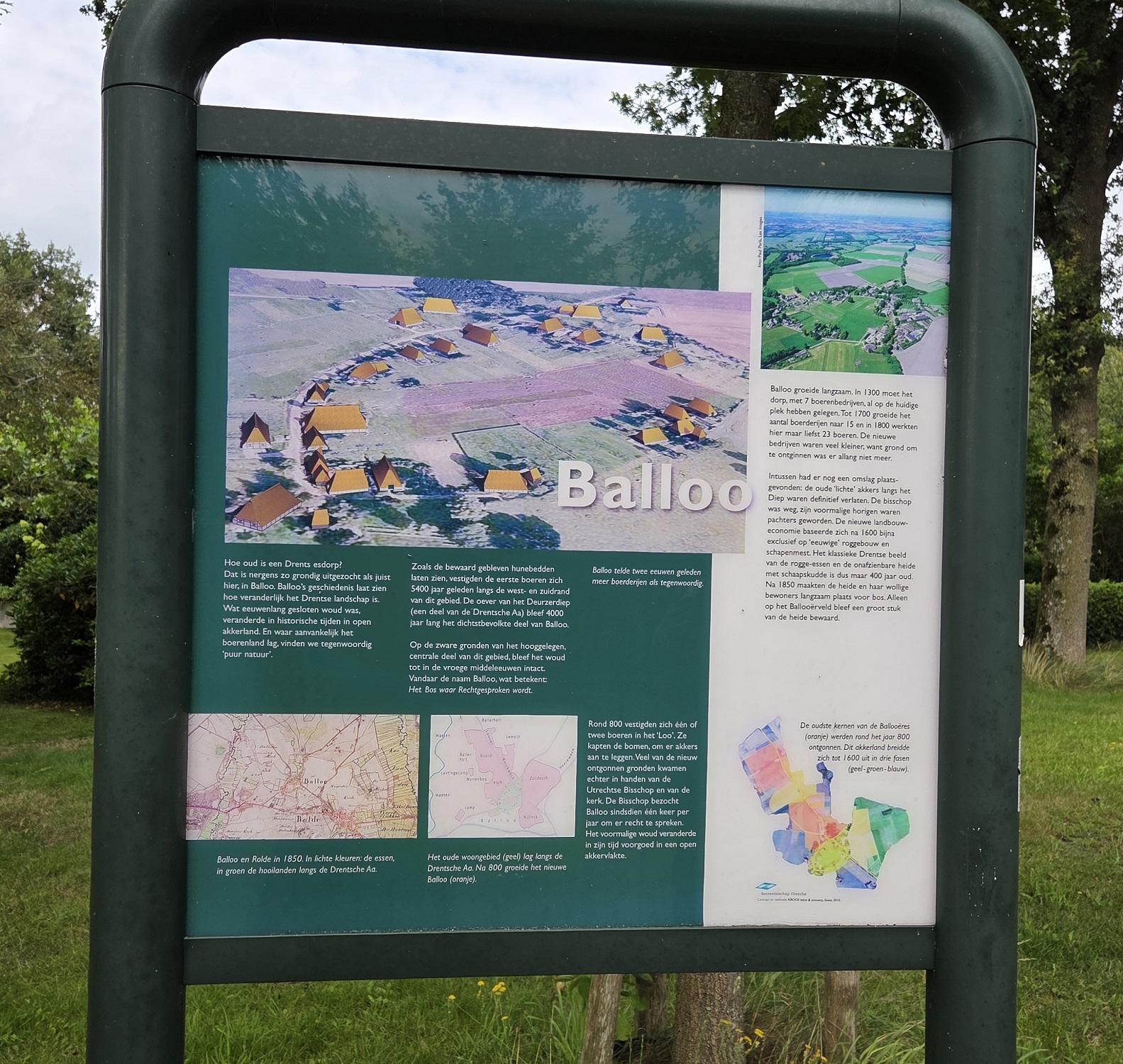
This sign contains a map in the lower right that shows how long different areas have been farmed. The orange ones have been around at least since 800CE.
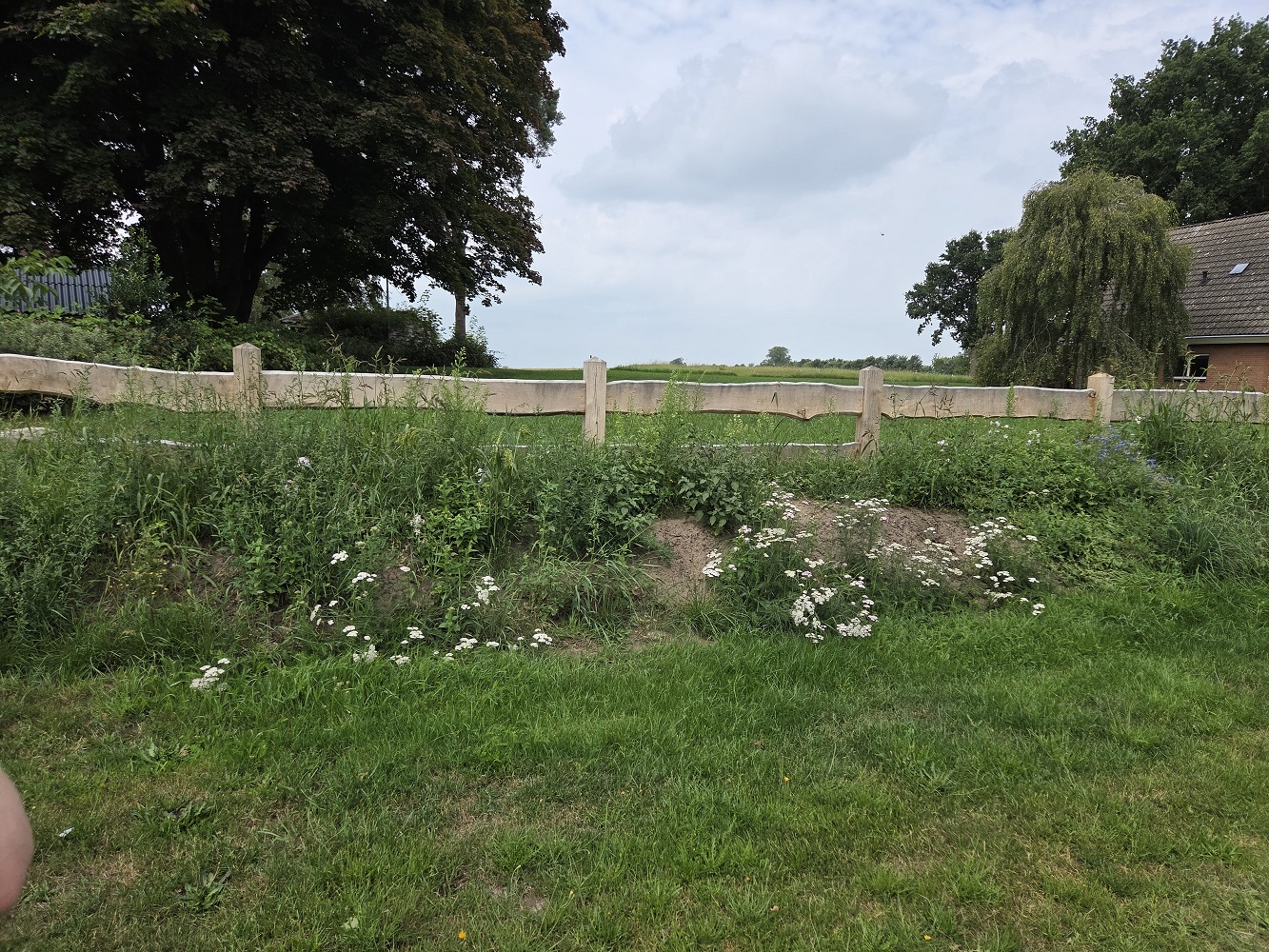
This is what happens when your field is in use for centuries; as fertilizer piles onto it, the ground level slowly rises.
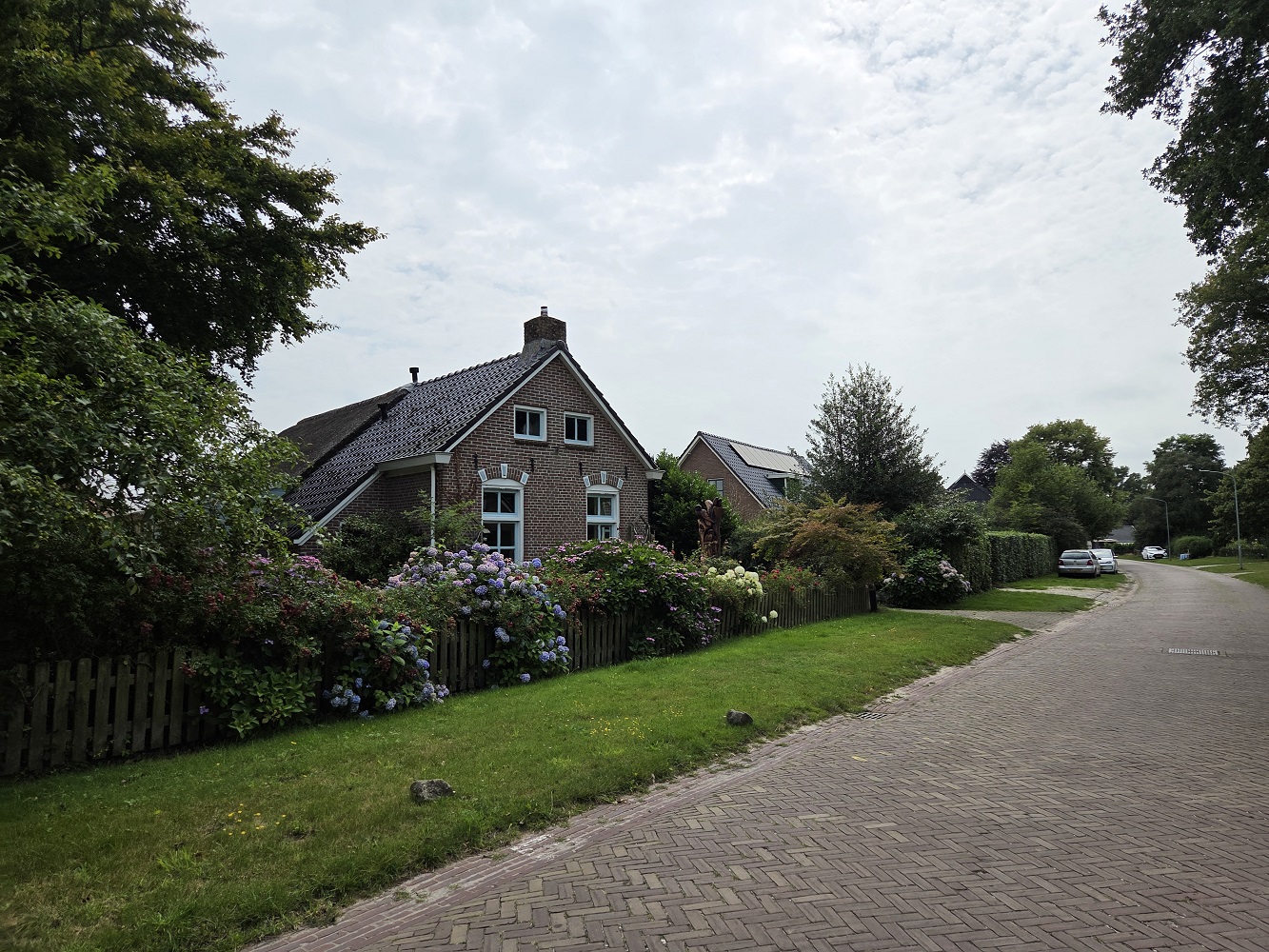
The gardens in Balloo are spectacular!
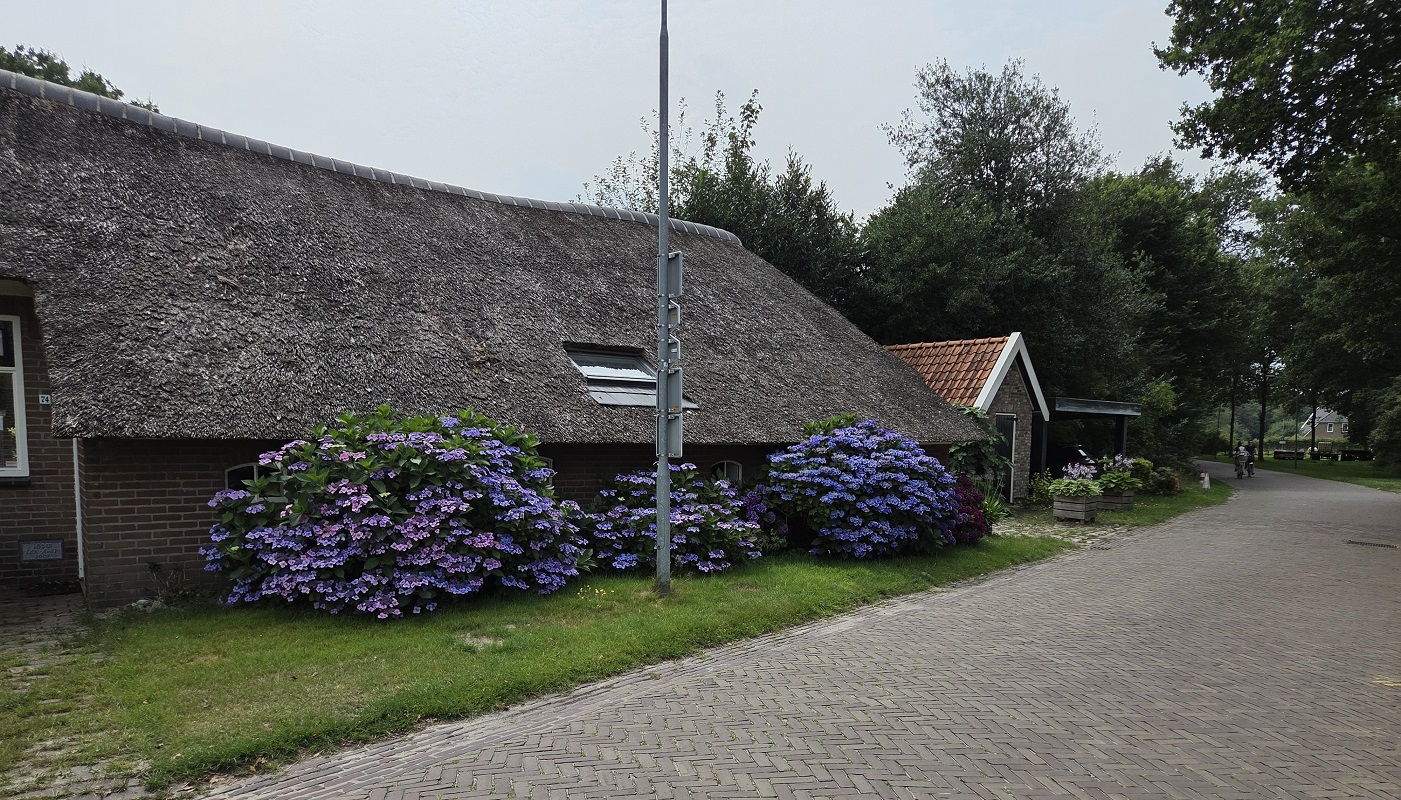
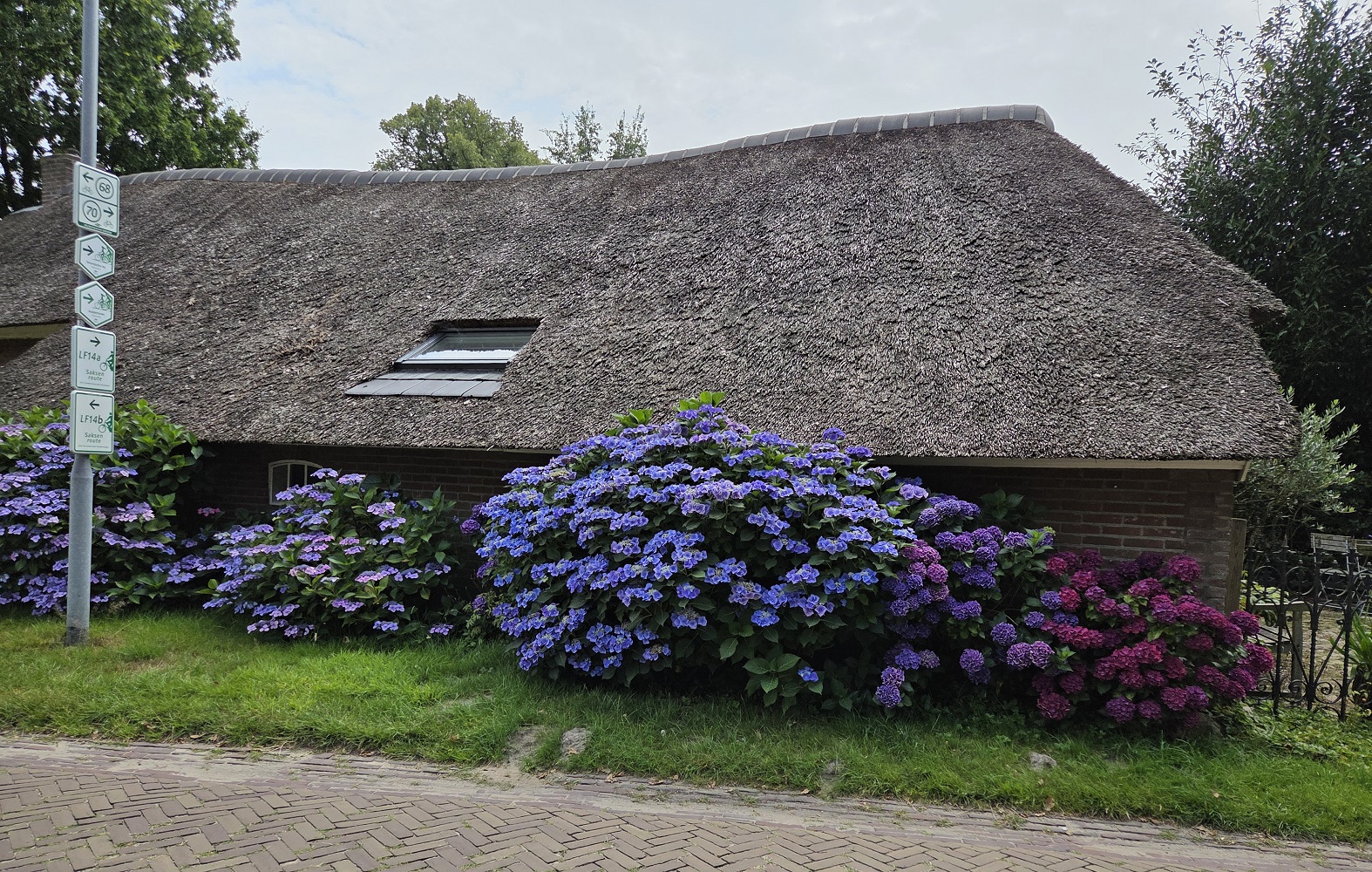
On the way out of Balloo, we stopped at a farm that had a small shop where you could buy local produce and meat/dairy products, but also organic foods of all kinds. And ice cream. The ice cream was the important part. I had apple pie ice cream, and Tharash had stracciatella ice cream. The farm also had a little yard with small animals, which was surprisingly uninteresting to the small children present, but I liked them.
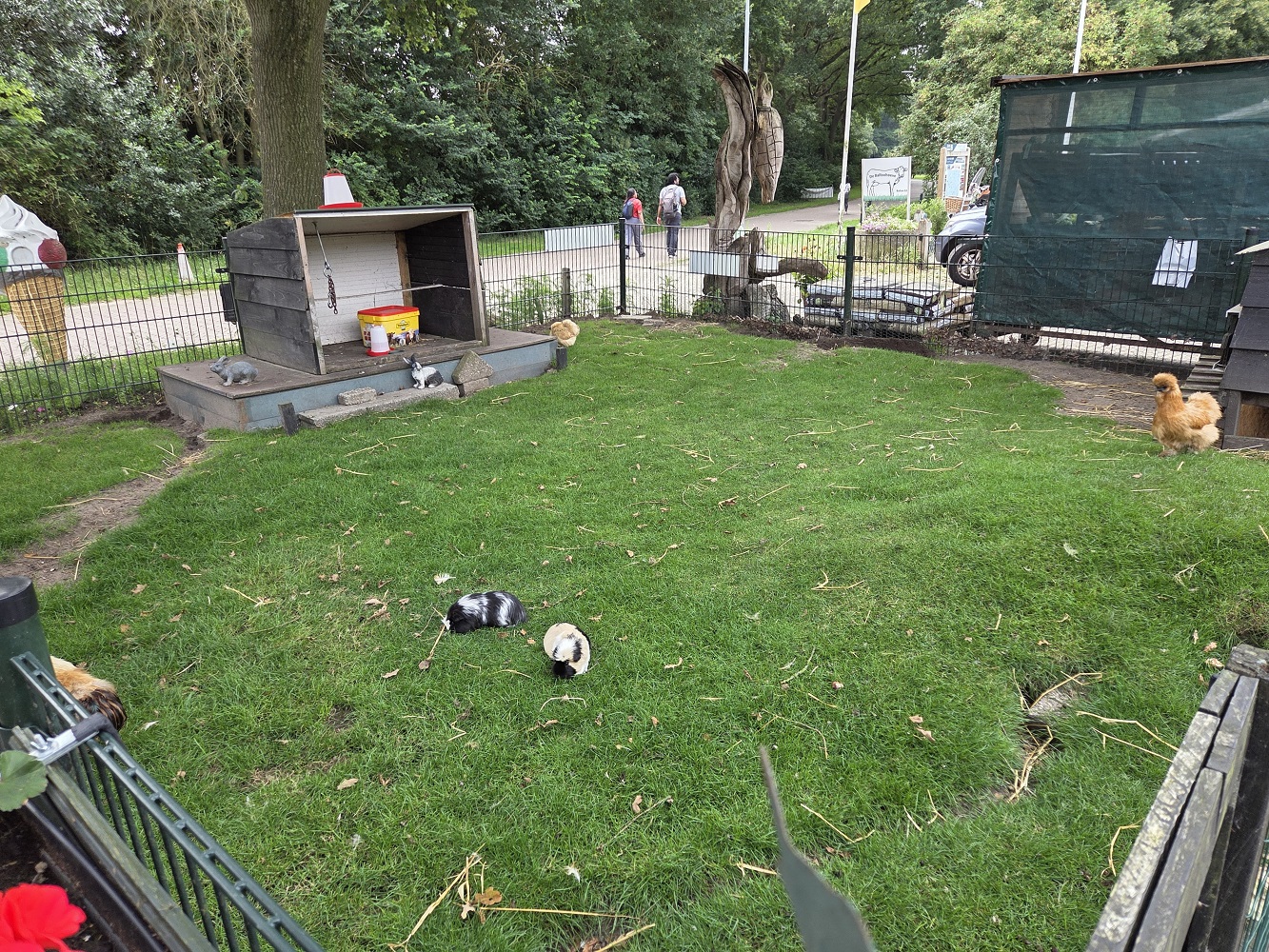
Two guinea pigs
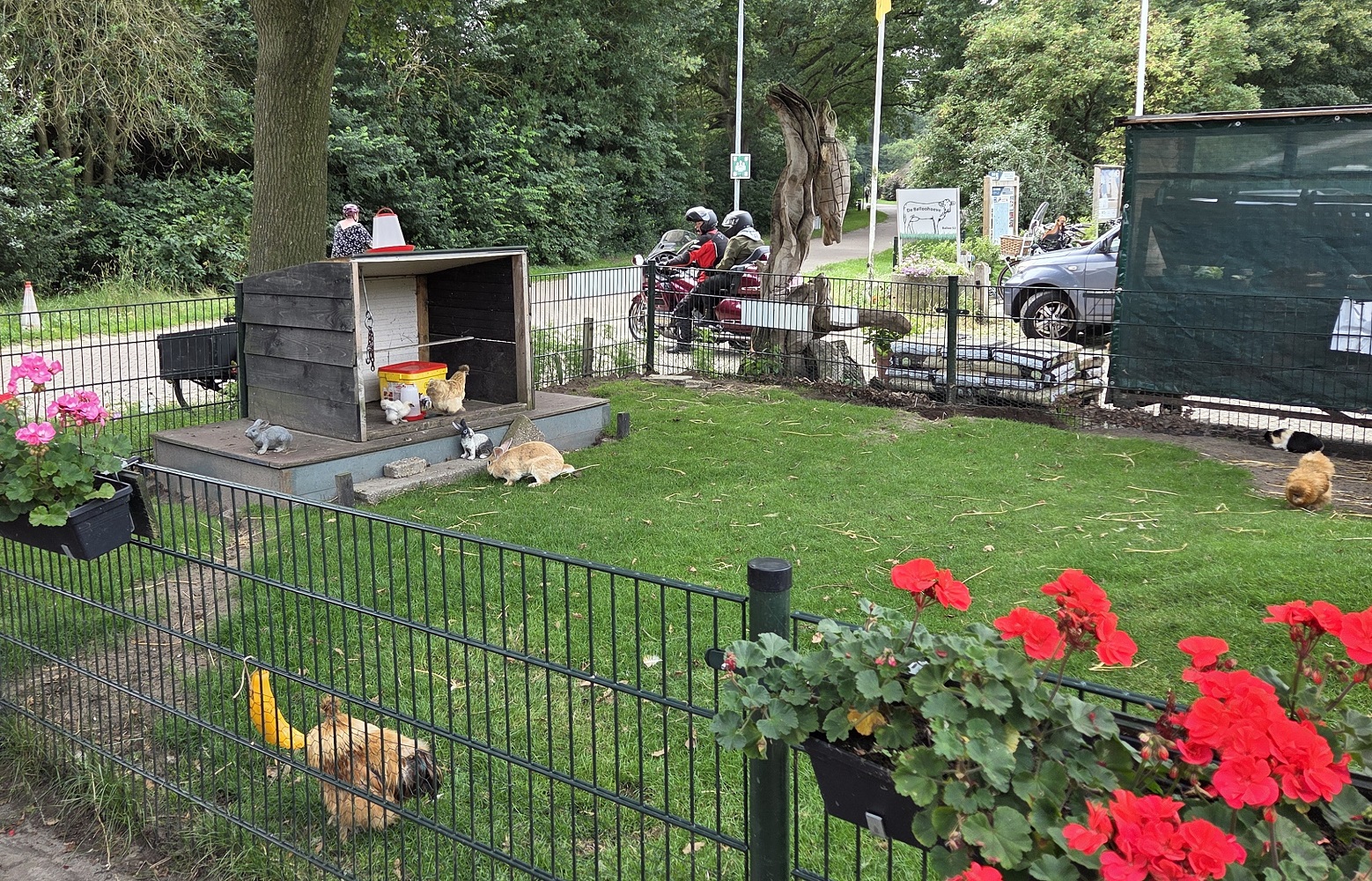
The rabbit is digging a trench along the far side of the pen. The non-brown rabbits are sculptures.
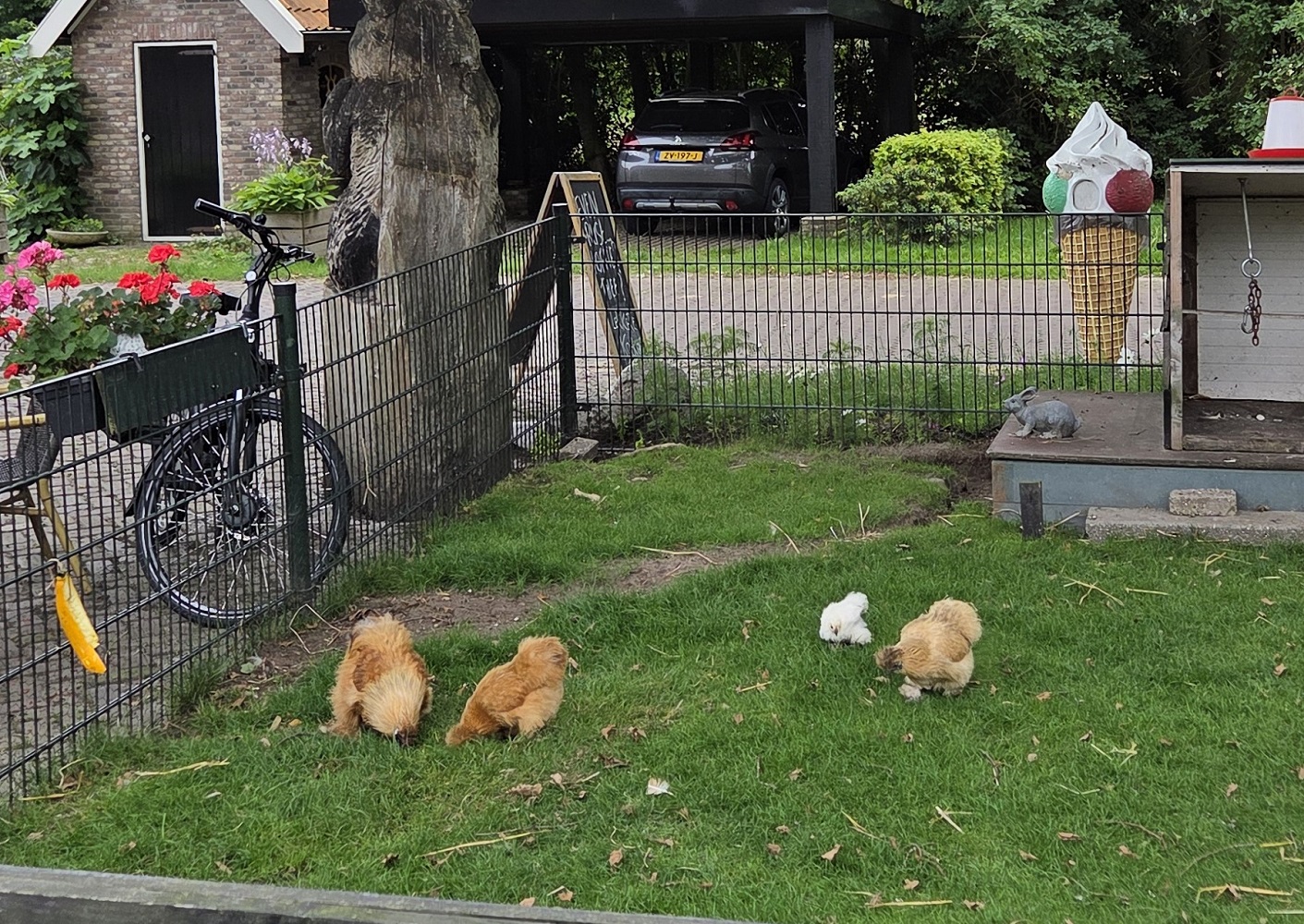
Four silkie chickens!
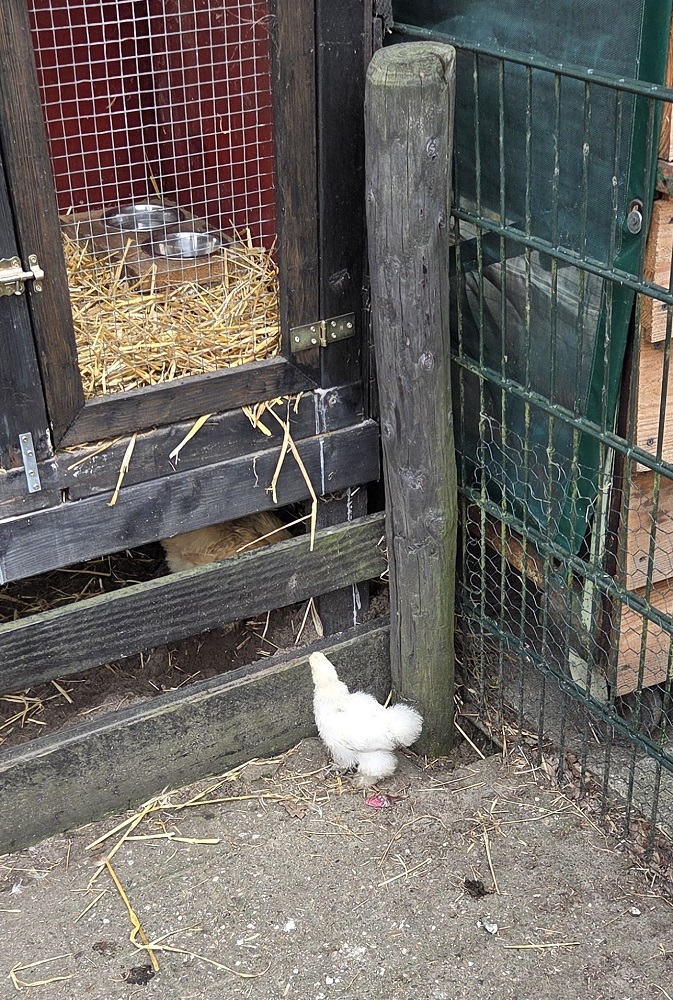
This one hopped out (but it’s still inside the anti-tourist fence) and then it hopped back in.
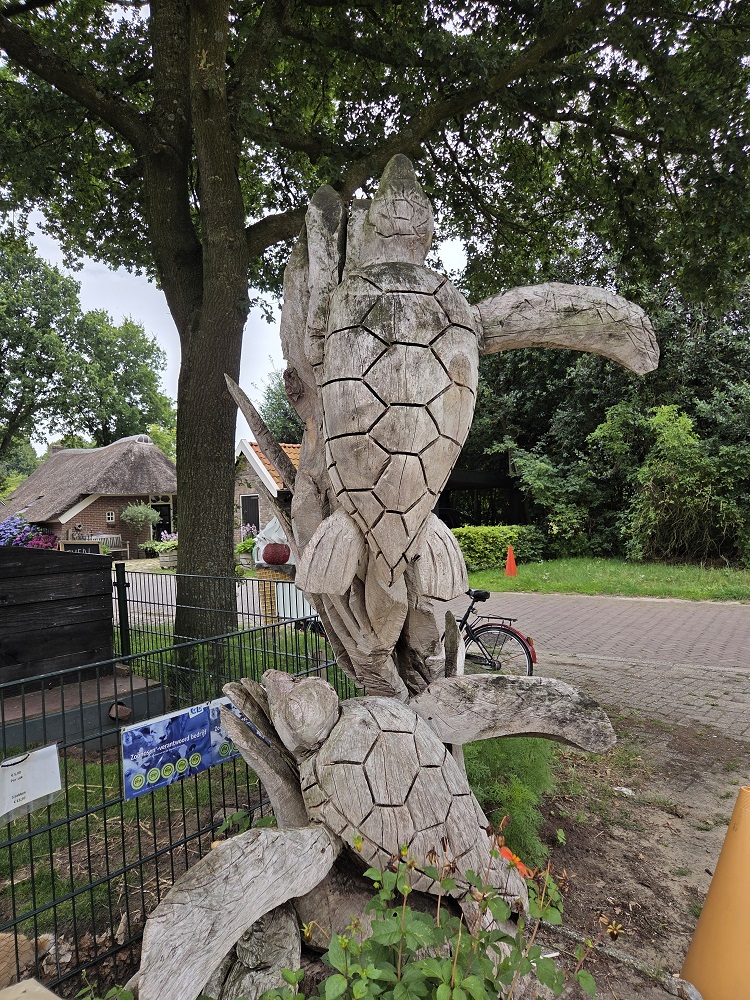
The farm also had a plethora of wood sculptures like this one.
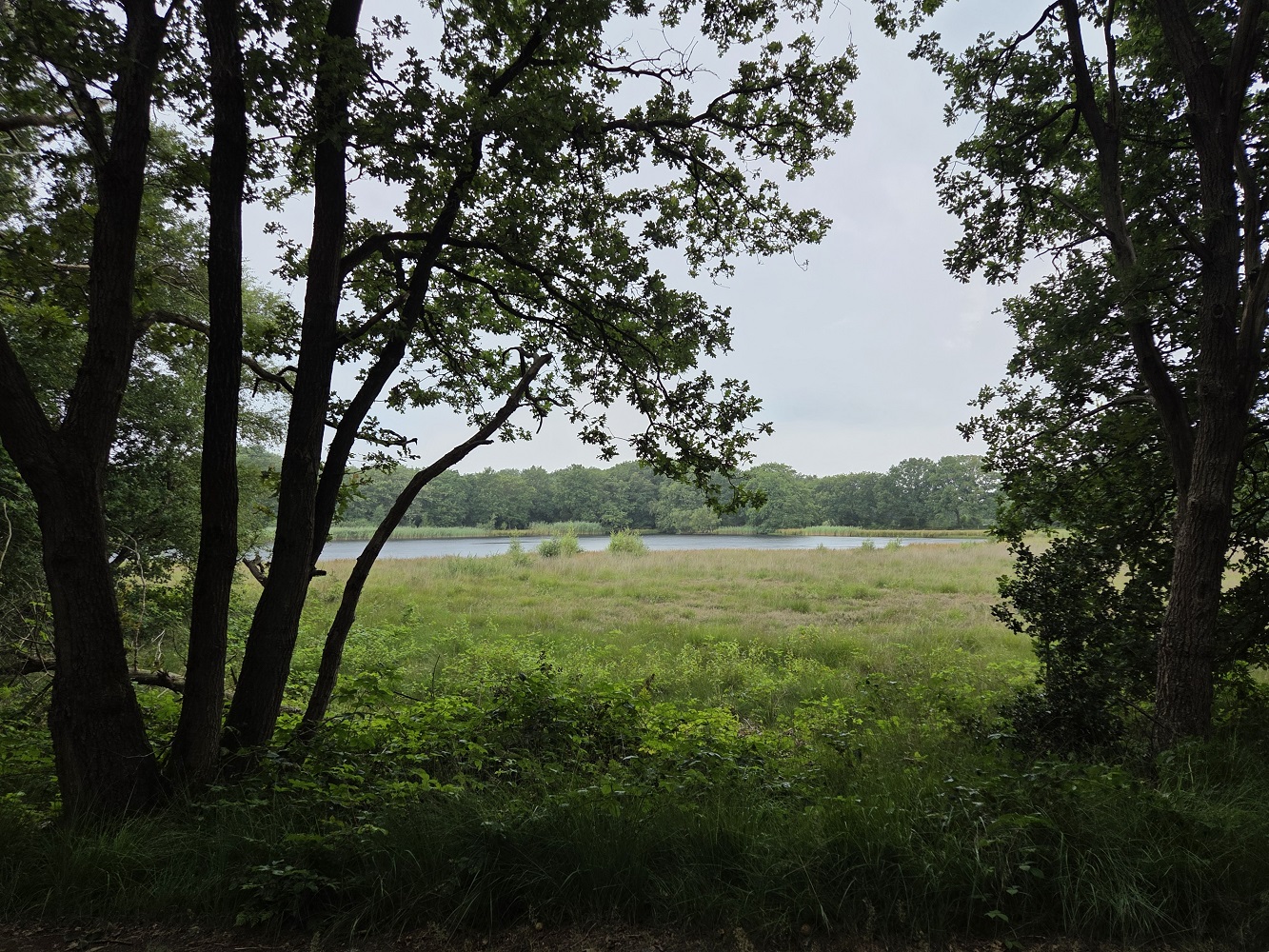
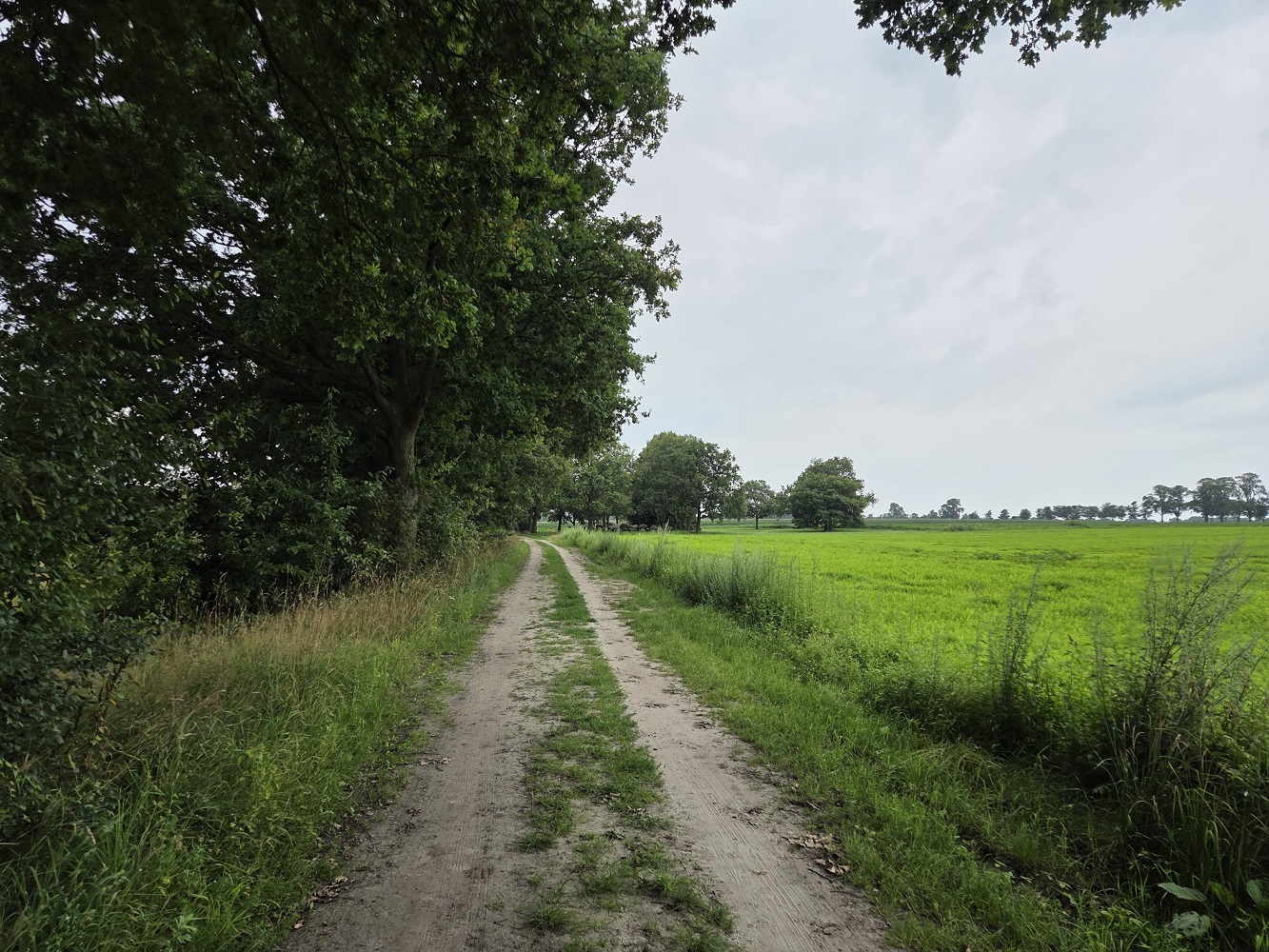
Do you see one more interesting thing in the distance?
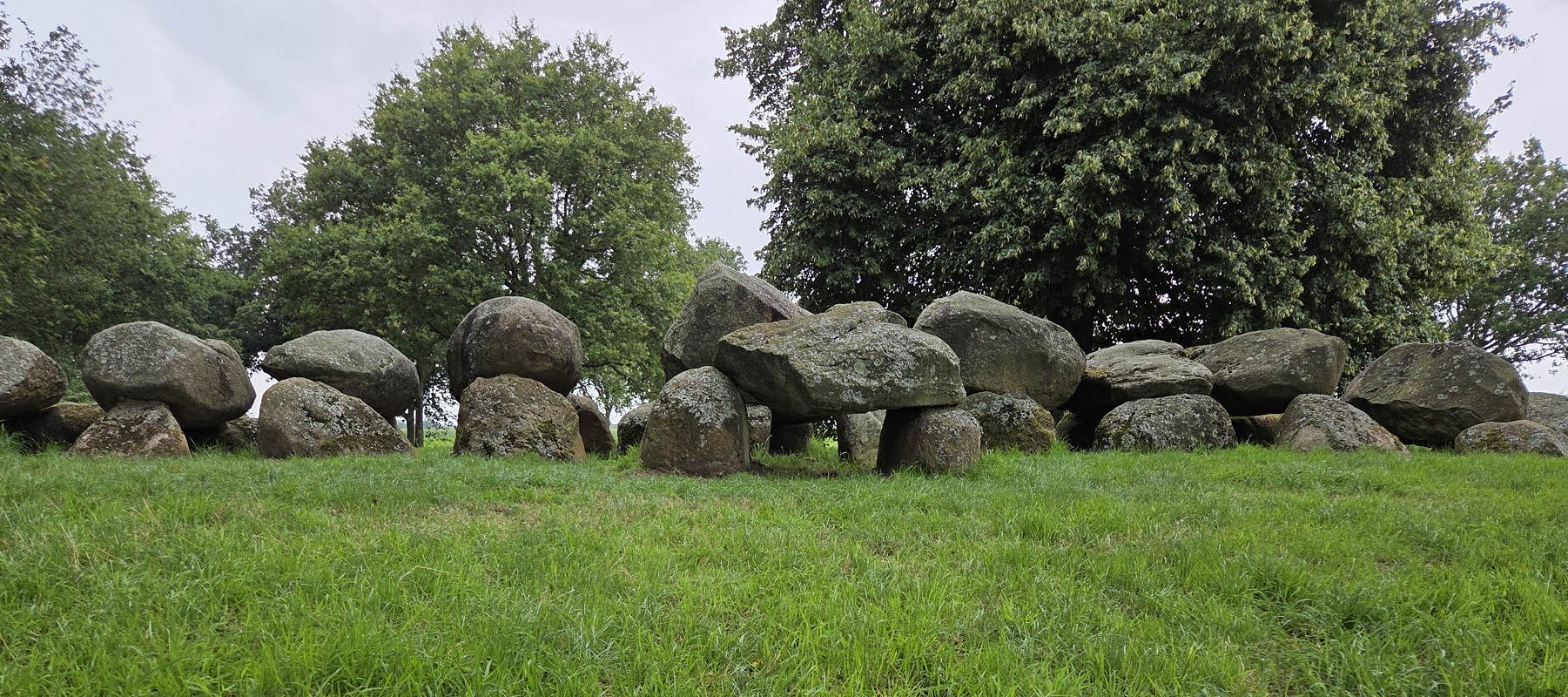
D16, complete with doorway.
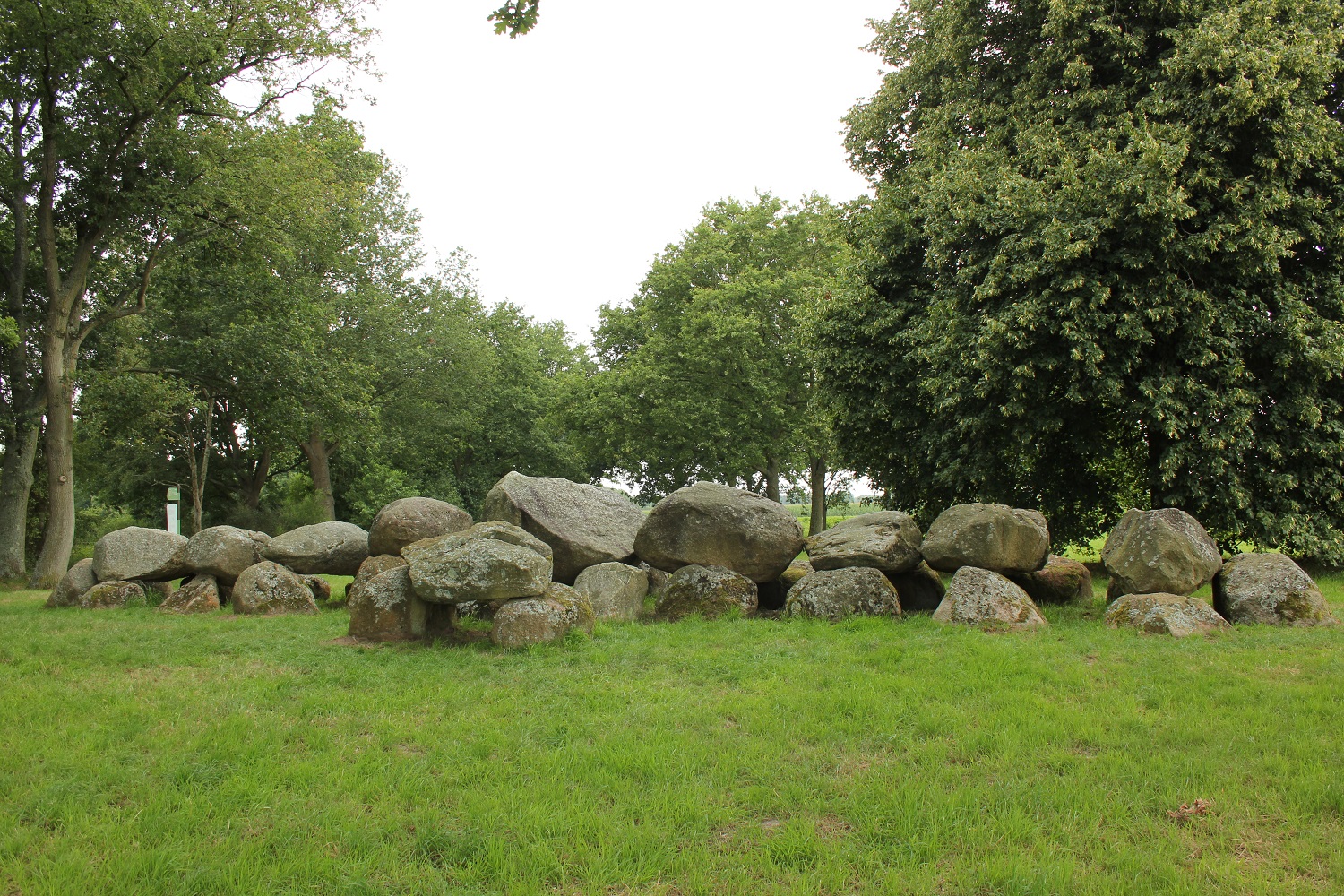
Photo by MH
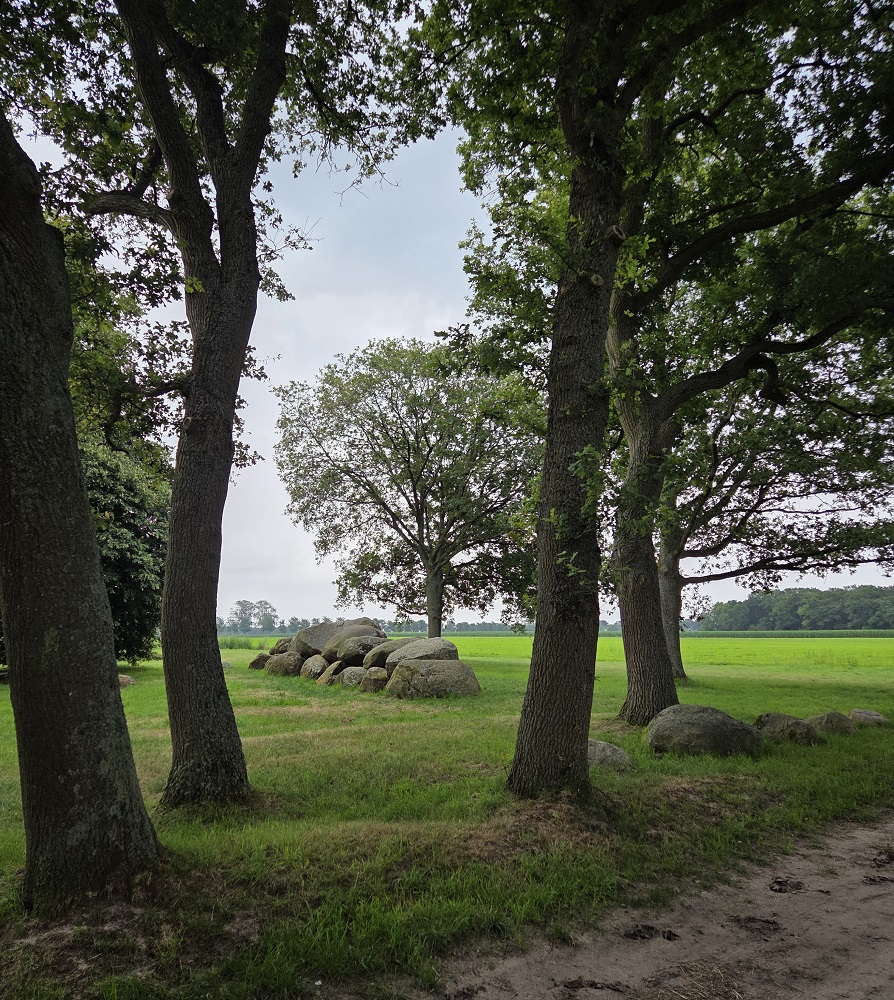
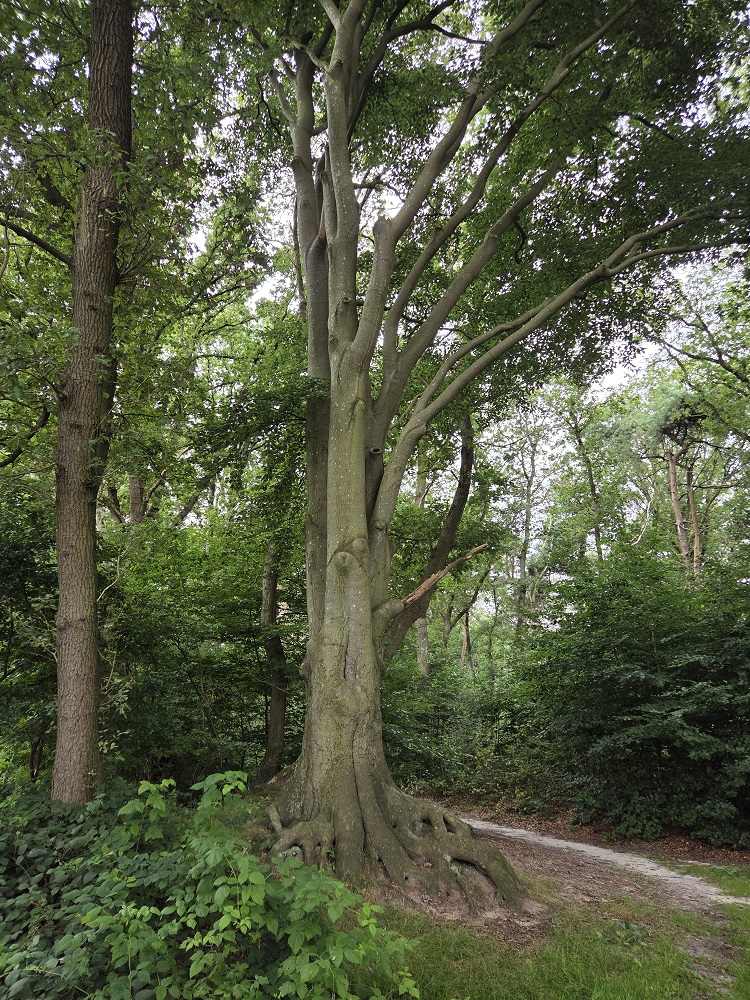
Then it began to sprinkle with rain a bit, and we were getting a bit concerned about making the bus back, as the total journey was several hours, so we changed our route a few times trying to take the shortest way back. Which led us through some interesting woods, and ultimately to the Tumulibos, or ‘grave mound woods’. There are dozens of really clear grave mounds under very beautiful beech trees – I see why Tolkien was inspired by beeches for Lothlorien. I suppose there must have been no trees when this was a gravesite, though.
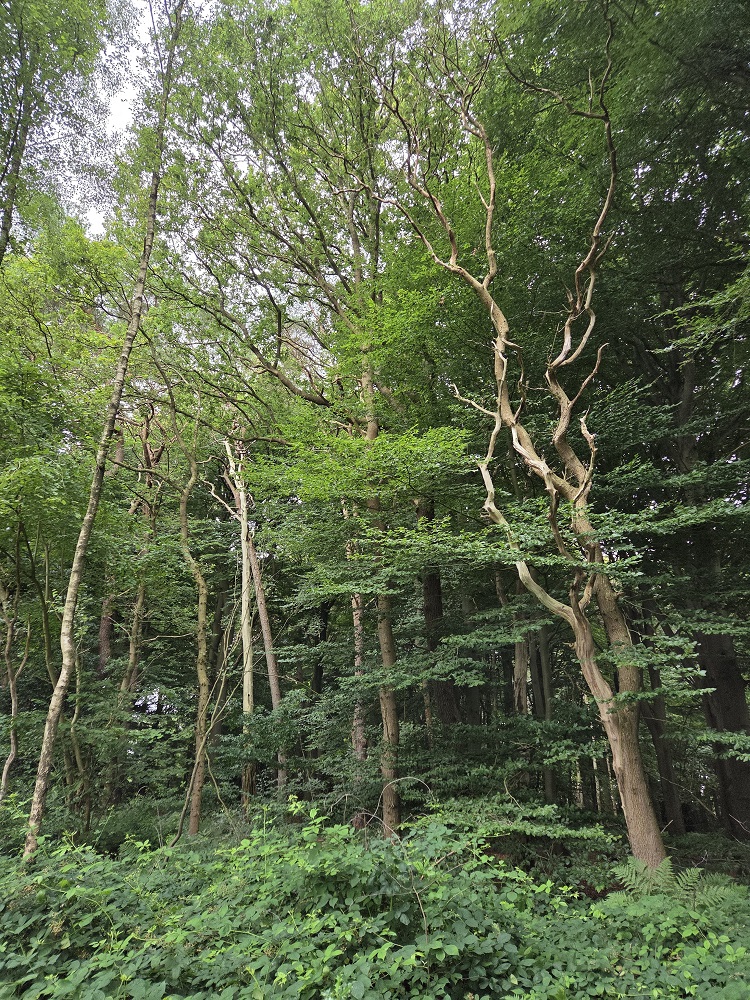
Unrelated but interesting ‘dancing’ trees on the walk back.
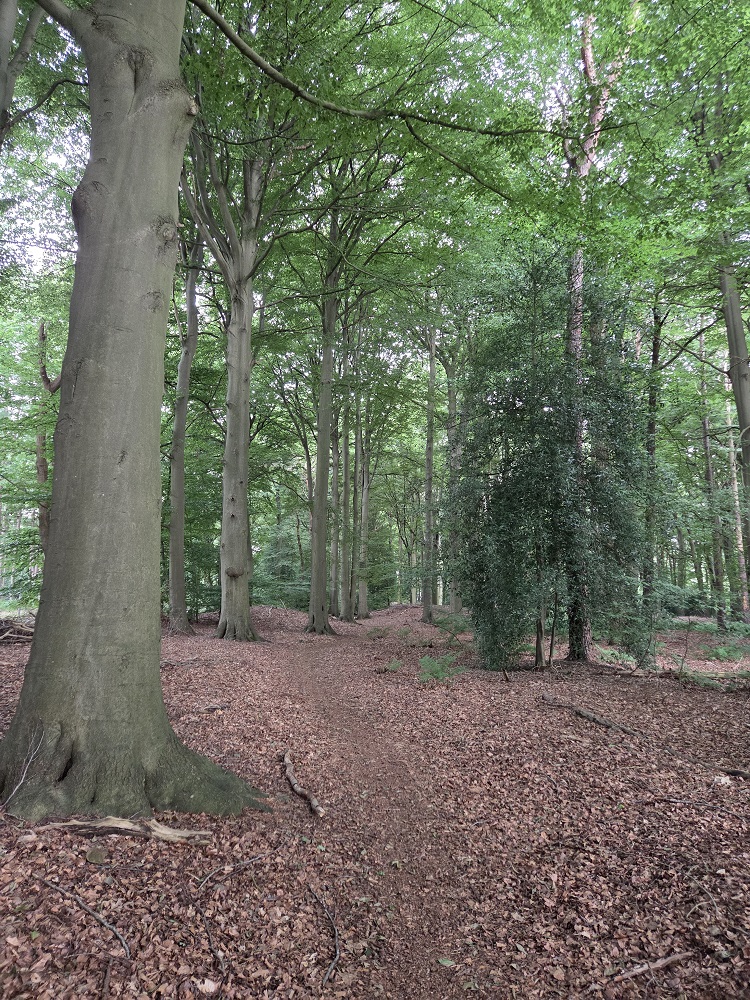
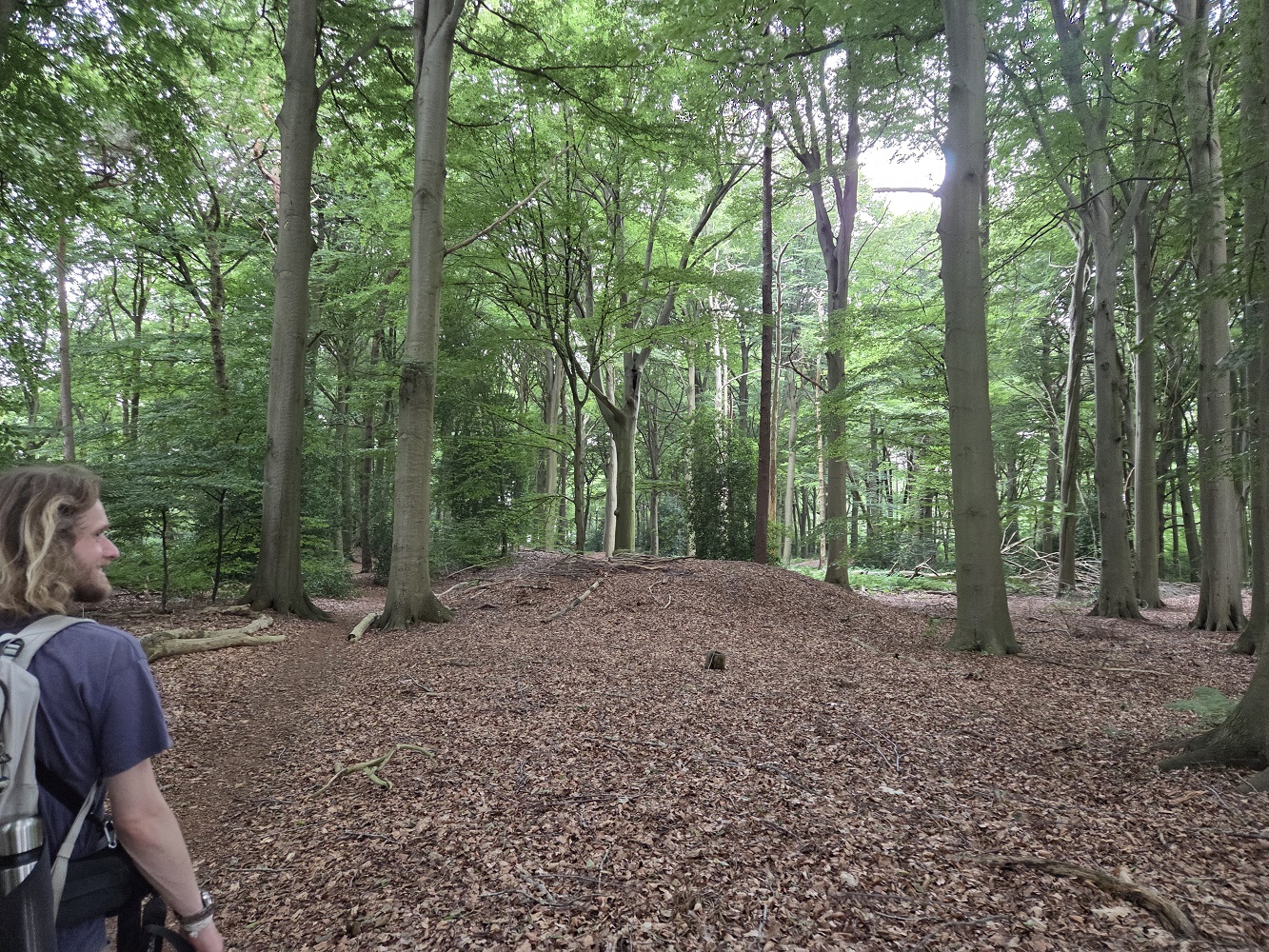
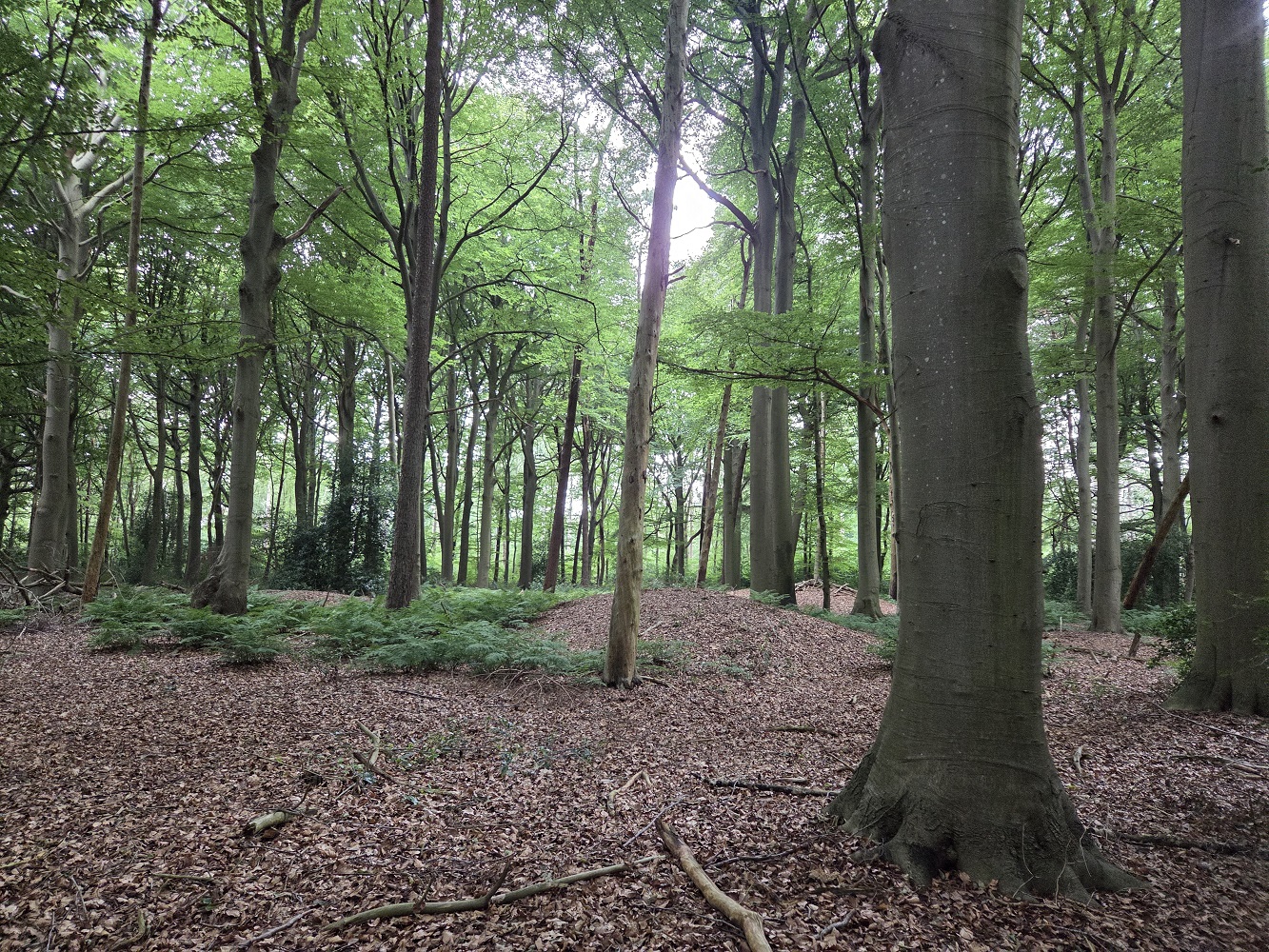
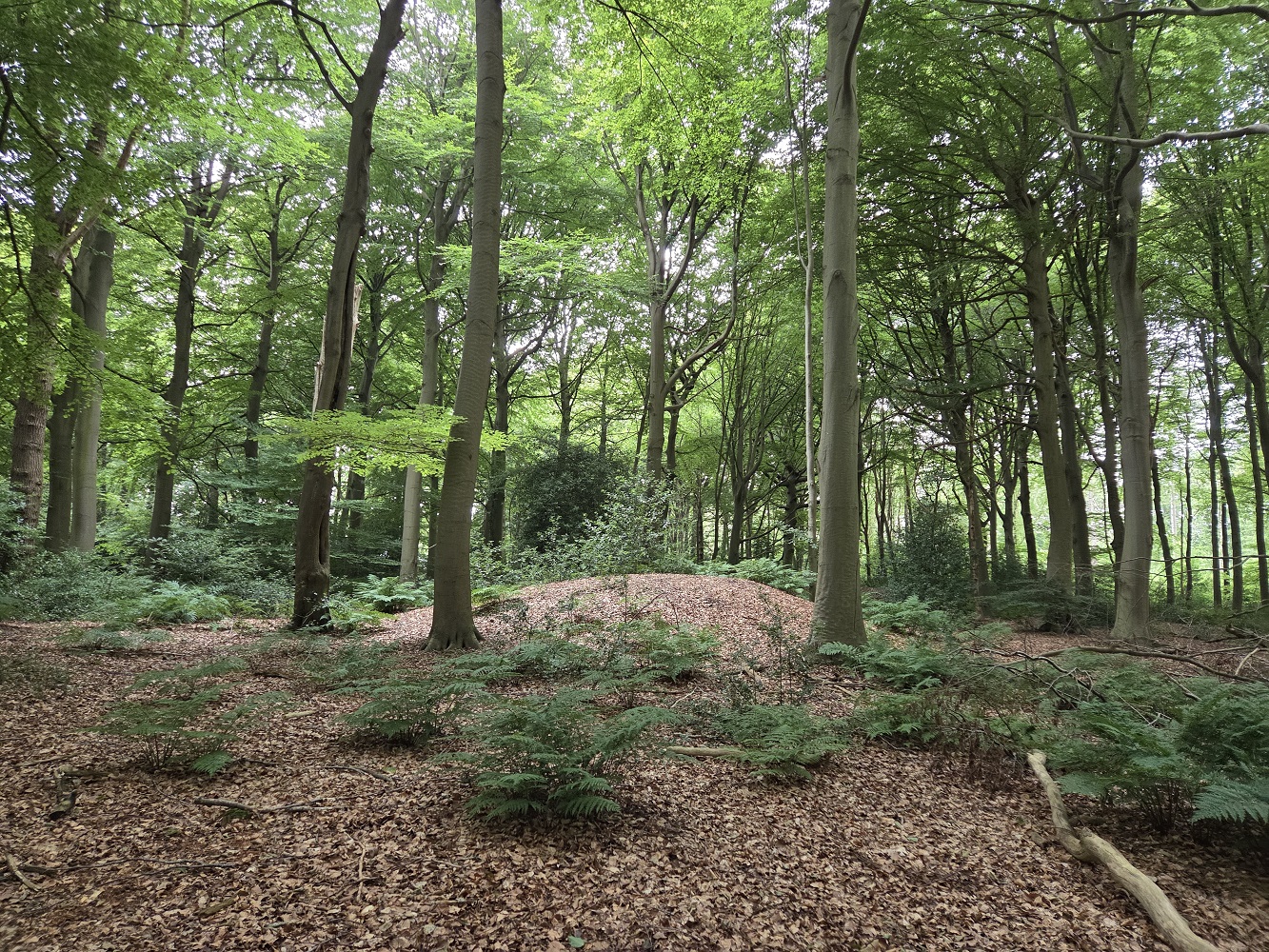
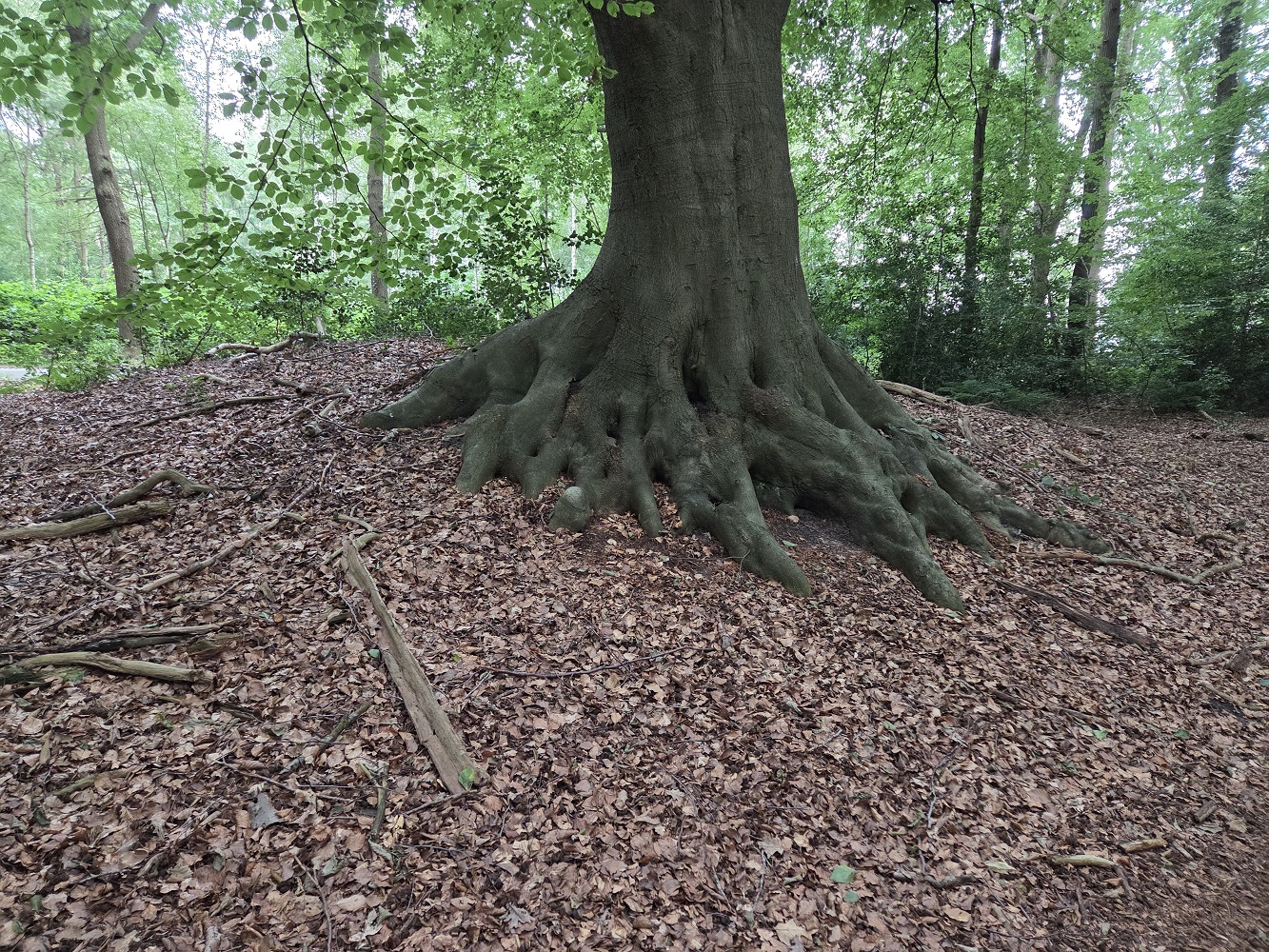
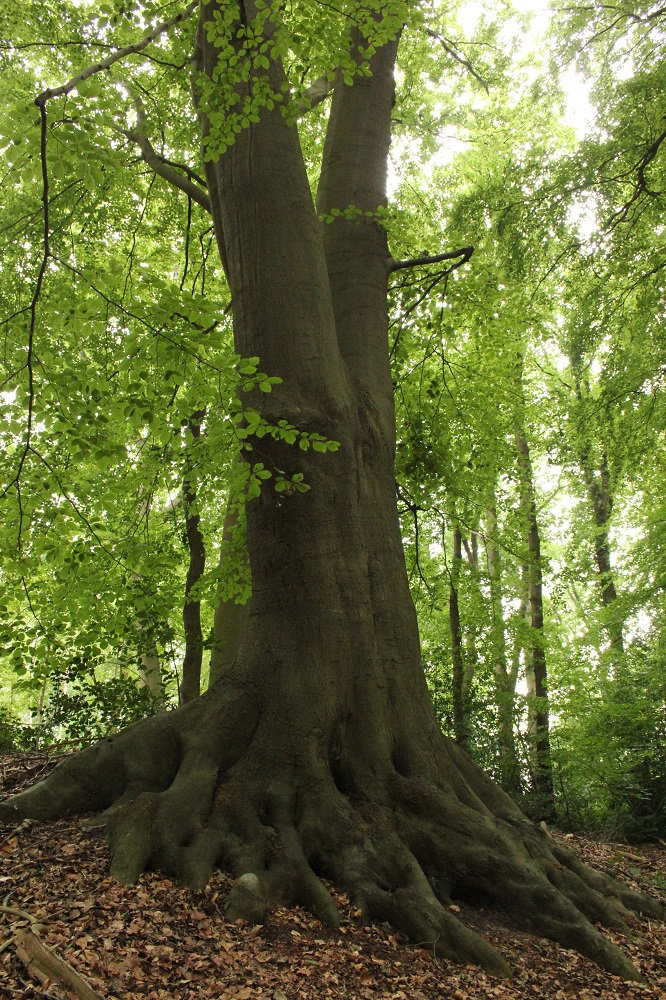
Photo by MH
And we caught the train heading back, this time across Flevoland. Since Flevoland is drained as a whole out of the depths of what was once the Zuiderzee, it is probably the very flattest part of the Netherlands.
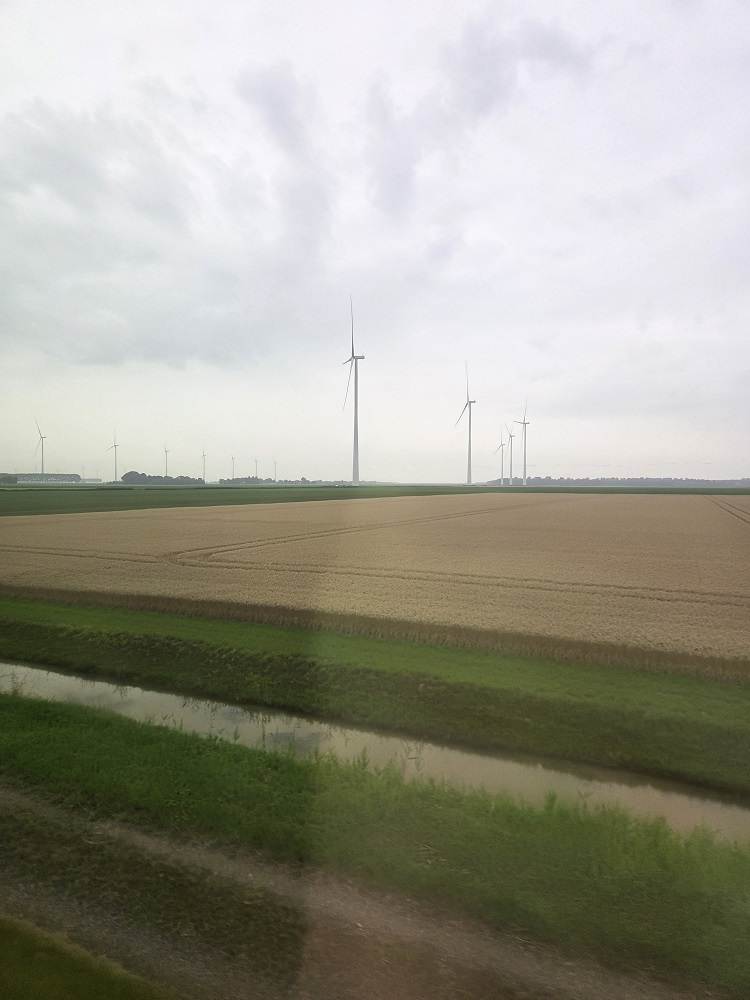
Majestic windfarms, powering the train no doubt.
And then we came back in time for dinner, so we had the leftover Japanese food – the rest of the miso and seaweed salad and gyoza, and the fried zucchini and mushrooms and made some white rice to round things out.
But wait, there’s more! I forgot that I went to Leiden the next day, before our big excursion to Maastricht. I didn’t take a lot of pictures though. Also I learned that there are feral parakeets in the Netherlands.
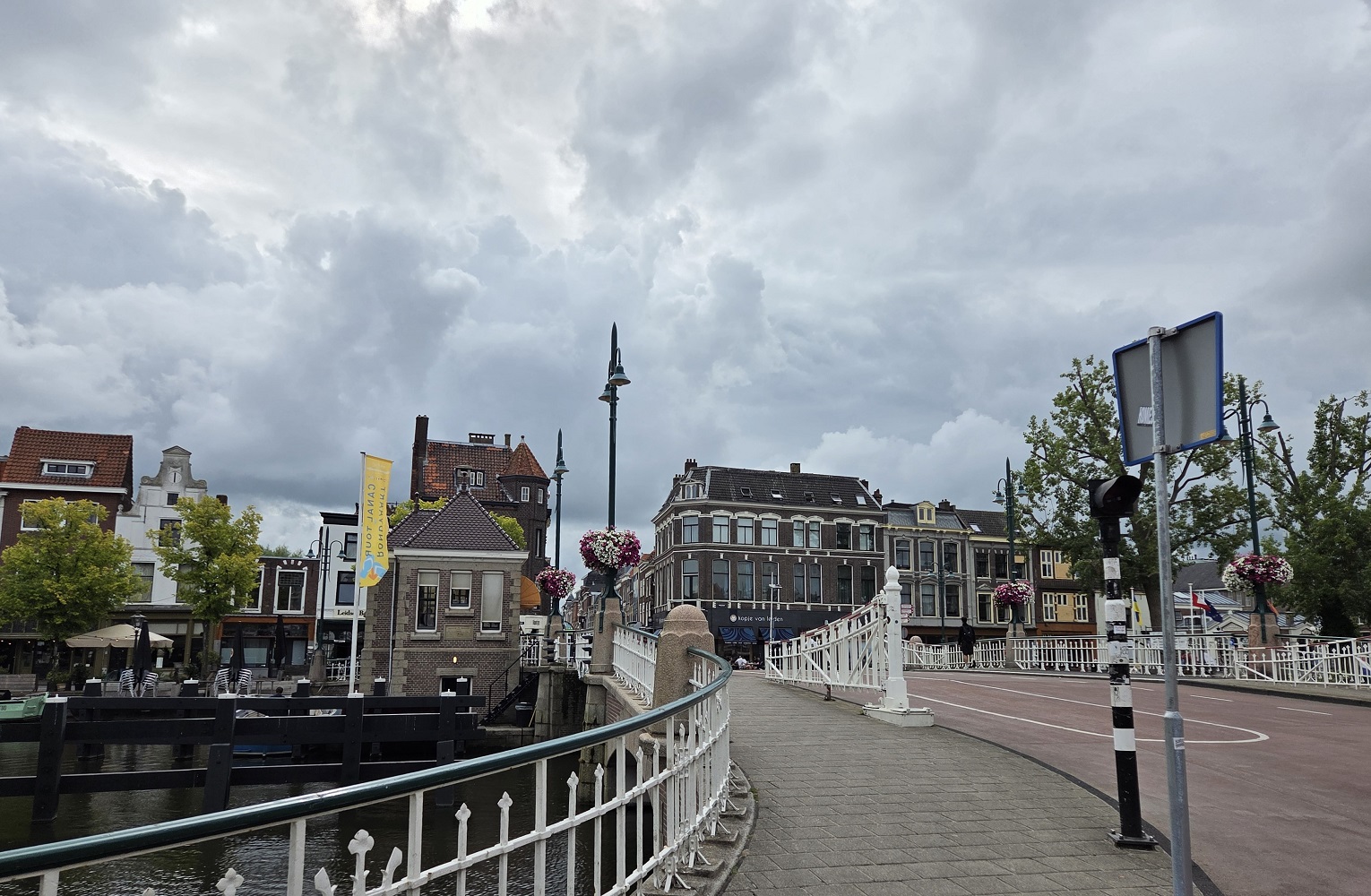
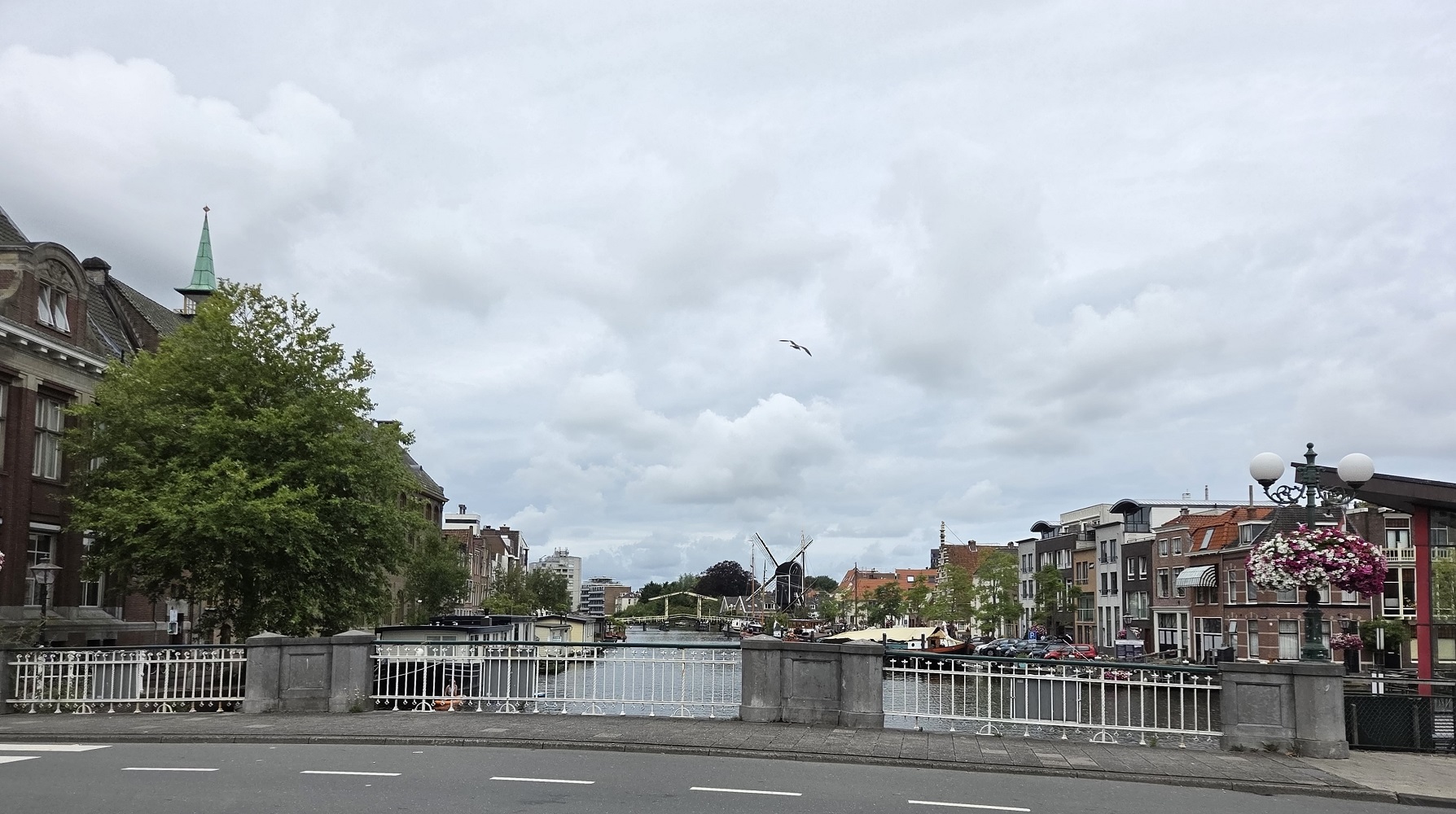
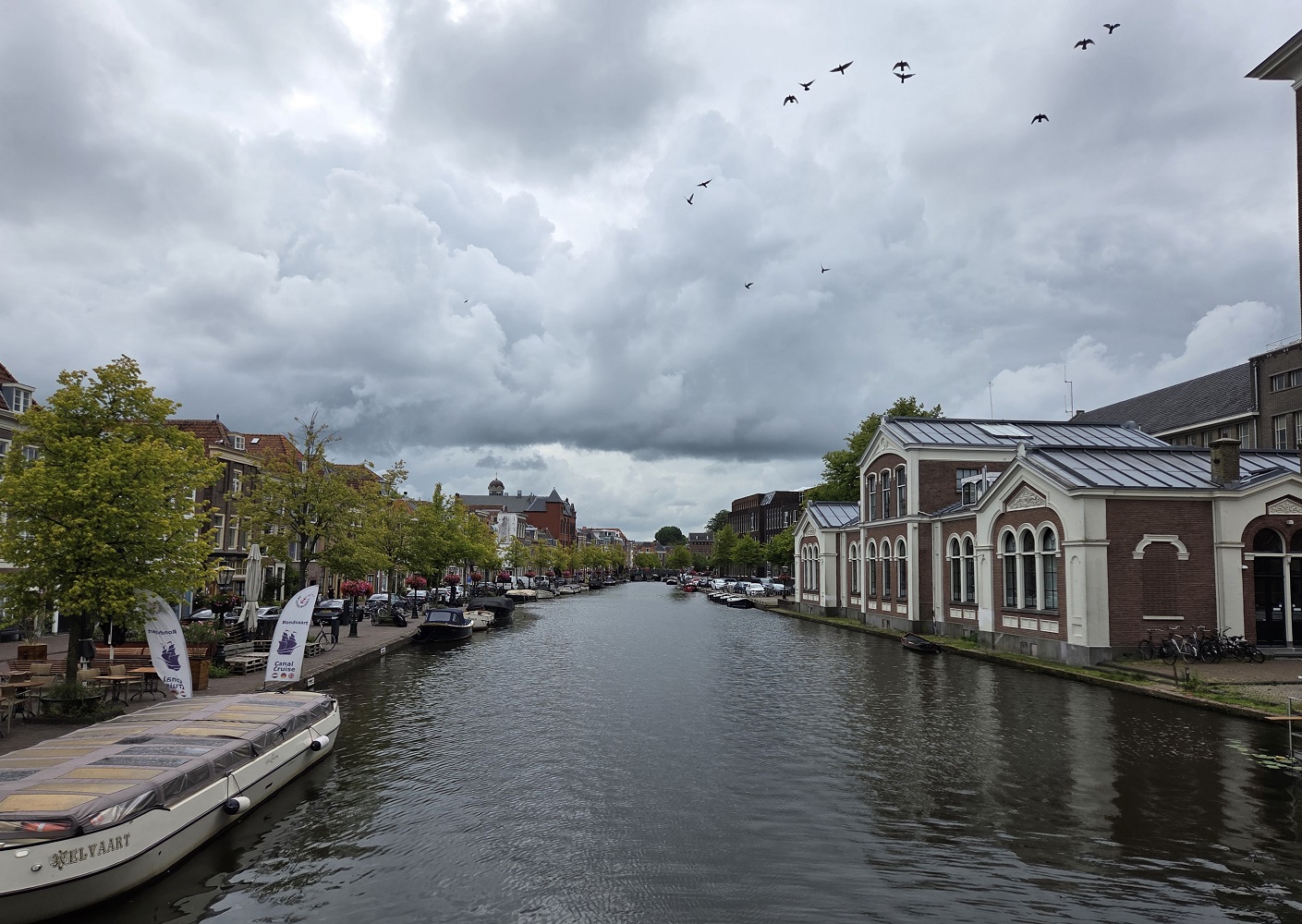
In Leiden, there was less construction/restoration on the streets around the train station than last time. Also with the weather sunnier than the winter, and with flowers in windowboxes everywhere, it was really an absolutely charming town. It’s just as pretty as Amsterdam, with a fraction of the tourists. I’d love to walk around it even more.
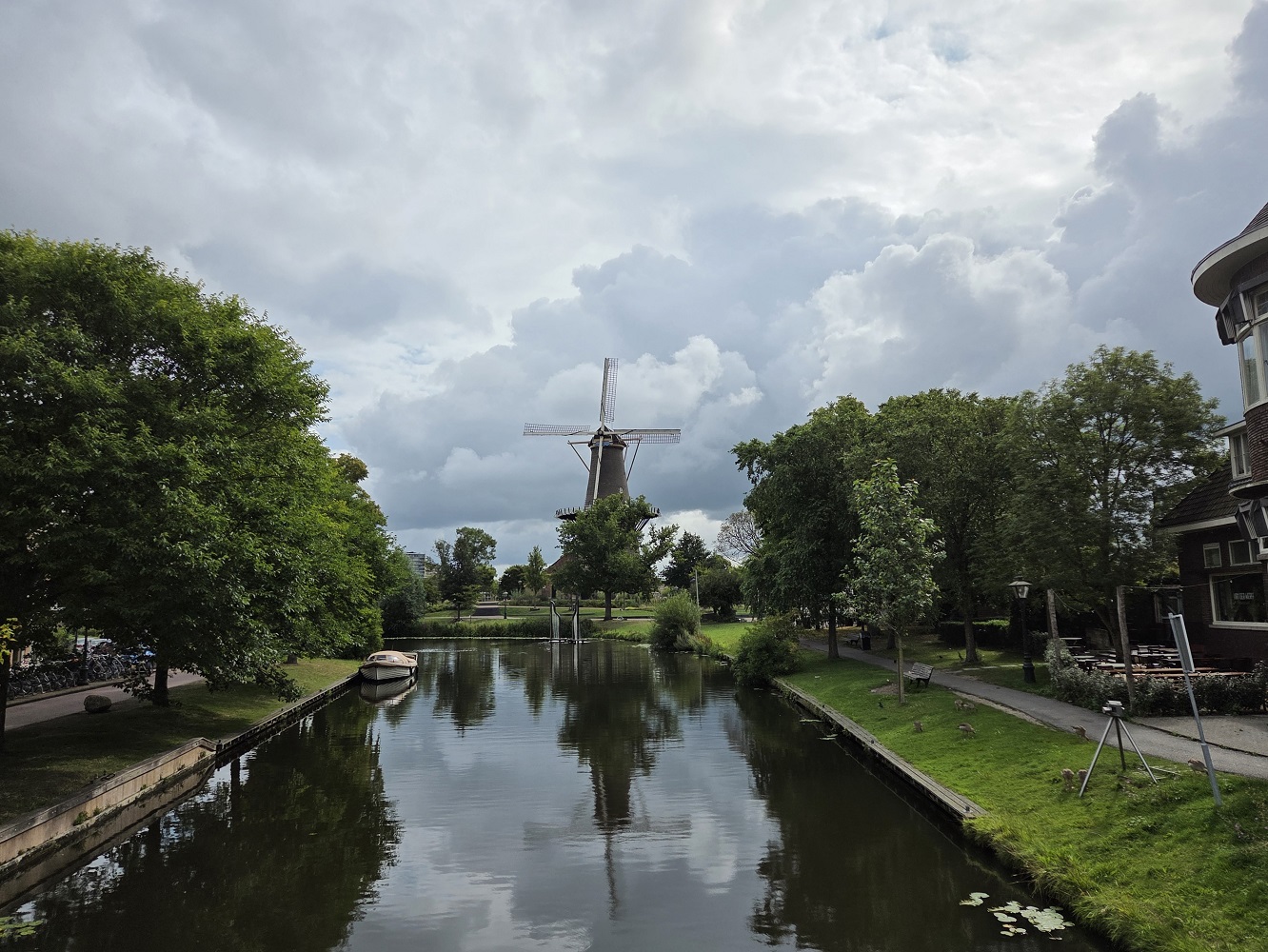
You can compare this to my previous picture


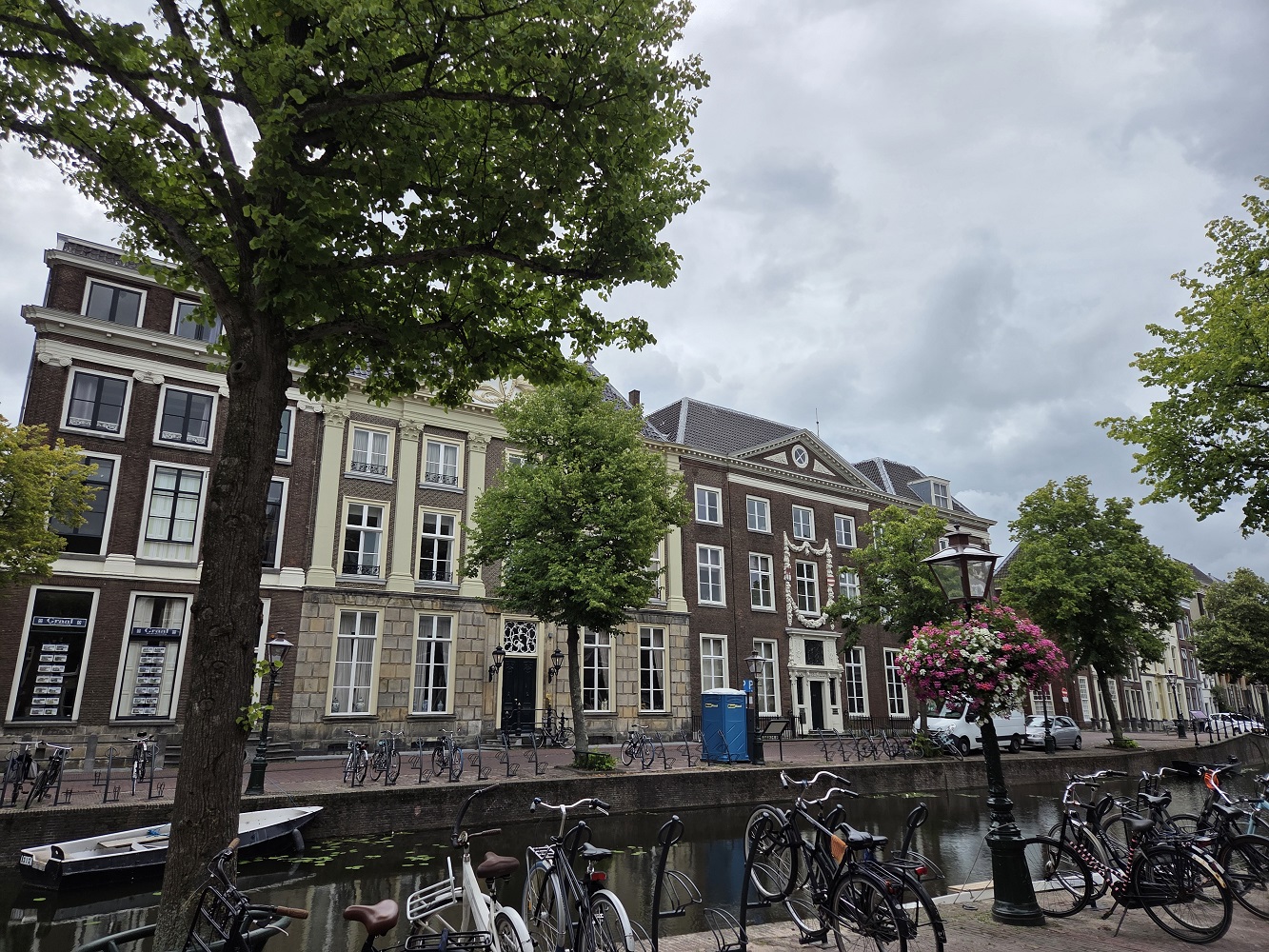
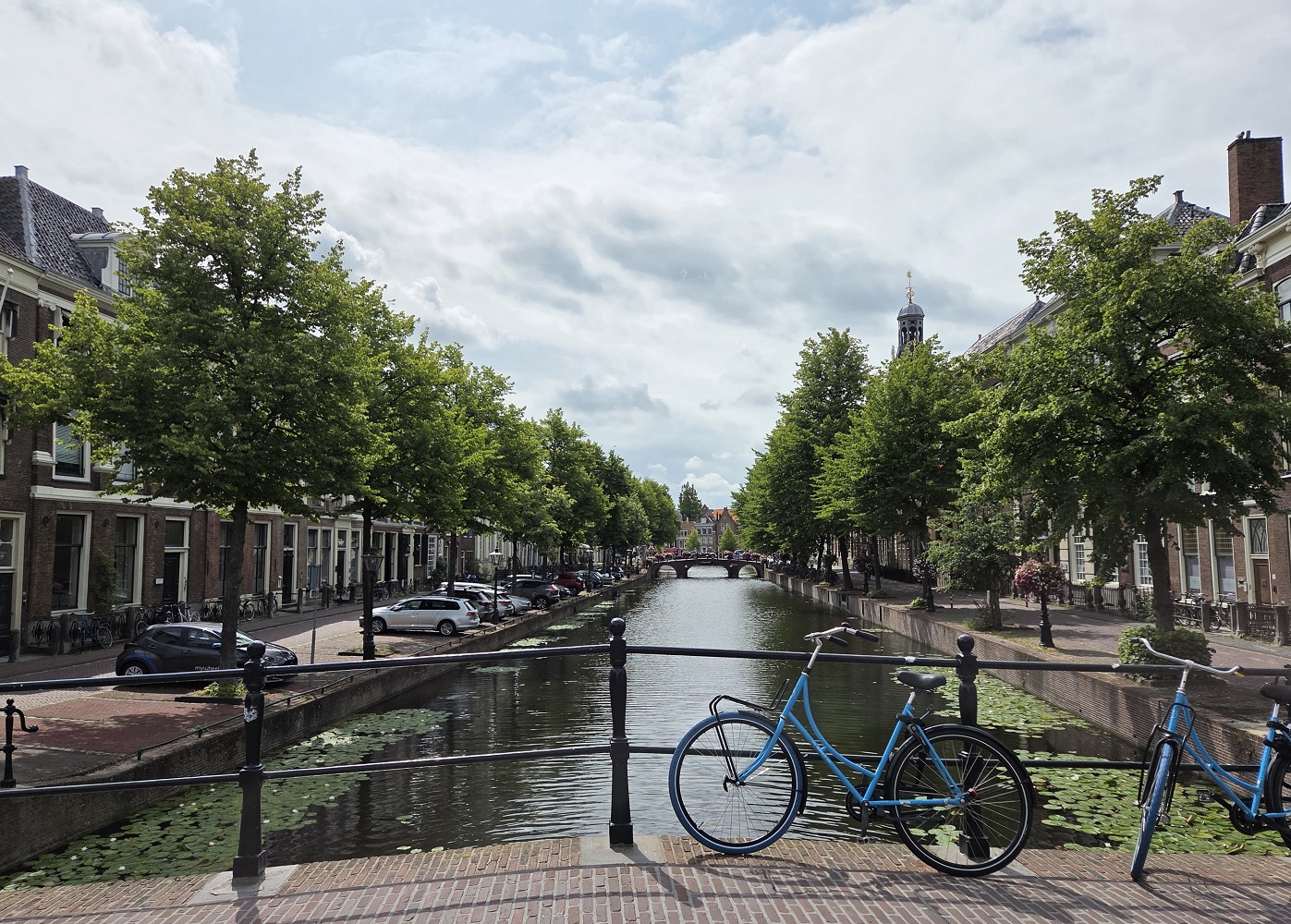
But first we went straight to the SieboldHuis, the Japanese museum of the Netherlands. It’s named for its founder, Philipp Franz von Siebold, who was actually German, but somehow got posted to the Dutch trading post in Nagasaki. He was one of the world’s first weebs, I guess, and was interested in everything in Japan. Particularly the plants and animals, and he gathered an extensive collection of flora and fauna. Even though he wasn’t allowed to leave Dejima, the trading port, he would trade with his patients and medical students for specimens, many of which he sent back to Europe for further study.
He also collected items, and the first room had on display many things like model houses, musical instruments, small house shrines, and even a few weapons. Also maps, which apparently got him kicked out of Japan the first time. He also lived with a 16-year-old girl and got her pregnant, which I know you’re not supposed to judge people of the past by modern morals but ew, squick, but on the other hand their daughter Ine became the first female doctor in Japan (specifically of Western medicine?) which is pretty cool.
The room also contained a temporary exhibit of ‘netsuke‘, or belt toggles – small decorative items to hold things attached to your obi. The ones in the collection were mostly made of ivory, and they were incredibly tiny and delicate – my favourite!
The second room contained samples of his flora and fauna gatherings, including crabs, rhododendrons, a giant salamander, and his dog, Sakura, who for some reason he had taxidermied. Wtaf, Siebold???
Upstairs was a temporary exhibit done by an artist who, during the time of the art project, was pregnant and her sister had just died, so she was going through some things. It’s called ‘The Turtle and the Monk’, by Anaïs López. The project was largely photography, but other media too – such as covering animal corpses in paint and then pressing them onto paper, or paper onto them.
Apparently the artist went to Kyoto to get away from everything, and while she was there she saw a really gorgeous turtle with a gold-flecked shell in the Kamo river. When she told local people about it and showed them the picture, they told her she got to meet a river goddess. She decided to call the turtle ‘Kami’ (=deity) and started trying to find it again. The story took on a fairy-tale quality as the artist wandered further and further along the river, looking for people who could tell her about ‘Kami’. Eventually she came to a shrine where she was turned away because she wasn’t Japanese enough, but then apparently she came to the realization that ‘Kami’ is everywhere. …Instead of just hanging out at the river trying to look at turtles, like a non-artist would do. We did not watch the 33-minute movie.
I can’t really relate to this story; calling the main character ‘kami’ is very generic, and I find it hard to believe in fairy-tales in real life no matter how many of them I try to write in fiction. But as far as pretentious art projects go, this is probably one of the better ones in my opinion. Maybe I’m not enough of an avant garde artist to judge its pretentiousness? I don’t have the interest to look deeper, though. The pictures of landscapes and animals were certainly very nice. The golden turtle really is spectacular and I can see why it’s a river spirit (I’ll believe in the turtle being a river spirit, just not the rest of it).
We spent some time in the gift shop, and for a while I wasn’t going to get anything because I can get Japanese stuff at home… like I don’t need Hokusai’s The Wave merch… but then I caved and got some cards with crane paintings on them.
Then we went to the Museum of Antiquities (Rijksmuseum van Oudheden), and had lunch in their café. Tharash had roasted vegetables on focaccia, and I had roasted vegetables and chicken in a pita. And a lemon loaf slice. And we both got some very nice chai lattes.
I’d been here before (about 30-40% of the way down this blog post), but we had only seen the top floor and the temporary exhibit last time. So this time we started at the bottom, and the first room is dedicated to cameo carvings. Like the netsuke, they were also exquisite. Some of them are absurdly tiny, so much that I wonder how they were found. Many of them were made out of multicoloured stone, so that for instance in a carving of horses and chariot, one of the horses would be brown and the other one behind it would be white.
Then we went to the Egypt exhibit which took up the rest of the floor. I appreciated how the artifacts on display took the viewer through a summary of the succeeding dynasties, though they didn’t mention how controversial Akhenaten’s reign was. There was a room devoted to religious statues, and looking at carvings of Isis/Horus, I wondered if there was any influence on similar carvings of Mary/Jesus, or if it’s just having the common ‘mother/child’ theme engendering similar poses in religious sculpture. Also there was a shrine carved out of red granite with sunken-relief carvings of gods around it, and though there seemed to be red paint on all the figures of gods, one carving of a falcon-headed god appeared to have a pupil because of a dark fleck in the granite. I thought that was a neat coincidence.
Then there was the requisite room about burials and mummies; they had a huge section of the Book of the Dead on display, which was lovely. They had a crocodile ‘mummy’ that they’d digitally scanned and discovered that inside were the bodies of two medium-sized crocodiles, and a whole bunch of little crocodiles, all bundled together to look like one really big crocodile. Also many sarcophagi, with various levels of decoration. I was vaguely uncomfortable about the human mummies on display, and I’m not sure why.
Then there was a room about tombs, and tomb sculptures. And then there was a room about Egyptology, both the study of Ancient Egypt through the ages and also its influence on the modern world. And after all that, it had been two hours and my feet hurt.
We went up to see the Ancient Greeks (3000-500BCE) again, and the temp exhibit on ‘what is archaeology’. I still don’t know if pictures are prohibited, but I needed a picture of my favourite pot.
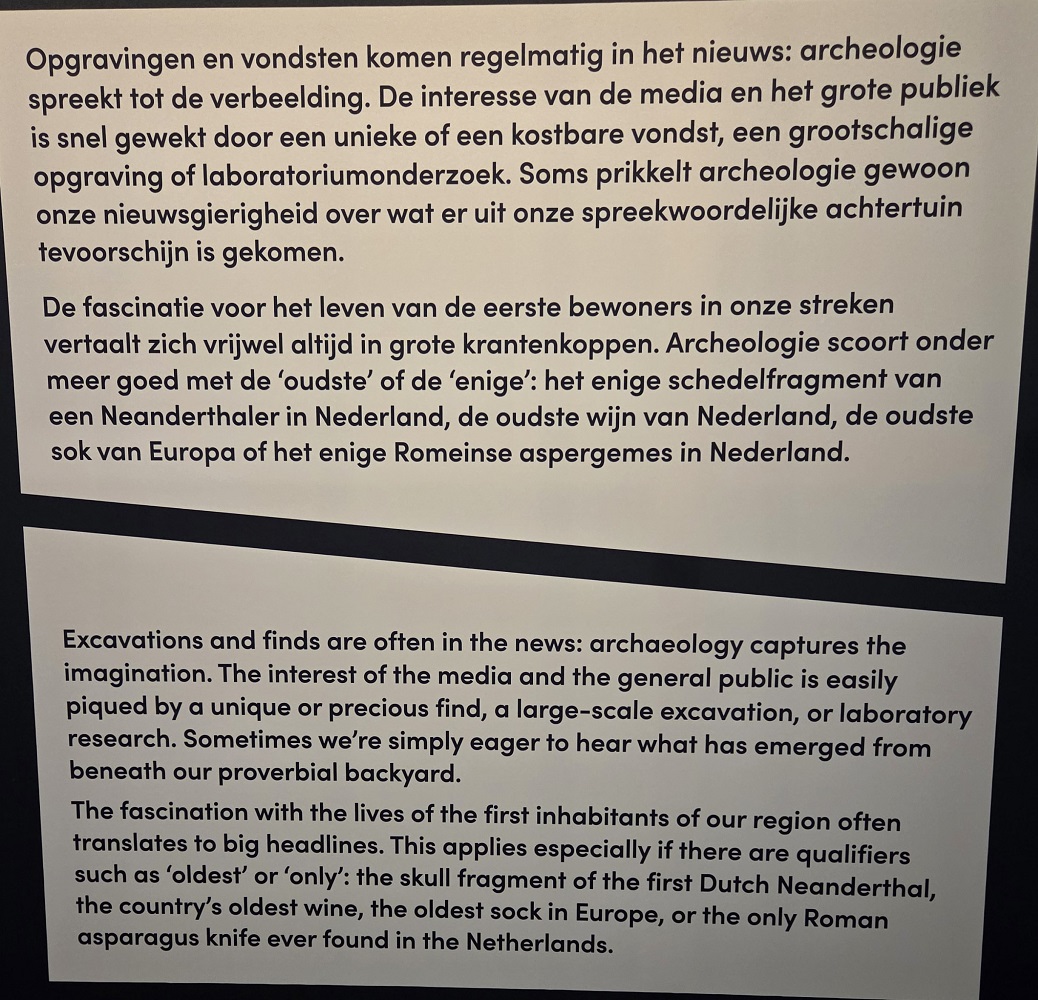
From the temp exhibit on archaeology. Yes, they did show the oldest sock and the asparagus knife (a knife with a handle shaped like an asparagus stalk).
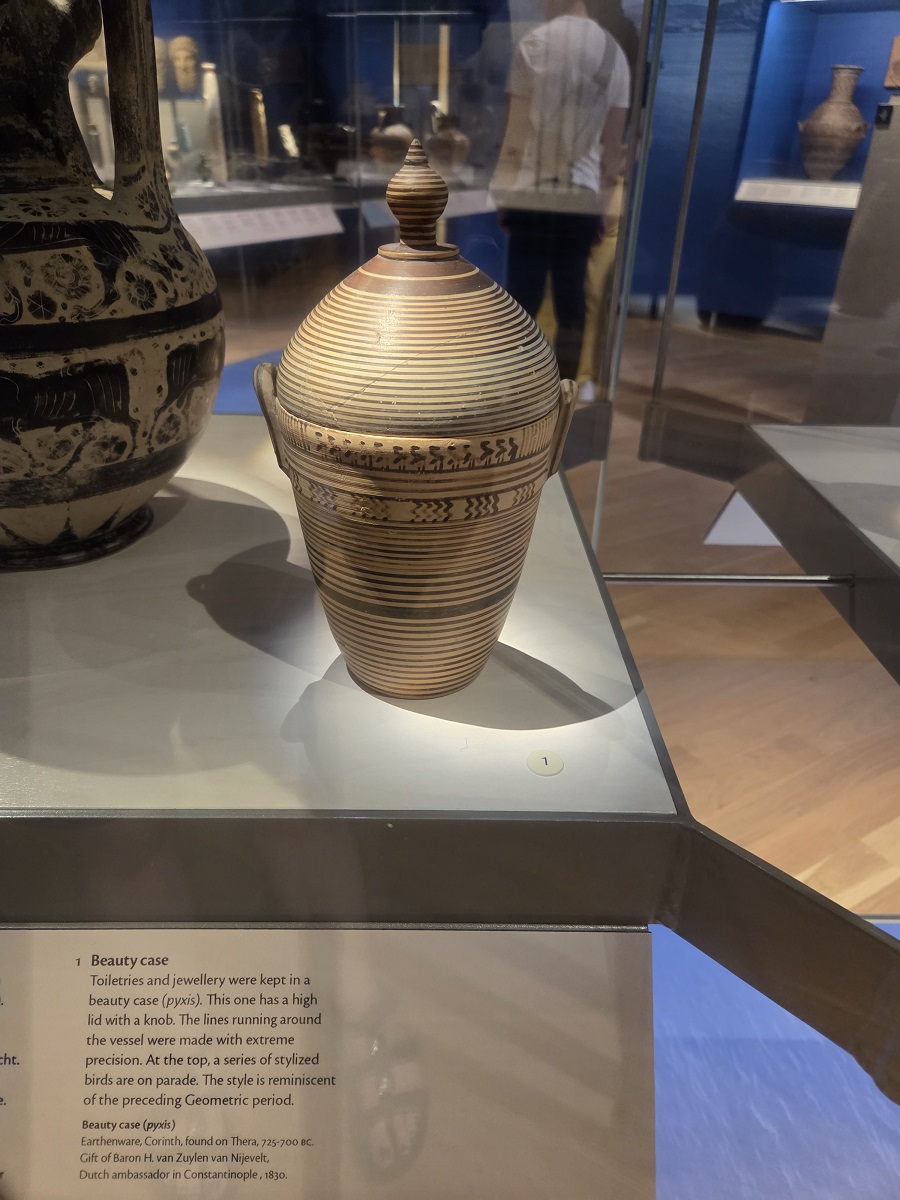
This is my favourite artifact in any museum ever. Behold its perfection!
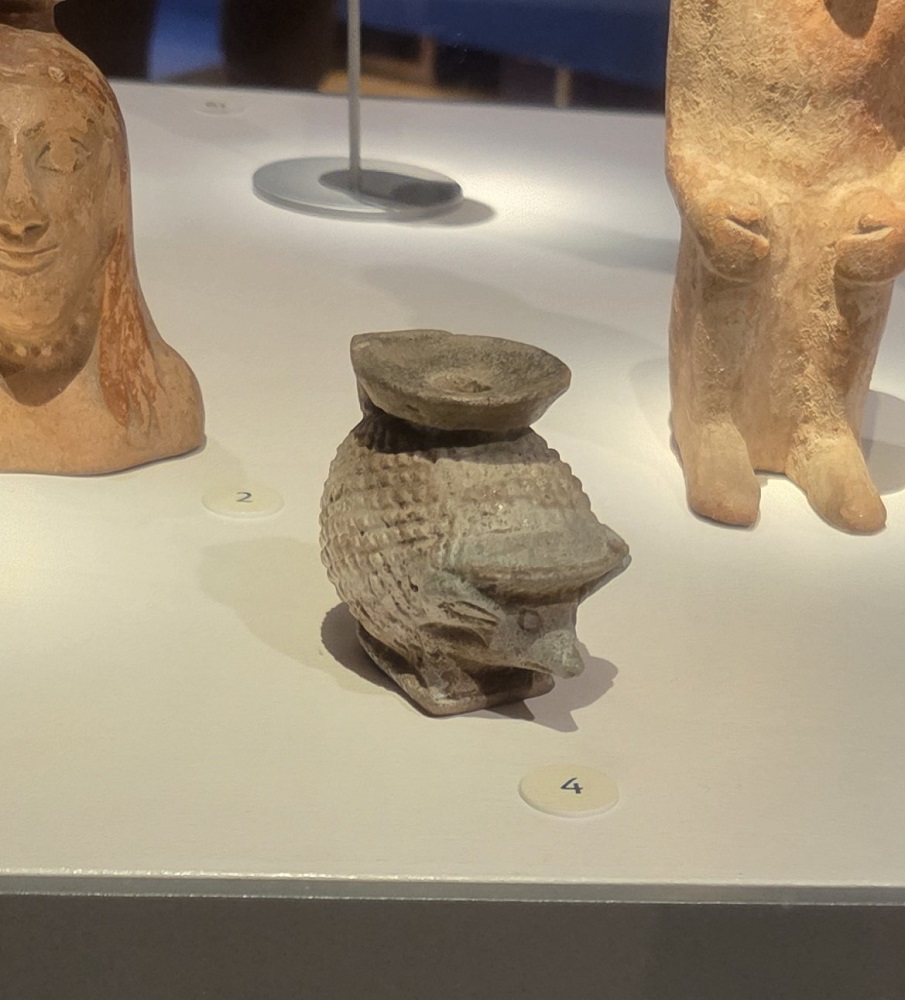
My second favourite artifact, look at this lil guy. It’s a hedgehog oil flask from Rhodes, 600-575 BCE.
Then we spent a lot of time in the gift shop again. I bought a bunch of things including a baby onesie with ‘Athena’s Owl’ on it for my nephew, in the interest of promoting intellectualism from a young age, and Egypt-themed washi tape for my mom. And the cashier lady let me practise my Dutch! She asked if I wanted a bag, and if I wanted paper or plastic, all in Dutch. : D
The next day I was so exhausted I cried most of the day. Tharash made dinner and was really nice to me, and I recovered enough to come down for food. But I had to be as tired as possible, to recover as quick as possible, because the next day we were going to Maastricht! : D
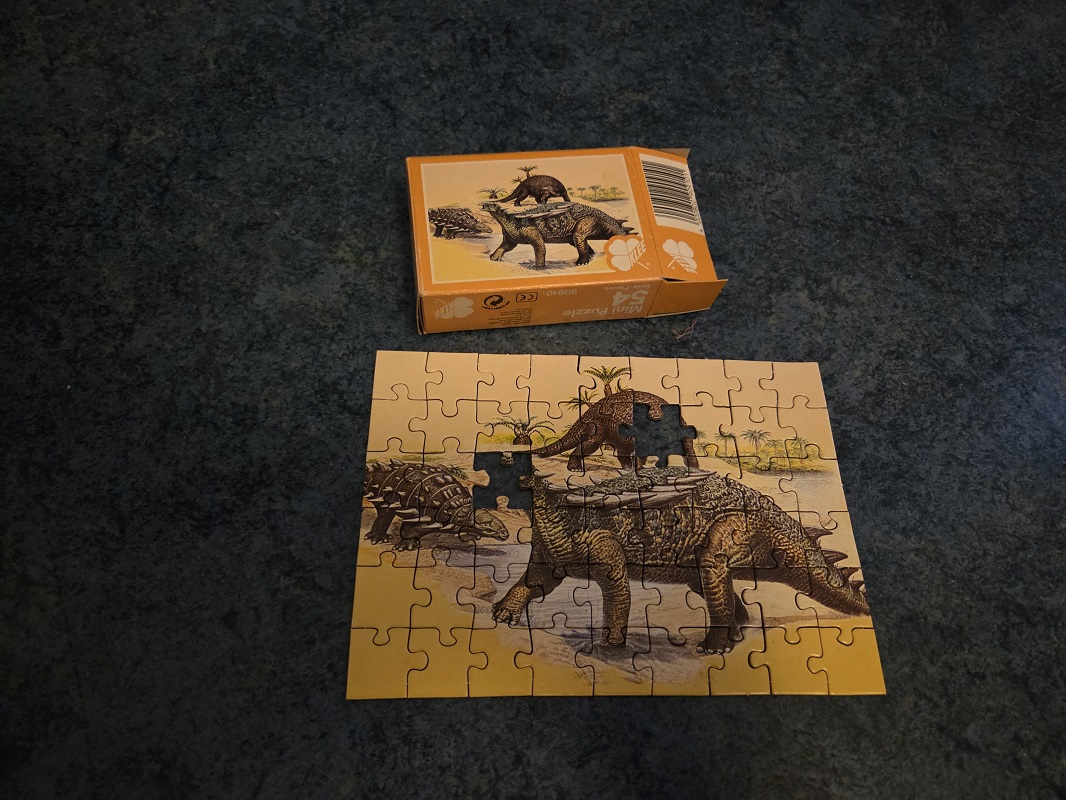
What I Did On My Day Off
Next – Maastricht