Previous – Utrecht
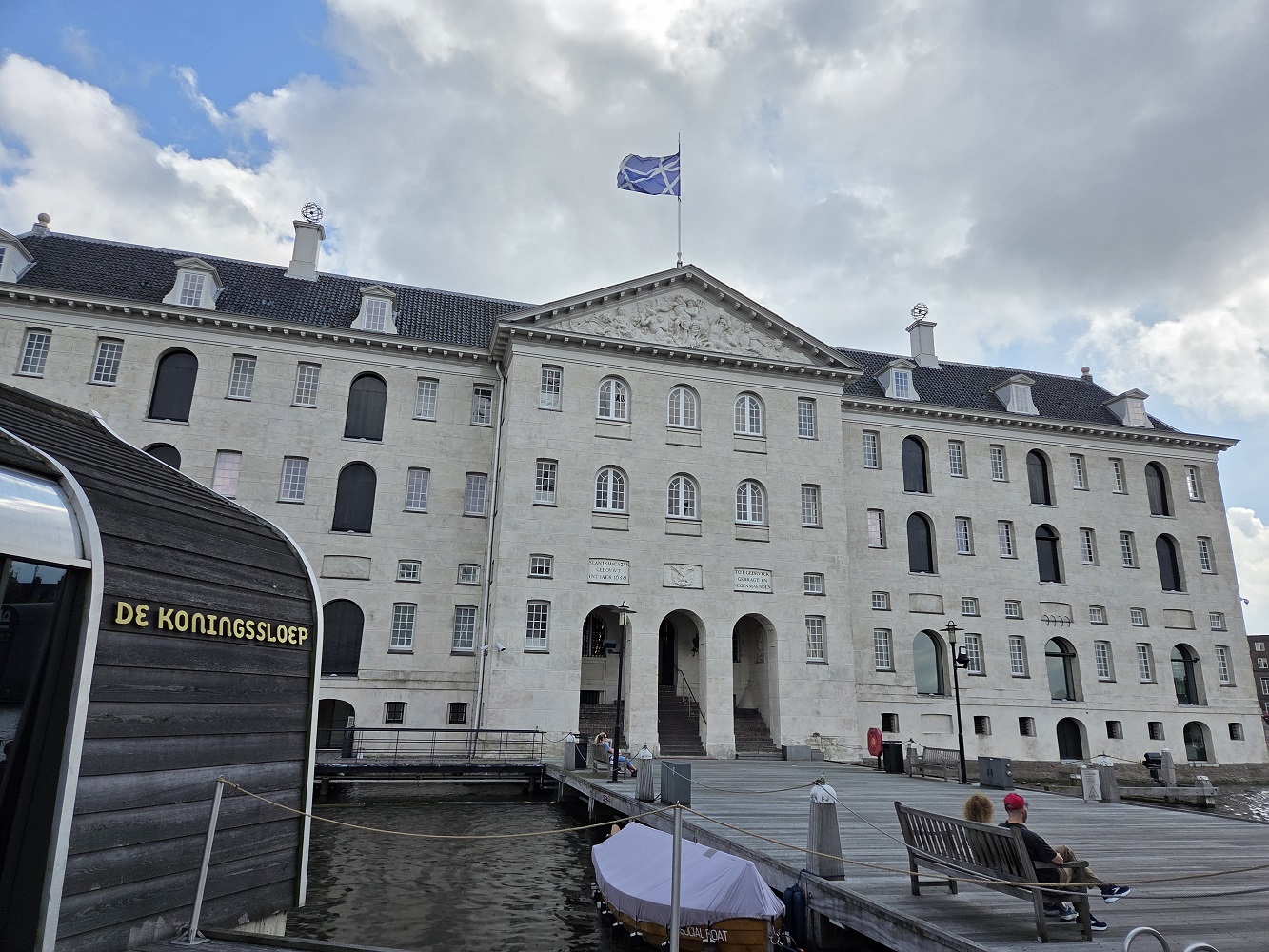
In the early afternoon, Tharash and I took the train/bus to the Maritime Museum (Het Schipvaartmuseum, ‘the ship-faring museum’) and met his dad there, who was going to see it with us.
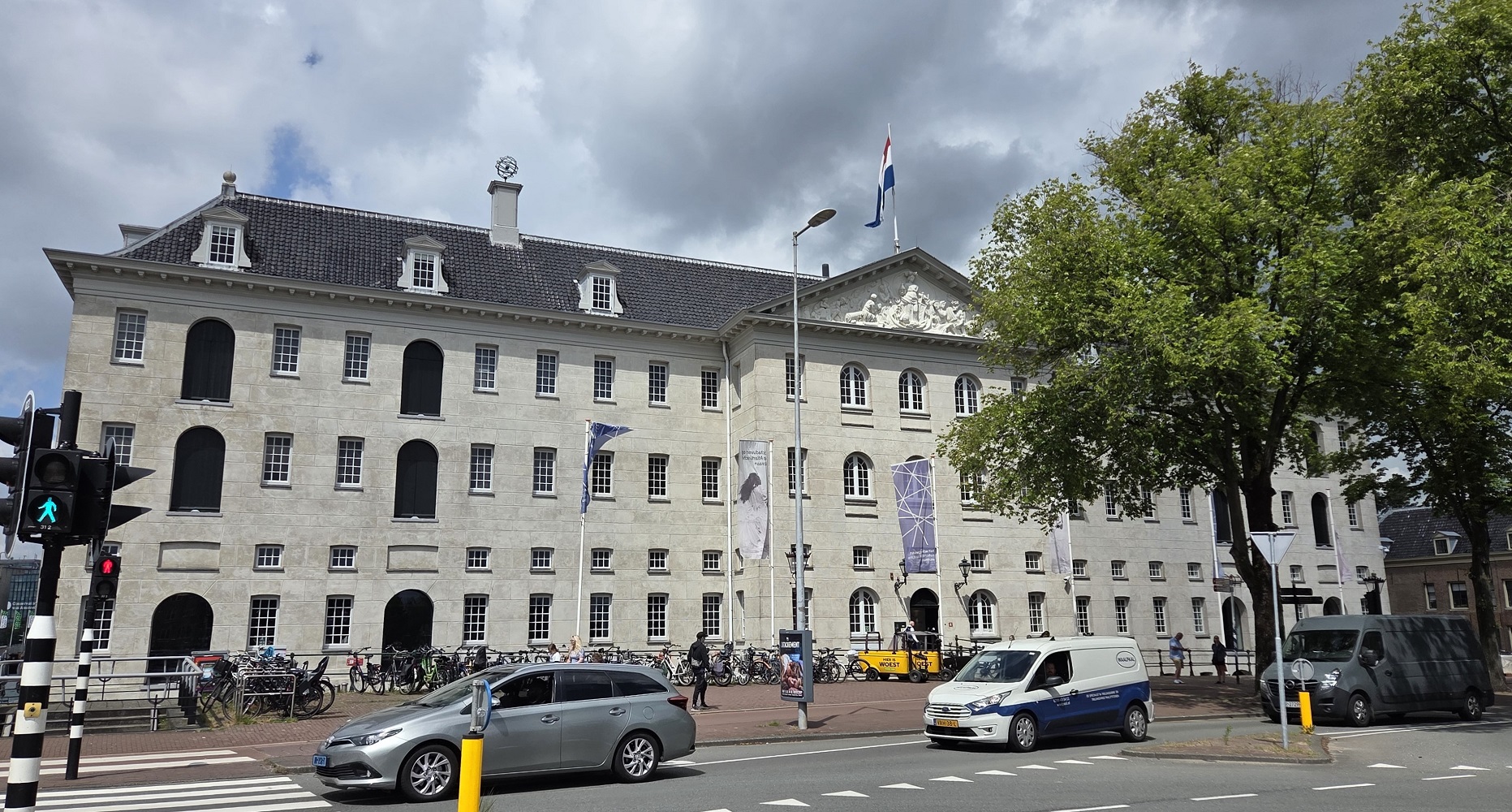
I’ve seen this building so many times, excited to finally go inside.
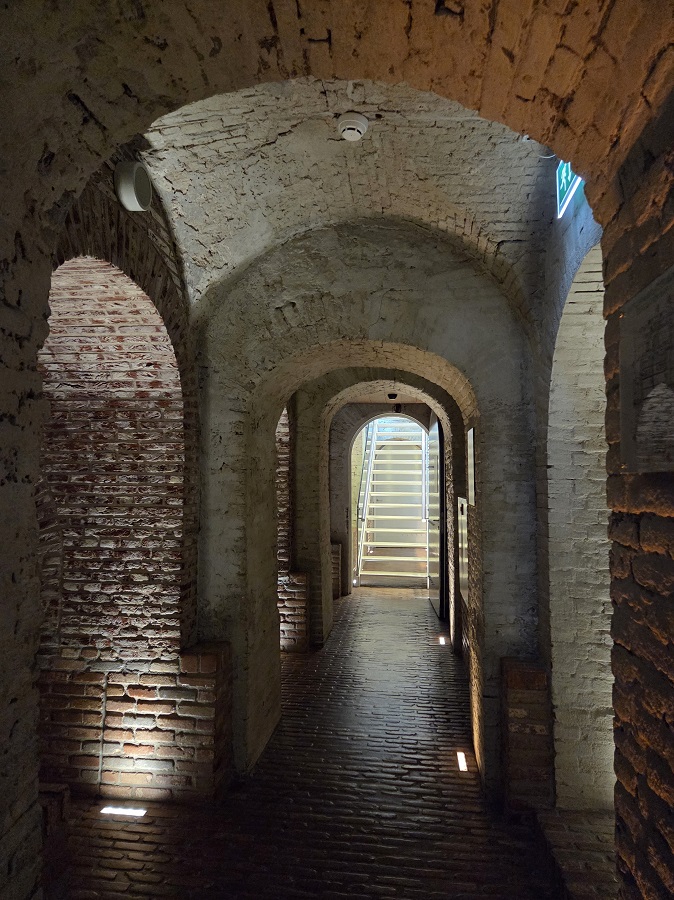
The backpack lockers are down here, it feels really cool.
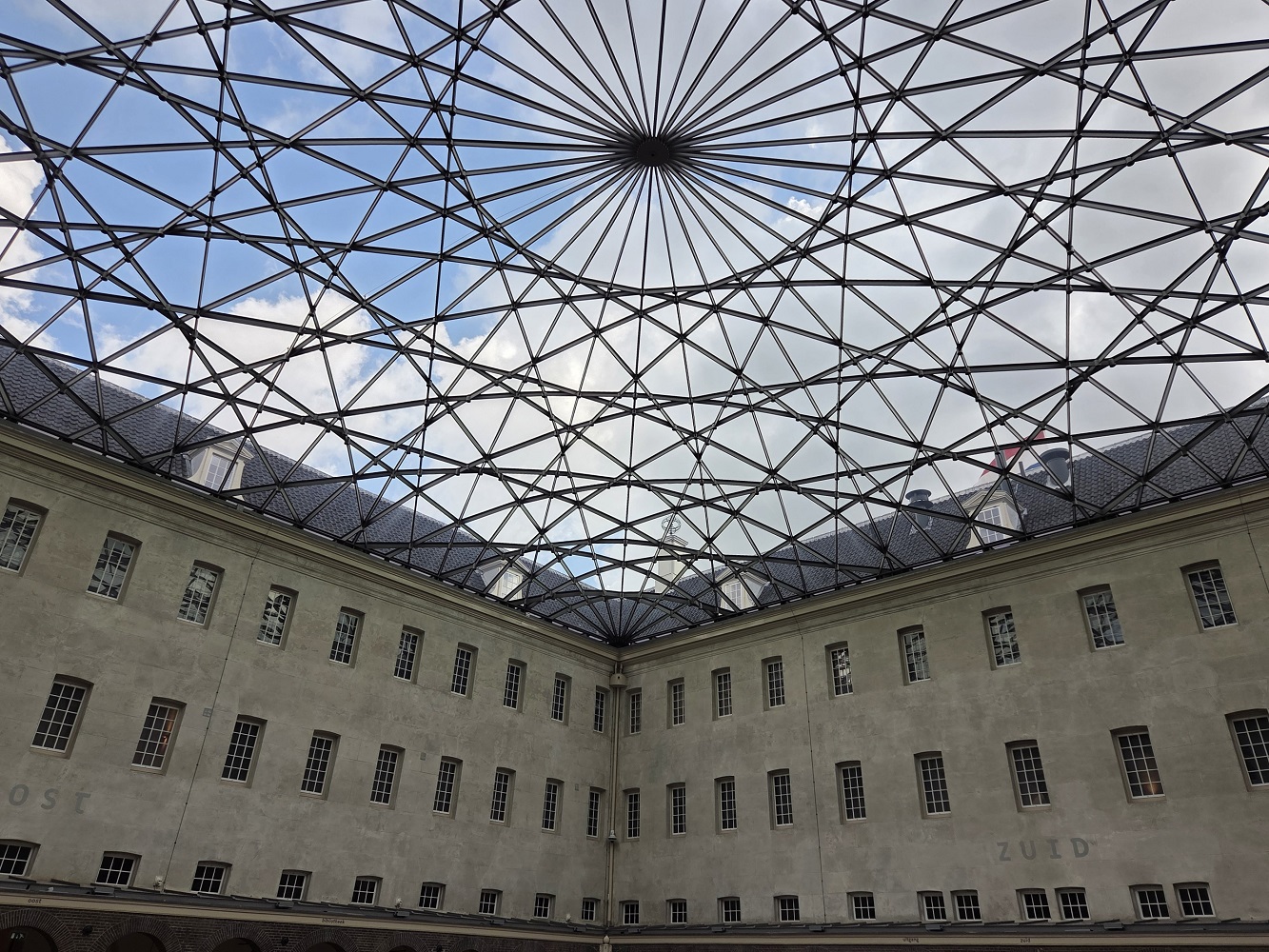
The courtyard is covered over like the Deutsches Historisches Museum in Berlin.

The museum is set up so that a different set of exhibitions is in each direction from the central courtyard. I wanted to see the actual ships first, that seemed sensible, so we headed north.
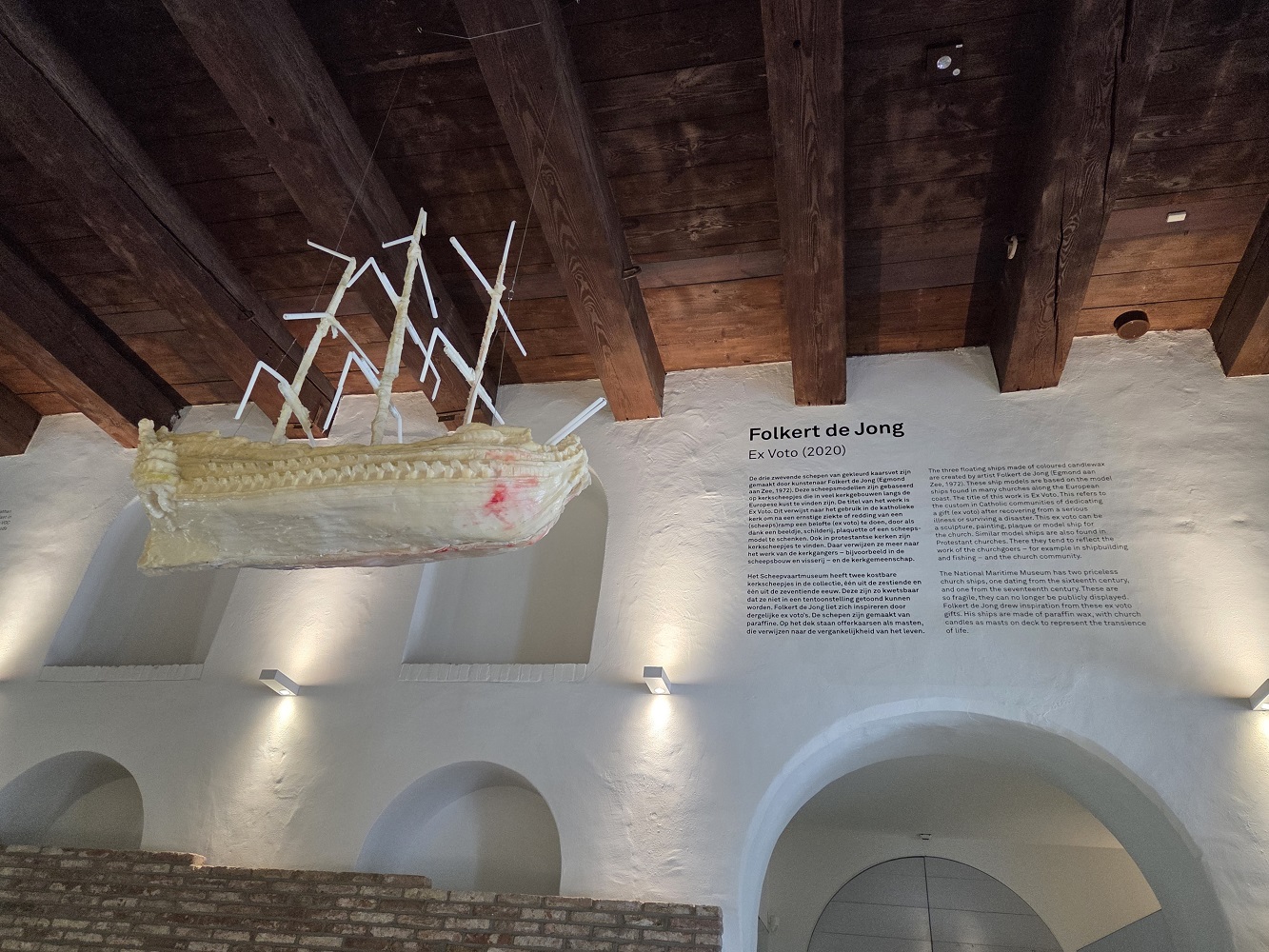
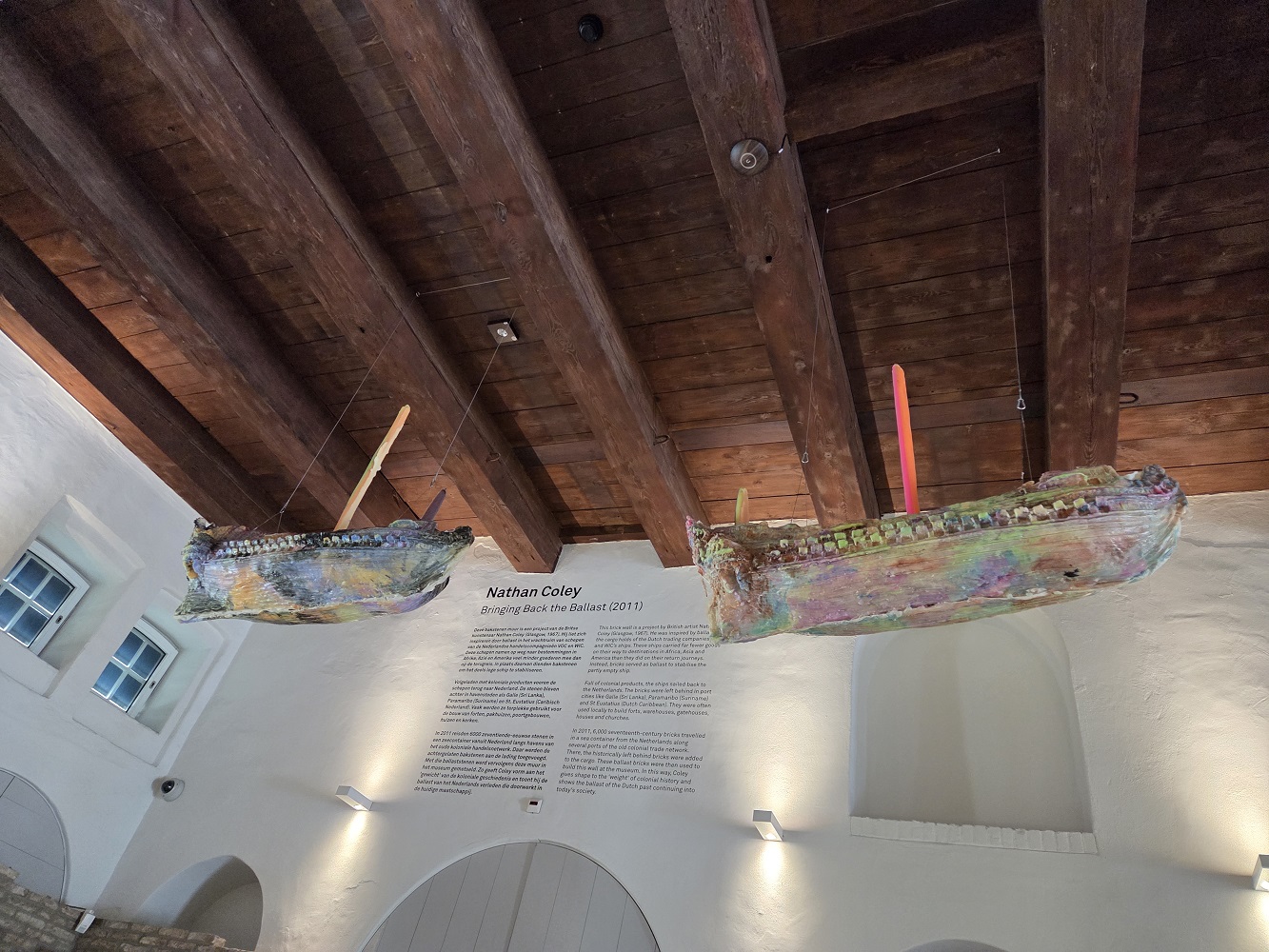
An artist’s exhibit of sailing ships made out of wax.
The text behind these wax ships says: “The three floating ships made of coloured candlewax are created by artist Folkert de Jong (Egmond aan Zee, 1972). These ship models are based on the model ships found in many churches along the European coast. The title of this work is Ex Voto. This refers to the custom in Catholic communities of dedicating a gift (ex voto) after recovering from a serious illness or surviving a disaster. This ex voto can be a sculpture, painting, plaque or model ship for the church. Similar model ships are also found in Protestant churches. There they tend to reflect the work of the churchgoers – for example in shipbuilding and fishing – and the church community.”
“The National Maritime Museum has two priceless church ships, one dating from the sixteenth century, and one from the seventeenth century. These are so fragile, they can no longer be publicly displayed. Folkert de Jong drew inspiration from these ex voto gifts. His ships are made of paraffin wax, with church candles as masts on deck to represent the transience of life.”
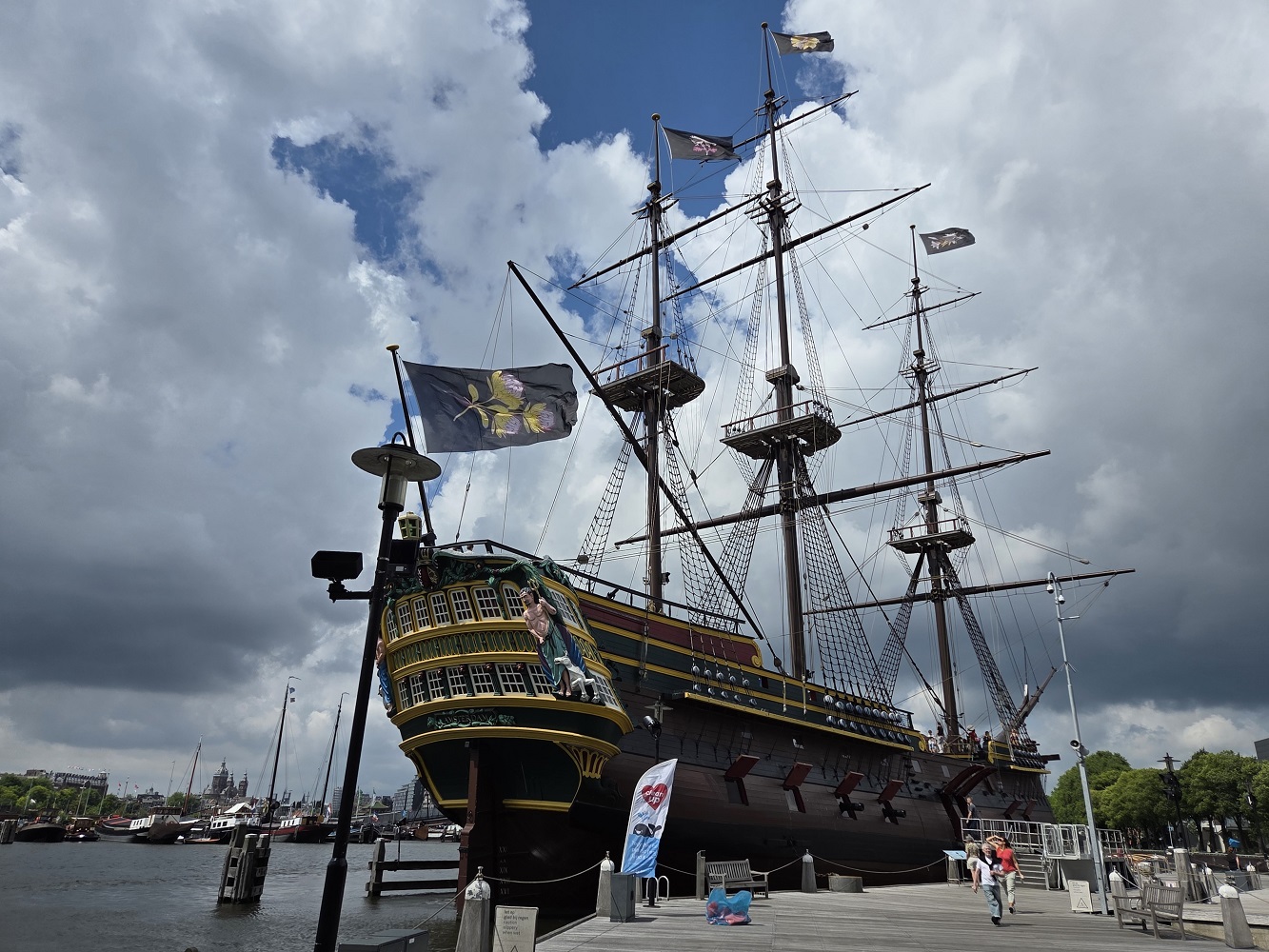
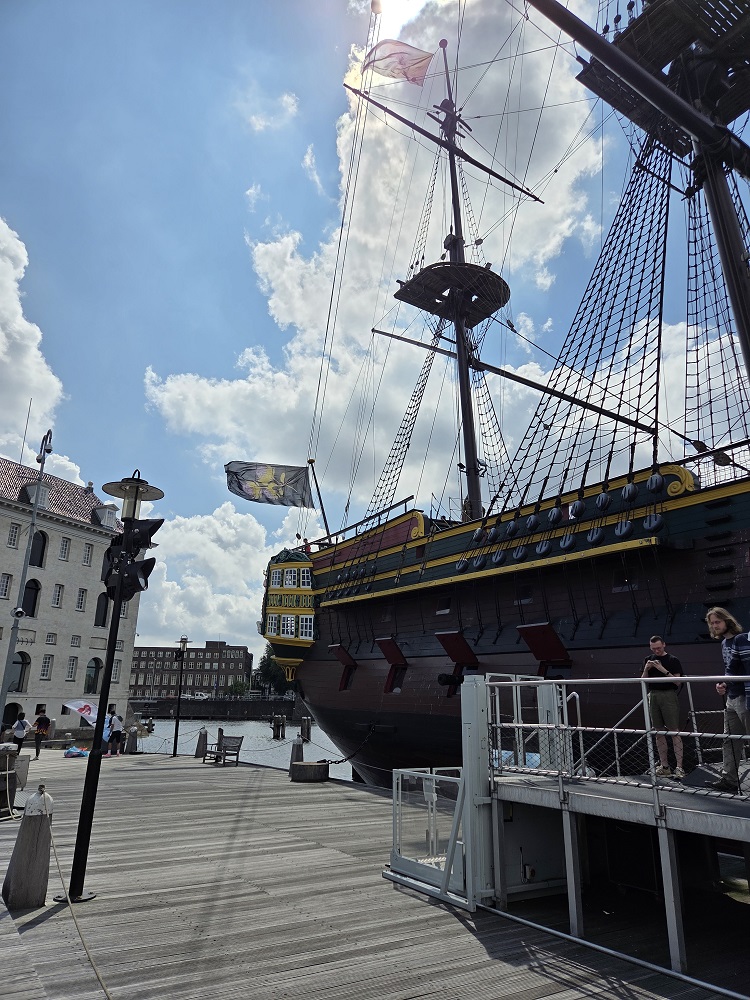
Down on the docks there are three ships to look at. Their reconstruction of a VOC ship, a steam-powered icebreaker, and the Royal Barge.
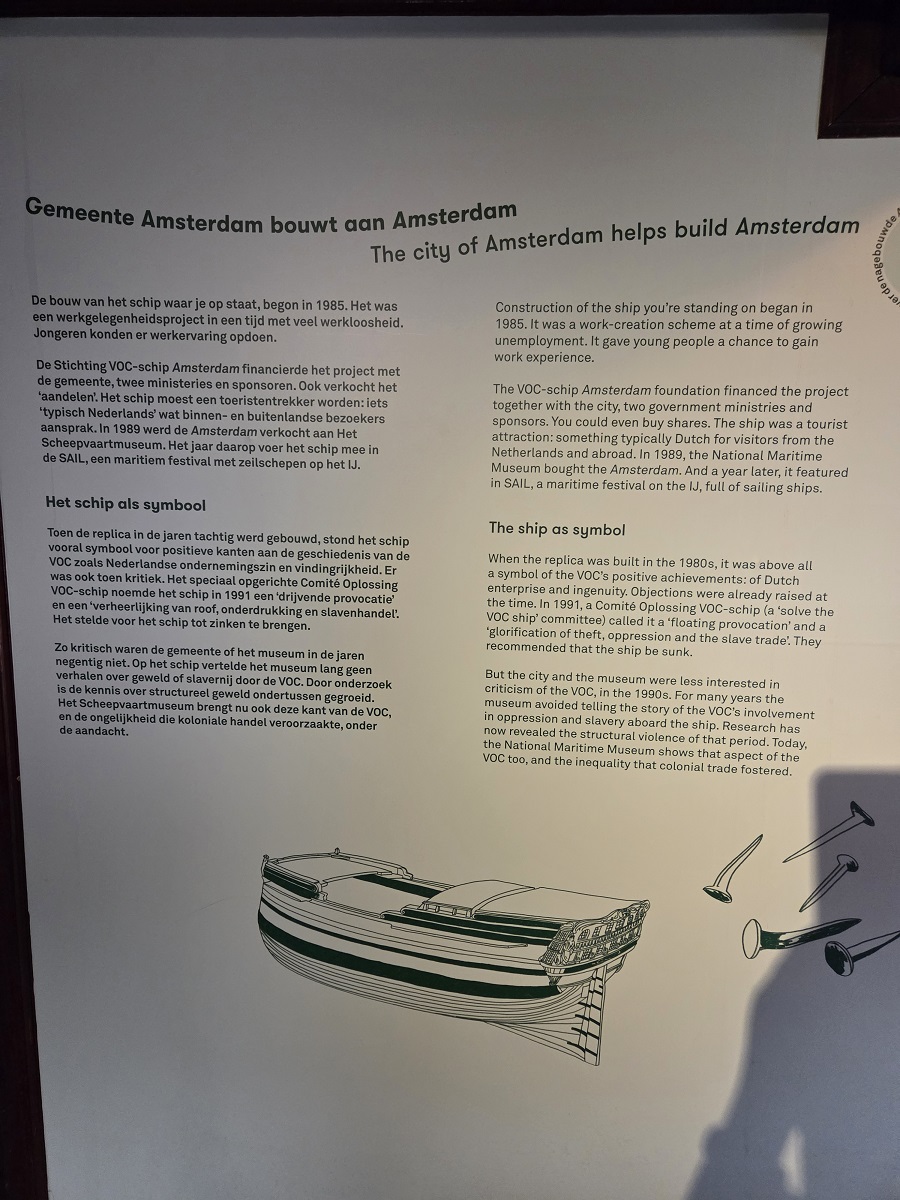
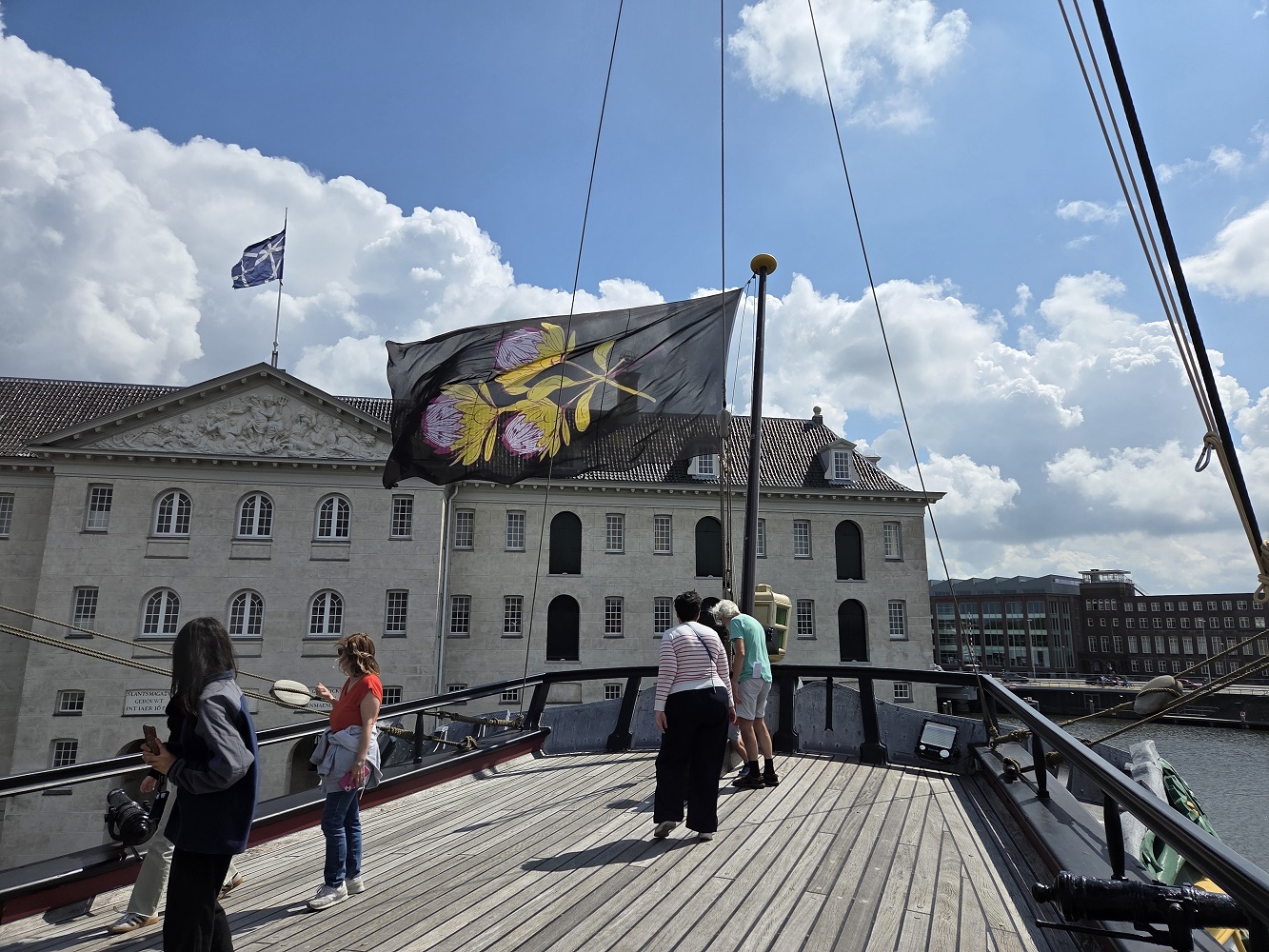
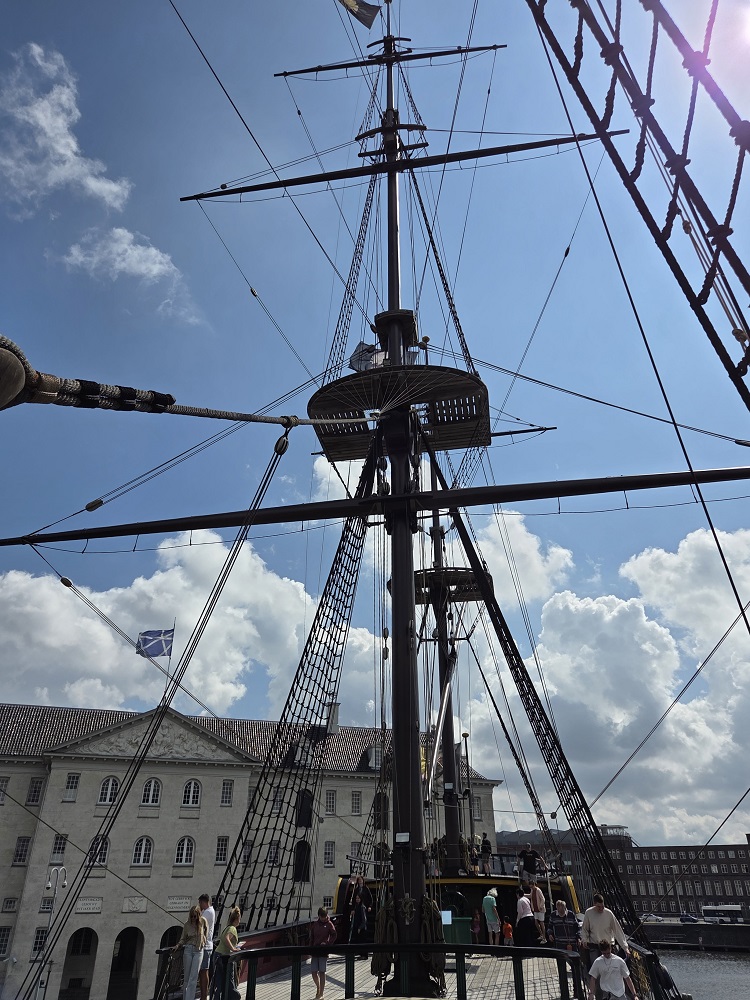
The original Amsterdam was built in 1748, and left on a voyage in January 1749. It sank off the coast of England, so it didn’t get very far. Its replica was built in 1985 as a work-creation project. It was always a bit controversial, but in recent times as people become more collectively outspoken about/aware of the cost of colonialism and the importance of human rights, it’s become increasingly awkward. Some people have even suggested that the ship be destroyed. Some people say that besides the dark part of its history, it’s a window into the courage and hard work needed to establish a global trade network hundreds of years ago. I think it’s important for this ship, now that it’s here, to remain here and be used to try to create empathy in a way that you just can’t do with paintings or words. It’s a part of the story, and maybe having a big interesting object tainted with a shadowed and shameful past is a good way to keep that story in people’s minds instead of pretending it didn’t happen. Or maybe I’m projecting, idk.
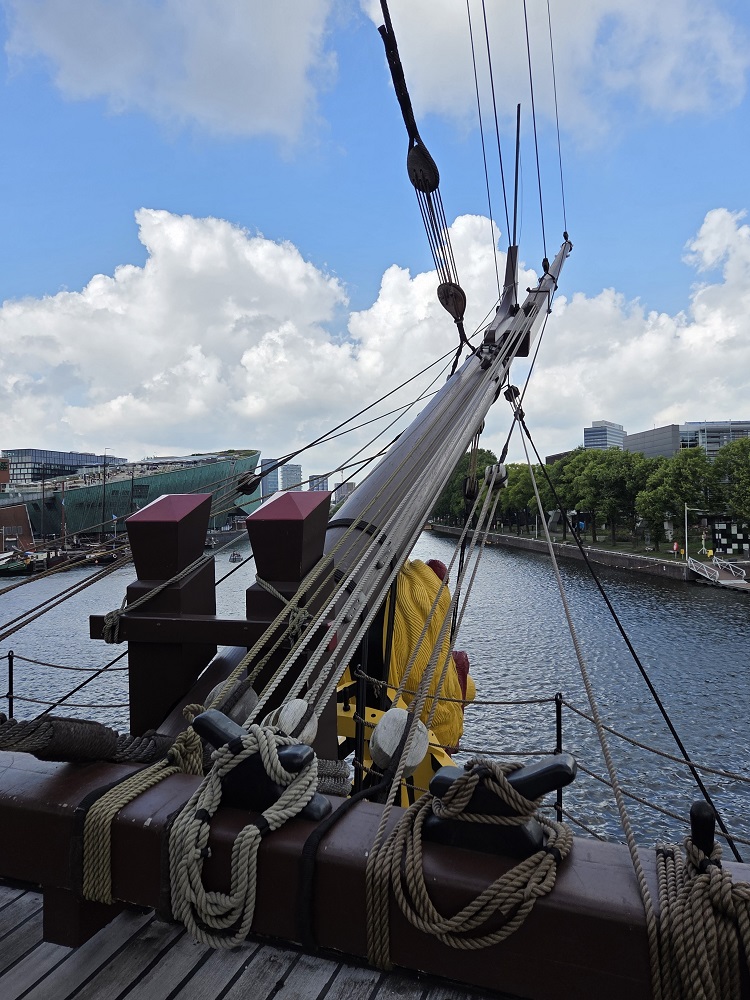
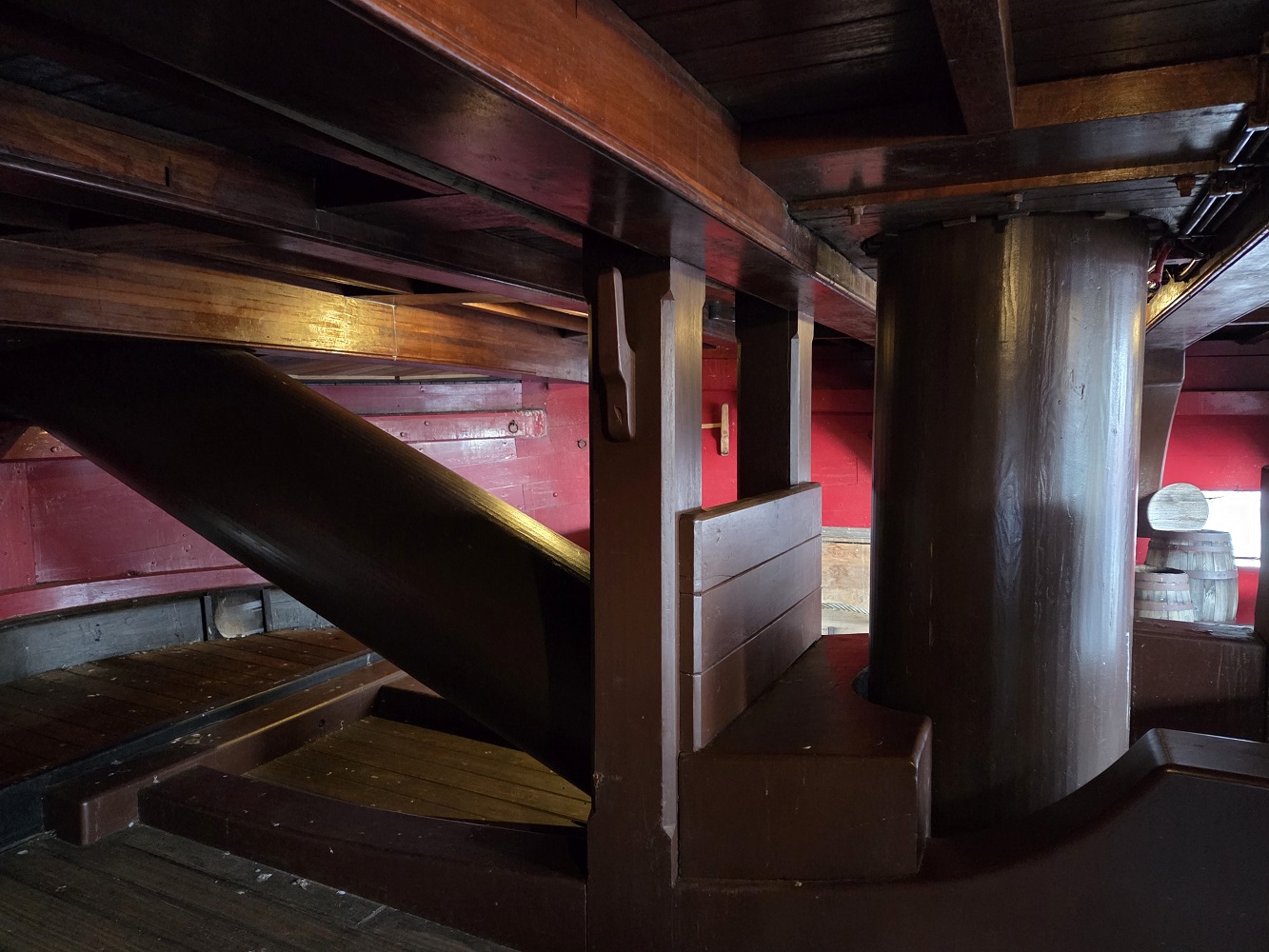
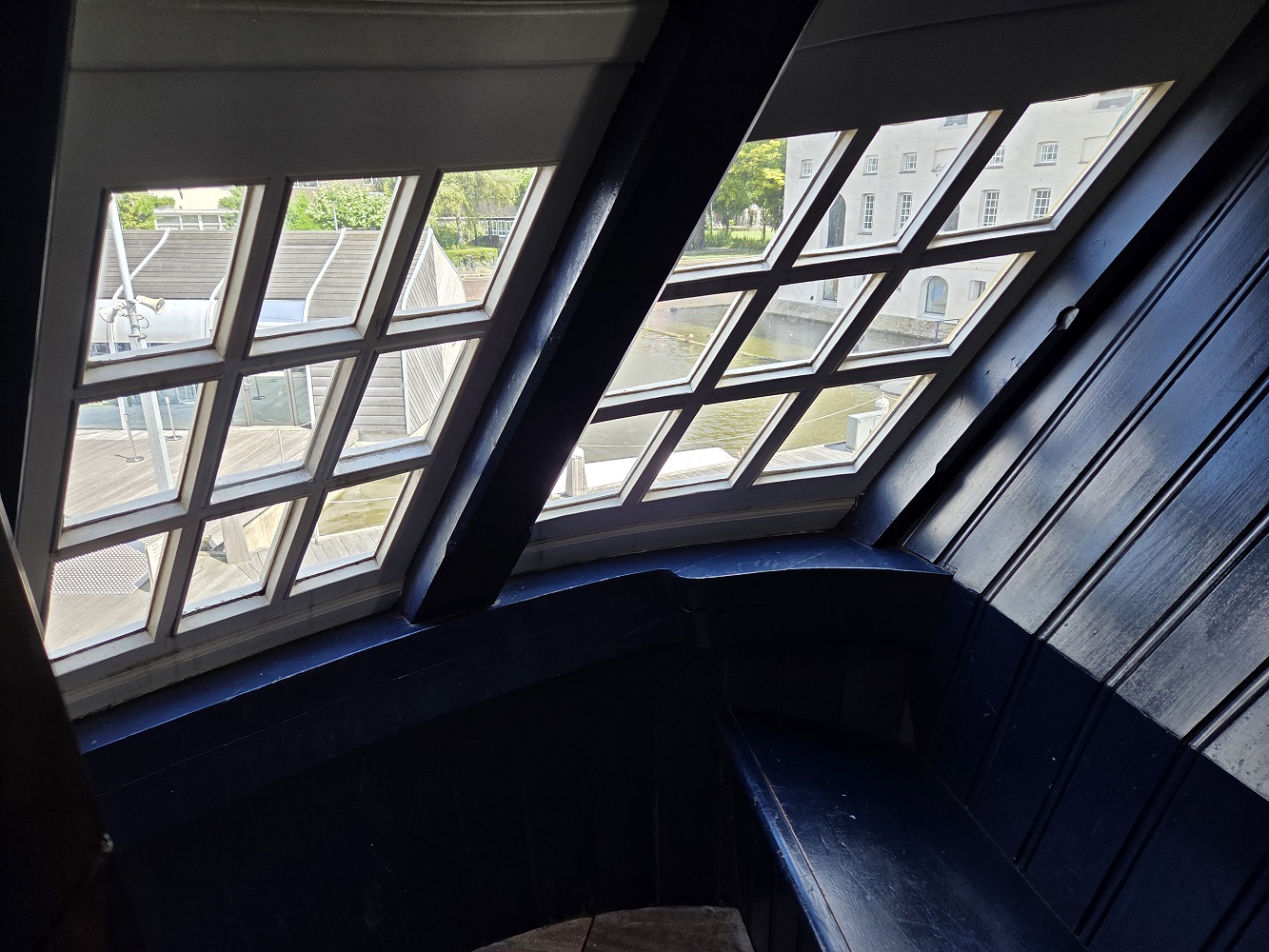
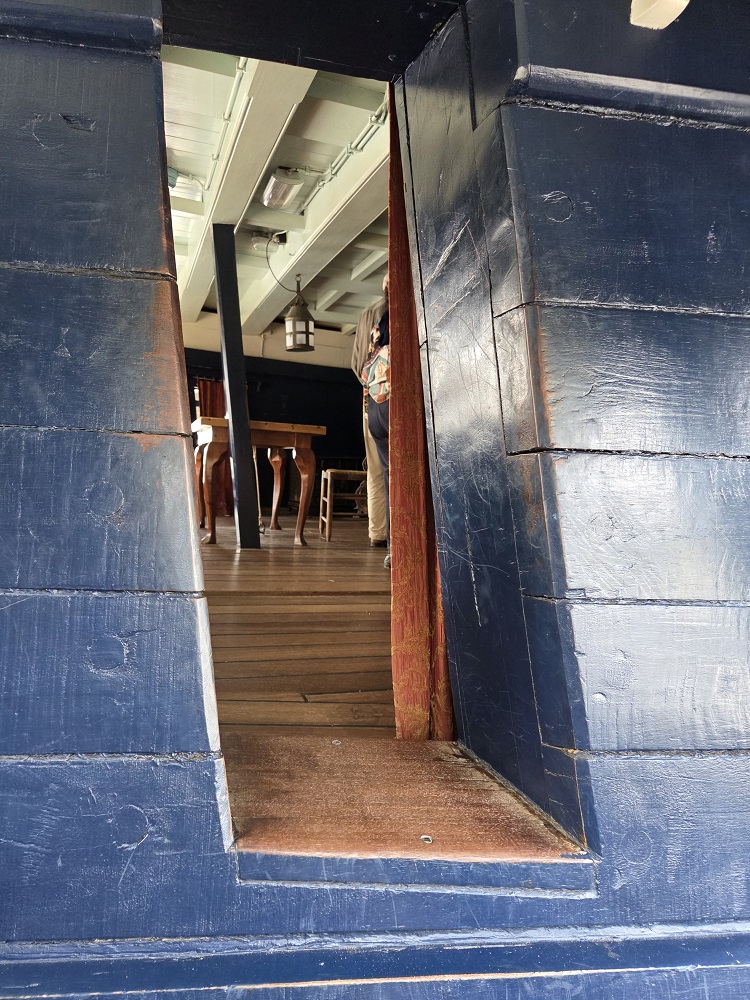
The second-deck-from-the-top is a bit lower than it was on the original Amsterdam, to create more space elsewhere on the boat… I totally bumped my head in there, hard. T_T And they had a crew of 330??? Not including passengers??? On this little thing???
They also had a video playing in a room belowdecks in the bow, and while I liked how it was on screens that wrap around and immerse you in the video, I did not like how it swooped and swirled like a seagull over a 3D reproduction of 18th-century Amsterdam harbour. Made me feel a bit queasy. The fact that we were on a boat (i.e. my feet were not grounded on ground) at the same time didn’t help matters.
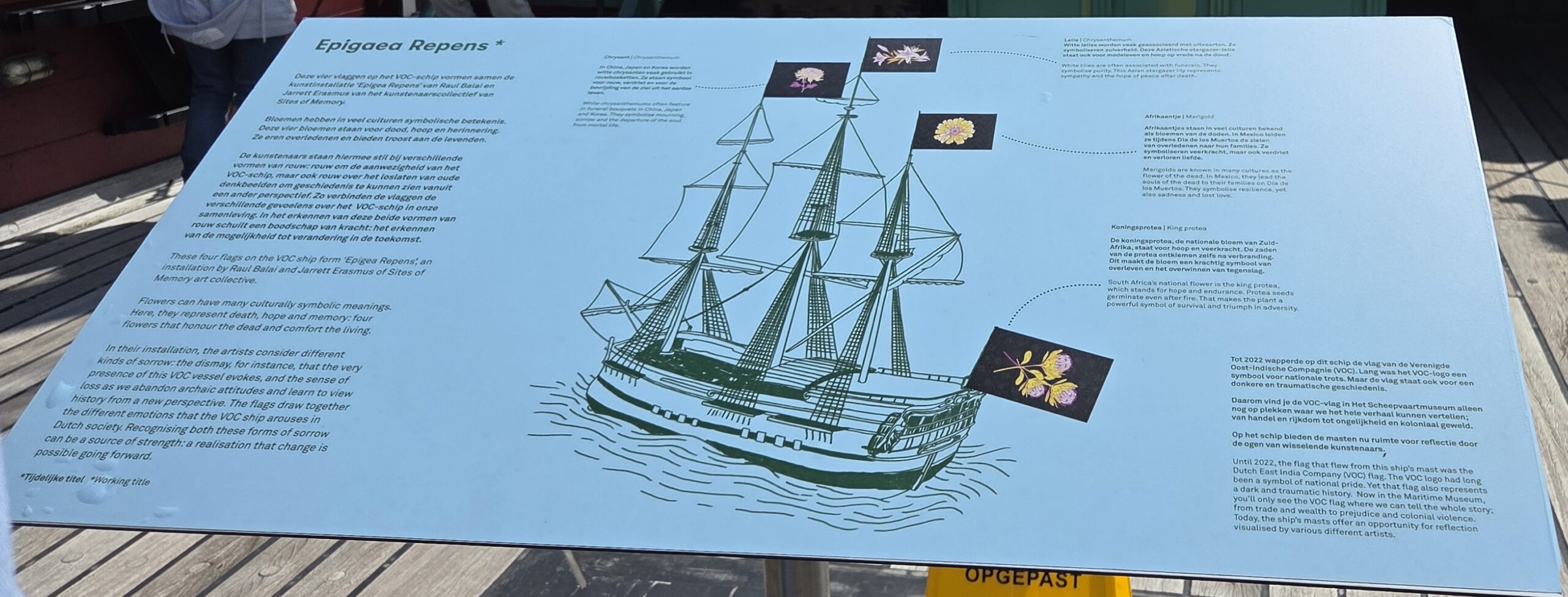
They have these flags designed by an artist about the complicated feelings that the VOC evokes. In this case, three of these flags have flowers associated with funerals on them. While some people think it’s too ‘woke’, I think it’s a good compromise between seeming to be unequivocally proud of the VOC, and doing something unconnected like putting a pride flag on it or something, which I heard was also considered. Though it did happen to be Pride Week the following week! Anyway, flowers are pretty, and I don’t think the message inappropriate.
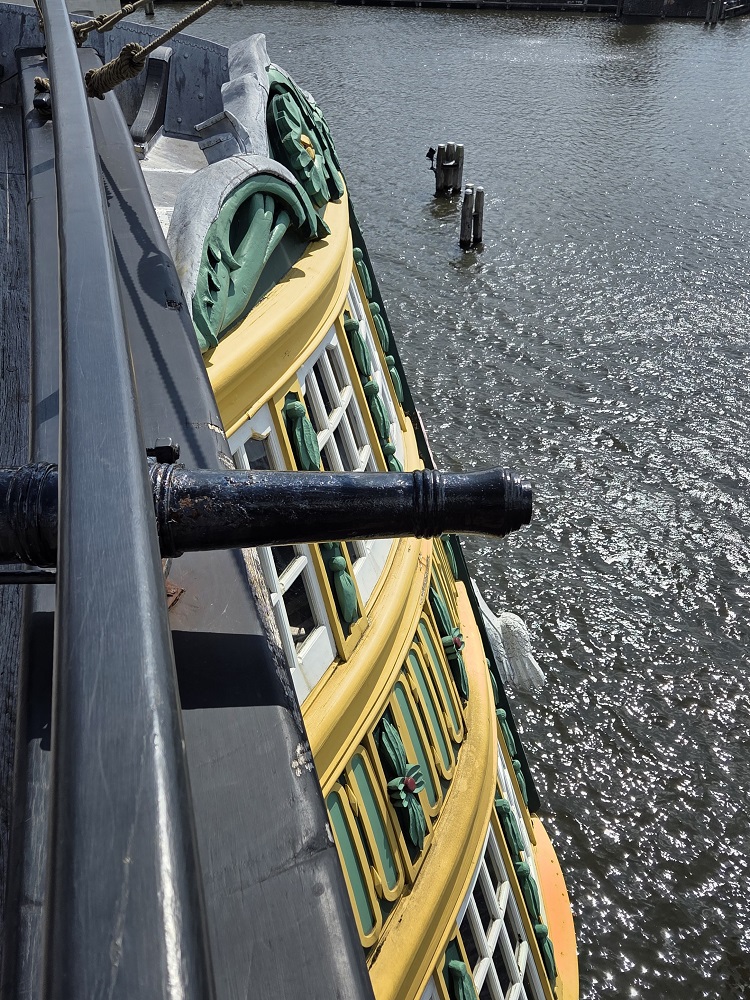
After the big ship, I took a glance at the steamship, but that’s not super interesting to me. More shiny is the Royal Barge.
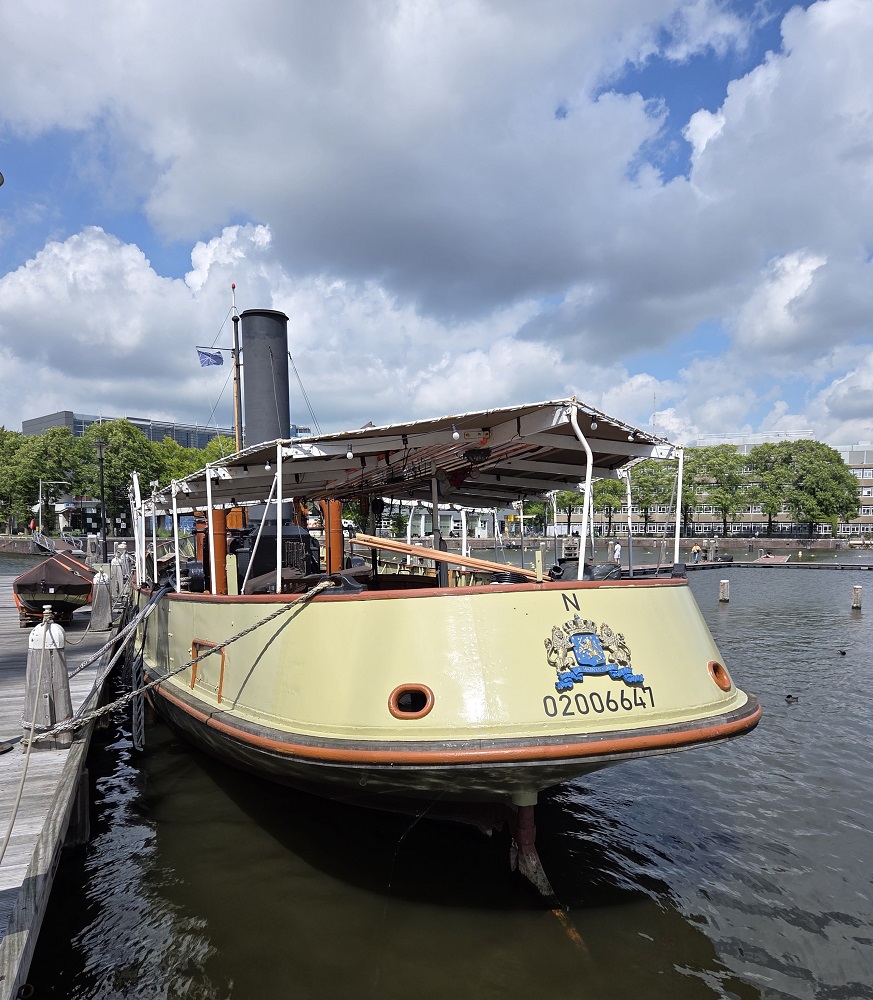
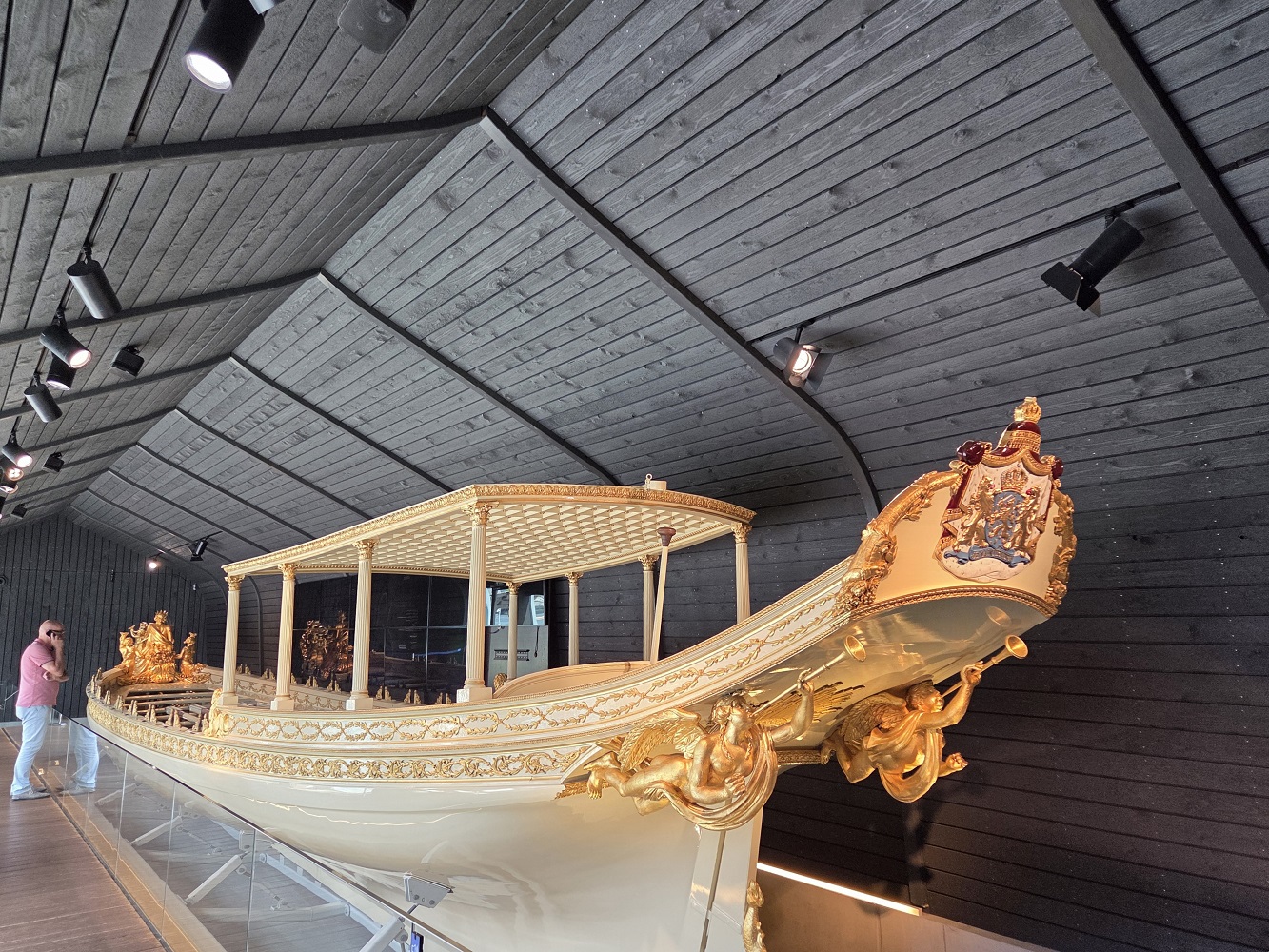
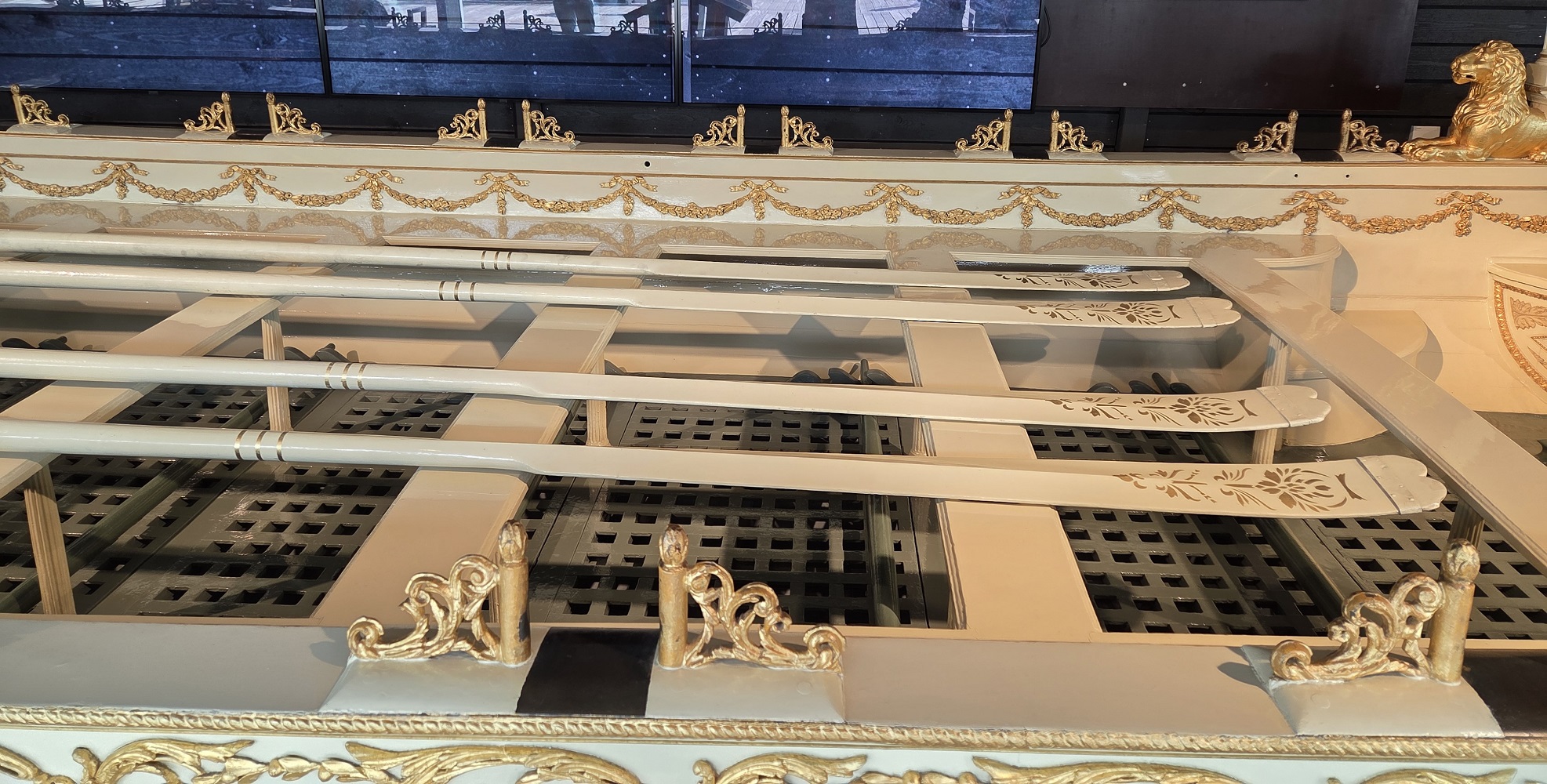
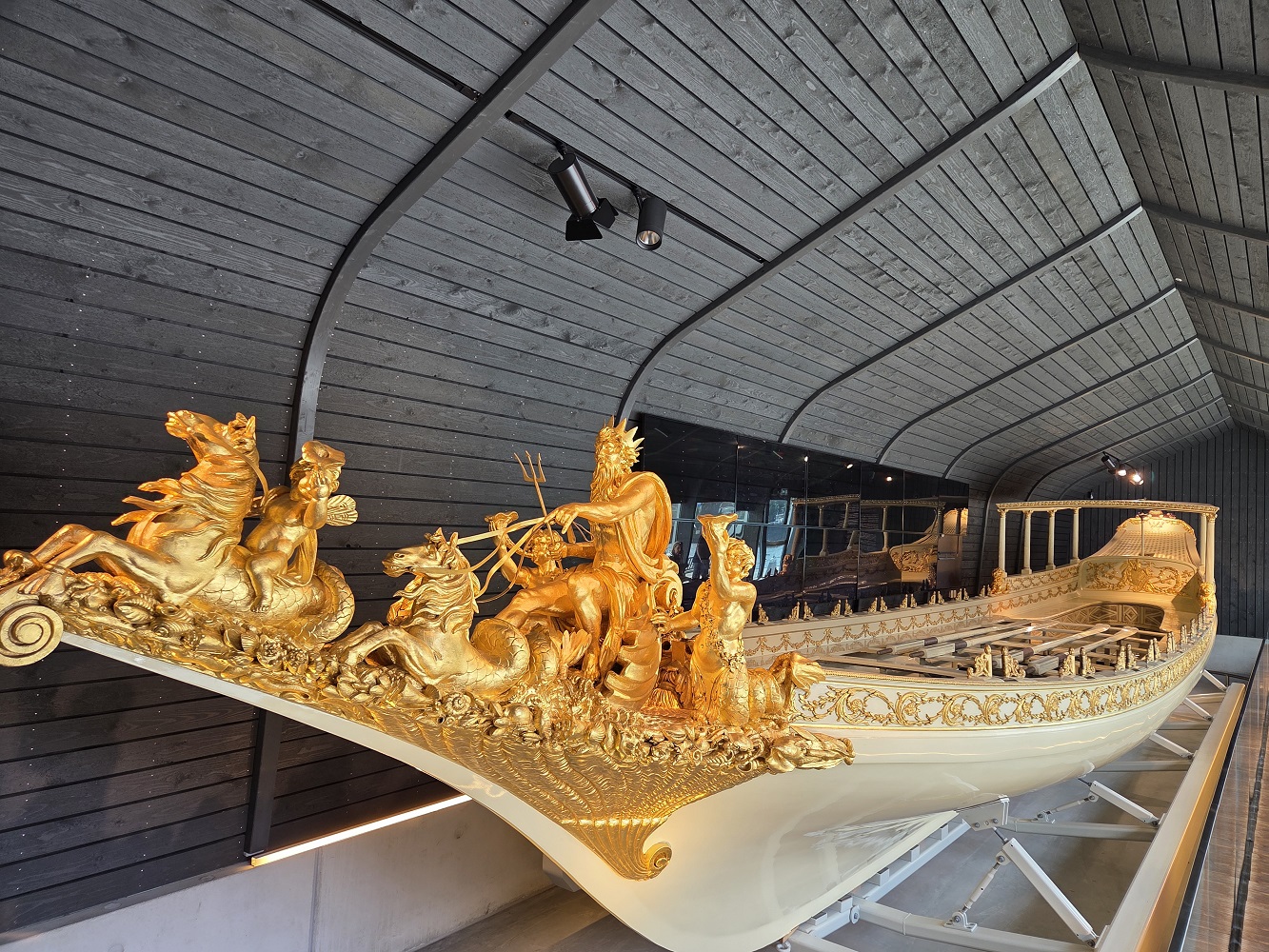
The Royal Barge was built between 1816 and 1818 for King William I of the Netherlands, because other countries had Royal Barges (stares at Handel’s Water Music) during a time that the Netherlands didn’t even have a monarchy. “Although King William I did not use the Royal Barge, his successors certainly did. The barge took to the water for the last time at the silver wedding anniversary of Queen Juliana and Prince Bernhard in 1962.” (A sign on another exhibit indoors explains that the stadtholders and other Dutch elite sailed in yachts.)
Then we went back inside to look at the more typical museum exhibits. The first one was Republic at Sea, which uses paintings and artifacts to run through a couple centuries of Dutch maritime history. Honestly, it feels like they were always at war with either the French or the English or the Spanish, and the only one people really agreed that they didn’t like was the Spanish. Kind of like the relationship between Norway, Sweden, and Denmark.
A couple of the coolest artifacts were ceramic figurines that were Made in China… of European subjects, like a peasant couple dancing. Since the Chinese artist never saw actual Dutch people, they made a sculpture of Chinese people dressed in Dutch clothes with Chinese flair. It’s really interesting, I’ve never seen anything like it before.
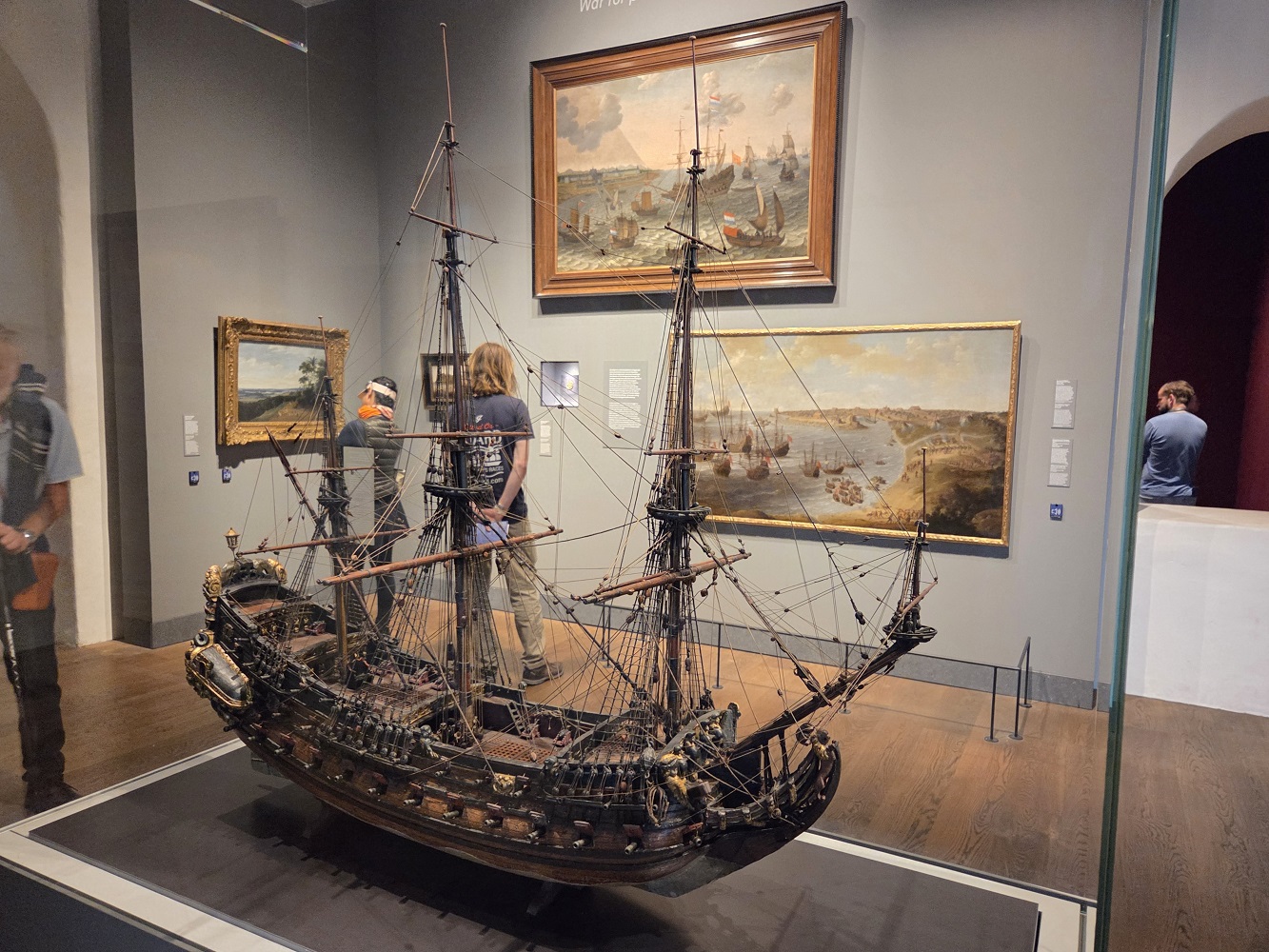
This is a model of a man-o-war from between 1670-1680, when the Dutch stopped just putting guns on their merchant vessels and started building actual dedicated warships for when they needed to fight people.
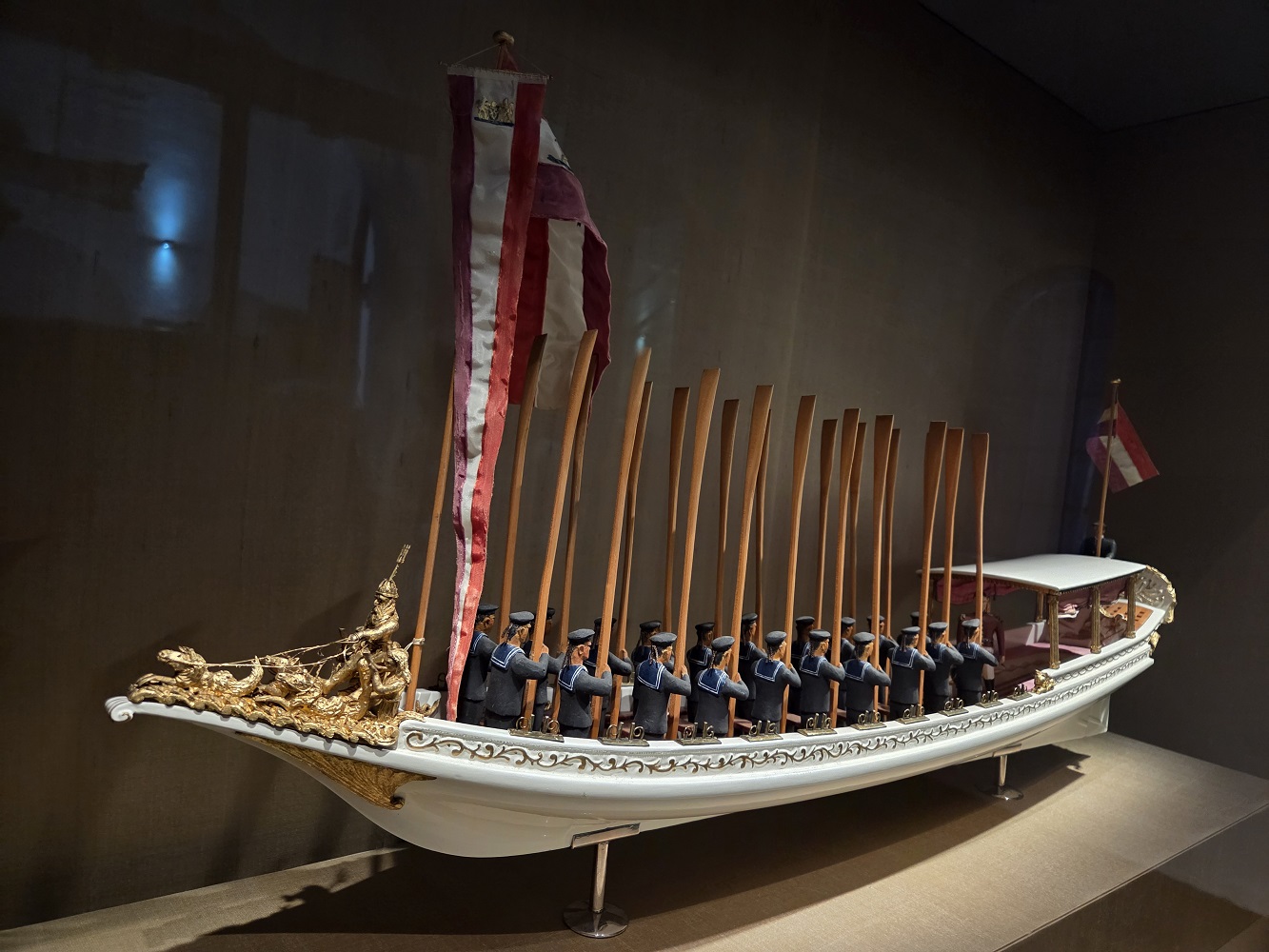
A model of the Royal Barge
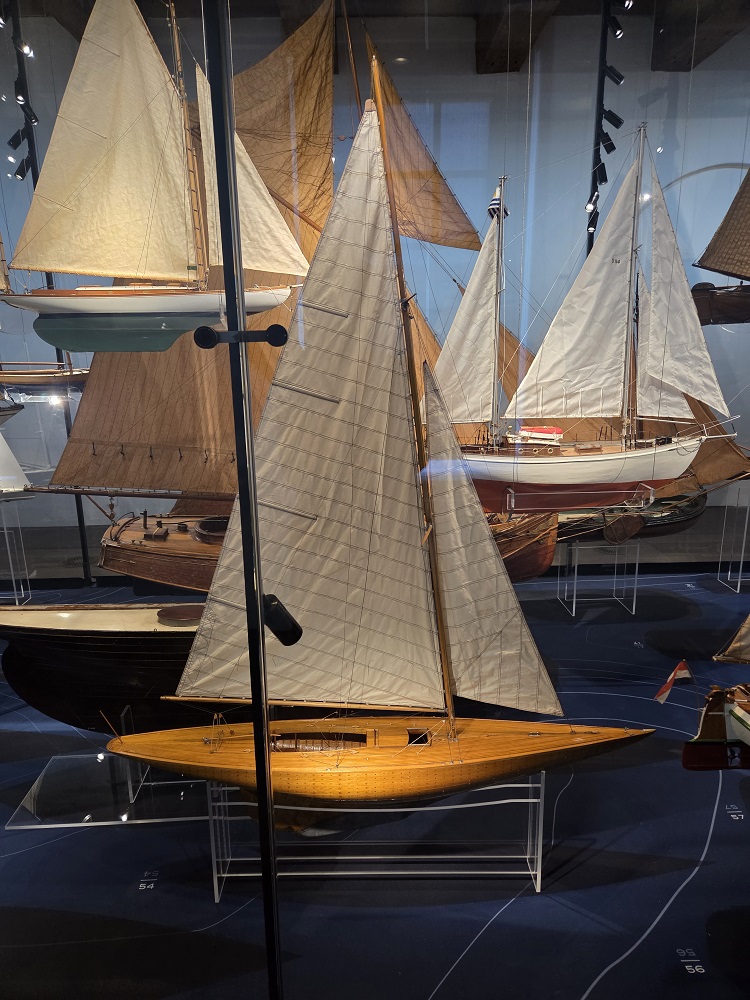
Then we went to the exhibits in the East wing, which included a model ship gallery. And when I say ‘model ship’, I don’t mean like teeny tiny models that just look good. These are basically miniature working ships. This is how Stuart Little starts to sound plausible. And they had SO MANY.
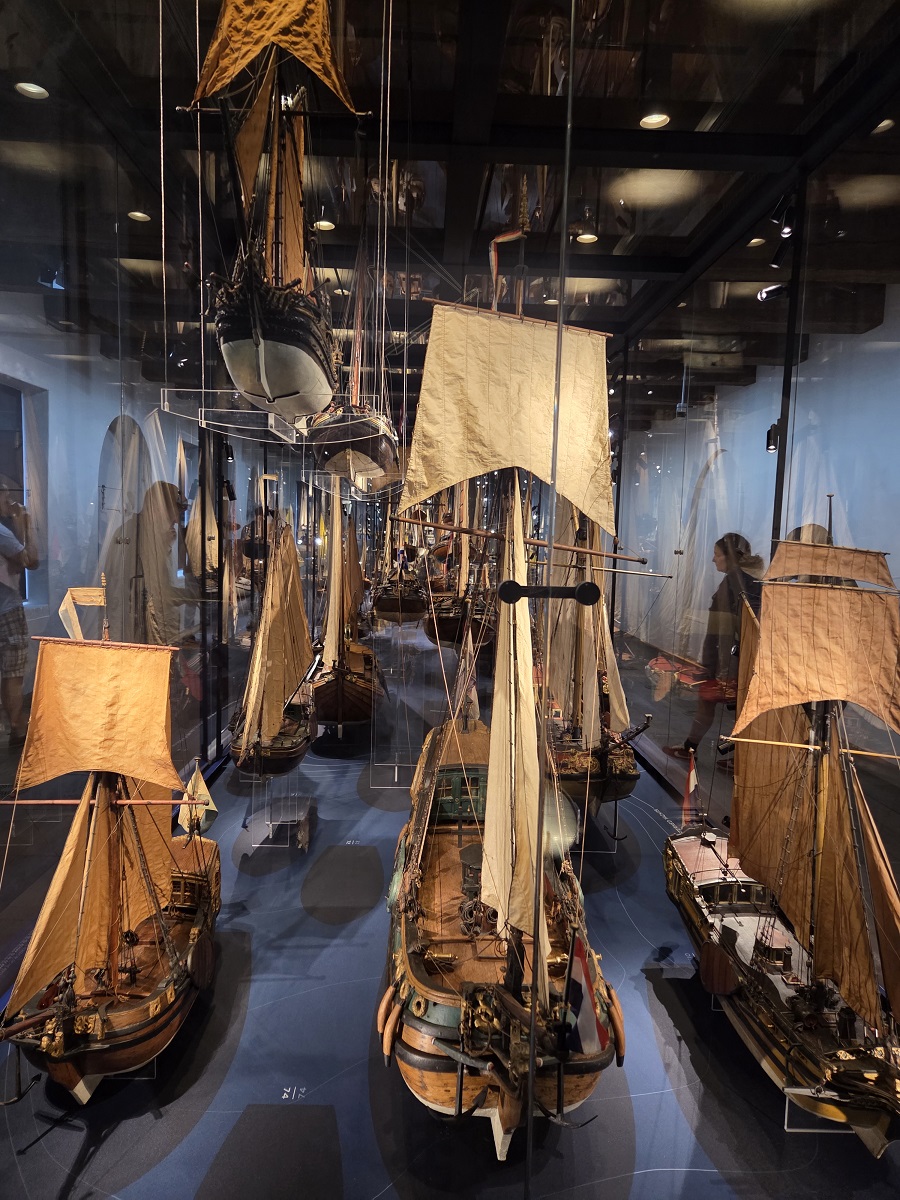
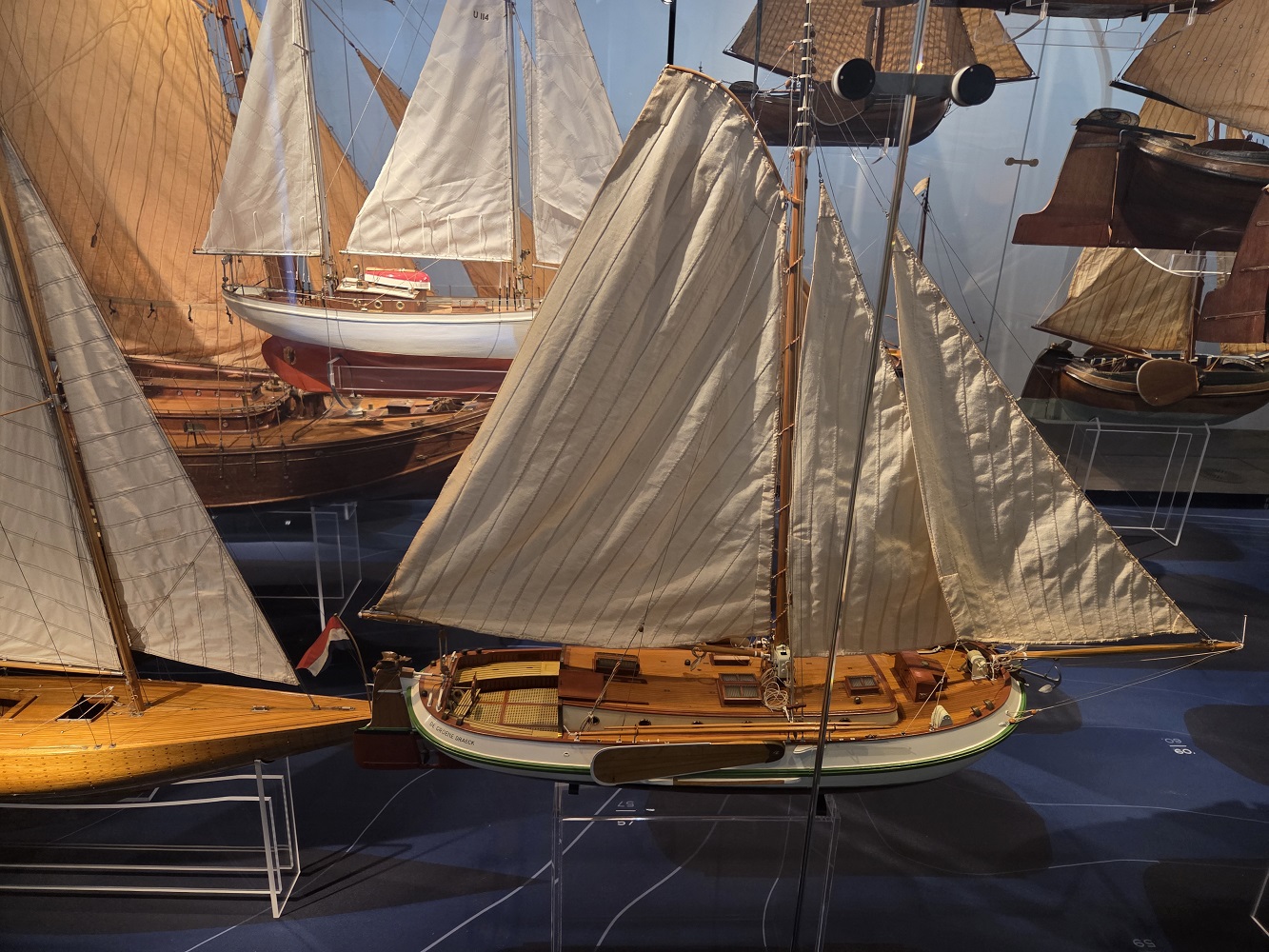
The paddle on the side of this ship is a Dutch thing for flat-bottomed boats suitable for their shallows and sandbanks – when they need a keel, they let it down (there’s one on the other side as well).
Then there was a room about the history of cartography, and an adjoining room on “how to make a nautical chart”.
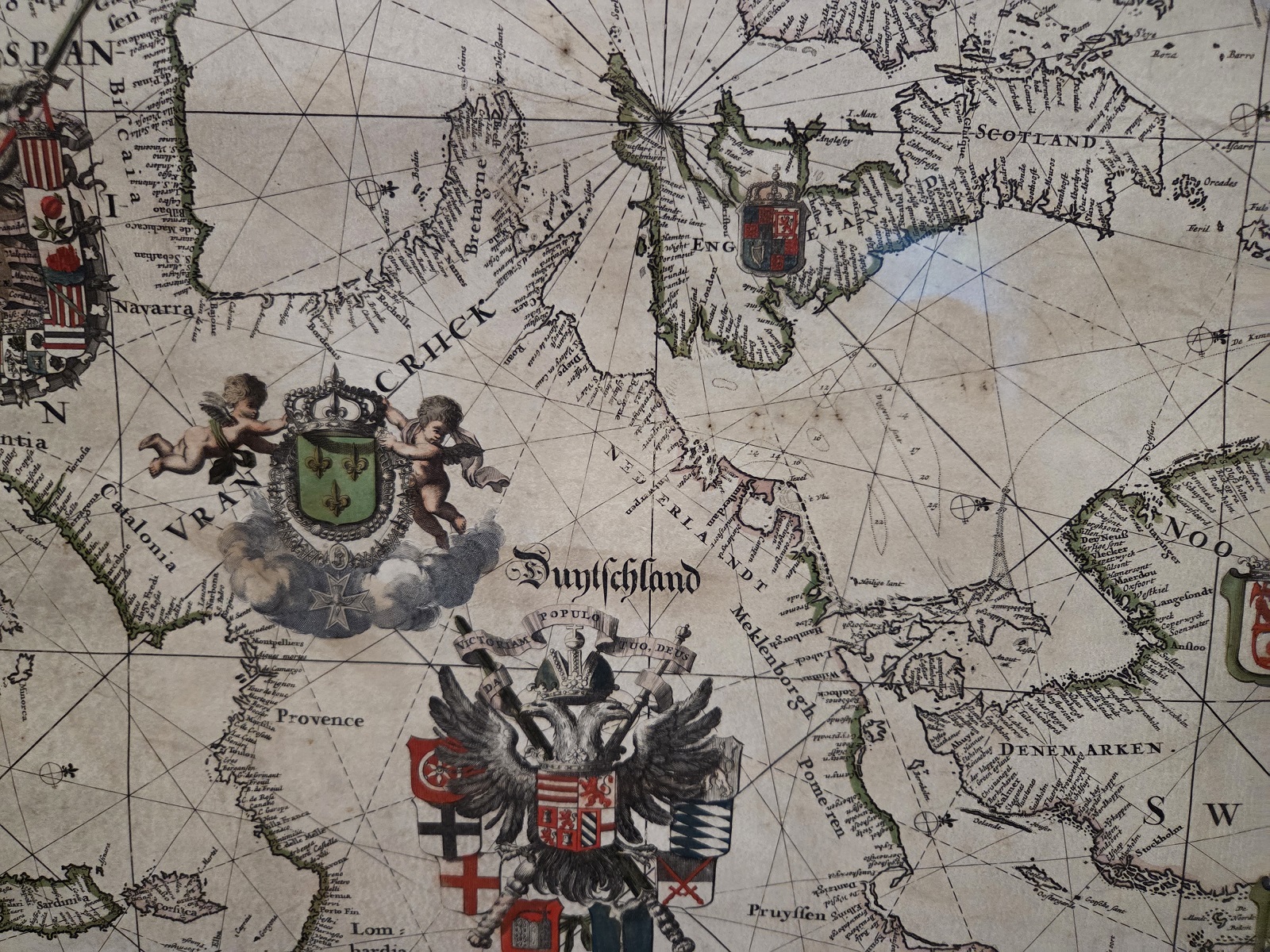
North being ‘up’ is a modern convention. “This is an updated version of a chart of Europe published in 1605 by Willem Jansz. Blaeu, the famous cartographer of Amsterdam. It is the firm’s first nautical chart, and is issued by the Dutch East India Company to its captains. This example has actually been used on board. Indentations show where a compas was placed to calculate the ship’s position on a voyage from Zeeland, round Scotland to the Canary Islands.” I don’t see the marks, but still cool that it was actually used.
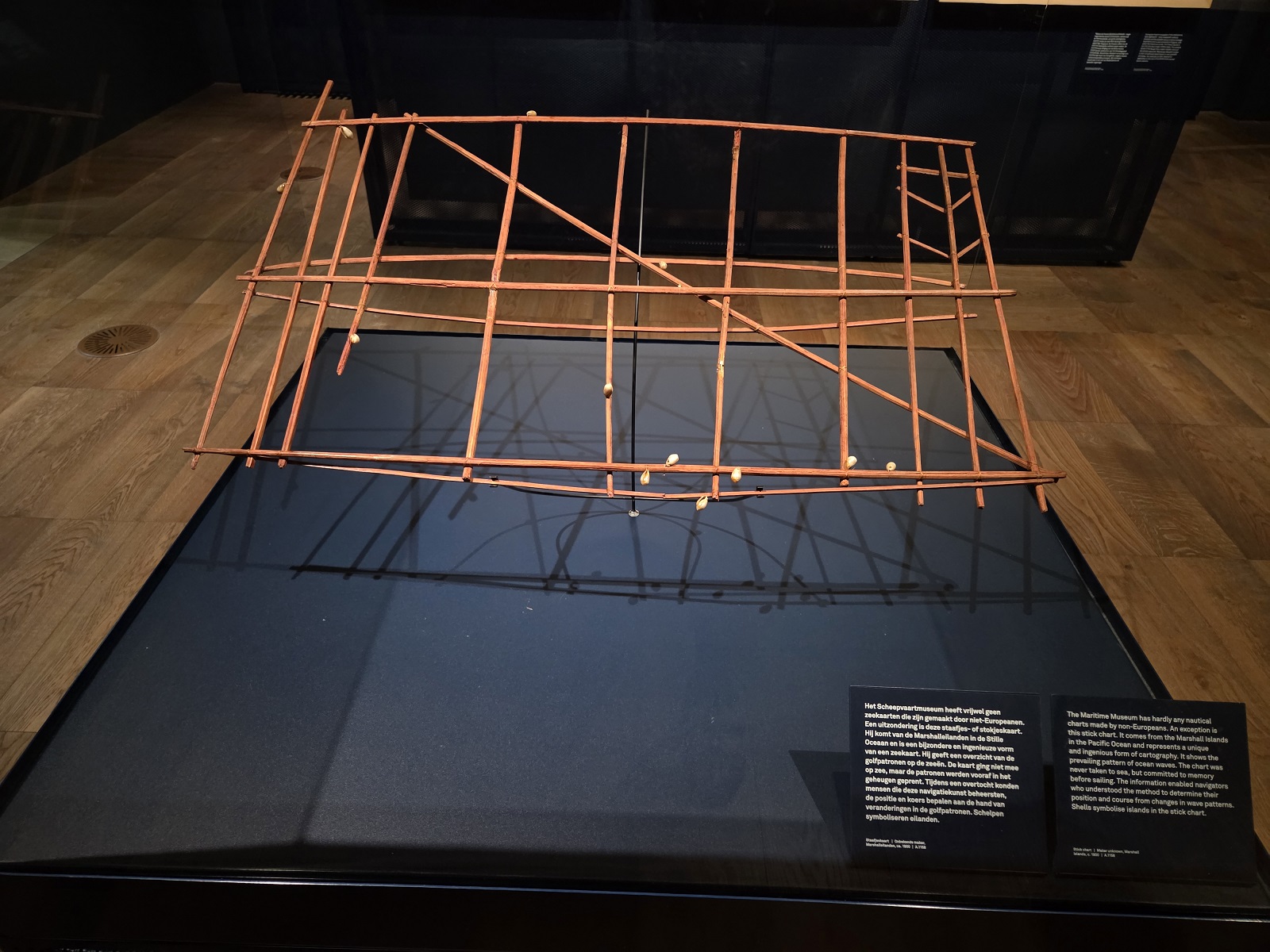
“The Maritime Museum has hardly any nautical charts made by non-Europeans. An exception is this stick chart. It comes from the Marshall Islands in the Pacific Ocean and represents a unique and ingenious form of cartography. It shows the prevailing pattern of ocean waves. The chart was never taken to sea, but committed to memory before sailing. The information enabled navigators who understood the method to determine their position and course from changes in wave patterns. Shells symbolise islands in the stick chart.”
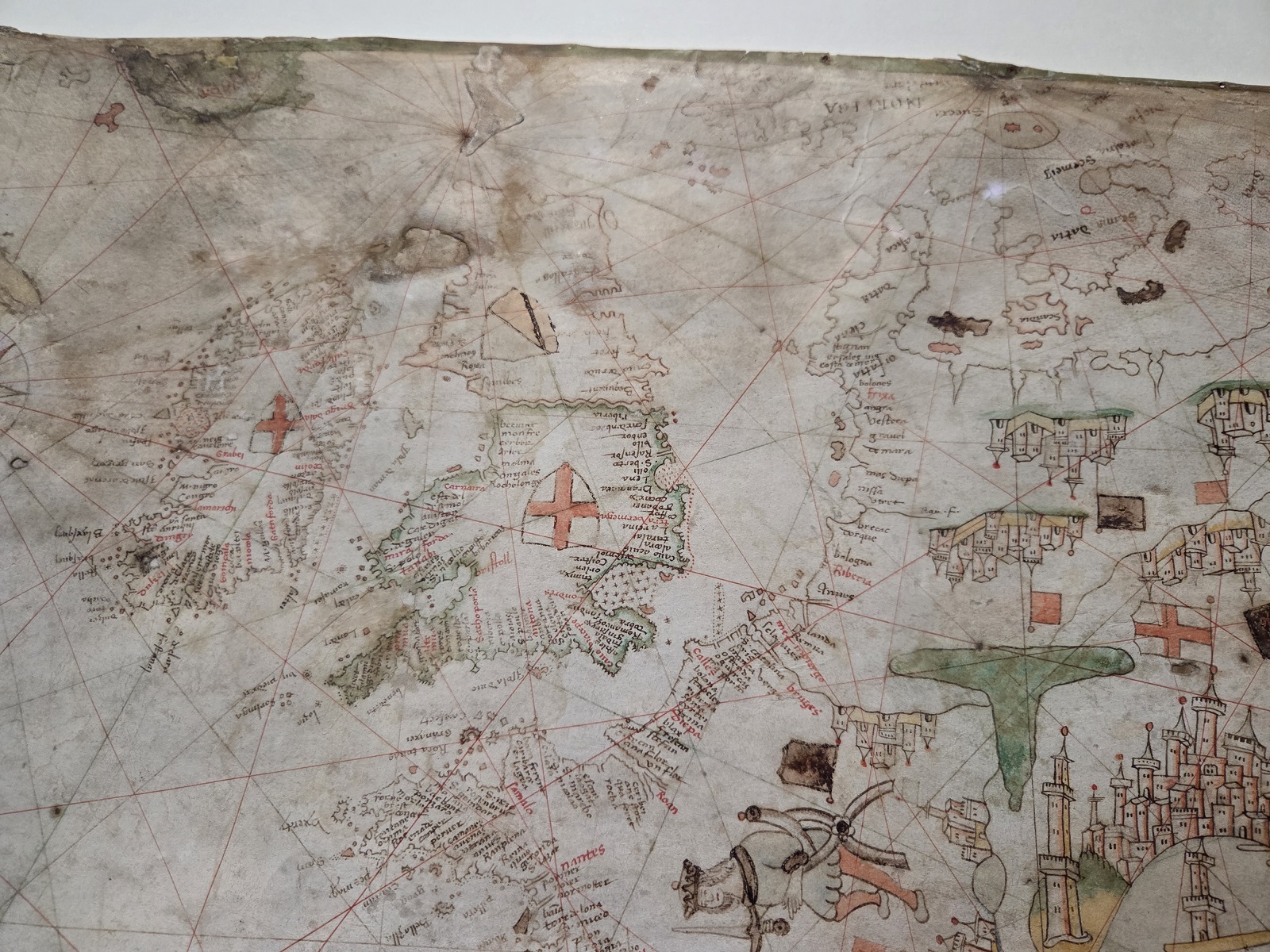
Okay I think I can see Bruges, but I don’t know if I see anything else I know.
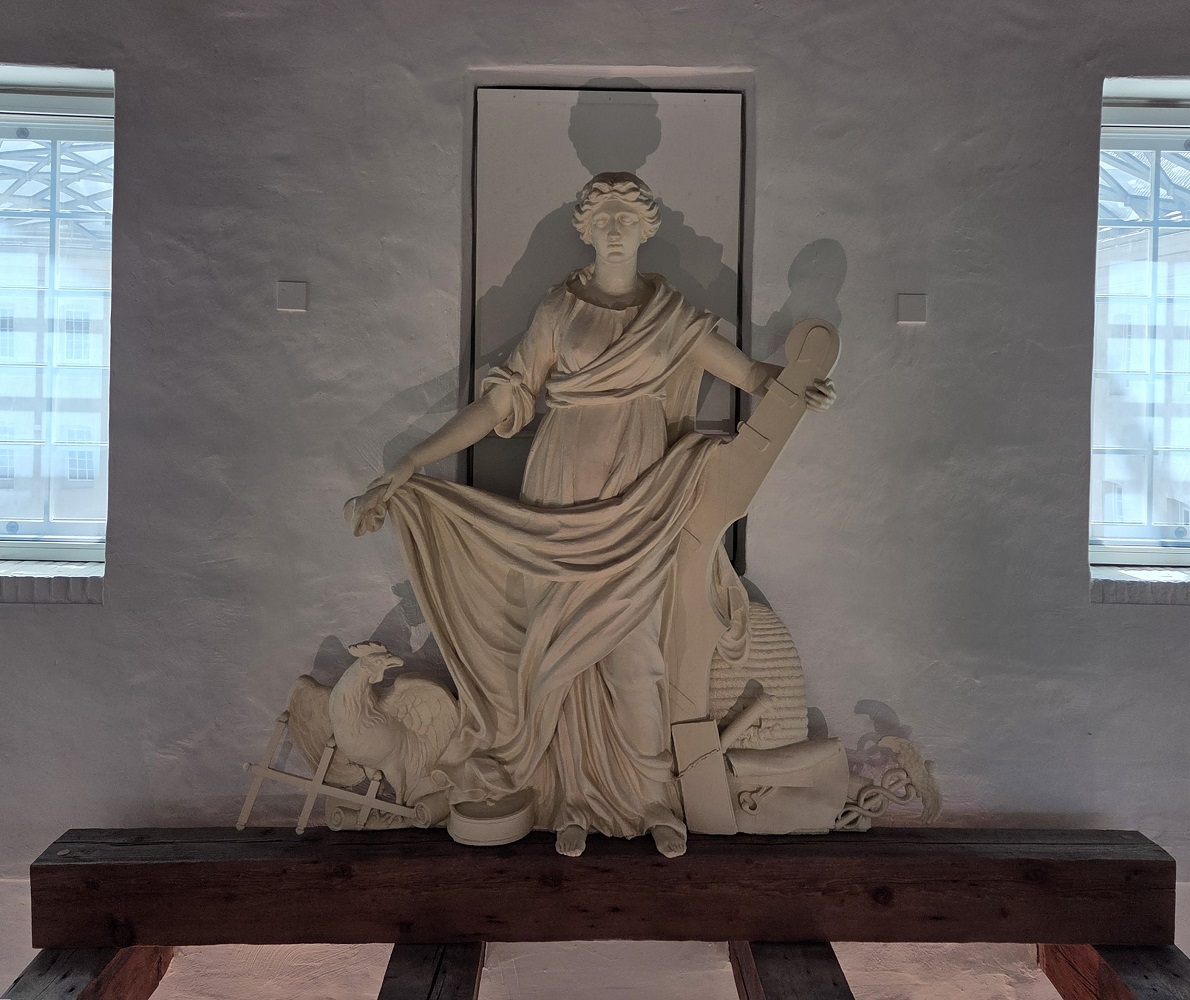
This is a statue of ‘Kaatje’, a statue representing seafaring, commissioned for the Nautical College which opened in 1785.
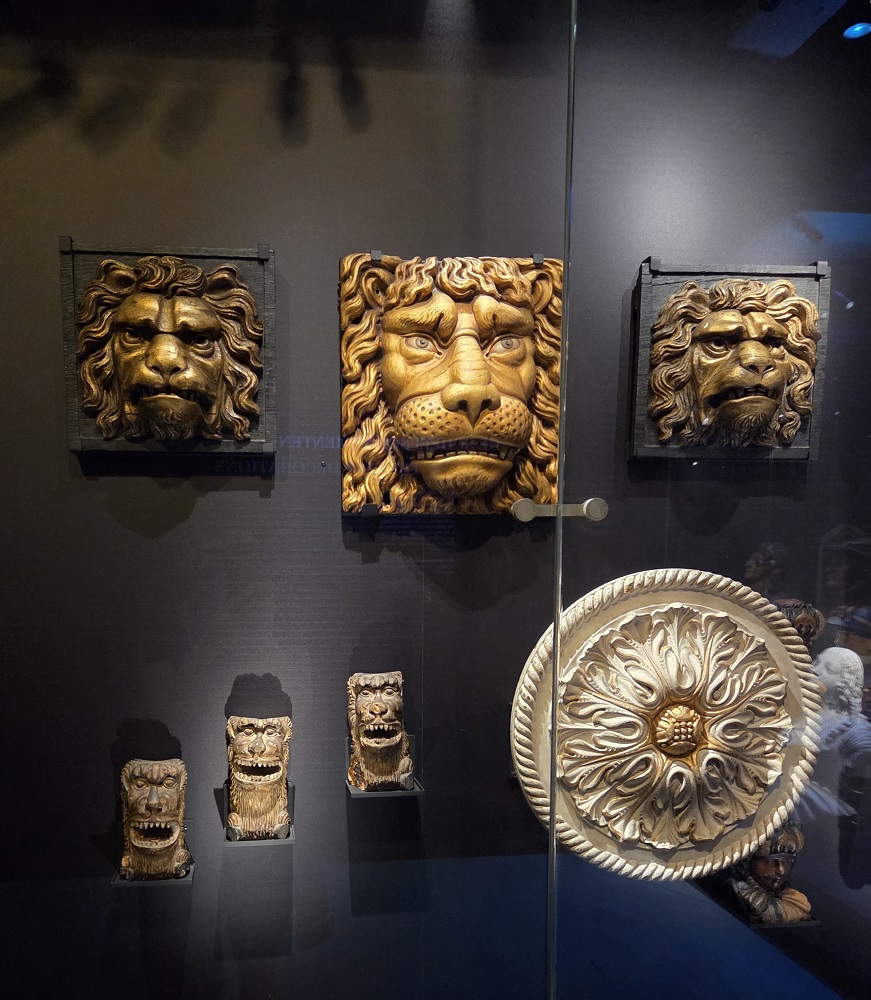
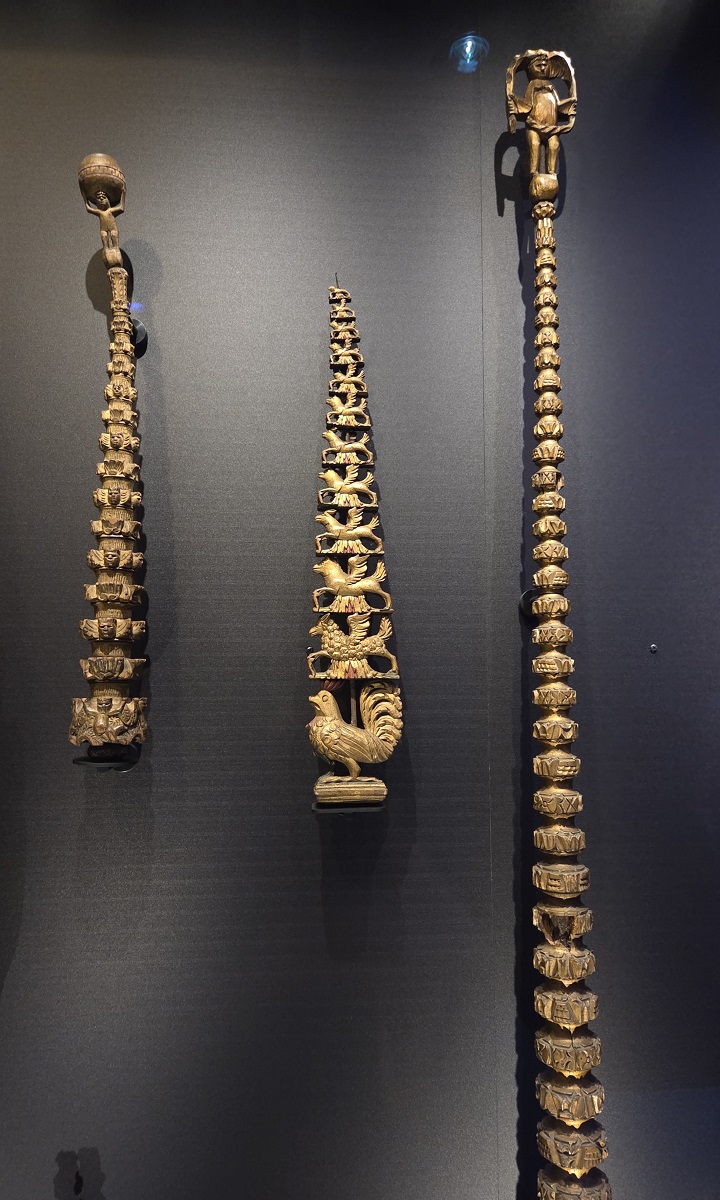
On the third floor were ‘examples of fancy woodworking from old ships’, like figureheads. And… whatever these poor lions were supposed to be.
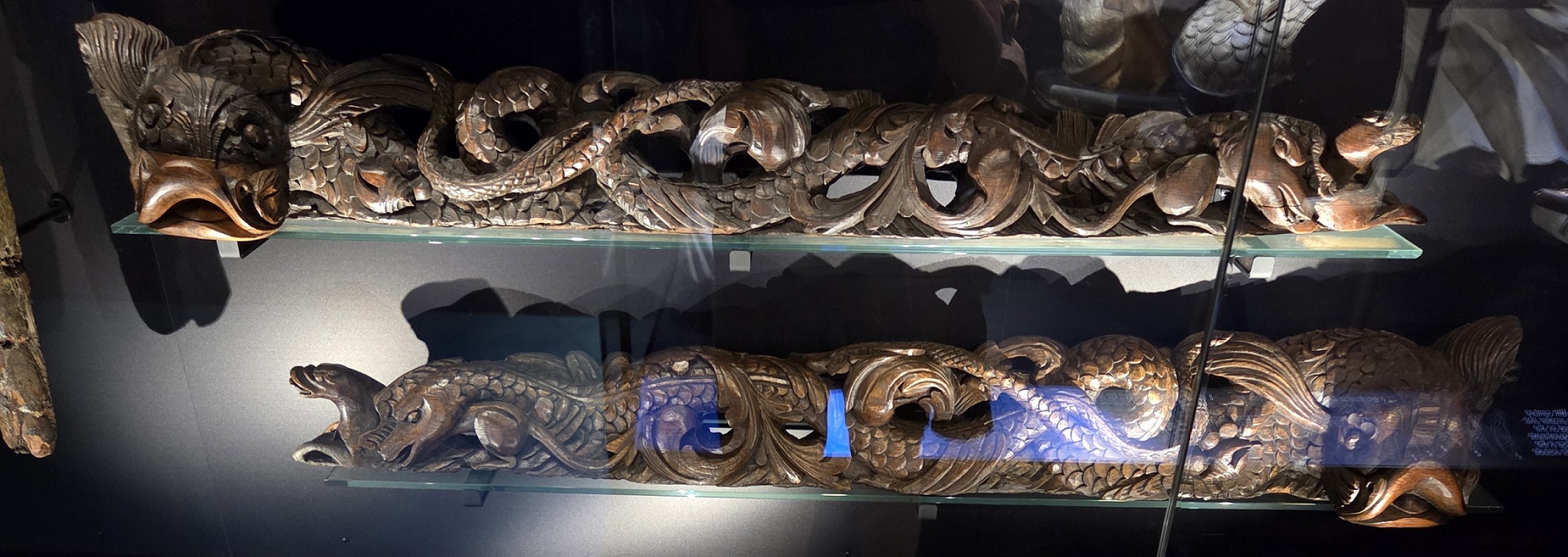
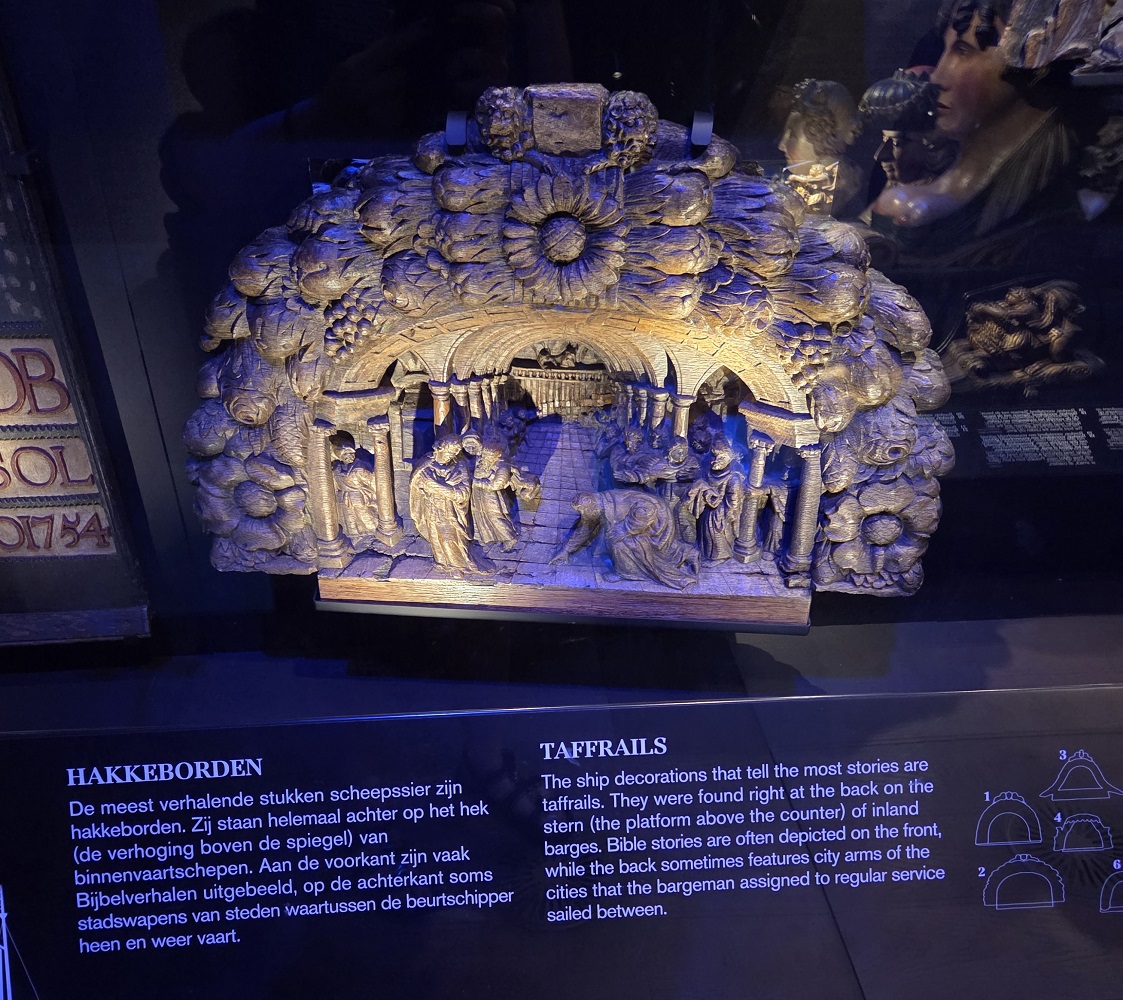
“The ship decorations that tell the most stories are taffrails. They were found right at the back on the stern (the platform above the counter) of inland barges. Bible stories are often depicted on the front, while the back sometimes features city arms of the cities that the bargeman assigned to regular service sailed between.” Say what? These are crazy detailed!!
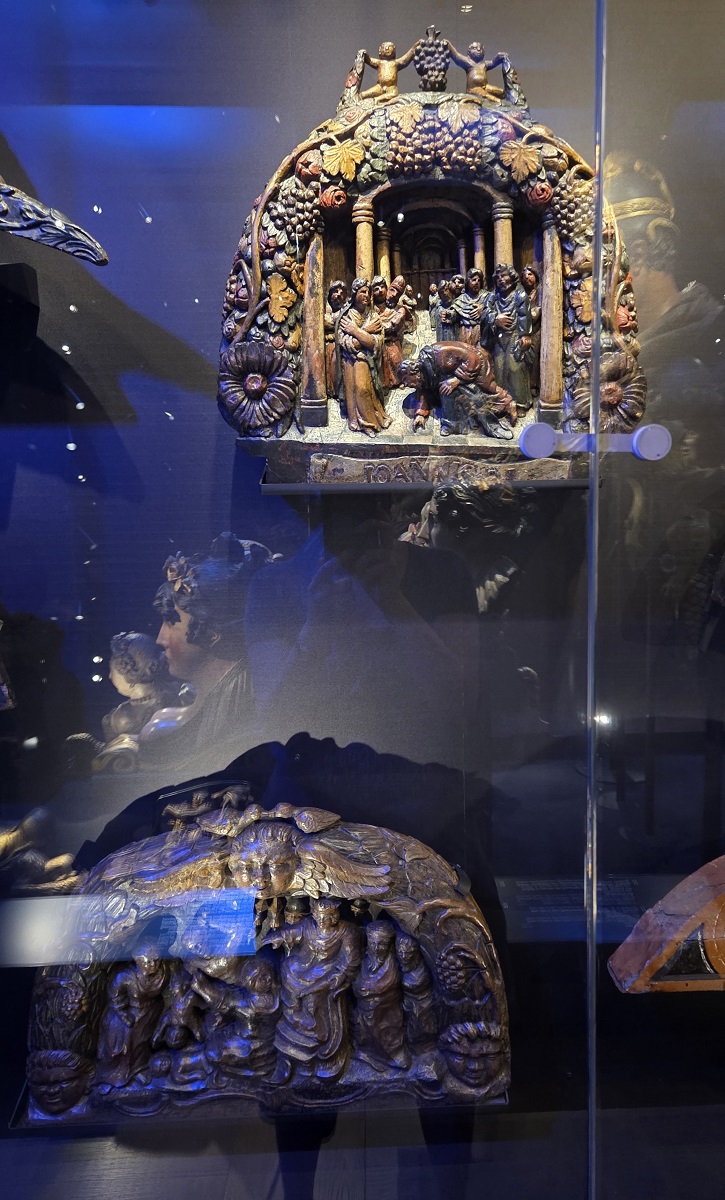
I think the bottom one is the Judgement of Solomon and the top one is Jesus and the Adulteress (Jesus is doing the part where he bent over and started doodling on the ground).
Next to that was a room of historic navigational equipment, which I wasn’t really into but Tharash like it. Then we went to the gift shop and I bought a magnet with a historic map of Amsterdam on it. Well, Tharash’s dad bought it for me, I forgot my wallet was still in the locker downstairs. Thanks!
While we were waiting for the bus, we stepped into a little enclosed space between buildings and Tharash’s dad showed us the window of the dorm room from when he was a student. Tharash also spotted a bat box nearby on a tree, which was of interest to him as he’s studying them for his job right now.
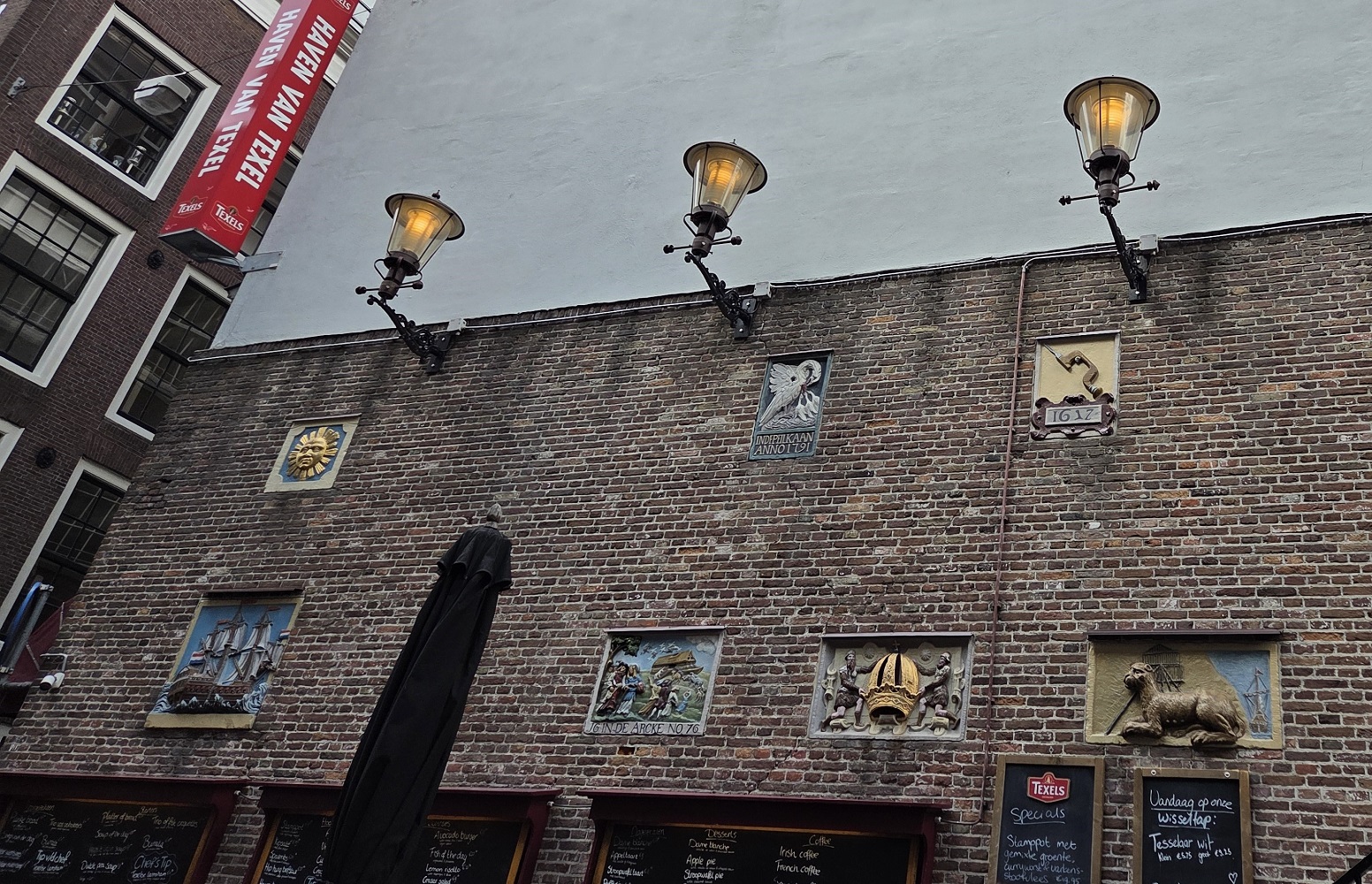
Then it was time for dinner, so we went to the restaurant Haven van Texel. And now I got the canal-side patio experience I’d wanted in Utrecht, and it was perfect. Except for the people smoking, but they left eventually.
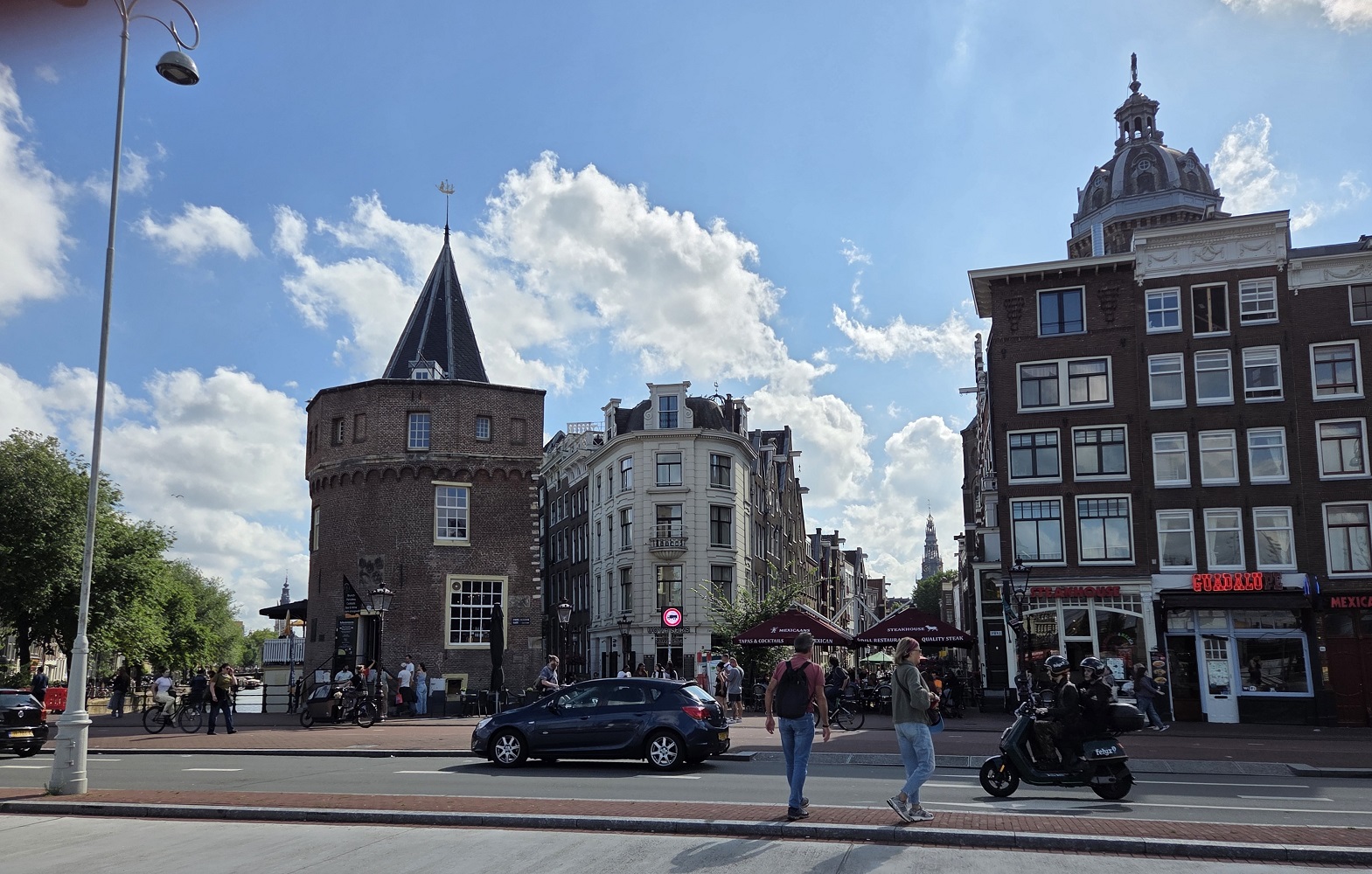
An old defensive tower.
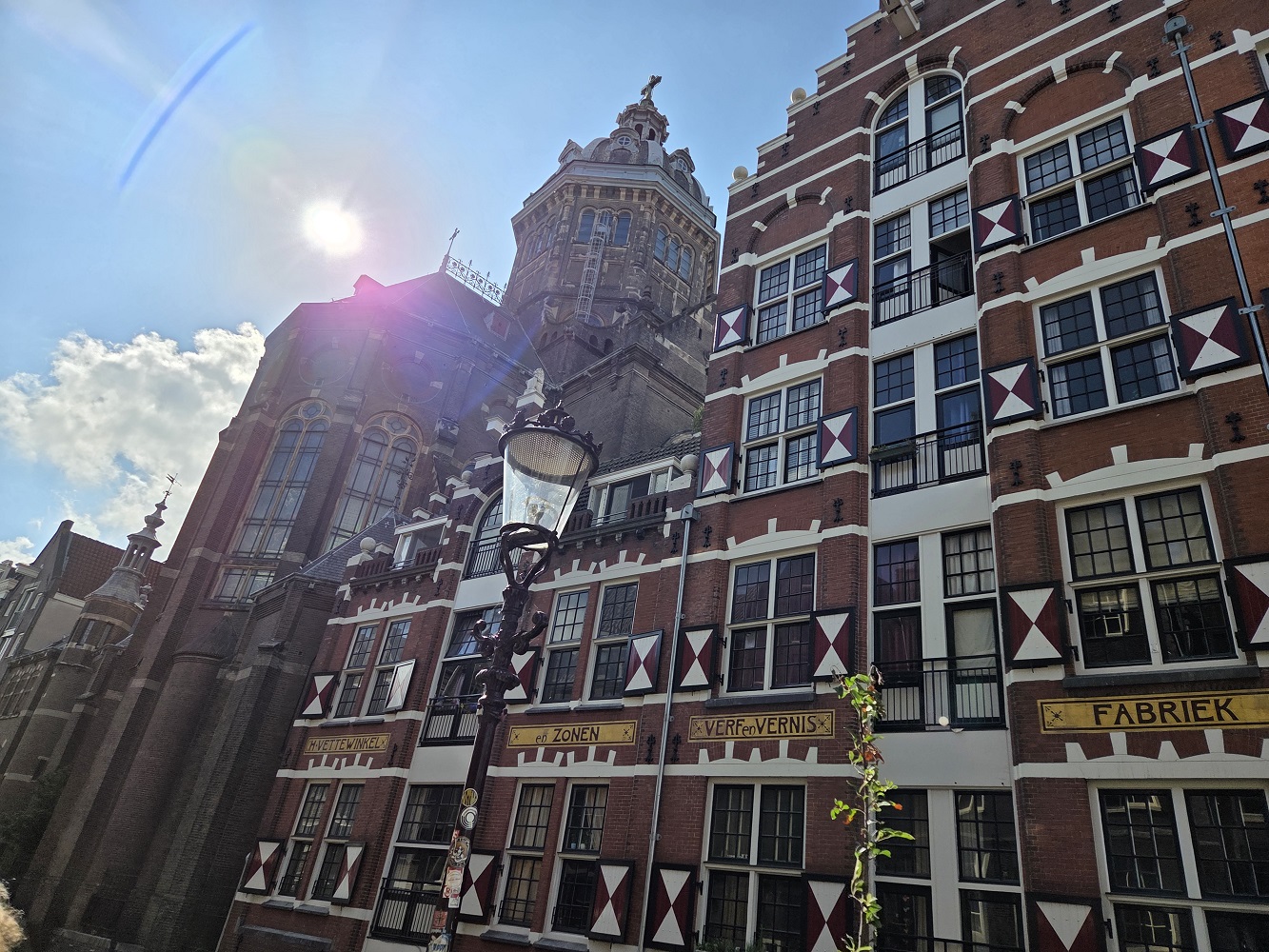
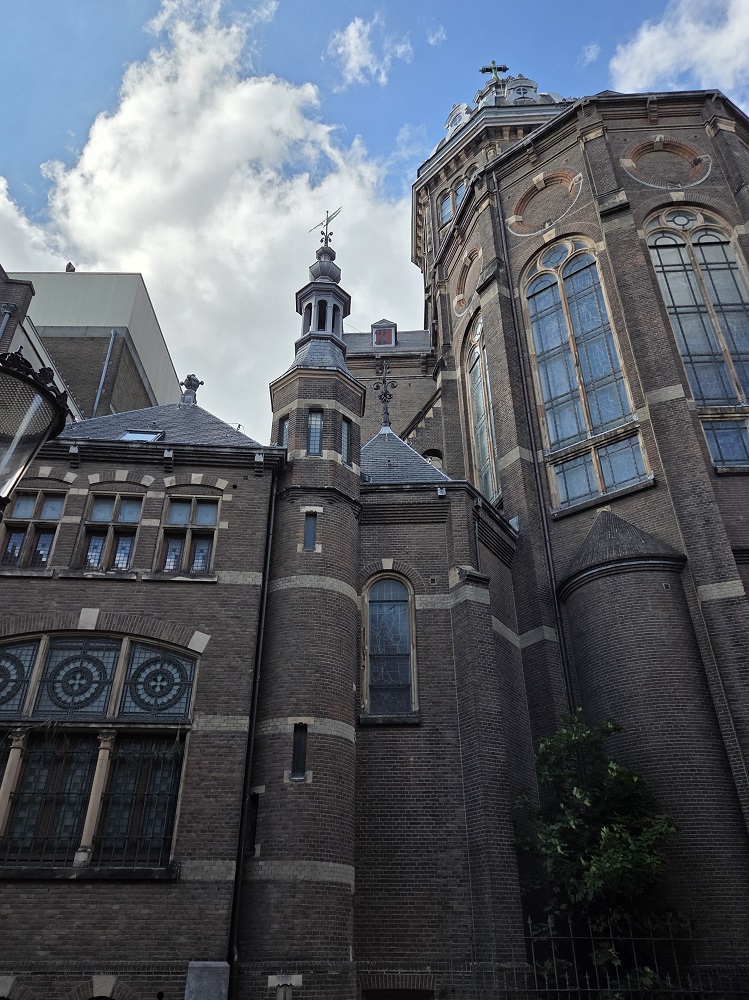
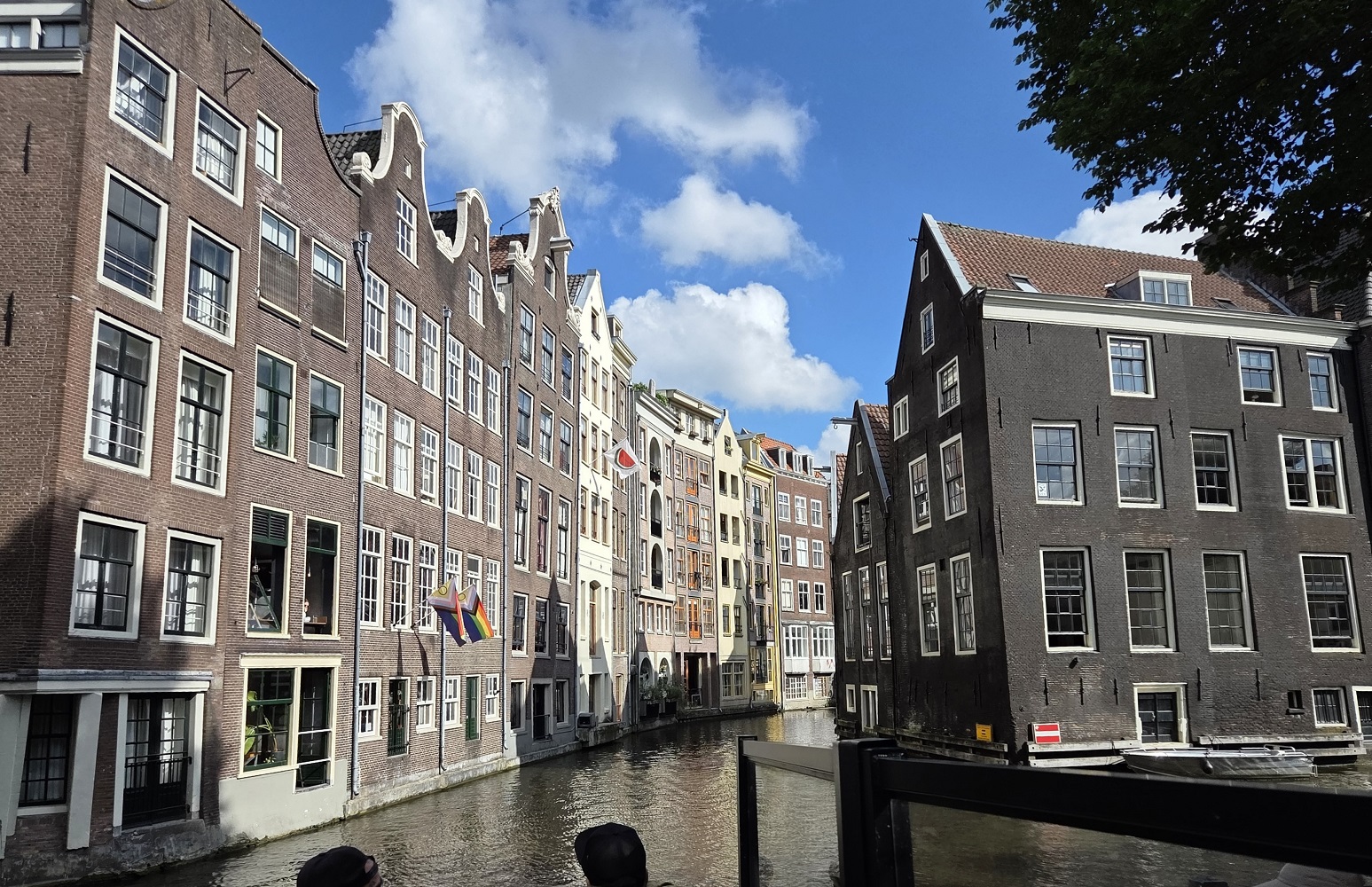
The view from the patio. Perfect.
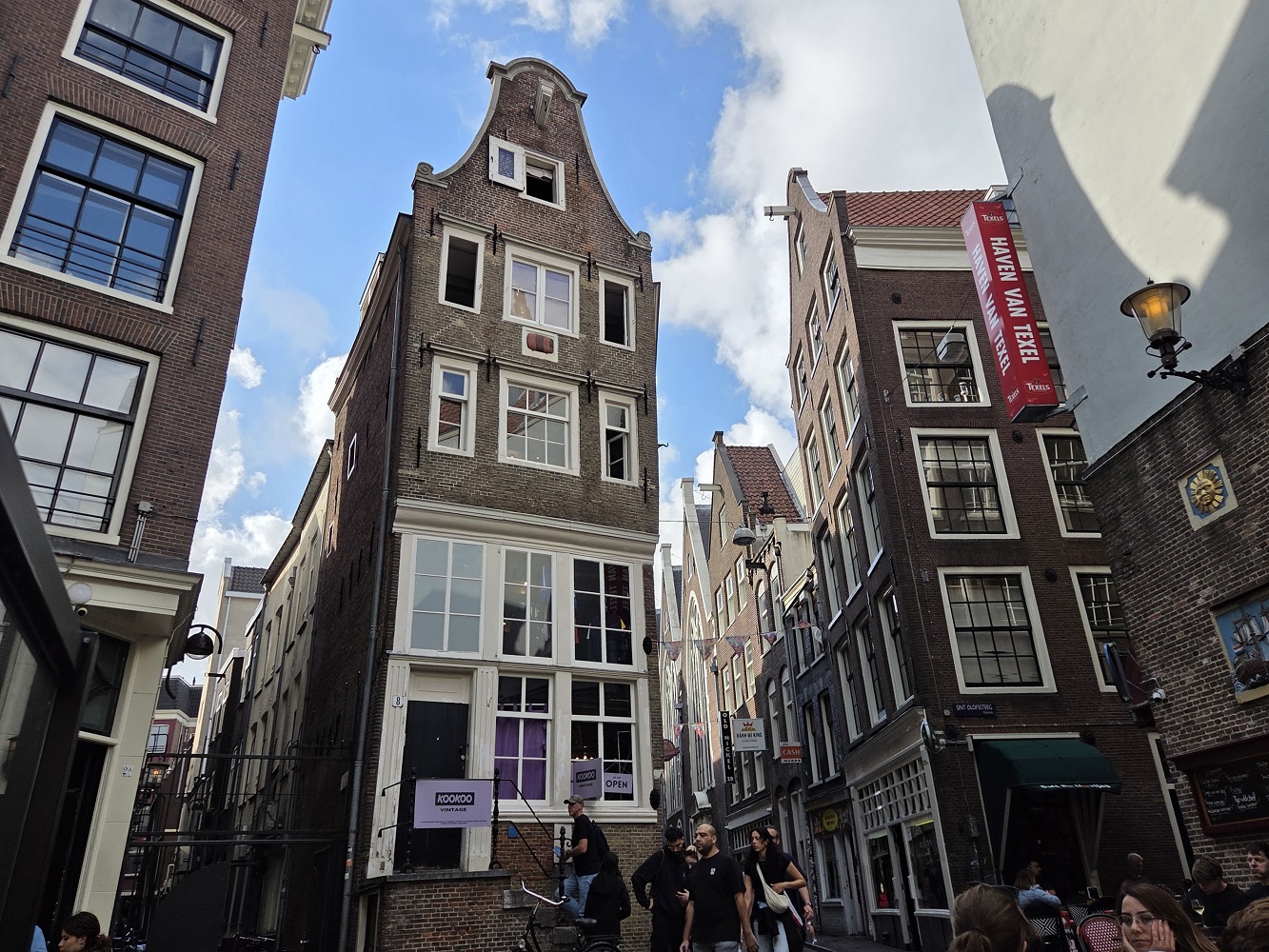
The view in the other direction has this nifty medieval intersection.
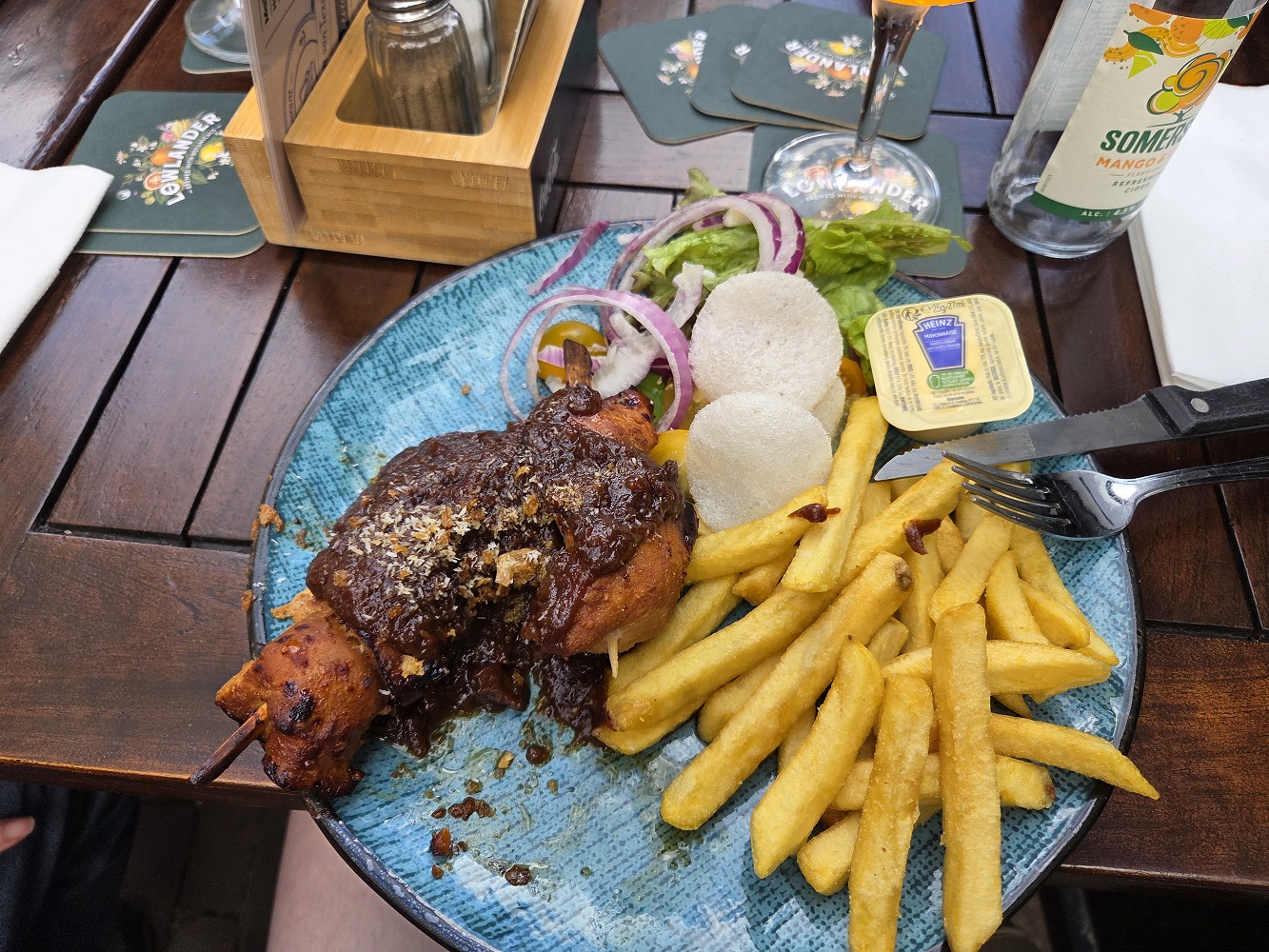
I had the chicken satay, and a mango cider, and it was really good!! I think I managed to finish it; it was a challenge, but a tasty one. The chips on top are shrimp chips.
Tharash’s dad ordered table bread, which came with a tapenade and herb butter; Tharash had a prawnburger, his dad had stamppot. For dessert, Tharash and I split a ‘stroopwafel pie’, which turned out to be cheesecake! It had whipped cream and vanilla ice cream, and stroopwafel bits scattered on top. His dad had a ‘Texel coffee’. When we got the bill, Tharash’s dad told them that it was excellent food, and Tharash let them know that he doesn’t always compliment restaurants so it was a really genuine sentiment.
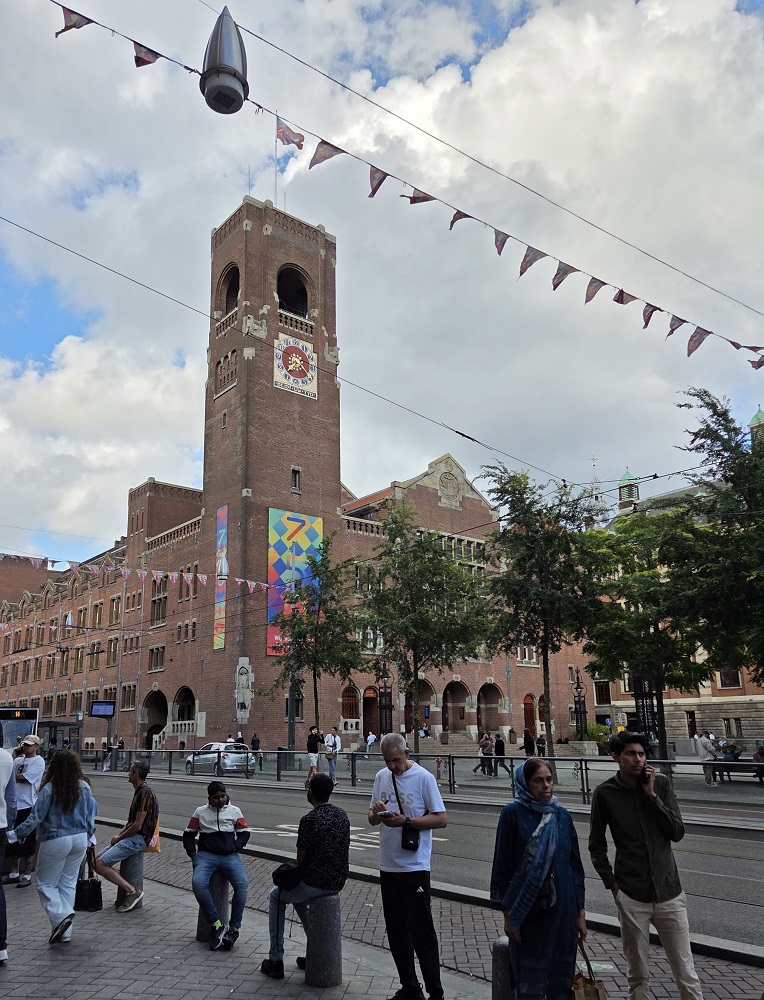
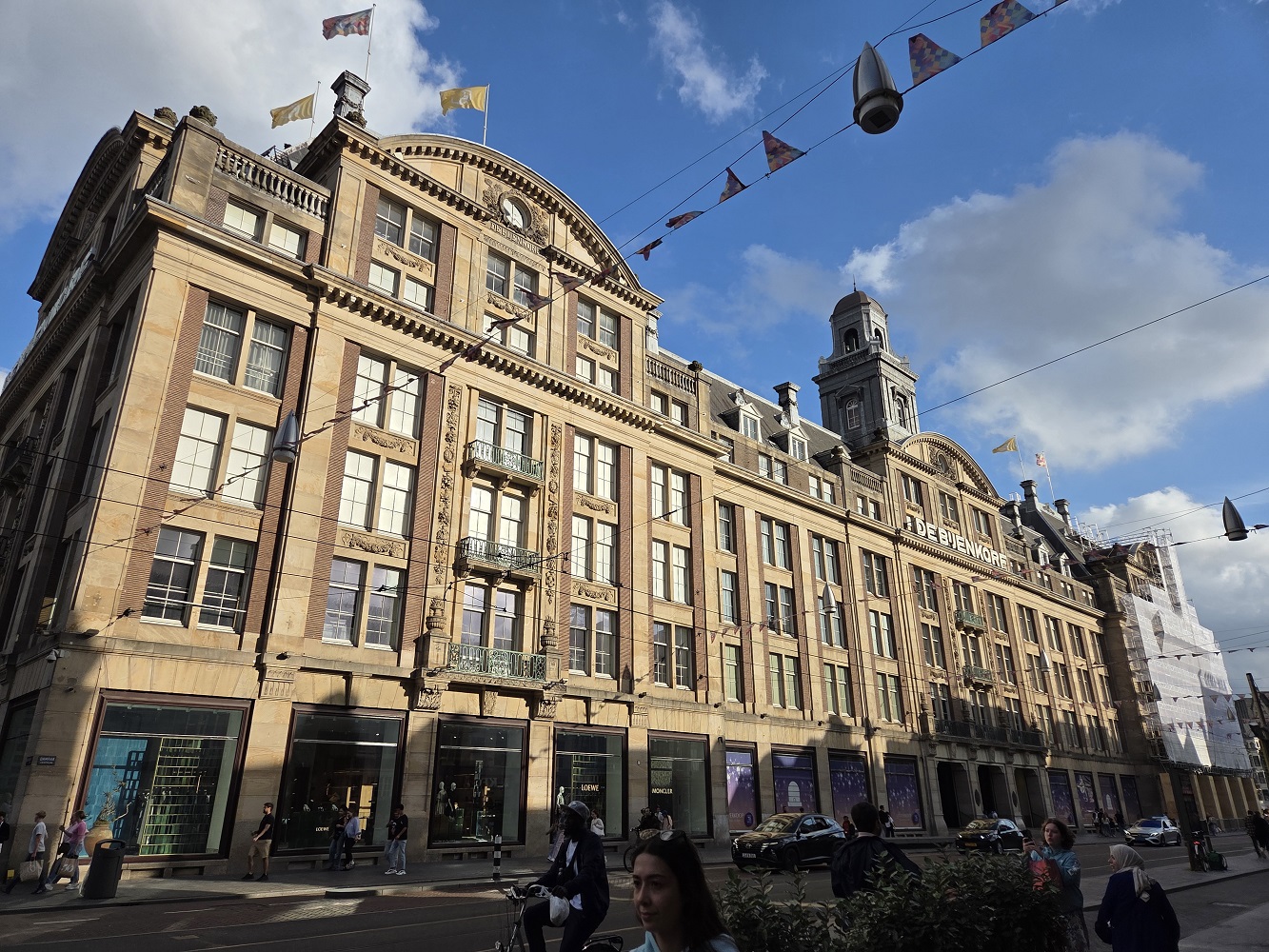
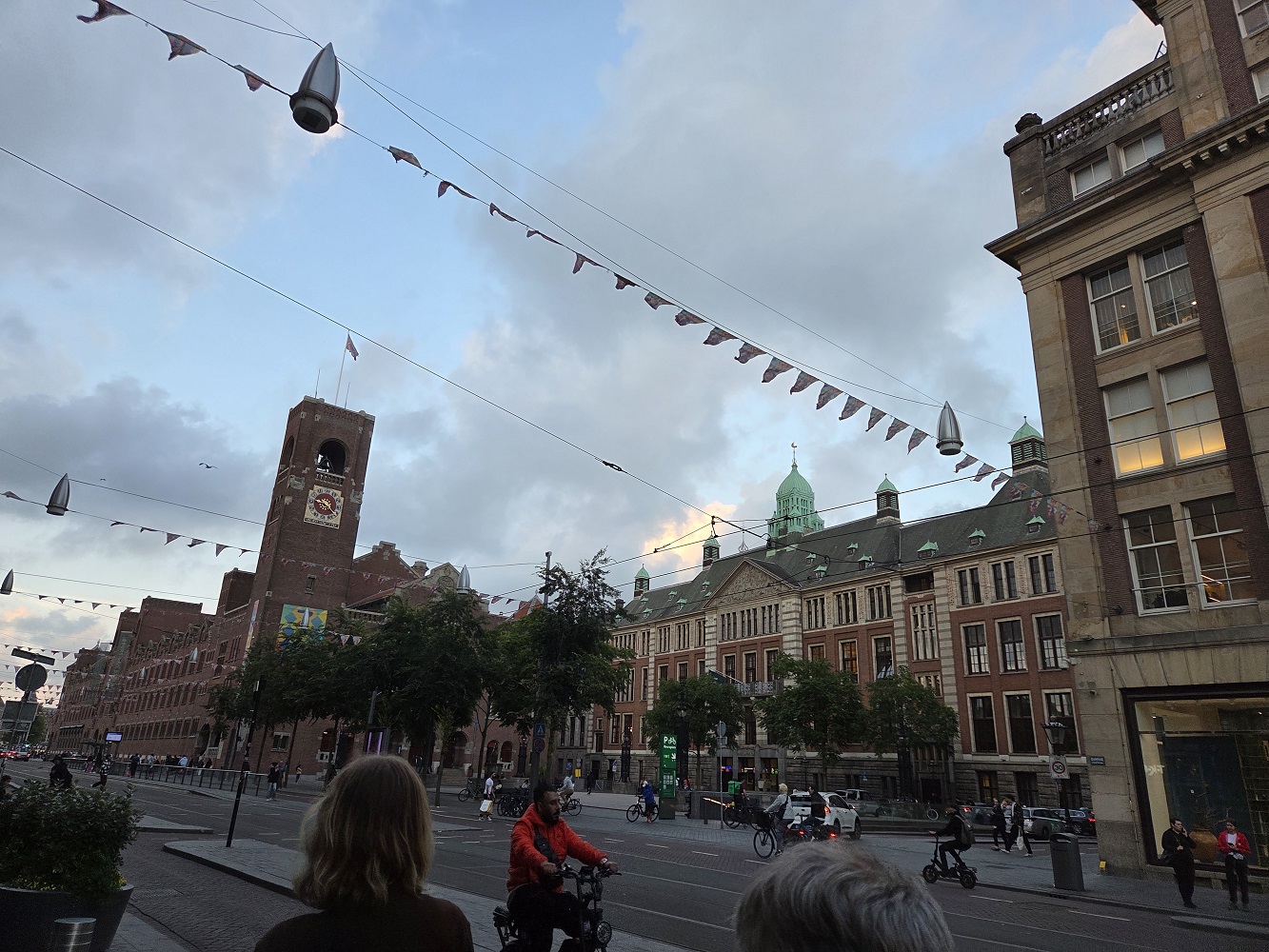
Then we walked to the Nieuwe Kerk for an organ concert! We walked down the busiest street in Amsterdam, the one that directly connects the train station to Dam Square.
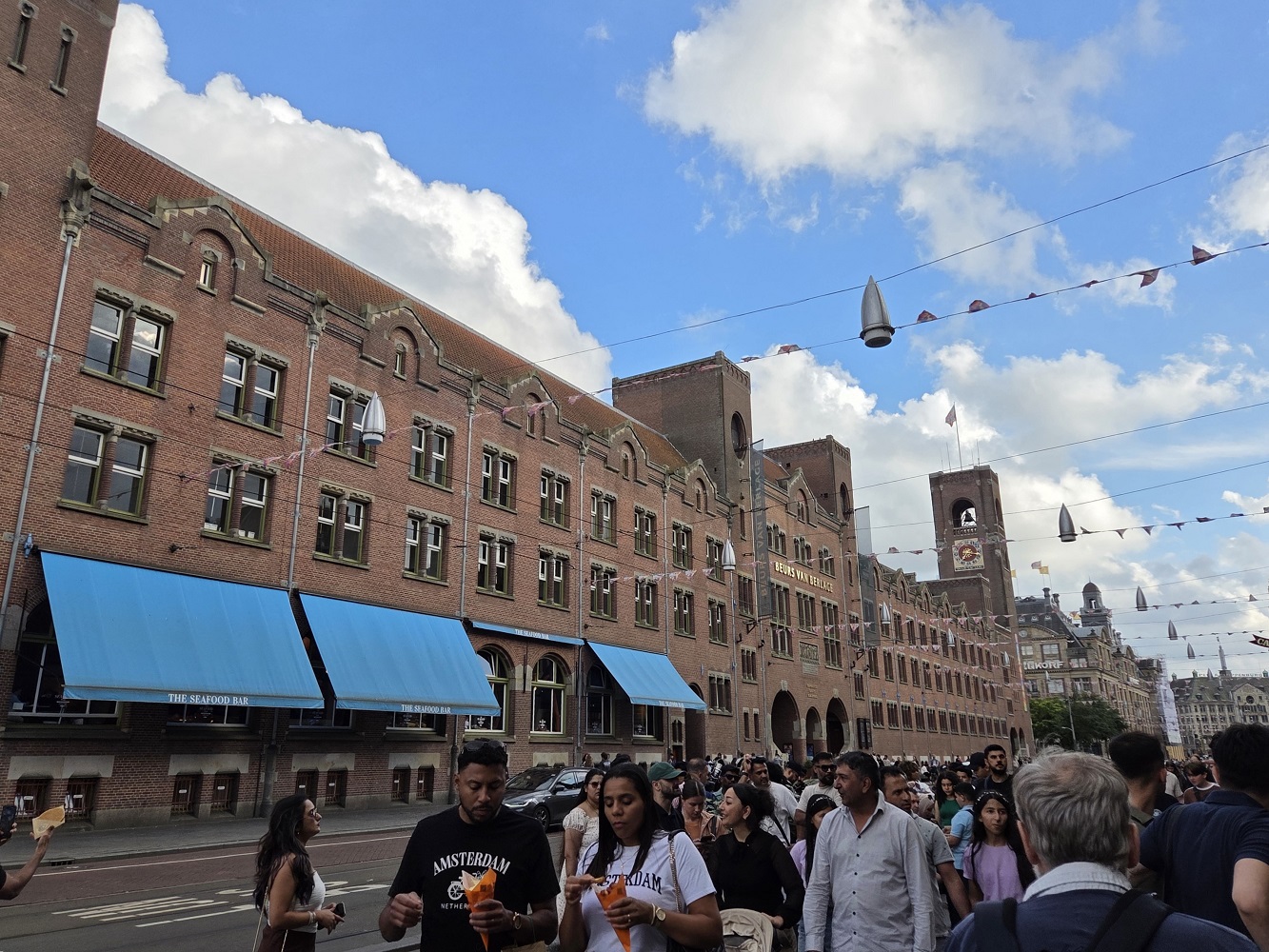
The Beurs van Berlage, a former stock exchange (the third one of Amsterdam before it all went digital) designed by the famous architect Berlage.
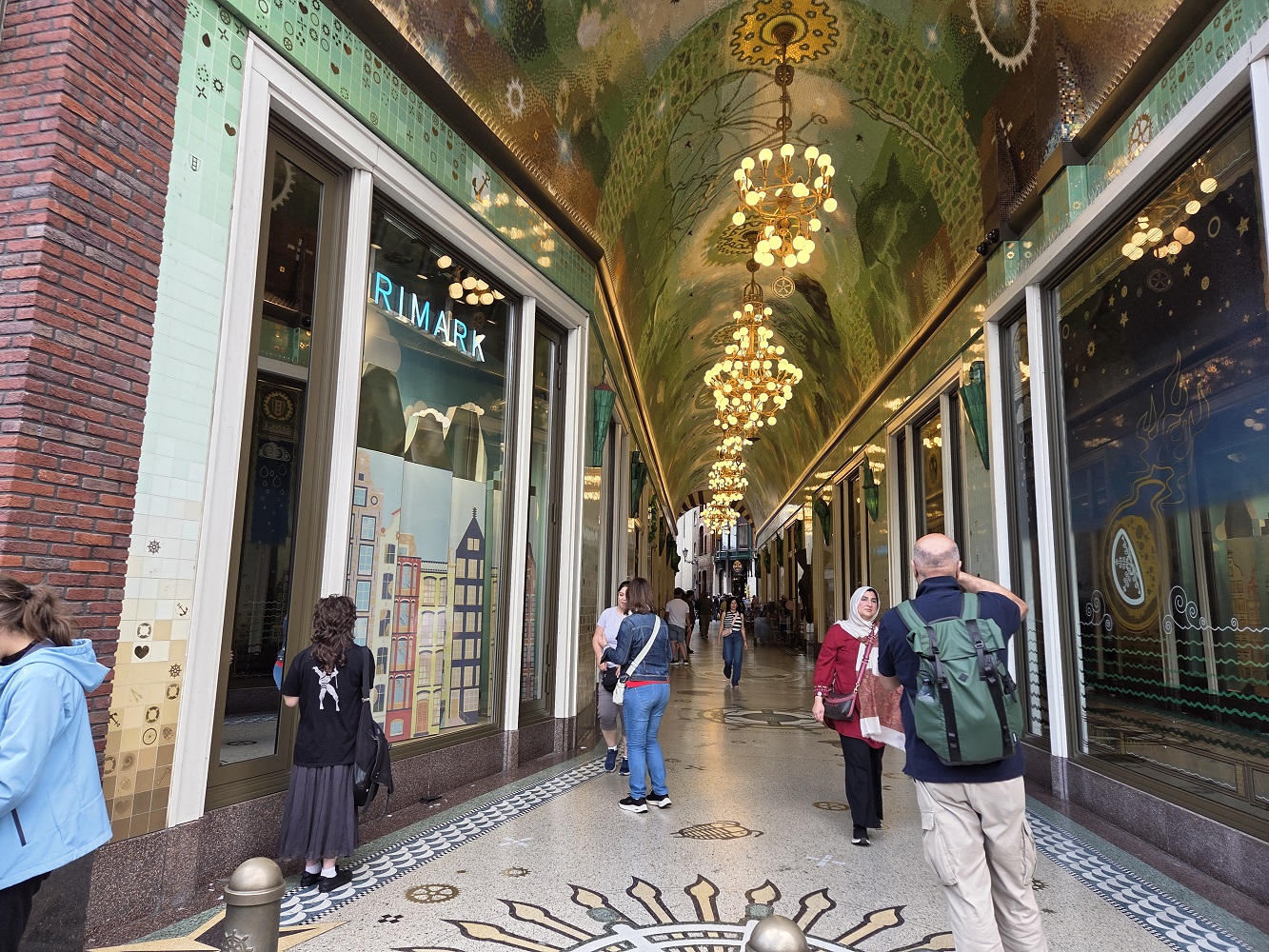
Never been inside the Nieuwe Kerk, though I’ve seen the outside so many times, so I was excited, and it was justified. It has two organs!!
The first half of the concert was played on the Transept organ, just a little one, but it still had pedals! Wouldn’t think pedals would fit in that little guy.
Performer: Henk Verhoef
Girolamo Frescobaldi – Toccata sopra i pedali per l’organo, e senze
Jan Pietersz. Sweelinck – Da pacem Domine in diebus nostris (4 variations)
Johann Jakob Froberger – Fantasia sopra Ut, Re, Mi, Fa, Sol, La
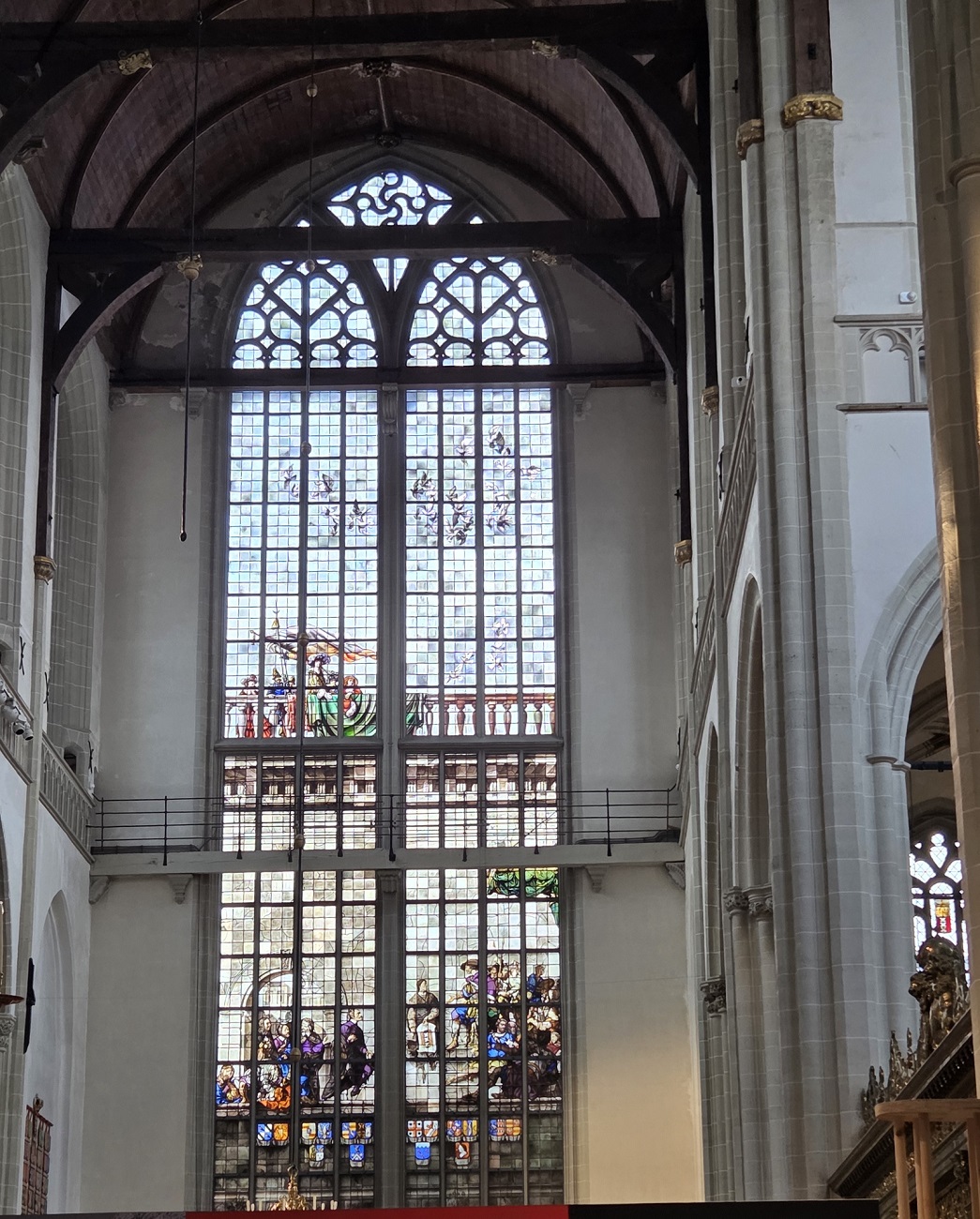
I shoulda taken a picture of the window on the other side, with all the pictures of historical royalty, I looked at it during the first half of the concert enough. : P But I didn’t so you only get this window.
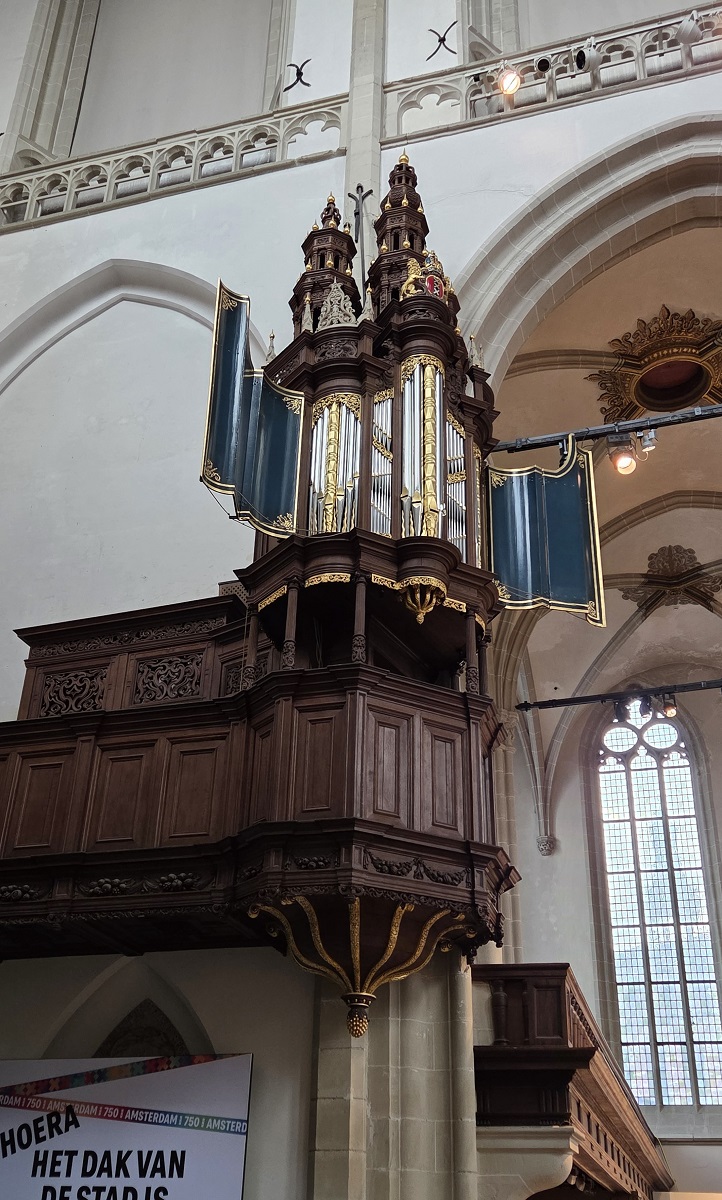
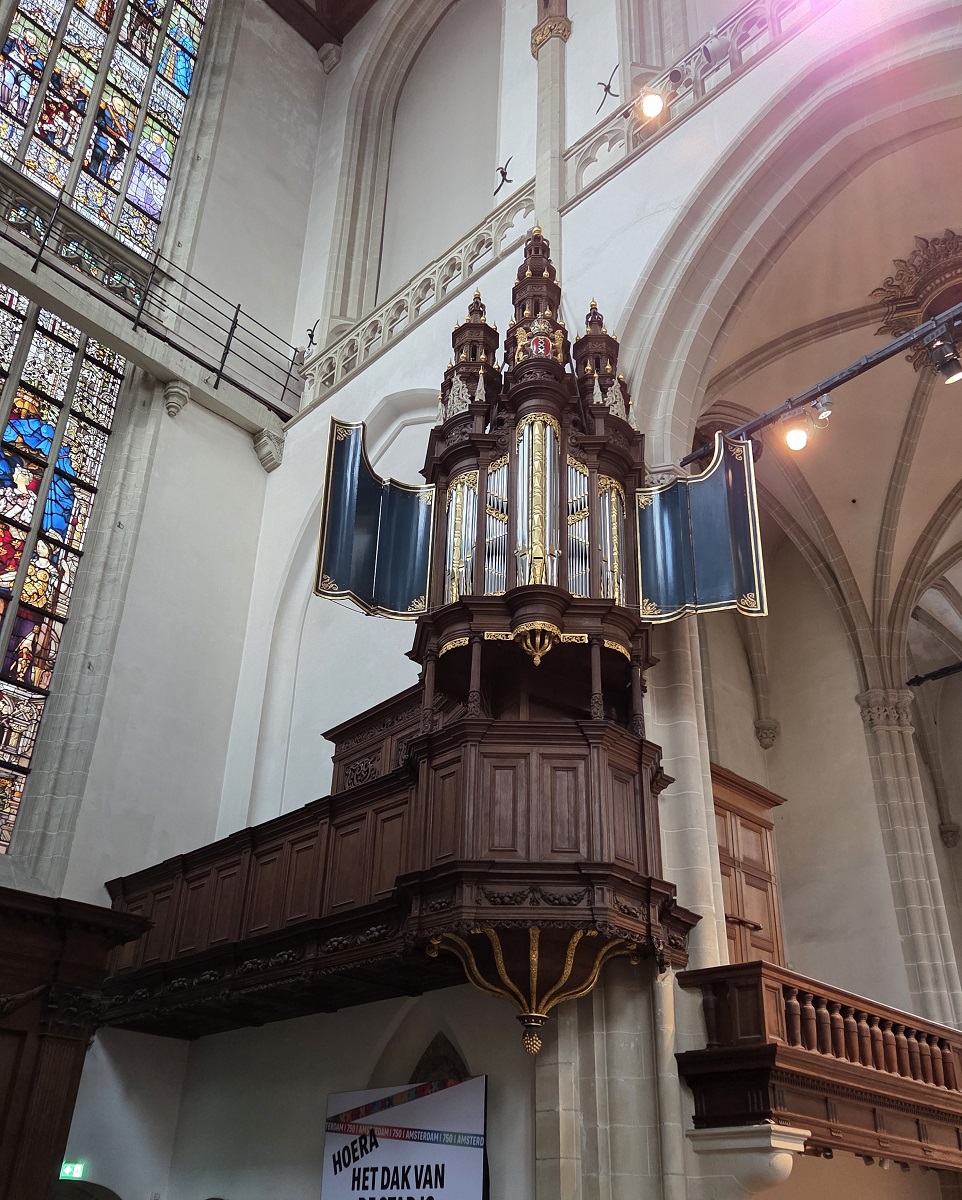
Then we moved over to the BIG organ. It had shutters for its pipes that had to be opened, using ropes (which were squeaky). This was also the only concert I went to that had a camera/screen set-up so you can watch the organist.
Heinrich Scheidemann – Magnificat in de zesde toon (4 verses)
Anthon van der Horst – Partite diverse sopra ‘O, Nostre Dieu et Seigneur amiable’ (Psalm 8)
Le chant du pseaume – Bicinium (fugue) – Ricercare – Air – Toccata – Organum
Johann Sebastian Bach – Prelude and Fugue in G, BWV 550
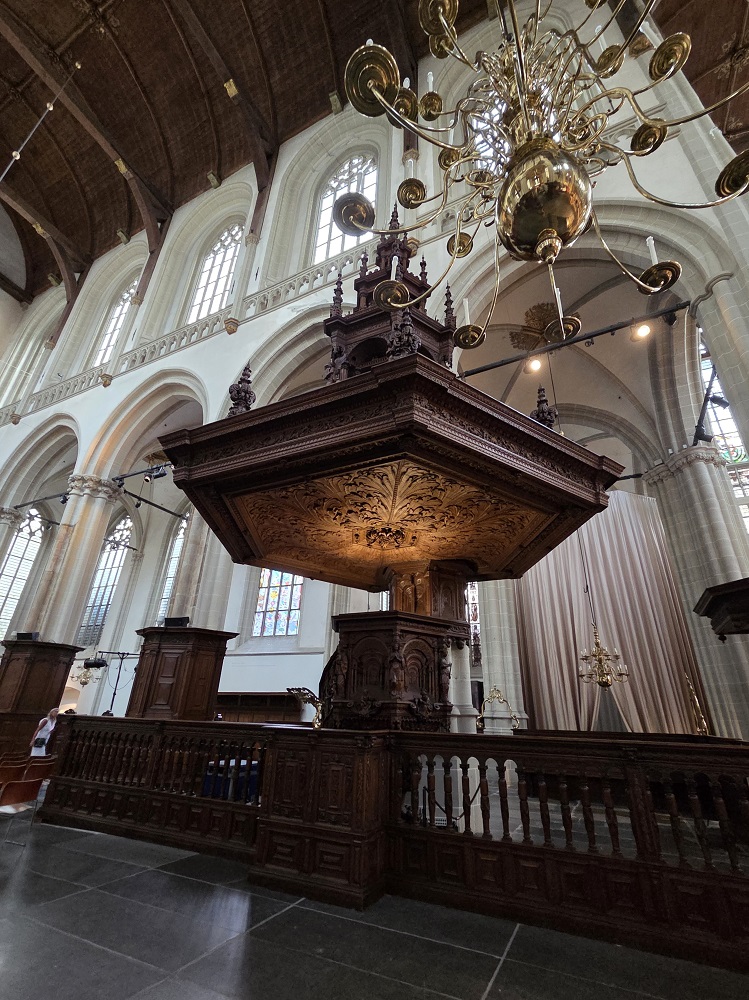
This might be the biggest… one of whatever this is I’ve ever seen.
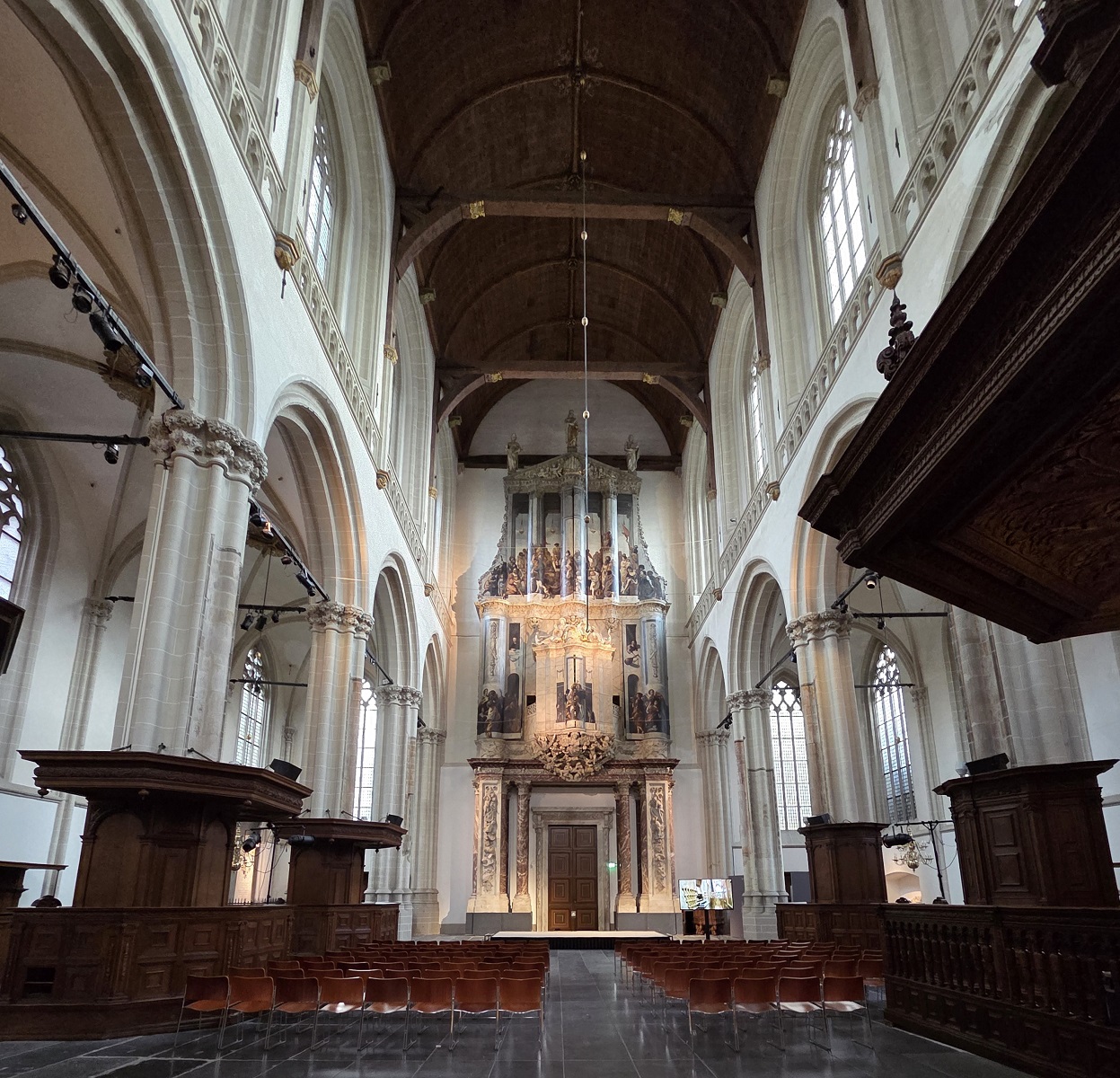
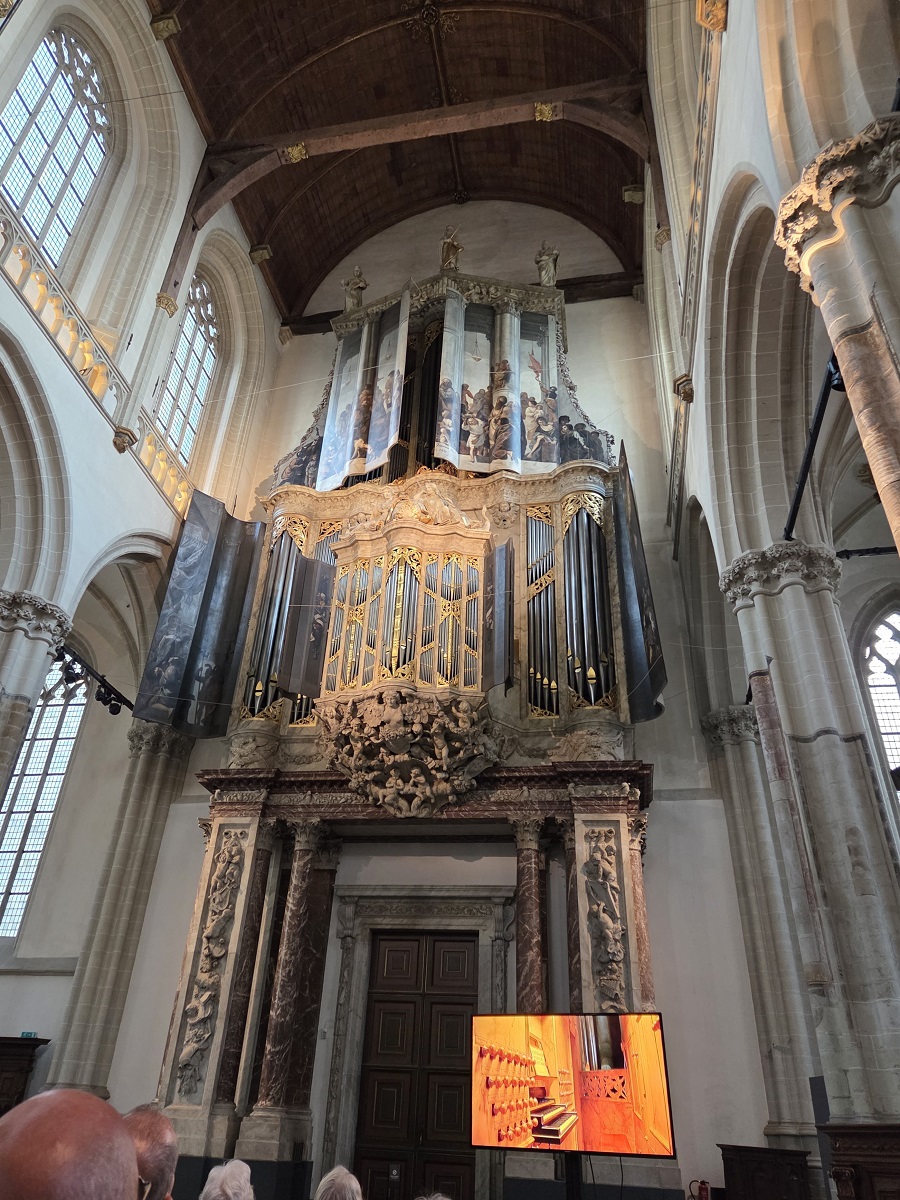
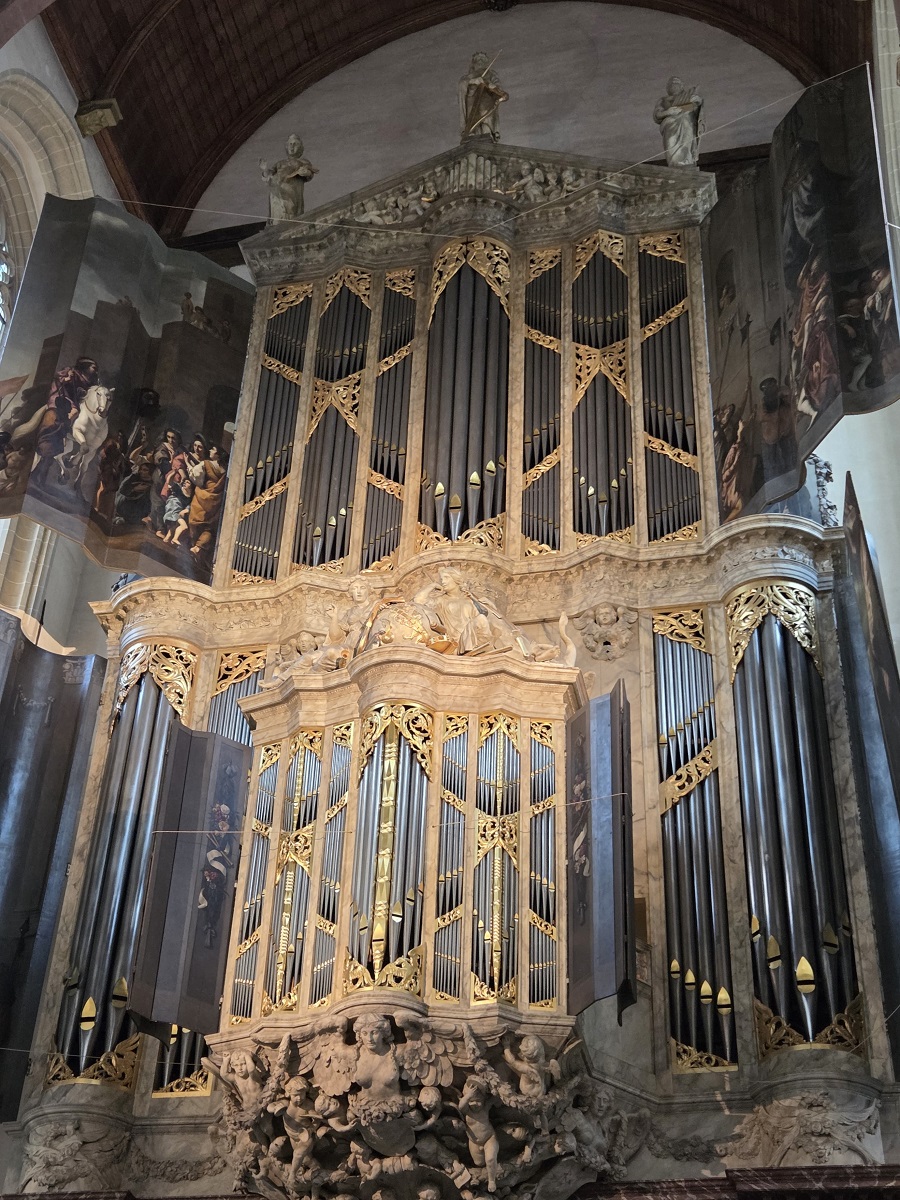
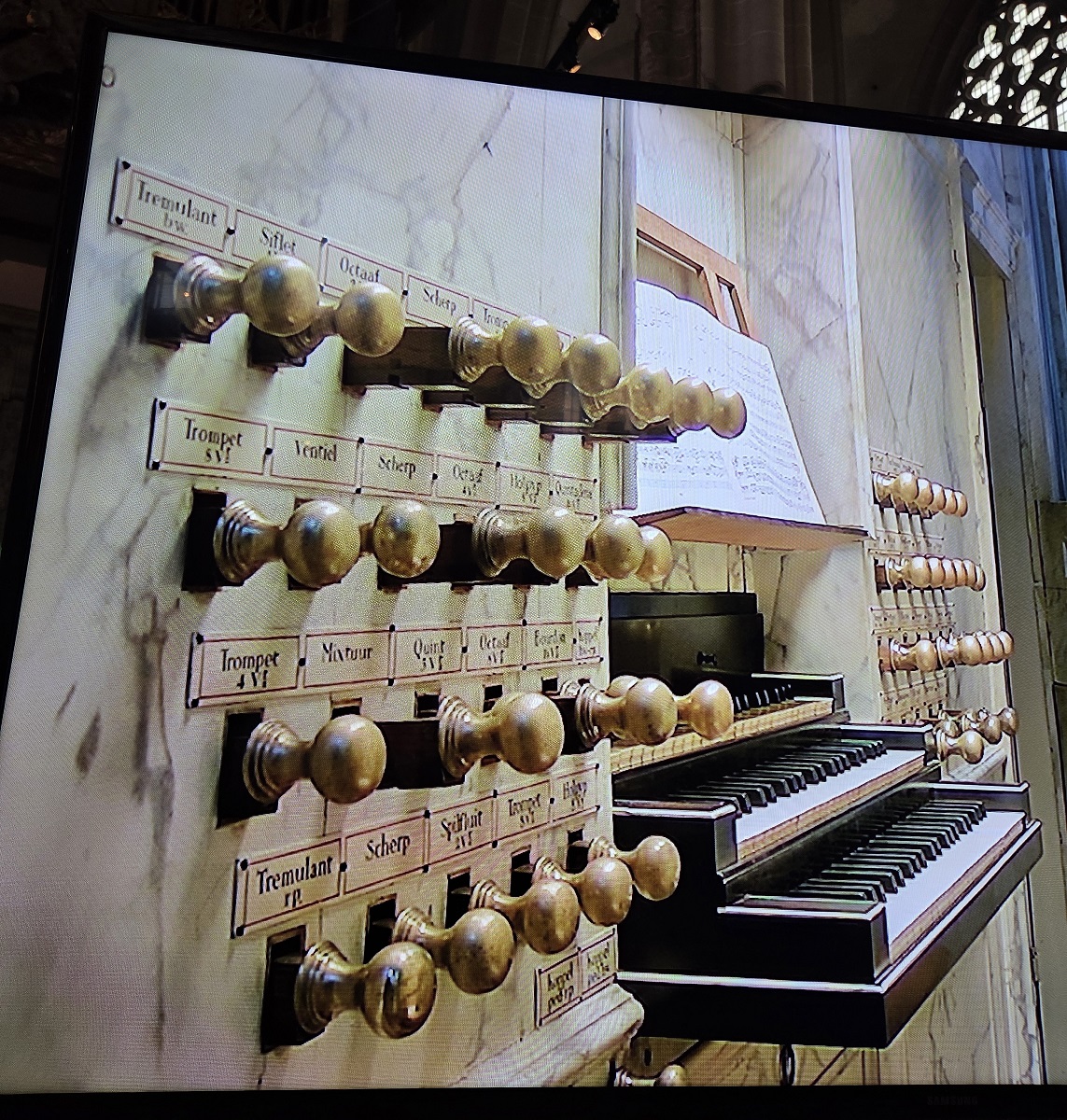
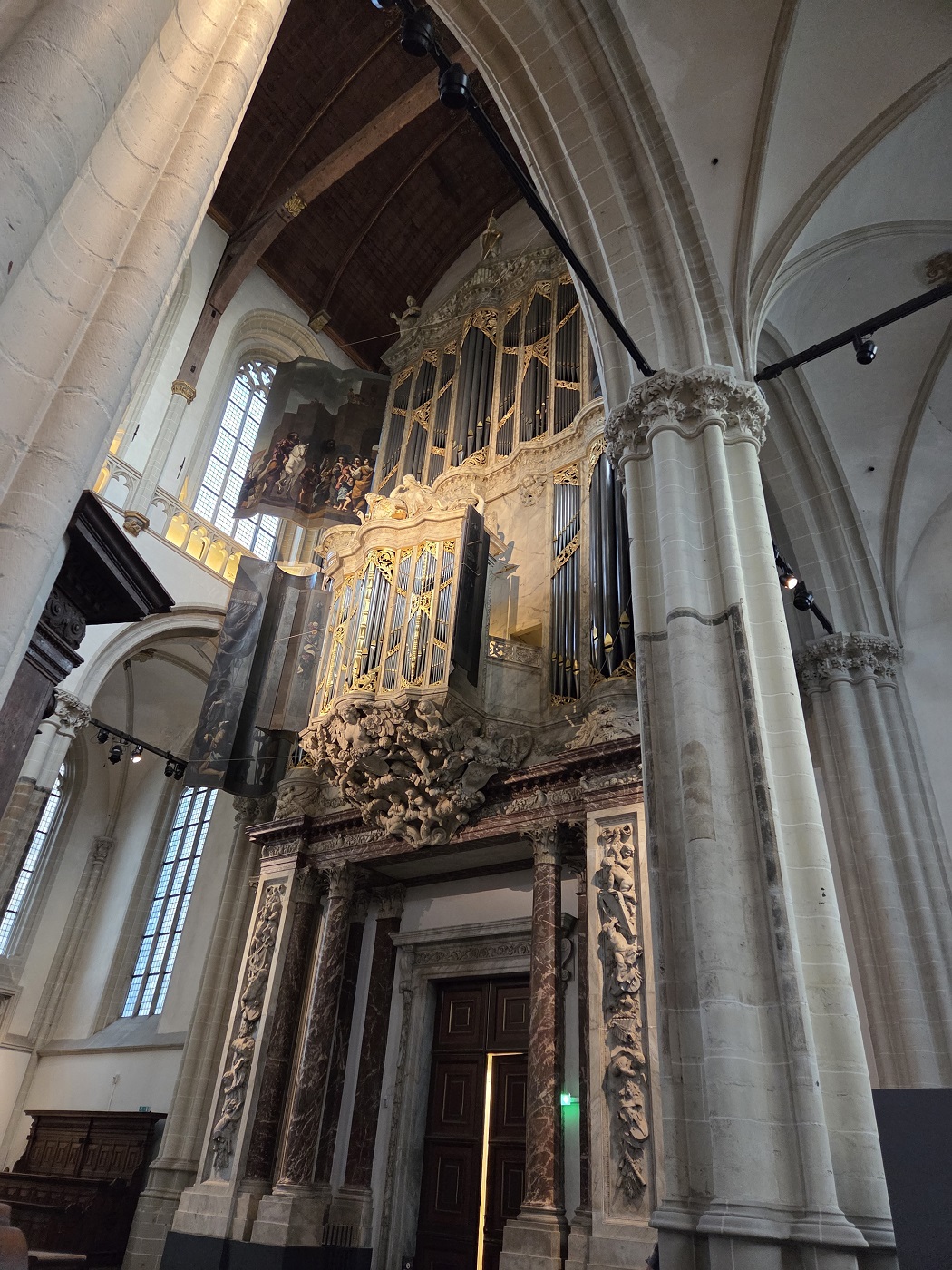
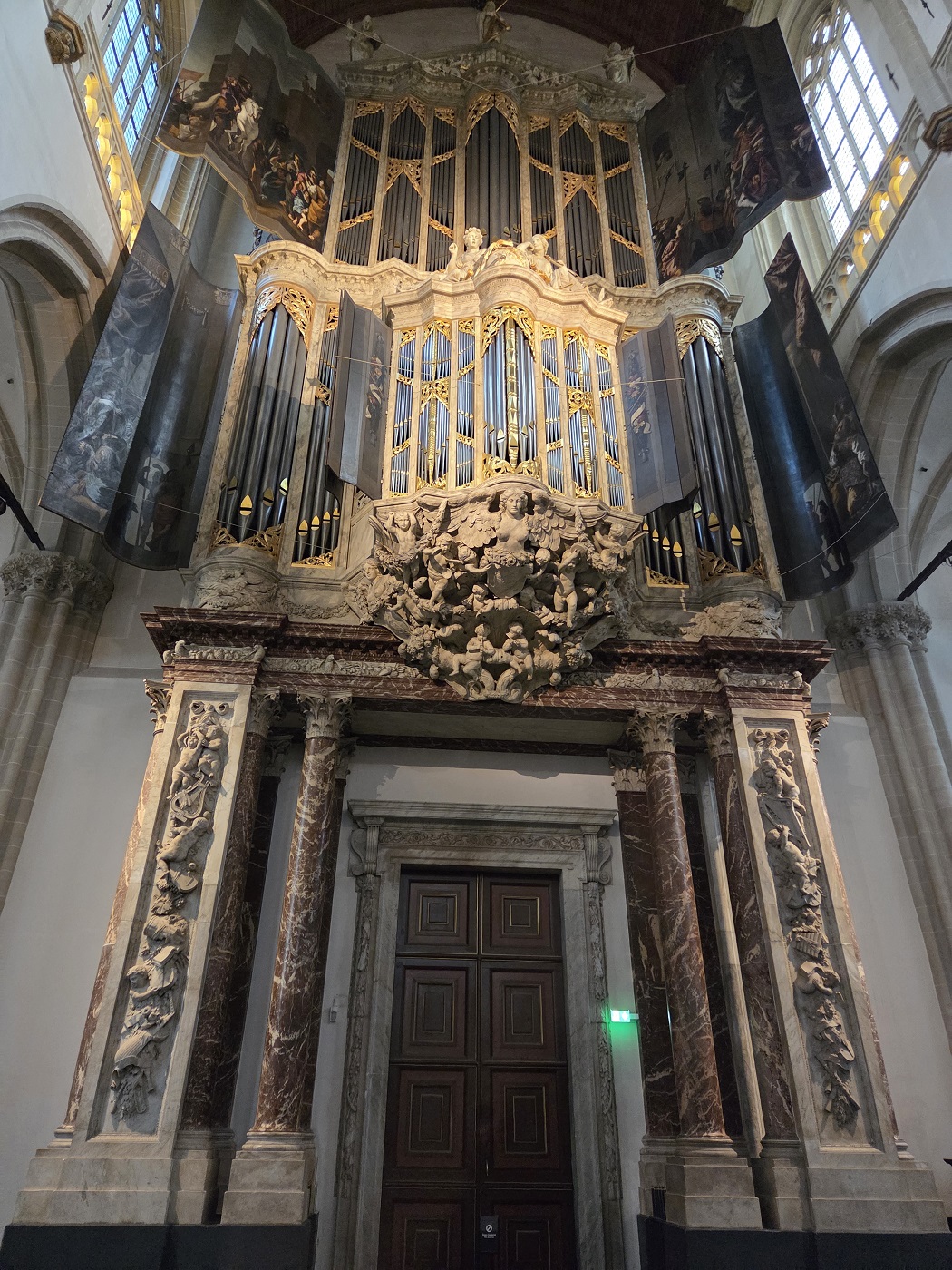
It was a lovely concert! The Horst was a 20th century piece, so some parts of it were a bit crunchy, but Tharash actually liked it the best. He’s really come a long way from his first organ concert! It did have a dramatic ending, which helps a lot. The Bach made me cry with happy existential feelings, which I blame on John Green and his book. But I was thinking about how it’s crazy that hundreds of years ago, this church was built, and hundreds of years ago, the organ was built, and hundreds of years ago, that piece was written, and that might not be very long on a cosmic scale but none of their creators got to see all these things come together; they can’t see how their creations are still around, still in use, still ‘alive‘ as far as humans call their art alive. We’re all just busily creating and arting and maybe it’s for each other and maybe it’s for ourselves and maybe it’s to scream into the uncaring void that we were here even though none of it will survive the sun’s death but in any way it’s kind of beautiful.
Then the organist was just hanging around! It’s impossible to bow from the organ, due to the shutters being open, so he hustled downstairs to bow before everyone stopped clapping, and then stayed to chat with people. So I asked about the pedals. The big organ has a flat pedalboard, as you might expect from seeing those antique stops. He talked a little about the history of both organs; the little one is younger, but has all original pipes, while the older one does not have all originals.
Then we enjoyed the pleasant evening on the walk back to the train station.
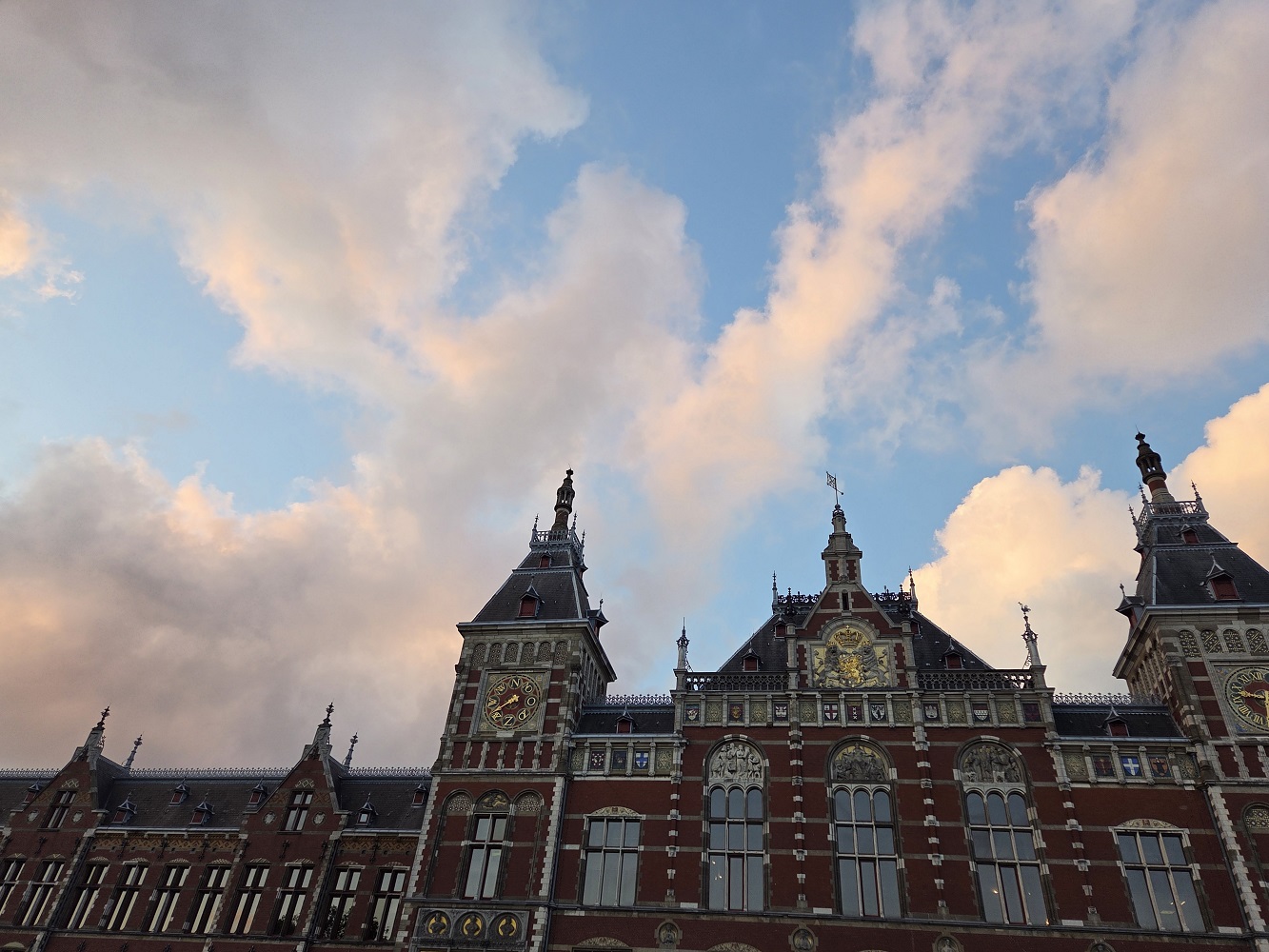
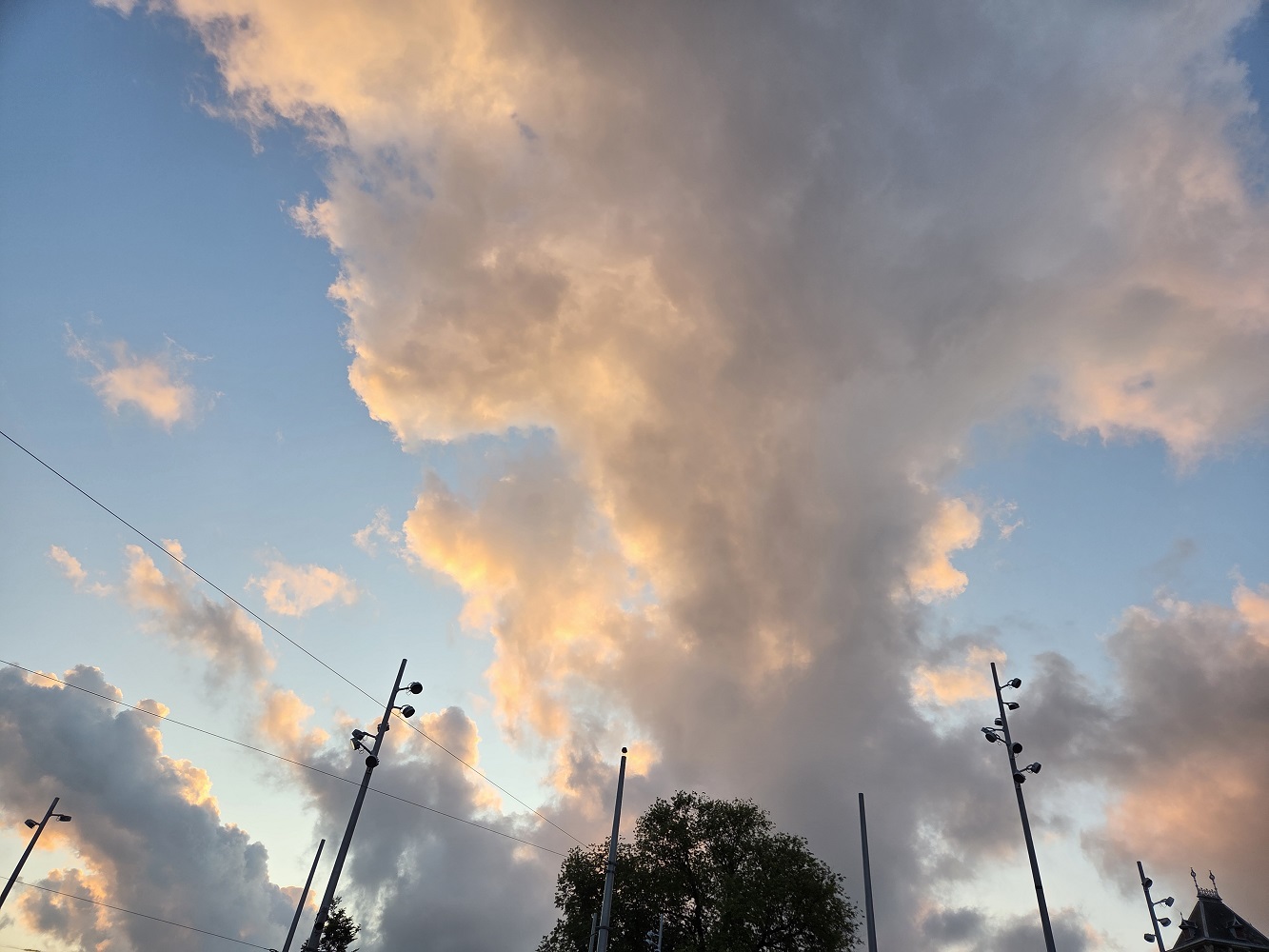
Cinematic.
Next – The Veluwe