[PSA: K-Pop Demon Hunters is a great movie; Tharash made me watch it last weekend and I’m a little bit obsessed. If you like comedy action drama with banger music, you should watch it too.]
Previous – Amsterdam
We took the Sunday off, during which time I read John Green’s The Anthropocene Reviewed, which was quite entertaining. And a bit existential, but I do have a tendency towards existentialism myself at the best of times. At dinner Tharash’s dad made a pizza that included sardines, olives, and red bell peppers. It was quite good! We had it a couple more times during my stay, too.
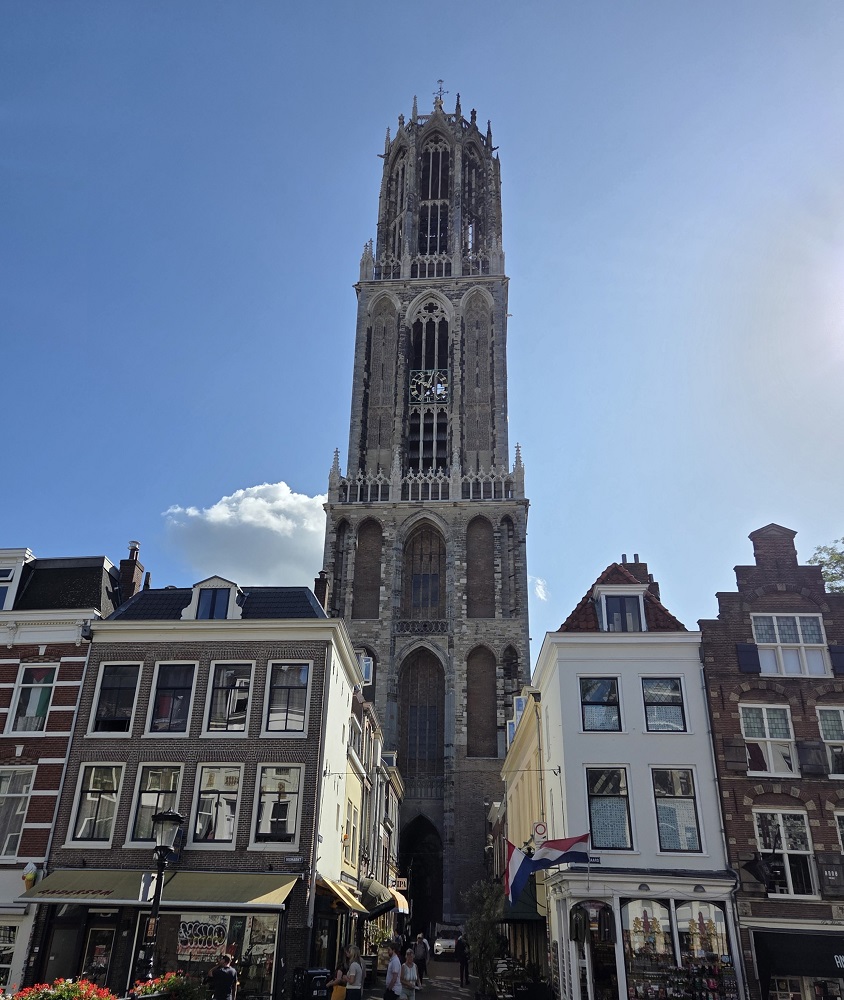
The first place we ended up going substantially away from home base for was Utrecht, where I had previously been in the winter, when it was a lot more grey (and yet not as rainy? lol foreshadowing). It was nice to be back again! It’s a lovely town, and the tower is no longer under restoration!
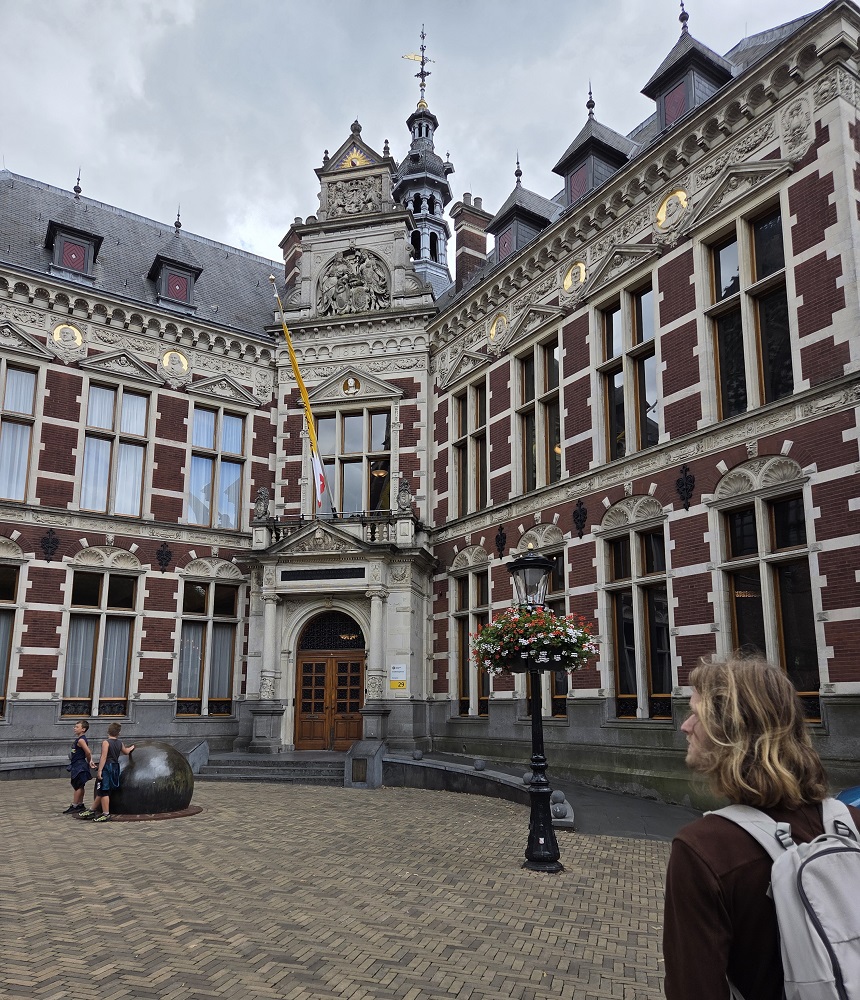
We booked several DOMunder tours, when we could have booked combos – the format wasn’t clear to us on the website. Each tour begins with a detailed overview of Utrecht’s history, as the context is required for just about every historic building. Less than half of the allotted time is spent on actually seeing the site that the tour is for. So doing a combo means you only get the history part once, I think.
The first one was the actual DOMunder, but when we went to check in, we also made sure to buy tickets for going up the tower (could you call it “DOMup”? “DOMover”?) because the website hadn’t let us buy those for some reason (though they registered in the website cookies that someone had tried to buy tickets, so it was kind of funny watching the ‘available’ ticket number go down the more times we tried). Good thing we bought tickets in person at the time we did, as these tours sell out by the time their timeslot rolls around.
I didn’t take any pictures of the DOMunder tour, so you’ll have to use your imagination… The first part was a 45 minute lecture on the history of the town from a very enthusiastic lady, in a cellar on the side of the square which includes a piece of the old Roman fort wall. She did it in English, and there was a simultaneous tour in the adjacent cellar in Dutch, and then they combined when we went to the actual archaeological dig site. Once upon a time, the Romans built a fort in this spot, called just Traiectum; they probably originally built it in wood, a couple times even, since it got burned down at least once. It is unclear if it was burned by Batavians across the river capturing it, or to prevent the Batavians from capturing it. Eventually the Romans decided to make it permanent, and built it in tuffstone imported by barge from the Eiffel region.
Some time after the Romans withdrew from the region, leaving their walls intact, a missionary named Willibrord came from England to evangelize the local people, and used the Roman walls as the outer walls of his church grounds. (I heard his name and thought ‘Willibrord’ was the most Anglo-Saxon name ever.) Eventually the church got quite large, built in a Neo-Romanesque style, and had two attached palaces for the Bishop of Utrecht, and for the Holy Roman Emperor when he was in town. The Emperor gave city rights to Utrecht about 900 years ago in 1122, which is why Utrecht to this day thinks of Amsterdam as an upstart little sibling (since they’re celebrating their 750th this year). There were quite a few other churches in the area by this point, including the one which now houses the Museum Speelklok that I went to last time, as not everyone in that time period could visit the big church since it was across the river.
Eventually the Neo-Romanesque church was replaced by a Gothic church, and then the Gothic church was replaced by a Gothic cathedral. The Roman walls were long gone by this point – above-ground, at least, but they live on in the placement of the streets.
The cathedral was famously blown down in 1674 in a freak windstorm; new research has determined that the wind was not caused by a tornado, which was the previous belief, but now a series of downdrafts in horizontal bands [scientific paper that includes contemporary illustrations of the damage] …or something like that, I am not a meteorologist. Something that I did not consider before was the idea that in a heavy storm, people would have taken shelter in the churches, which is horrifying to think about in this context. Not that being at home would have been any better in this instance.
Anyway, apparently the rubble was just left there for 150-ish years before they finally got around to doing something about it in the early 19th century (yet another thing related to Napoleon? I don’t remember clearly). Seems crazy that they just left it, though I’m pretty certain bits and pieces must have been recycled all the time for building material in new buildings.
Then we finally got to go into the actual exhibit, the actual archaeological site right in the middle of the Domplein, which came with a flashlight/audio guide with an infrared beam. The flashlight was because they kept the lights in the exhibit very few and dim, so as to prevent the growth of moss and other damaging plants, and the infrared beam was used to trigger sensors in the exhibit which would then play an audio file from the audio guide in the earpiece. It was a bit awkward; I think the Ghent Gravensteen method of inputting a number would work better, because then you don’t have a dozen people crowding one sensor to try and find the sweet spot to make the beam work.
In the dig site, there were the foundations for the towers of the cathedral, a piece of a Roman building wall, and the layers in the soil that showed when it was burned. It was still a bit hard for me to visualize what those pieces of wall meant above-ground. They also included a couple of movies, including a CGI visualization of what it would have been like to be inside the cathedral during the storm, though it’s now considered out of date because it still shows a tornado at the end. The visual effects reminded me of Amnesia: The Dark Descent (I mean, without the monsters), and reminded Tharash of Vagrant Story (okay I think the graphics were better than that). The video used the camera to represent a person inside the cathedral… alone, no other people present, but I think I remember they had footsteps and scared breathing sound effects. Windows shattering from the hail, wind howling and rain crashing and the building creaking, a chandelier drops from the ceiling, and then a rain of stones as the camera backs up hastily.

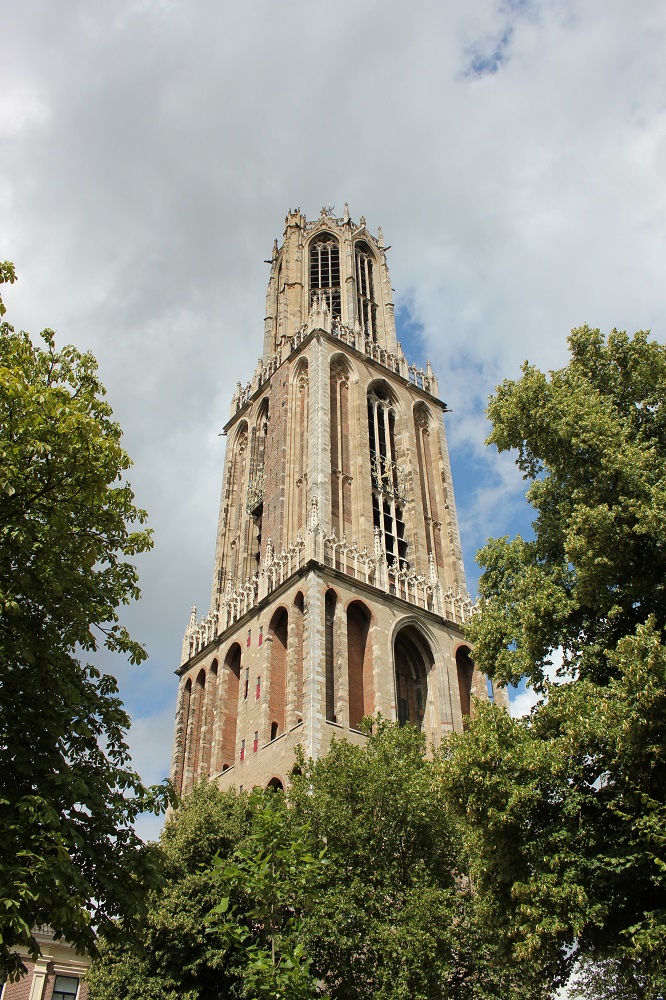
The sun was in and out all day. You can see the stairs if you look closely; the windows up the side, and at the top the one support column that’s a bit thicker than the others. Photo by MH
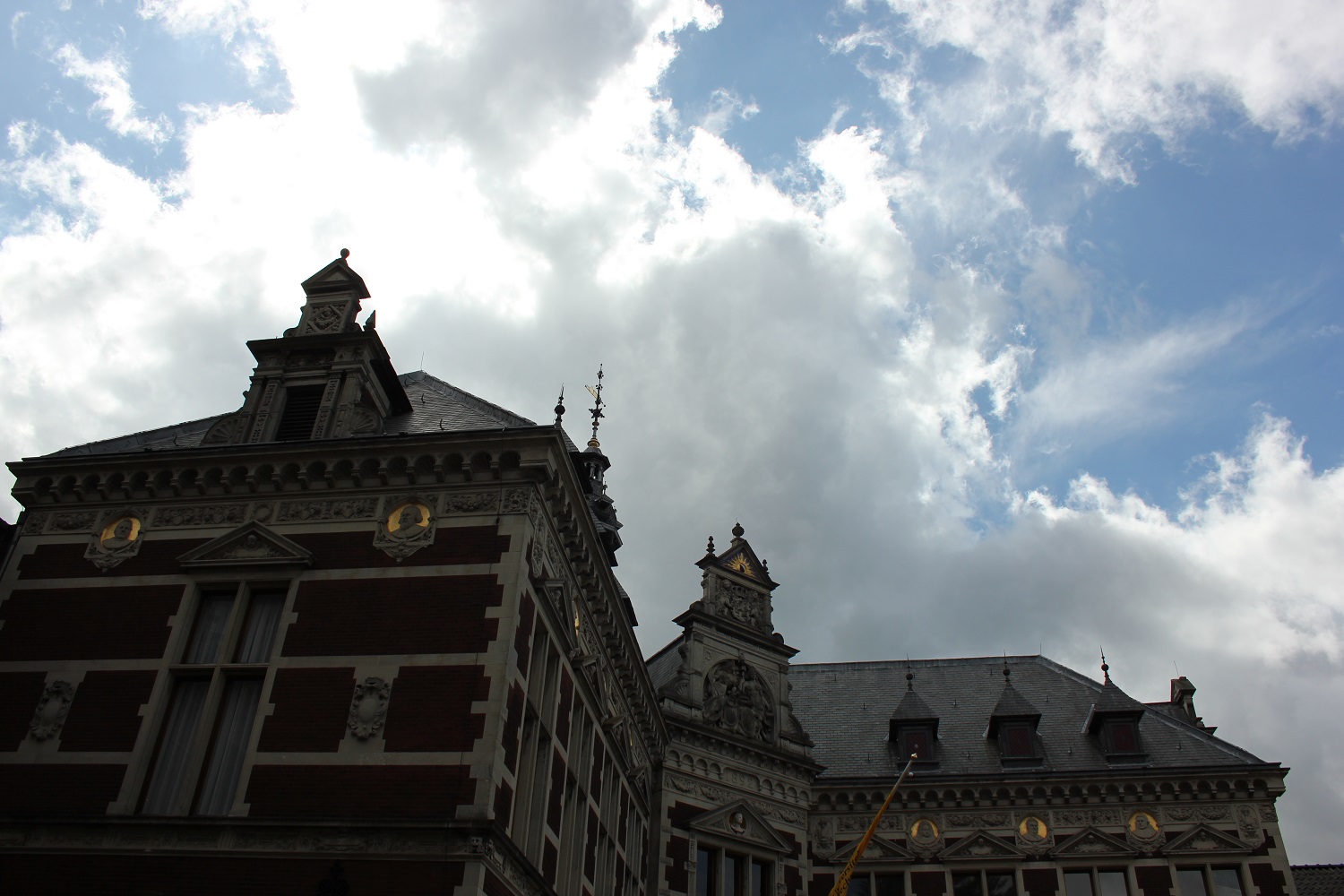
Photo by MH
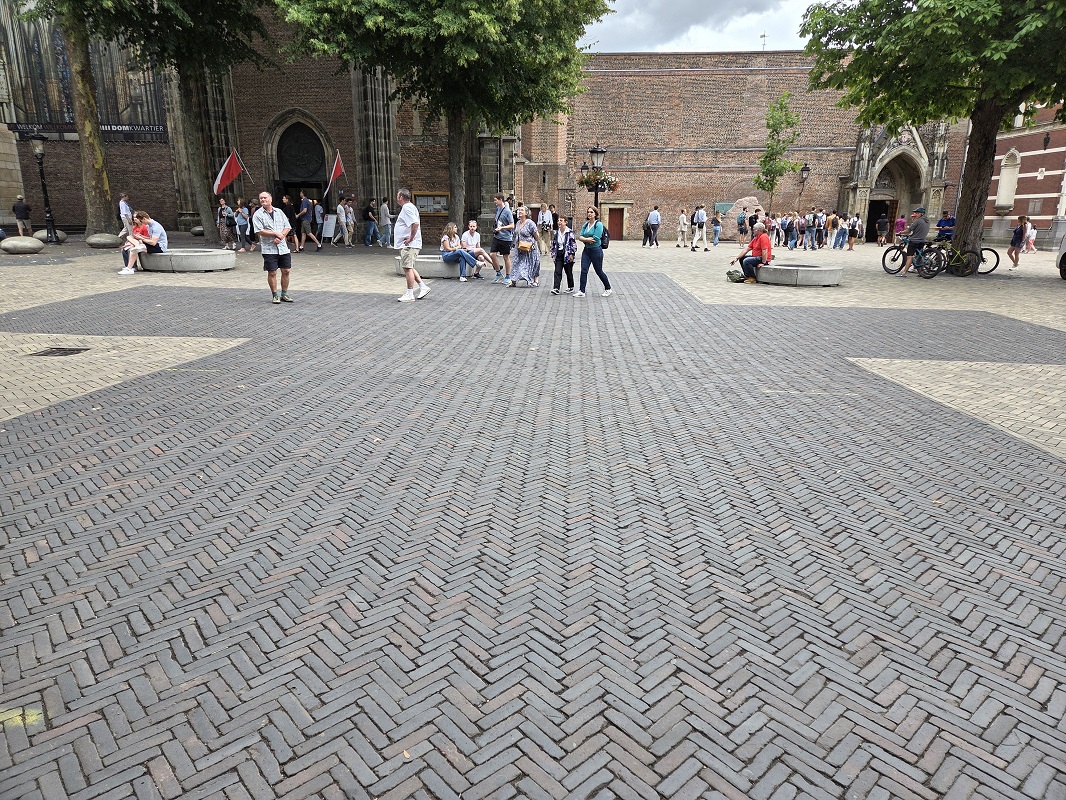
This is the outline of the Heilige Kruiskapel (Holy Cross Chapel), which was from the medieval period but taken down in 1829.
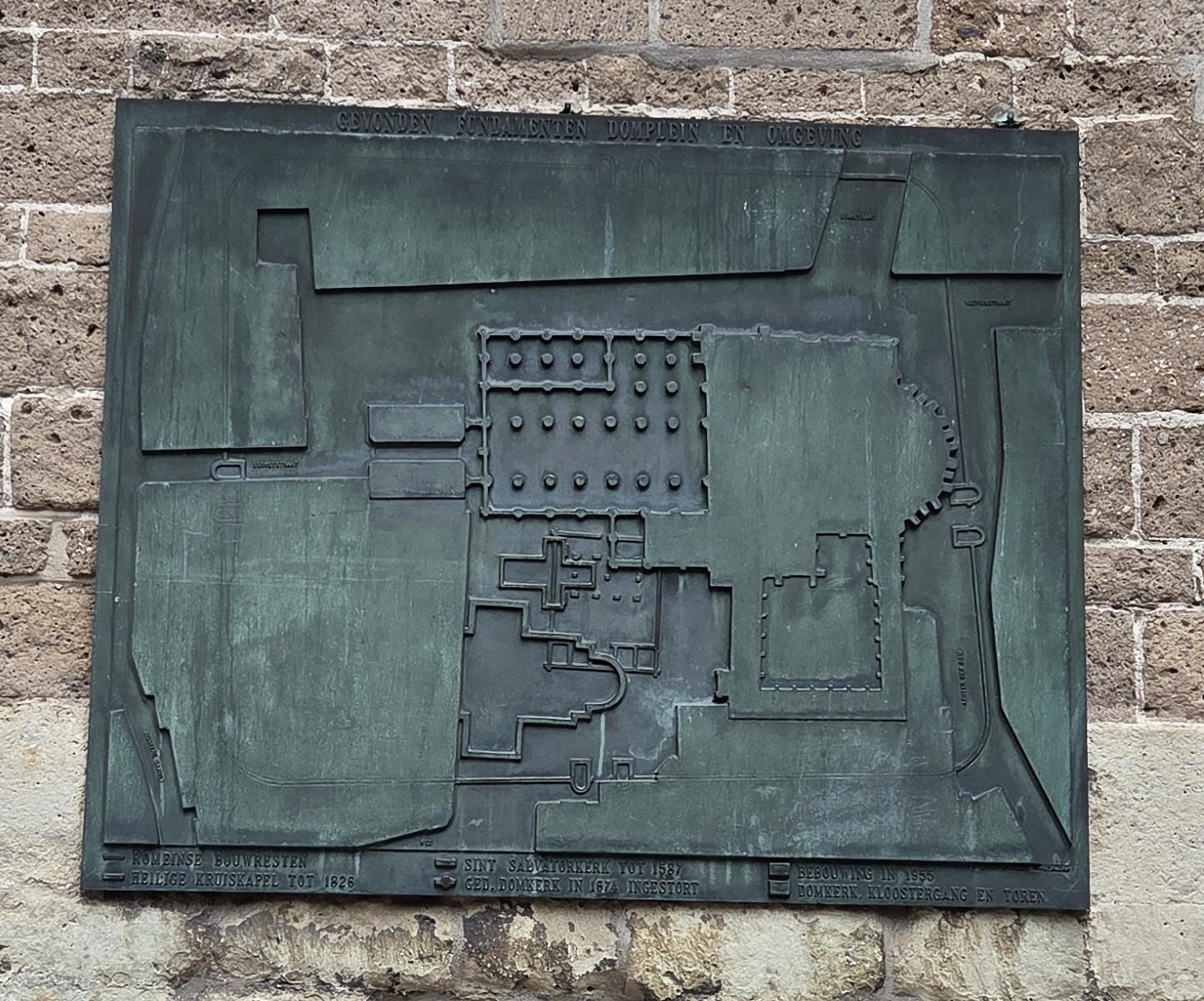
A map of the previous structures in the Domplein, including a Roman building, the Heilige Kruiskapel, St. Salvator’s church, and the previous extent of the cathedral.
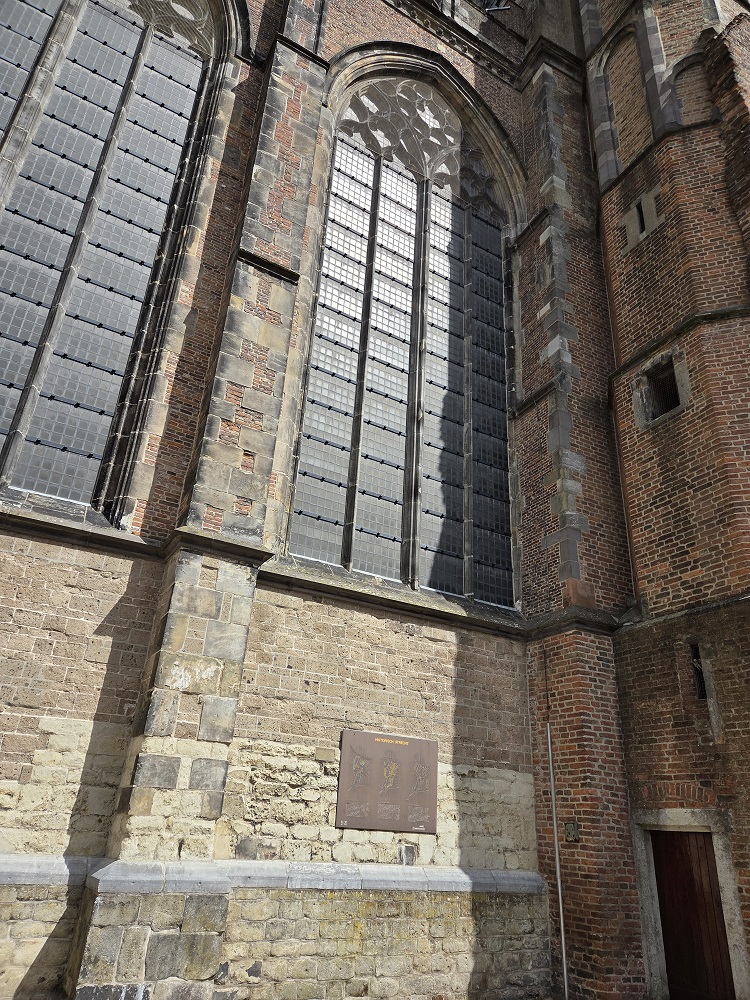
What I find really interesting about this now is that some of the building material was recycled from previous churches on this site. This wall is so hodge-podge. So historical!
Next we ascended the tower; this one was done by a single guide, a young man who did his script first in Dutch and then in English. It was an okay way to practise listening in Dutch, but since he would say several paragraphs in one language before switching, I wasn’t able to one-to-one each sentence/word. Also the guide lady from the previous tour came on this tour as a spectator, I think she had family visiting and was hanging out with them as they touristed, possibly?
The Domtoren is the tallest church tower in the Netherlands, at 112.32m; it feels… unnecessarily monumental for the city? In the middle ages it must have dominated everything. It still does today. It feels too big for the cathedral it was attached to. Almost like they’re compensating for someth-
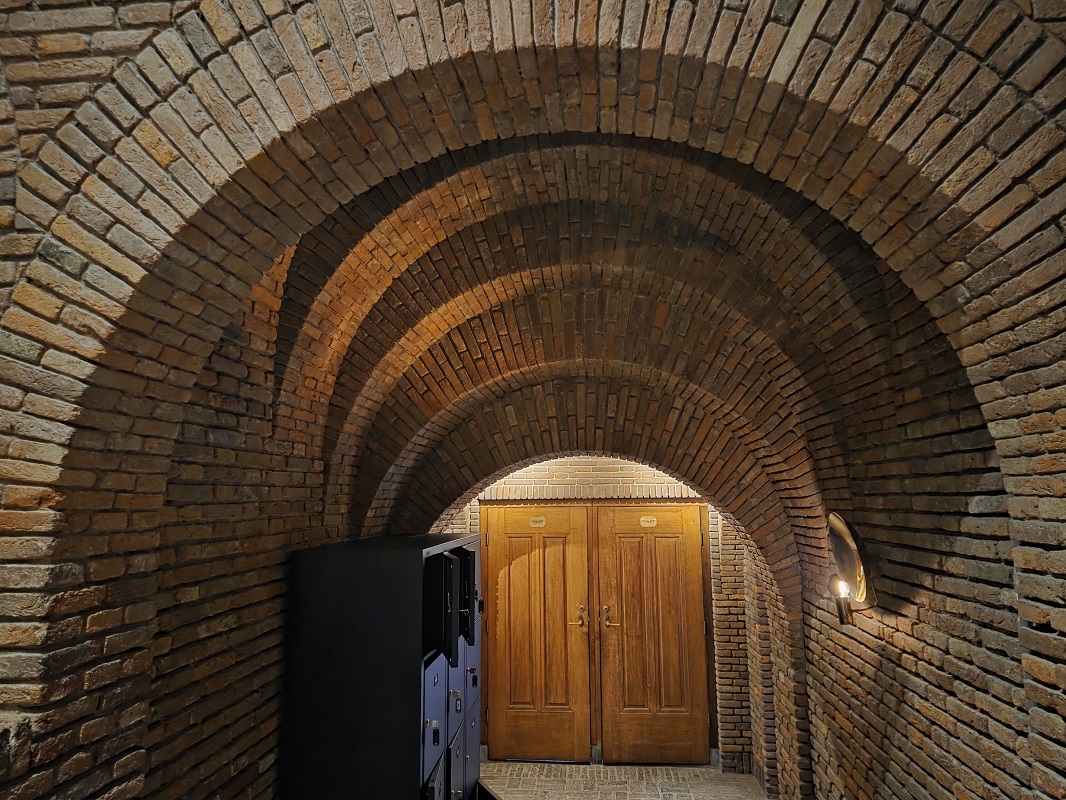
This is where the tour started, in an adjacent building that takes you up to the first available floor of the tower. I thought these arches were cool.
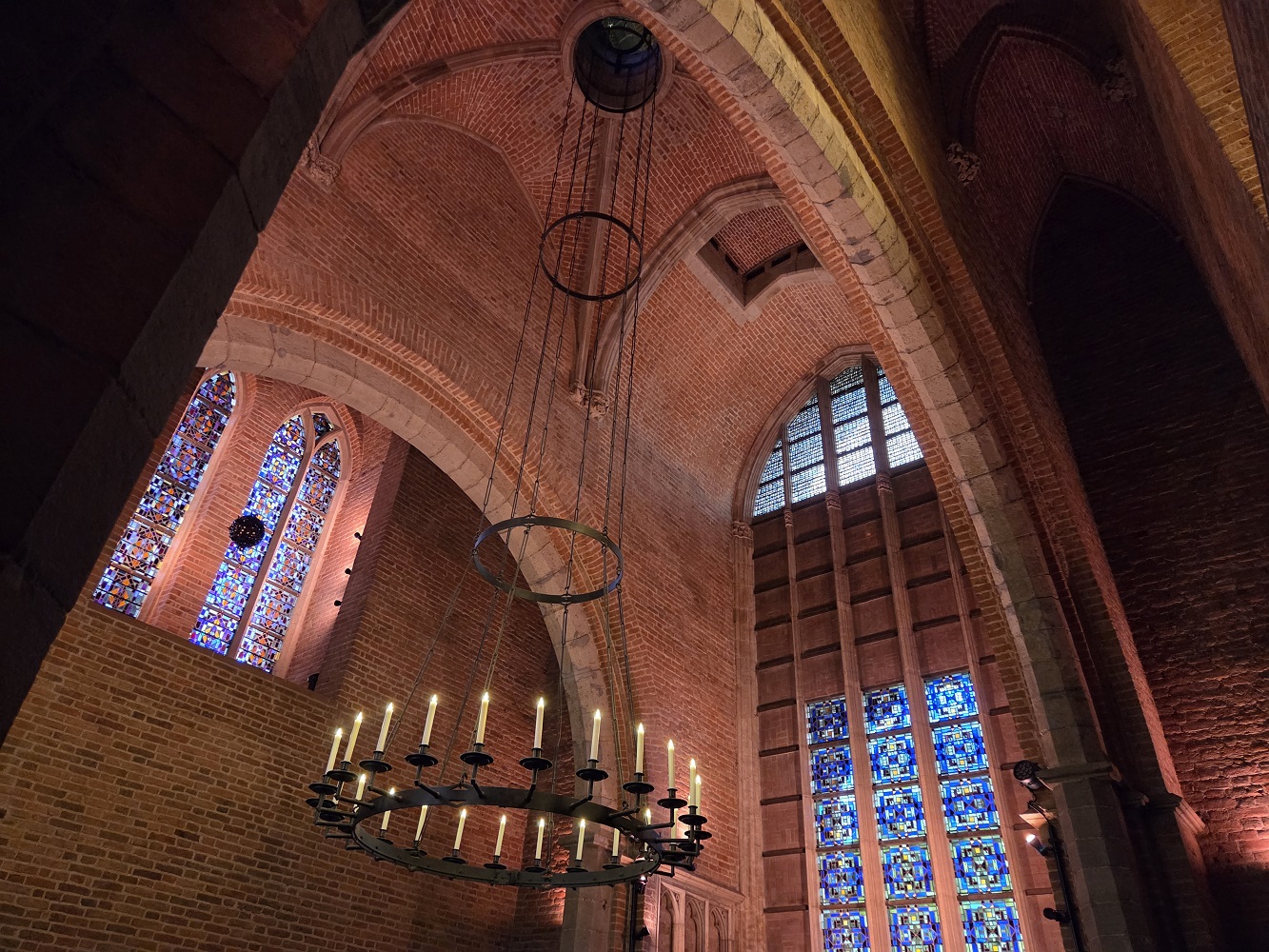
The lowest available level of the tower is the part that is above the passageway on the street, so it’s already quite high.
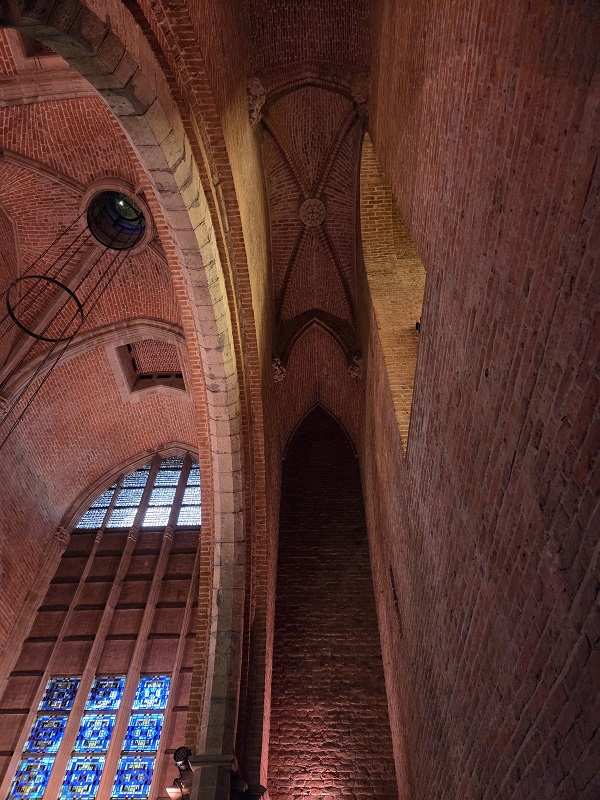
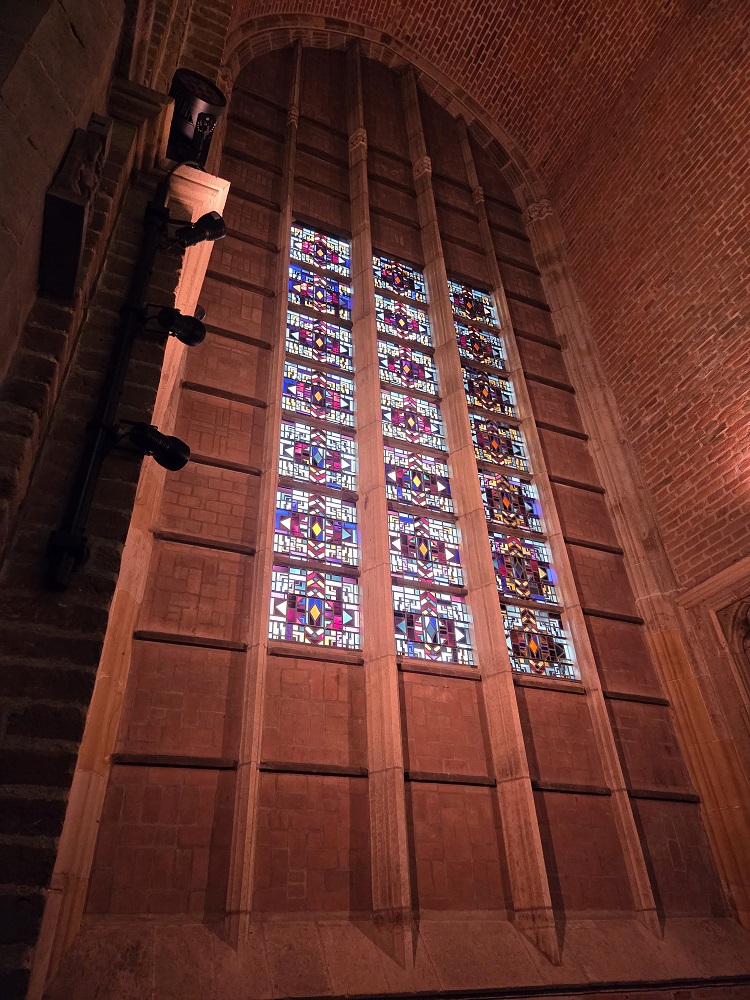
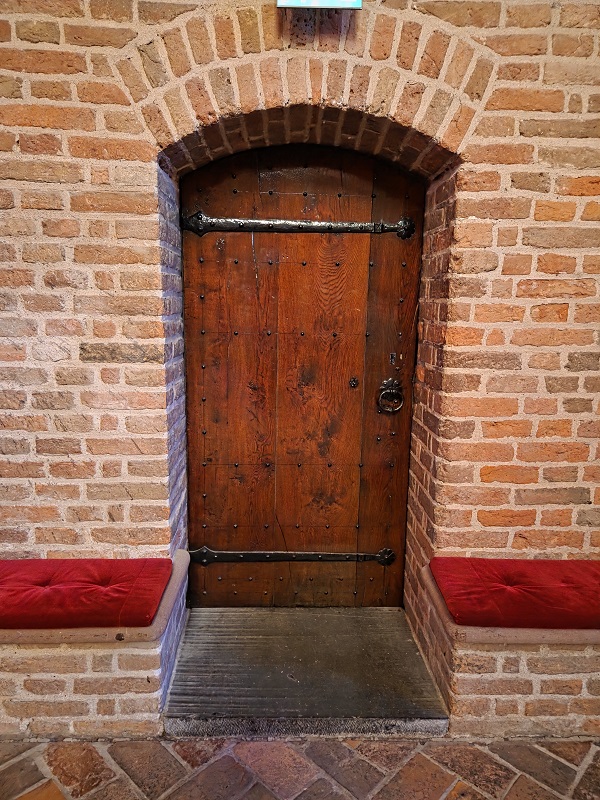
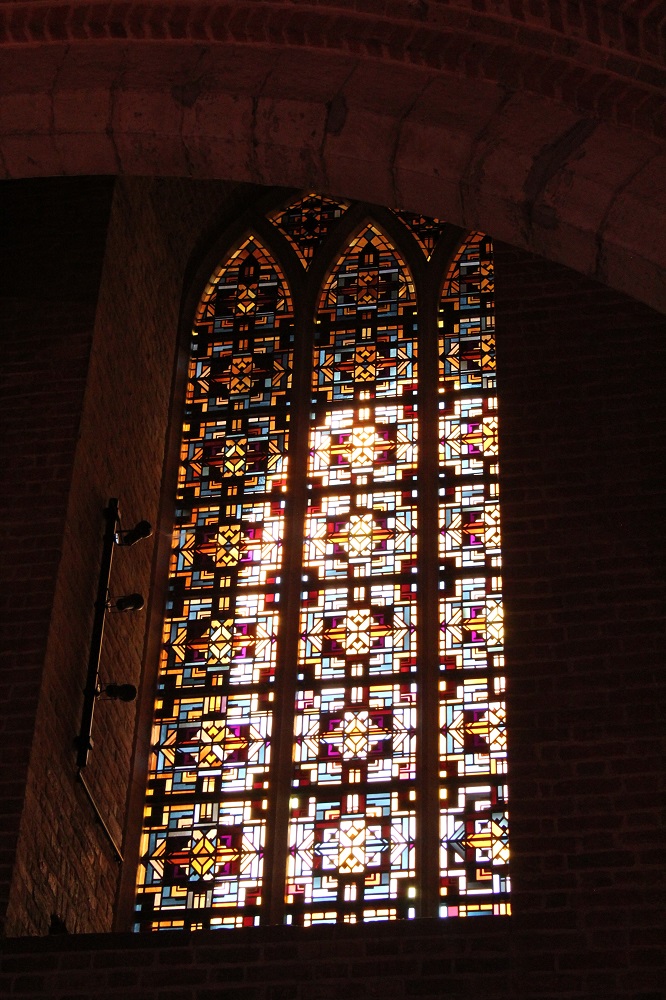
Photo by MH
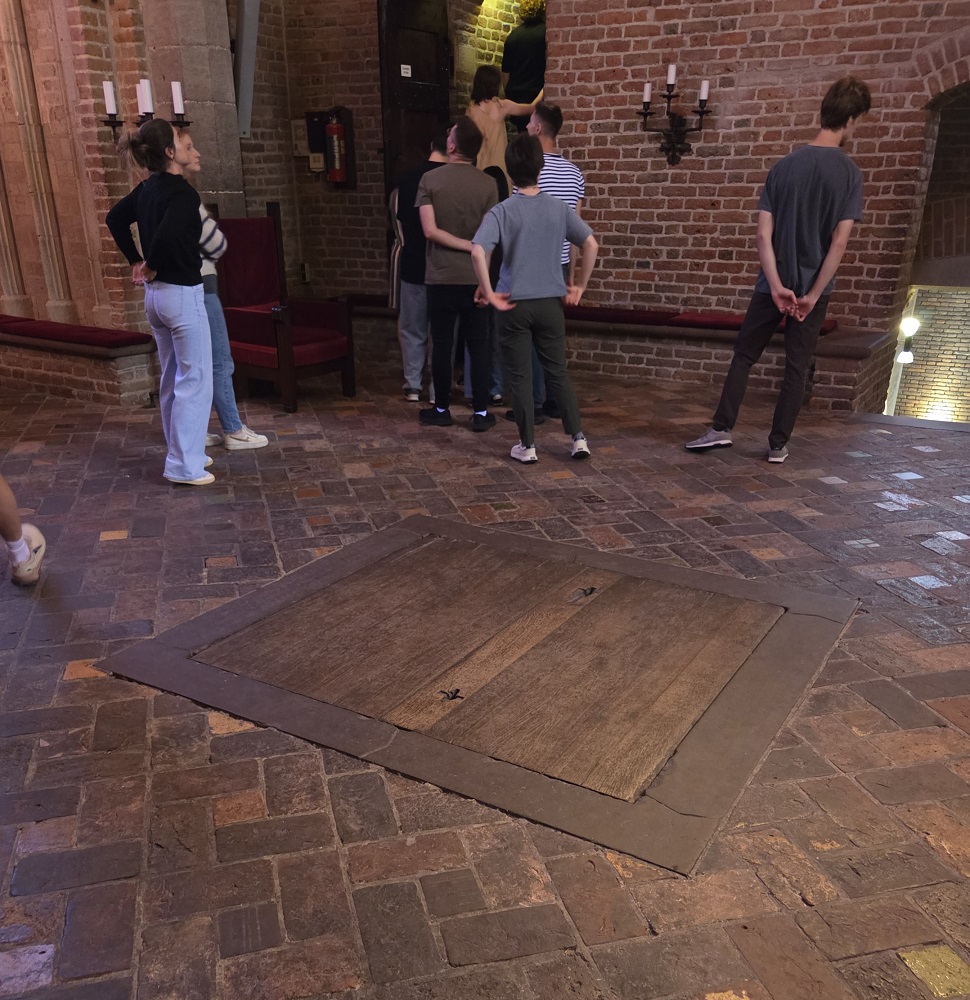
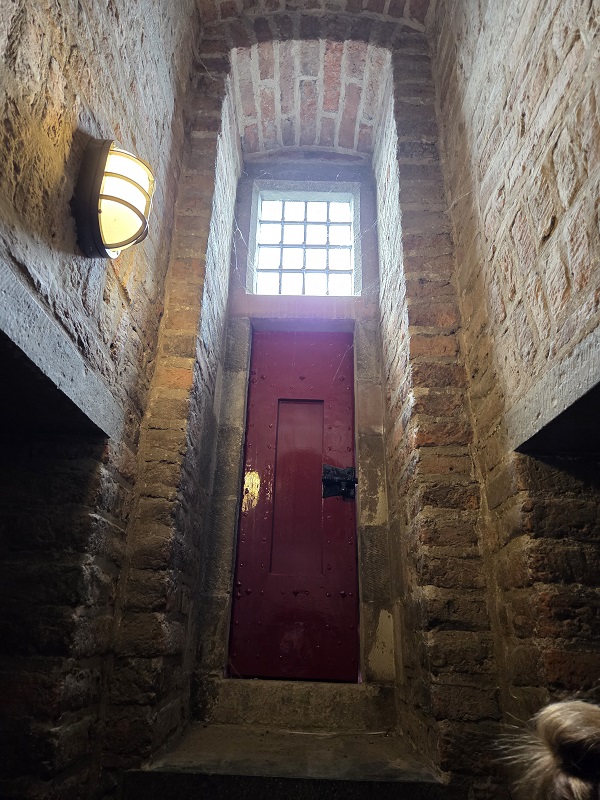
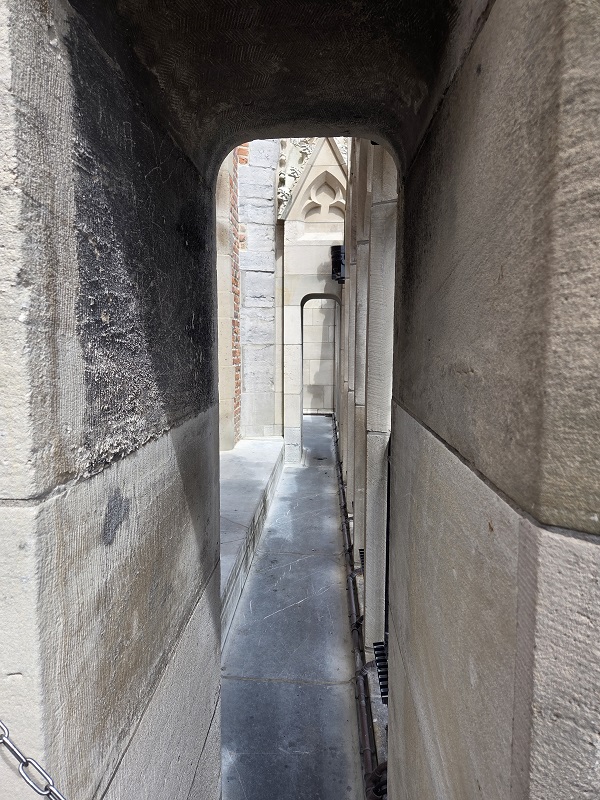
The lower part of the stairs had these little doors on the outside wall everywhere. I’m not sure what for.
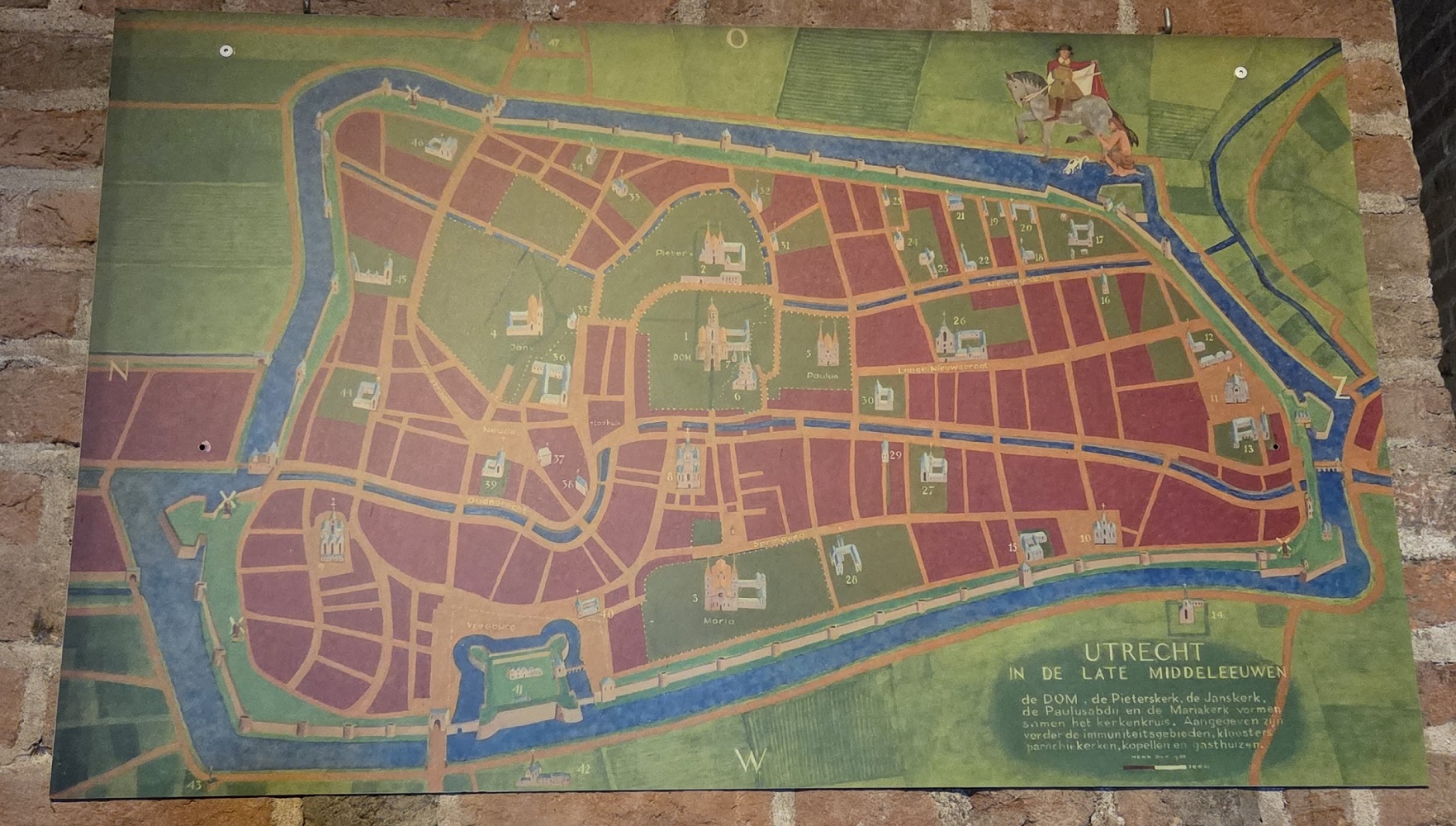
A map of the churches; you can see the ‘kerkenkruis’, the ‘church cross’, or five churches arranged in a cross with the cathedral at its centre.
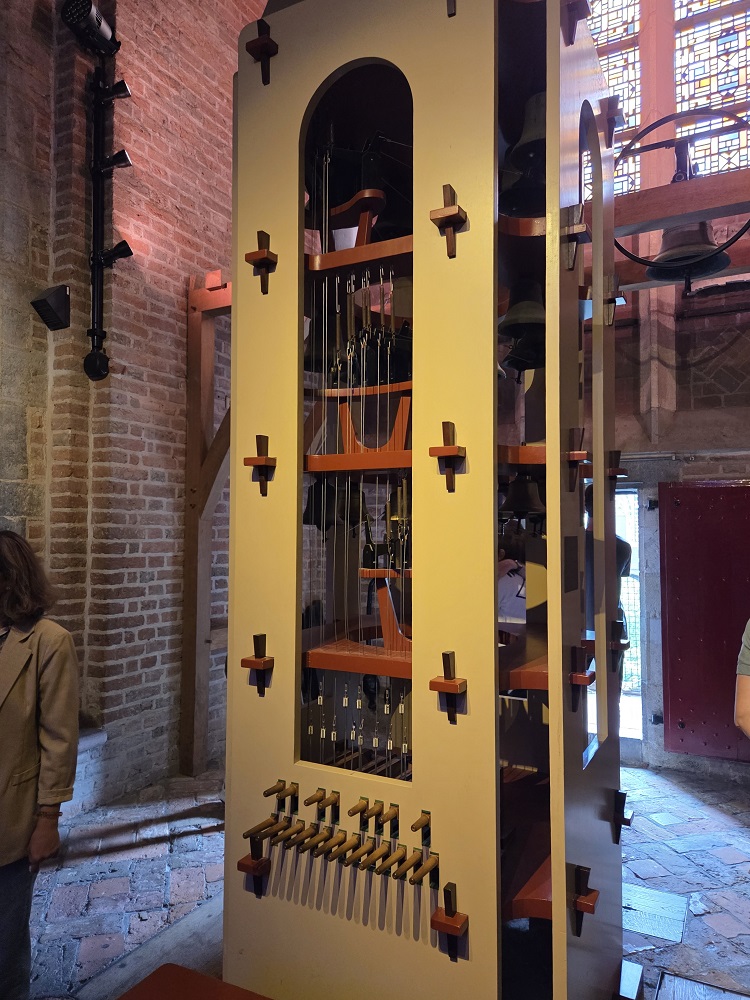
A model carillon on the next floor up! The guide didn’t really talk about it though.
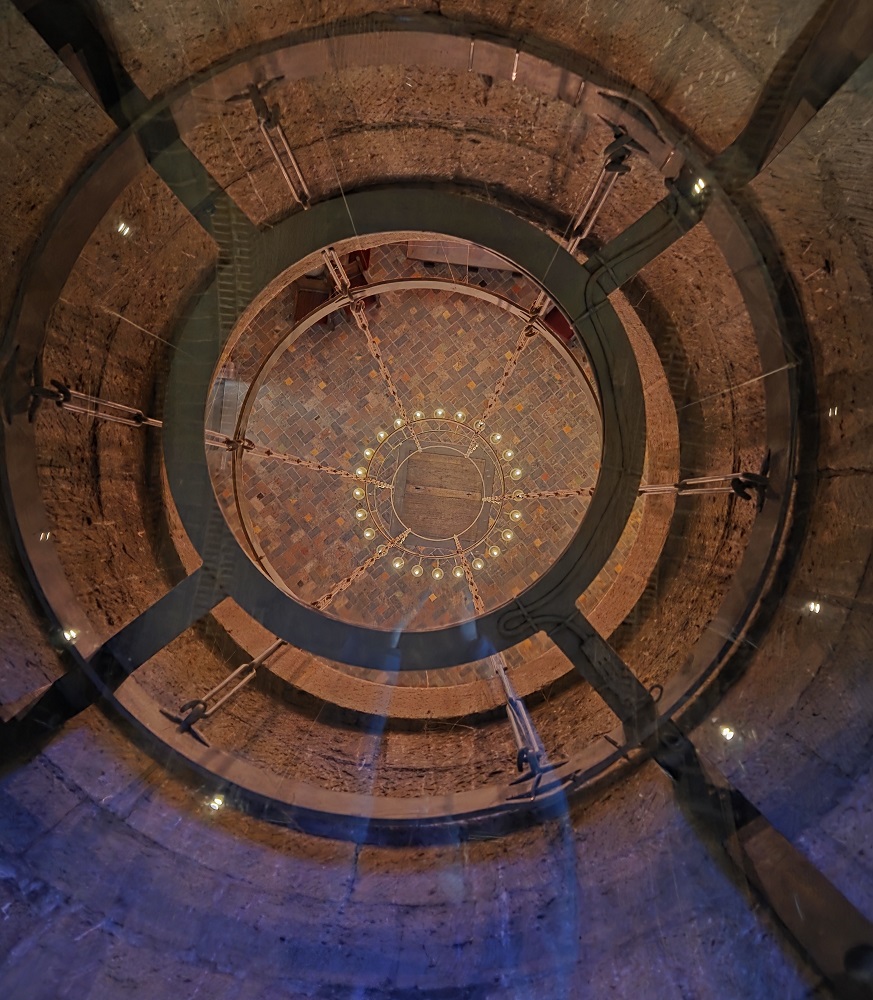
You can see down into the first floor!
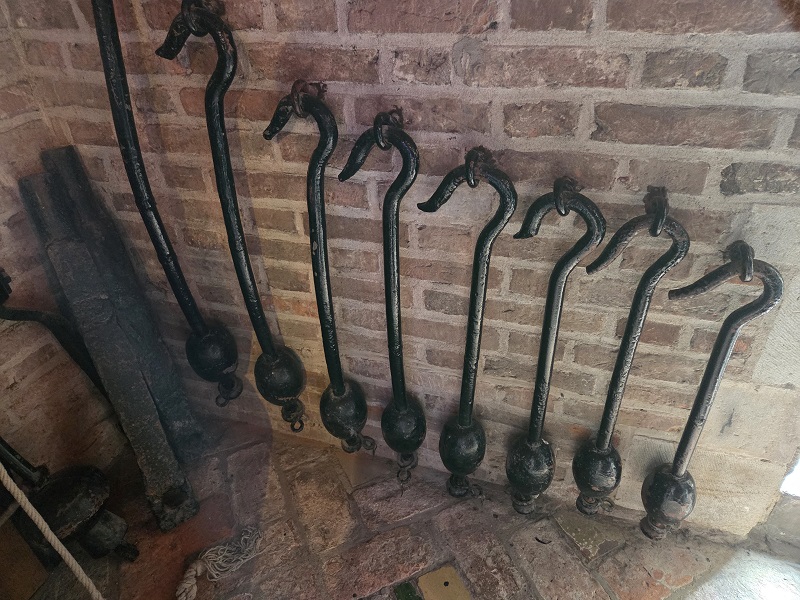
I believe these are bell clappers.
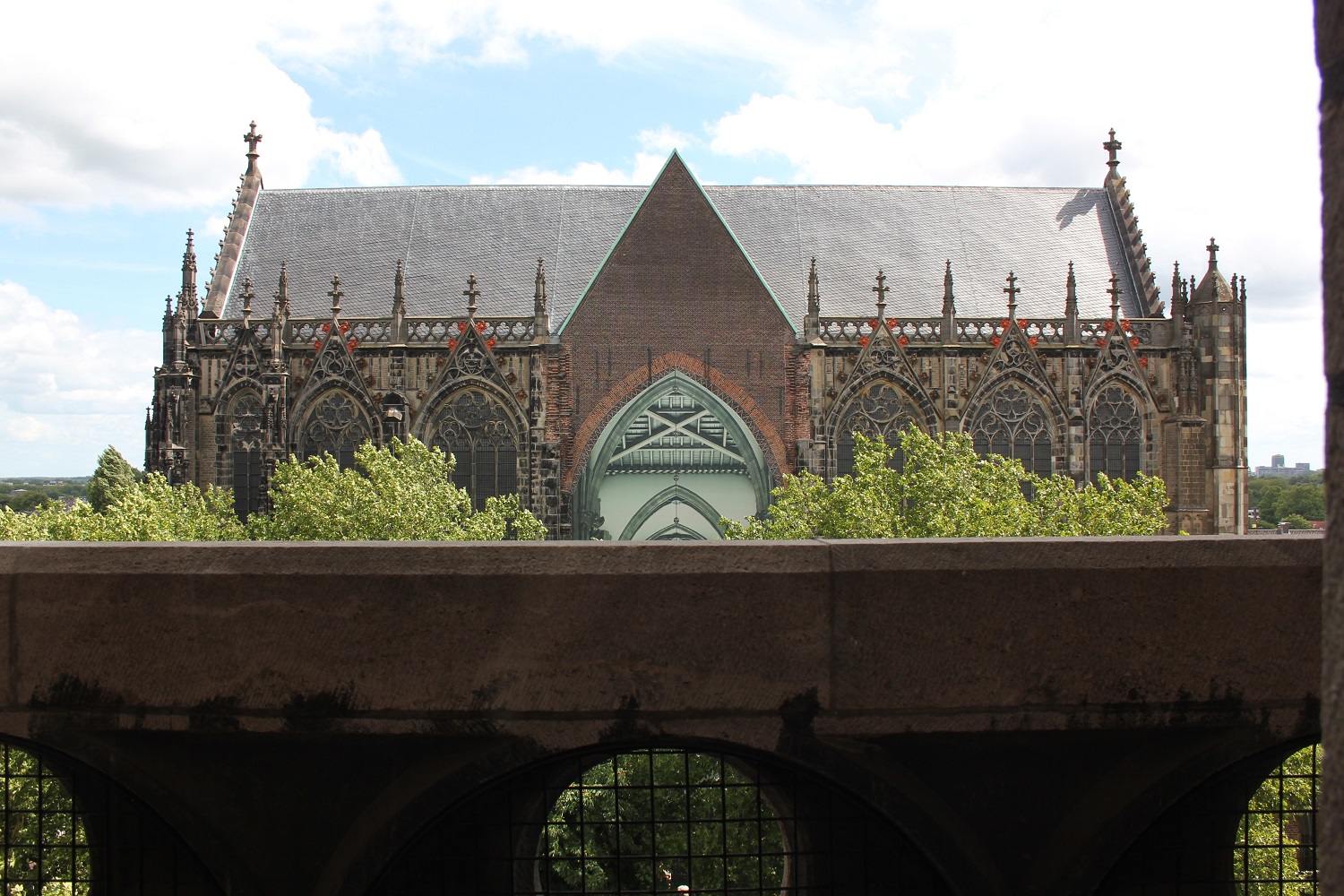
Photo by MH
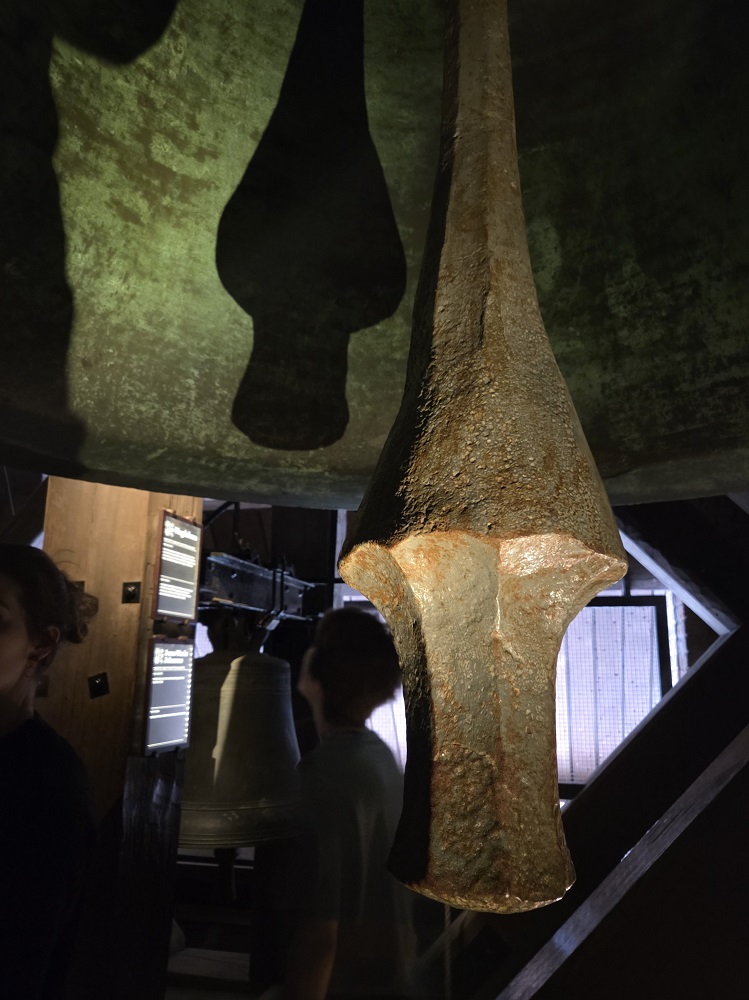
These are the BIG bells; I forget if this one was the biggest but I think it might be. This clapper shape is called ‘apple-core’, and it was used on the older bells (the newer bells had round clappers like above). How did they get them into the tower? It is a mystery. (here’s how they got new bells in)

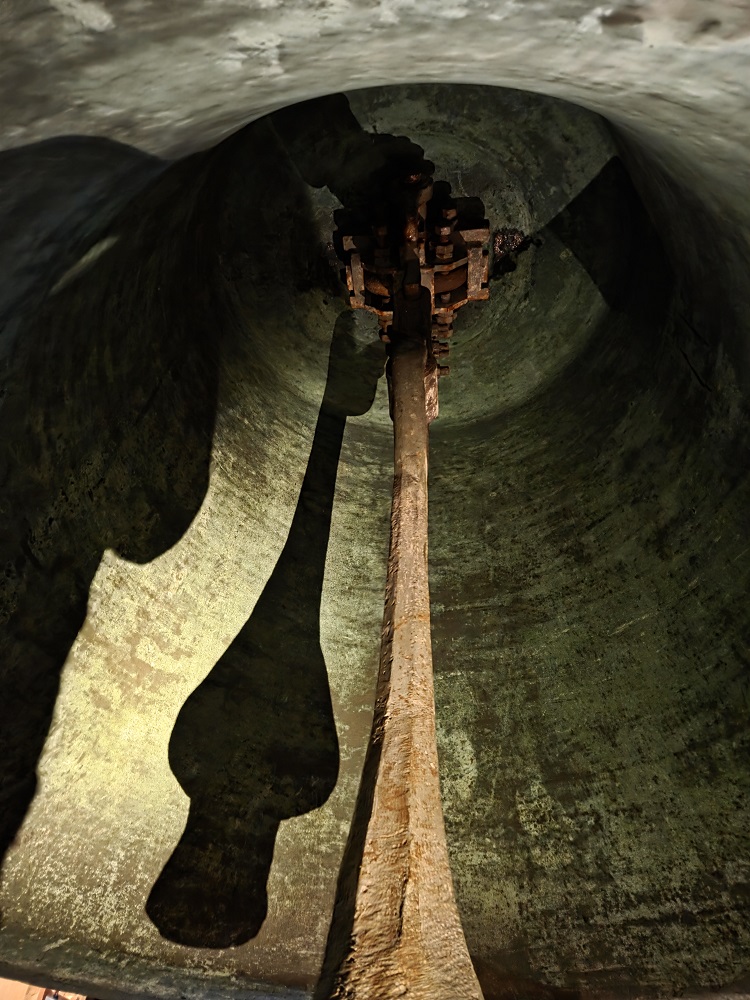
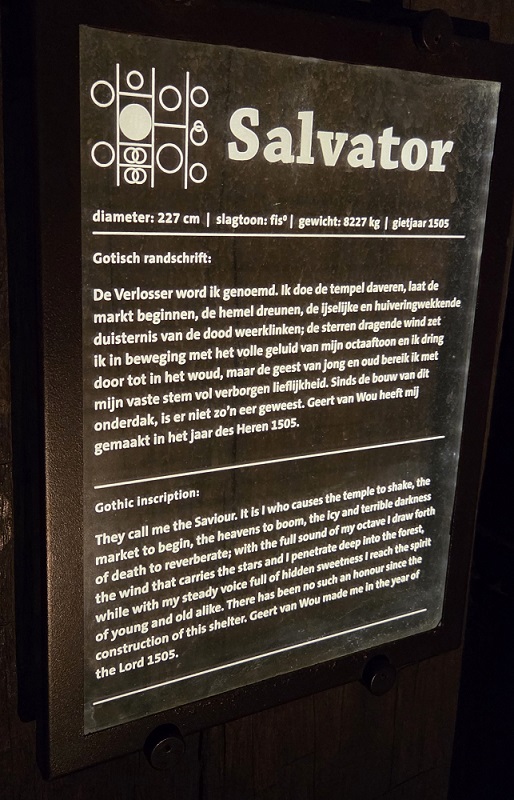
You can hear the bells tolling in recordings at the bottom of this page.
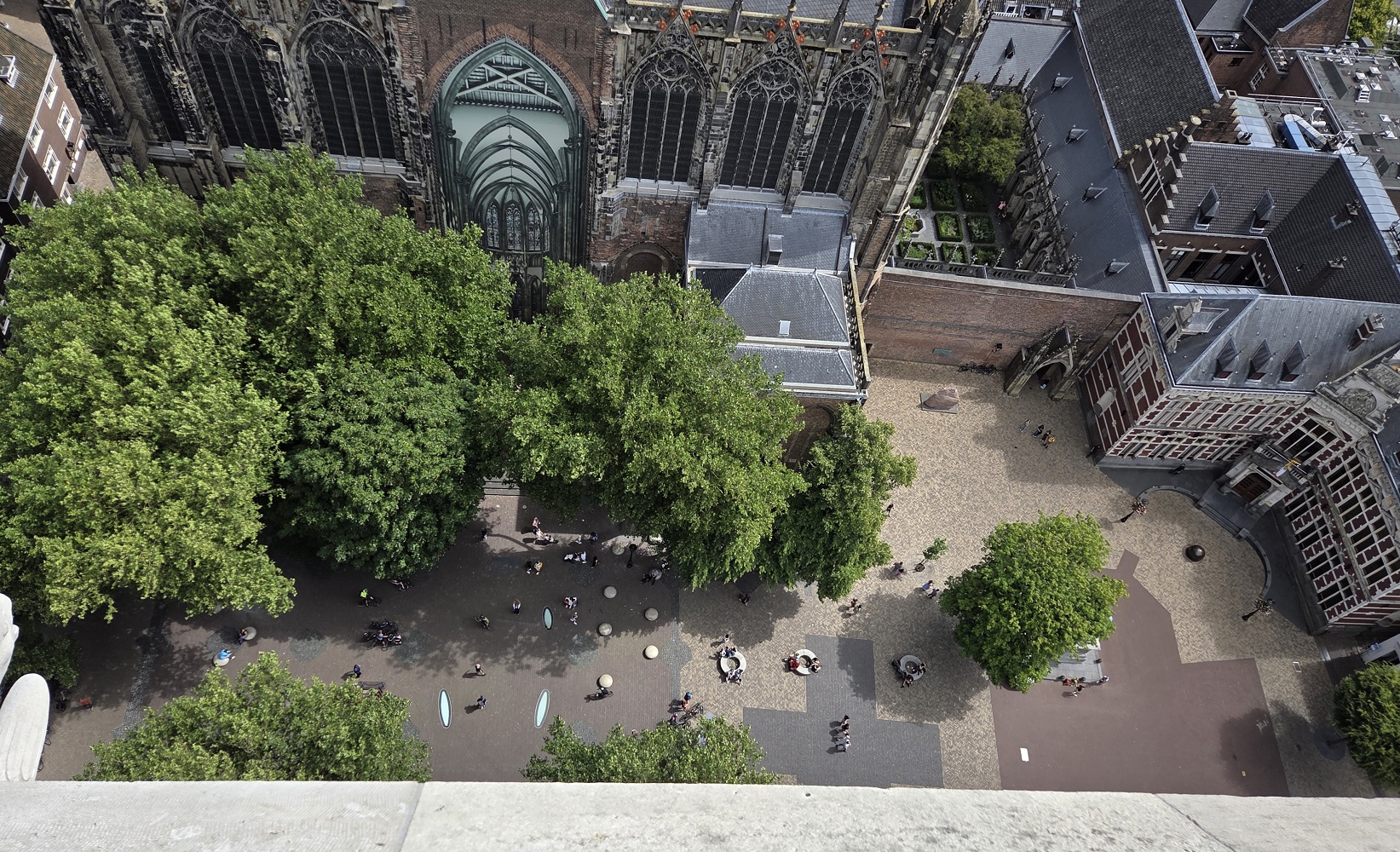
There’s the outlines of the missing cathedral, the Kruiskapel, and Saint Salvator’s church.
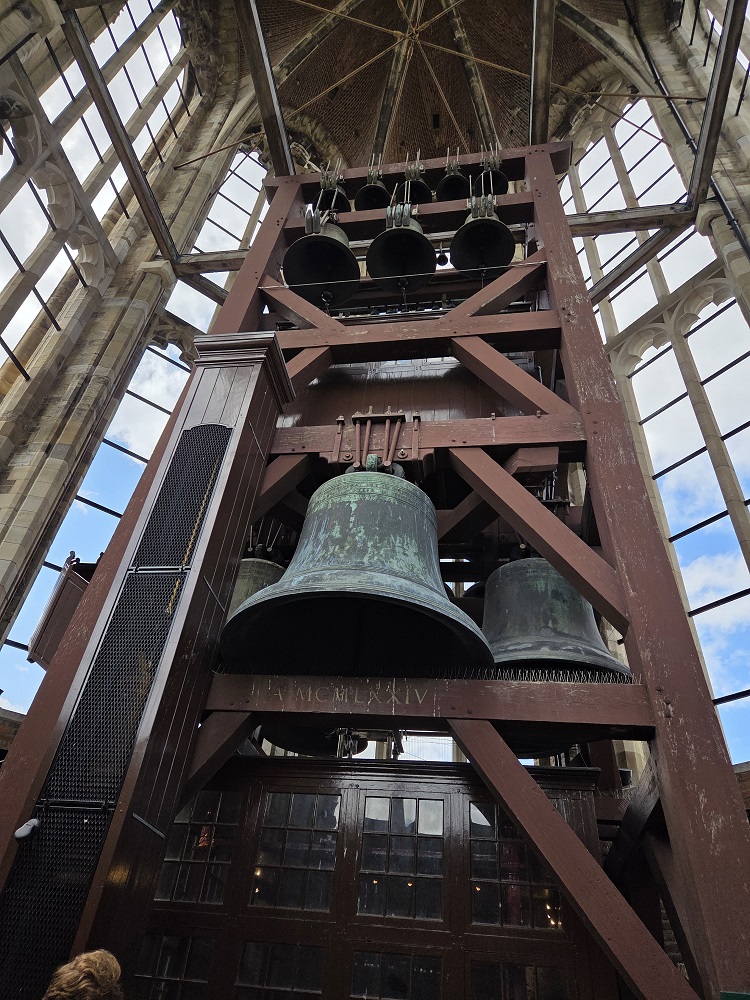
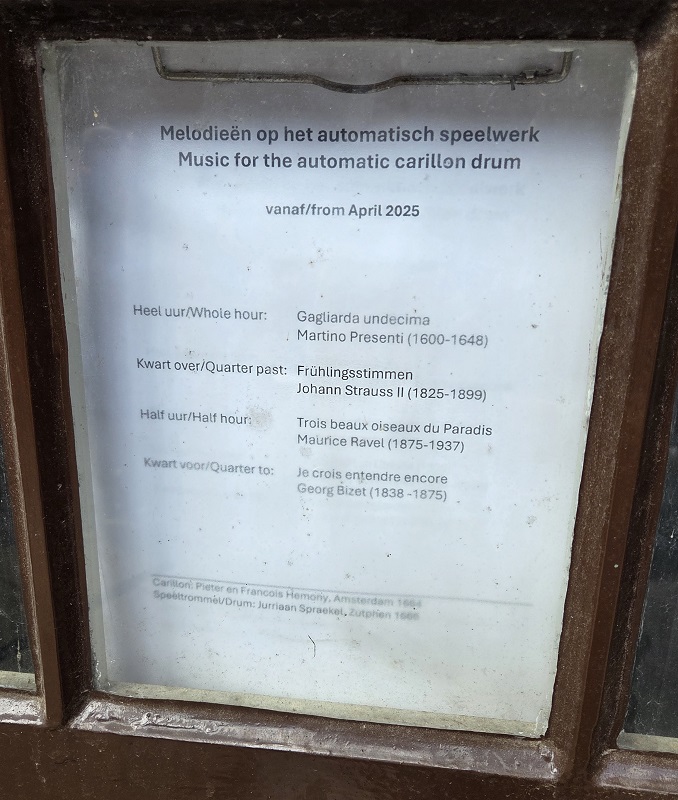
The carillon itself! It runs off a barrel, like a music box, like the carillon in Bruges, but you can also see the cabin up above where the human carillonneur would play.

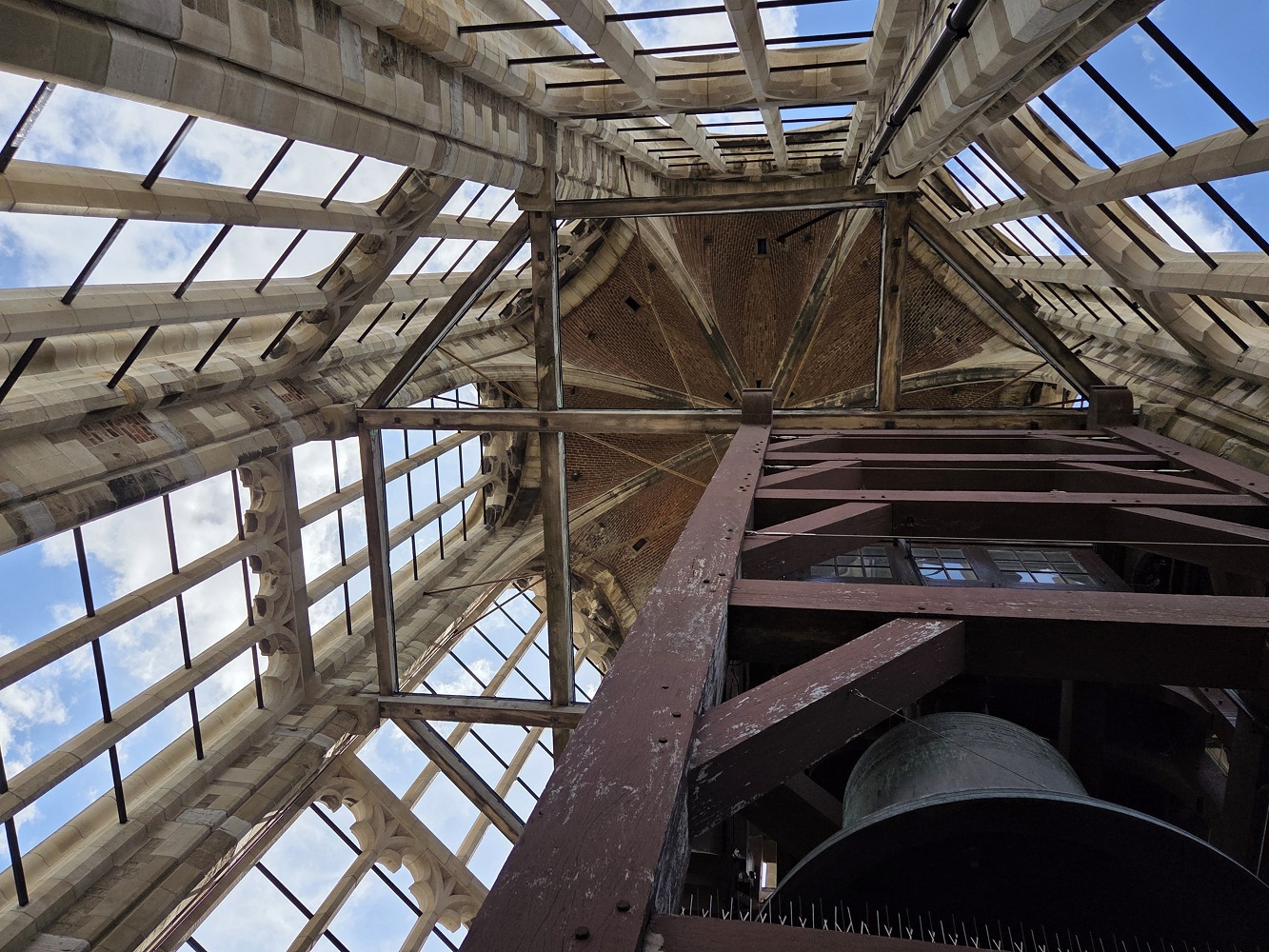
This part of the tower is called the ‘lantern’. You are surrounded by sky.
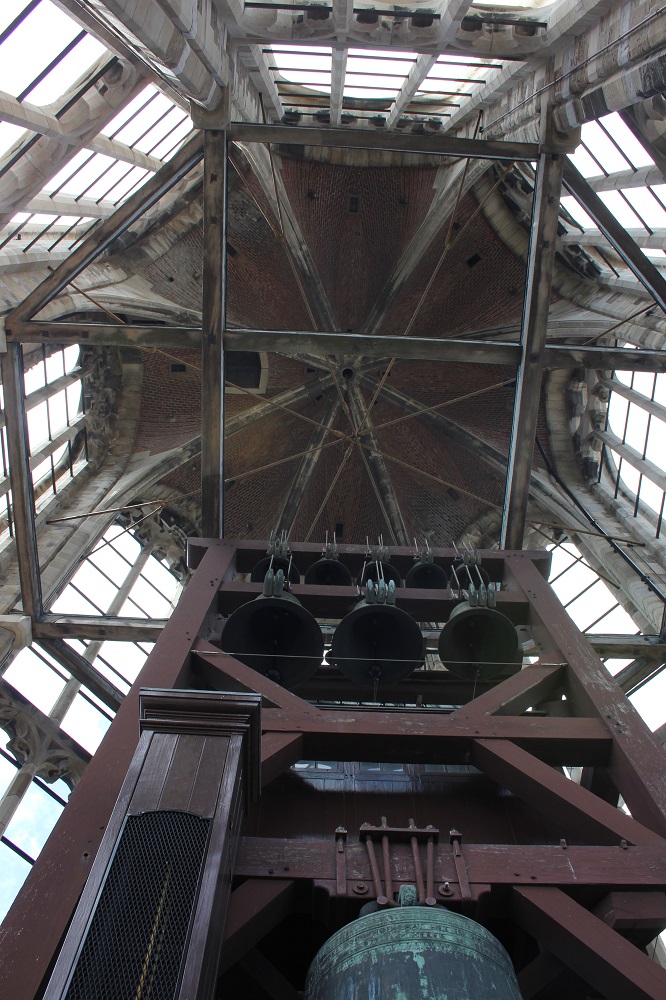
Photo by MH
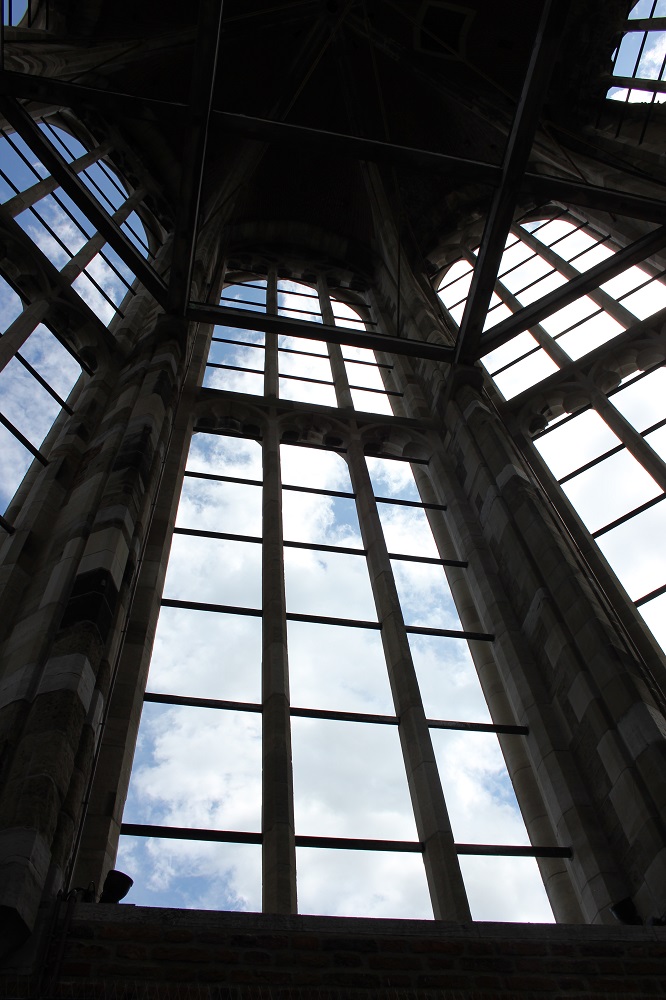
Photo by MH
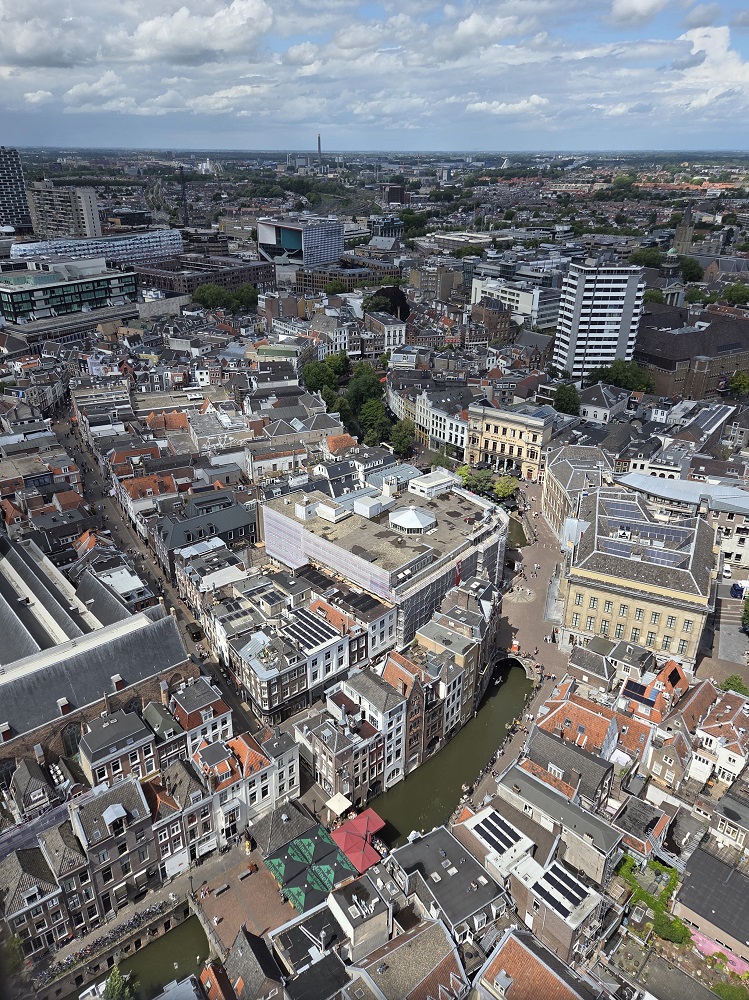
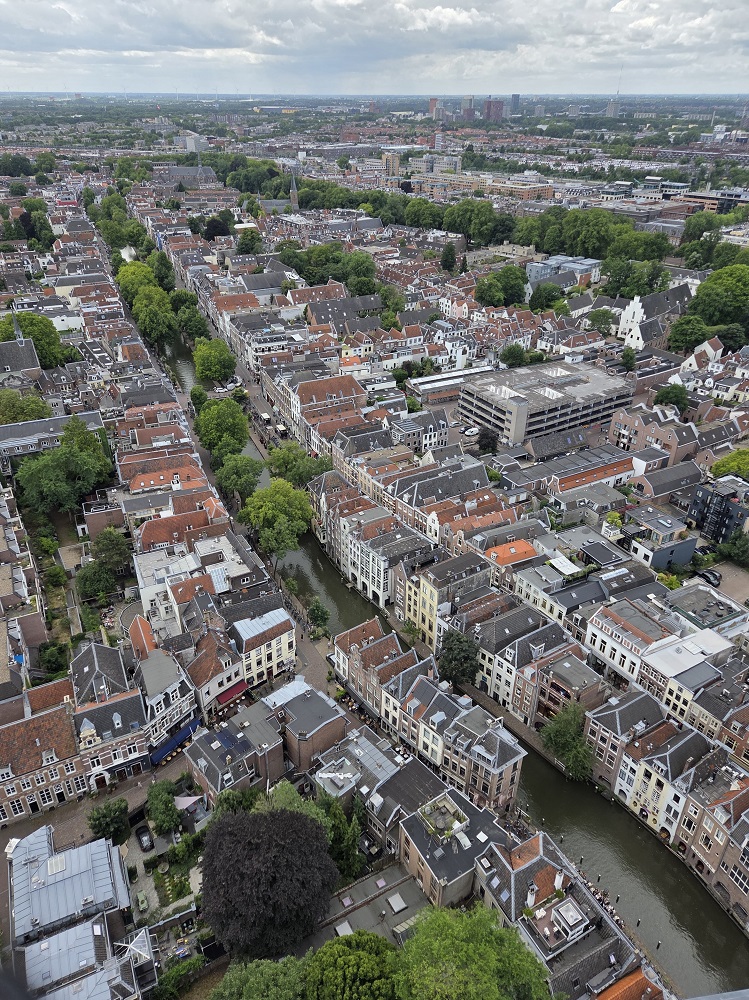
The very top has a spectacular view. Worth those 465 steps? The guide does this climb 3 times a day. Never goes to the gym, he said.
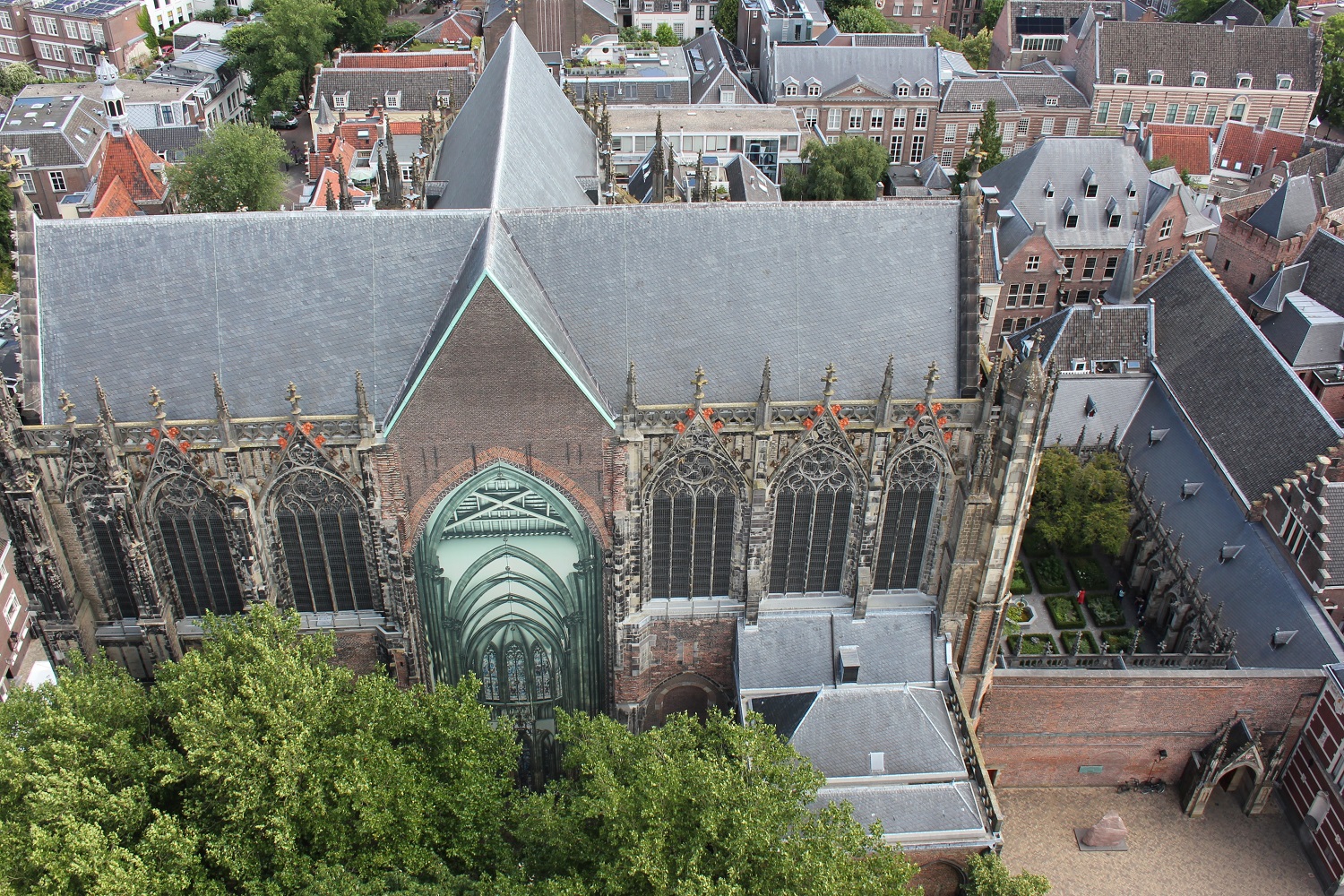
Photo by MH
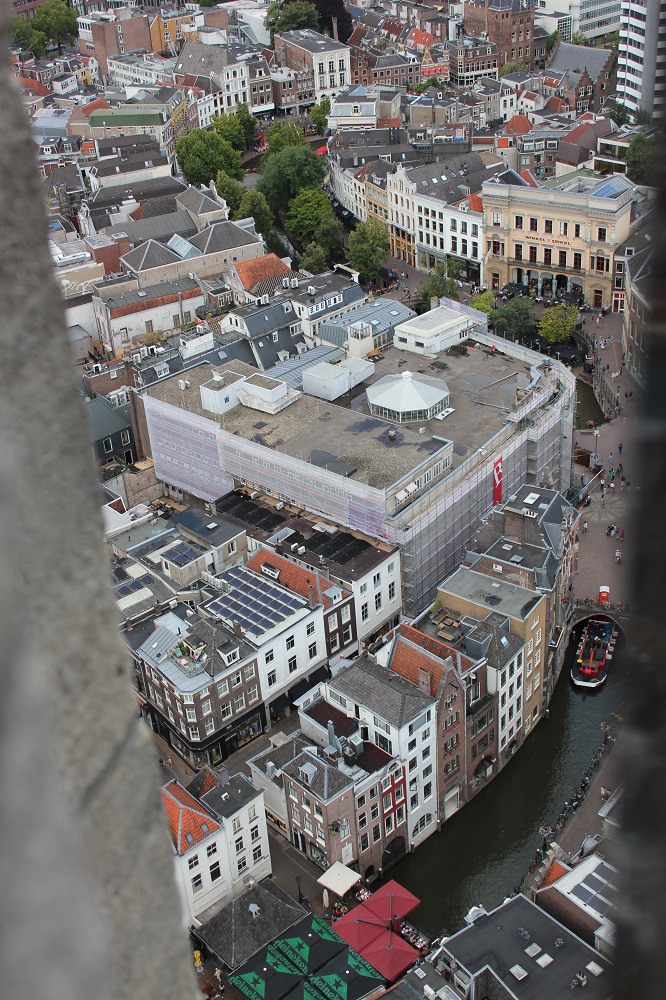
Photo by MH
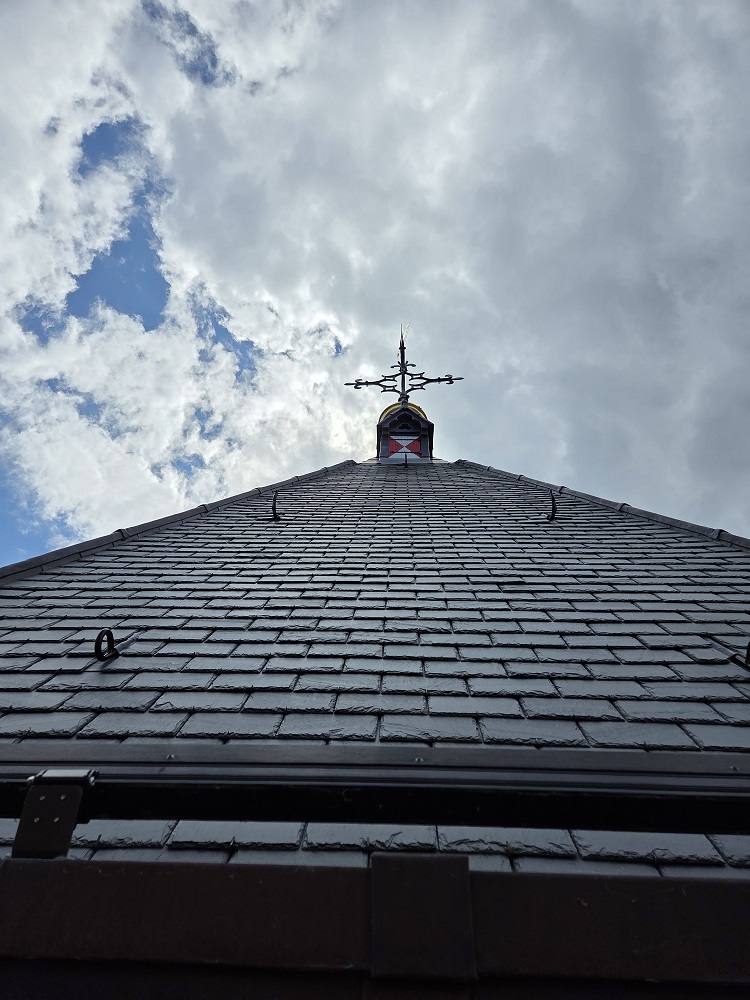
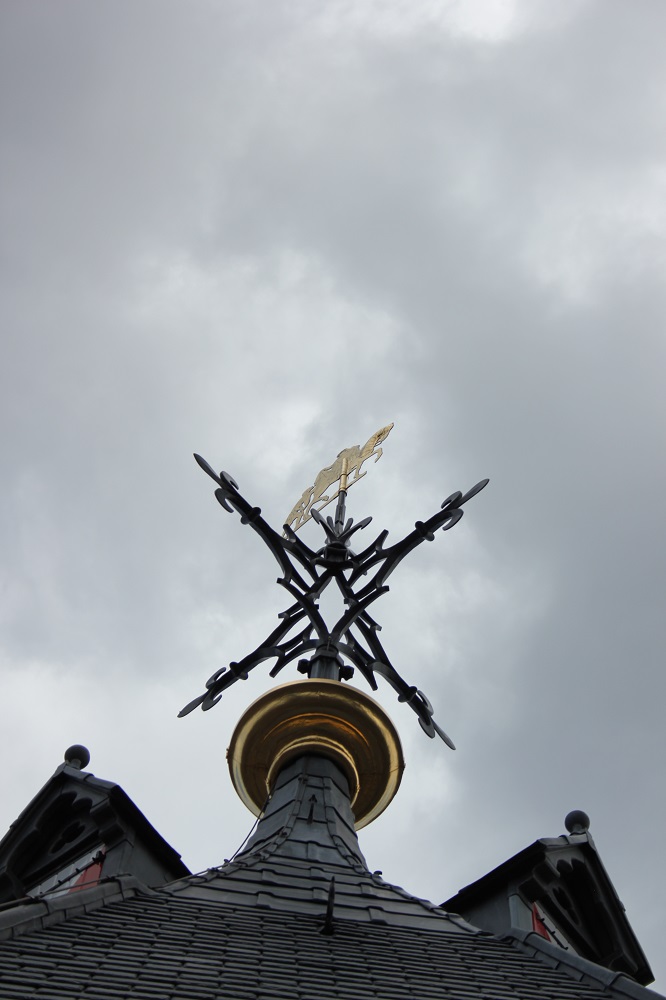
Photo by MH
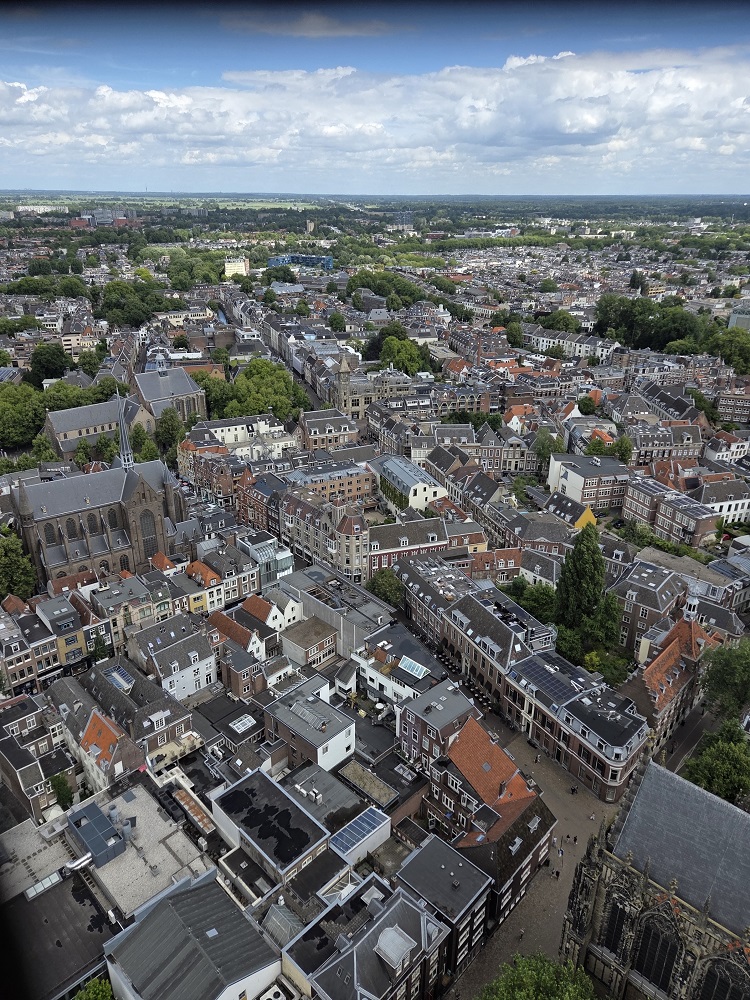
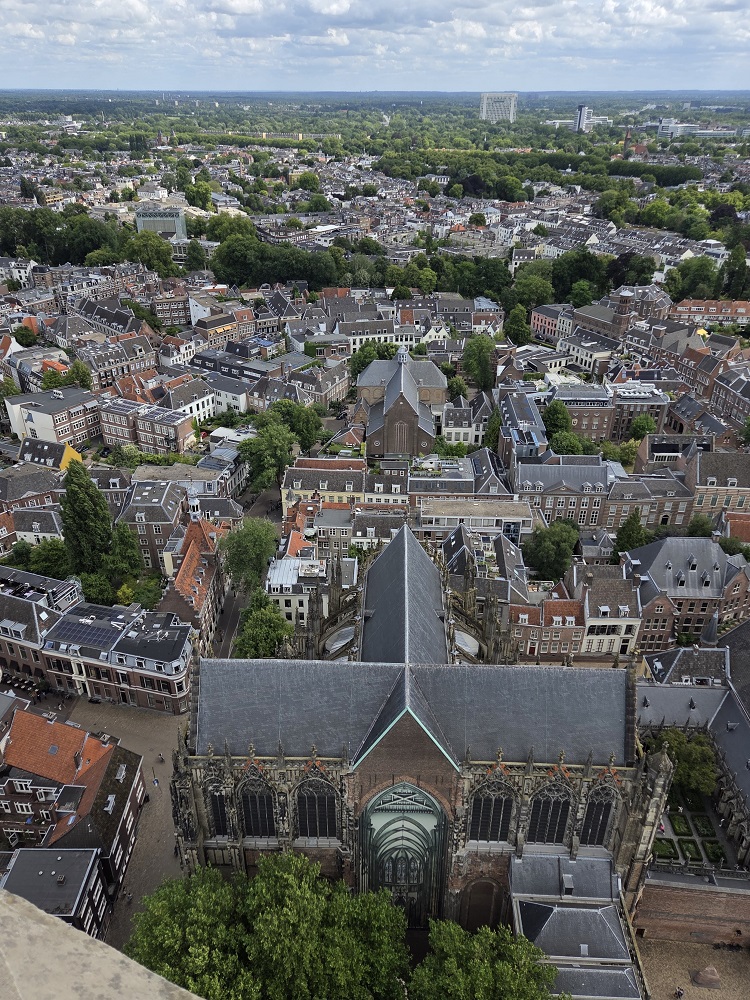
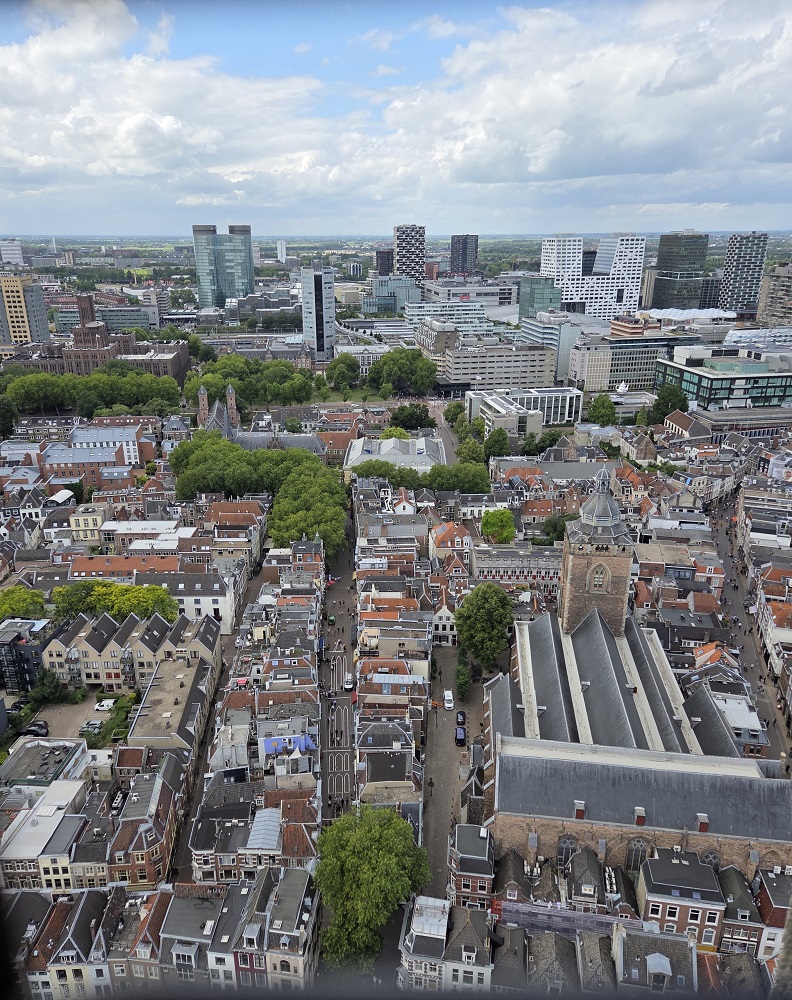
I found a lot of interesting things in this view, some of which might be too small in this downsized version… such as the train tracks, the trees of the canal, the Inktpot building behind those trees, and an image of the Domtoren embedded in the street pavement.
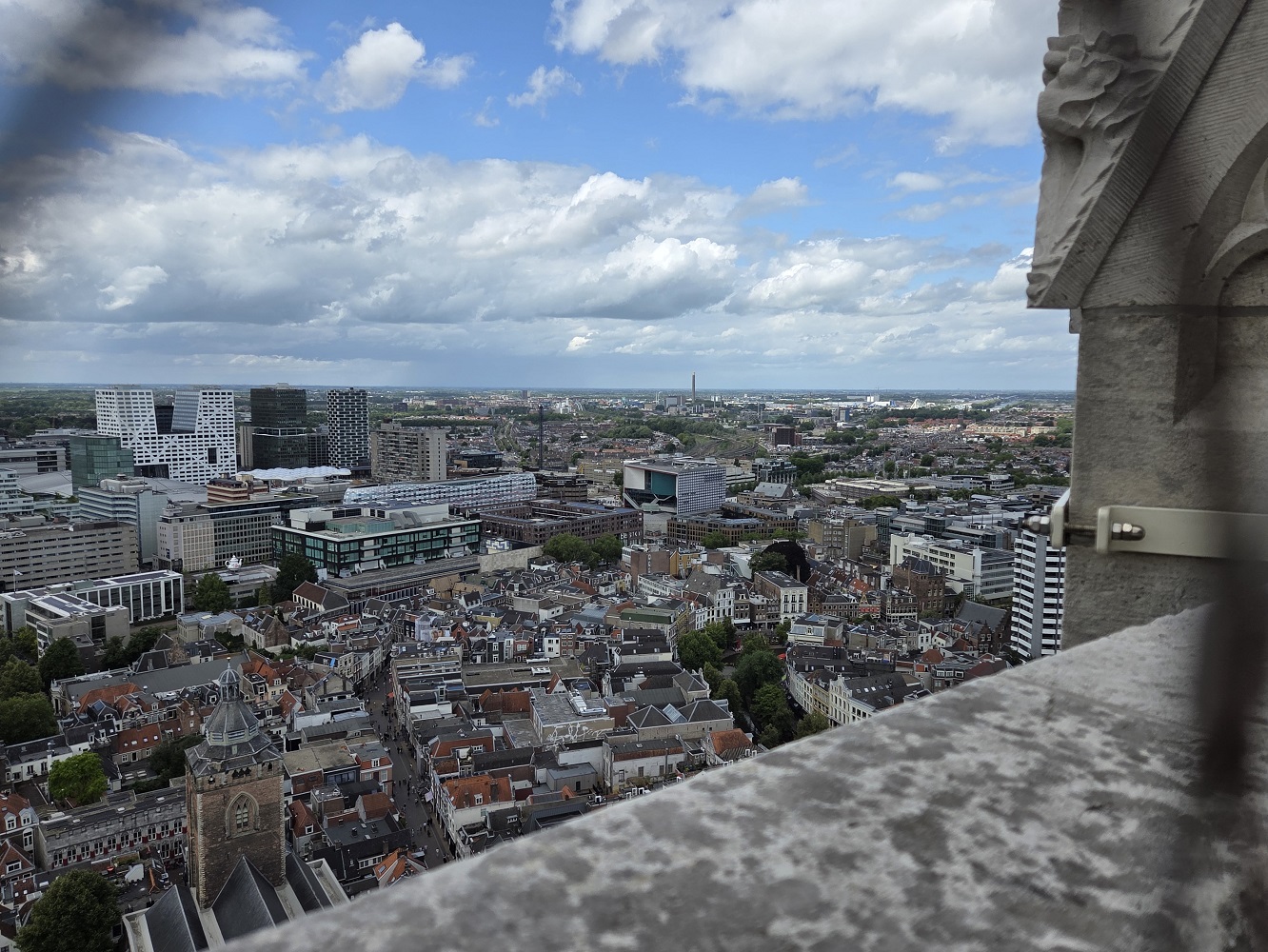
There’s a sense of freedom to be up in the sky like this, kind of like how I felt in Hohenneuffen too. Actually, my ‘tall historic building’ anxiety was quite quiet that day, normally when I’m up a tall stone building like this my anxiety is low-key screaming about how it’s going to collapse any second no matter how many centuries it’s stood perfectly fine. I wasn’t even thinking about how much air there is in the walls of the Lantern below.

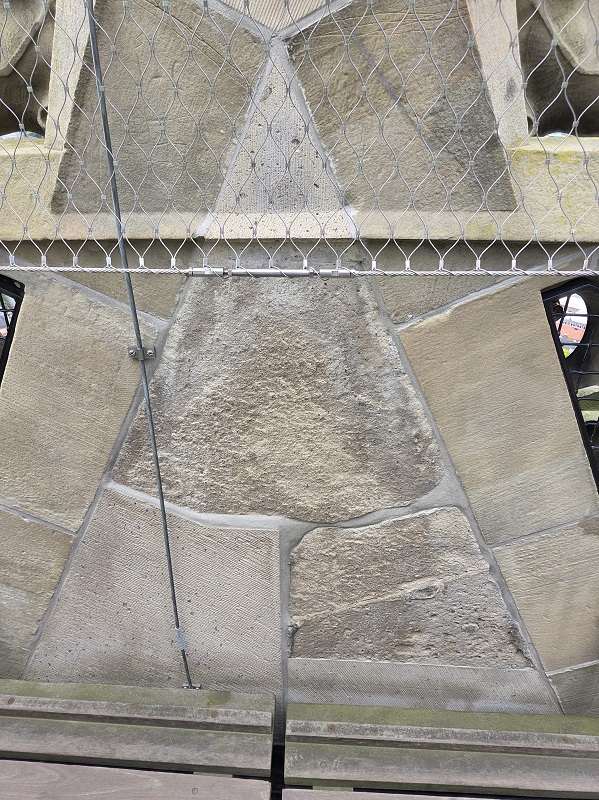
I suppose this is what they did during the renovations a year and a half ago; you can see the contrast between old and new materials very sharply. I felt it was a bit of a theme, as I also saw it at Valkenburg and even Archeon.
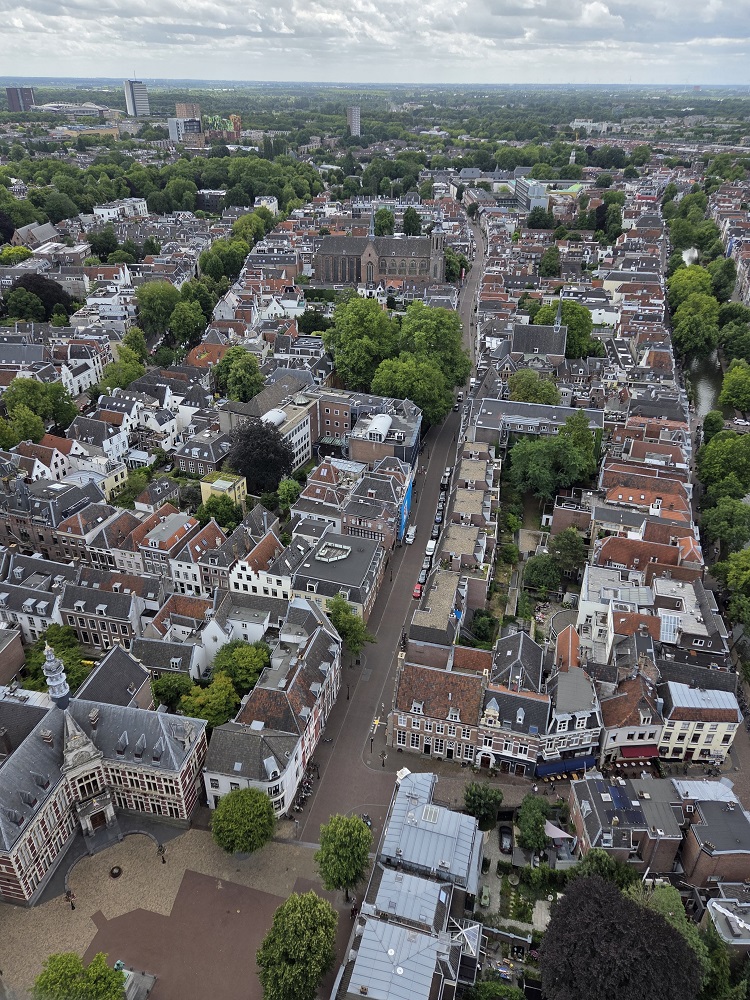
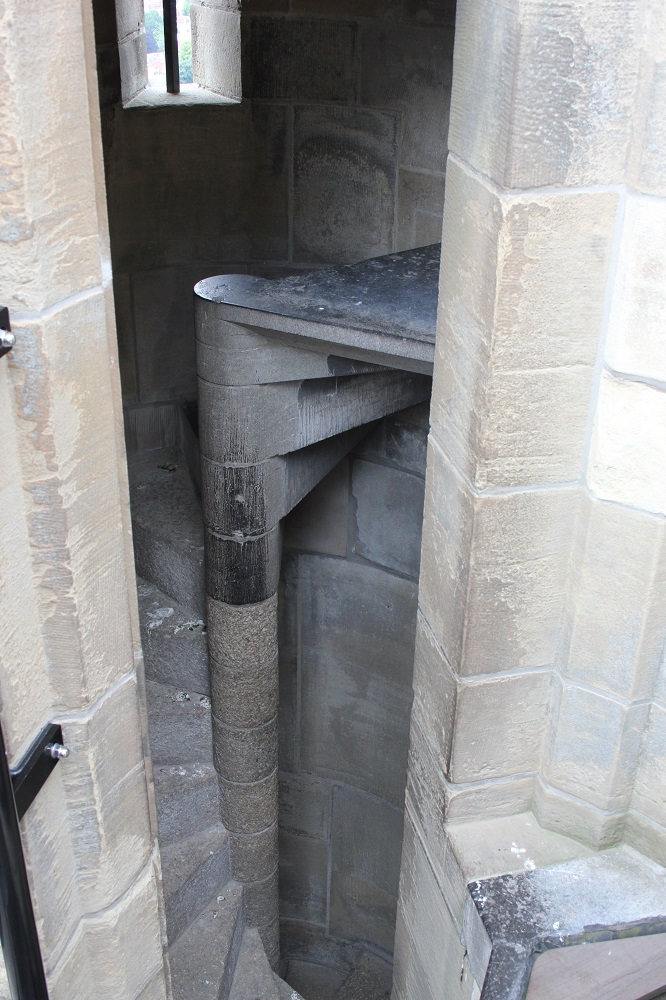
Photo by MH
After that, it was high time for lunch, so we went to a café called Loof. We had to order a drink before they even brought us a food menu… I think Tharash had a beer, I had a drink called Fristi that was kind of like a Yoplait but in a classy glass bottle. It was strawberry. We both had a ‘Croque Napoleon’, a baguette with goat cheese and walnuts, a truffle sauce, a fried egg on top, and a green side salad. It started to sprinkle with rain, so they put the umbrellas up.
Then we went around the town. To the cloister garden again, now green with summer, then went on a circuit vaguely following the old Roman wall.
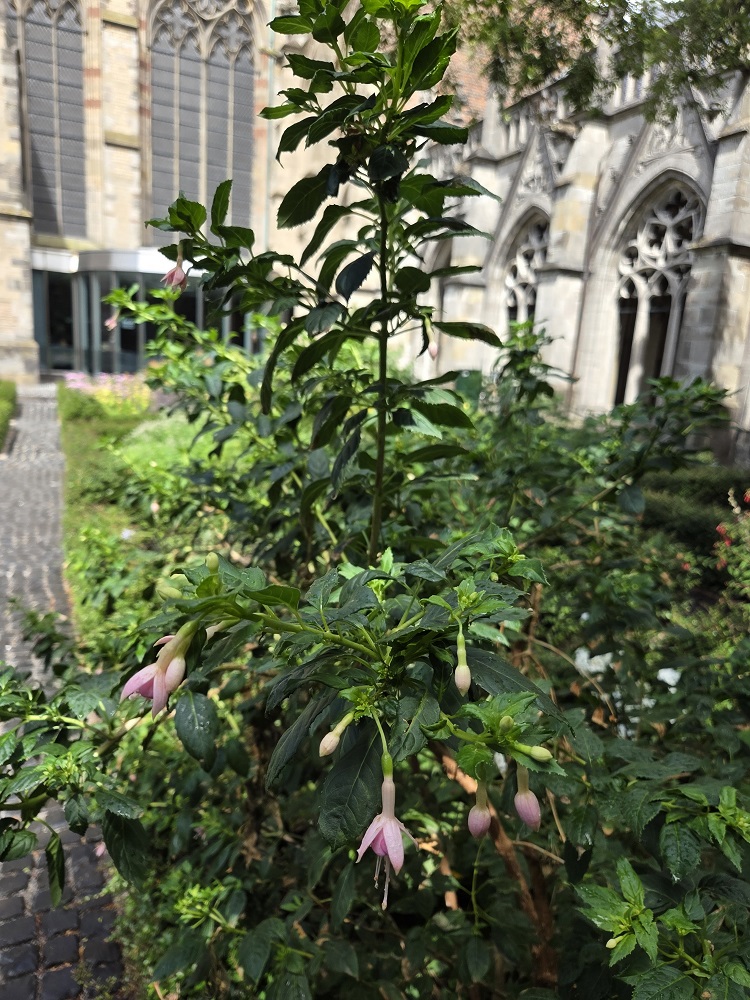
In the cloister garden I saw this plant that reminds me of plants my mom puts in her hanging baskets, but I’ve never seen one as a bush before.
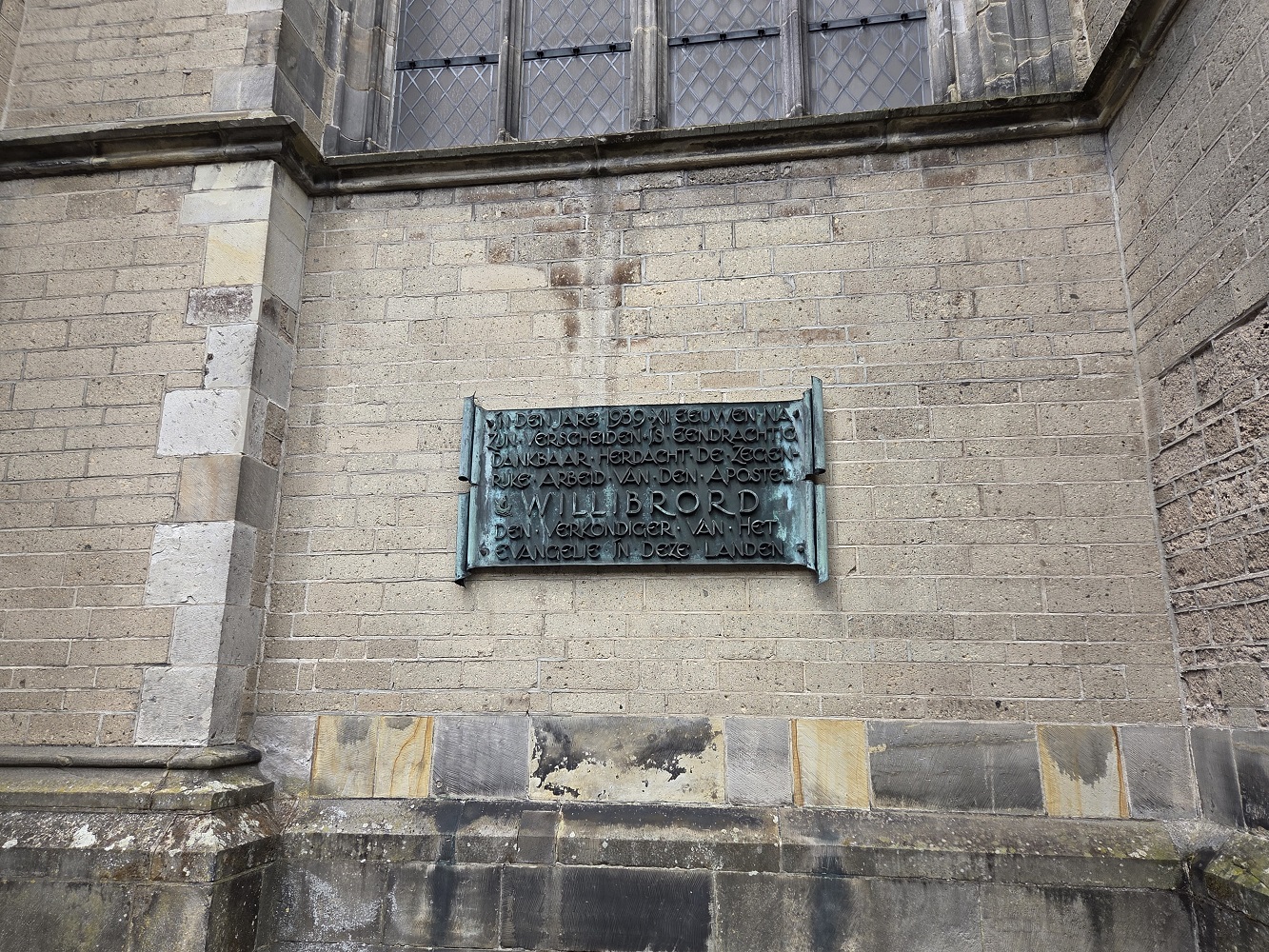
This is quite antique Dutch, so a bit hard to read, and especially for a beginner. “In den jare 1939 XII eeuwen na zijn verscheiden is eendrachtig dankbaar herdacht de zegenrijke arbeid van den Apostel Willibrord den verkondiger van het evangelie in deze landen” which Tharash helped me translate on location, but I don’t remember what it said so Google says: “In the year 1939, eleven centuries after his death, the blessed work of the Apostle Willibrord, the preacher of the gospel in these countries, was commemorated with gratitude and unanimity”.
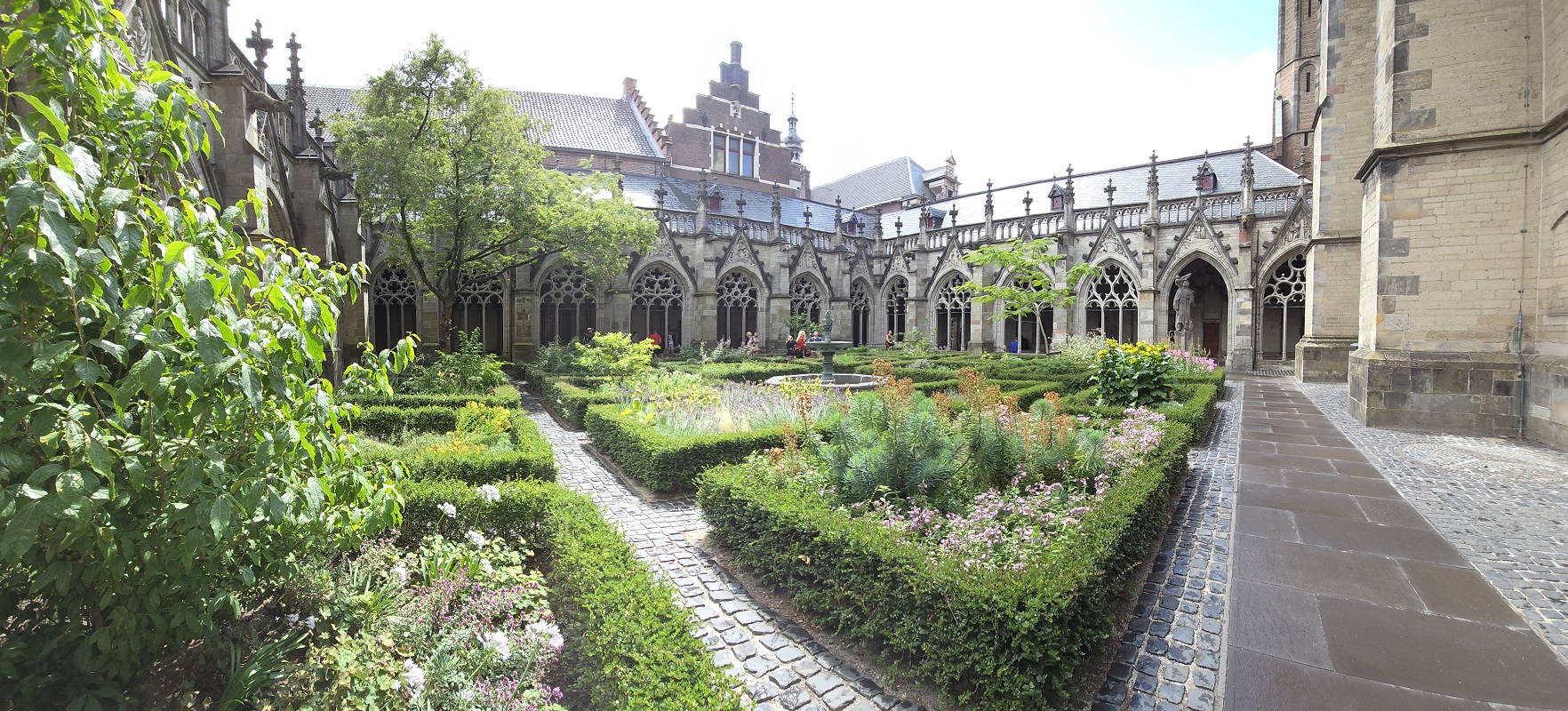
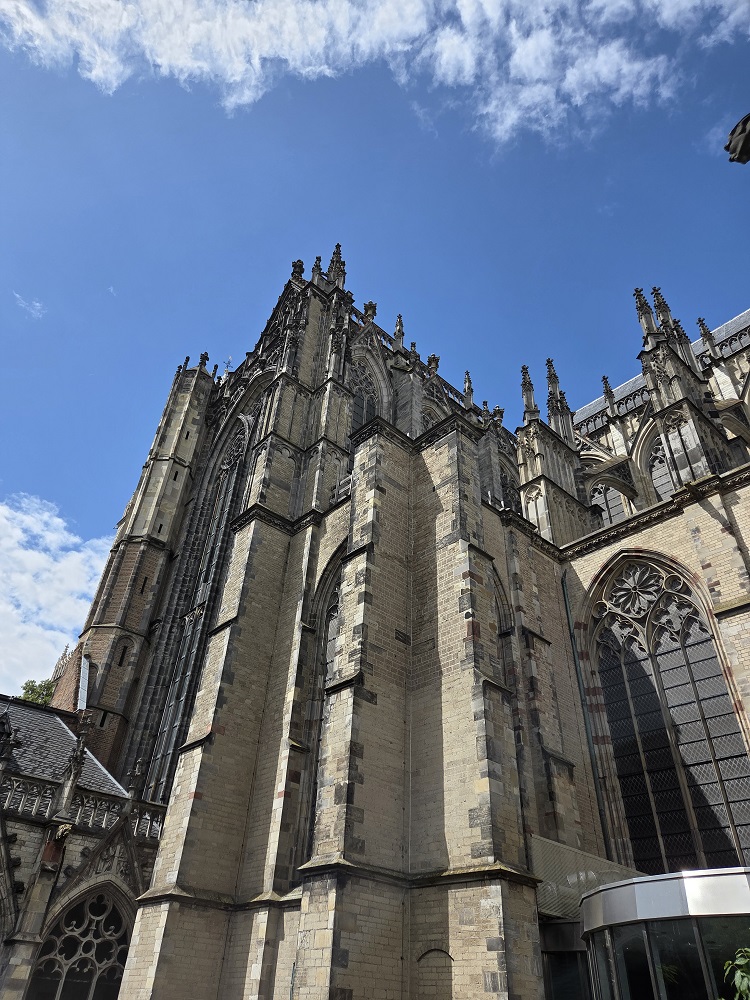
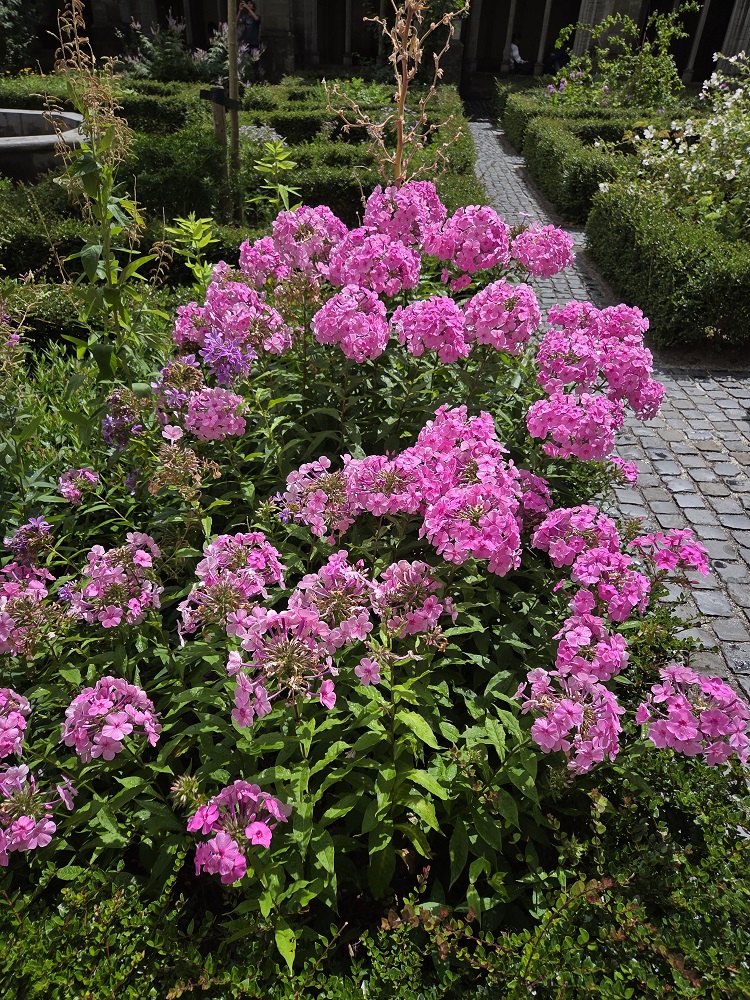
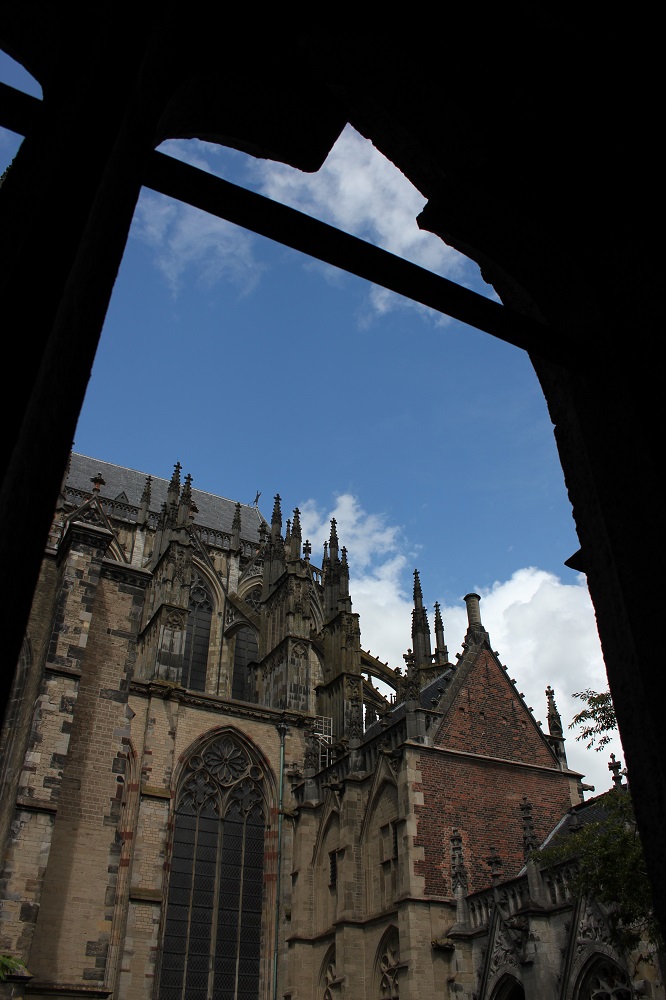
Photo by MH
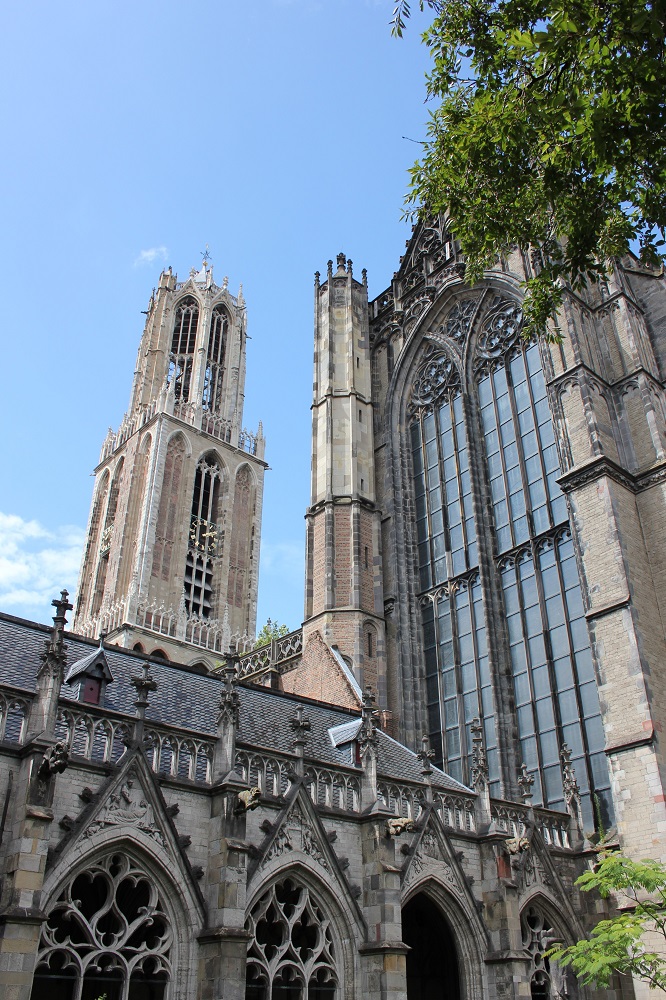
Photo by MH
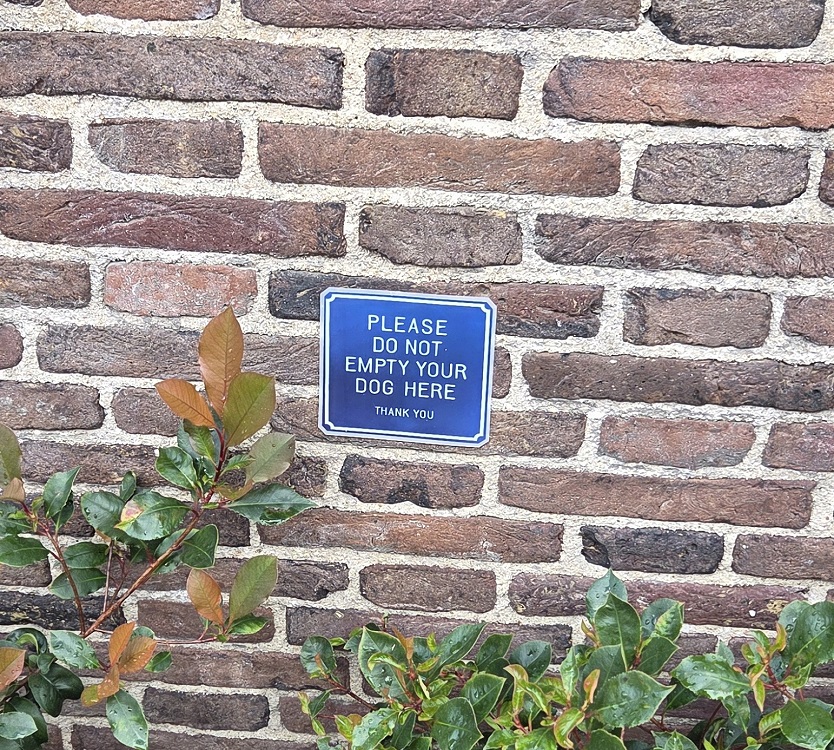
Saw this sign in the street and it made me lol.
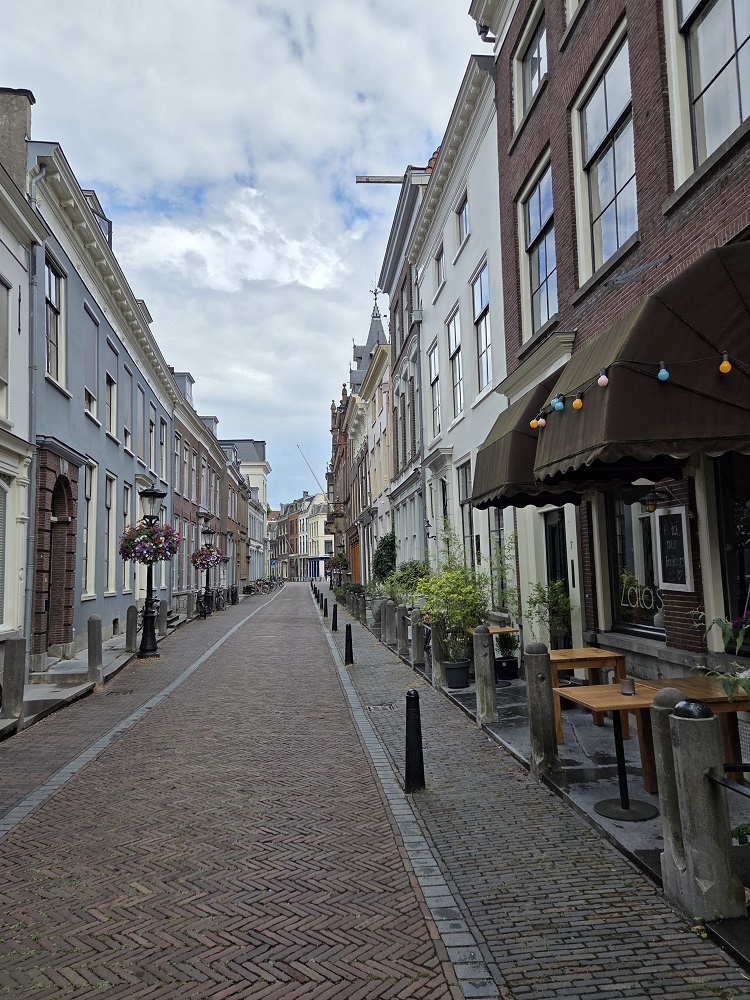
Quiet university street.
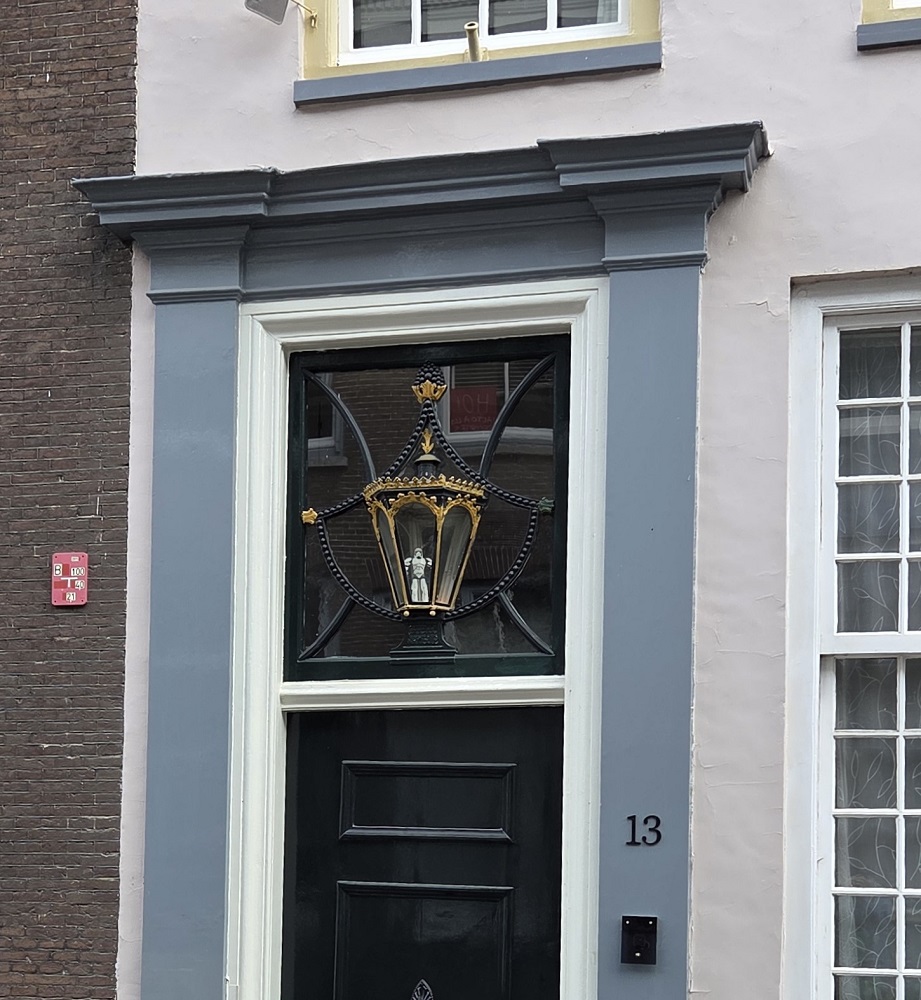
LOL a stormtrooper
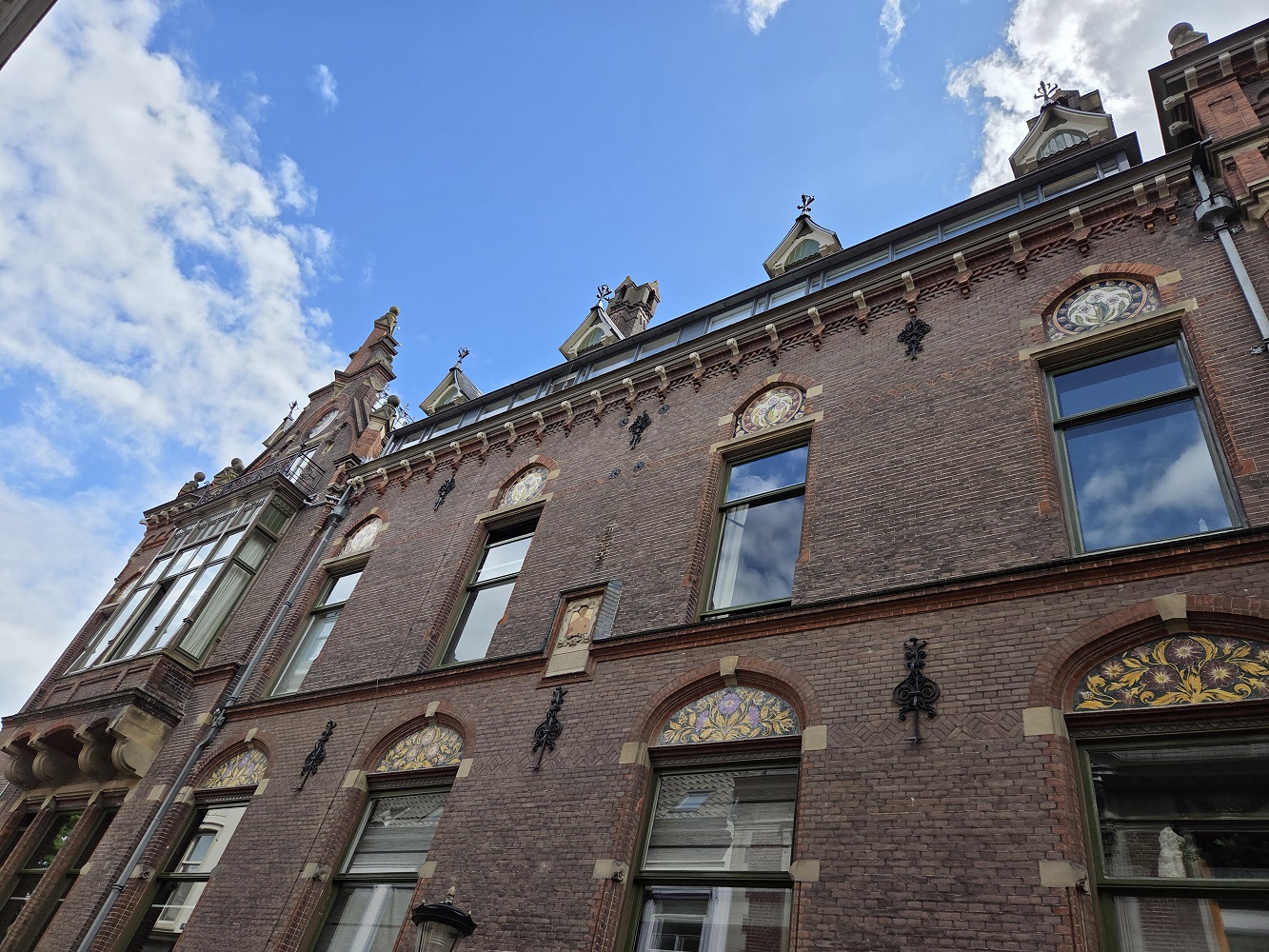
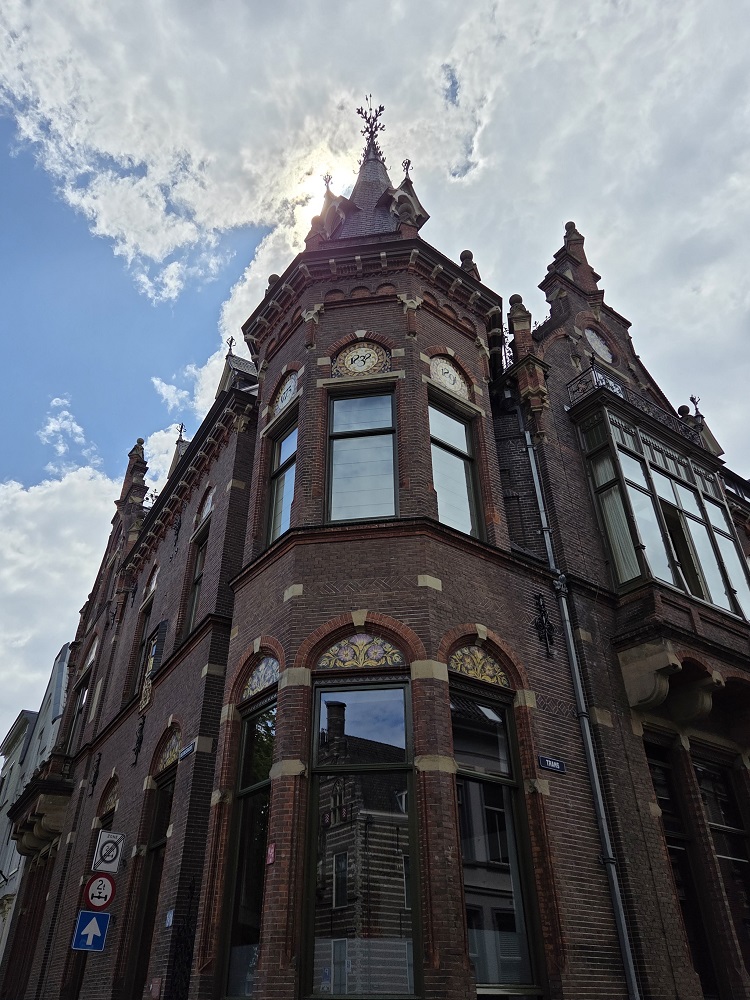
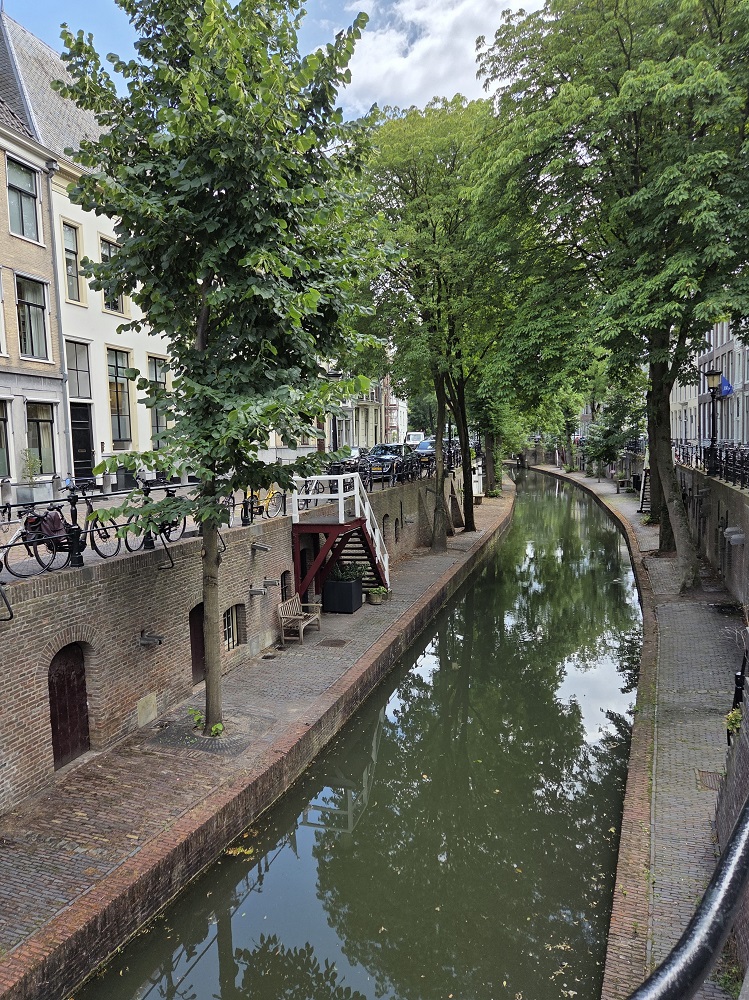
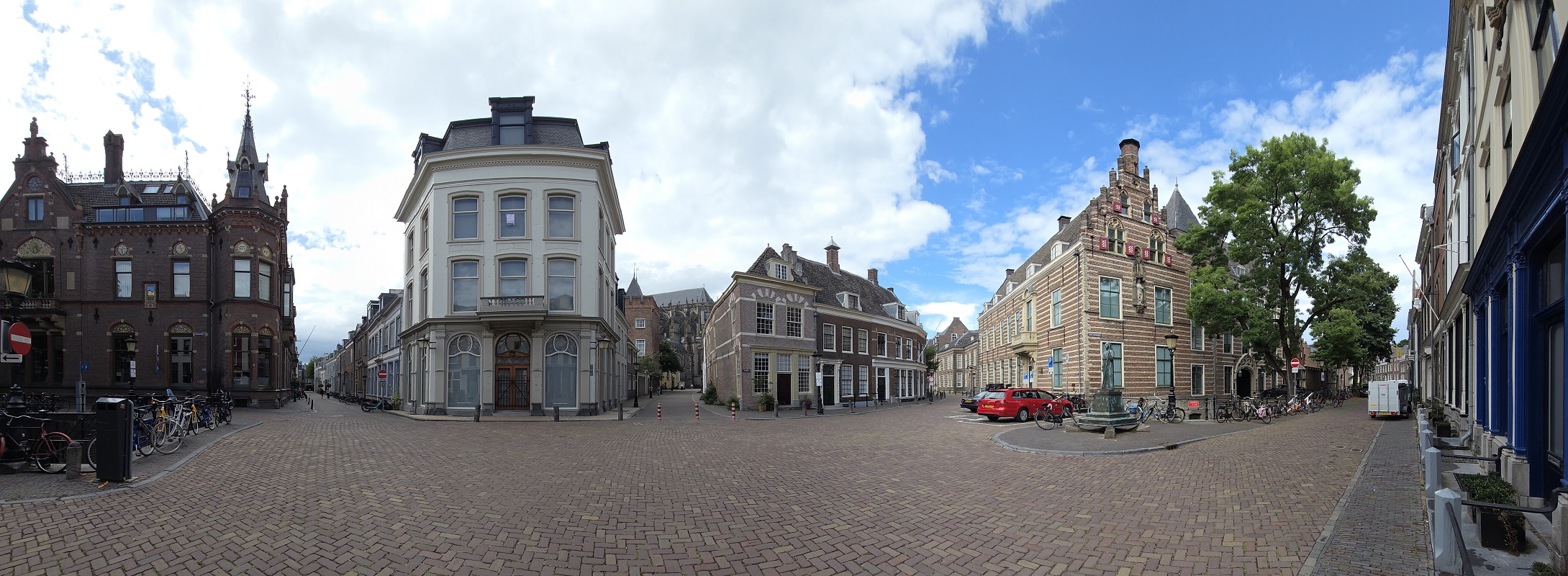
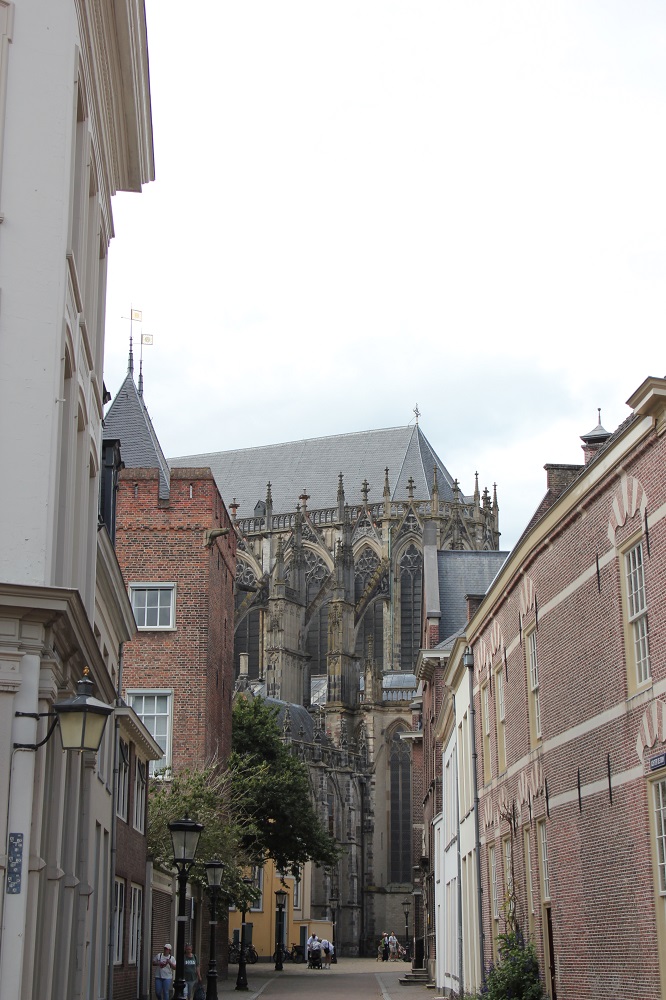
Photo by MH
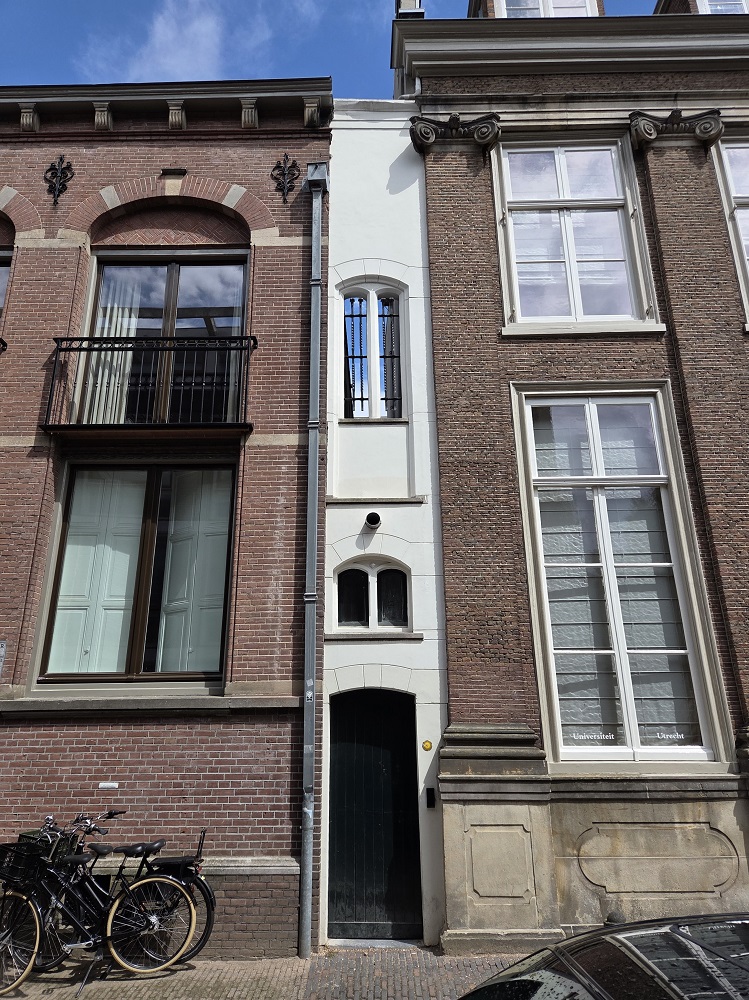
This alleyway is blocked off by such a nice (and tall) wall that I thought it was just one of those ridiculously skinny buildings.
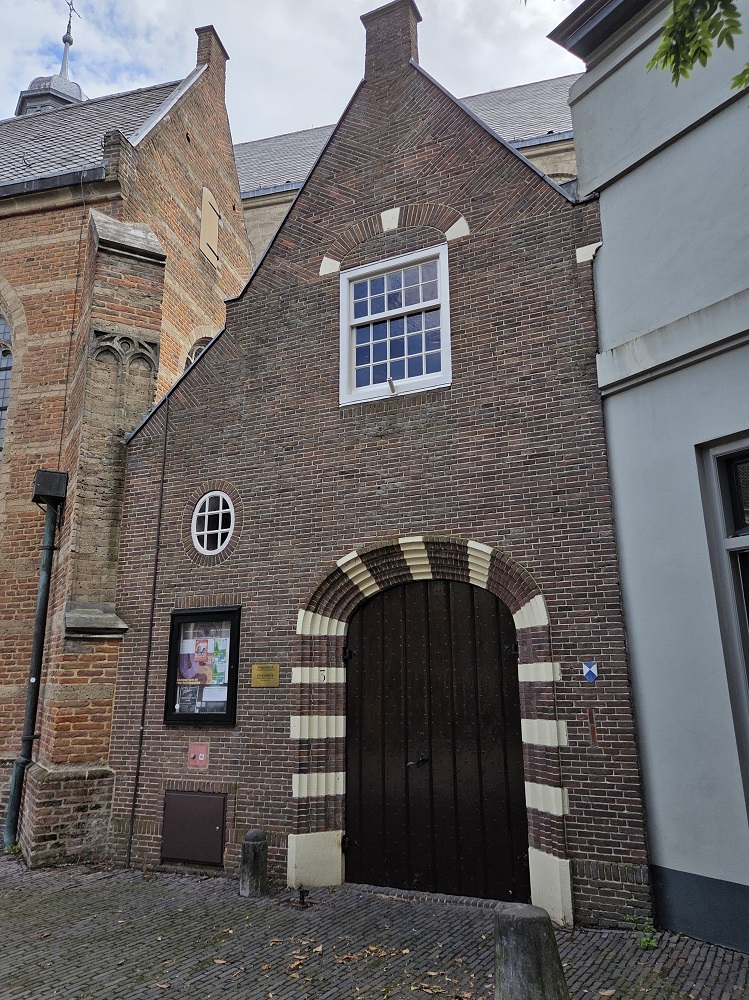
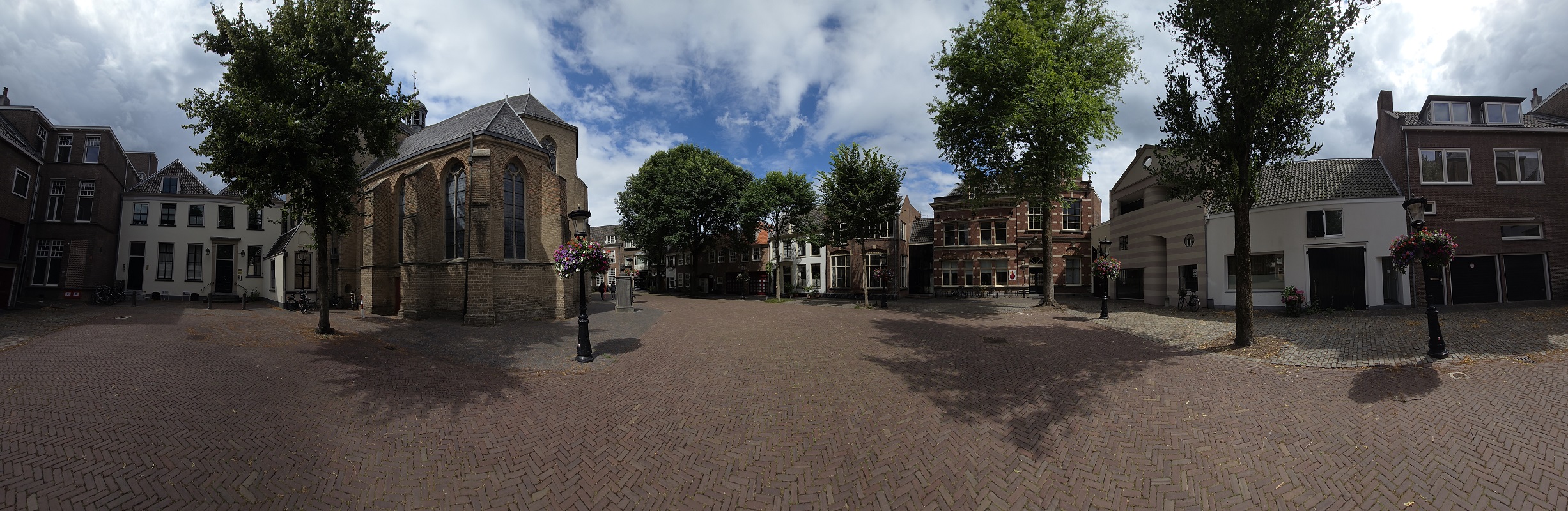
This is the back of St. Peter’s church, a delightfully quiet square I think probably mostly inhabited by university students. I tested the limits of my panorama feature, this is about 330 degrees.
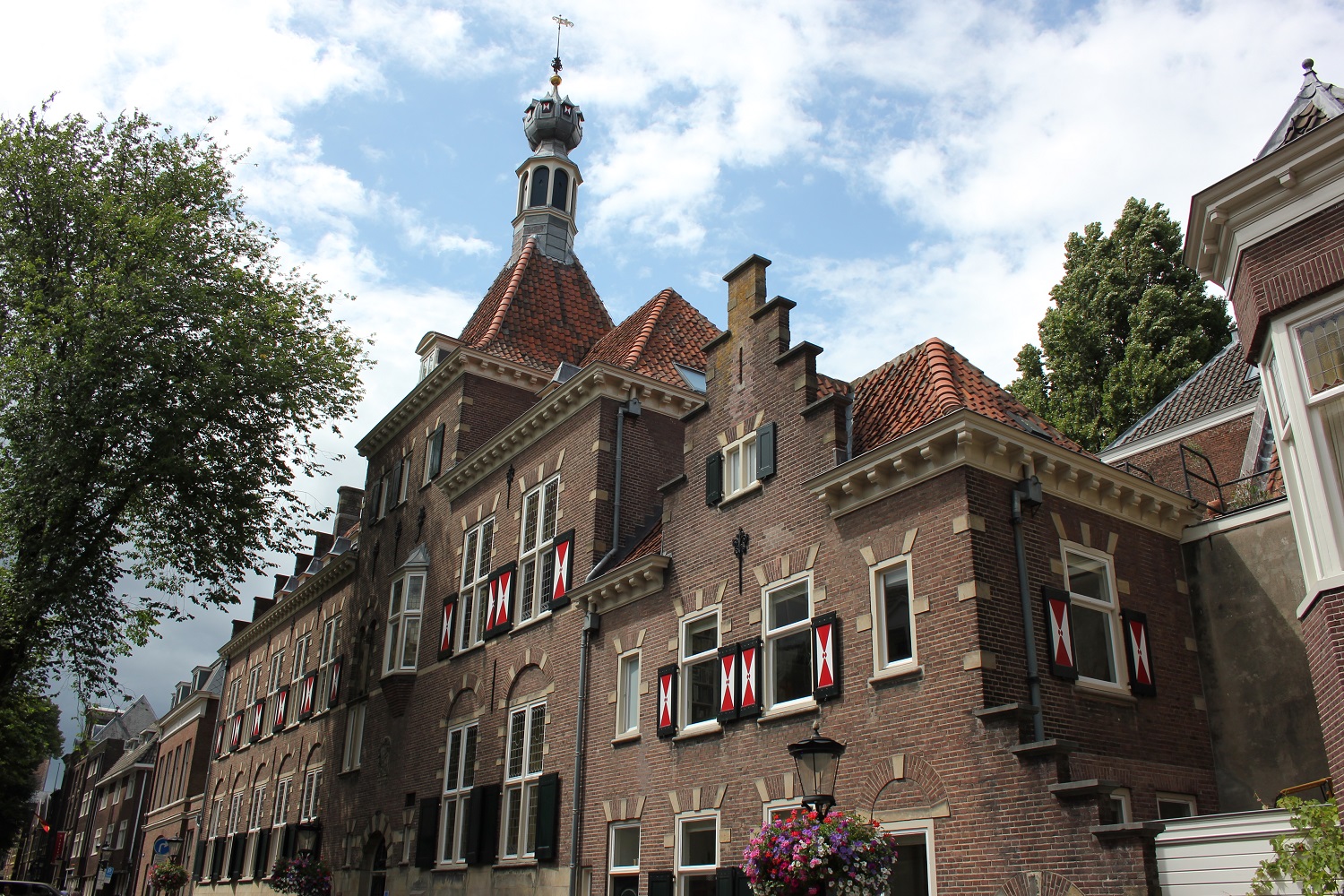
Photo by MH
We went by a bookshop where I saw a beautiful hardcover edition of the complete stories of Frog and Toad in Dutch, and I almost bought it but it probably wouldn’t have fit in my luggage, it was very heavy. So I bought the first Nijntje book instead. Now I have two Nijntje books. This one was a lot easier to read. I am progressing!
And then it started to RAIN. HARD. BUCKETS. Just like in Tübingen. Or Trier. The PNW is wet but it doesn’t come down hard like it does in Europe. So Tharash got out an umbrella and we huddled under it while aiming for shelter… was heading for the Domtoren but the rain finished when we got there lol.
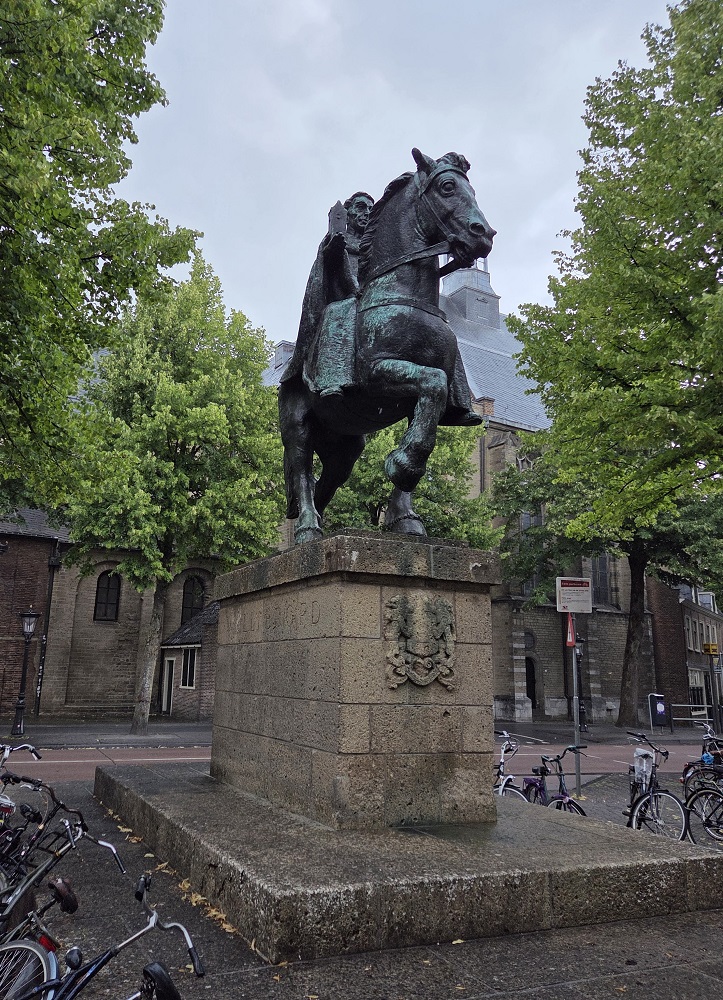
Oh hey look it’s that Willibrord
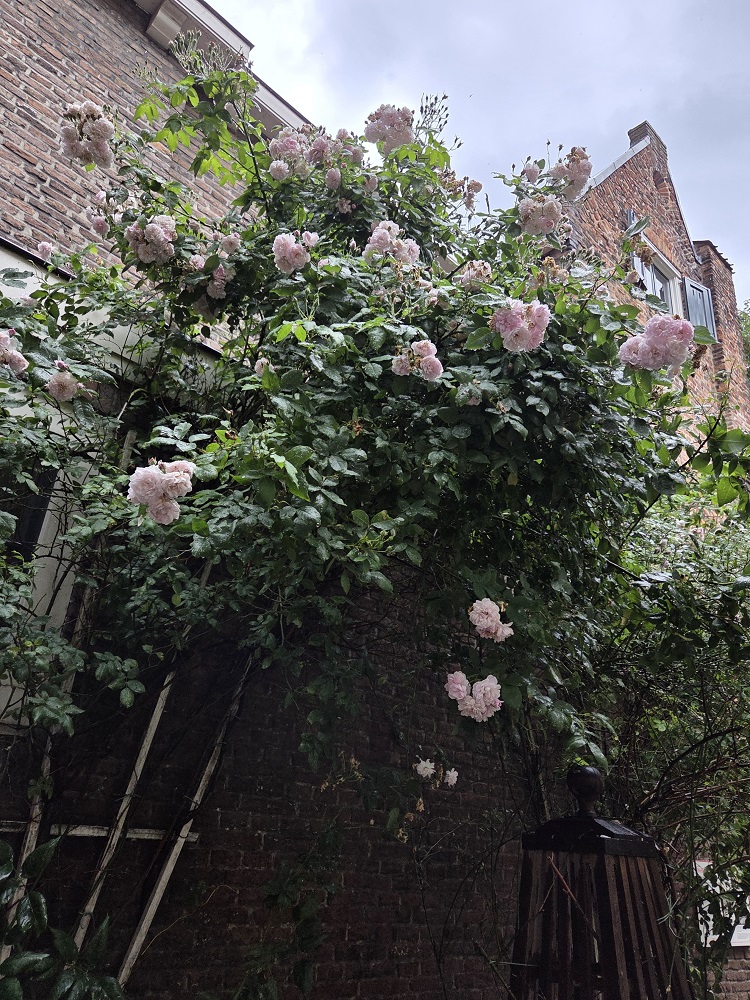
This garden by the Domtoren was very pretty in the wet, anyway.
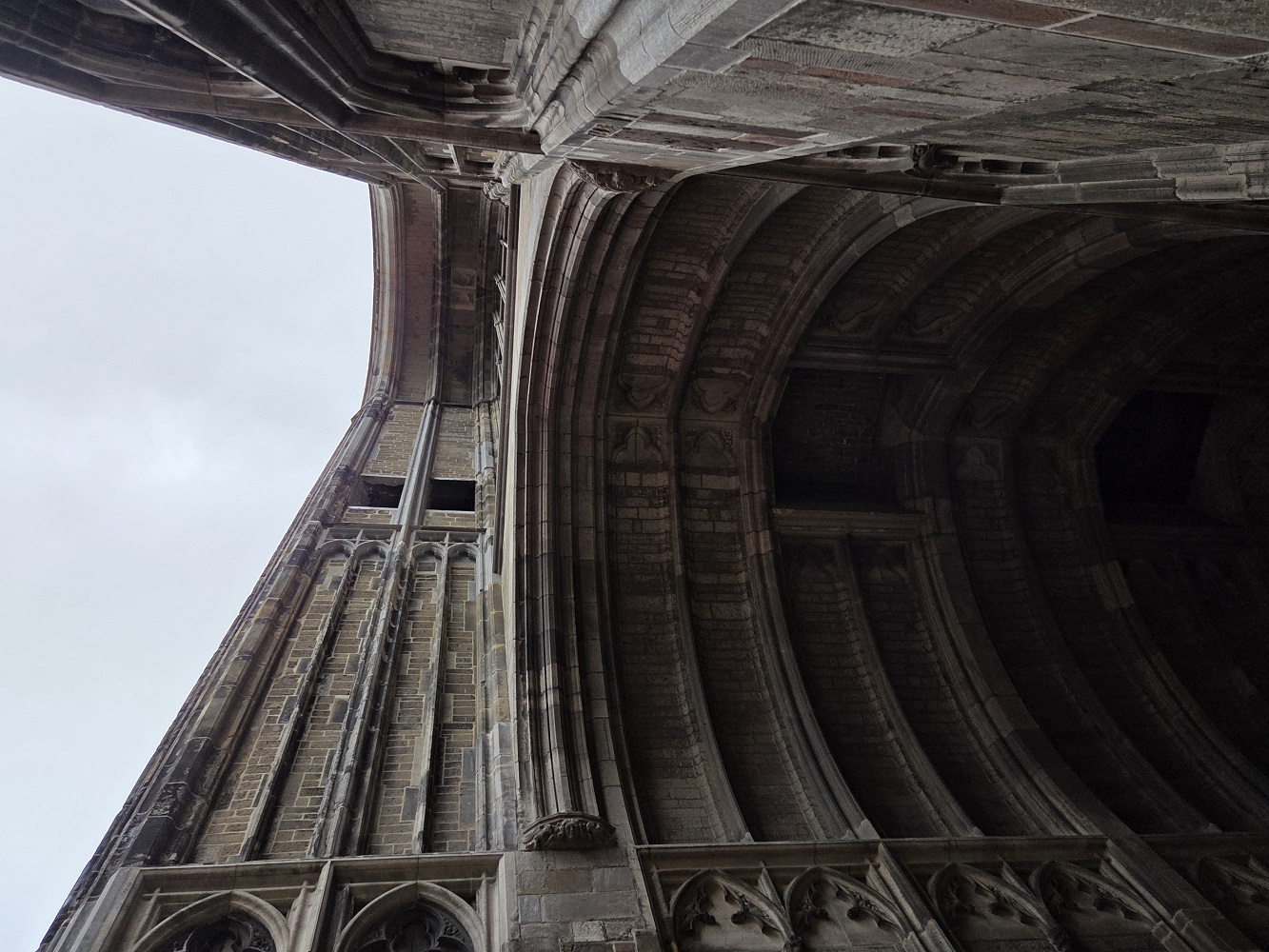
Under the Domtoren.
We stopped in the cathedral again, and I saw a 3D puzzle model of the cathedral (sans windstorm damage, which doesn’t seem right… it’s iconic because of the damage) so I went to the giftshop, and I got a bookmark of the organ, and not the 3D puzzle, but a laser-cut paper model, which takes up a lot less space both assembled and unassembled.
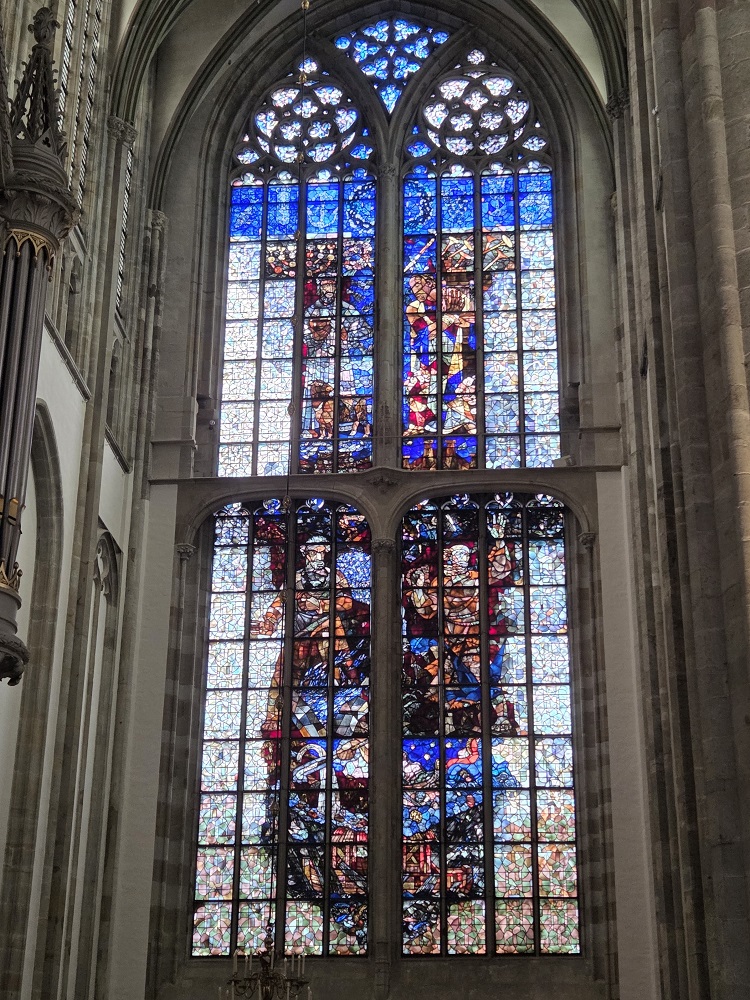
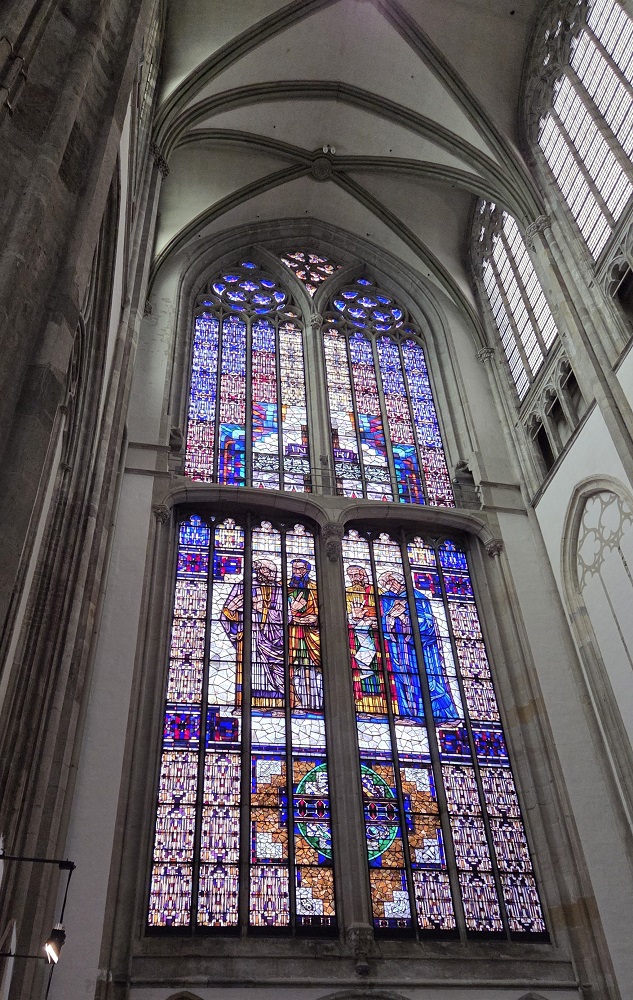
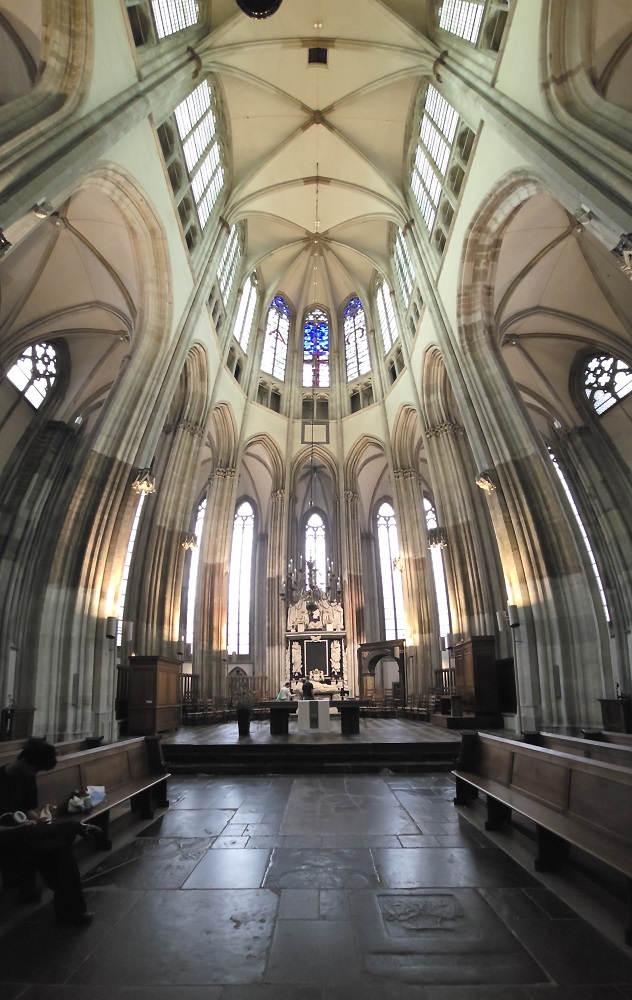
I was trying to do a vertical panorama to really show the height, and then the camera did this weird thing with it that looks pretty cool lol
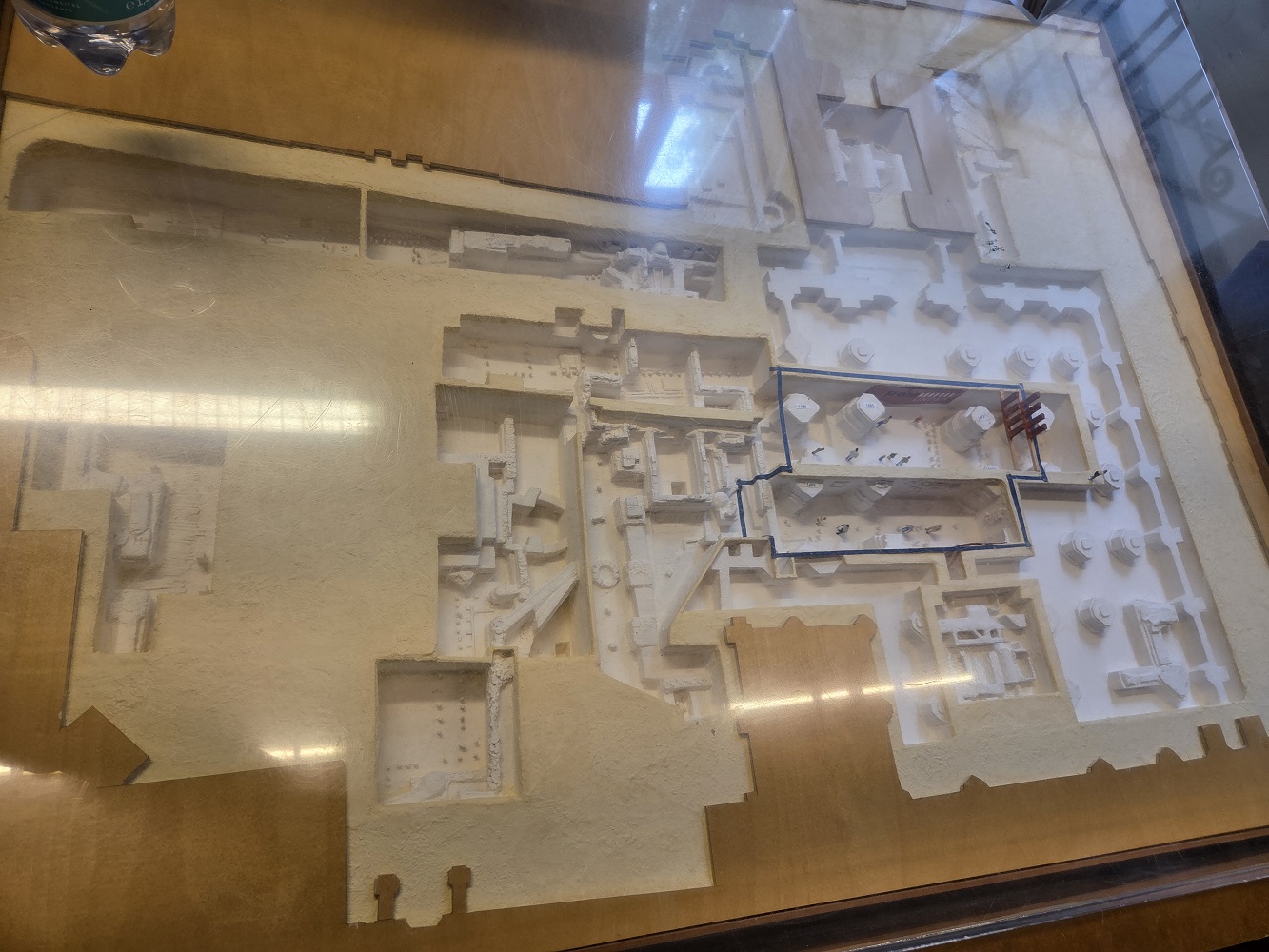
A model of what they know about what’s below the surface of the Domplein, I think. The cathedral is at the bottom, the Domtoren is at the top; the outlined part is the DOMunder, and the sticking-up bits on one side of the DOMunder is the stairs down into it. You know how I love models!
Then it was time for the Palais Lofen tour. This guide was not very comfortable in English, so it was a good thing for us that we’d already had a lot of the info from the other tours. We were a bit bothered – not by her, she did her best, and all the guides are volunteers – but by whoever asked her to do this tour that she really wasn’t comfortable doing.
Anyway, Palais Lofen is the remains of the palace where the Holy Roman Emperor came to stay when he was in Utrecht, as mentioned above. Only the bottom floor remains, where the servants would have worked and storerooms would have been. They’ve only half-excavated it; something about lack of funding prevents a proper investigation into the remaining three feet of sand. There is one segment that has been fully excavated, and it is the basement of the Bar Restaurant Walden where we went for lunch in the winter. There’s also a bit of Roman wall built into the floor in that basement. Who knows what’s still there? I’d love to see it fully excavated.
There was also a video in this site, and it was of the event that gave Utrecht city rights. Apparently, around 1122, the Bishop of Utrecht wanted to dam the Rhine to drain more fields so he’d get more taxes. The local merchants were upset, because that would limit trade into Utrecht. The Bishop said he would build a canal to make up for it, but they had to pay for it since it was for their benefit. This was, as you might guess, not a satisfactory answer for them, since they wouldn’t need a canal if he didn’t make a dam, so the Bishop went to the Holy Roman Emperor who was in town to complain how unreasonable they were. The Emperor saw through his words and plans, and they got in a quarrel. Which meant that their retinues outside got in a fight, and the Emperor had fewer men with him, so he might have lost, except the townsfolk joined in against the unpopular Bishop. The Bishop was imprisoned for treason, but was later ransomed by the Archbishop of Cologne. Then the Emperor gave the people of Utrecht city rights as a reward, so they weren’t beholden to the Bishop anymore. Oh, and he still had to pay for their canal.
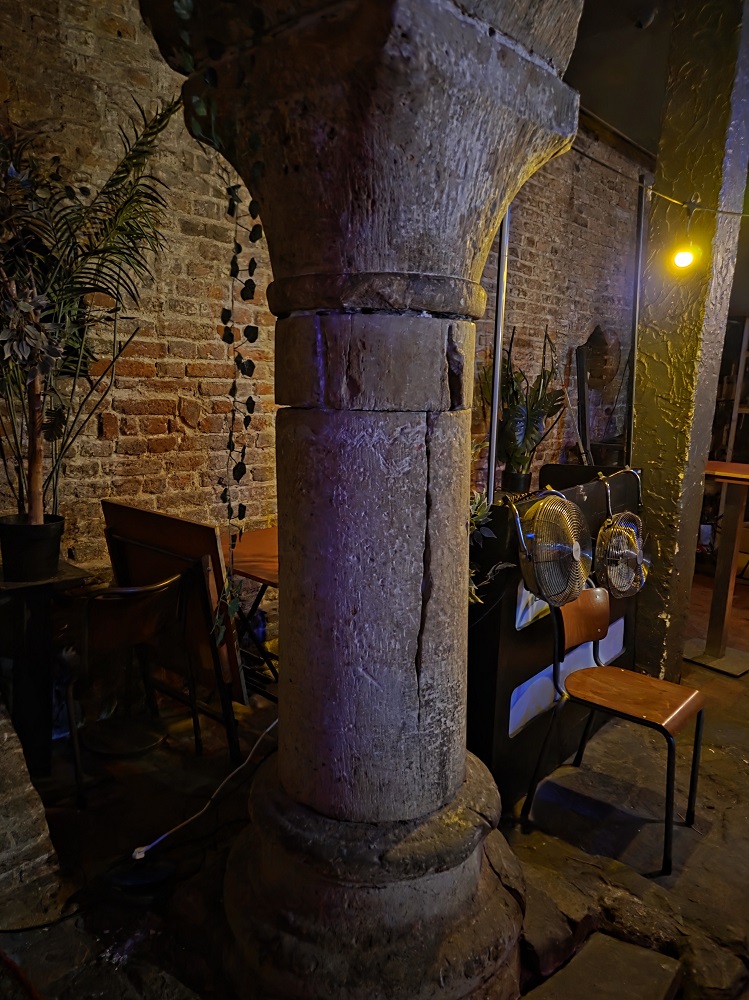
These pillars are CHONKY. The rest of them are still half-buried in sand, and there’s still enough height to have a whole exhibit.
The tour had gone on longer than scheduled, so I was starting to get a bit antsy about making our dinner reservation, but we were there on time even though I stopped to take pictures again some more.
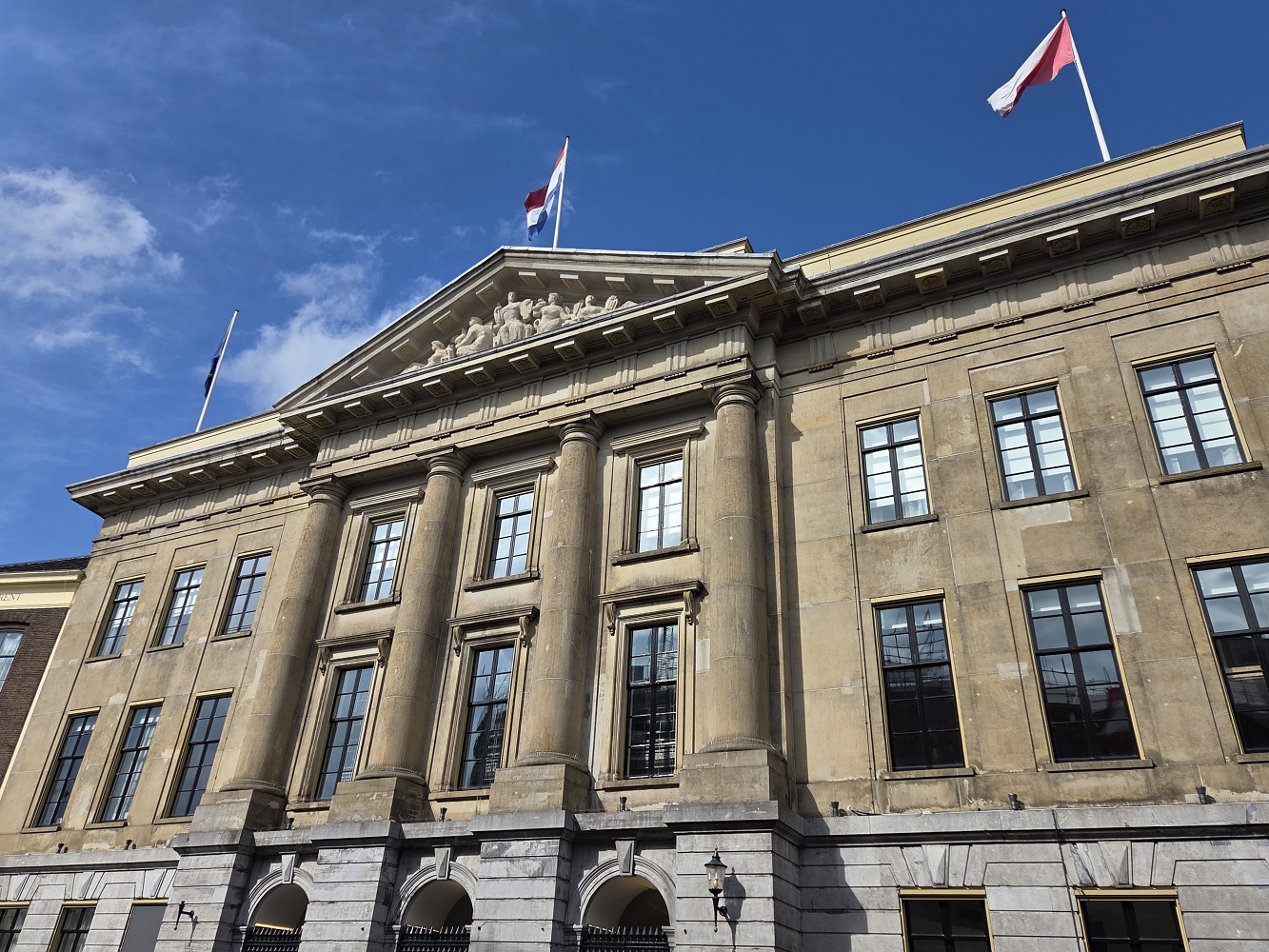
The town hall! Which I didn’t take a picture of last time.
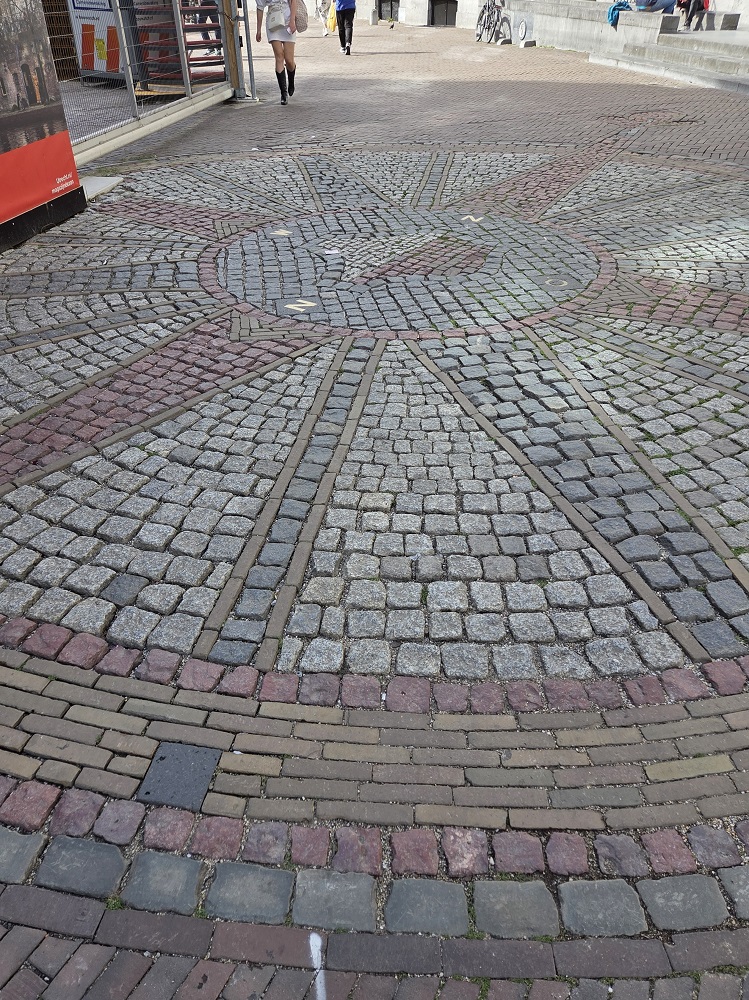
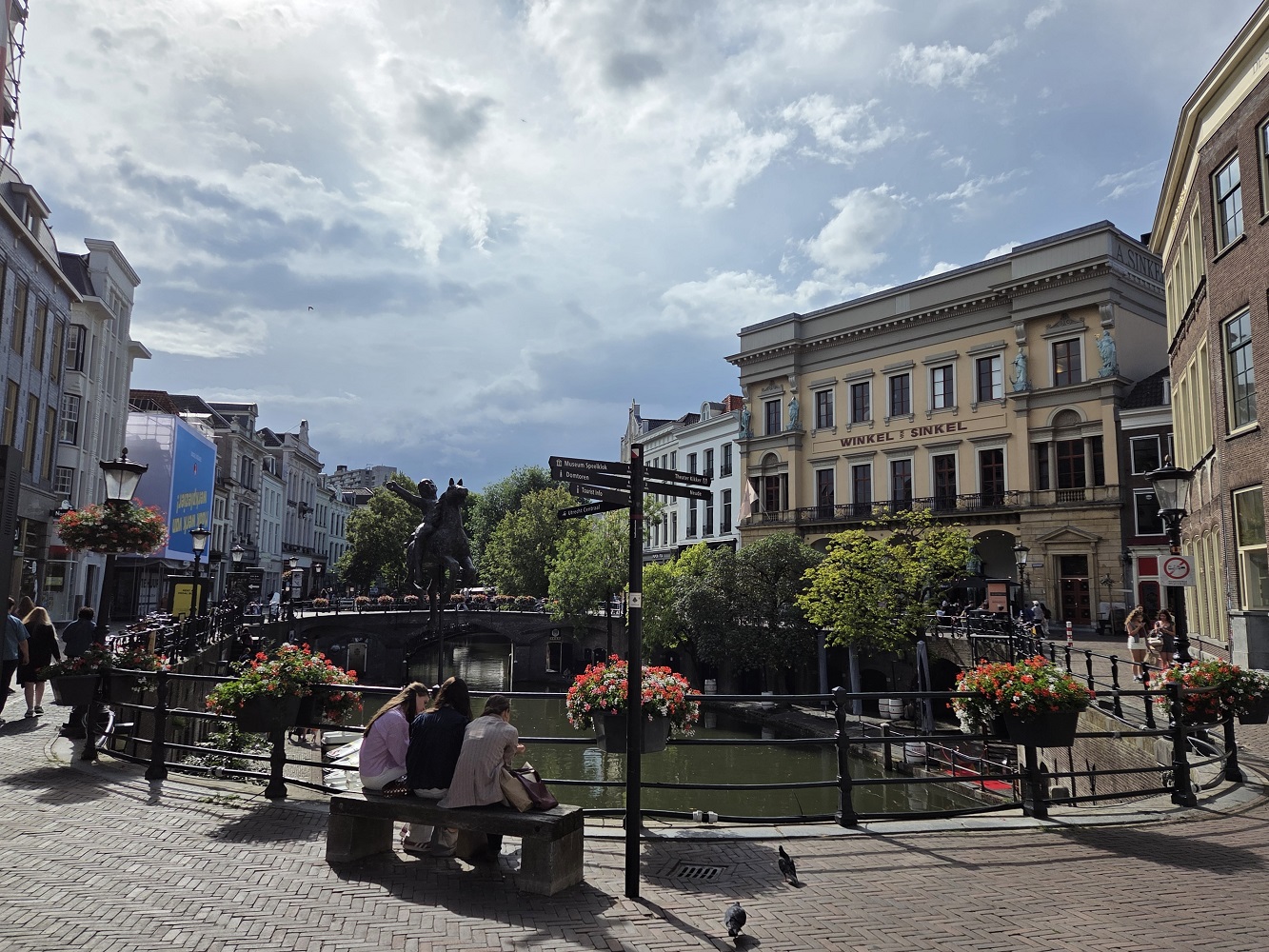
This bit was under renovation last I was here, if you remember the girl on the horse.

We went to a place called Toque Toque for dinner. A weird thing that happened when we were researching dinner places was that about two doors down is a restaurant called Quignon, and it has the exact same style website? Checking the menu pages was especially confusing because the biggest visual difference was the font colour. Anyway we settled on Toque Toque because I was hoping for a canal-side dining experience, and Tharash was hoping for a wine-cellar dining experience, but we got neither of those. We both had the Goat Cheese Burger, and I don’t know what I was expecting but it wasn’t quite… “a slab of goat cheese on a bun with hamburger toppings” but that’s what it was. Also the menu said it came with arugula, and I asked for no arugula, but the server was confused and thought there was only arugula in the side salad, so he didn’t put through my request. Which there was arugula in the side salad, but there was also arugula on the burger, I know how to read a menu. >: I And I asked in Dutch, too.
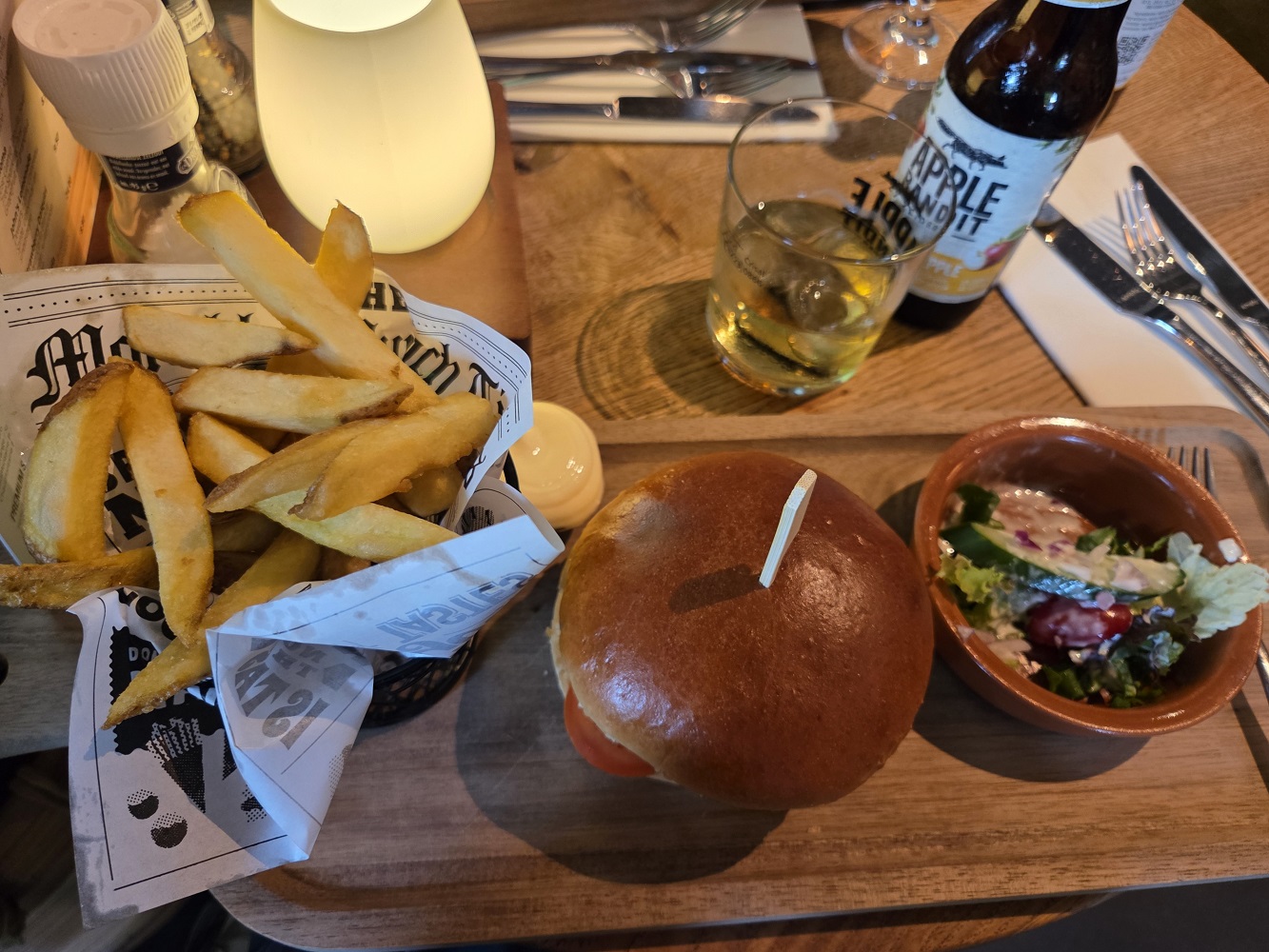
Anyway, the fries were fantastic, fresh out of the fryer, and the apple cider there, Apple Bandit, tasted just like apple juice – no noticeable alcohol flavour, and it’s 4.5%. Delicious.
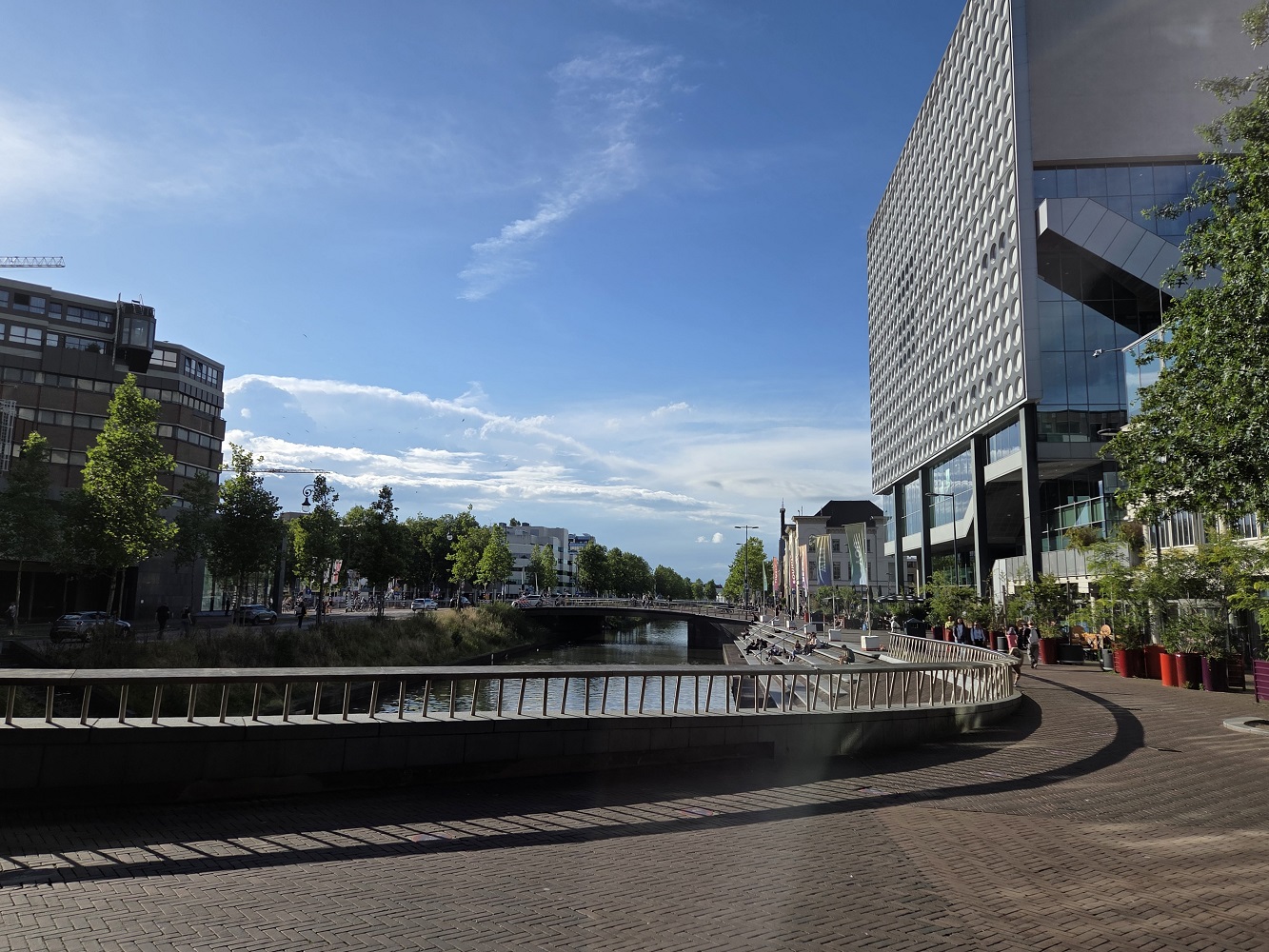
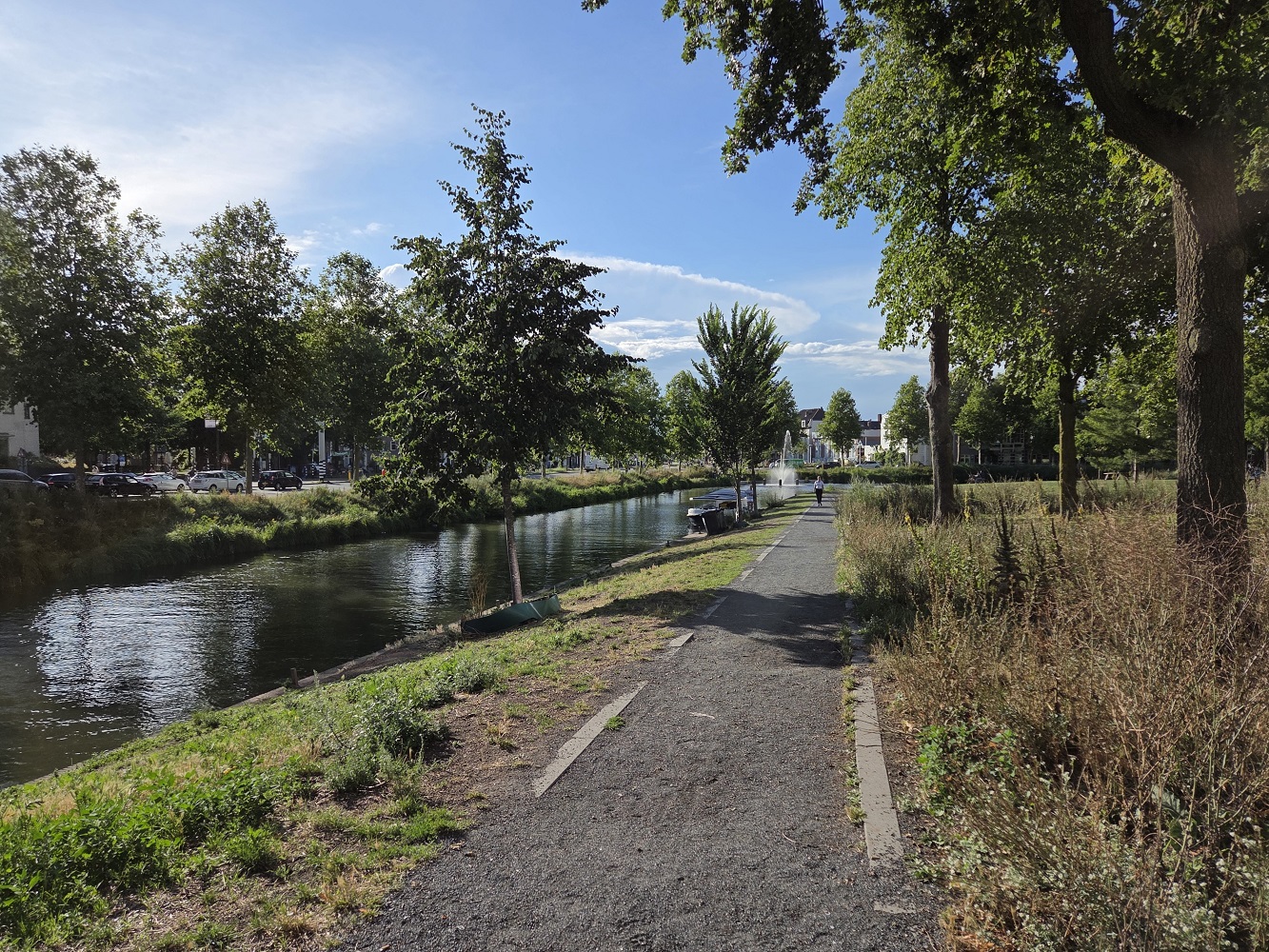
After dinner I asked if we could do one more thing, and that was walk along the canal beneath the mall. This canal was at one point turned into a freeway for cars. Just in the past few years it was changed back into a canal. I’ve seen a couple urbanist videos about it, but I wanted to see it for myself. And it’s lovely! It’s a very nice canal.
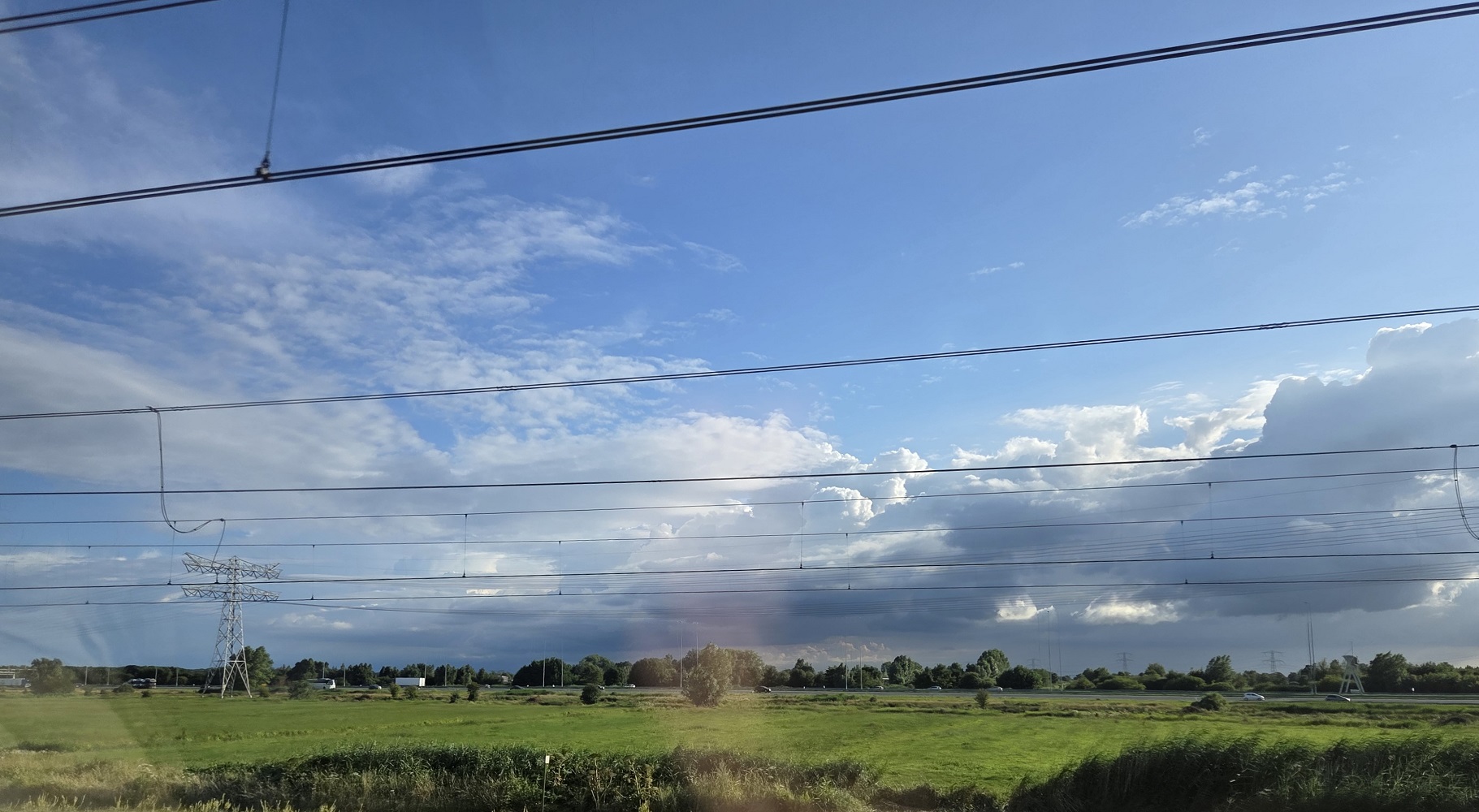
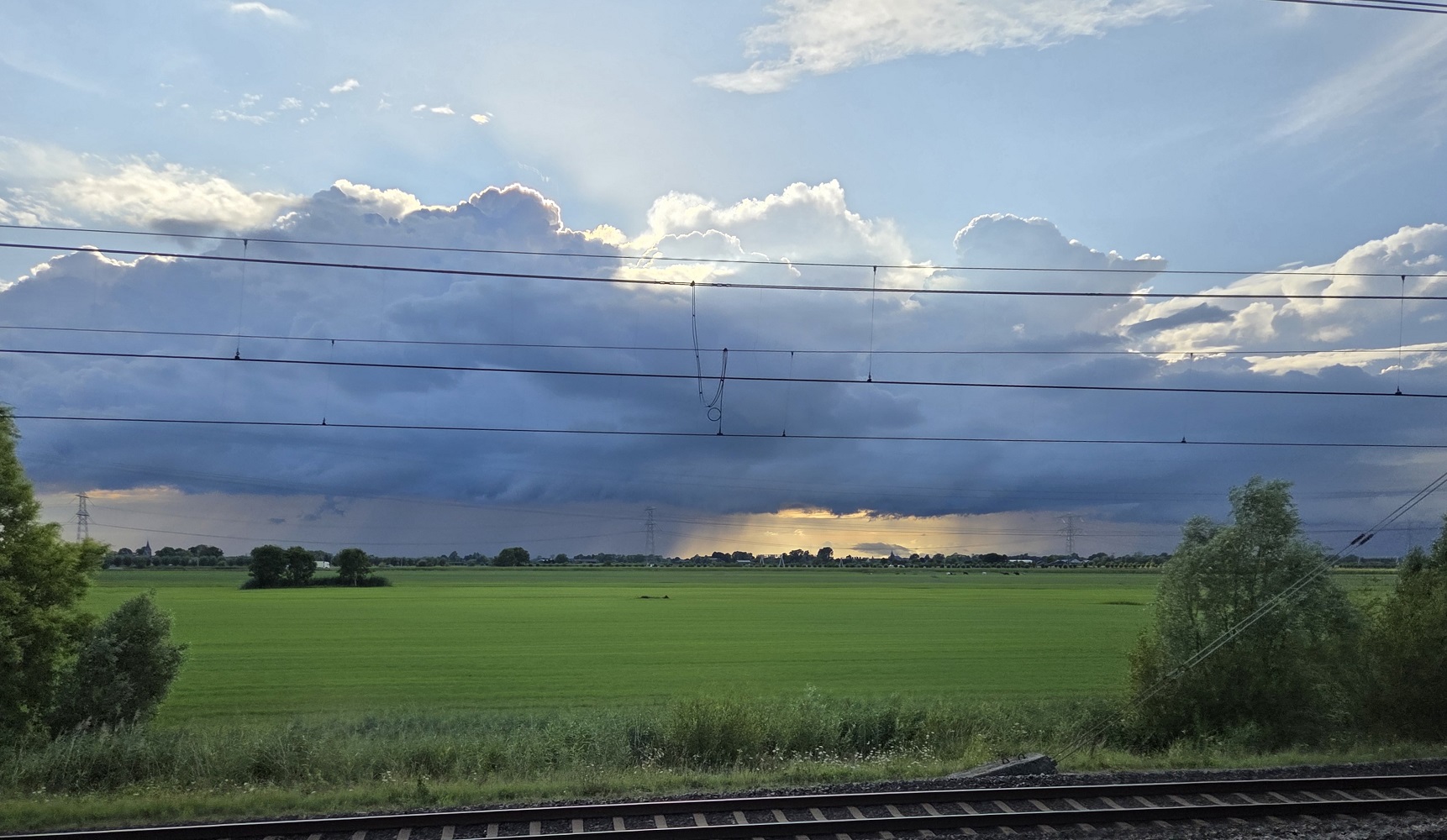
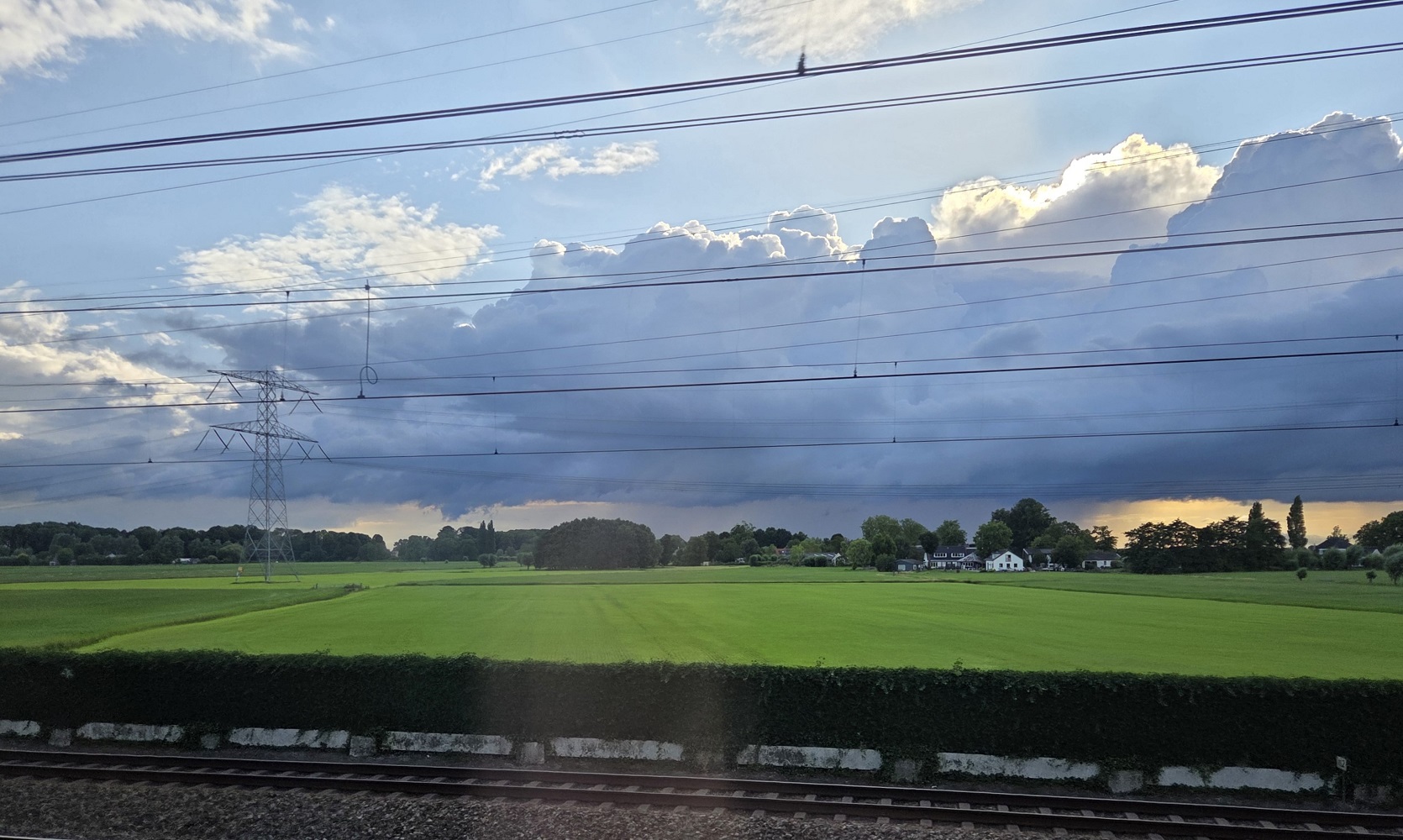
Tharash was totally out of personal battery on the way back. From the train I could see this really neat rainstorm though. I know there are wires all over the pictures, but hey NS is 100% powered by wind-generated electricity now, so that’s pretty cool!
Next – The Maritime Museum