Previous – Zuid Limburg
So I woke up with a blister from all the hours of walking I’d done the previous day, but it wasn’t so bad yet (eventually it took over most of my left middle toe lol). We picked up things for breakfast and lunch at a convenience store, and ate breakfast on benches outside the train station. We missed the bus, but we were still a bit early, so we took the train instead. This was the first time in the Netherlands that I took a train that wasn’t NS – apparently in an attempt to cut costs, NS divested itself of a bunch of minor lines a while ago, so this one is run for instance by Arriva. You can still use the same transit card, but you have to boop the Arriva card machine instead of the NS card machine. And if you are arriving by NS and then taking an Arriva train (or vice versa, of course), you have to sign out of the NS machine and then back in to the Arriva machine to continue on your journey.
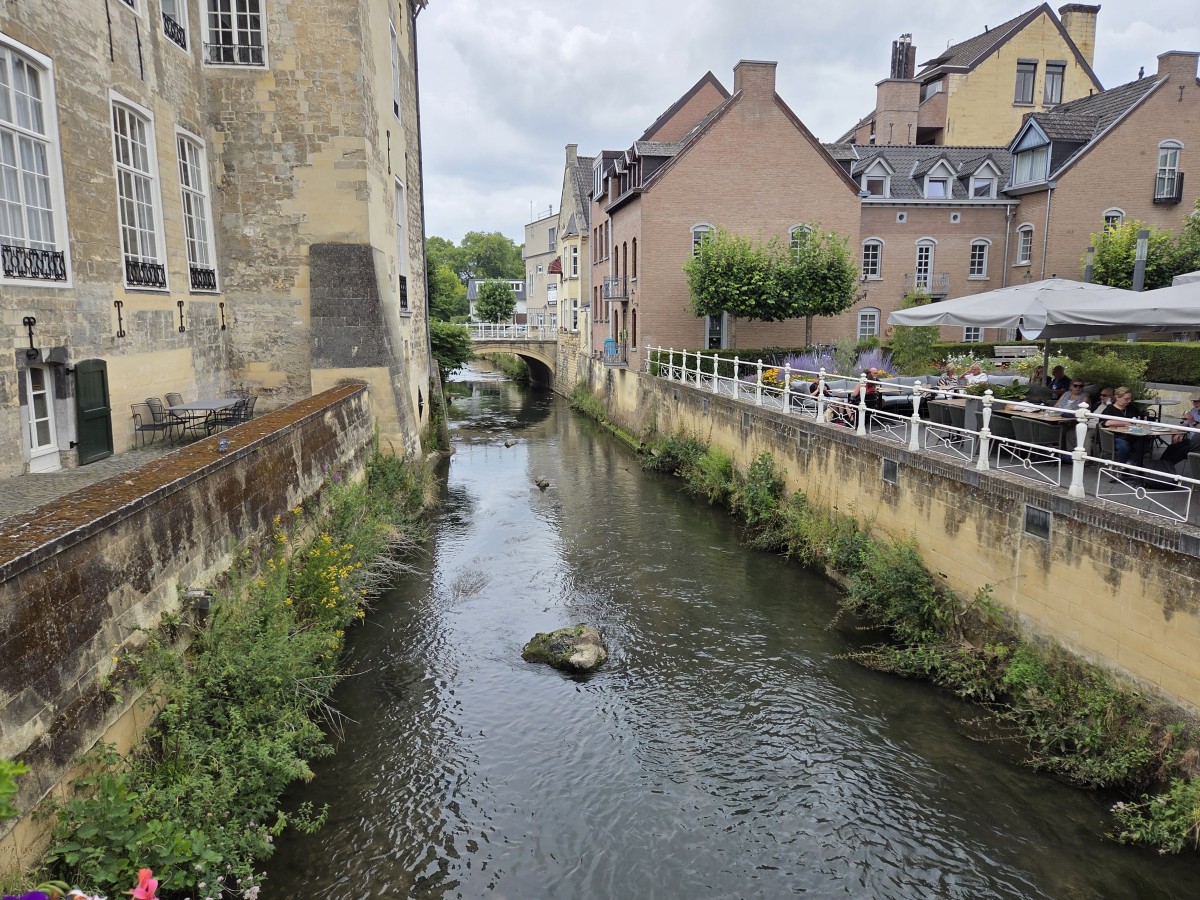
Which really wasn’t a big deal since at this point, we were only taking Arriva. Valkenburg is a nice little town, though to cross the main car street (Geneindestraat) that lies between the train station and the historic city took a LONG time even with the fancy timed crosswalks. The historic city is pretty nice, and the Klein Geul river runs through it, which eventually ends up in the Maas just north of Maastricht.
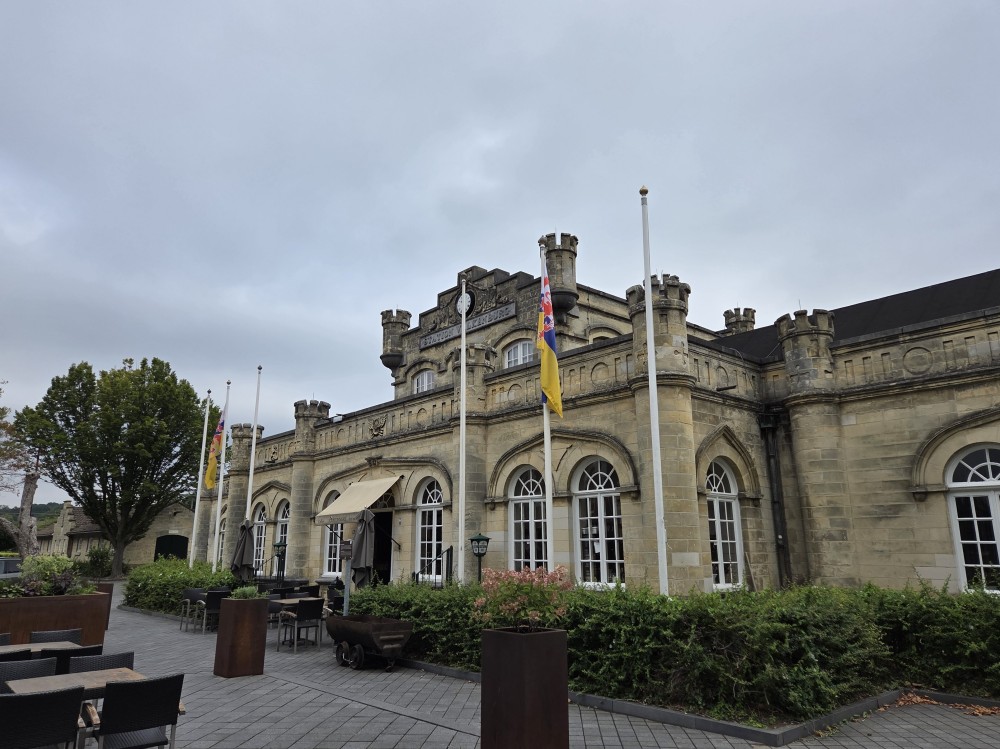
Train station!
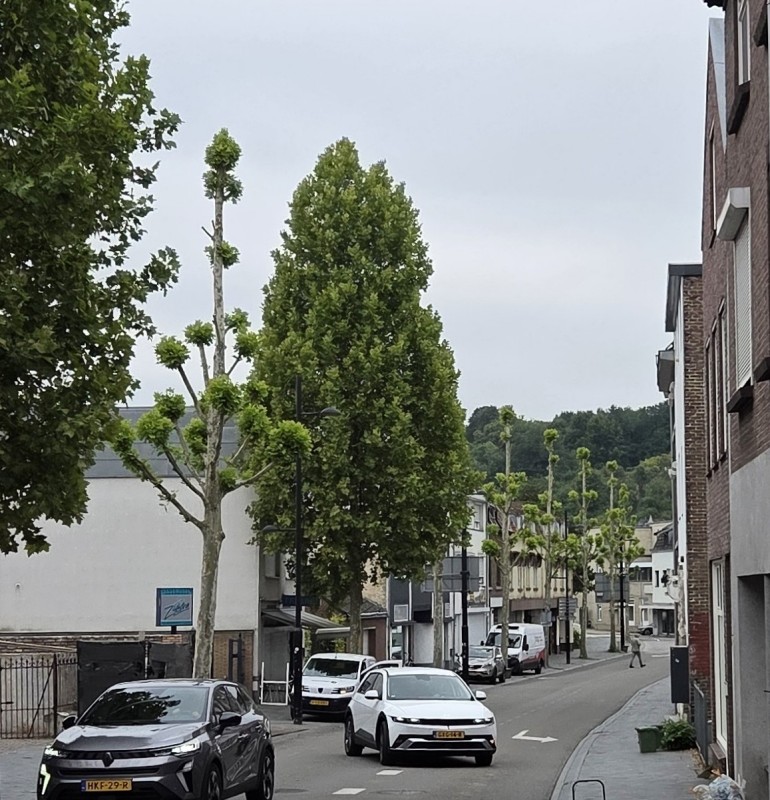
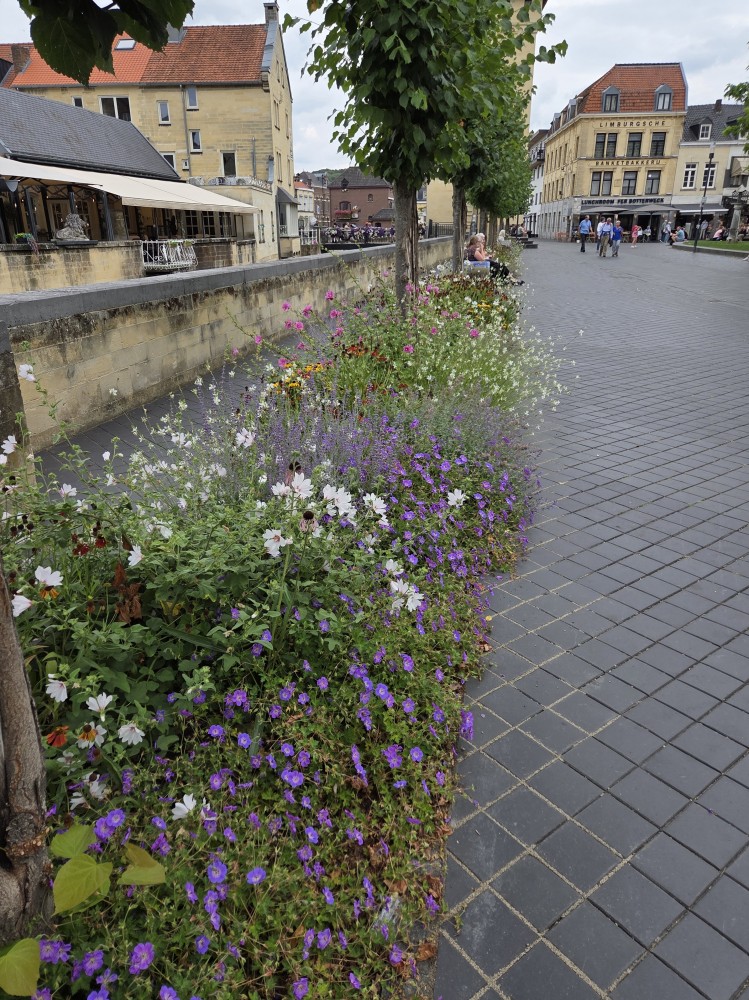
These trees are weird.
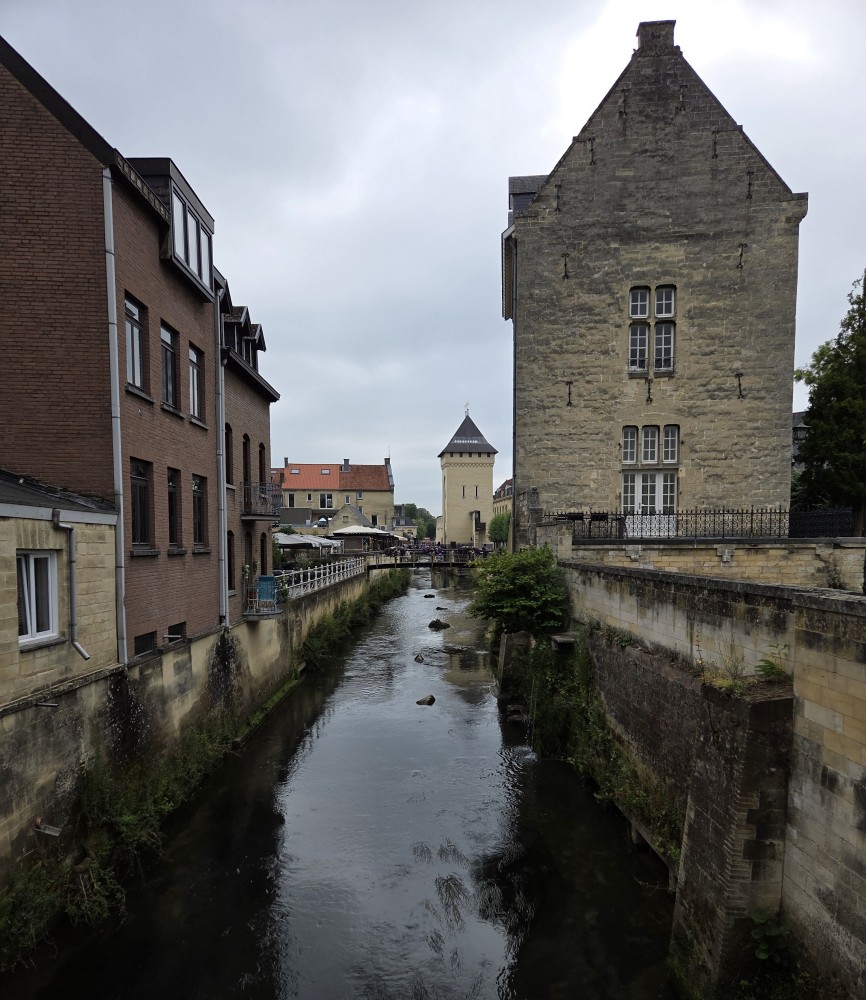
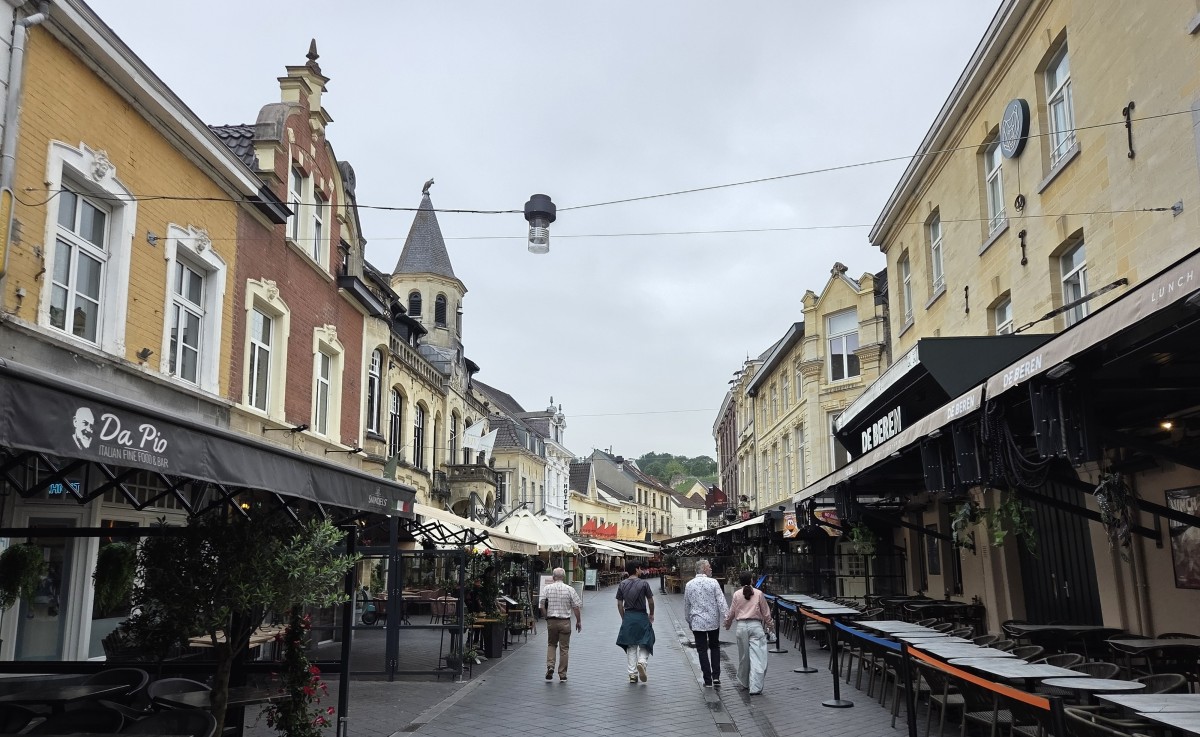
At this hour, there were very few tourists, and the restaurants were still setting up.
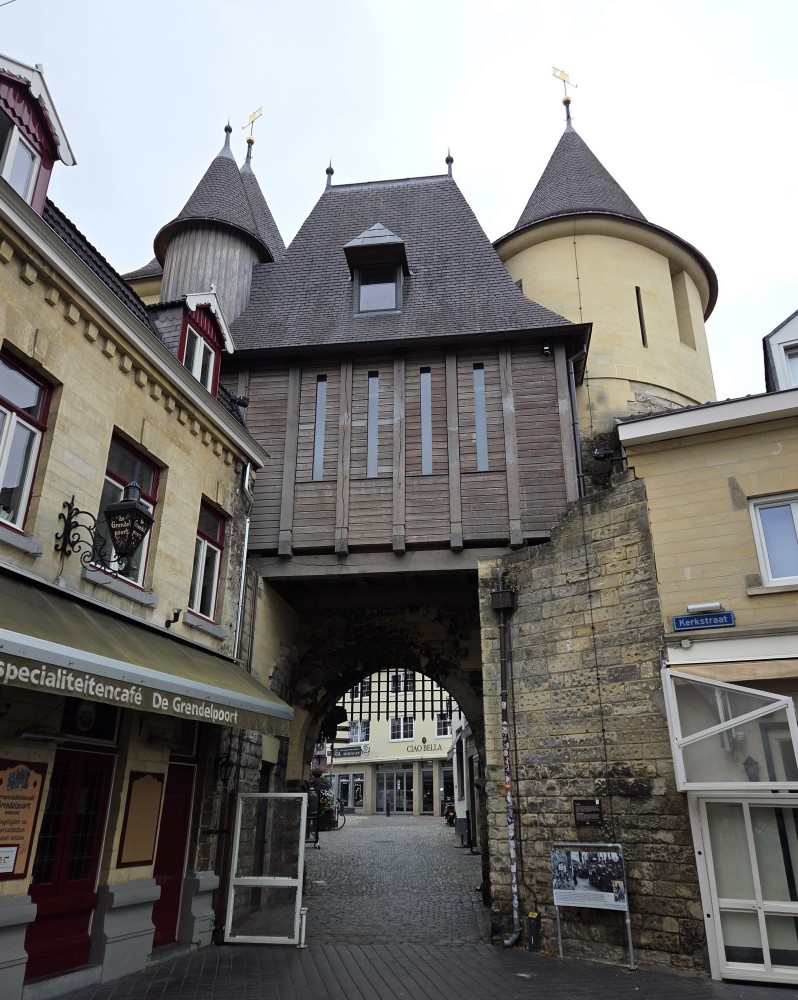
“Grendelpoort – This medieval city gate was built at the start of the 14th century and it is also called the “Bergerpoort” or the “Maestrichterpoort”. The name possibly derives from the nearby Grendel water well. With the destruction of the castle and the fortifications in 1672, the Grendelpoort was spared.”
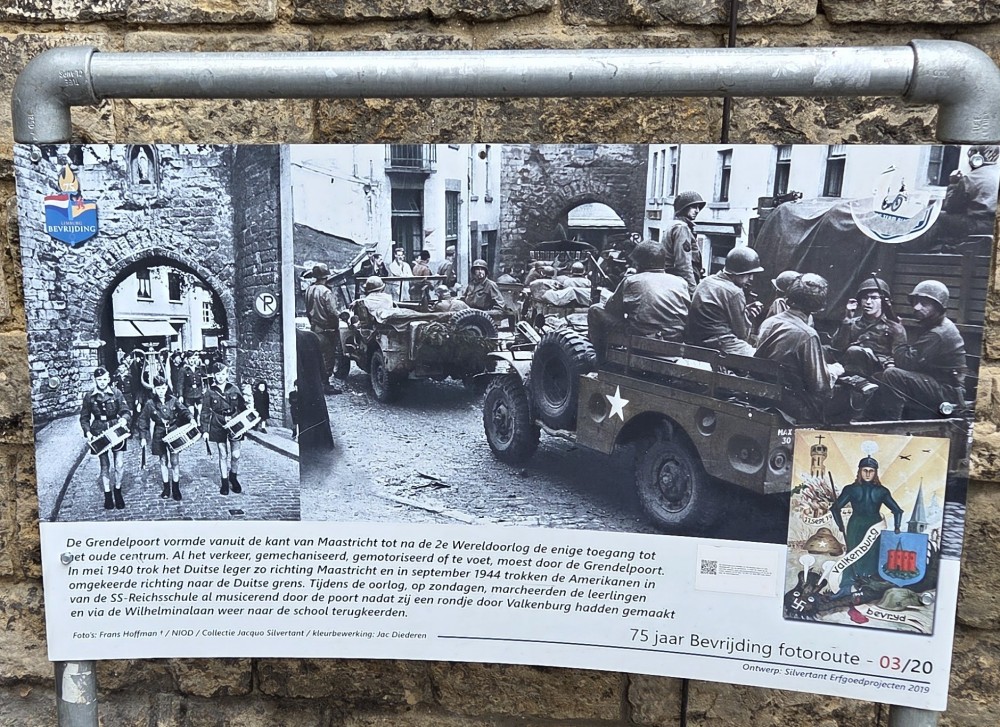
“Until after World War II, the Grendelpoort gate was the only entrance to the old city center from Maastricht. All traffic, mechanized, motorized, or on foot, had to pass through the gate. In May 1940, the German army advanced towards Maastricht this way, and in September 1944, the Americans marched in the opposite direction towards the German border. During the war, on Sundays, the pupils of the SS-Reichsschule marched through the gate, playing music, after completing a tour of Valkenburg and returning to the school via Wilhelminalaan.”
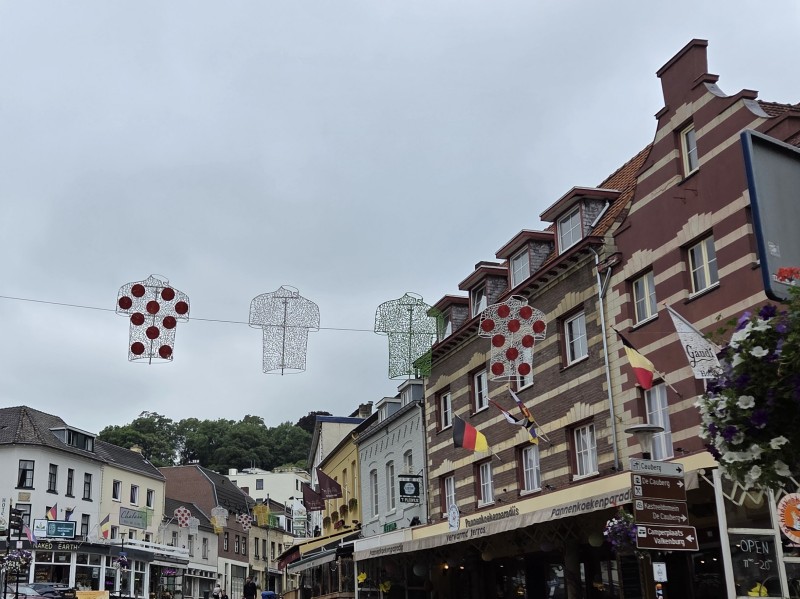
Some Tour de France fans in the city, huh (I don’t think the route went through Valkenburg this year)
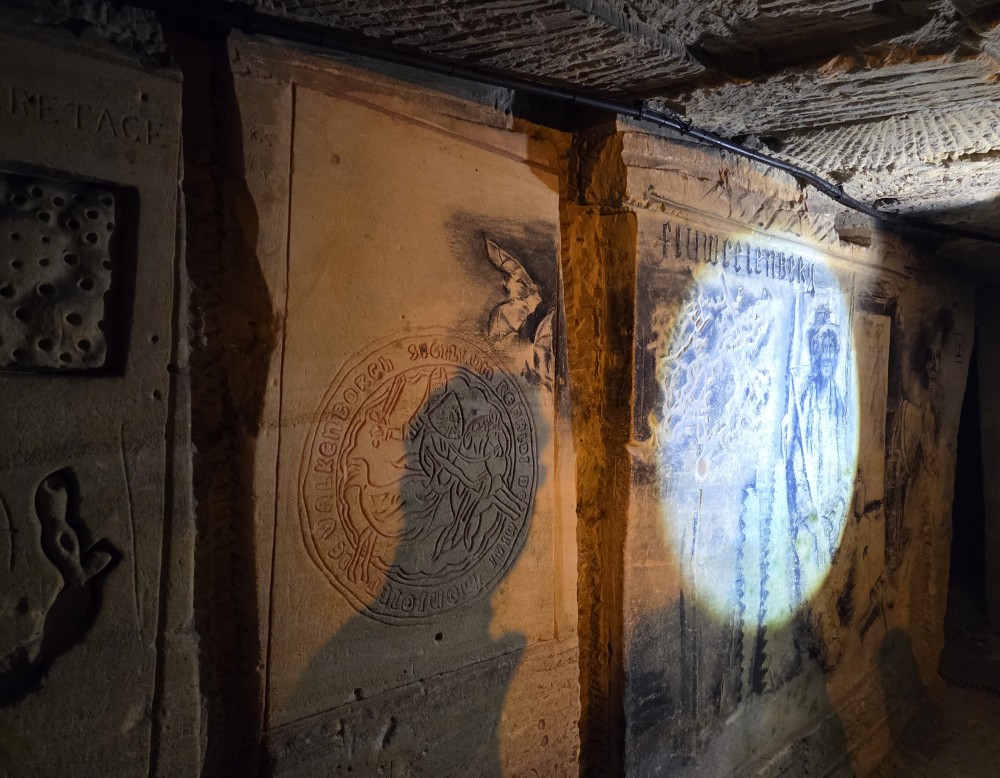
The castle on the hilltop is very romantic, overshadowing the town. It’s necessary to go through at least one city gate to reach the museum entrance. We didn’t go to the main entrance, we went to the secret cave entrance, to the Fluweelengrot (Velvet Cave). There was a collectible coin machine there, so I got one.
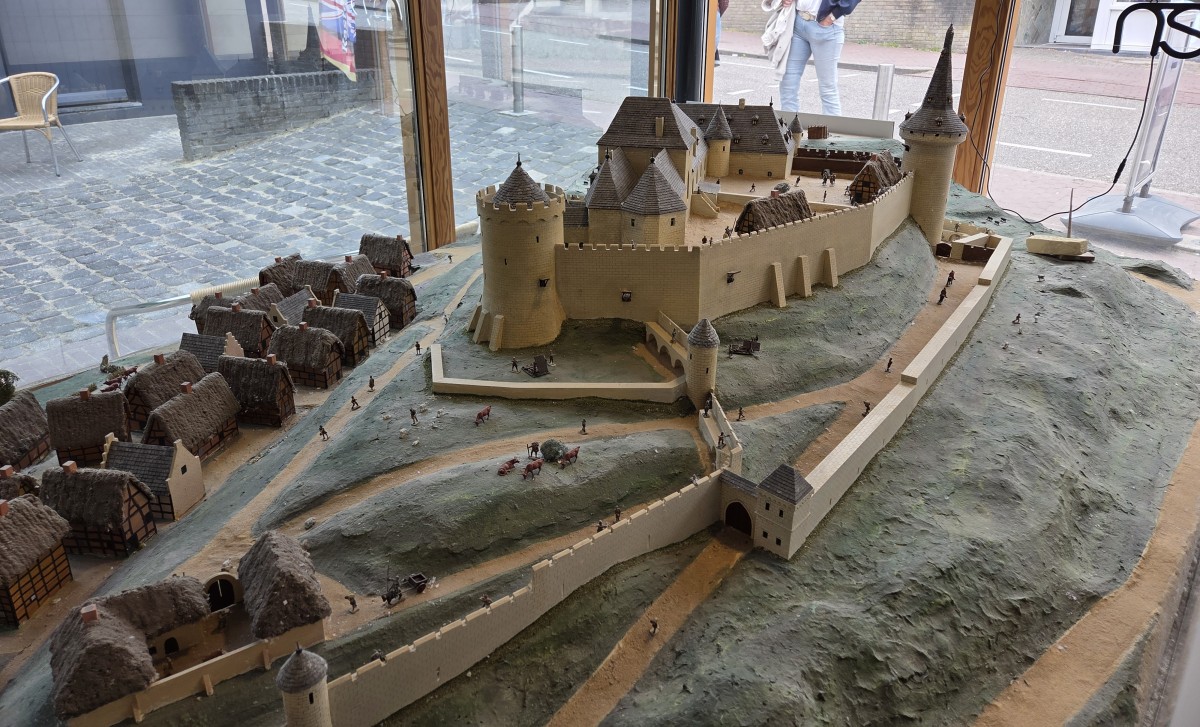
The entrance to the cave is at the far end of the wall on the right on this model.
This cave tour was again all in Dutch. I can hear numbers pretty well, but then I try to guess what the rest of the sentence is based on the numbers and what I already know about Dutch/geologic history and… I’m usually way off, haha. The guide explained that we all needed to stay close for safety; there are 200+km of tunnels under the landscape here, and 12 exits, and not every part is safe. Near the end of the tour, he told us a story about two teenagers who went to explore some other caves and weren’t discovered for a month – they were within 200m of the cave entrance when their bodies were found, but when it’s pitch black and you’re dying of dehydration a hundred metres could be ten thousand for all the good it does you. But even at the beginning when he was just going through the safety procedures, some people decided they’d rather not do the tour after all. Somehow, my own fears about underground spaces were not triggered on this tour.
The guide was a great storyteller, I could tell that without being able to understand any of it! He was very animated and told a bunch of jokes. In the first area, he explained how the caves were excavated – stone blocks were chiselled out of the wall for construction, using long metal bars. It must have been exhausting work, and it left interesting diagonal lines grooved across every surface. You could see where each individual block had been. Apparently if you dry the sandstone out (it’s not completely dry in its natural environment) then it becomes waterproof afterwards.
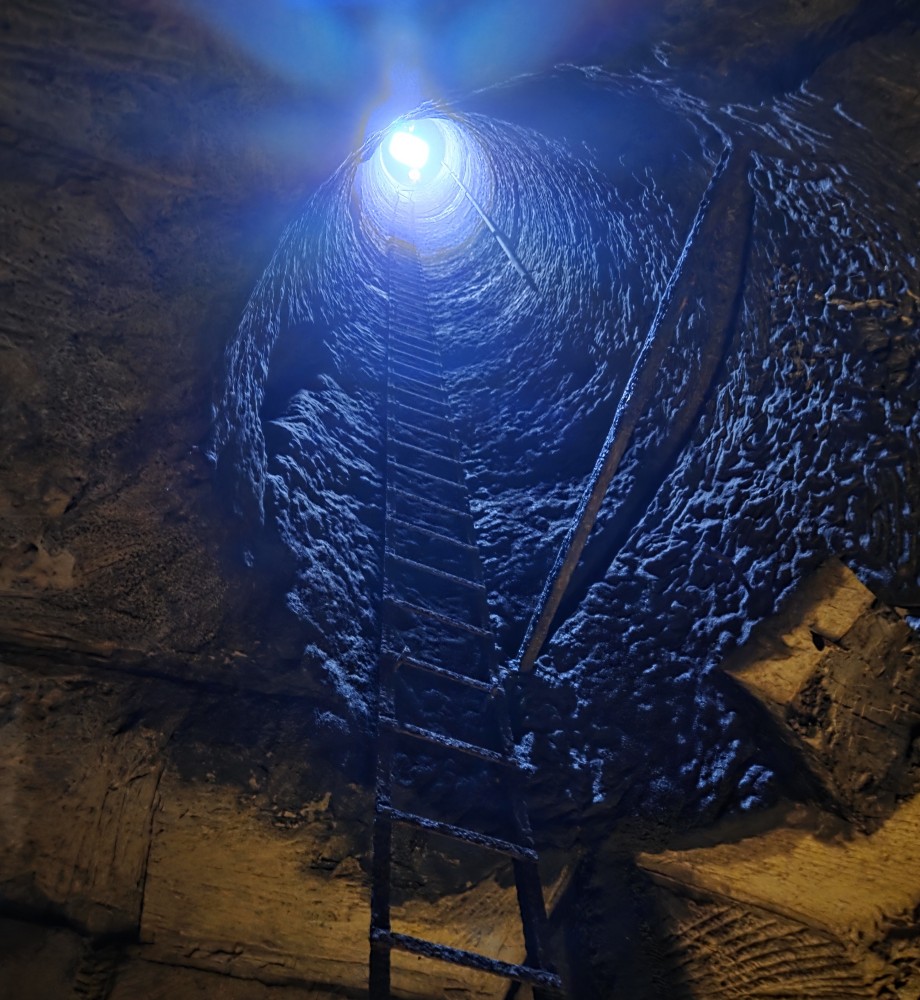
A well (no longer in use)
He told of a siege that once took place around this town in the middle ages, but the secret tunnels meant that food was still coming in and so the siege failed. Also we weren’t supposed to take pictures of the murals, but he said he wouldn’t tell anyone if we didn’t. 🤫
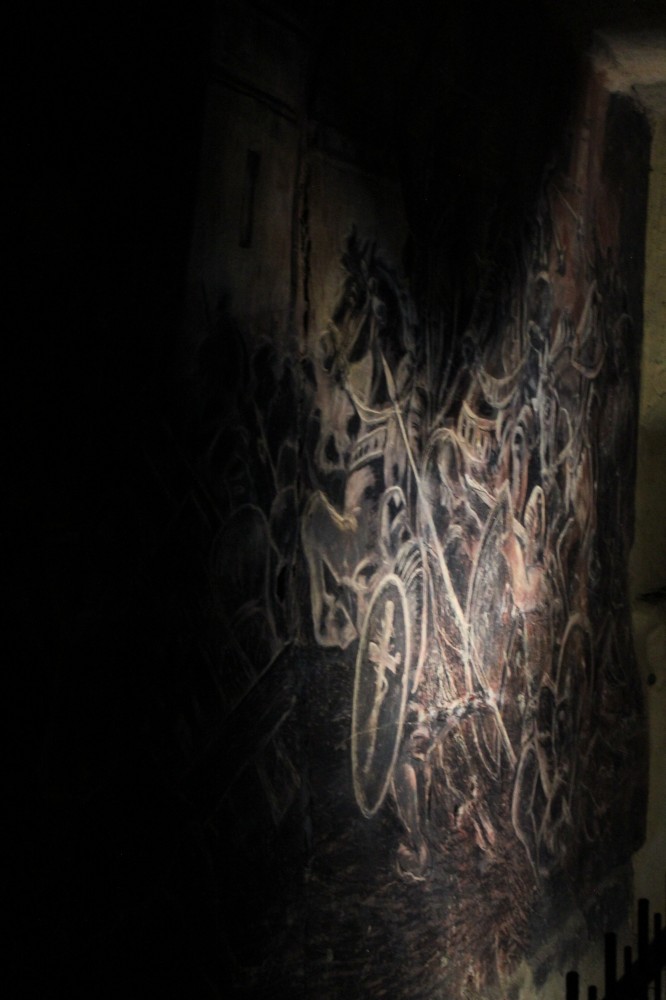
There are murals commemorating this siege. Photo by MH
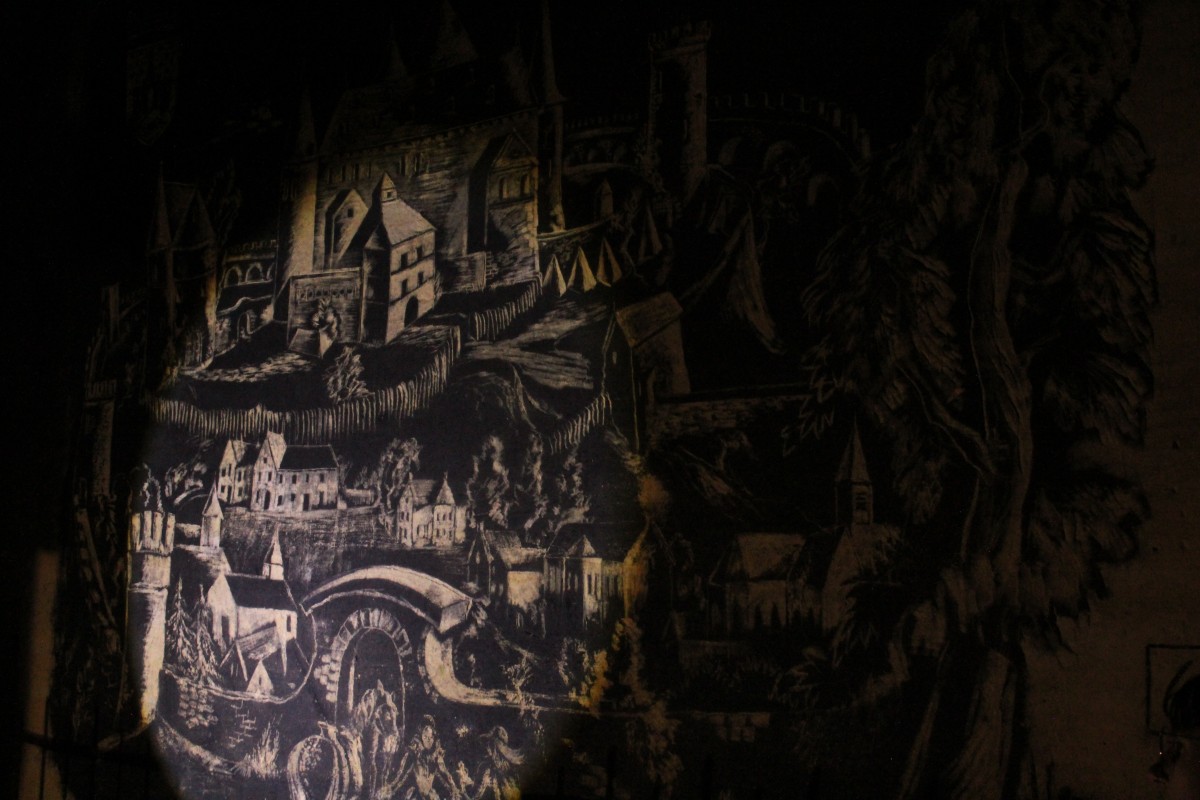
Photo by MH
There were a couple sculptures by local stonemasons just fooling around and carving dragons into the raw stone, even painting them in bright colours. A bit goofy-looking. I don’t have pictures of those.
In WWII, these tunnels were of course a Dutch Resistance hiding place. Apparently 4000 people went into hiding here… and 4005 people came out because of all the babies that were born.
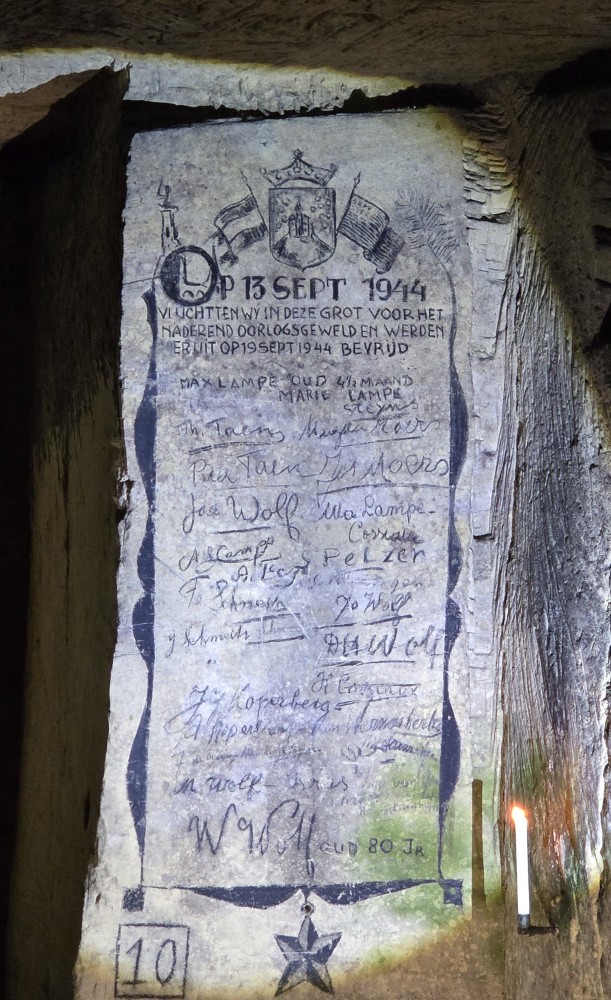
There was once a secret Catholic chapel here, from the time when Catholics weren’t accepted openly. The art here was pretty amazing given the limited resources.
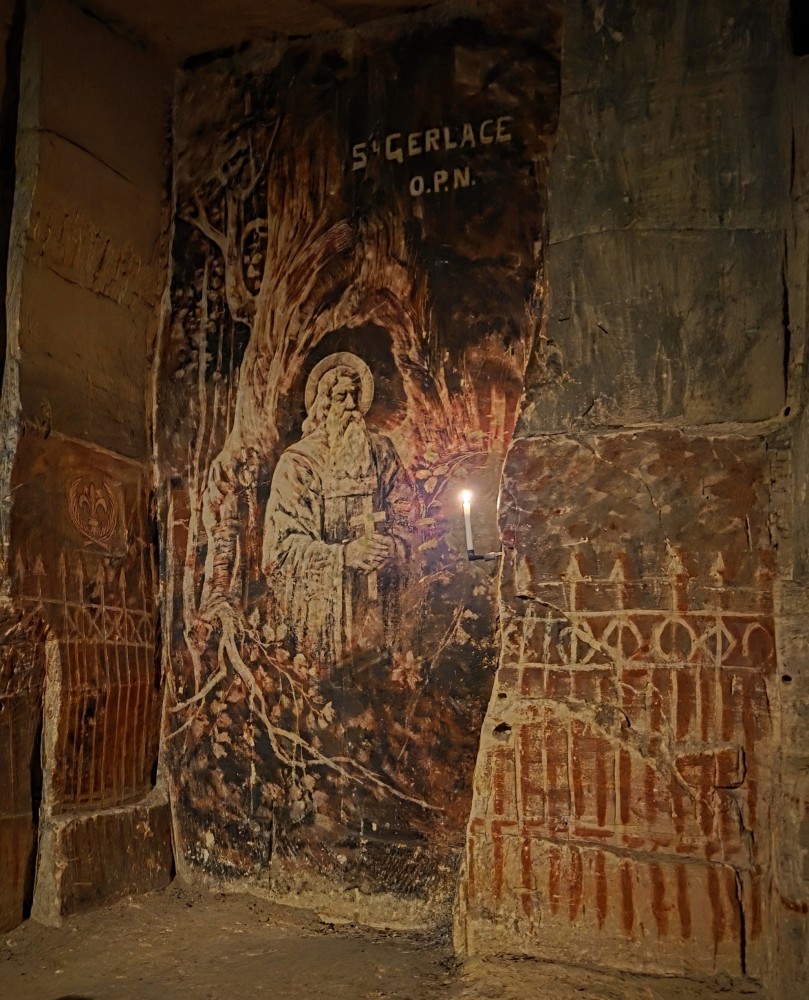
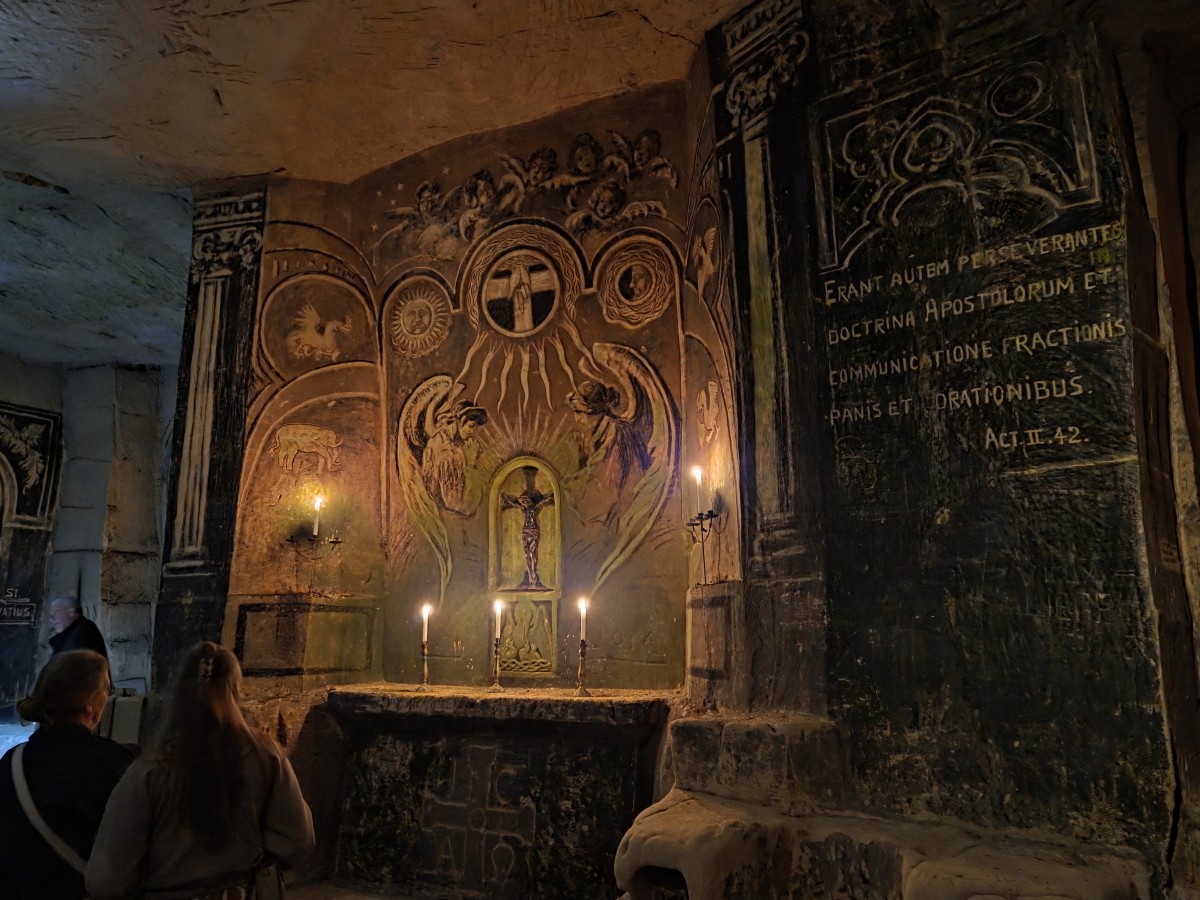
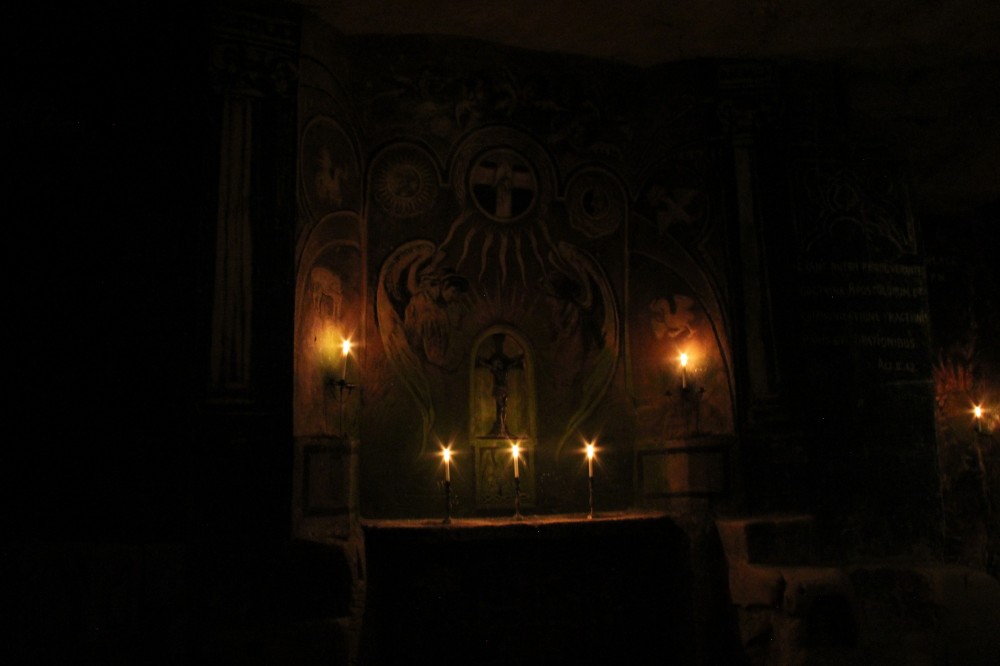
Photo by MH
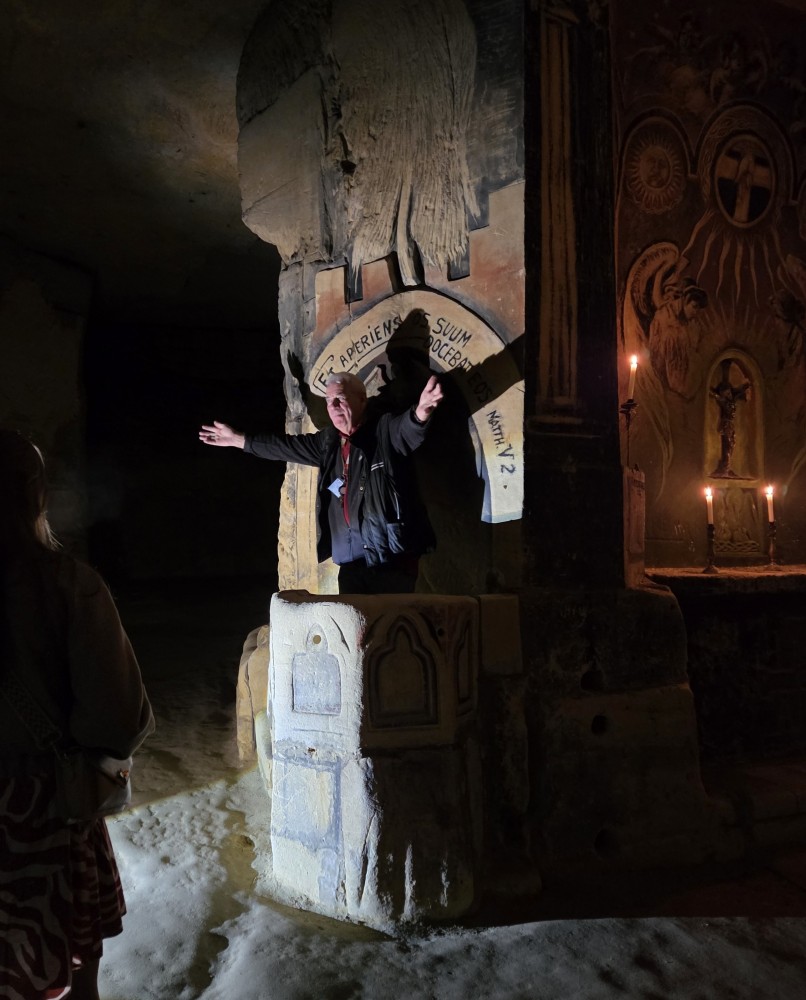
They have a pulpit
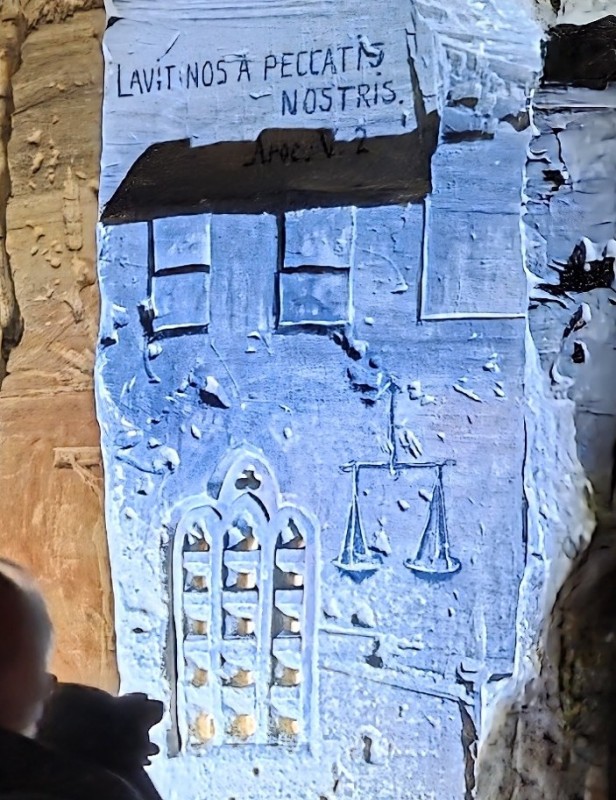
And a confessional
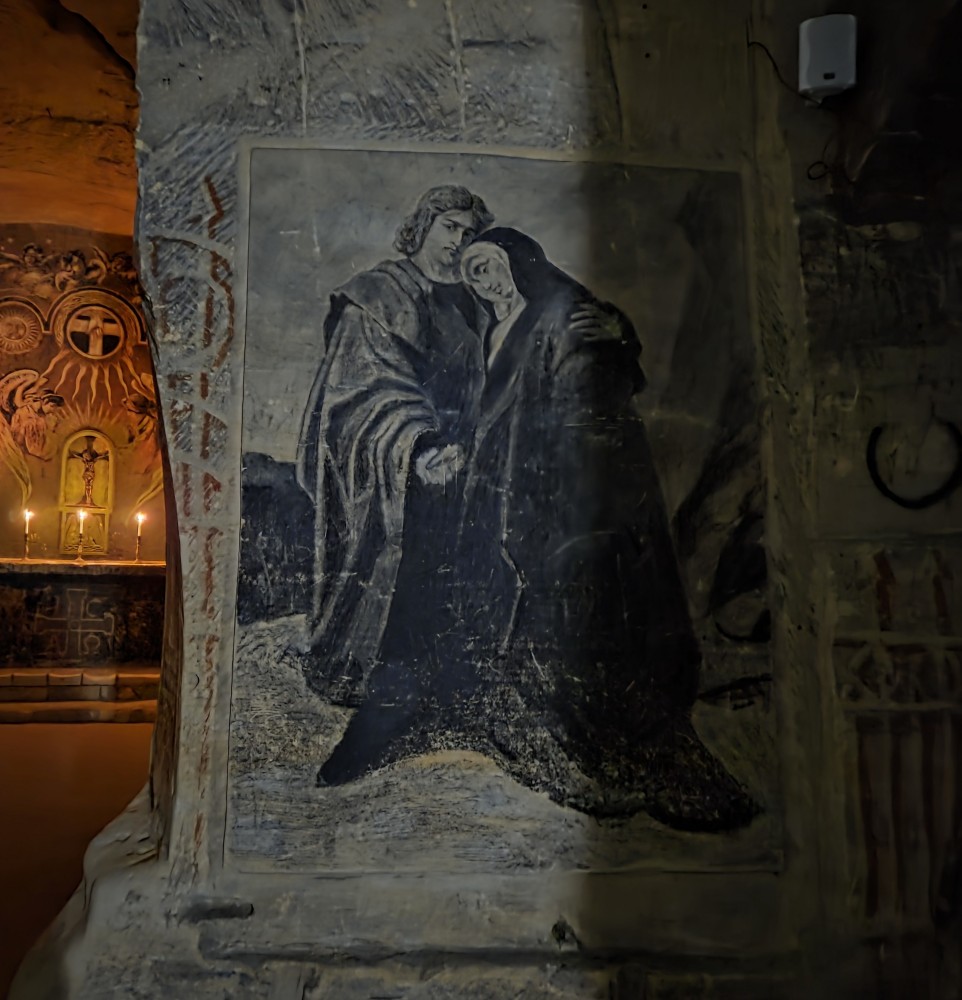
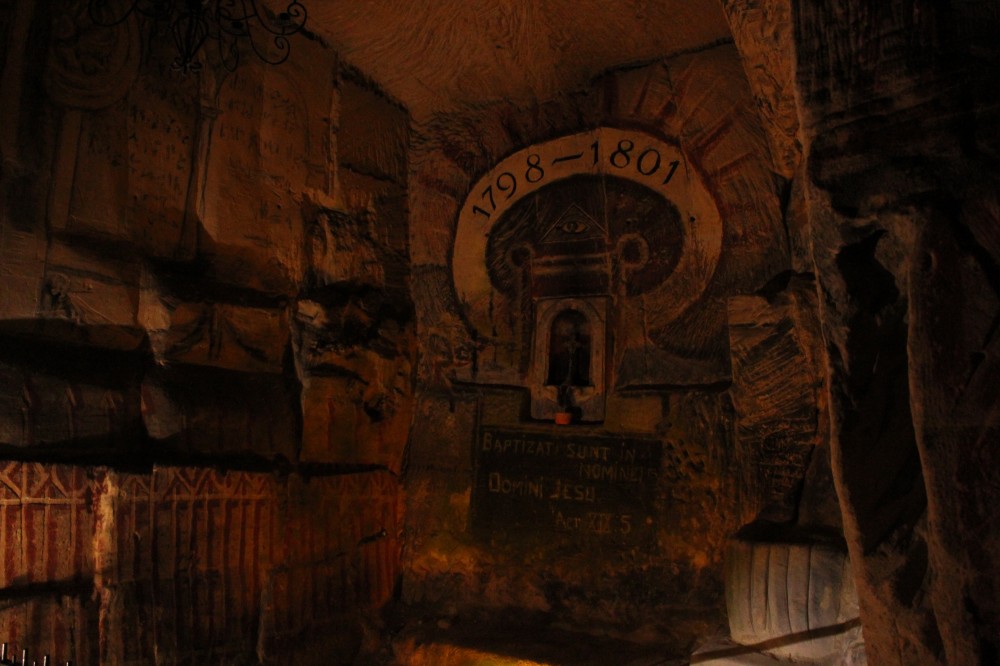
Photo by MH
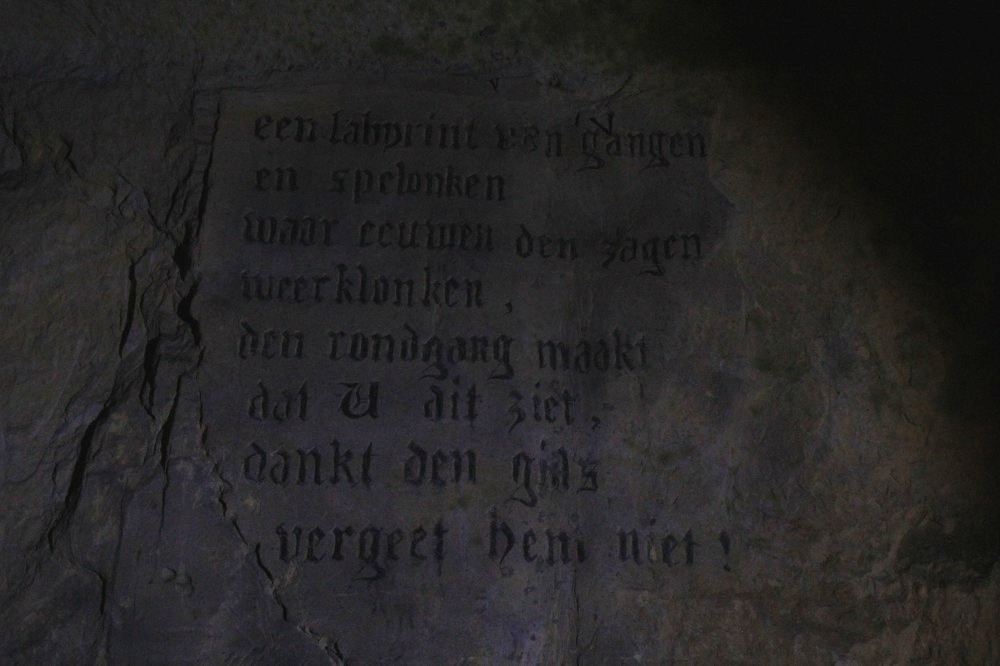
“A labyrinth of corridors and caverns, Where centuries have seen the sound of saws, The tour allows you to see this, Thanks to the guide, don’t forget him” Photo by MH
In one place near the end, he turned out his lantern so that we could experience 95% darkness. Apparently there was still 5% light coming from exhibition lights elsewhere in the cave, but for us it may as well have been 100%, since we’d had light up until that point and our eyes were not completely adjusted.
To exit the cave, we had to climb a whole lot of stairs, which brought us out right on top of the hill at the foot of the castle ruins, at the foot of what is known as the Wolf Tower – not because of wolves, but because it had an octagonal vault, vault being ‘gewolf’ in (old?) Dutch (Google says vault is ‘gewelf’). First, we had lunch under a tree, which was nice until we started getting swarmed by wasps. We packed up and started to move on… some other people began to unpack their lunch in the same place, so we warned them about the wasps too.
Valkenburg Castle is an amazing place. Some parts have been stabilized with fresh sandstone blocks, but a huge part of it is still in the same condition that it was when the Dutch blew it up in 1672, when they destroyed it rather than let the French capture it and use it. It must have taken an immense amount of gunpowder… reminds me of another building I’ve seen that was blown up with gunpowder.

While I loved the Great Hall, that used to be two stories, the main feature of the castle was the central donjon. There have been three over the centuries; a square one, which probably did not have a stone outer wall, it was just a tower on a hill. Then there was a big sixteen-sided tower, but eventually it was replaced by a smaller ten-sided tower. You can see the foundations for all of them. There were a ton of great signs all over the site, numbered, with information about each feature’s history and even some cgi renders of what it might have looked like when complete.
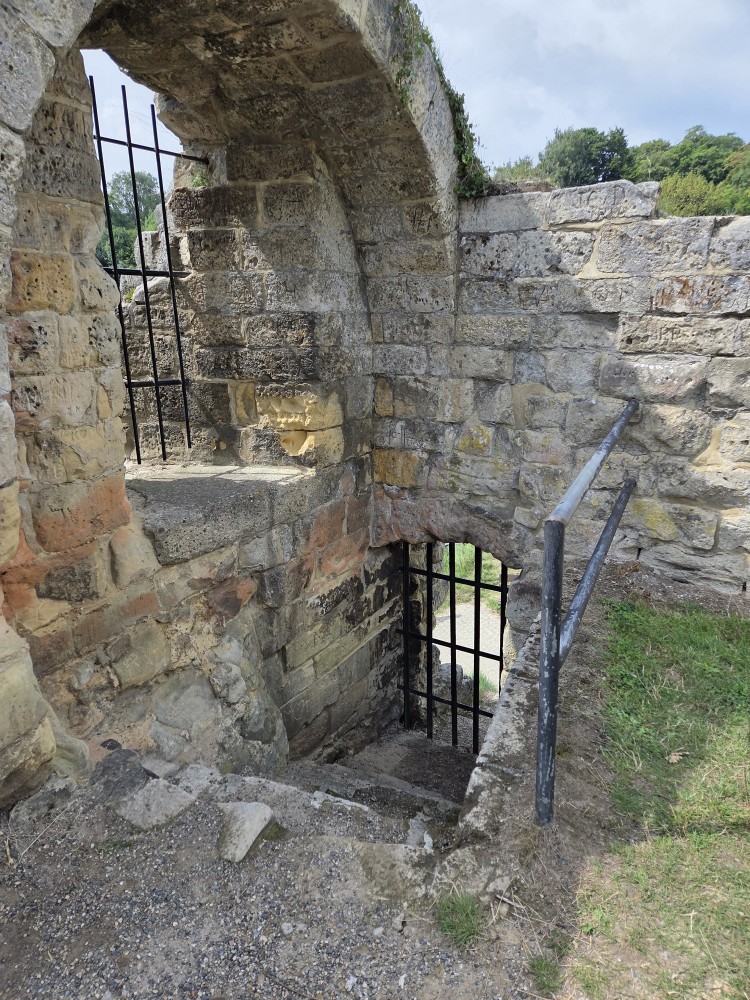
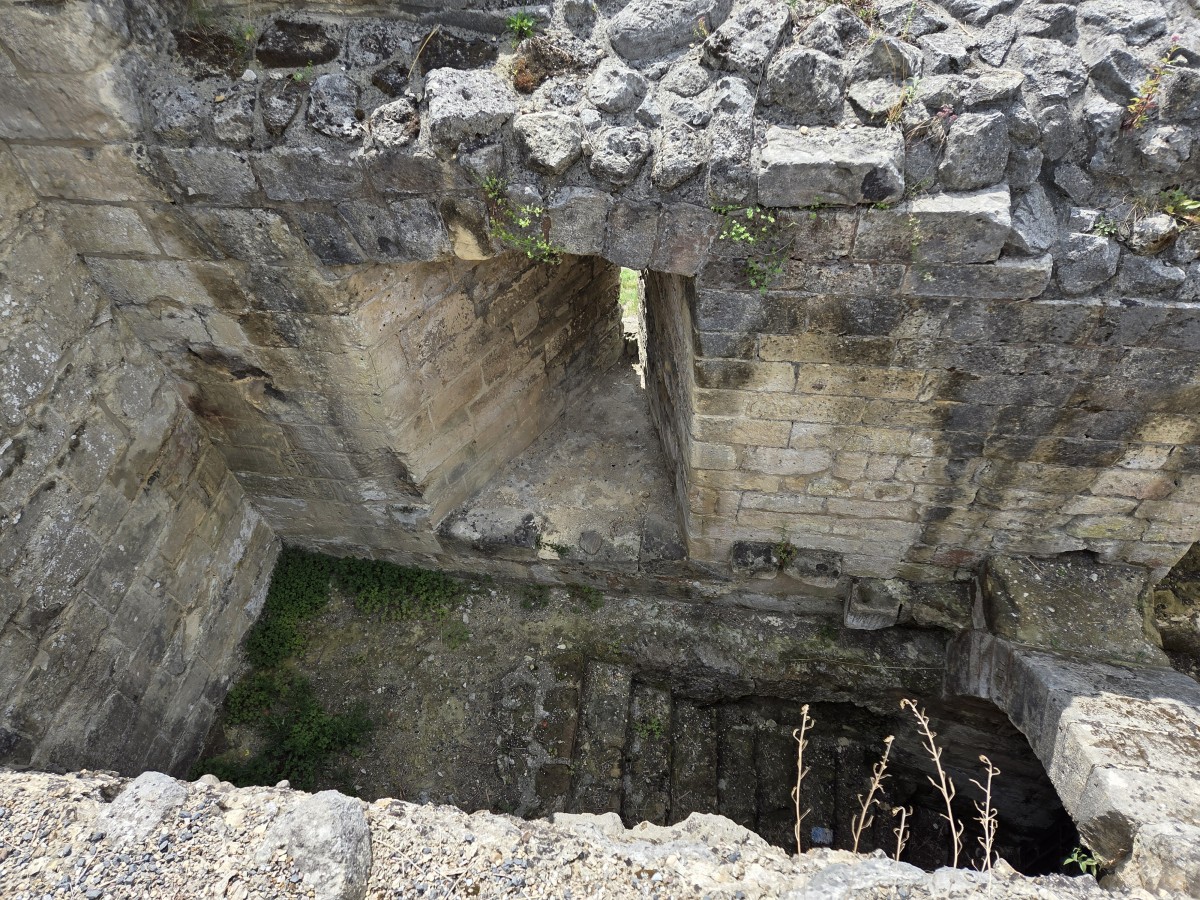
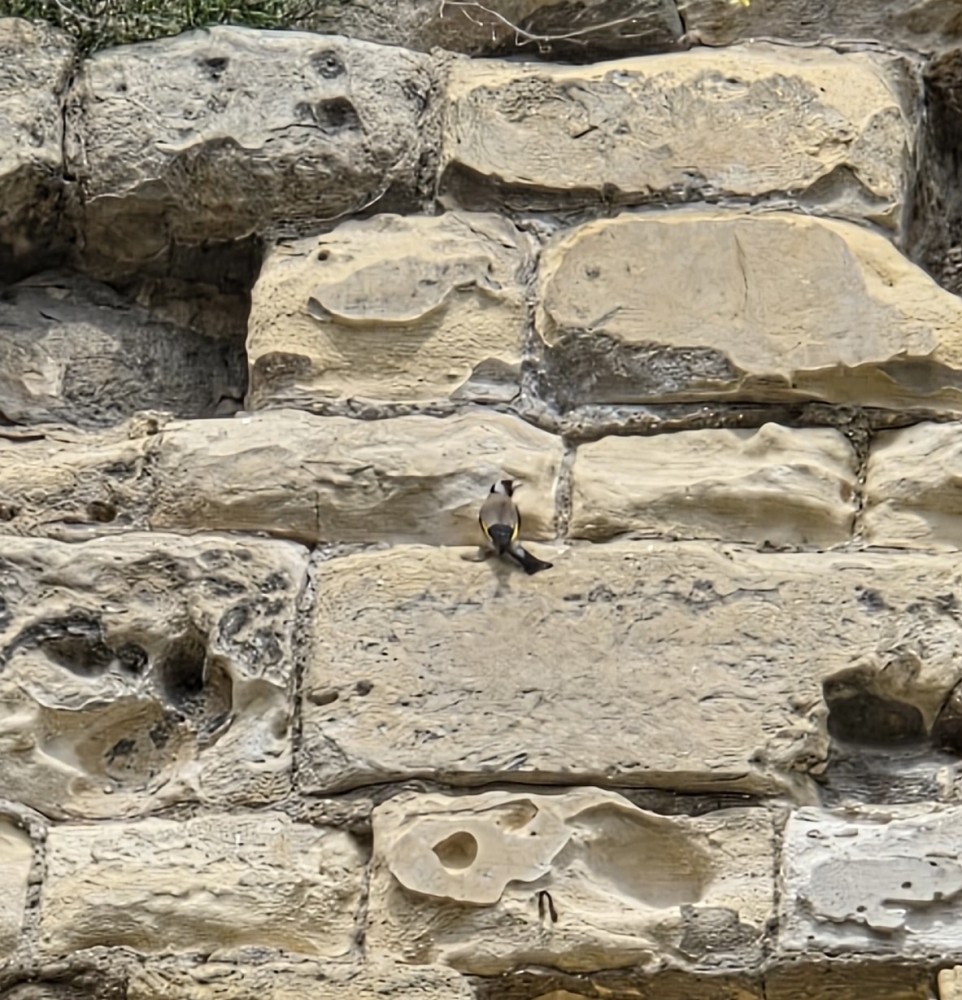
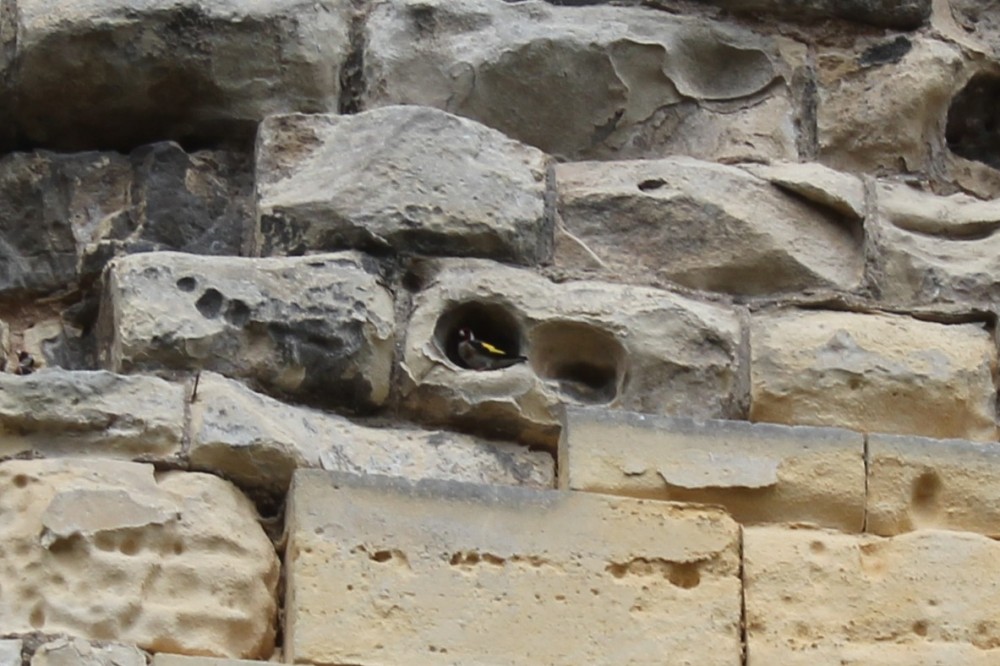
Photo by MH
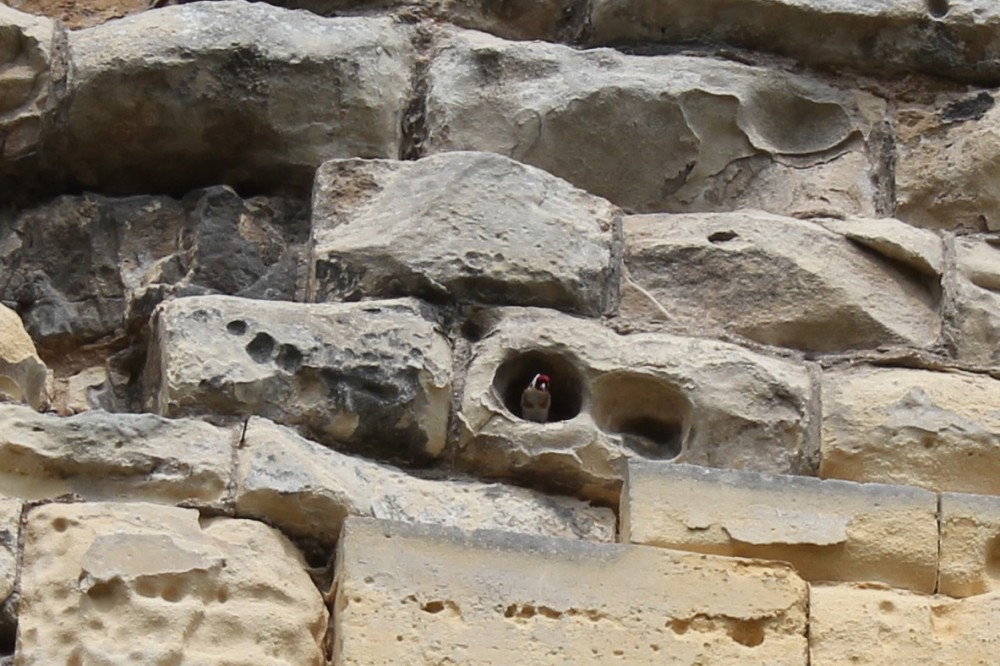
Photo by MH
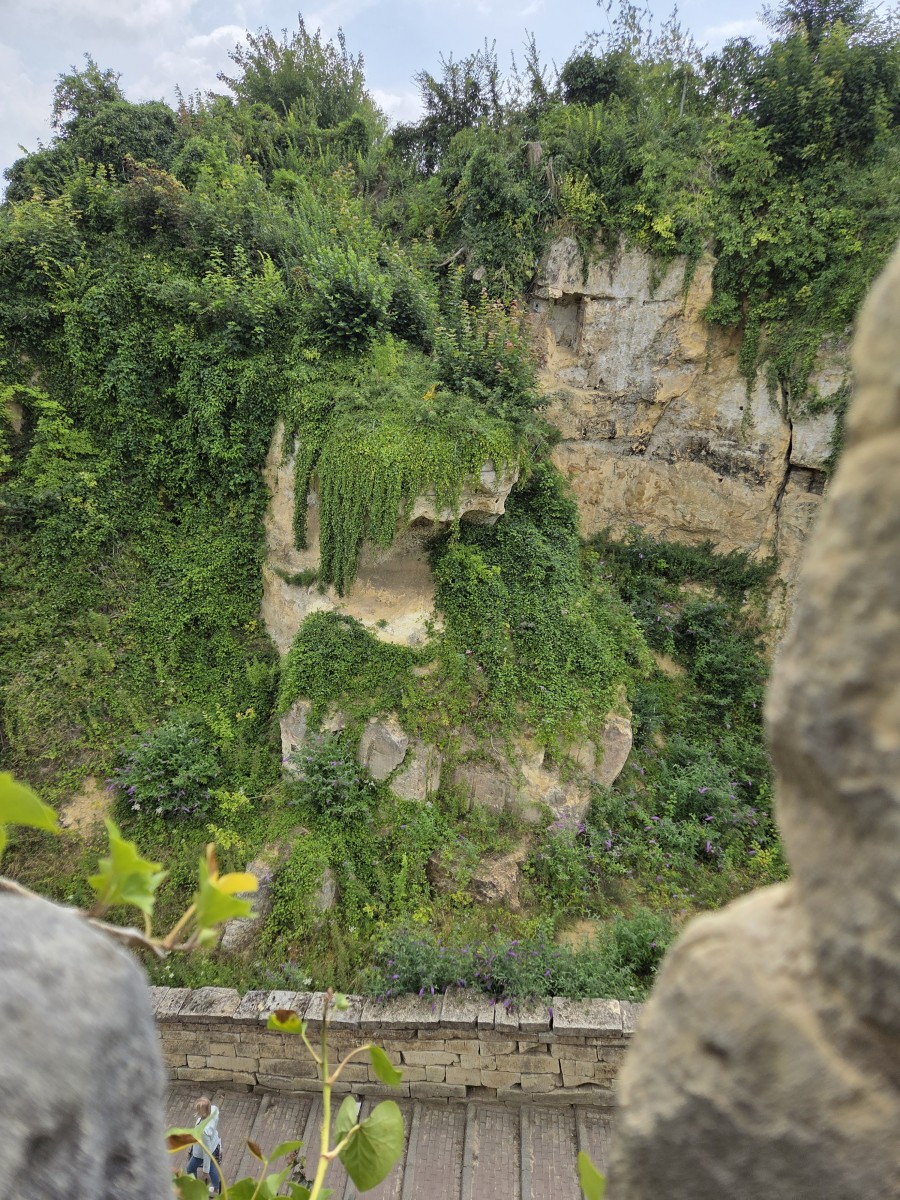
Looking through an arrow slit at the adjacent cliff, which is pretty stunning with all that greenery. Below is a stair that is a shortcut from below the castle to above the castle.
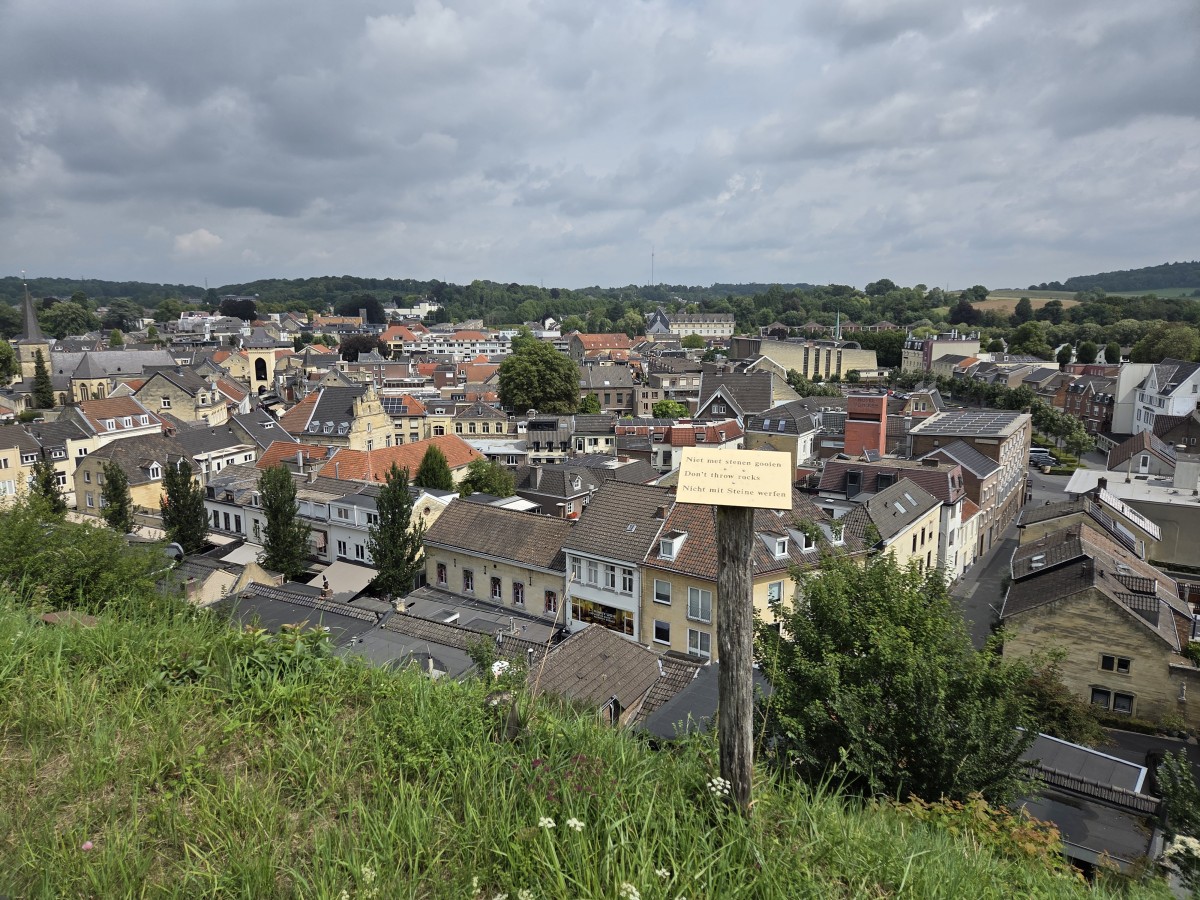
People who throw rocks are dumb.
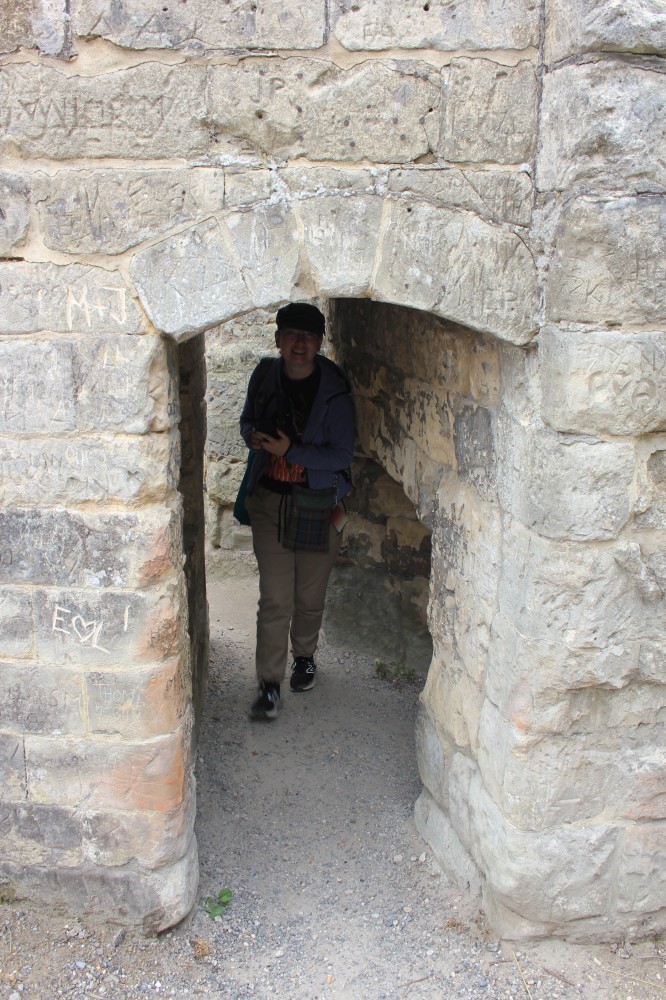
Photo by MH
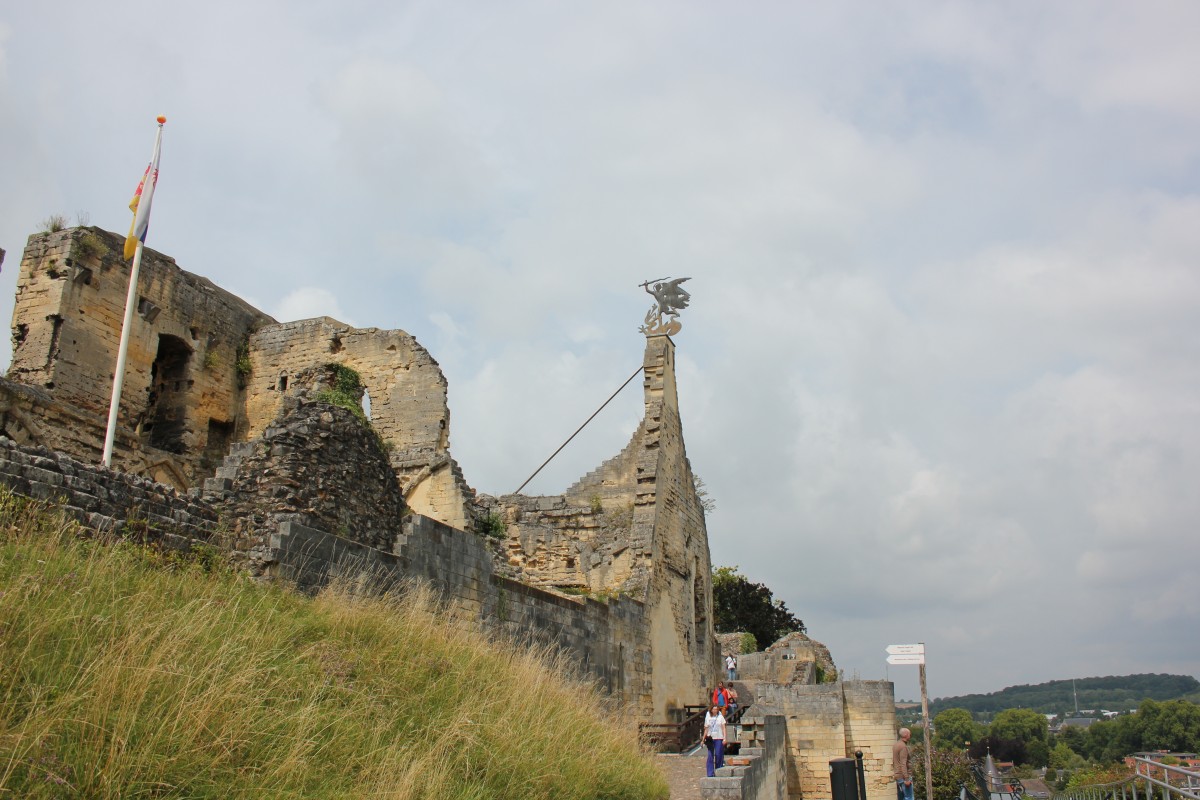
Photo by MH
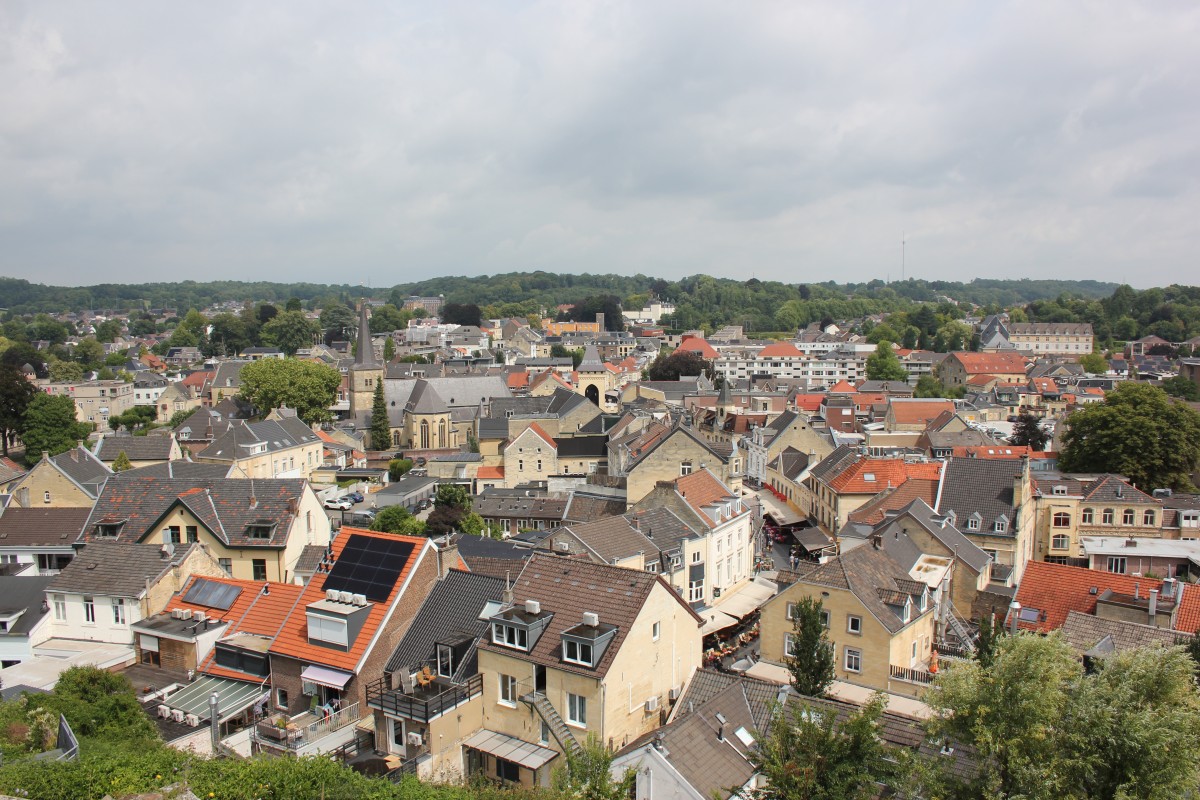
This picture shows the street that we walked up to get here, and at the end of it is a city gate tower and a church. Photo by MH.
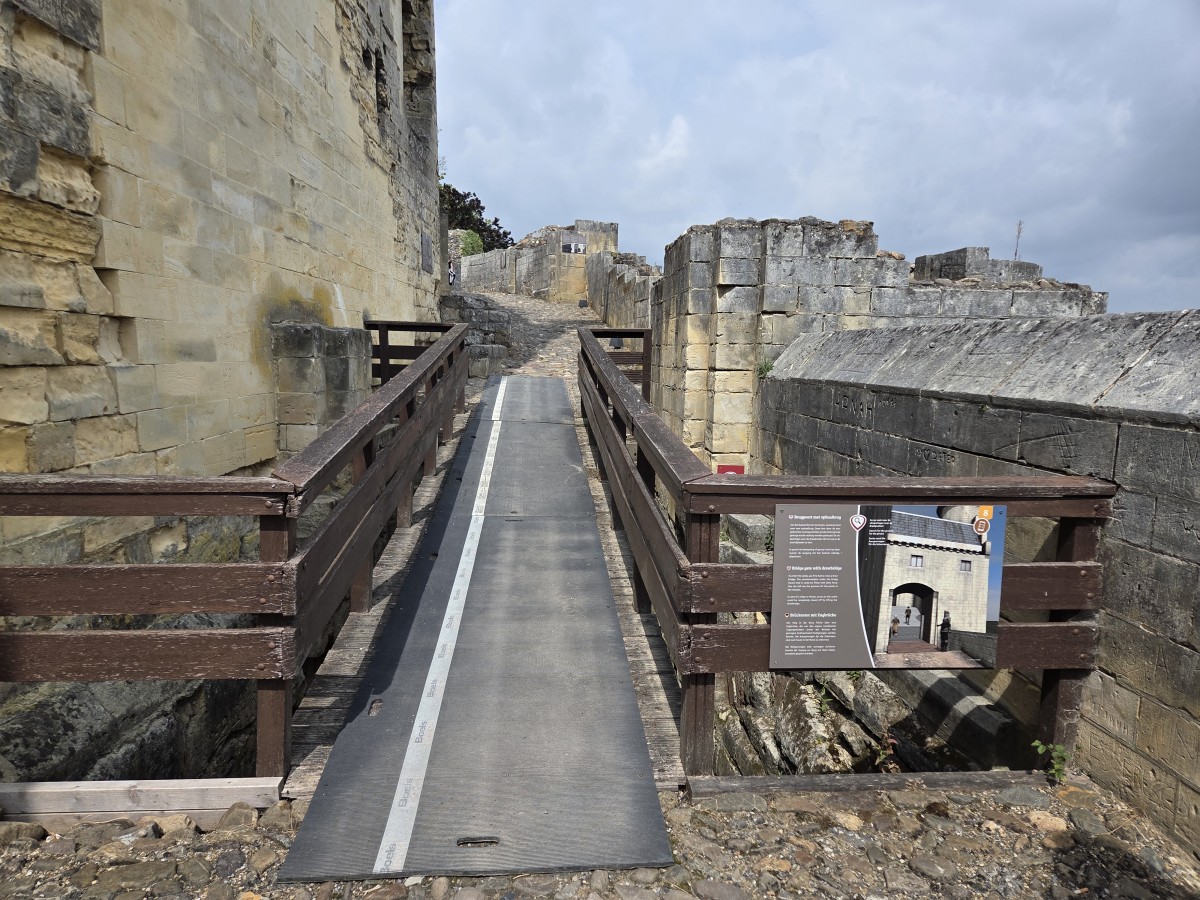
Drawbridge and gatehouse
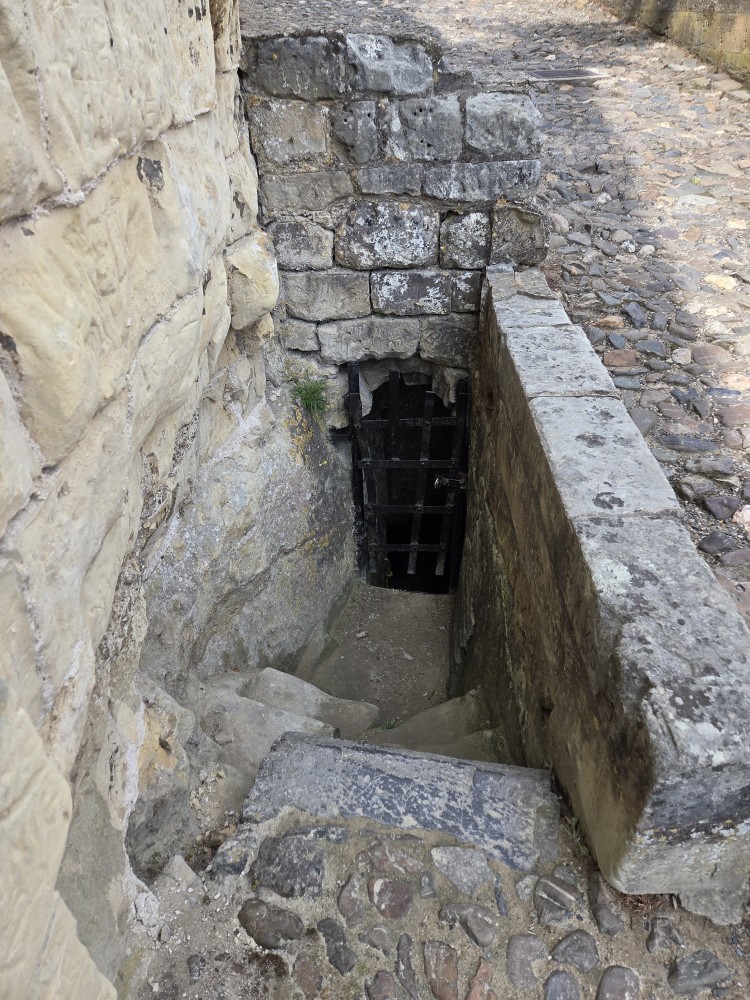
Under the gatehouse
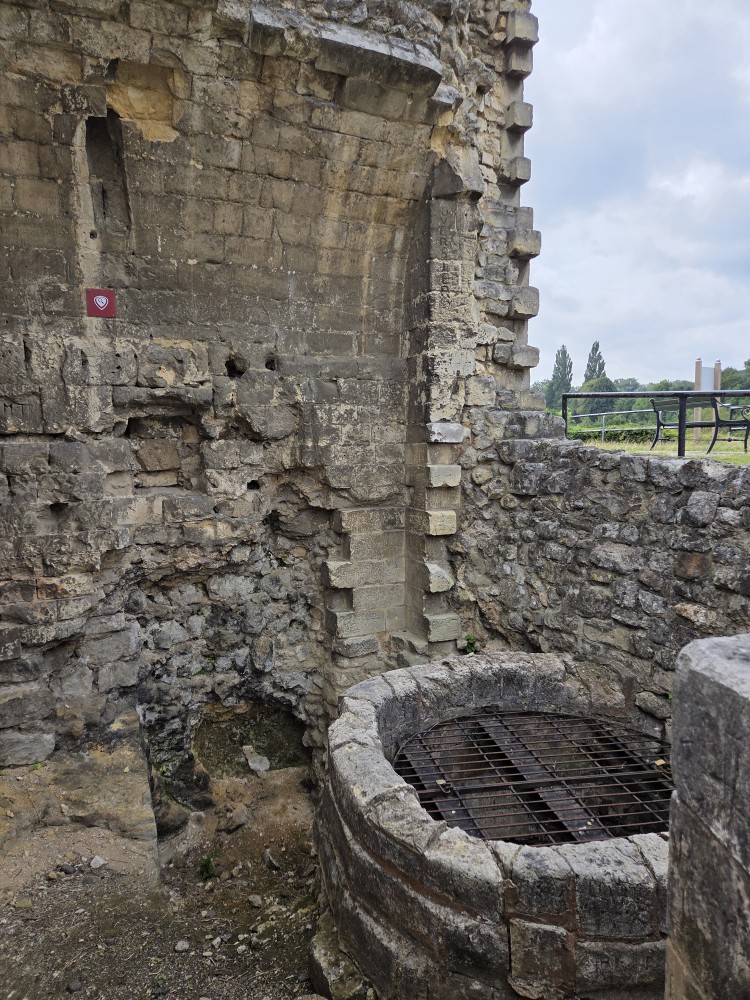
The well, of course! Also they had a whole tower with a mill for grinding flour, though none of the mill stuff was still in it.
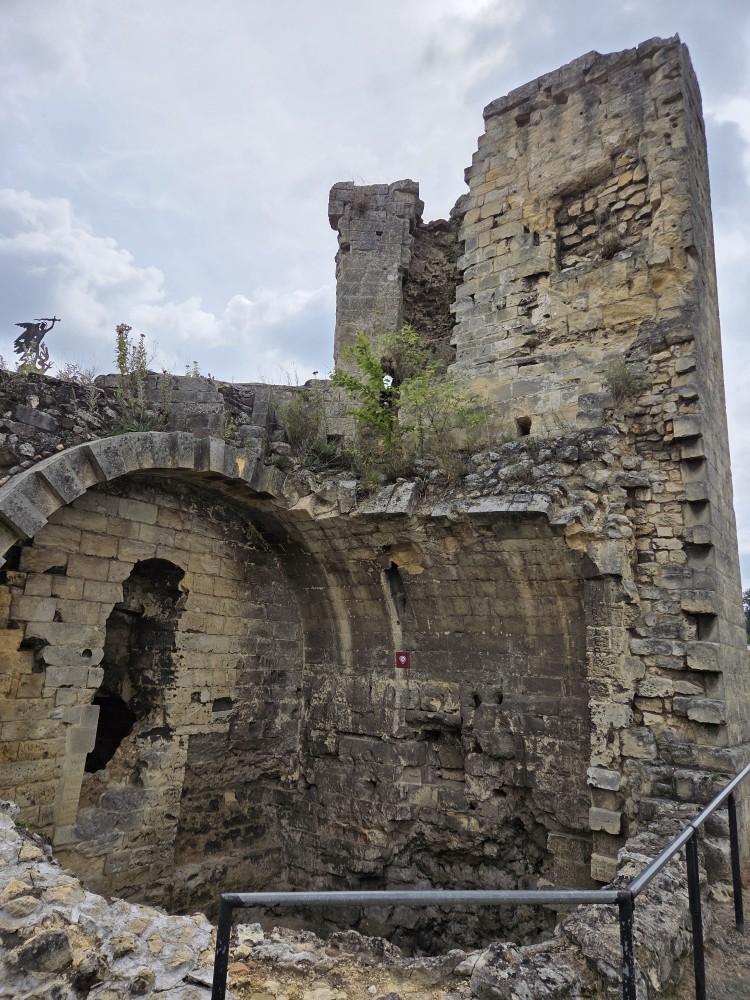
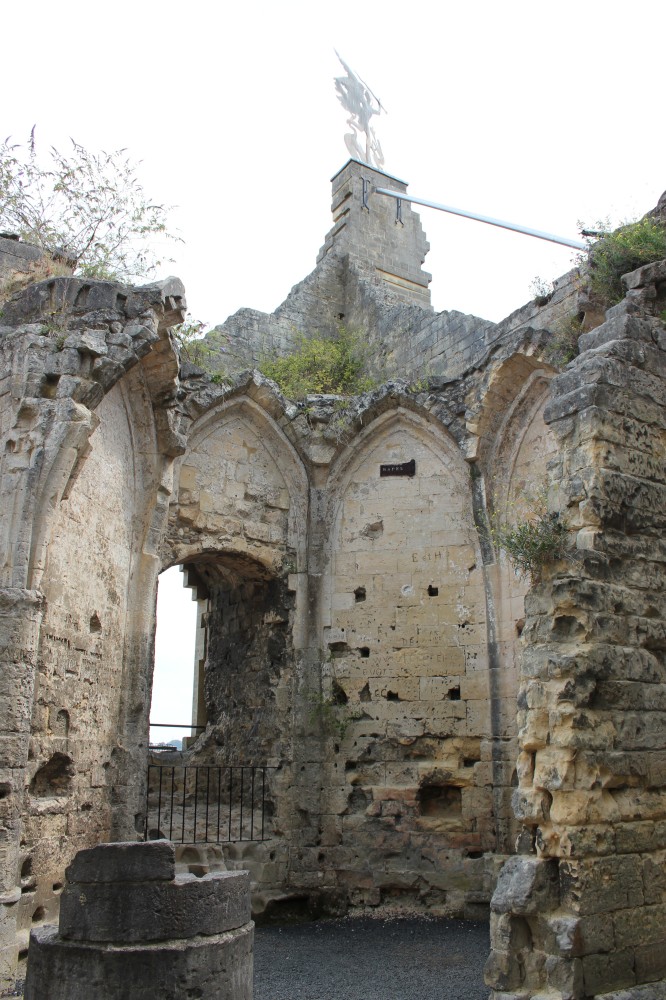
The chapel once had a beautiful vault. Side note, I hate how the soft sandstone allows every stupid jerk who wants to scratch their initials into the stone do so with great ease. Every reachable inch of the castle is covered in carven graffiti. Photo by MH
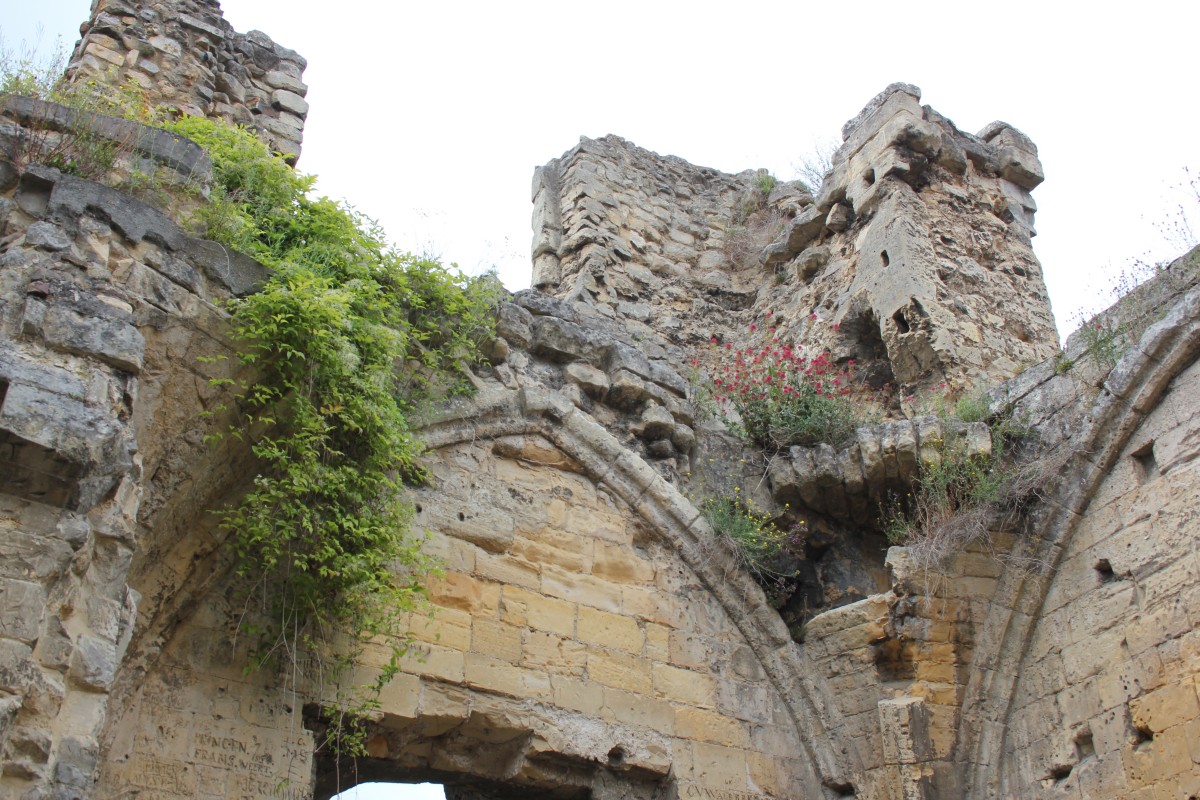
Photo by MH
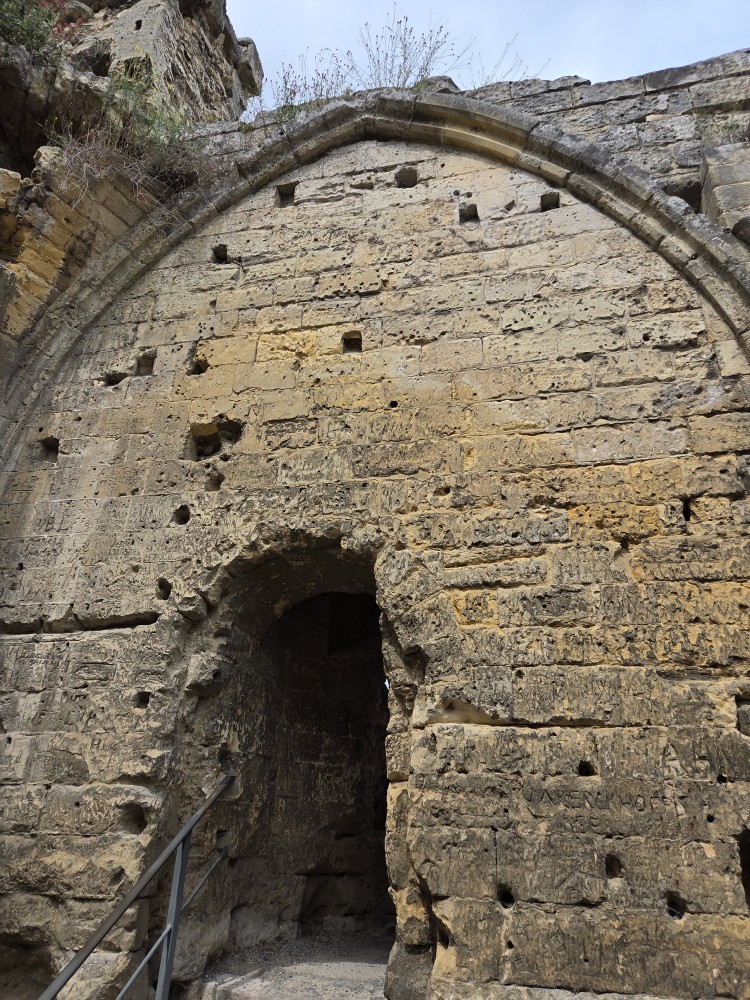
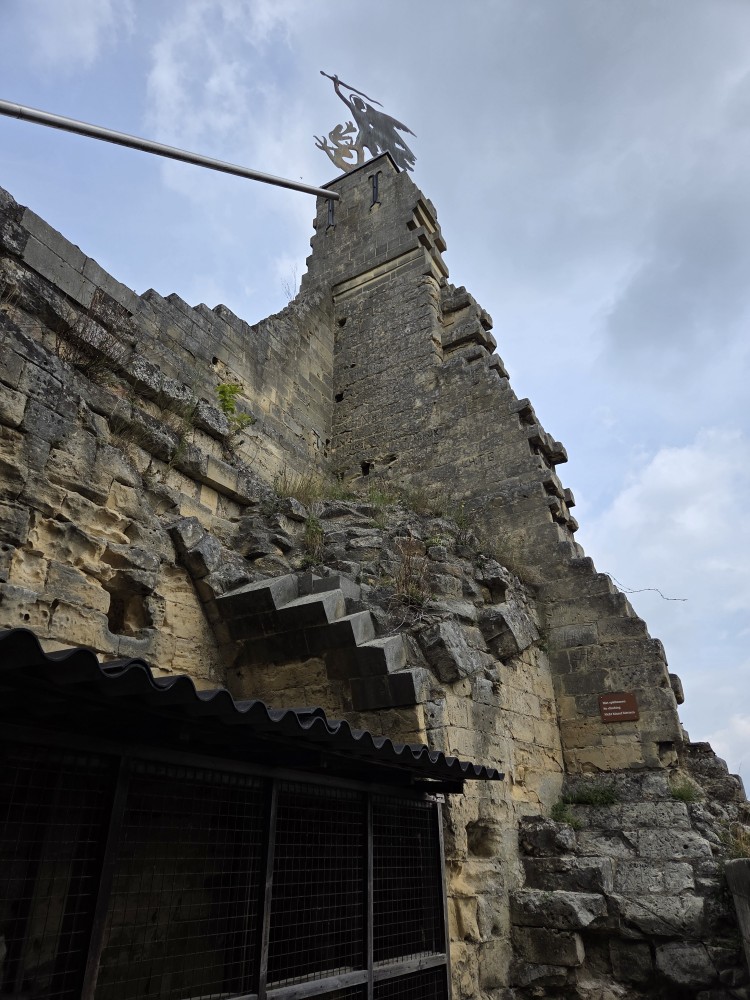
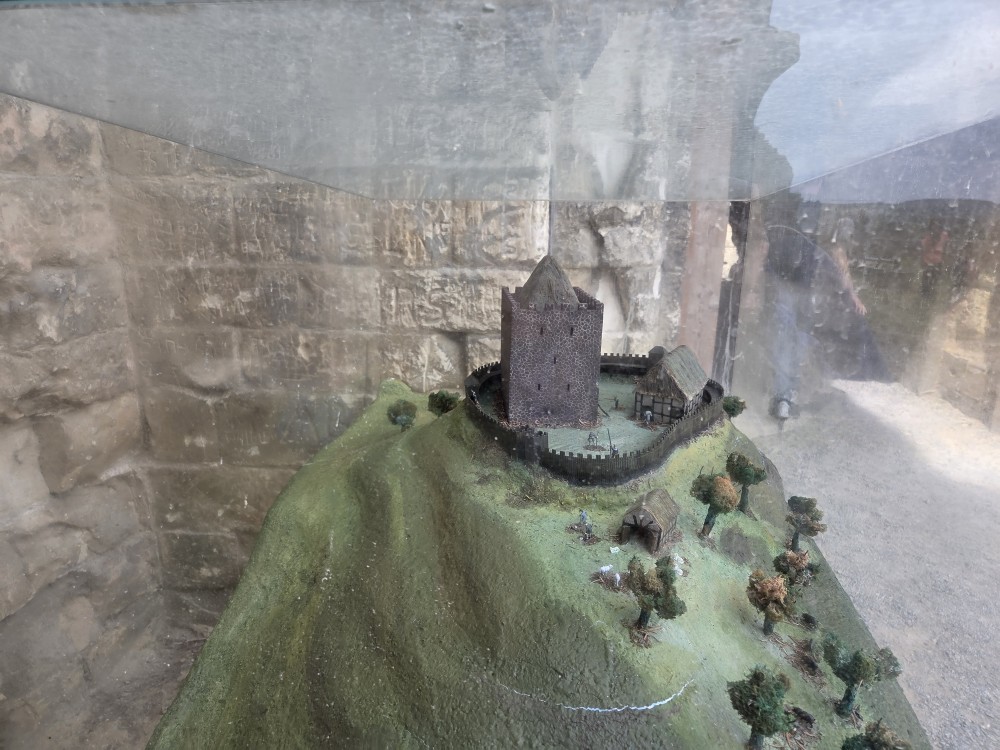
A model of the first tower that stood on this hill.
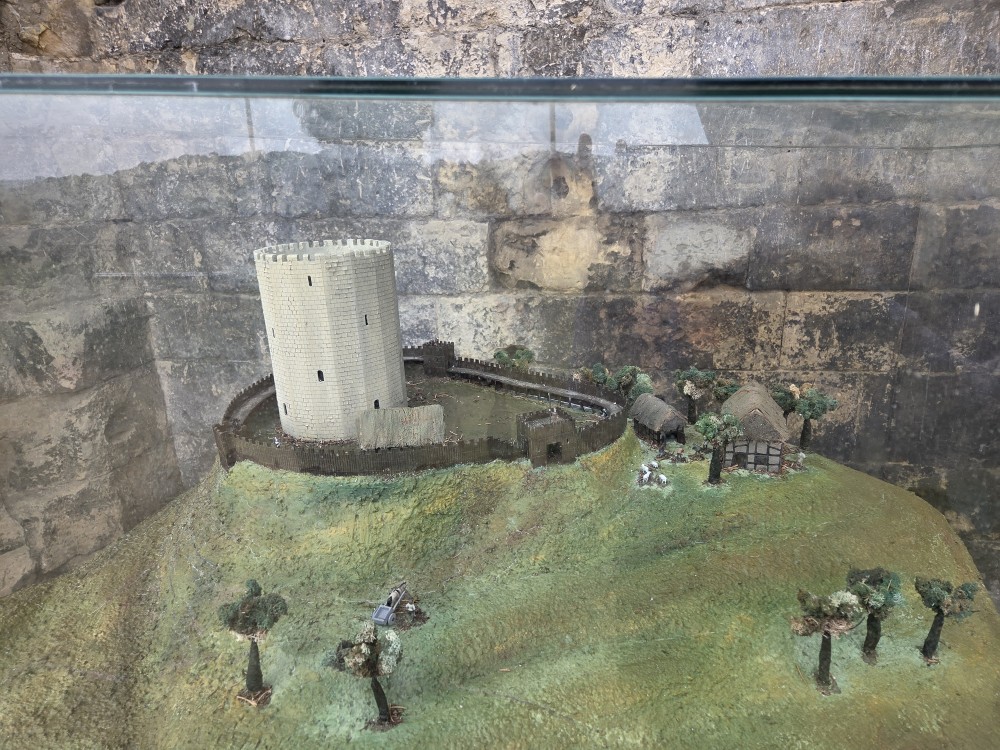
The second tower. A sixteen-sided affair.
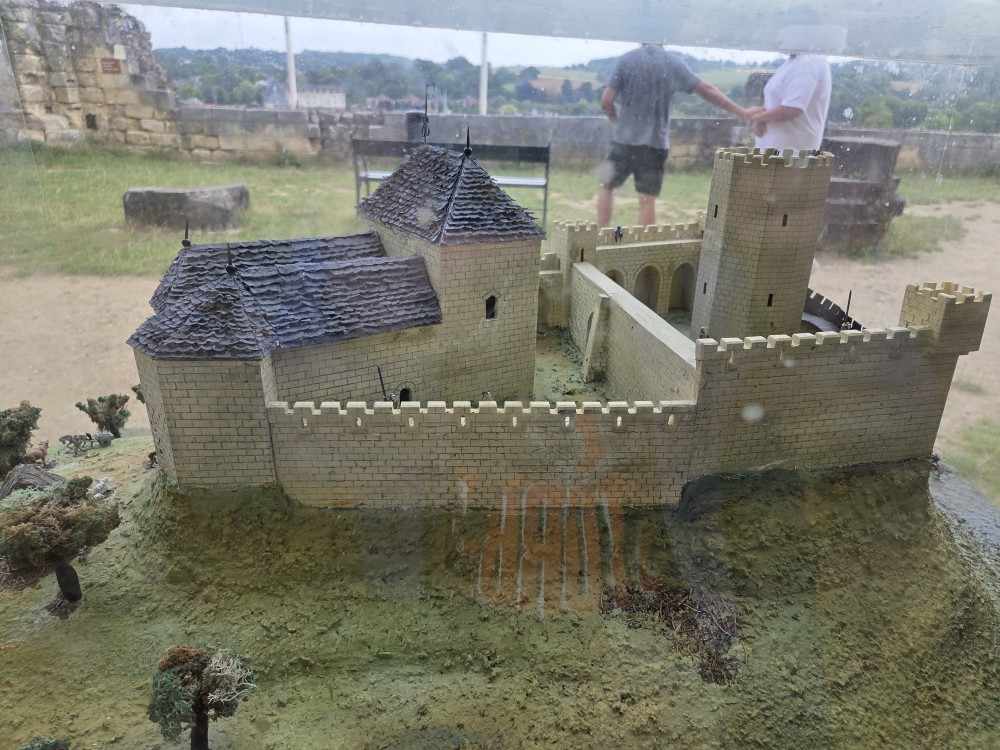
Apparently sixteen sides was too many, as the next great tower to appear on the hilltop only had ten.
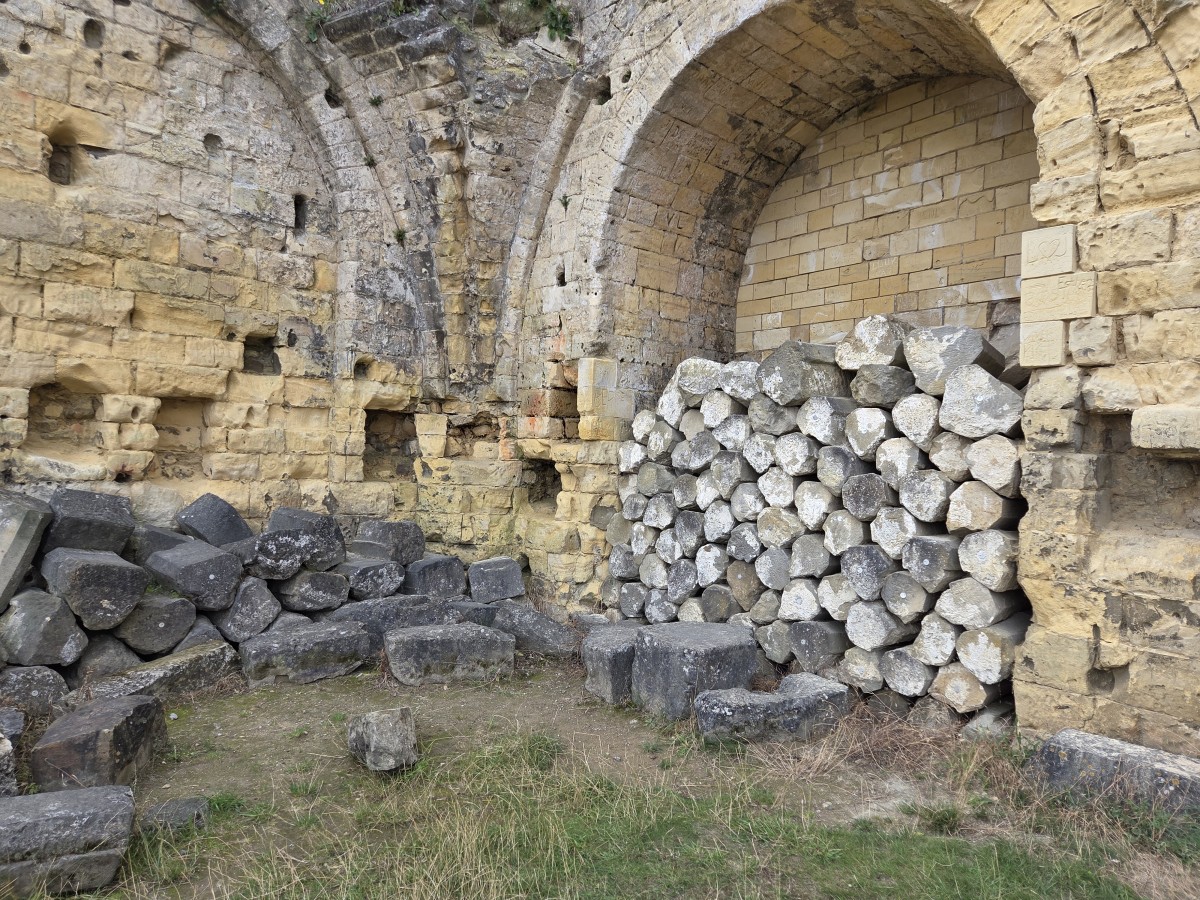
The pillars that once held up the second story of the Knights’ Hall are just stacked like firewood. Maybe the preservation society hopes to do something with them in the future.
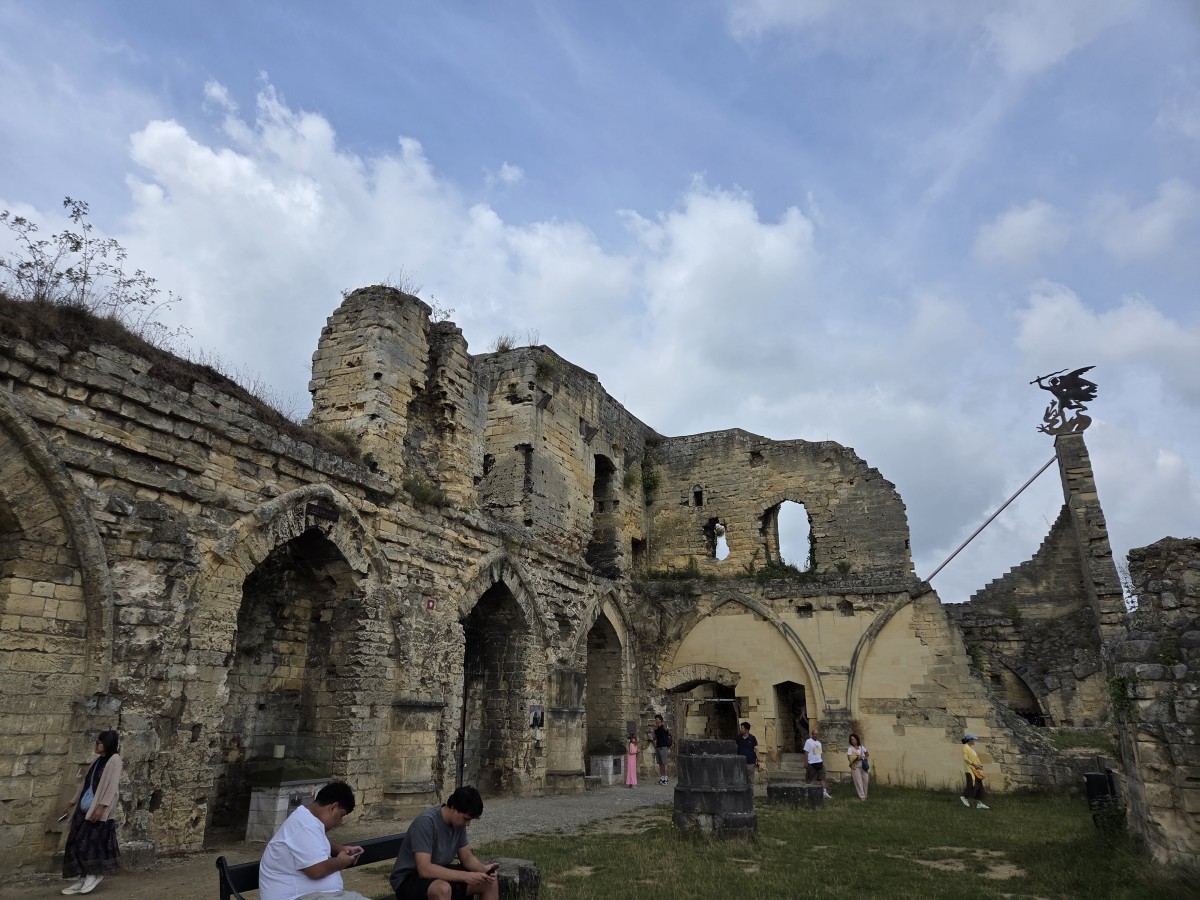
I feel you can get a sense of what the hall would have been like as a two-story building.
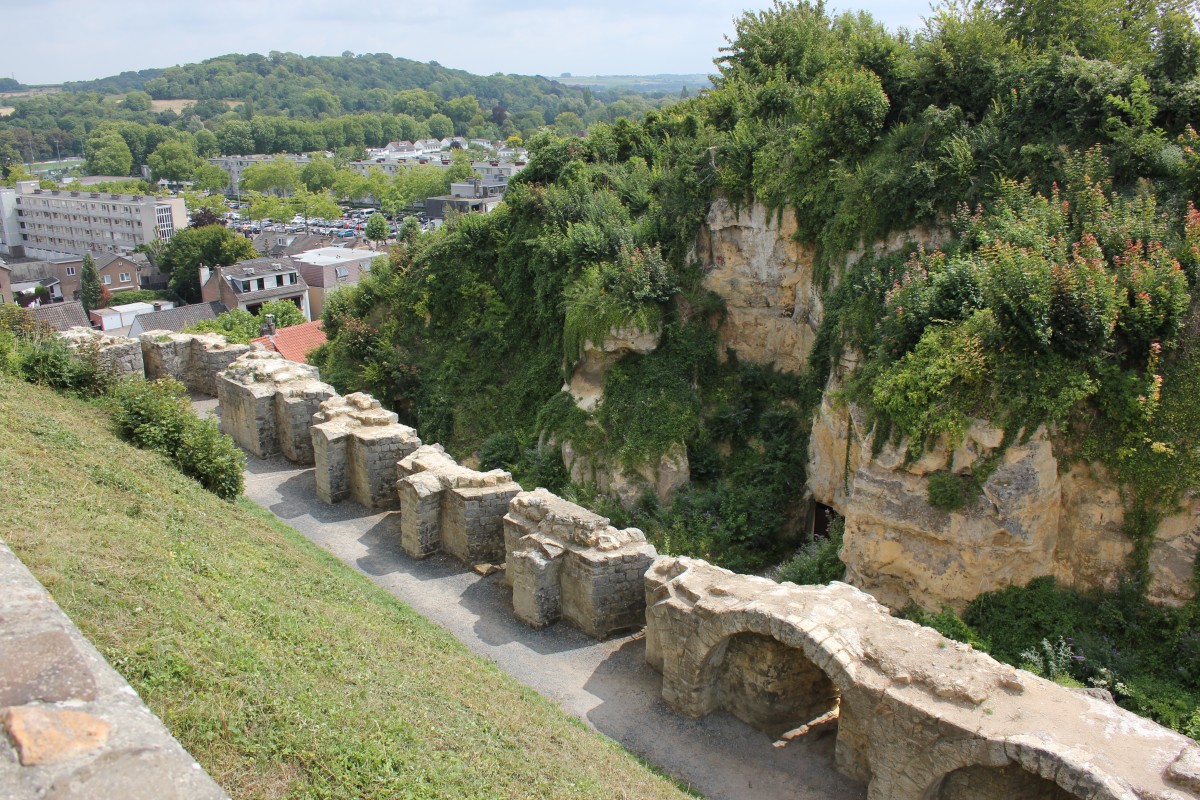
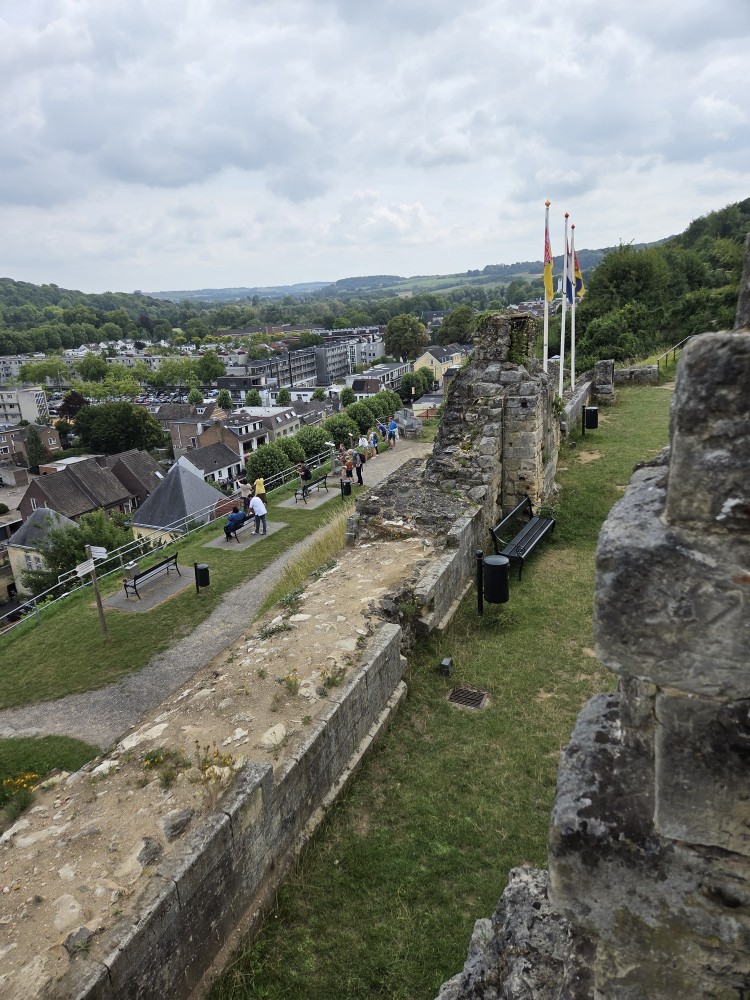
Looking down on the outer wall
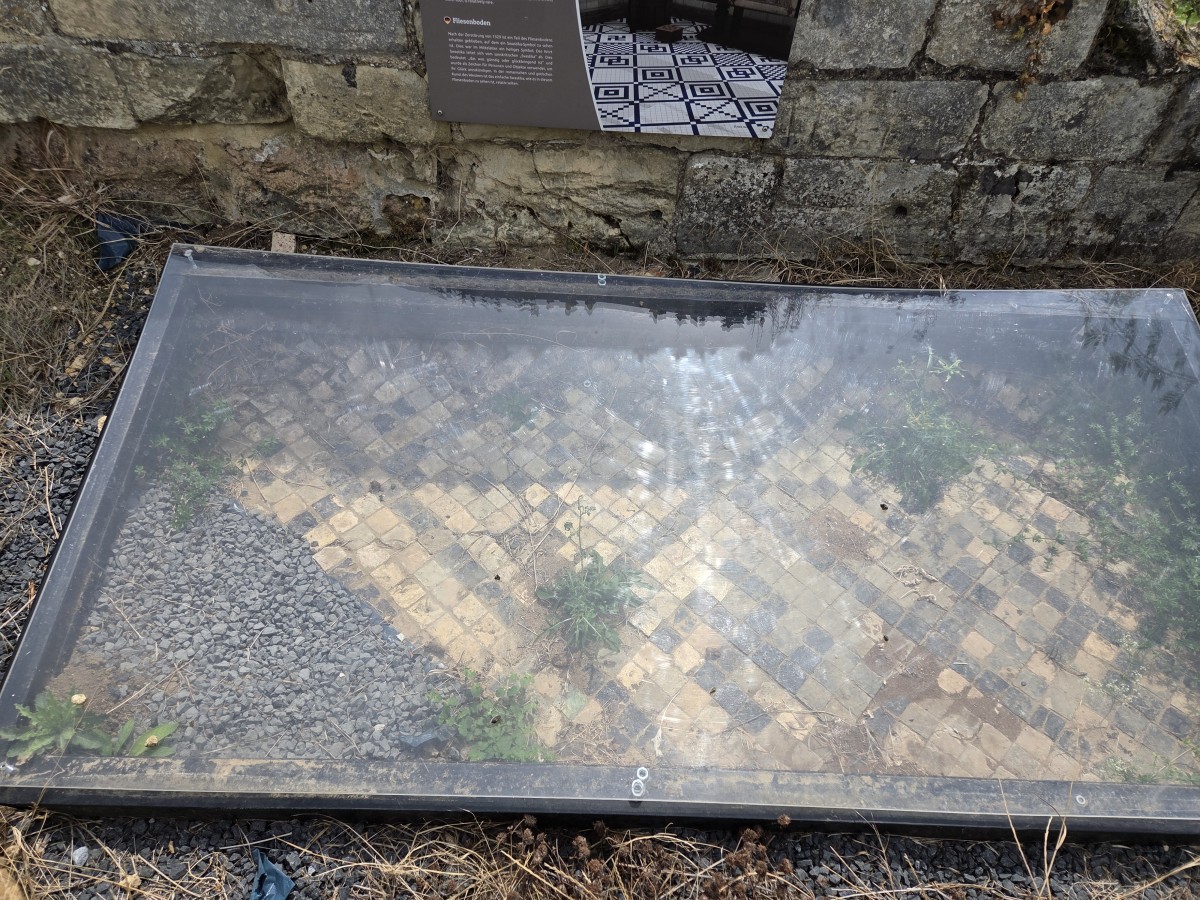
A fragment of floor mosaic. This must have been the *nice* part of the castle. And yet the dungeon/oubliette isn’t too far away.
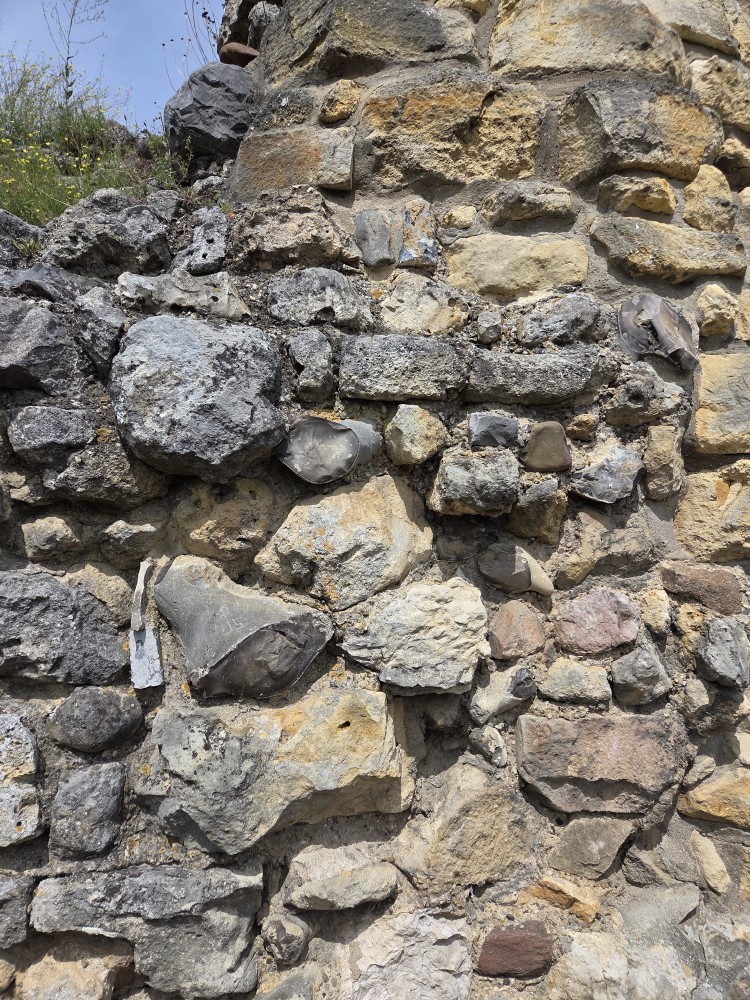
Is that a bit of flint I spy?
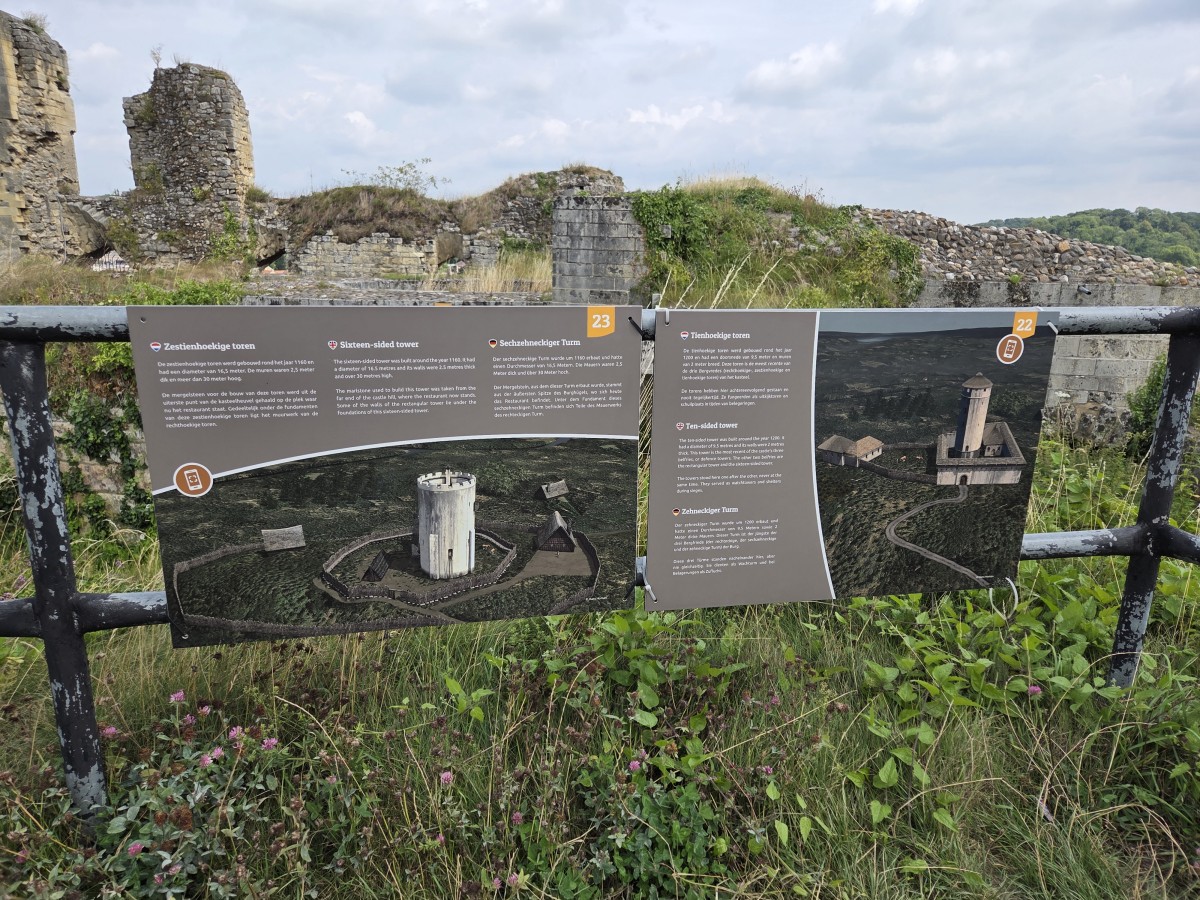
Some information on the sixteen- and ten-sided towers.
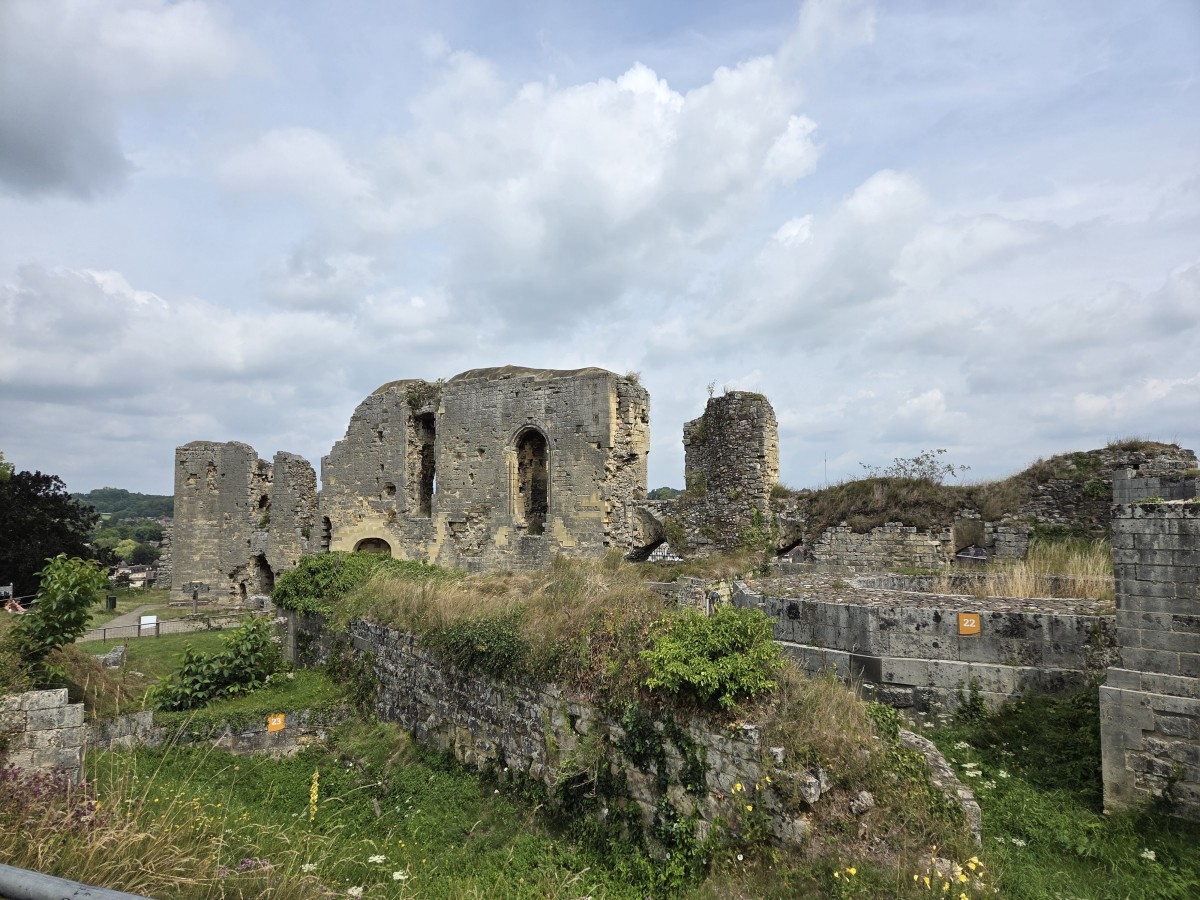
The foundations of the sixteen-sided tower are on the left, with the 23 on them, from about 1160, and the ten-sided tower on the right with the 22, from about 1200.
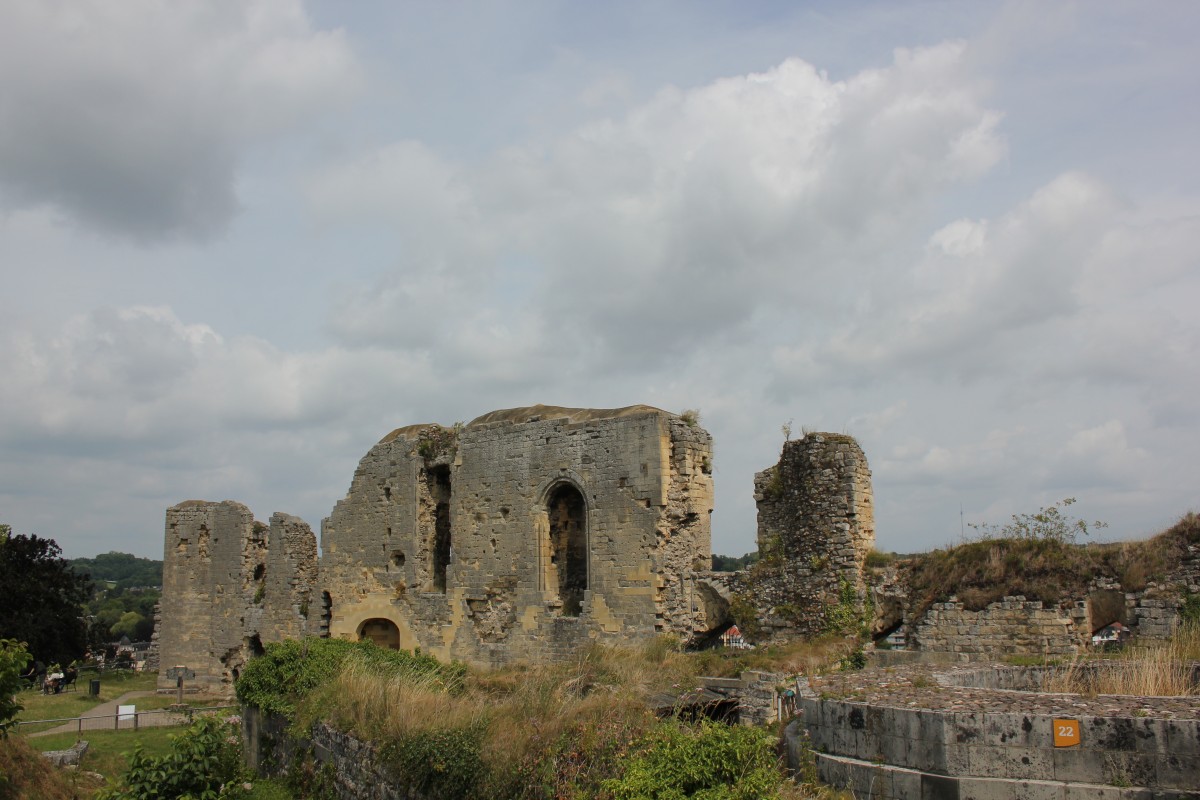
Photo by MH
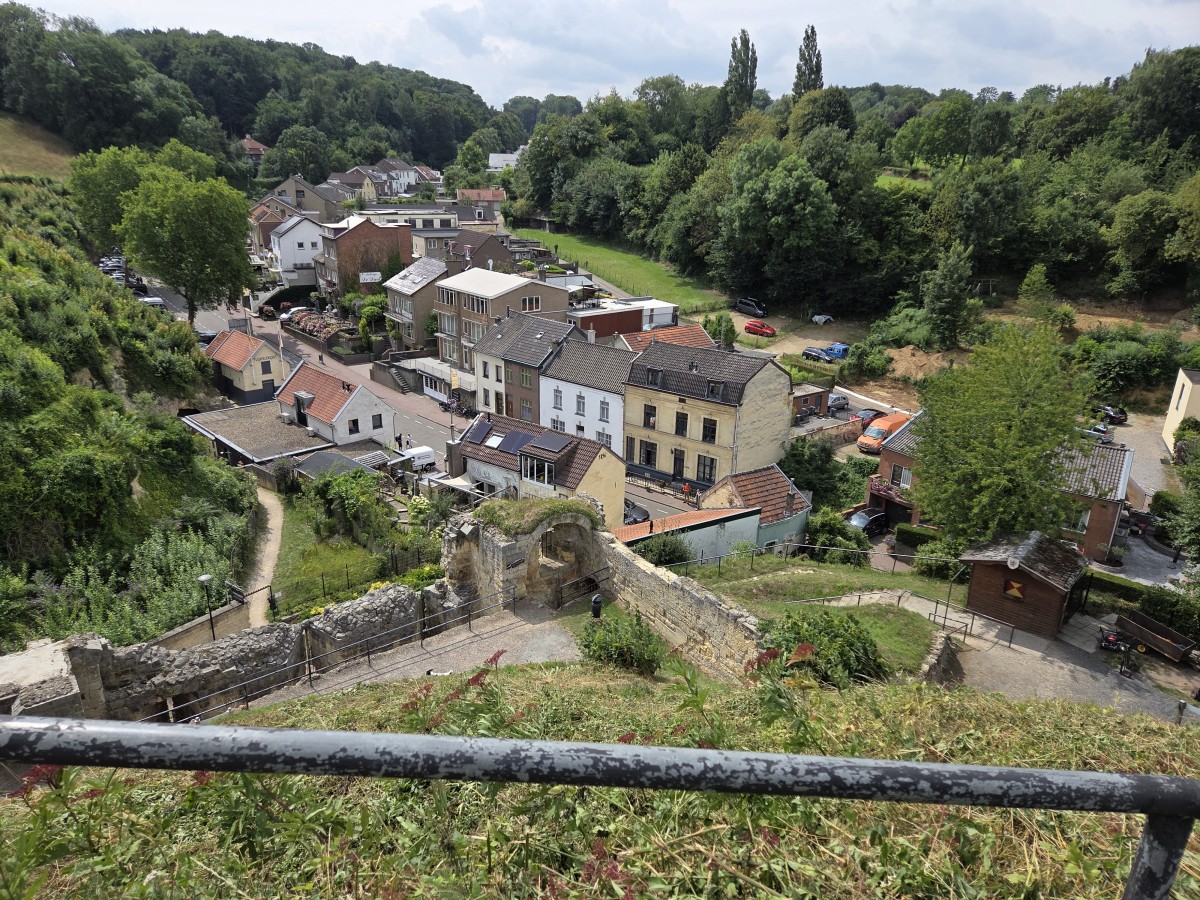
Looking down on the entrance and exit to the Fluweelengrot from where the Wolf Tower used to be.
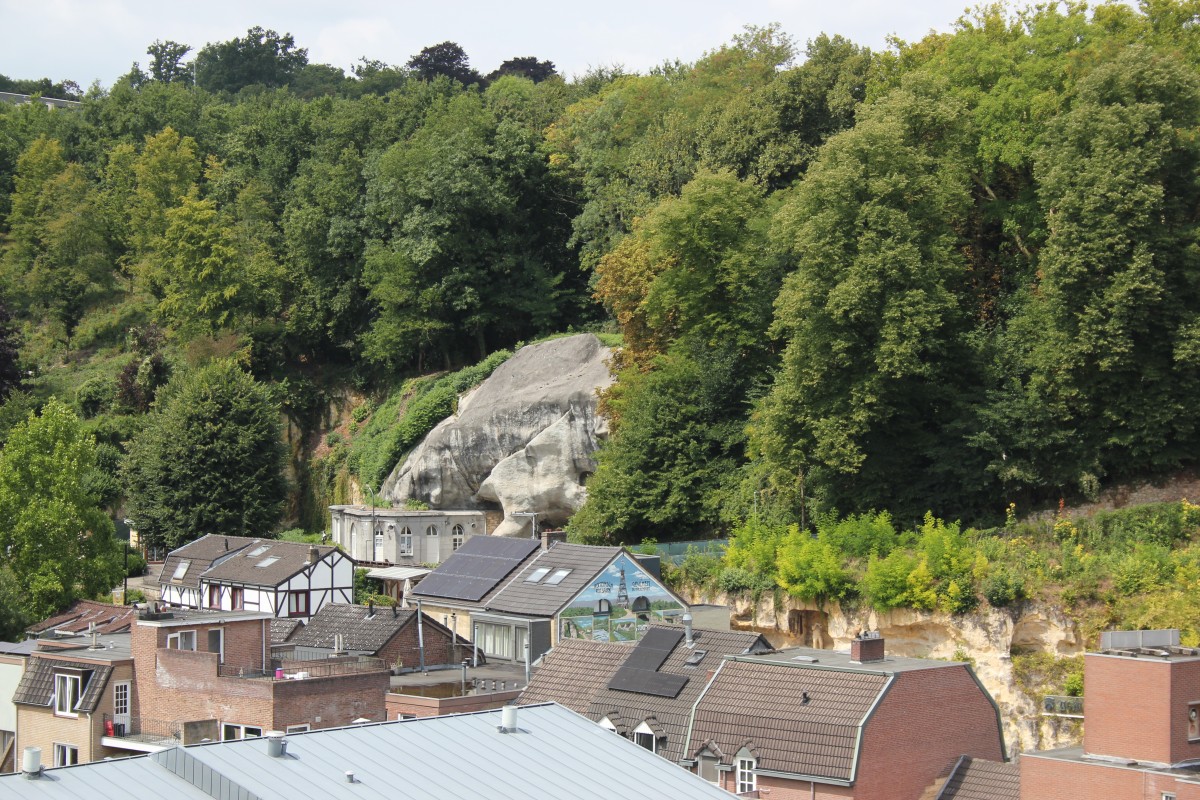
Photo by MH
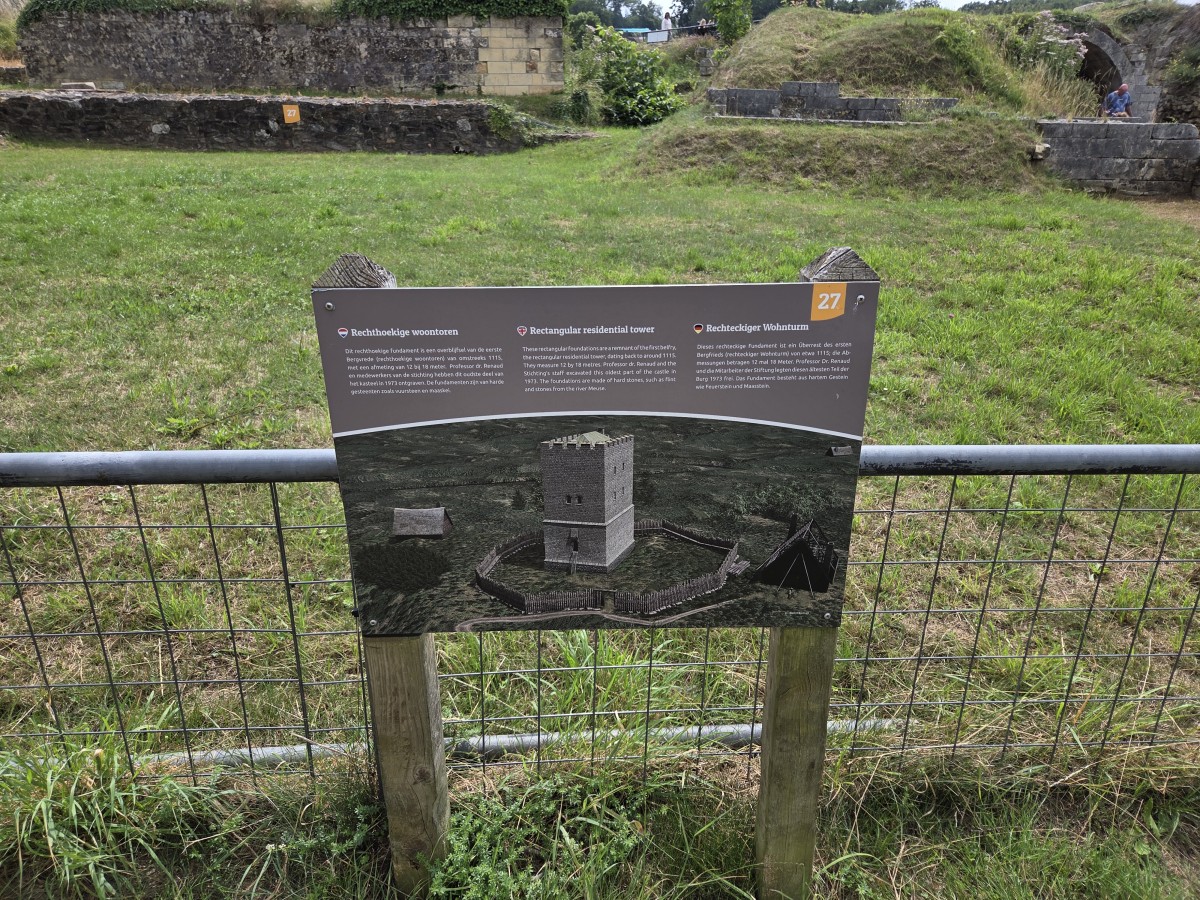
Information on the square first tower from about 1115.
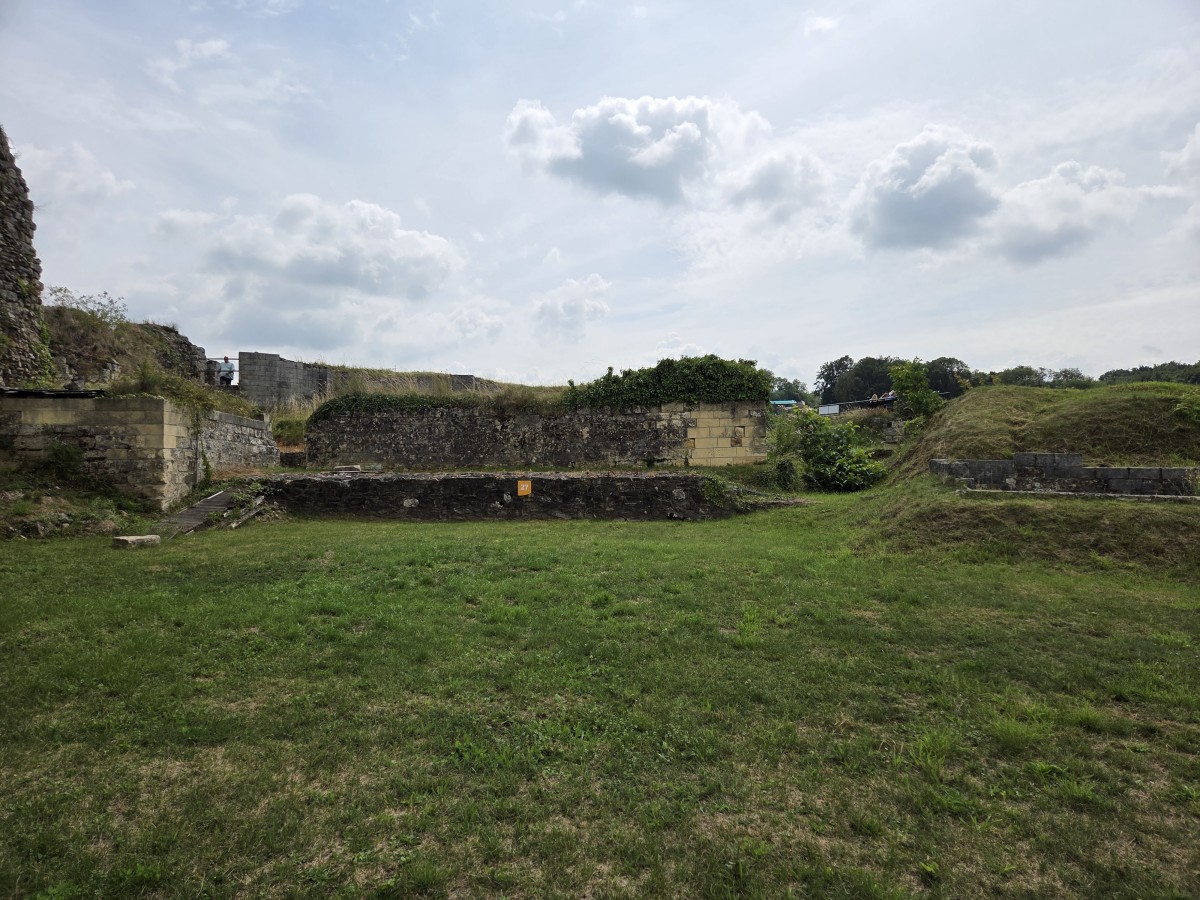
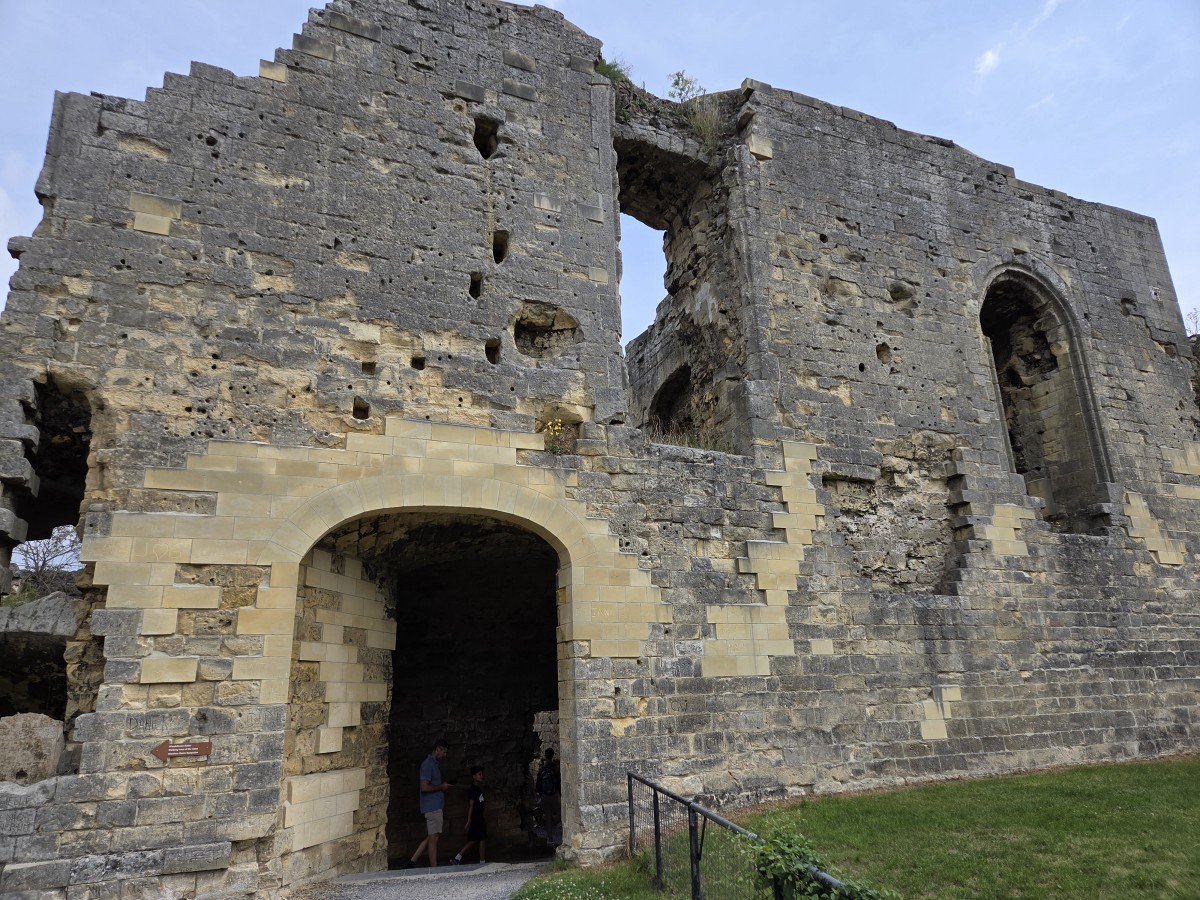
This shows the contrast between new stone and old stone. I think at this point they’re replacing just enough to keep everything safe, and I think that’s enough. It’s a shame it got blown up, but that’s an important part of its history.
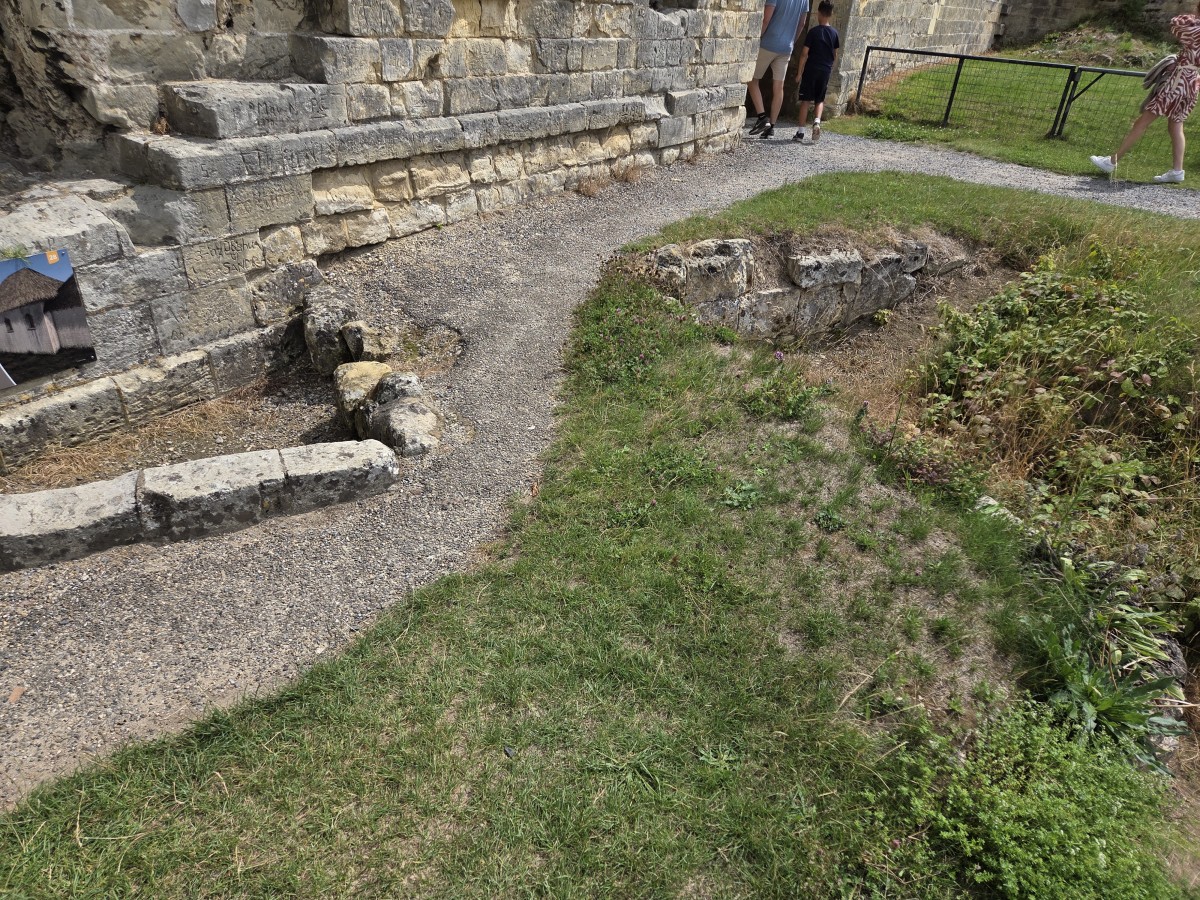
These foundations are clearly much older than the castle, though not as old as the sequence of towers – they’re from about 1250.
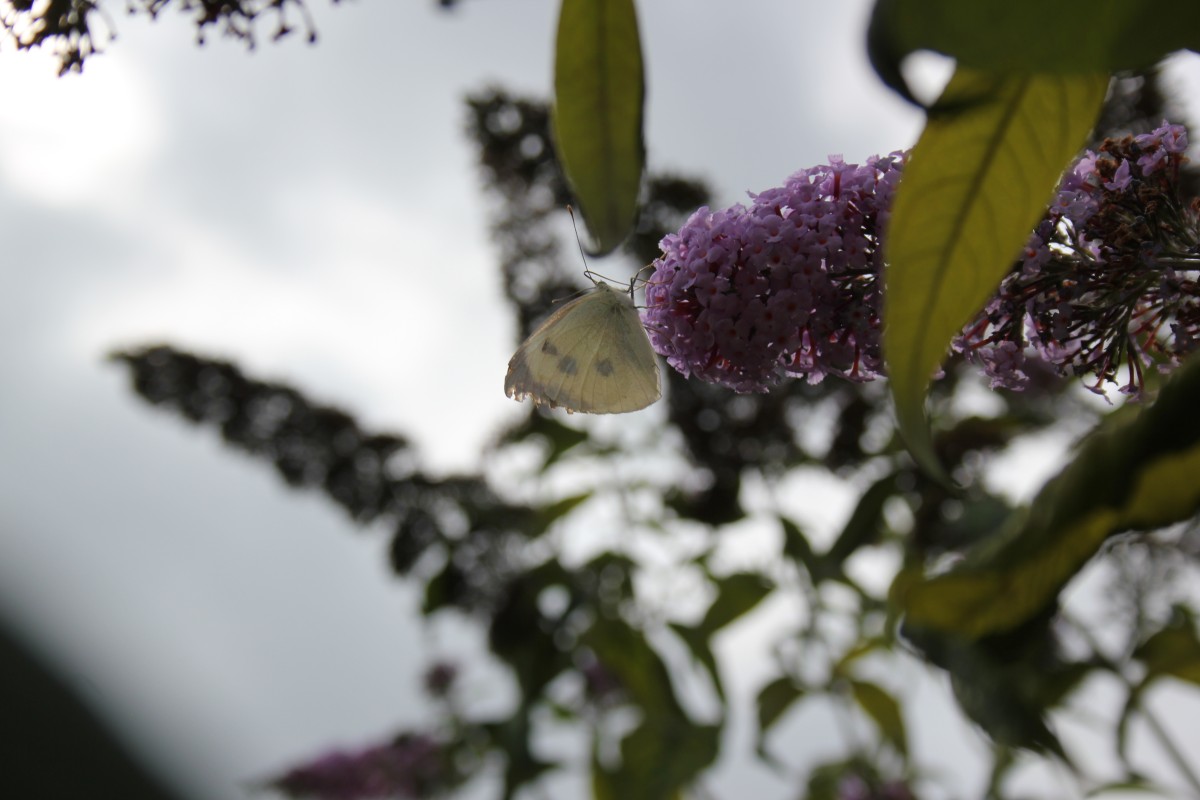
Photo by MH
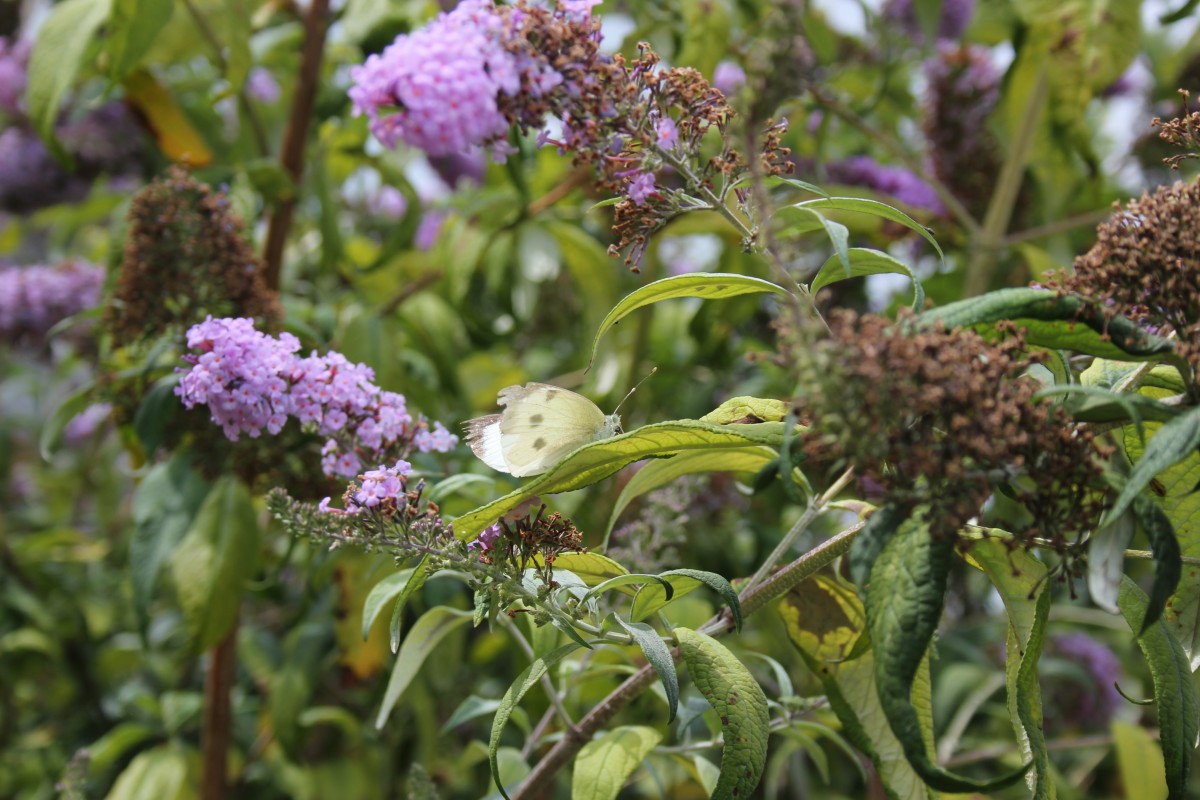
Photo by MH
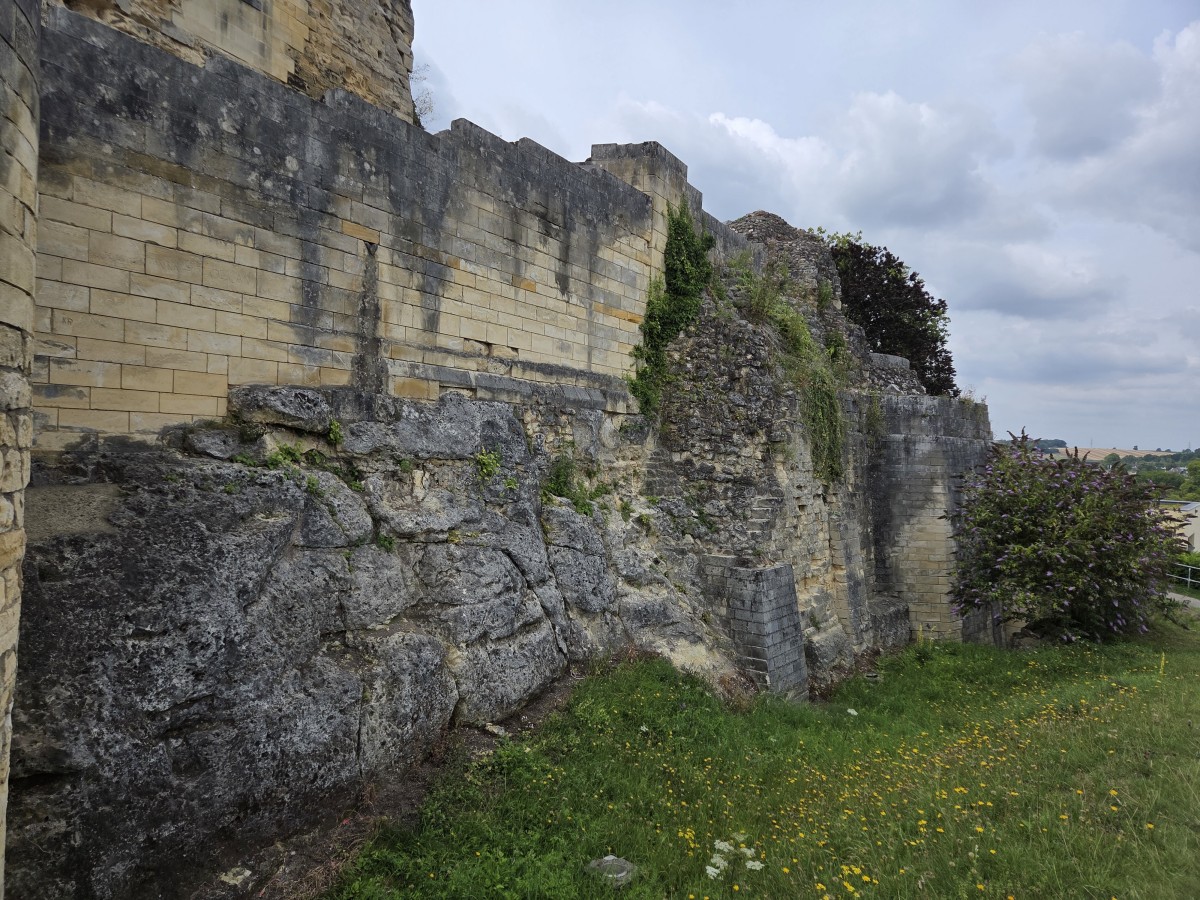
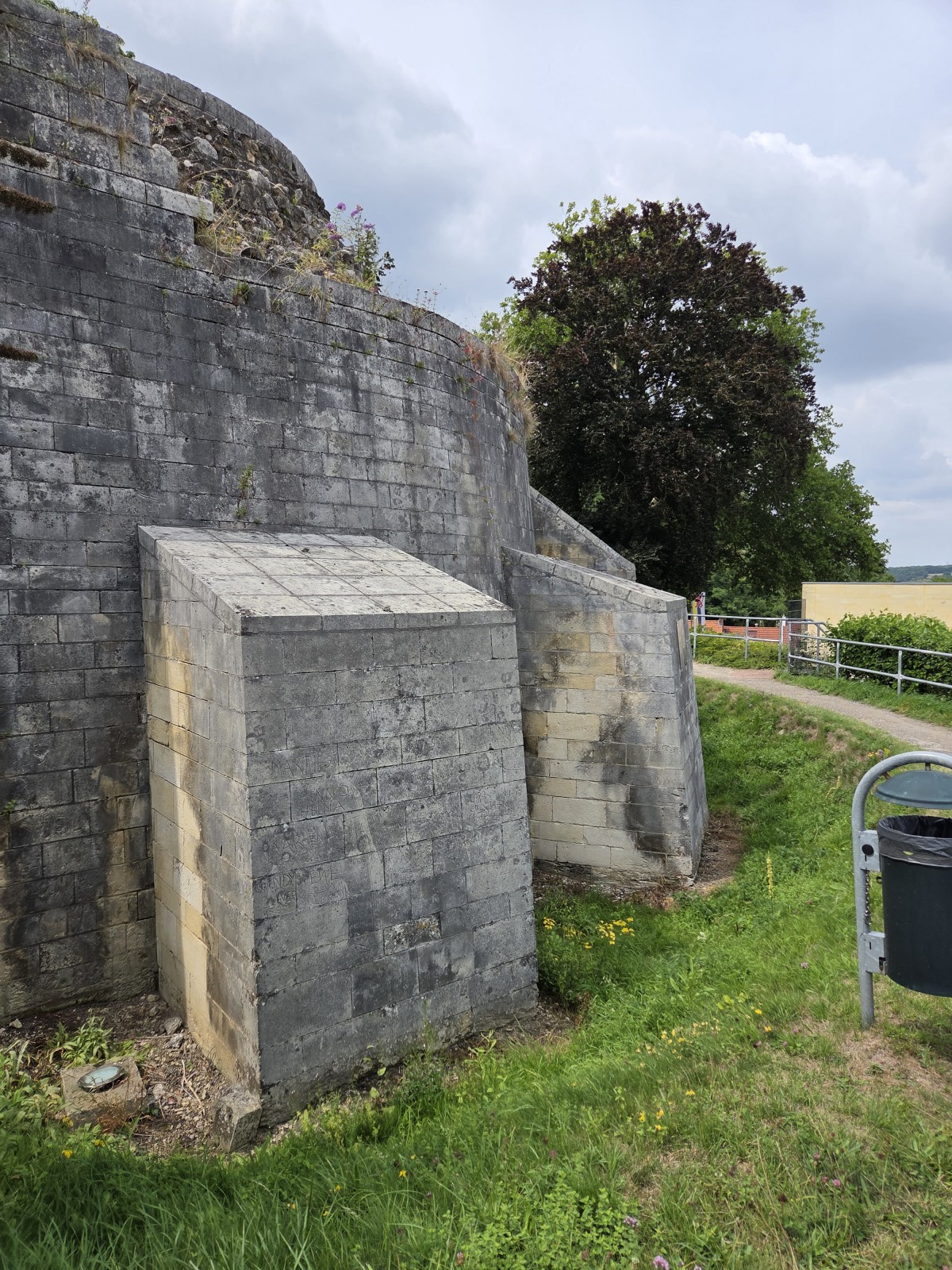
This tower had cannons on it at one point, so that if an enemy captured the town they’d still have to deal with getting shot at.
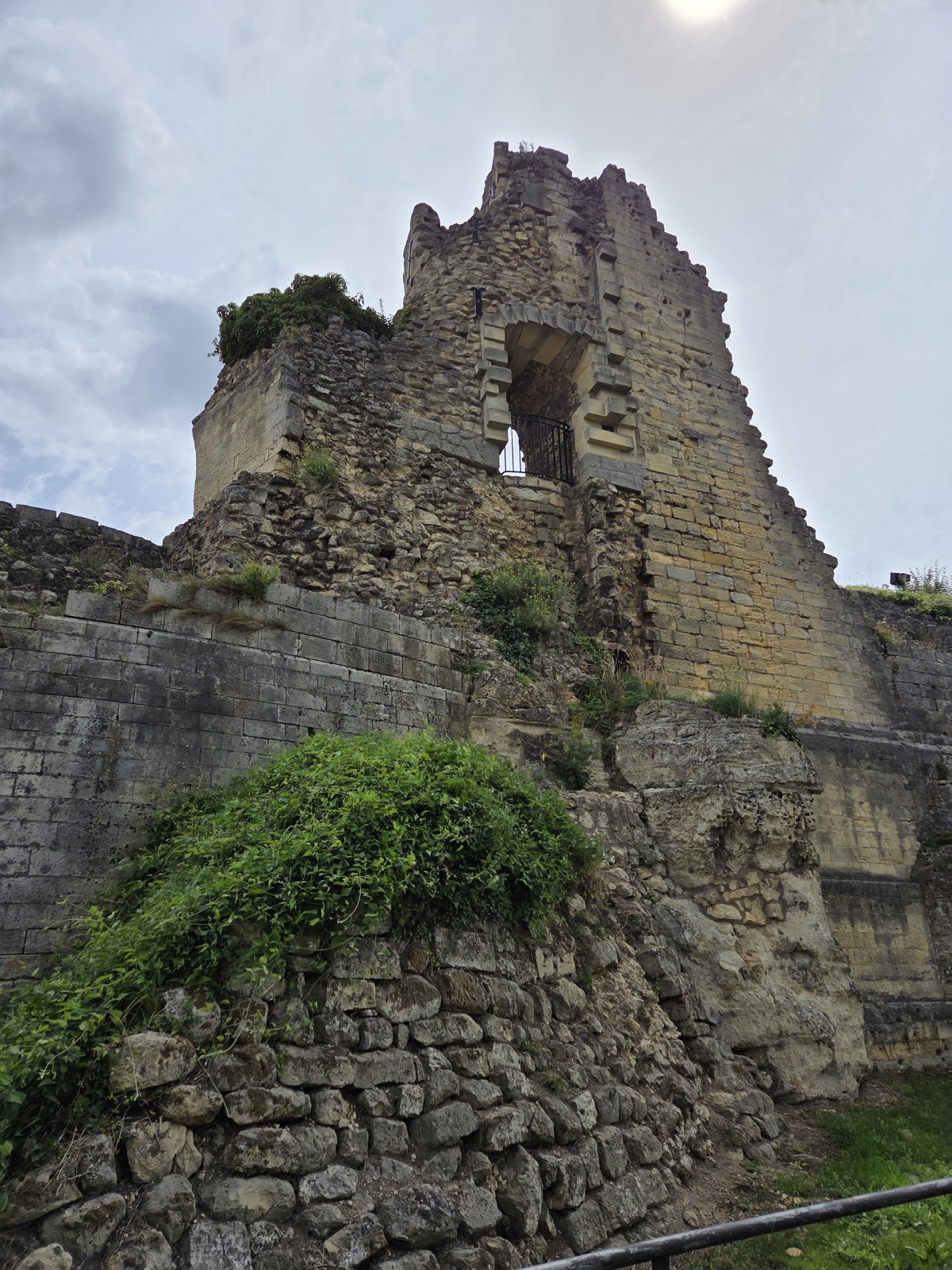
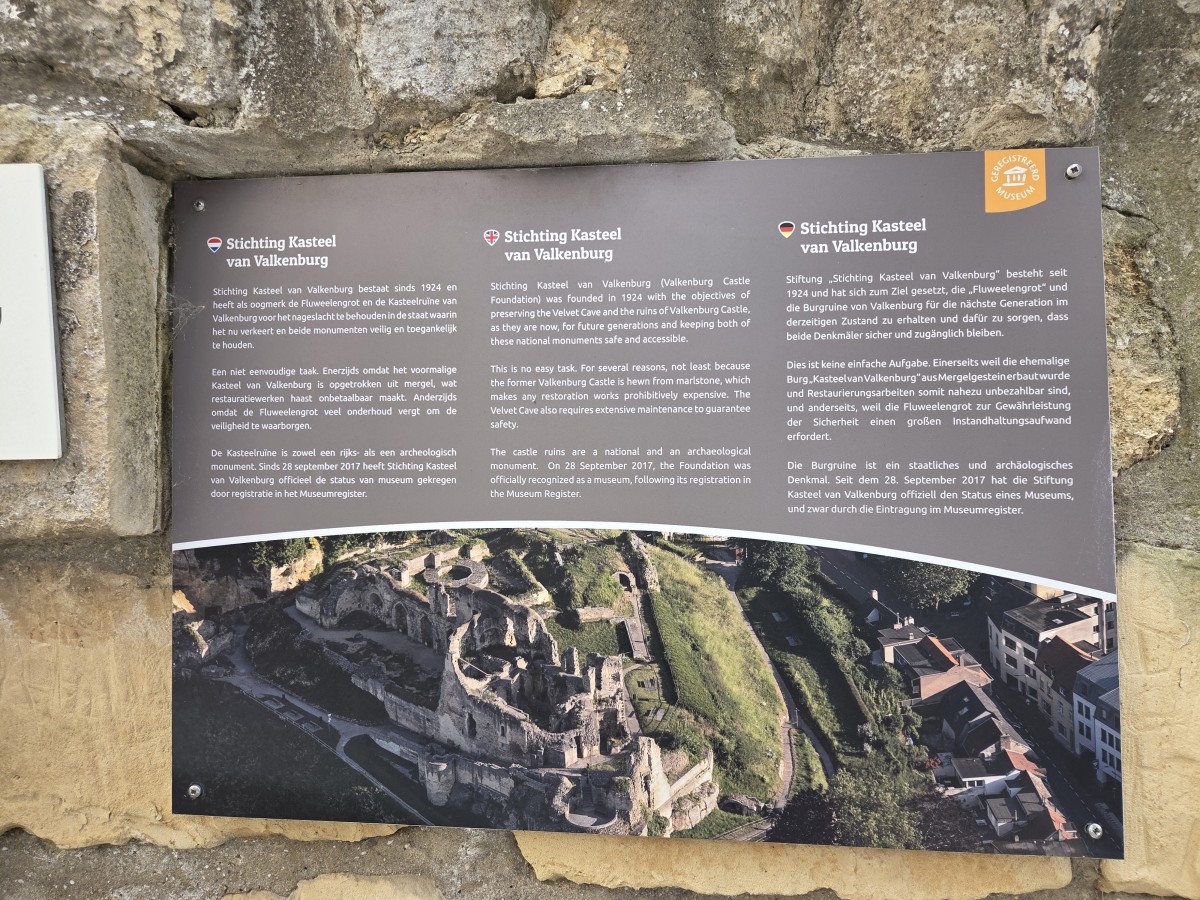
The overhead view is GORGEOUS and I needed a postcard posthaste.
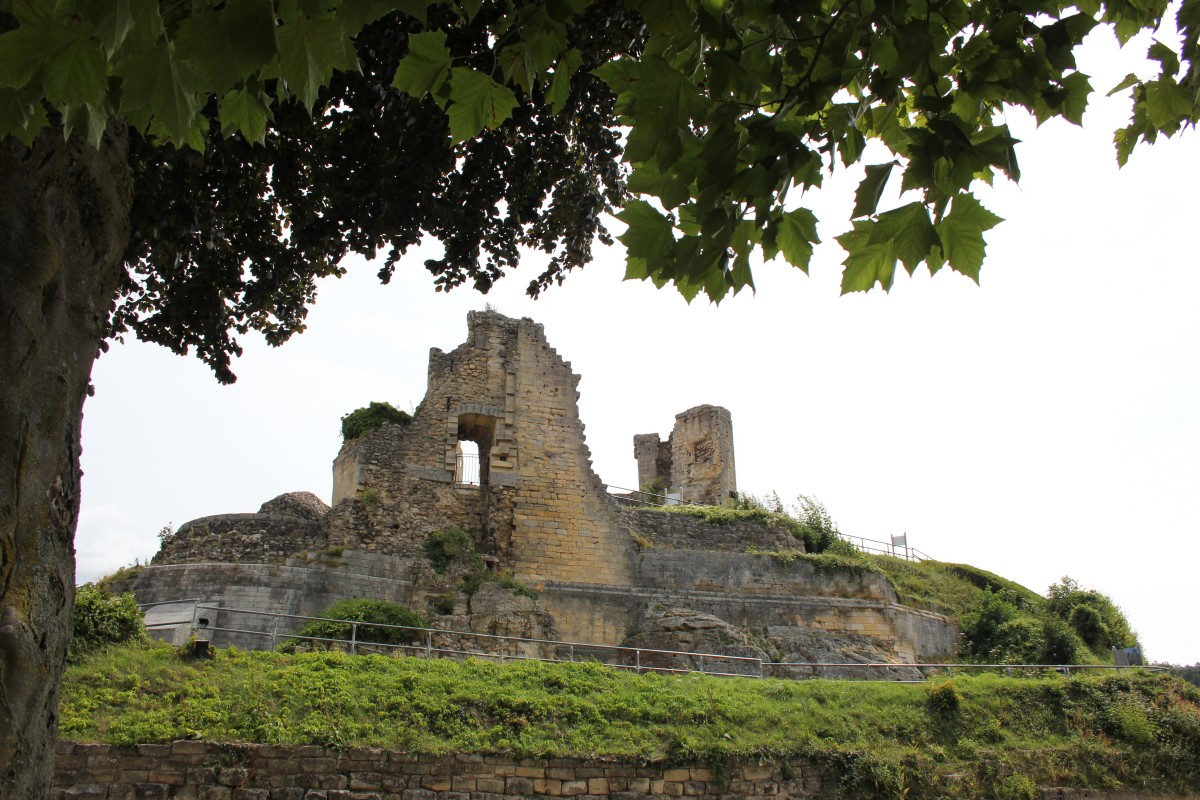
Photo by MH
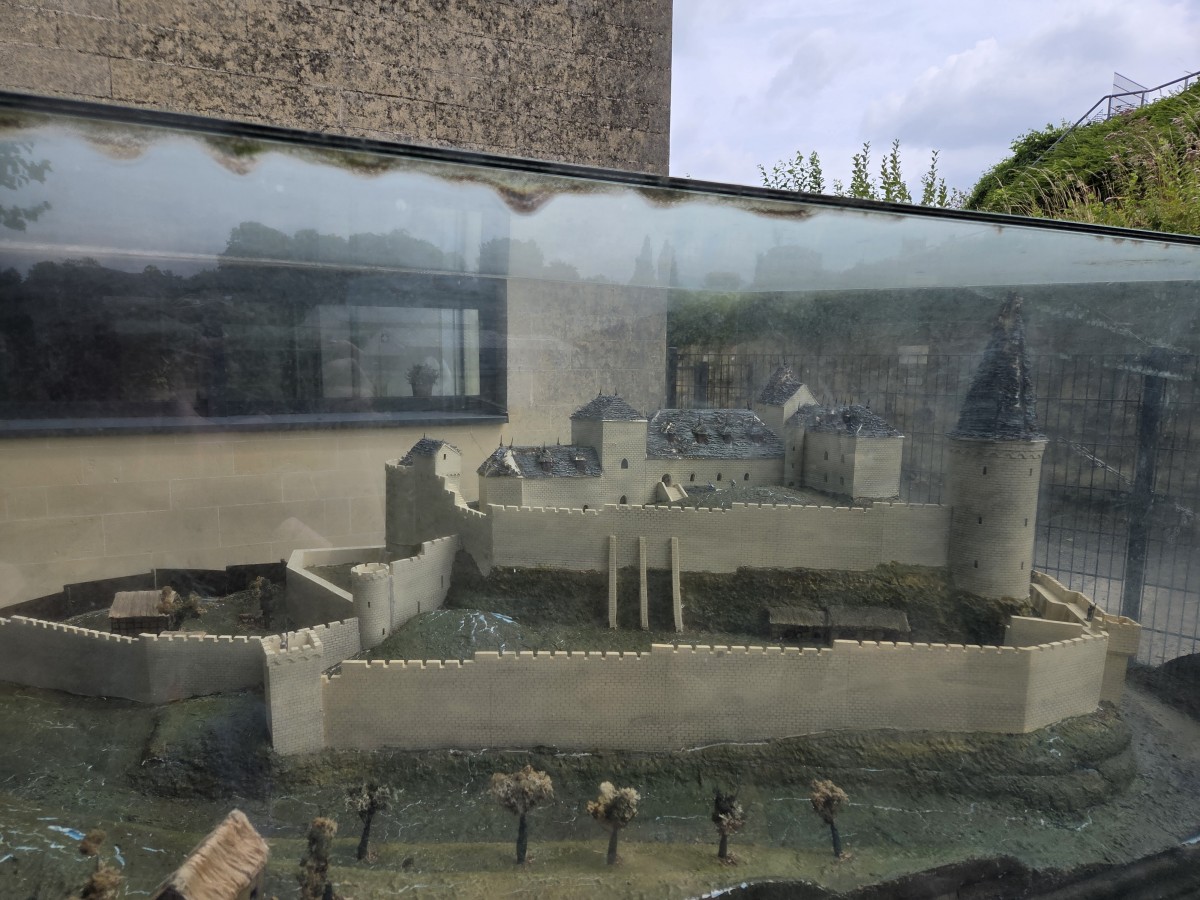
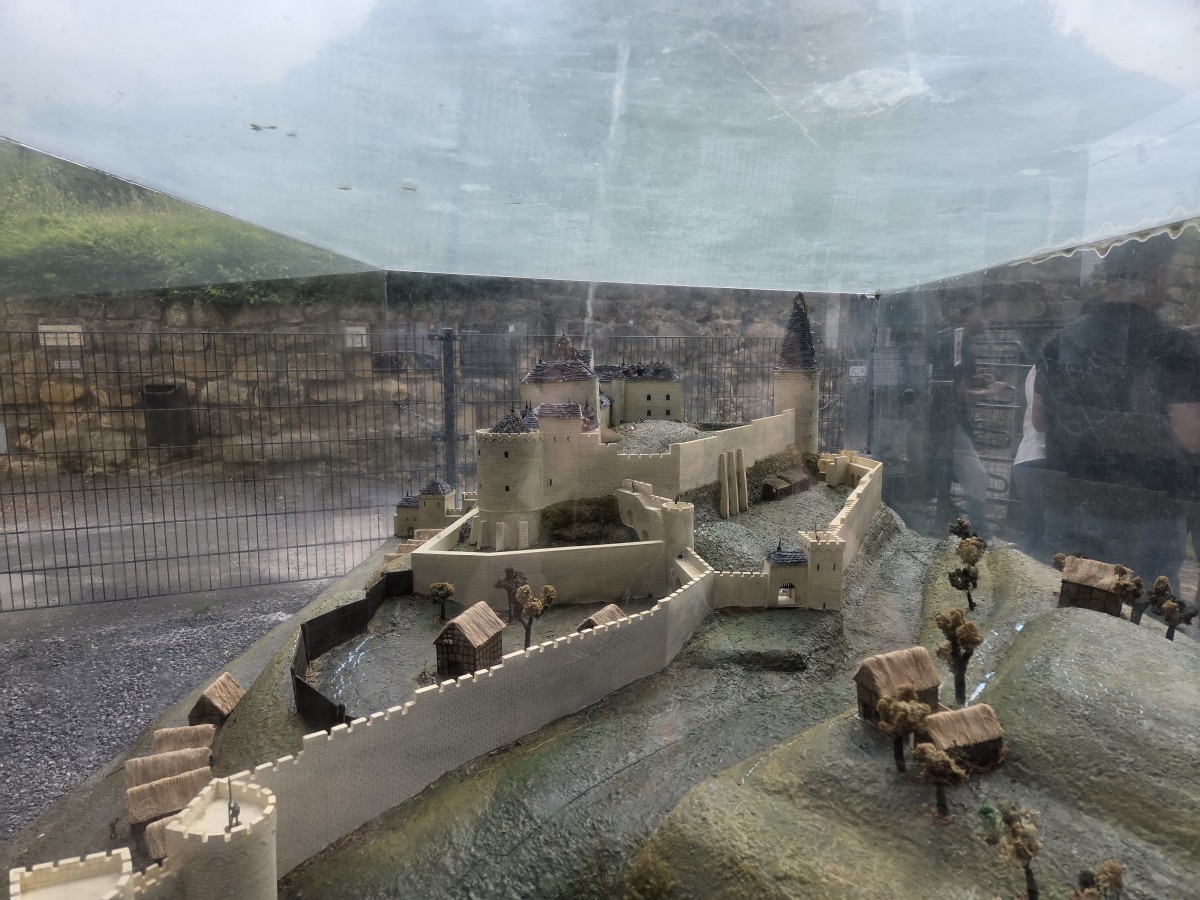
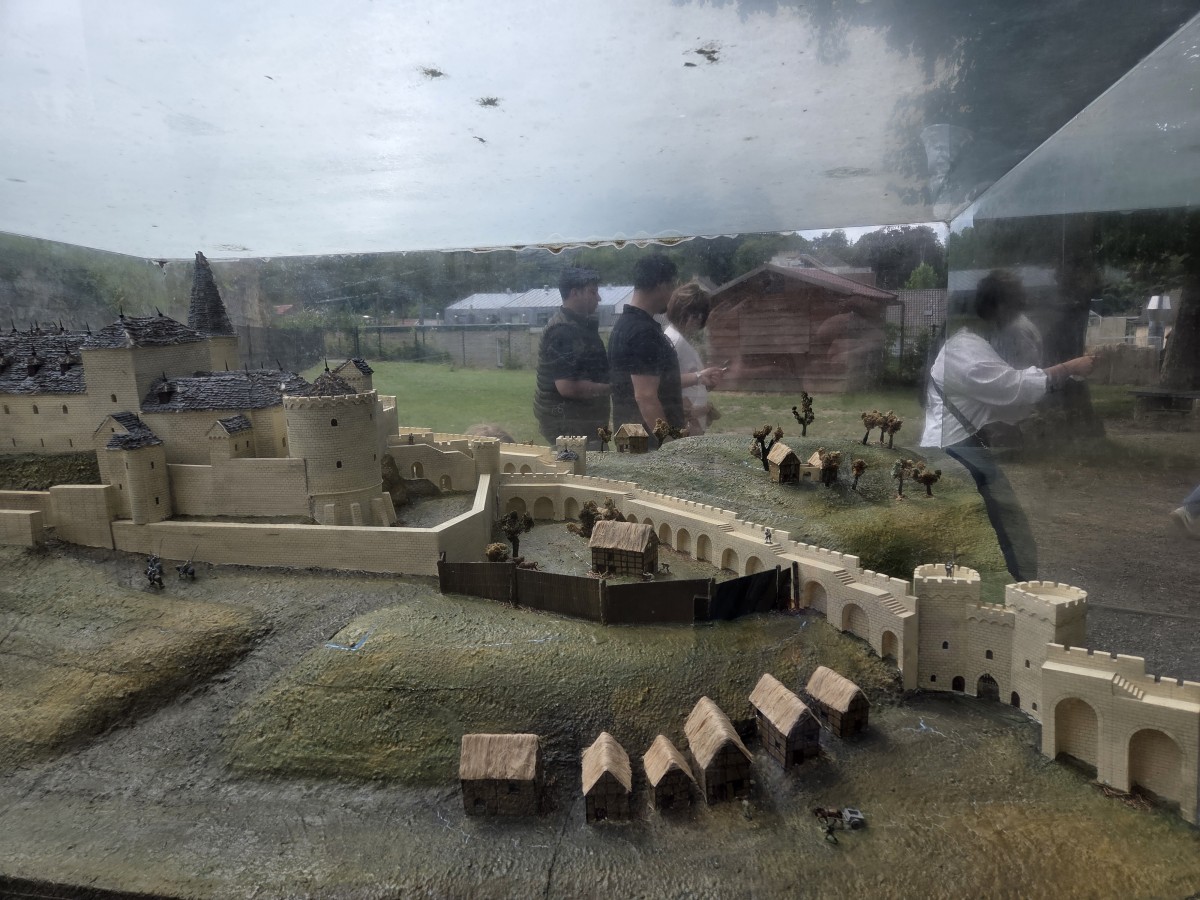
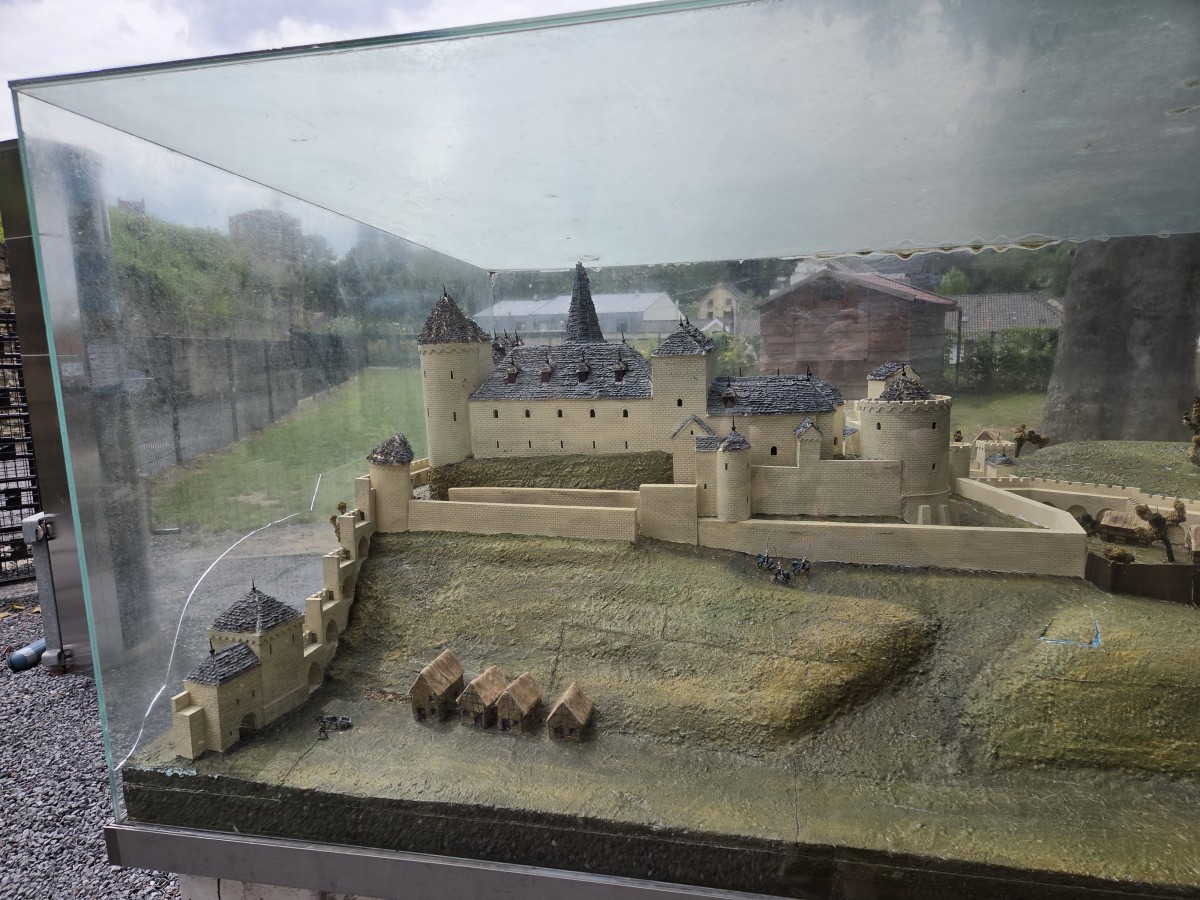
A model of the complete castle at the height of its glory.
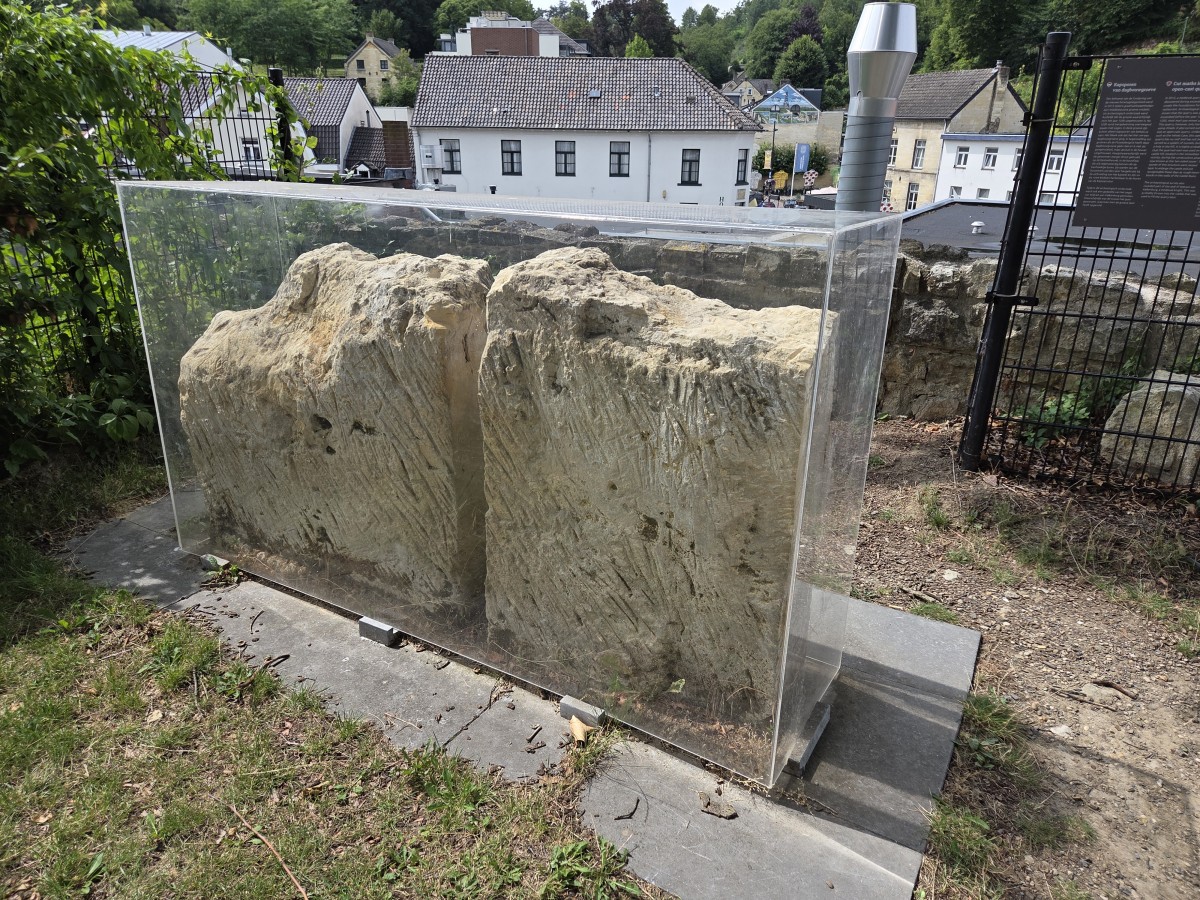
Some samples of stones from an open-air quarry; note the diagonal scratches from the extraction. At some point they switched to using saws to cut the stone, so this is from earlier. These stones in particular might have been used in the ten-sided tower.
Then we went down into the town again, and strolled along the shopping street. I bought a postcard of the aerial view of the castle, but I got tripped up in speaking Dutch when the lady asked me if I wanted a stamp (postzegel) as well, as that’s not a word I’d learned yet. There was a candy shop with gigantic cone-shaped bags of marshmallow candy on racks, so I got one. The marshmallows tasted lightly flavoured, not sure of what (kinda citrusy?), and they had a little bit of sugar on the outside. There was a whole shop filled with knock-off Barbies? There was a shop full of gemstones and crystals and fossils, probably for the New Age crowd. The fossils were cool, but they weren’t local fossils so I decided not to get any. We walked to two of the other city gates that still stand, and around a church, where the conversation volume drops like a lead weight when you go into the non-tourist street. Then we headed back to the train.
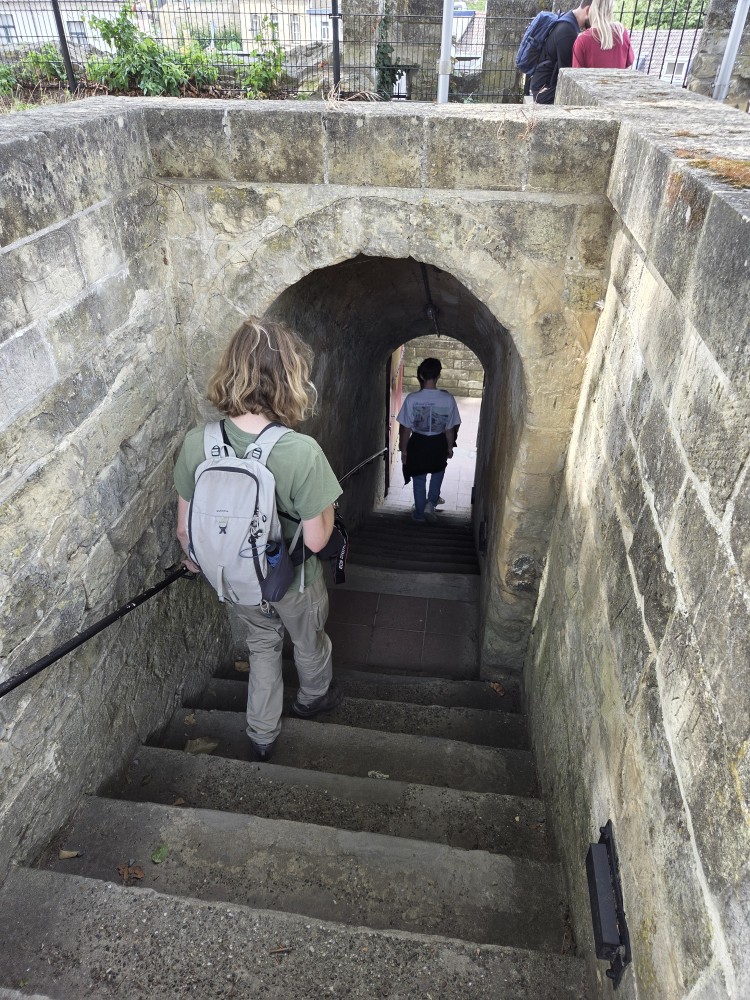
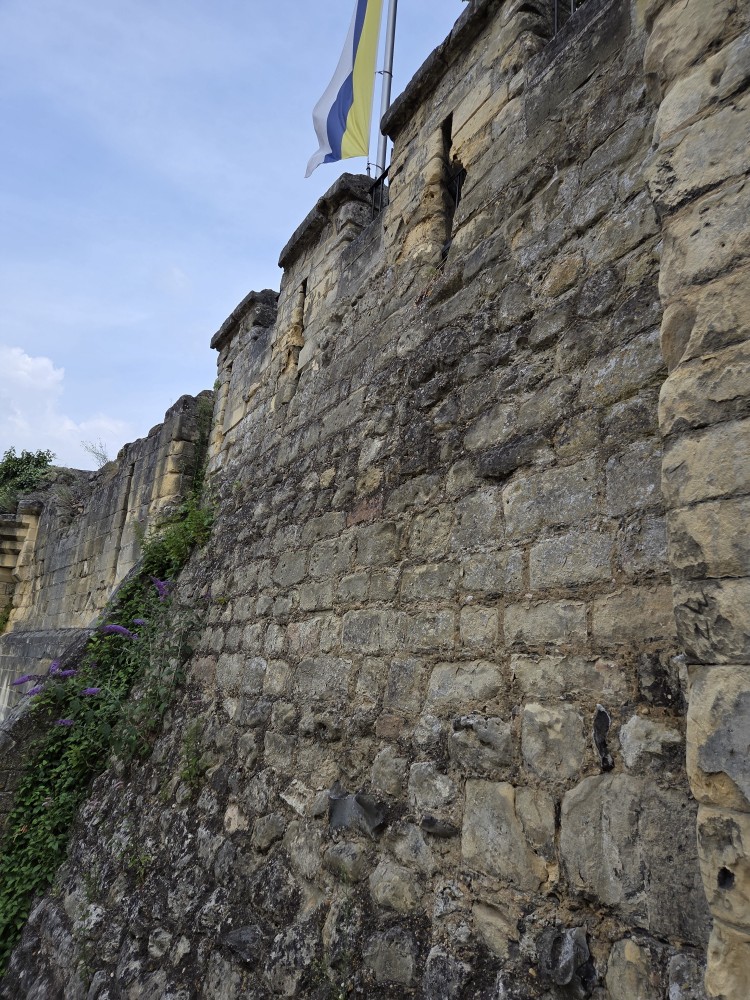
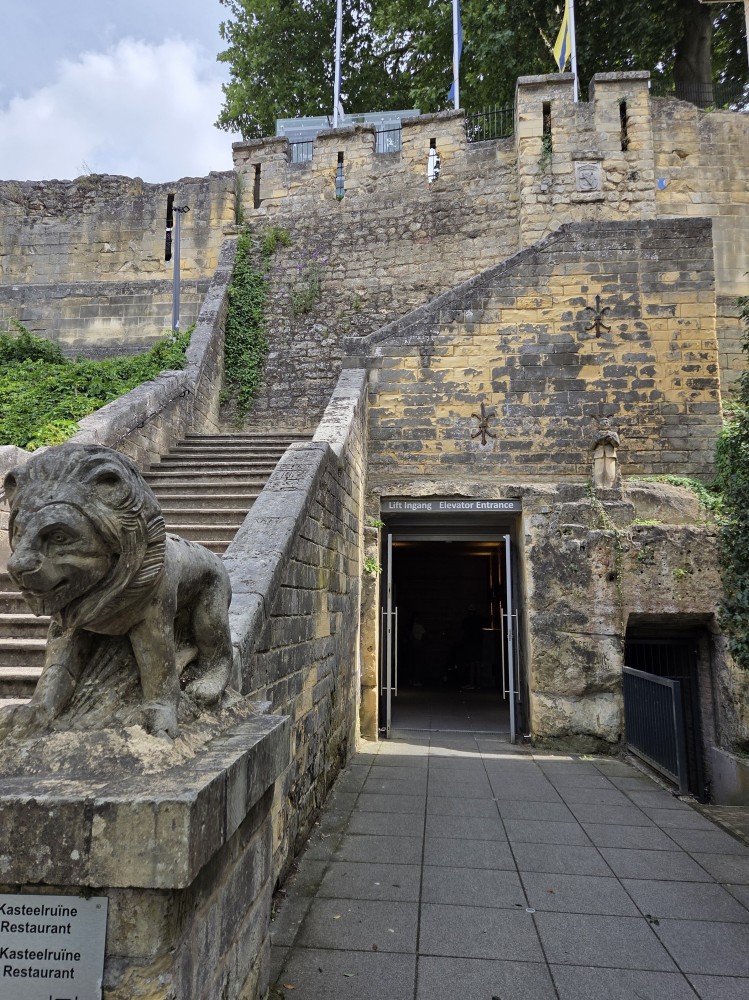
You can always take the medieval elevator.
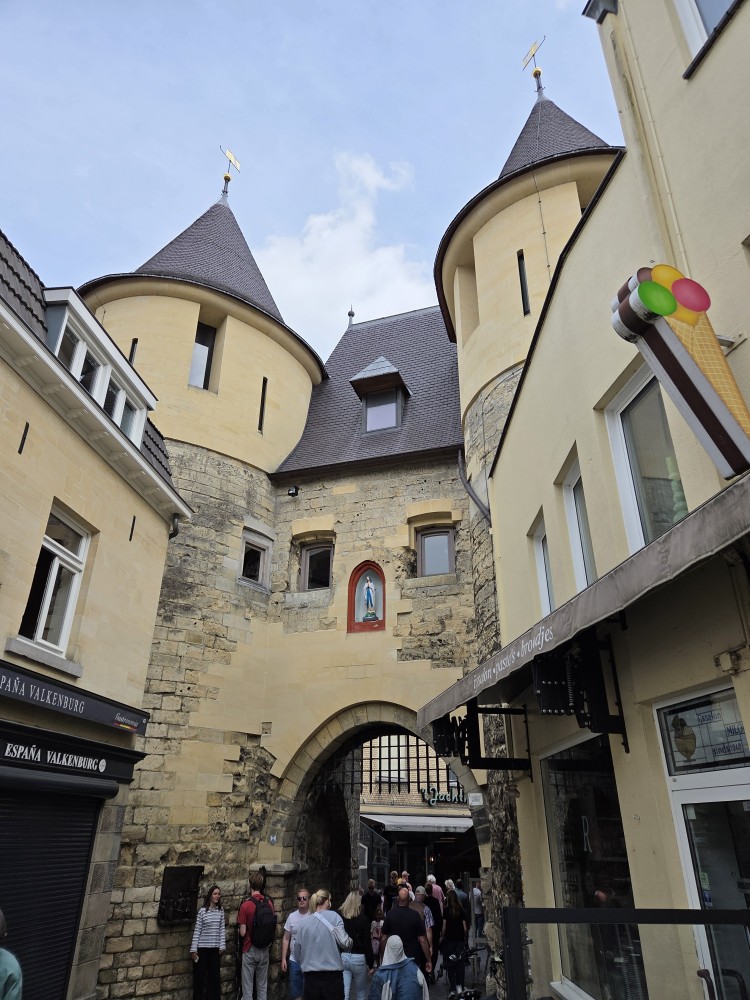
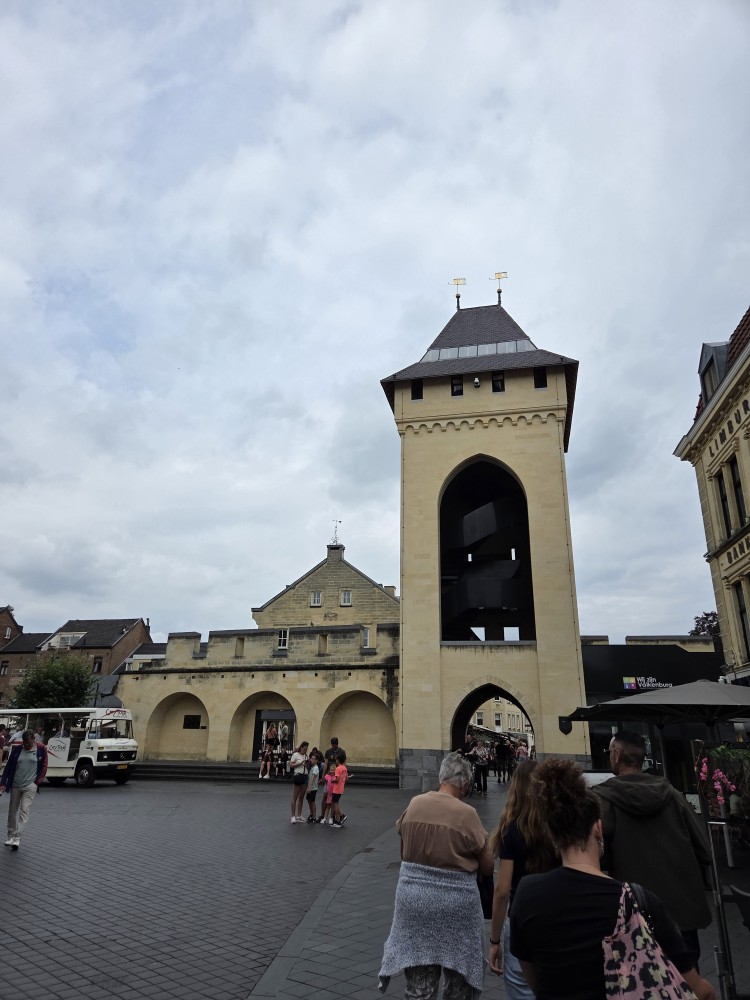
The city gate from the outside. A great deal of it has been replaced/rebuilt, which makes me wonder how bad it got to before that happened (and if possibly some of the damage was done in the early ’40s).
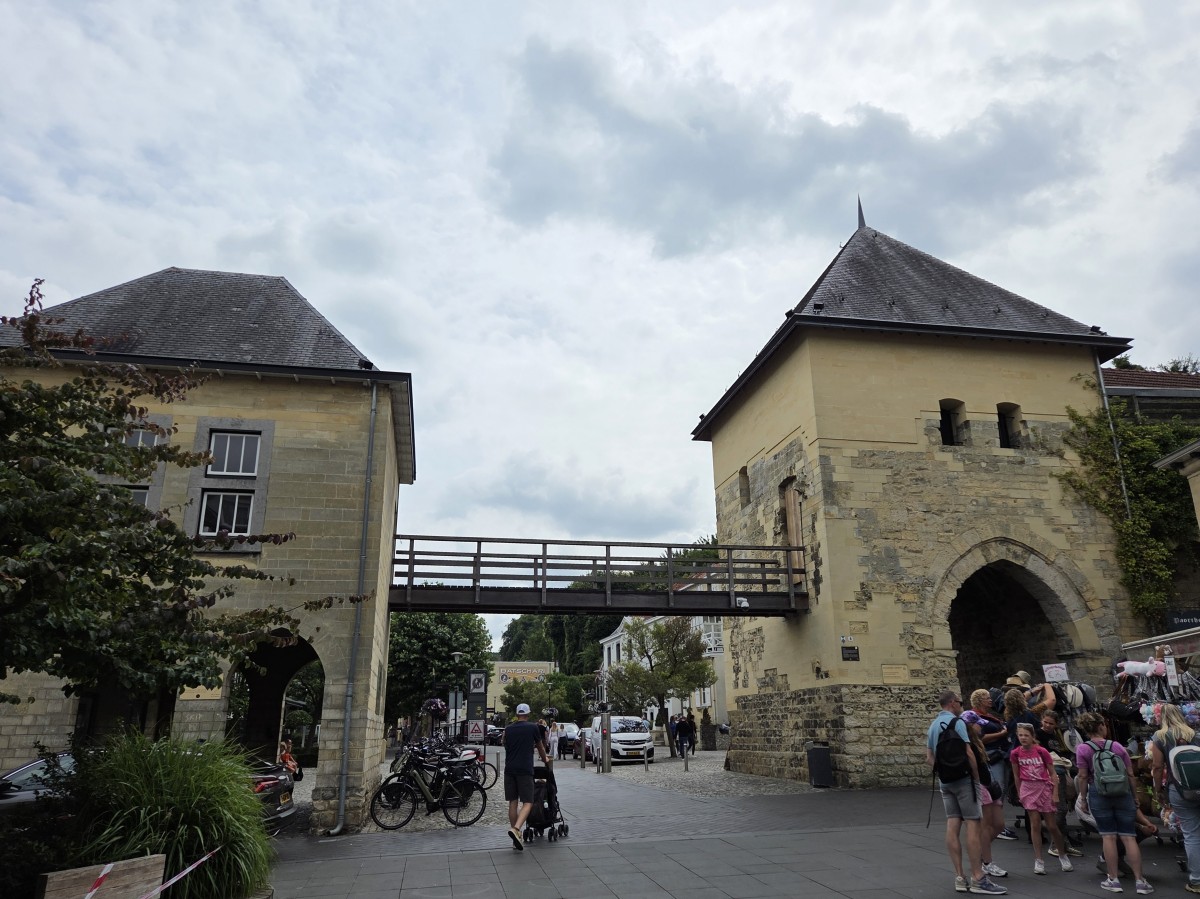
Another city gate right below the castle on the other side.
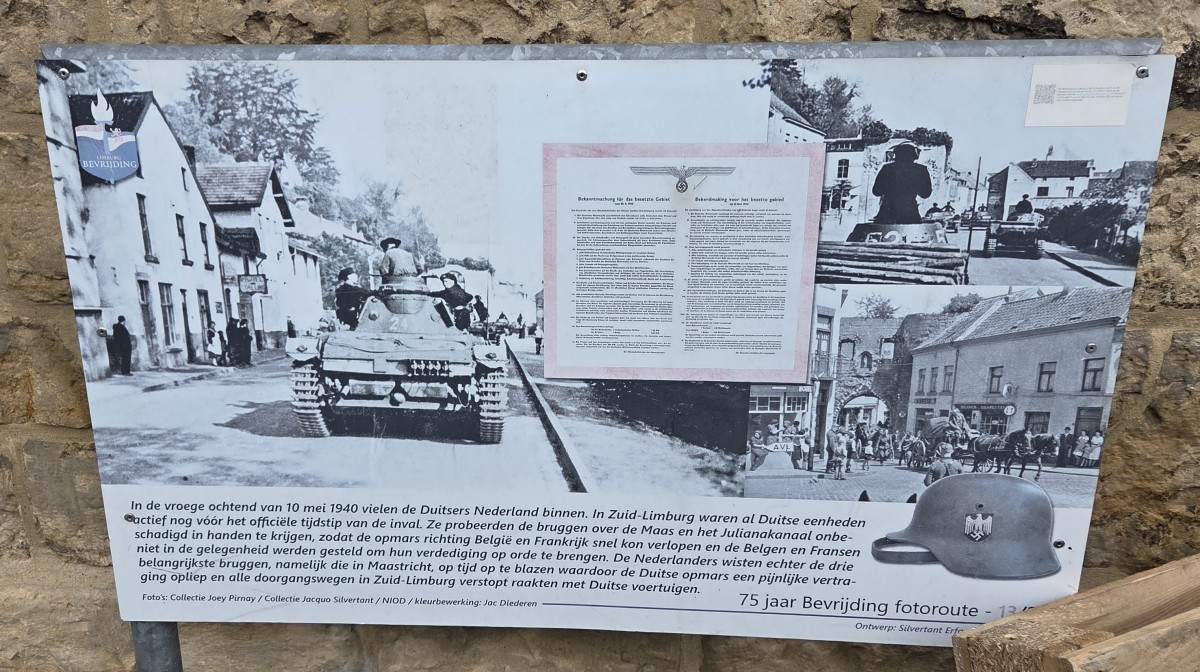
“In the early morning of May 10, 1940, the Germans invaded the Netherlands. German units were already active in South Limburg even before the official time of the invasion. They attempted to capture the bridges over the Meuse River and the Juliana Canal undamaged, so that the advance towards Belgium and France could proceed quickly and the Belgians and French would not have the opportunity to organize their defenses. However, the Dutch managed to blow up the three most important bridges, namely the one in Maastricht, in time, painfully delaying the German advance and clogging all the main roads in South Limburg with German vehicles.”
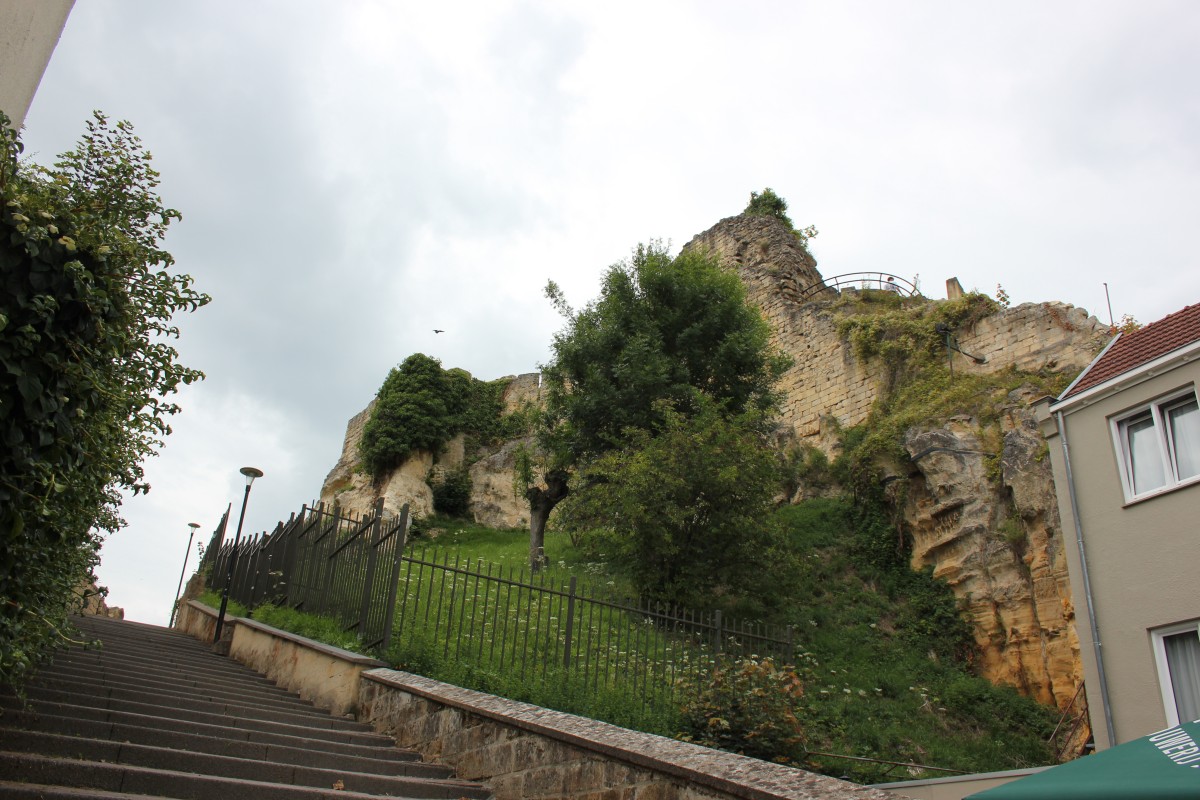
These are the stairs that we glimpsed earlier through the arrow slit on the wall. Photo by MH
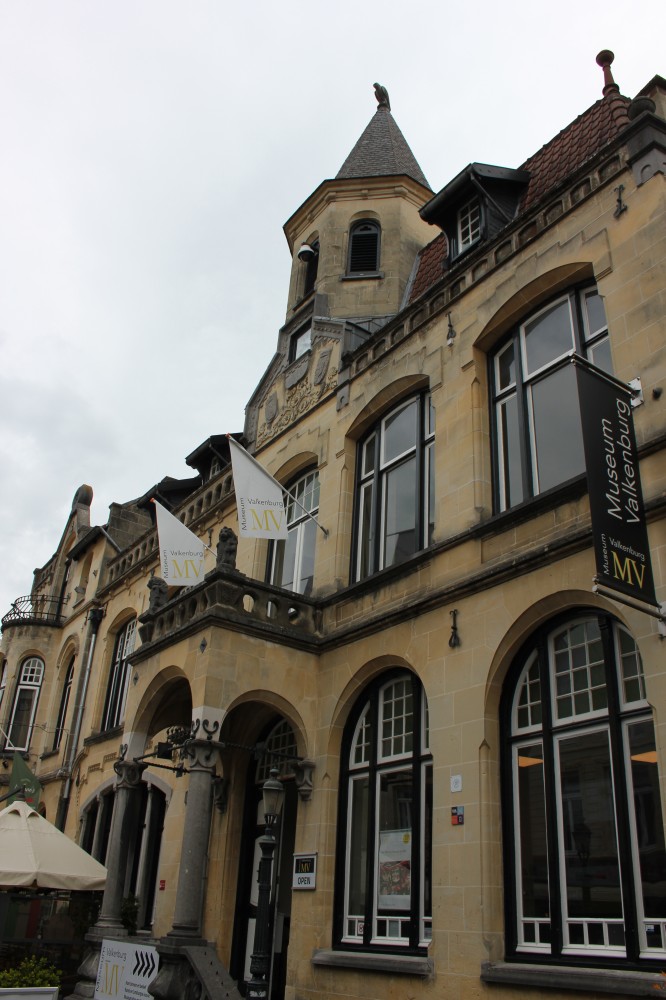
It seems like most buildings here are made of the local stone. And why not? Photo by MH
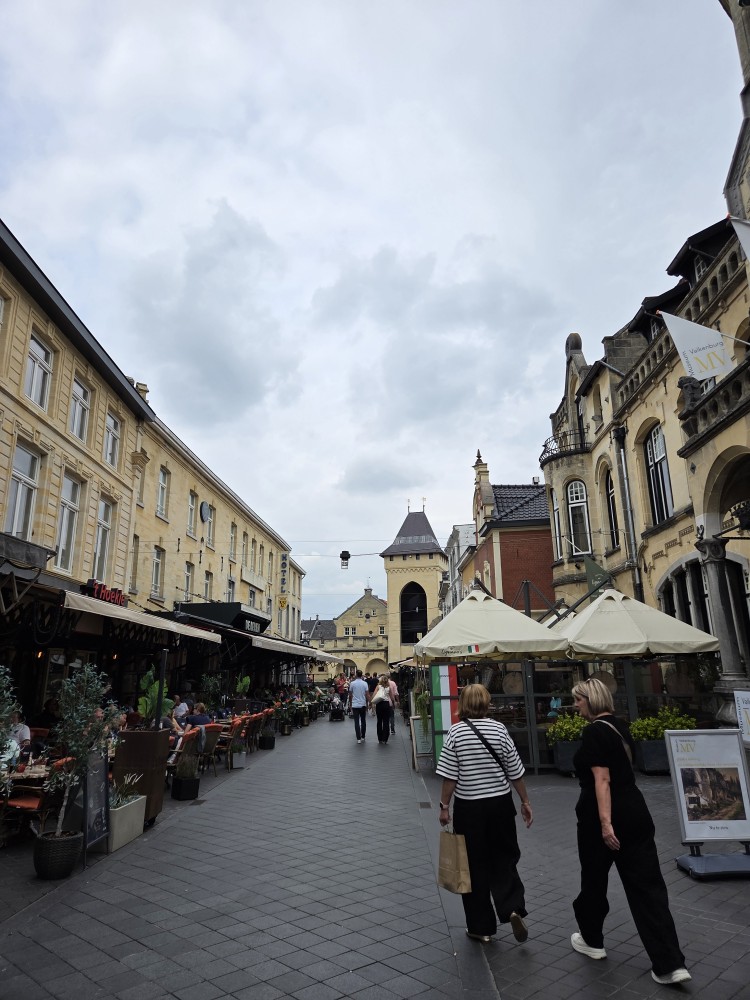
The restaurant street, with another (totally rebuilt from the ground up) city gate.
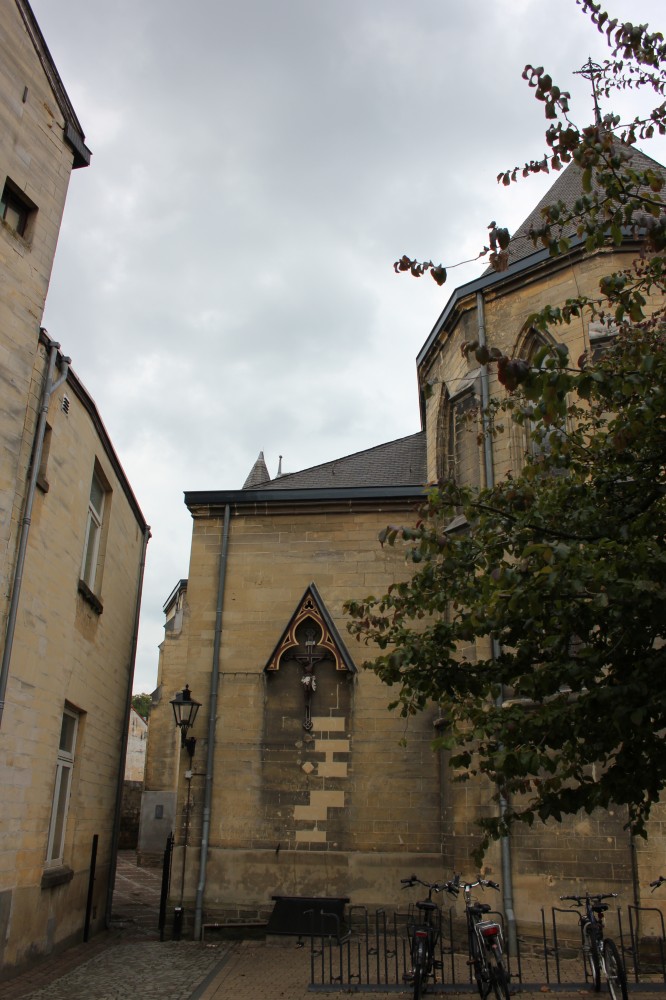
Some pictures of the church. Photo by MH
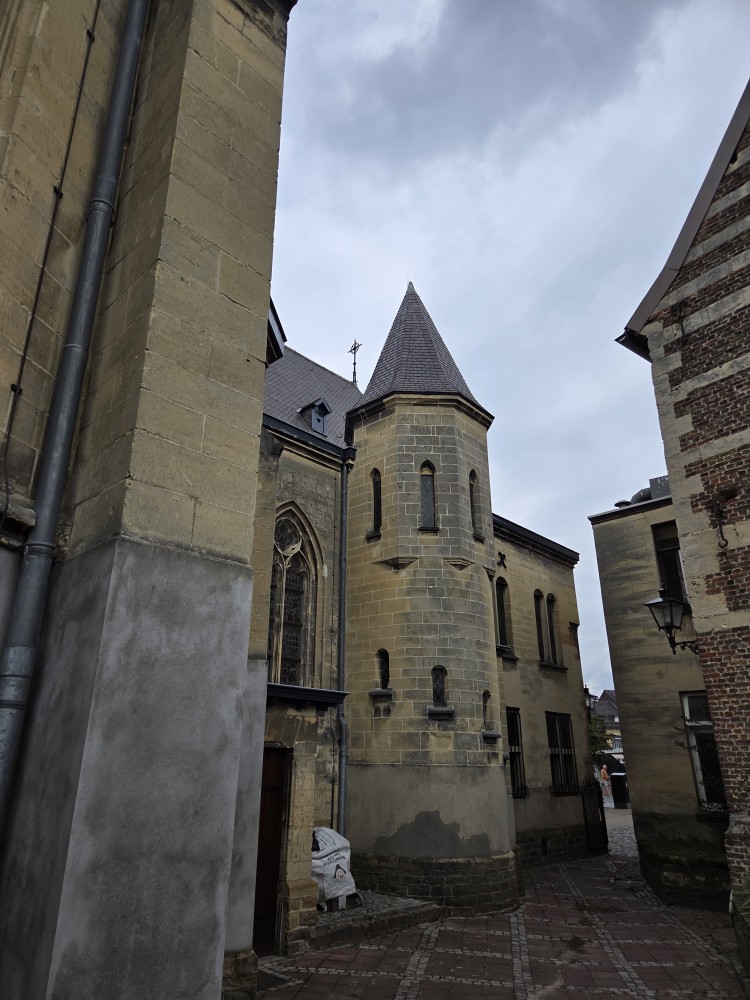
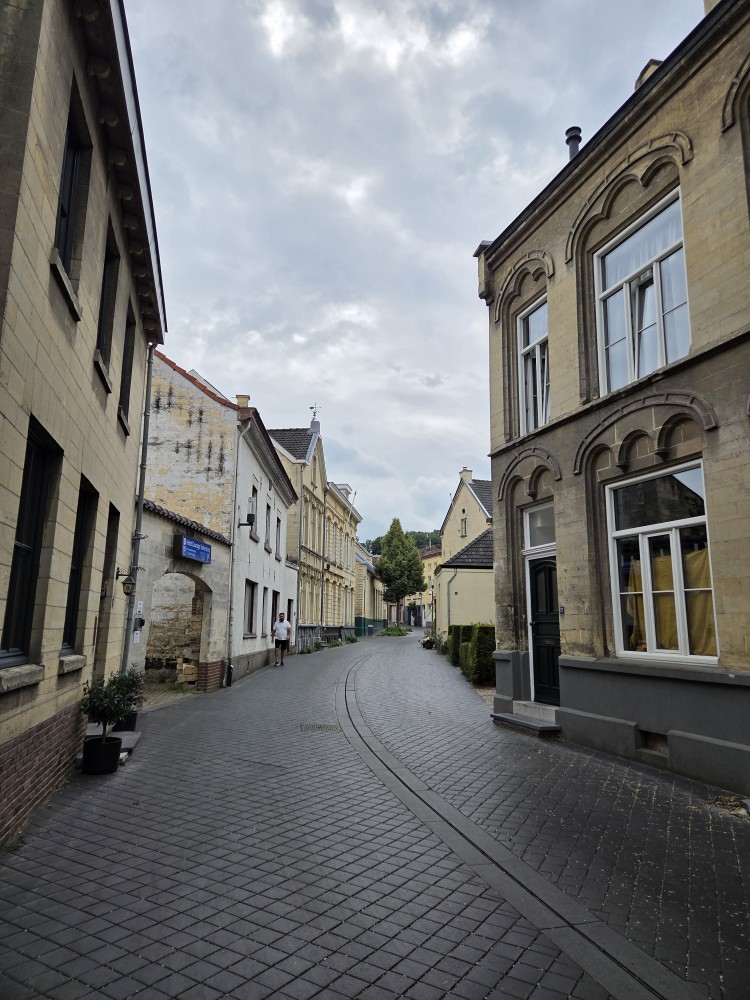
The not-tourist street is *dead silent* in comparison. Very calm.
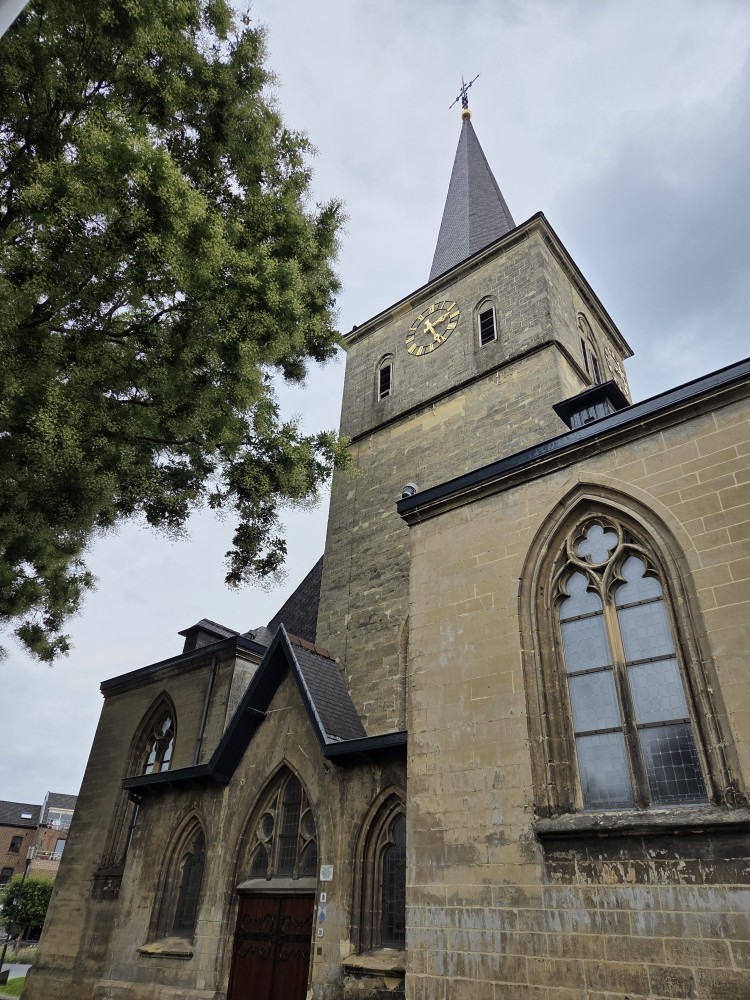
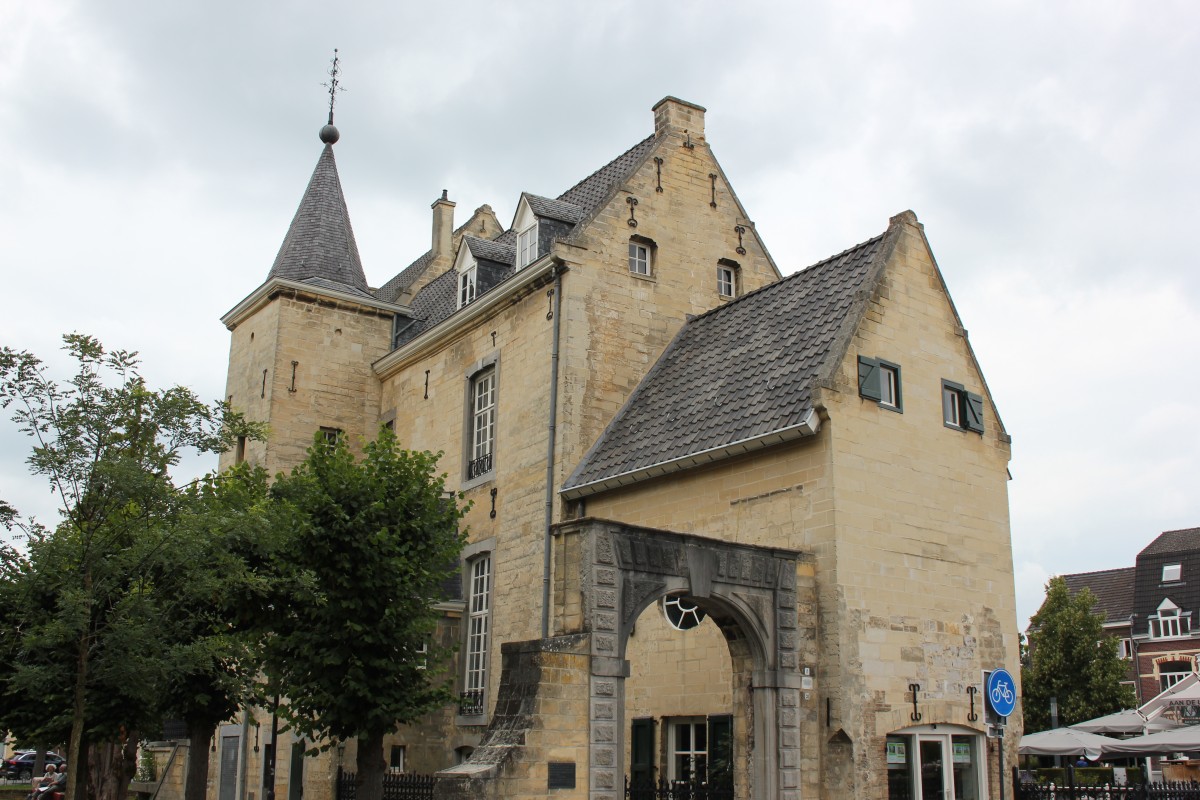
Another nice building. Photo by MH
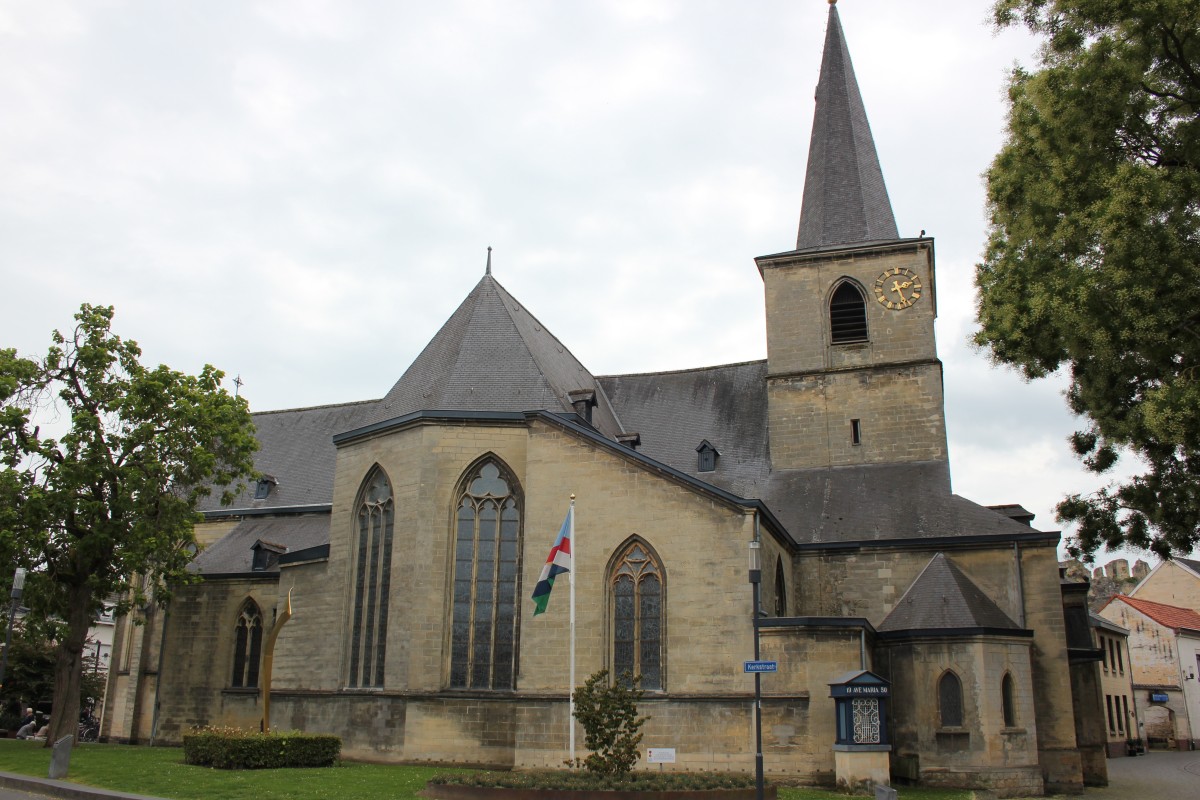
Photo by MH
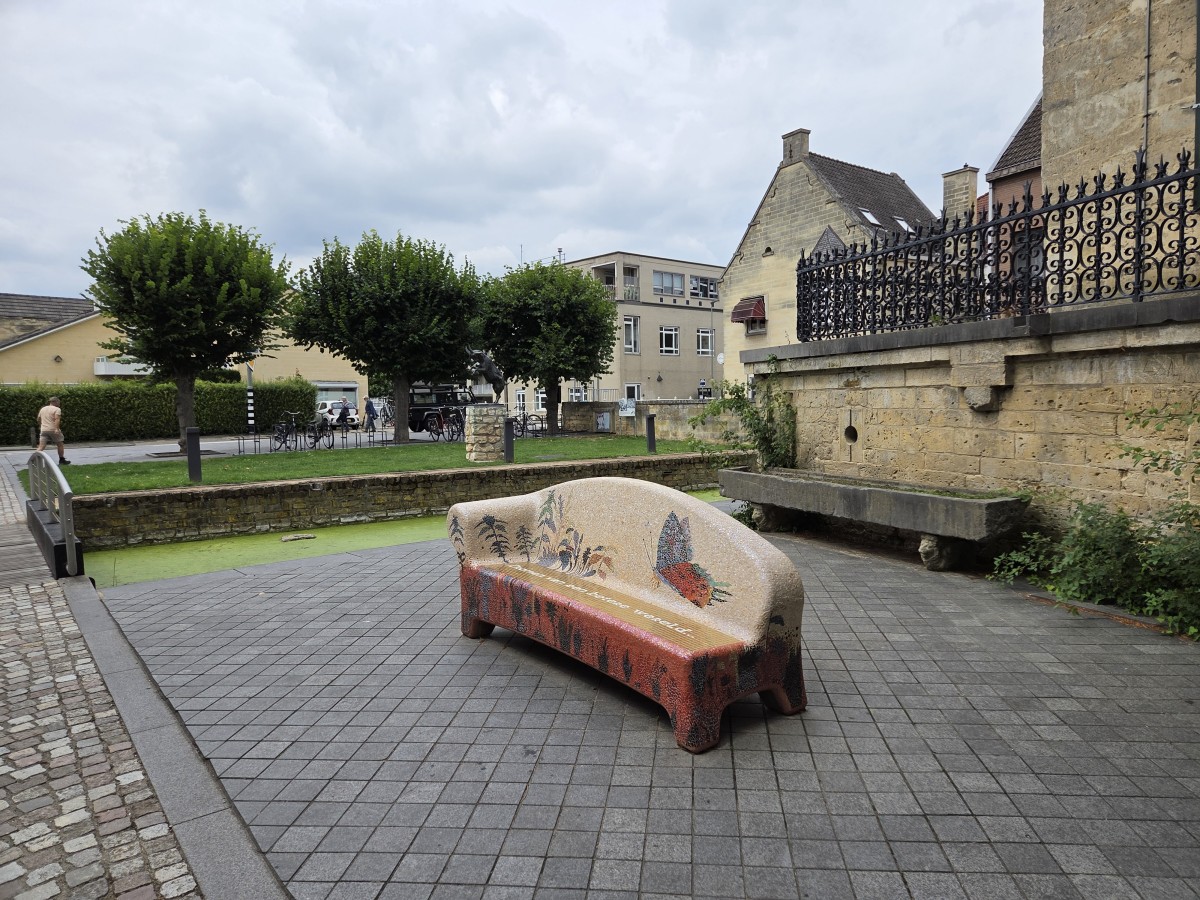
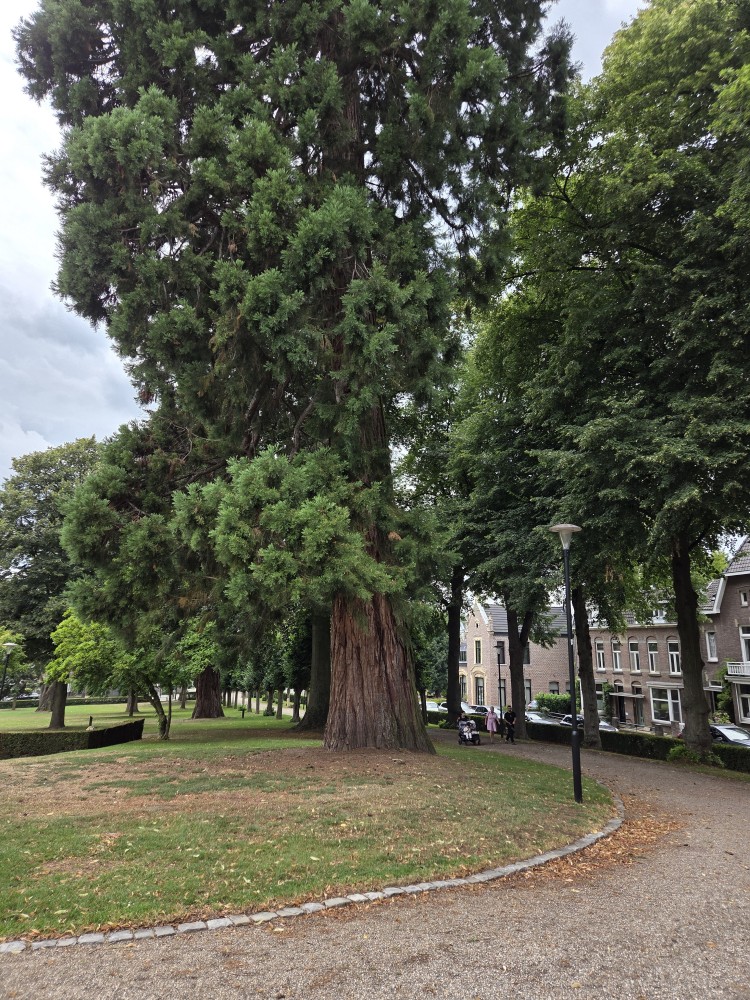
We could have spent a little more time in Maastricht, maybe going inside St. Servatius instead of just walking around outside, but I was a bit tired (and blistered) so we just got some snacks at the train station and then went to go on our train. I was like “what kind of trashy candy do you have that you haven’t seen in North America?” so I got a Mergpijp, which is kind of like a cylinder-shaped Wagon Wheel; it’s got that artificial taste to it. And I also got a matcha cookie, which was quite bright green, and it was quite fresh – soft and almost gooey on the inside, tiny bit crunchy on the outside. Felt like it had come out of an oven less than an hour ago.
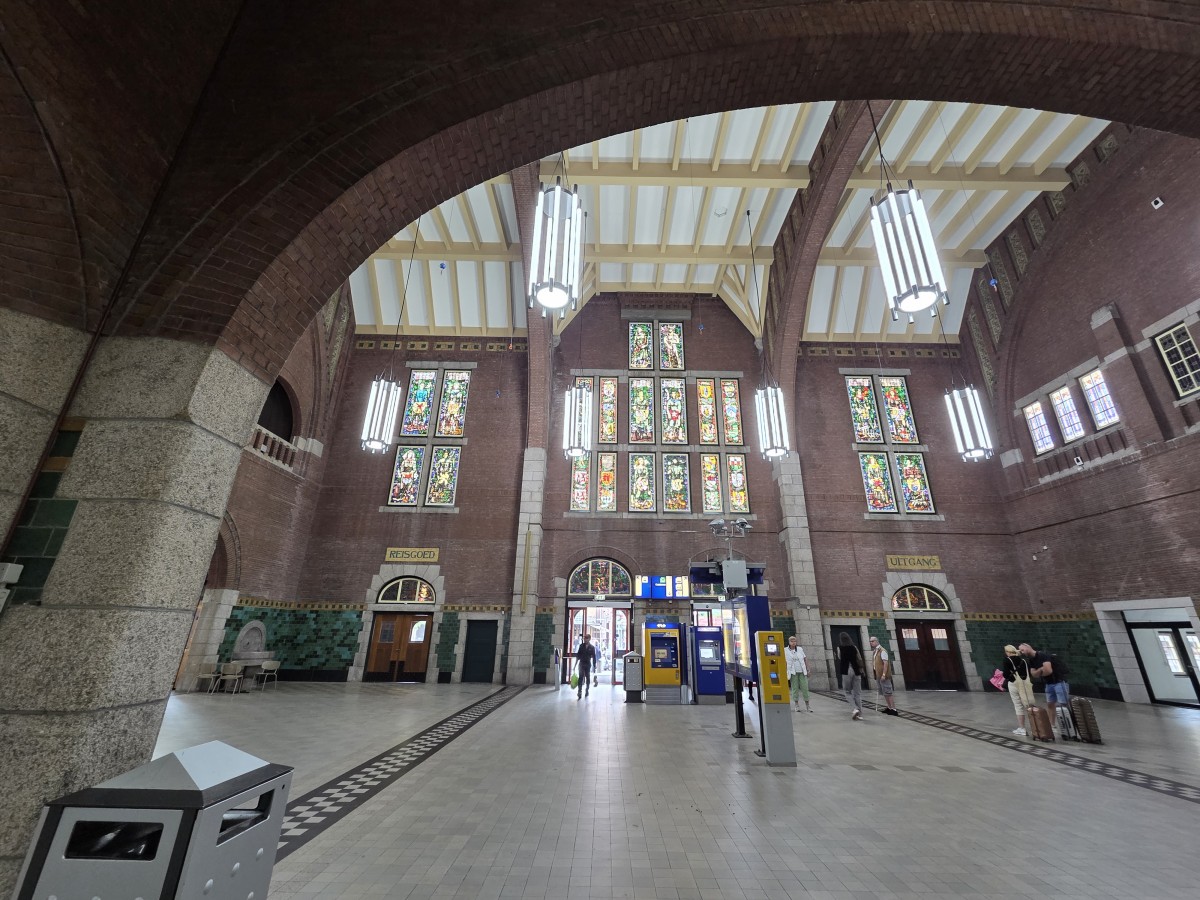
One more look at the interior of the Maastricht train station.
The next day was a rest day which I wrote nothing about. XD
Next – The Dunes