Previous – Maastricht
Fully a third of all Tharash’s trip pictures were taken on this day, I think he might like this place. I also took a lot of pictures, so… this will probably have the most pictures of any post on this trip.
This day we went to the hostel’s dining room for breakfast; it’s a breakfast buffet that’s only an extra 10 euros, for which you can make as many broodjes as you like, or get boiled eggs, or yogurt, or cereal. Probably some other stuff too, I didn’t make a list. We’d also gotten the lunch package, where they give you a bag with some pre-prepared stuff and then you can make more broodjes from the breakfast material to put in it. The paper lunch bags were a bit big, so we transferred the materials to our backpacks – and the bottled water to our own waterbottles.
Then we headed out. Over a pedestrian bridge, past the Maastricht Museum, and to a bus stop under some trees. The bus went past the European Union monument; did you know the European Union agreement in 1993 was signed in Maastricht? They seem quite proud of it. Also the stars on the monument spin under certain conditions which is pretty funny and neat. The bus ride out to our destination was about half an hour, and then we had to walk another 15-20 minutes to get to the start of the walking tour we were going on.
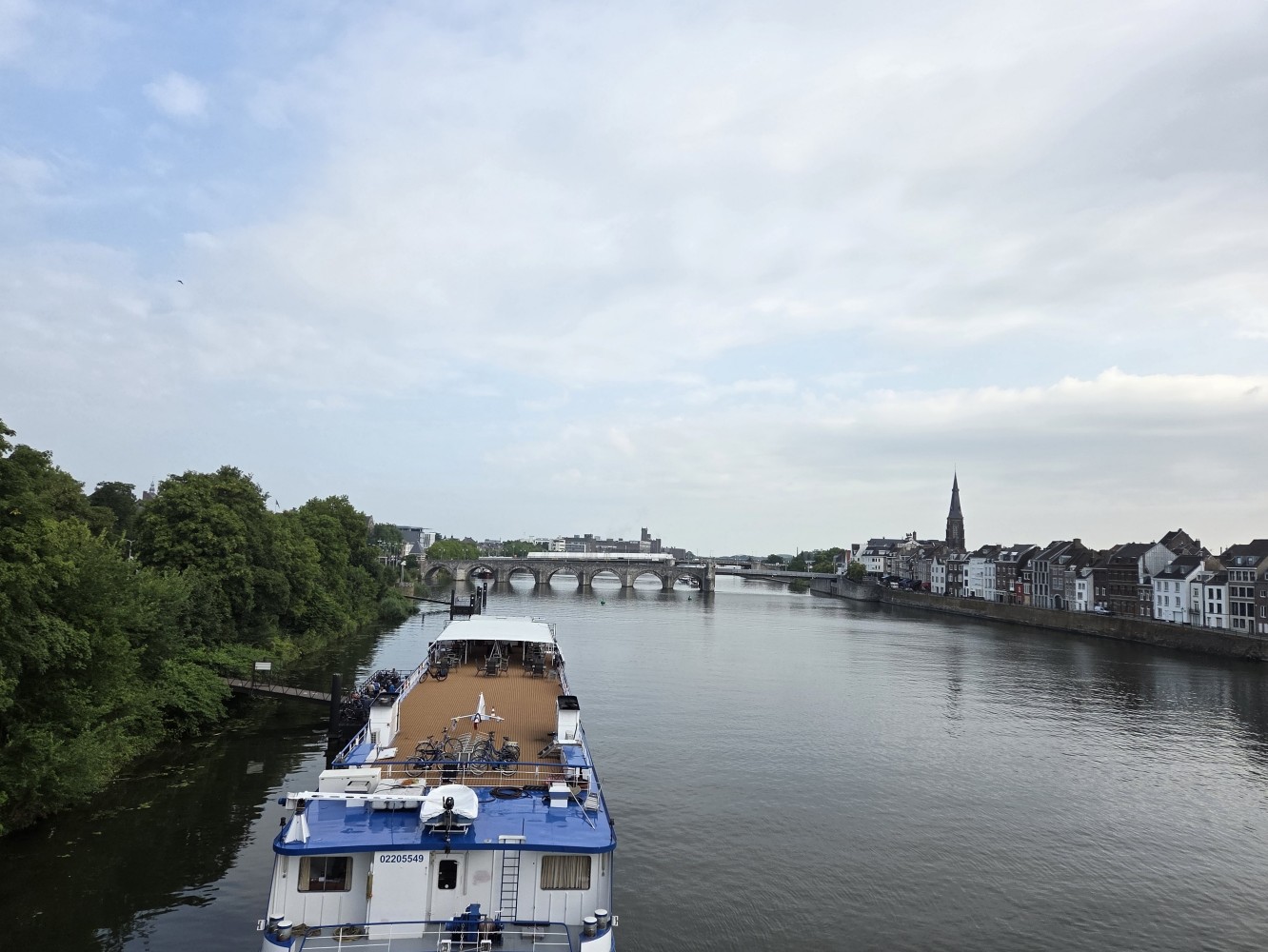
On the pedestrian bridge, looking back north to the bridge we were on yesterday
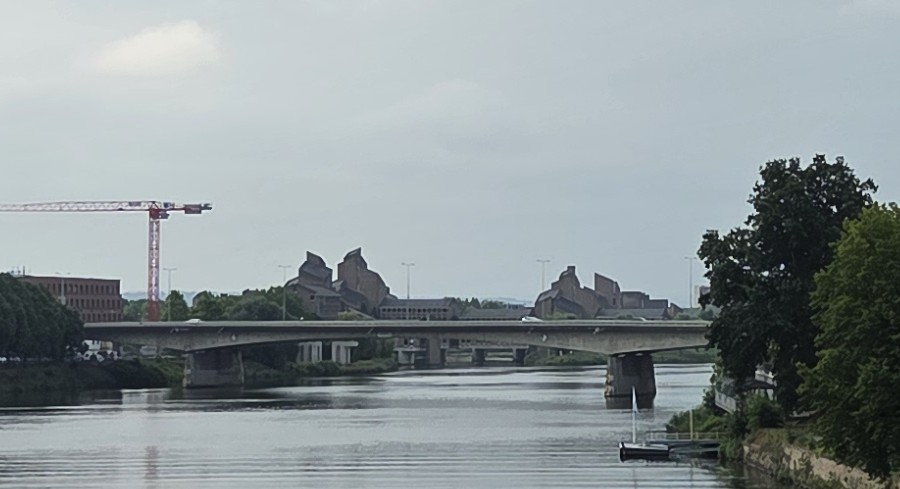
Just some interesting buildings behind the car bridge to the south
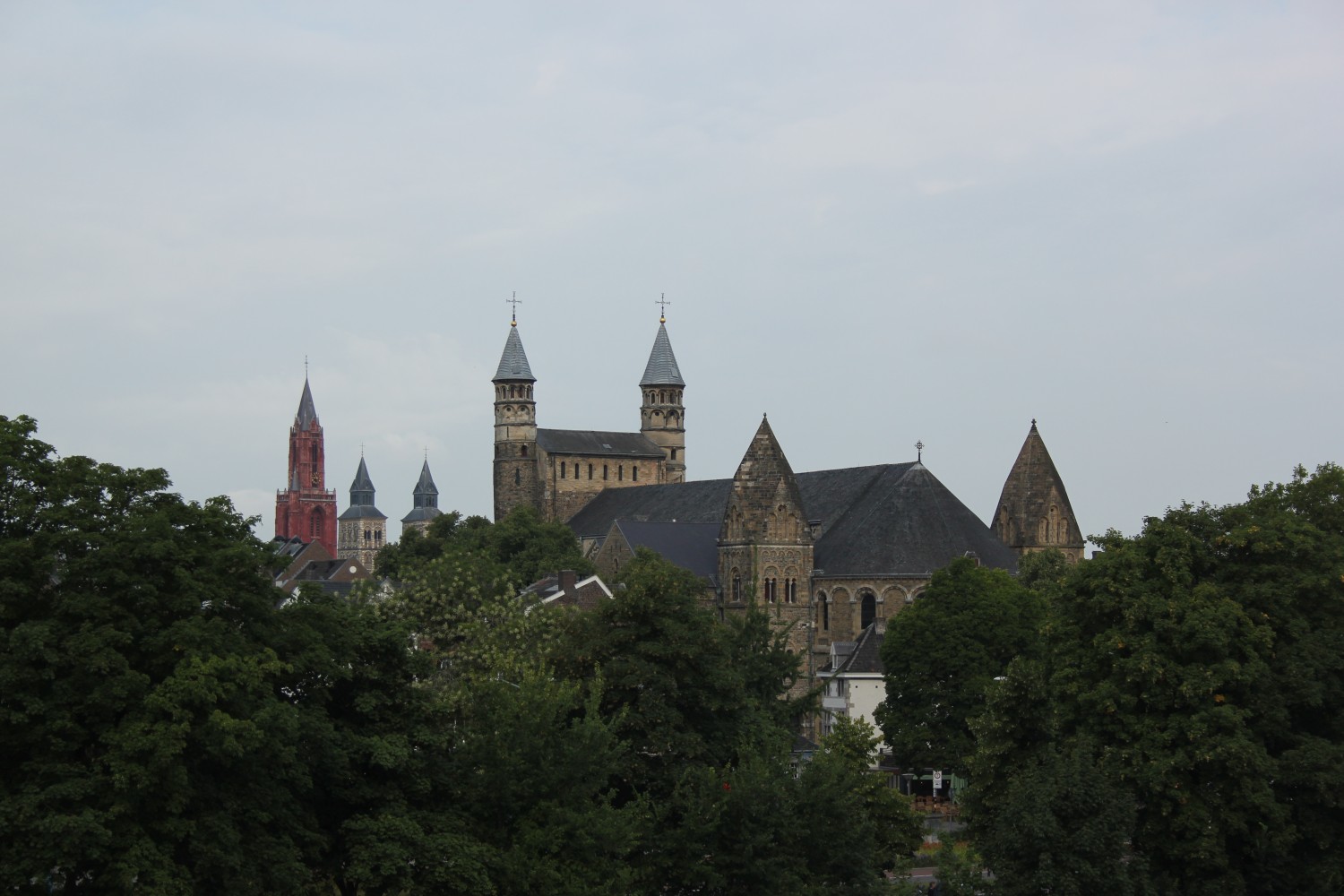
Photo by MH
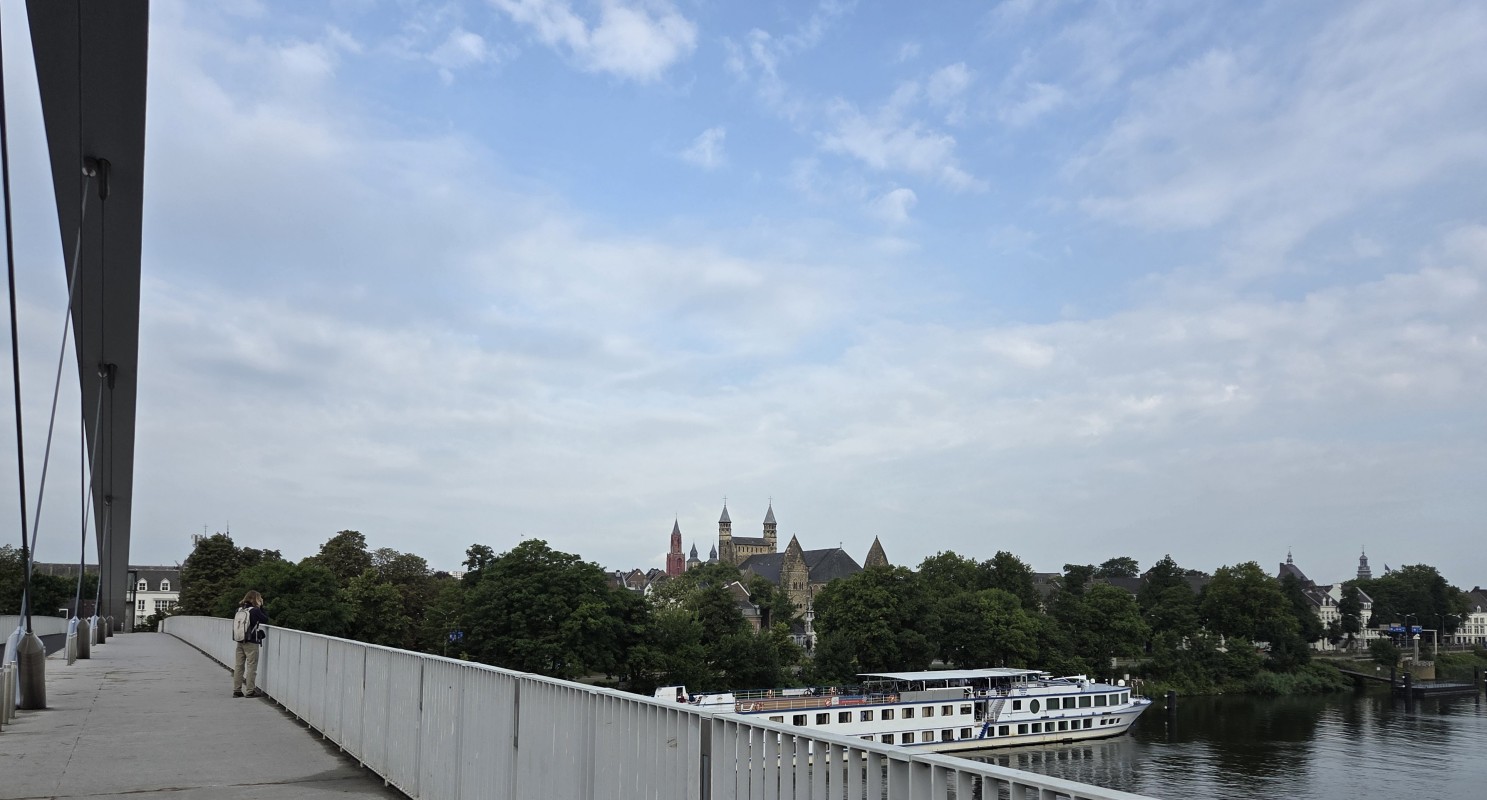
Me taking a picture of him taking the previous picture :3
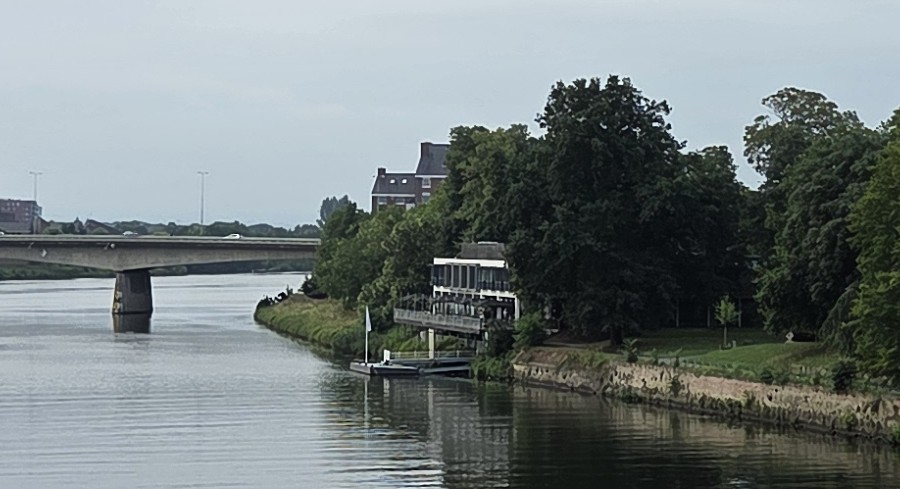
Our hostel
There were about a dozen people on the tour, including what looked like a whole family with grandparents and two young boys (one of them had long hair in a braid so he was very androgynous, but Tharash said the boy said that he was a boy). The tour was all in Dutch so I could only understand about one word in 20. Tharash gave me the condensed version when he could. The boys were given replica stone age flint spears to carry; pitch was used in their creation and the guide gave us a sample of pitch to smell. I was expecting it to smell like pine resin, but it didn’t at all. It had a very faint burnt scent, but other than that it didn’t actually smell like anything.
The guide did a quick demo of flint knapping, and the tools the local people would have used to do it with, including antlers. He also explained the geologic reasons why this area was rich in flint and chalk limestone. If I understood correctly, during the time periods that the Netherlands was underwater, immense amounts of chalk got laid down. Creatures burrowed in it, creating depressions that then filled with flint… somehow.
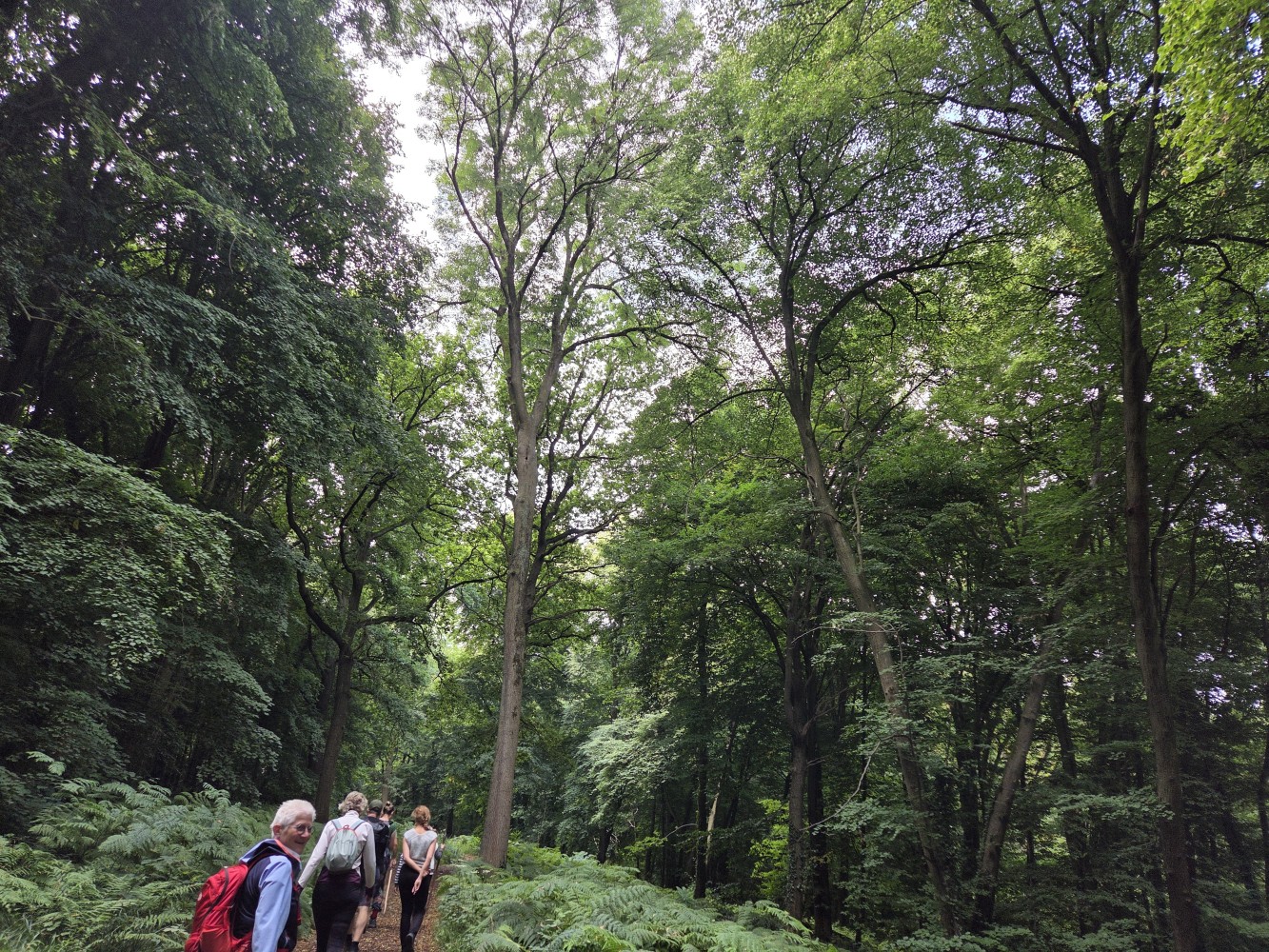
Then we headed out into the hills up farm trails into the forest on the elevation. On the way we saw a badger den in the bank of the path. The guide explained that the way you can tell it’s badgers (and not foxes) is because the entrance is very clean, unlike foxes, who make all kinds of mess with eating and pooping around their dens. We saw a lot of hazel trees. The long, straight stems were used for arrows, and also the thicker ones for bows. While climbing the hill, the androgynous boy was stung by a bee… but his family had brought an epipen so in a few minutes he seemed perfectly fine.
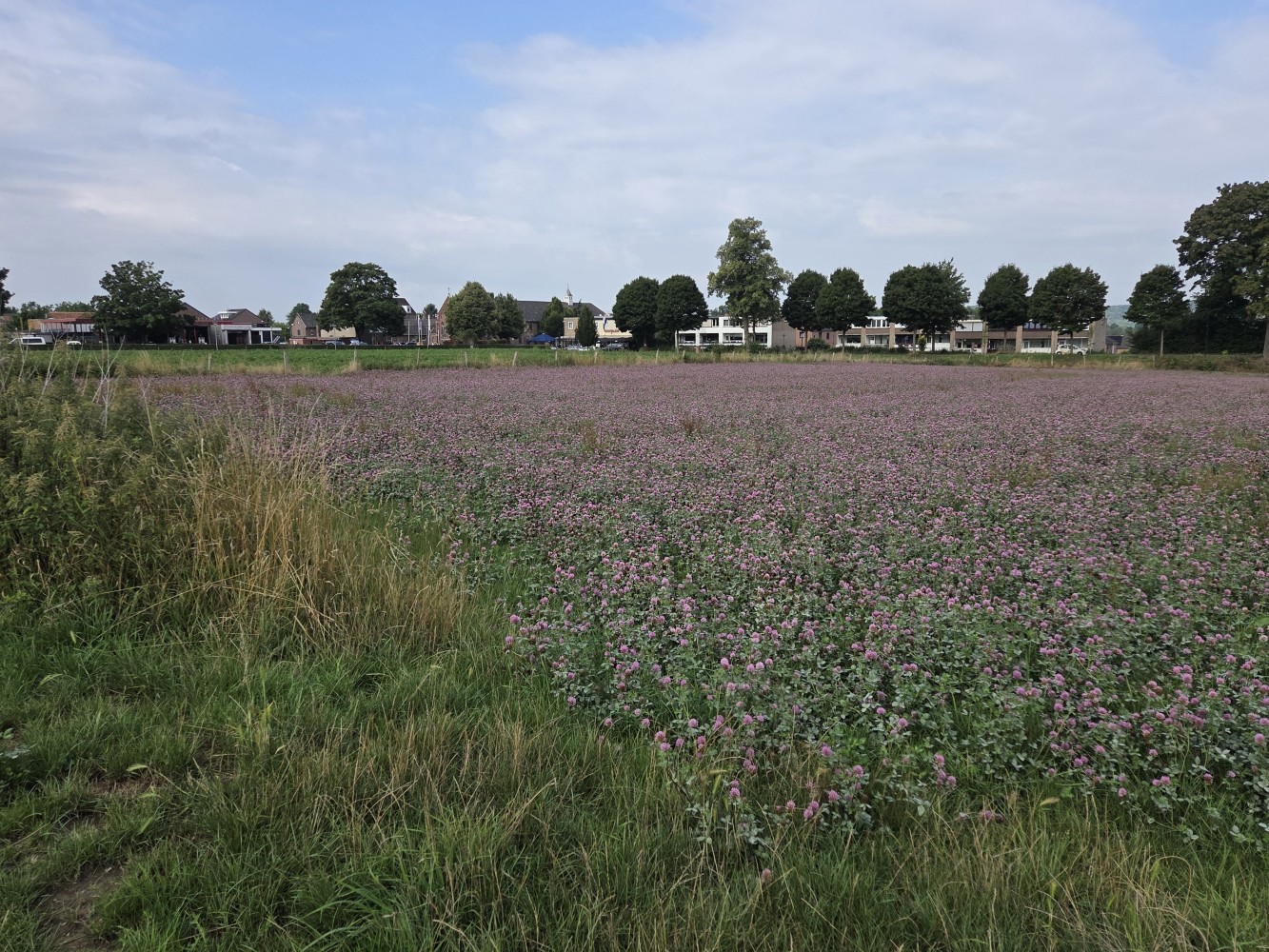
A big field of blooming (clover?) on the way to the tour start
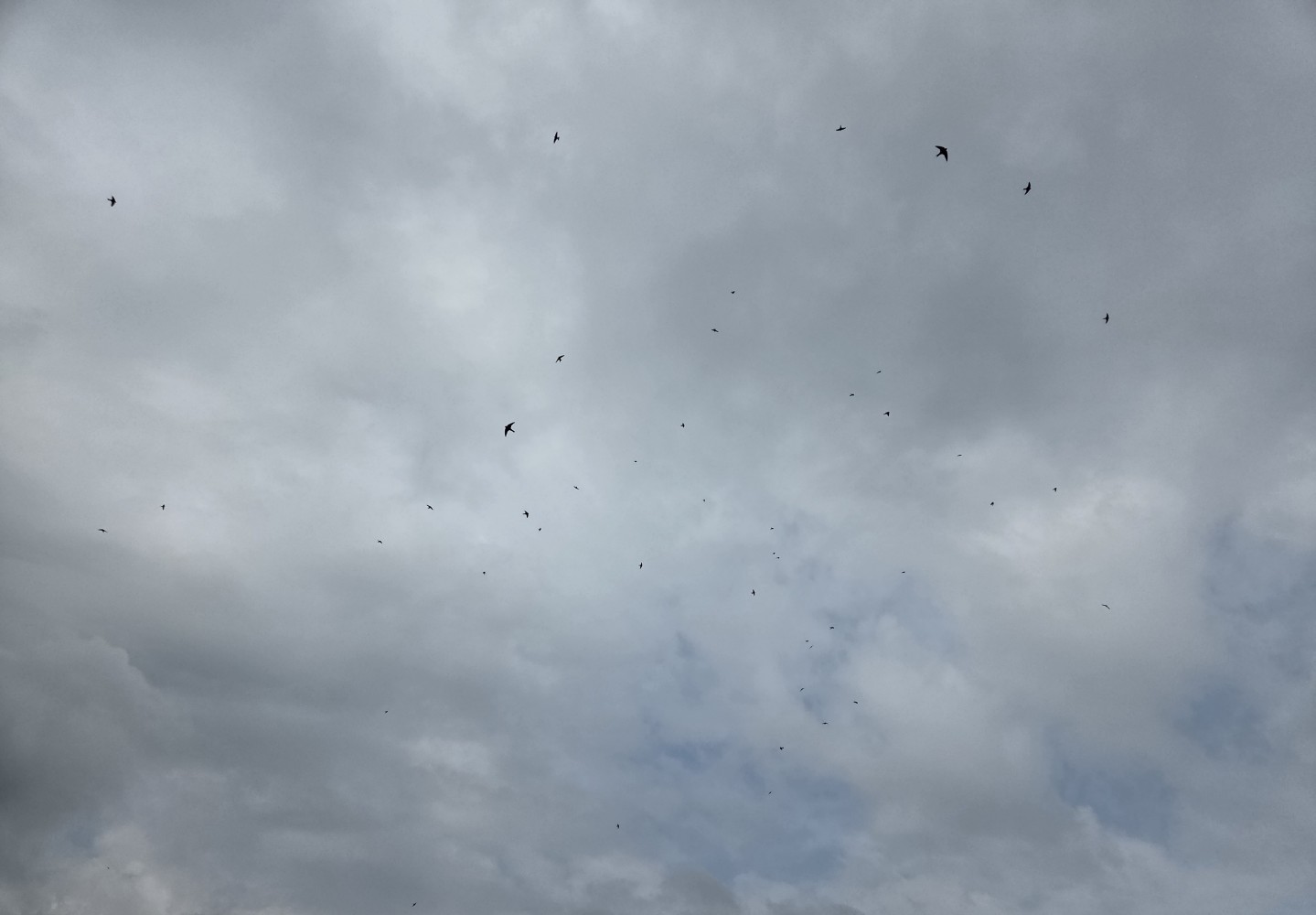
Birds!
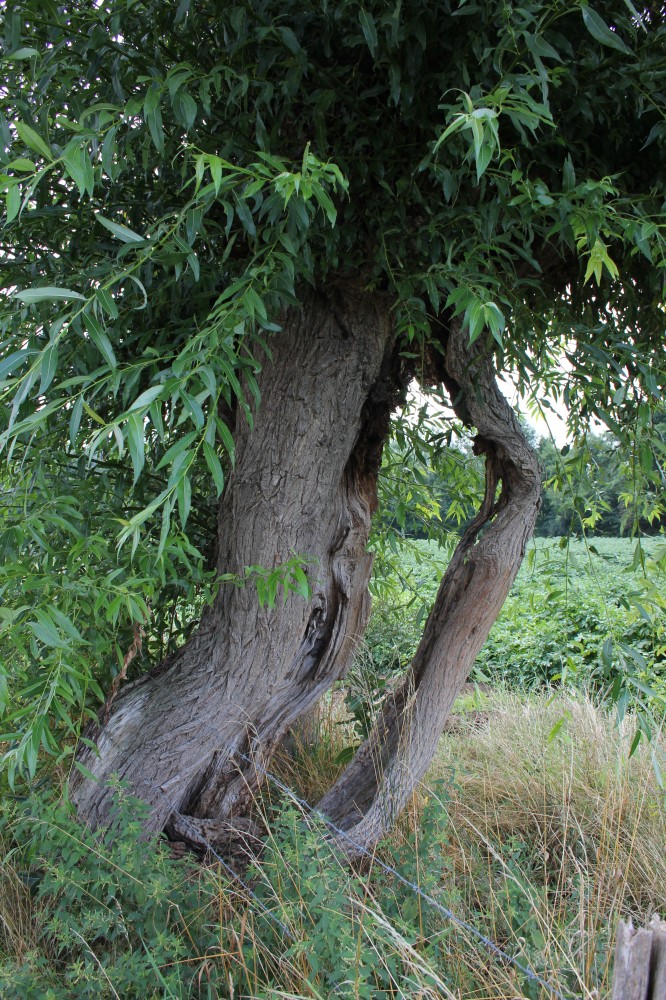
Photo by MH
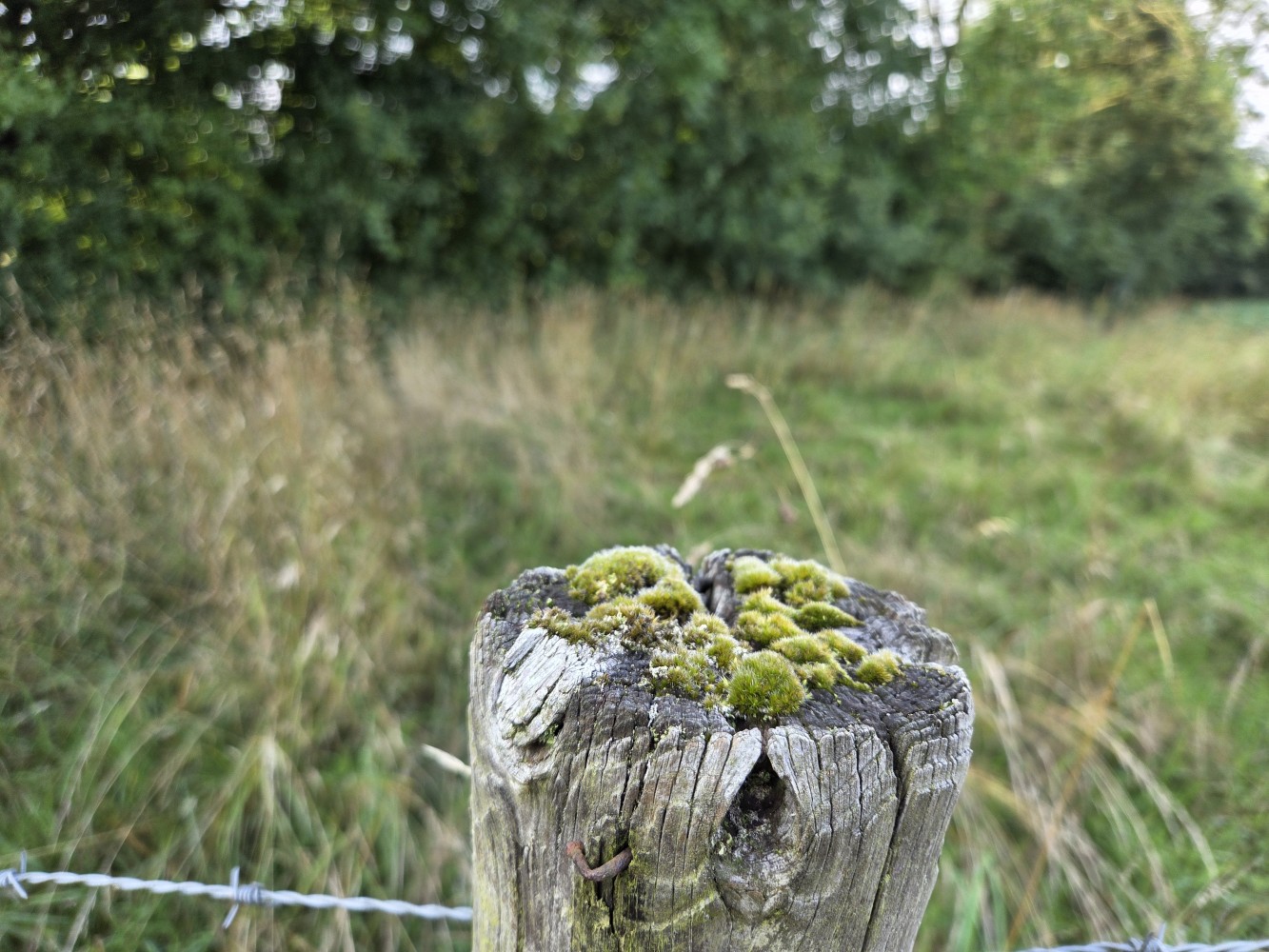
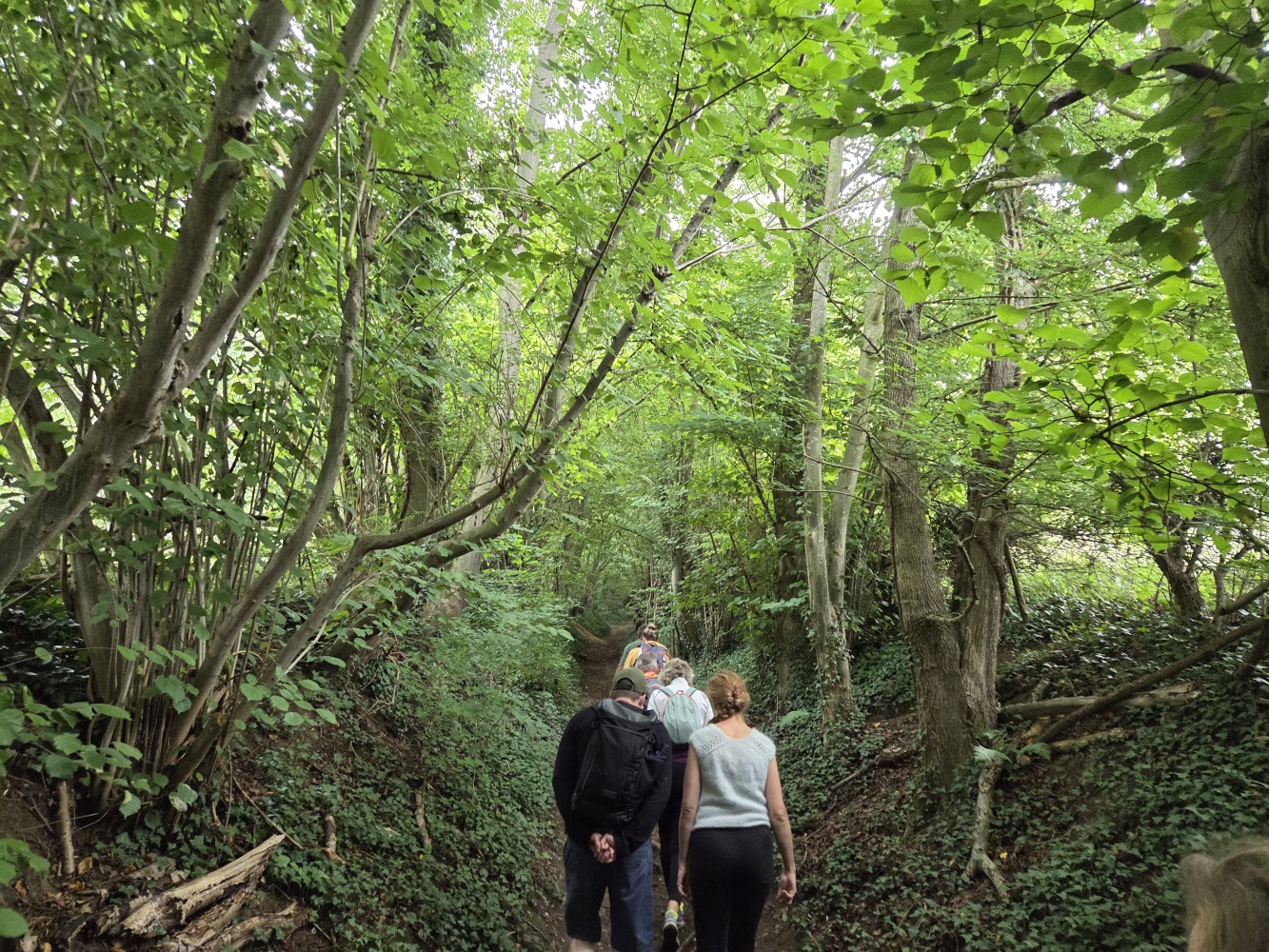
Hazel on the left
The first cave-related thing we saw was a sinkhole; a fence has been built around it with a little look-out so you can look into it and take pictures. Then we took a little bit of a detour to go down the hill to see the entrance to the cave that theoretically led to the sinkhole. People haven’t explored it, as it’s too small in some places to go through (and also not safe) but they have lit fires inside and saw smoke coming out of the sinkhole, so they’re connected. It was actually pretty steep to go down to the lower cave. Had to climb over a couple fallen trees. Made me feel at home.
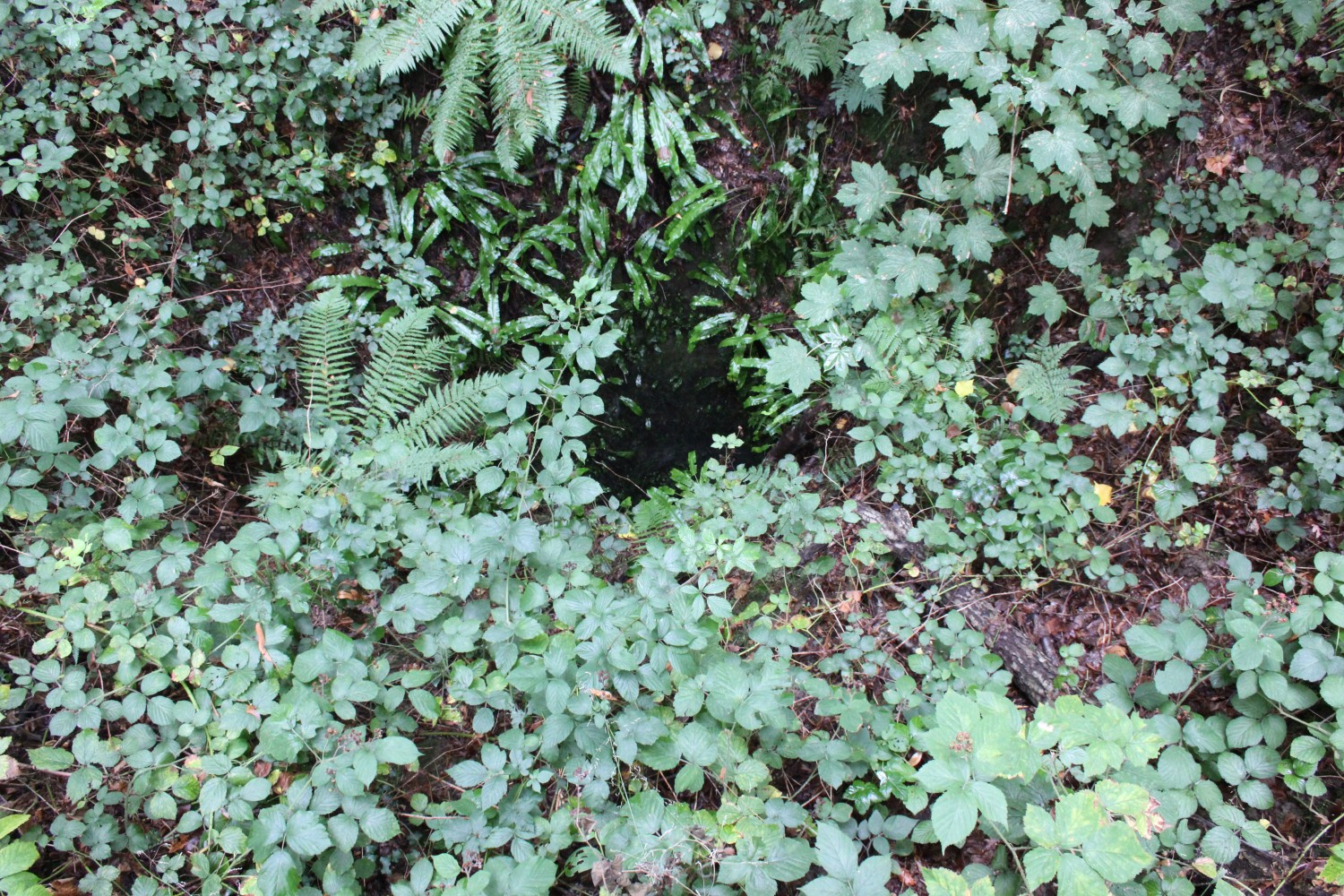
Photo by MH
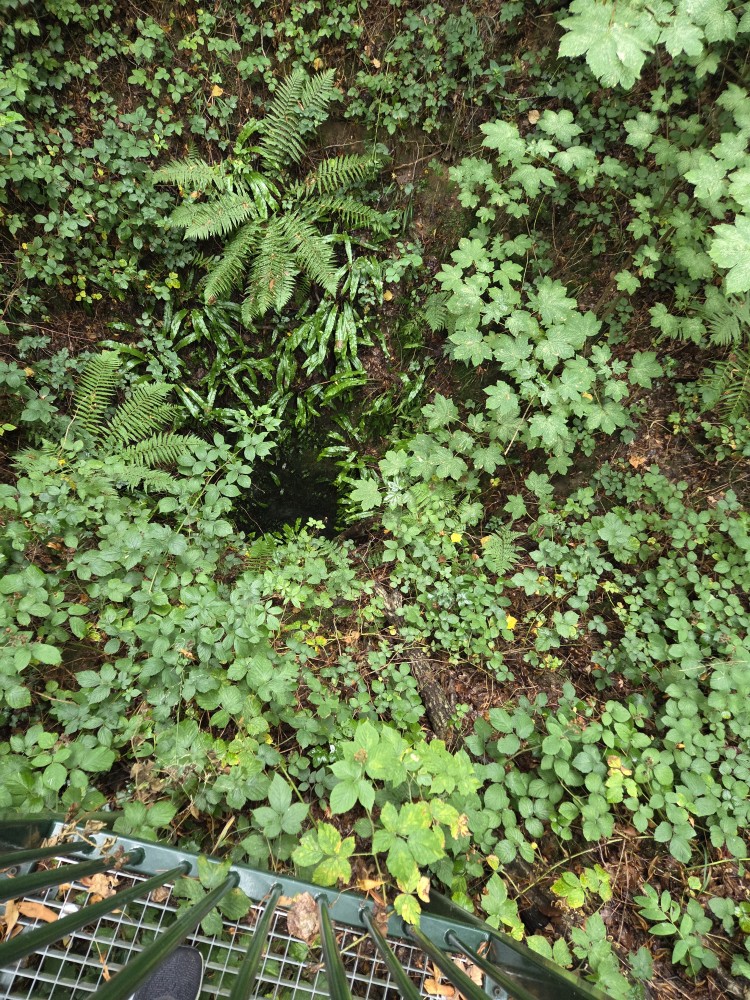
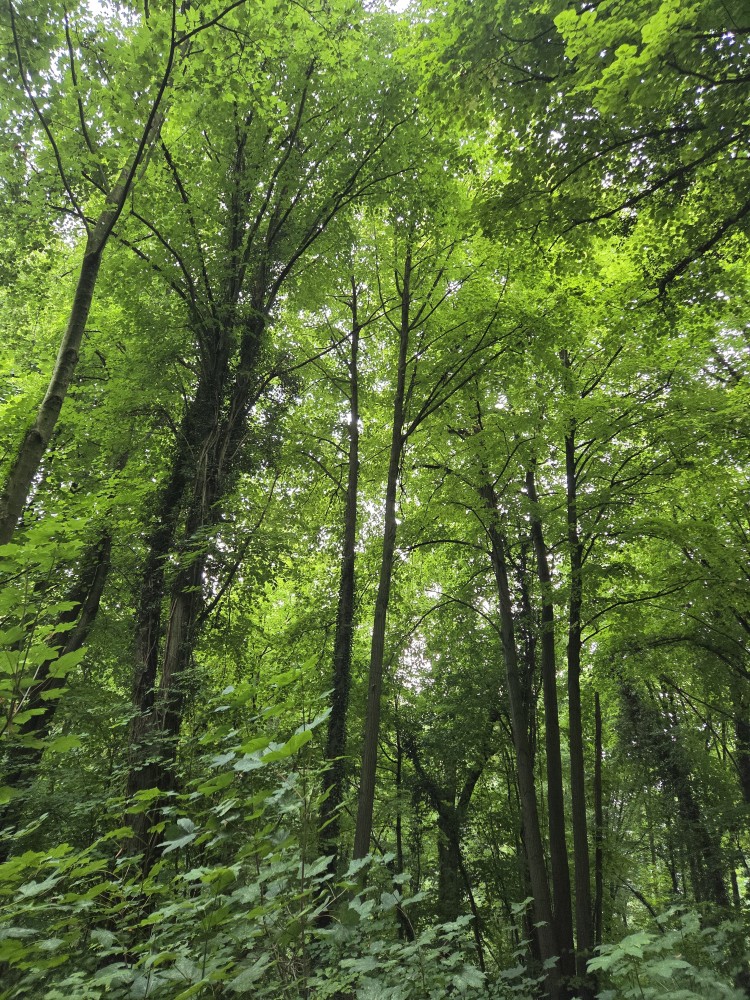
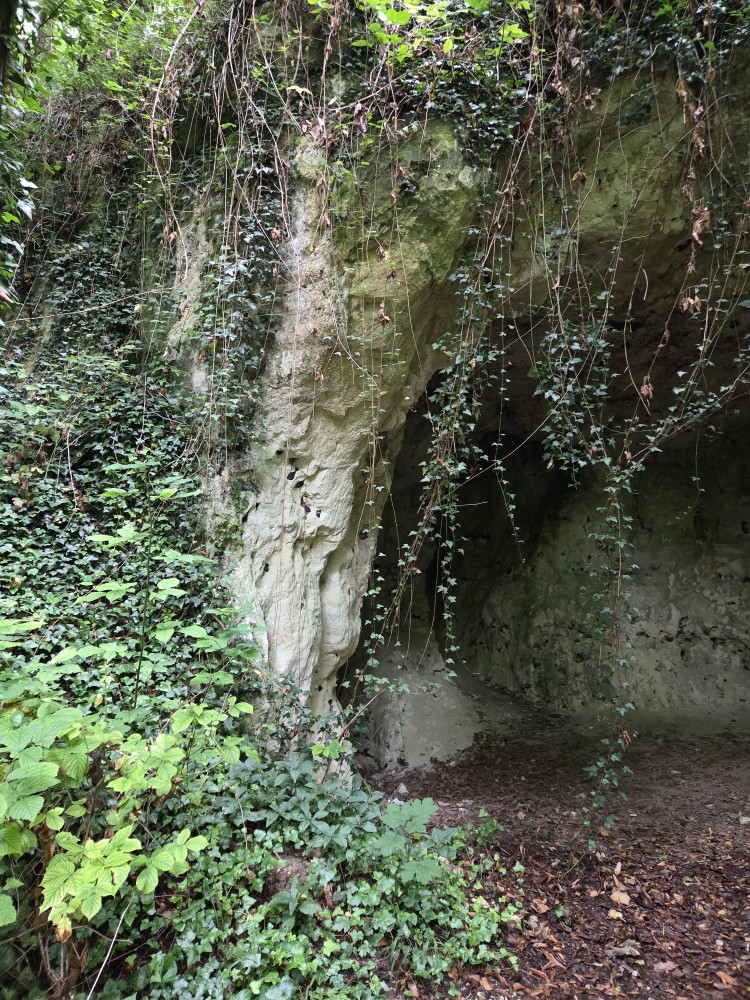
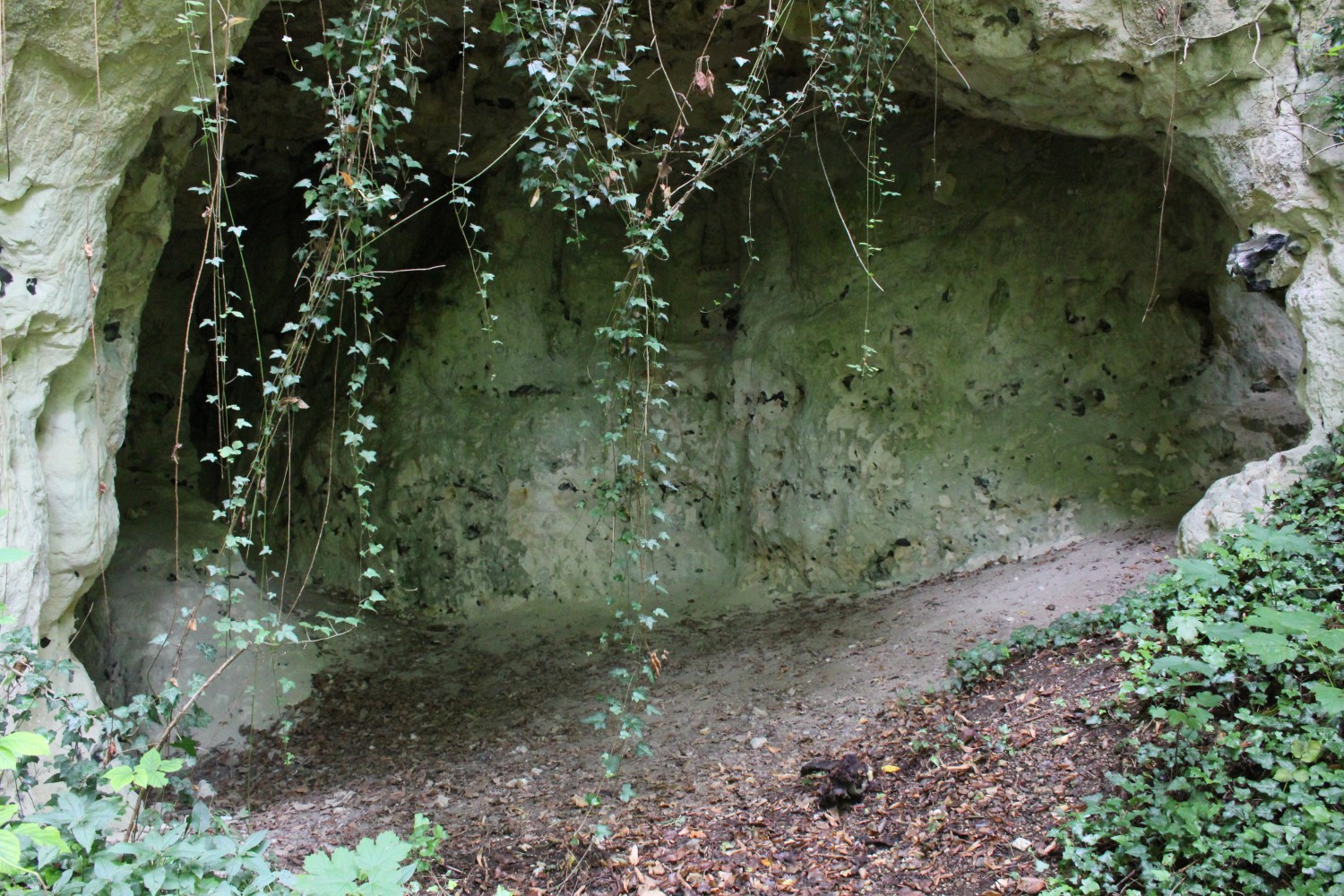
Photo by MH
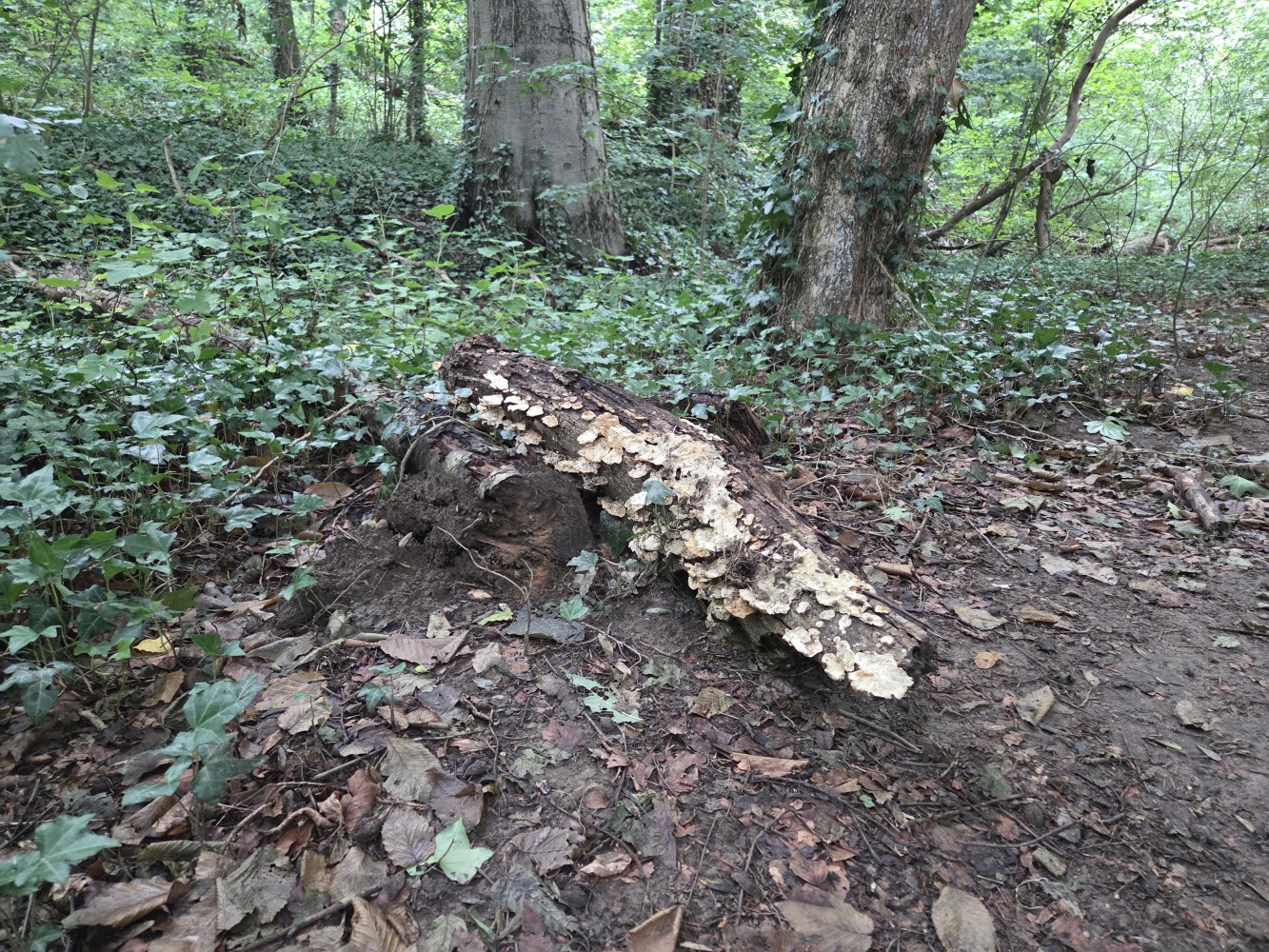
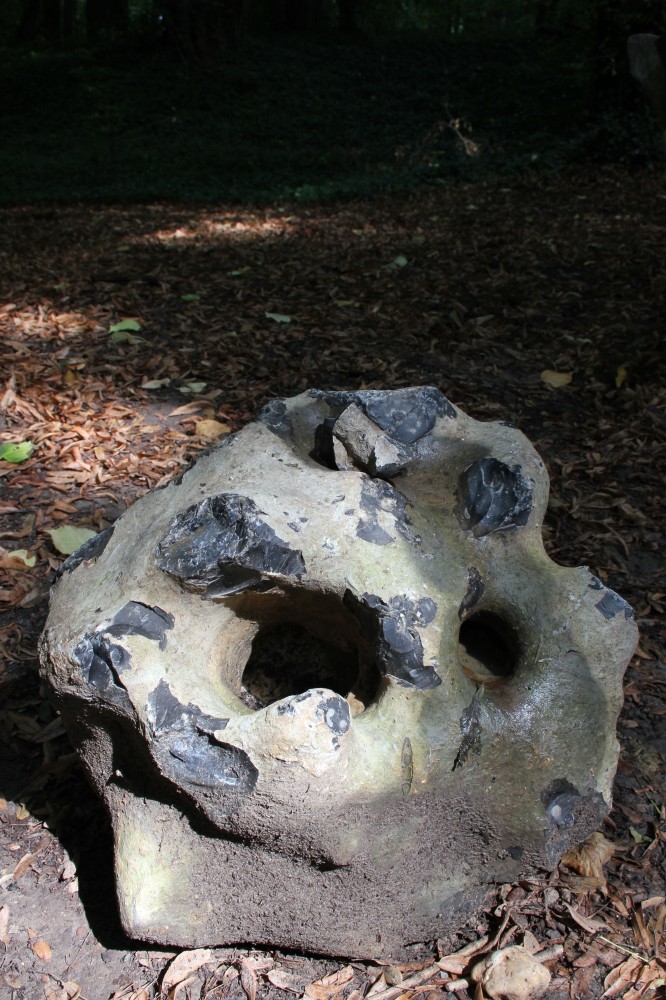
Just a big ol’ hunk of rock with lots of giant flint pieces in it. Photo by MH
Then we went back up the hill and a bit further to get to the actual mine. Not quite the original mine. Prehistoric people would go up to the top of the hill and dig down until they hit Flint Layer 10, which apparently has the best flint. Then they would dig sideways until they ran out of natural light. Apparently they decided that fire in the mines was too dangerous, which is fair. Once they ran out of light and flint to extract, they’d go back up, over several metres, and dig another. They’d connect the new hole to the old hole in order to have another way to get out if something happened.
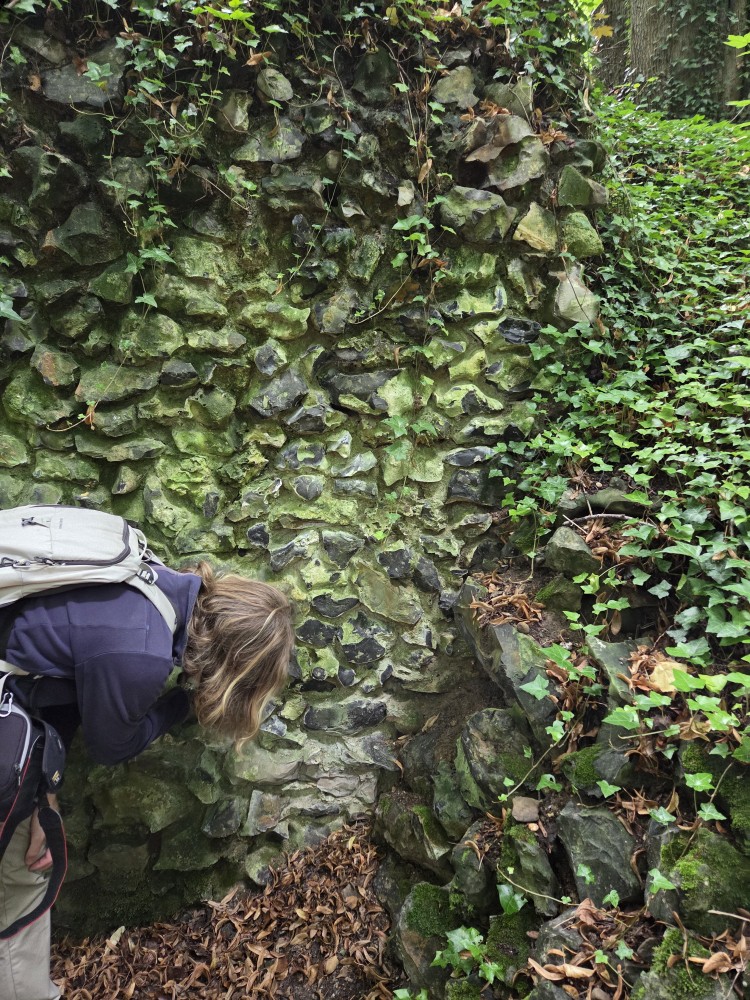
The exterior of the entrance… built of flint. Probably worth a fortune in the stone age lol
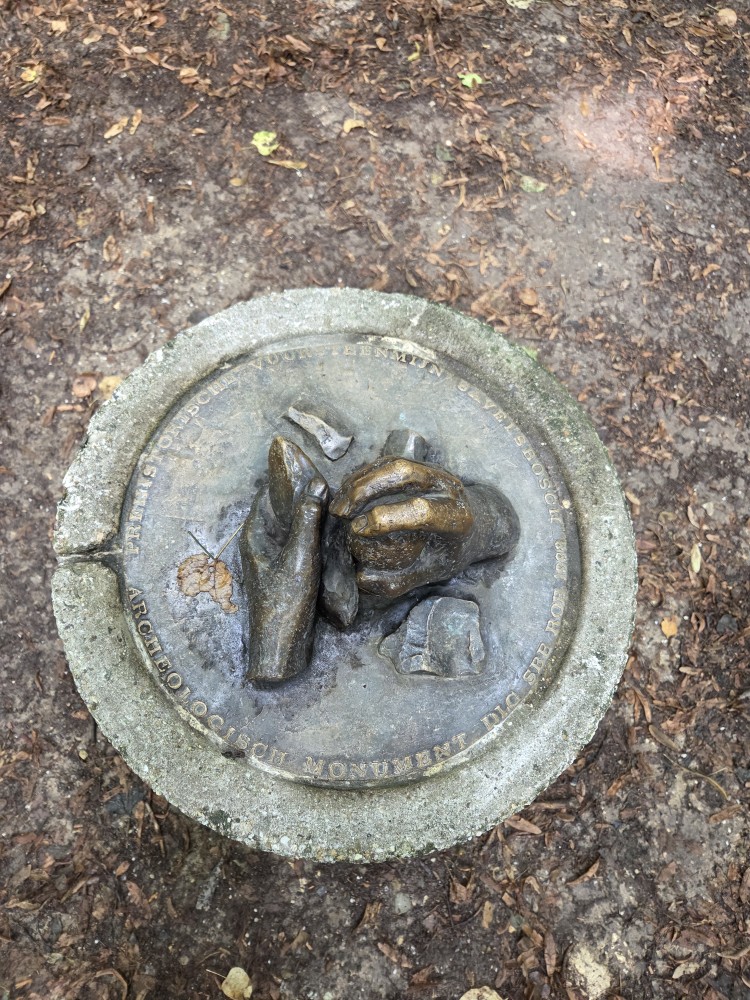
Flint knapping sculpture
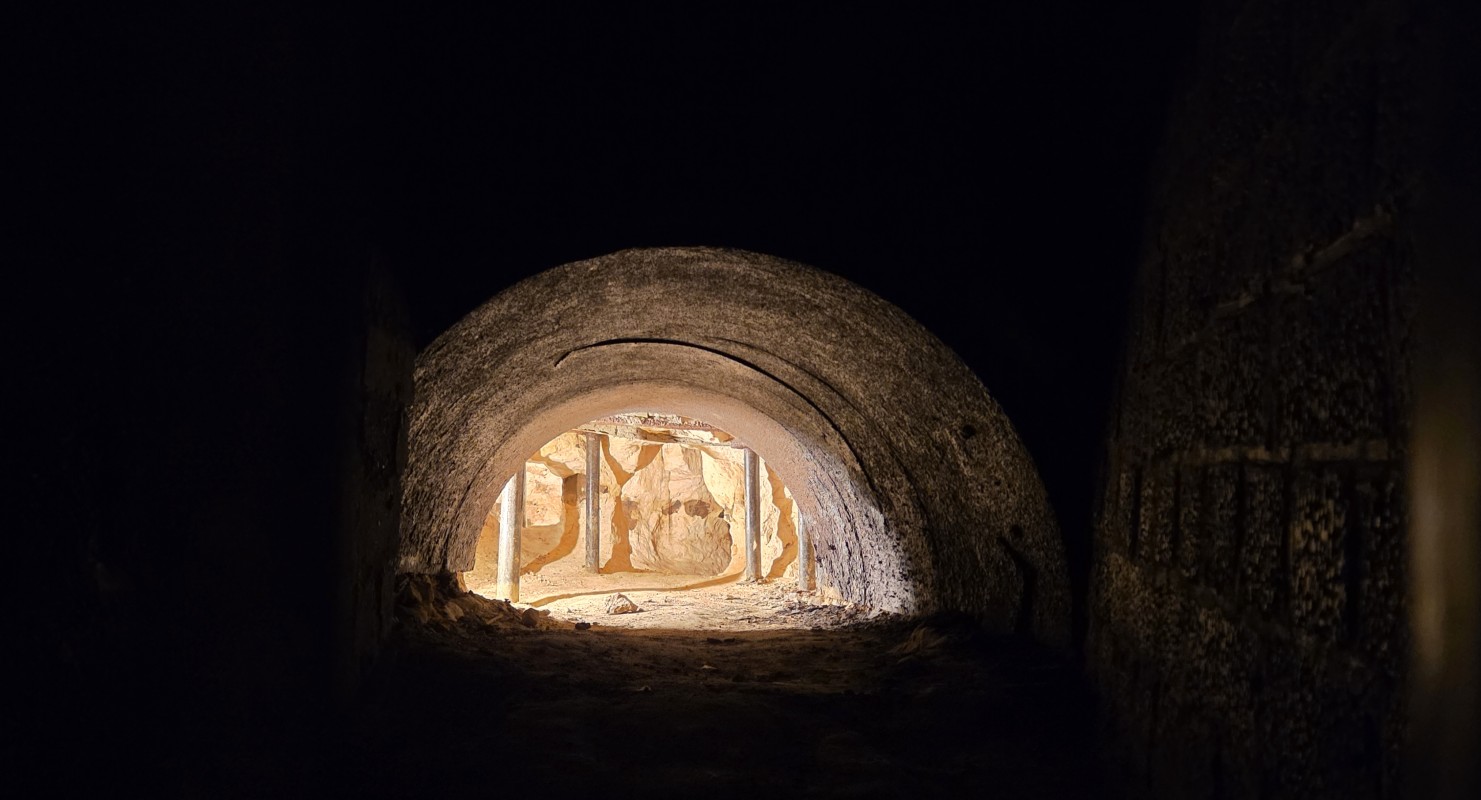
What we were walking into was a horizontal shaft dug in the 60’s and 70’s by volunteers connecting about 70 of these mini-mines together, many of which had been filled back in with the dirt dug out of them. It was installed with a wonderfully designed lighting system that lit the prehistoric mines very thoroughly and stylishly. The flint lumps really stand out. Apparently science still doesn’t totally know how they’re made.
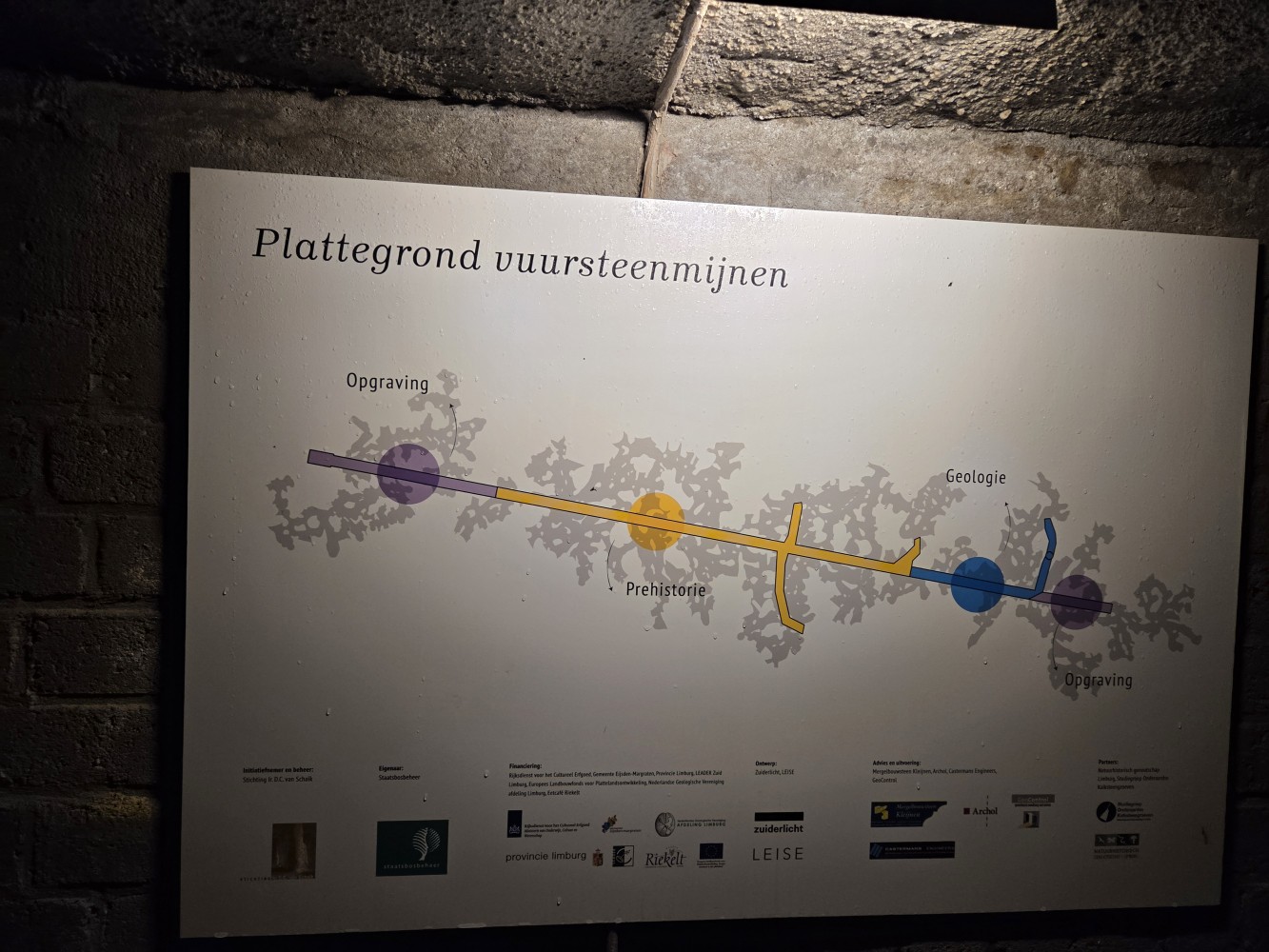
A map of how the tourism mine intersects with the stone age mines. The colours correspond to what the wall displays talk about.
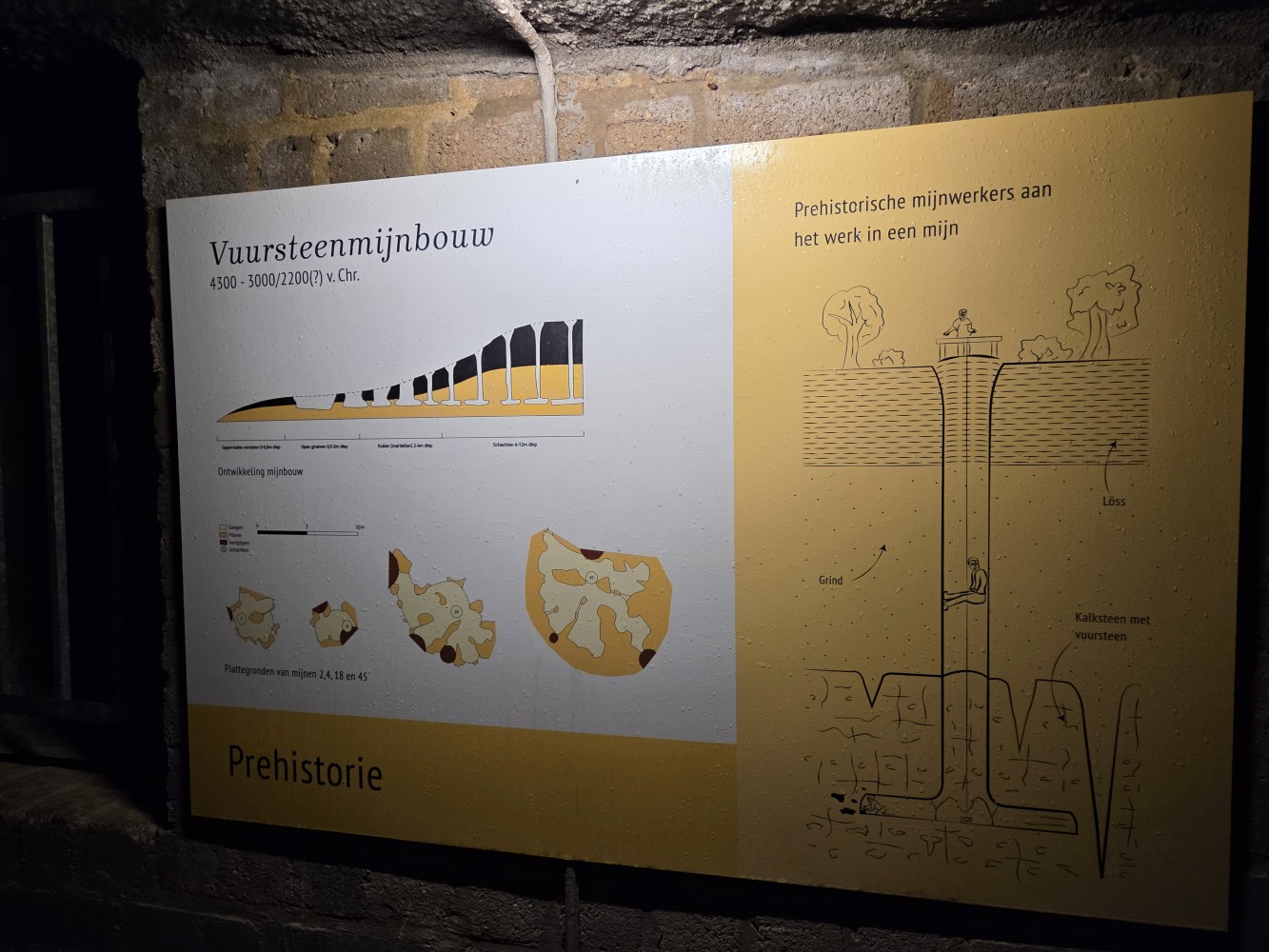
How they went looking for good flint
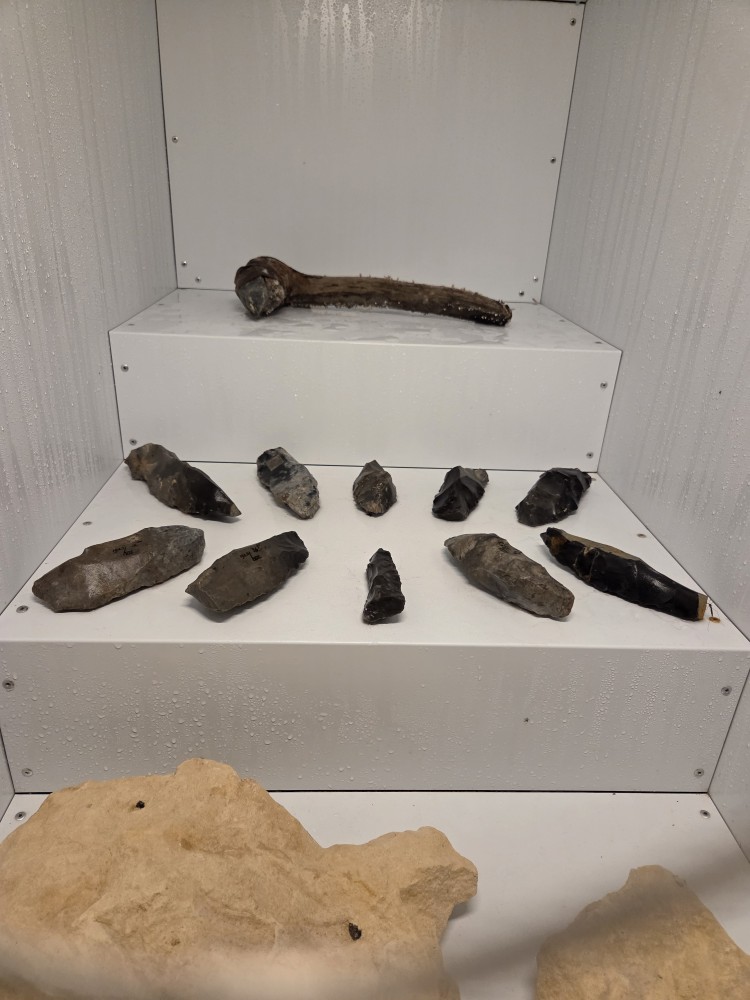
They even had a few of these displays showing artifacts and things
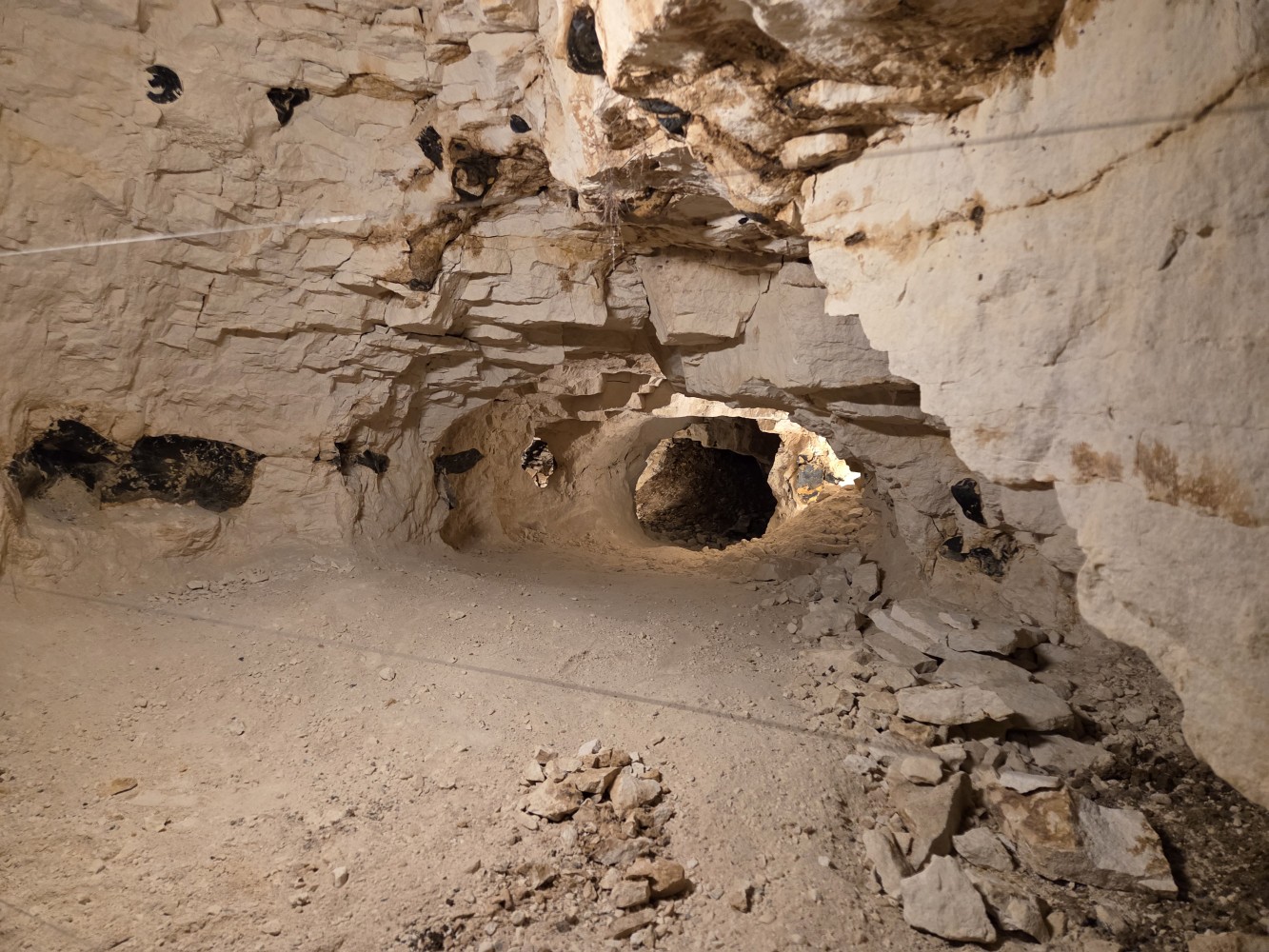
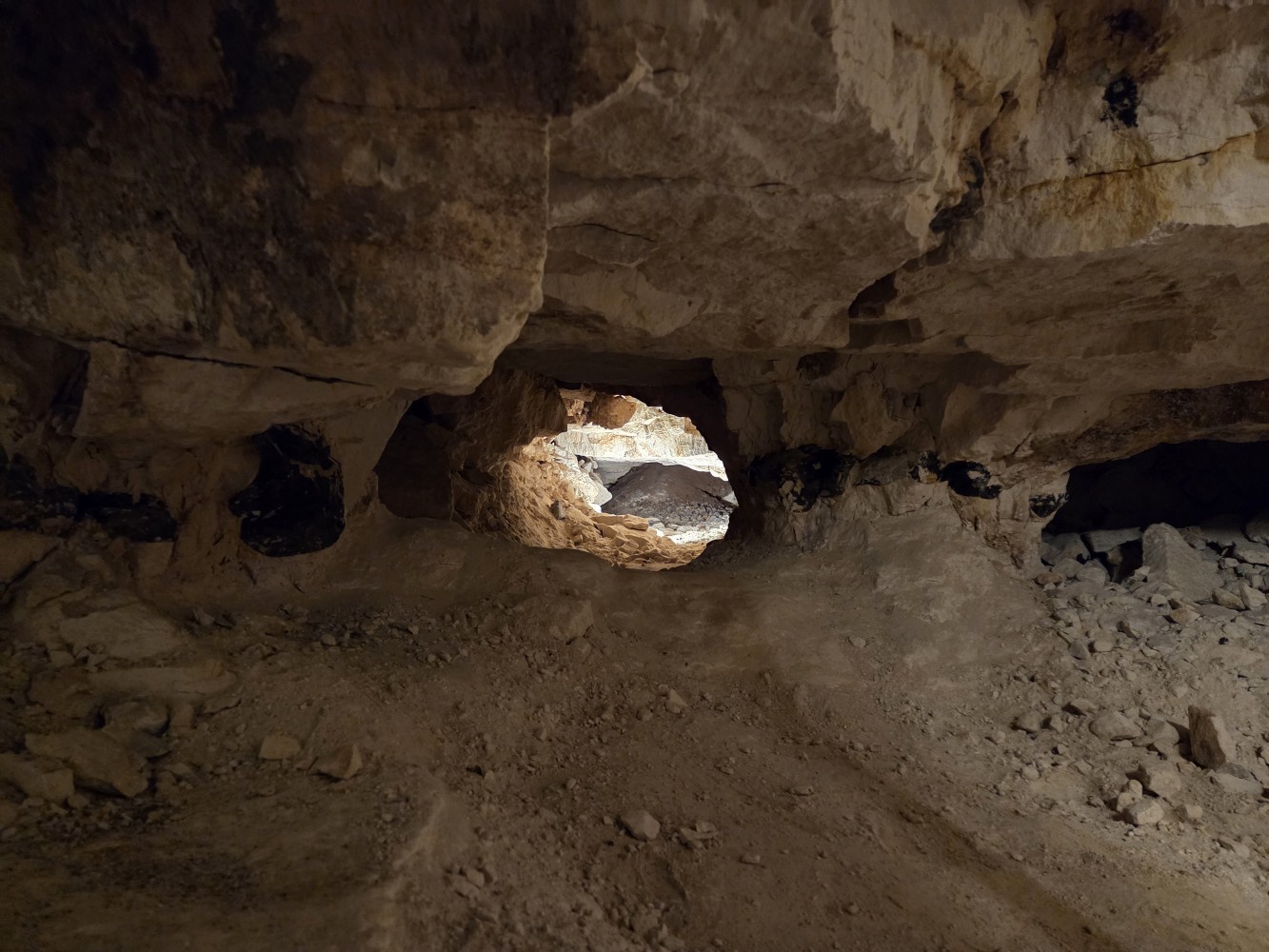
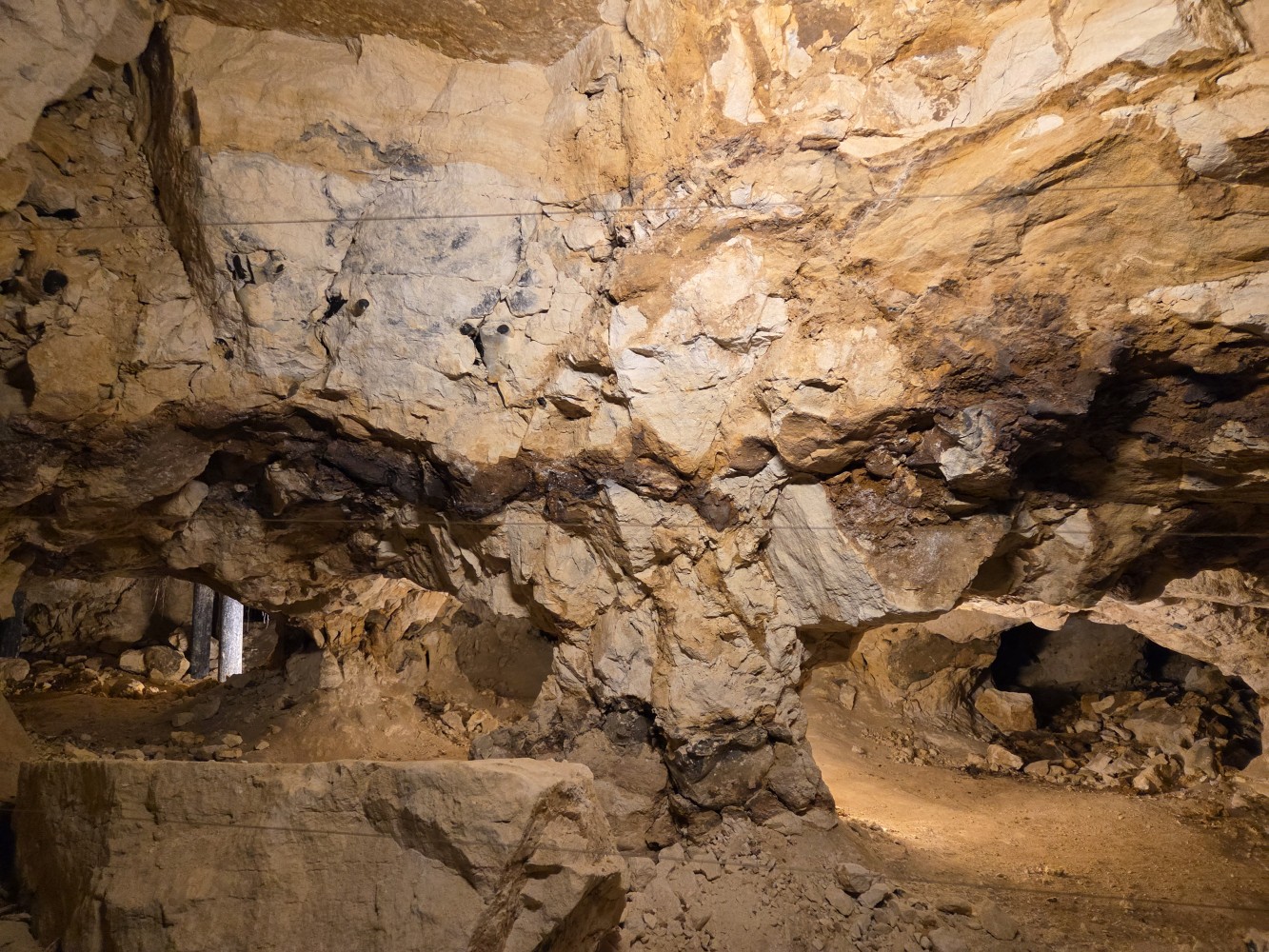
Next four photos by MH
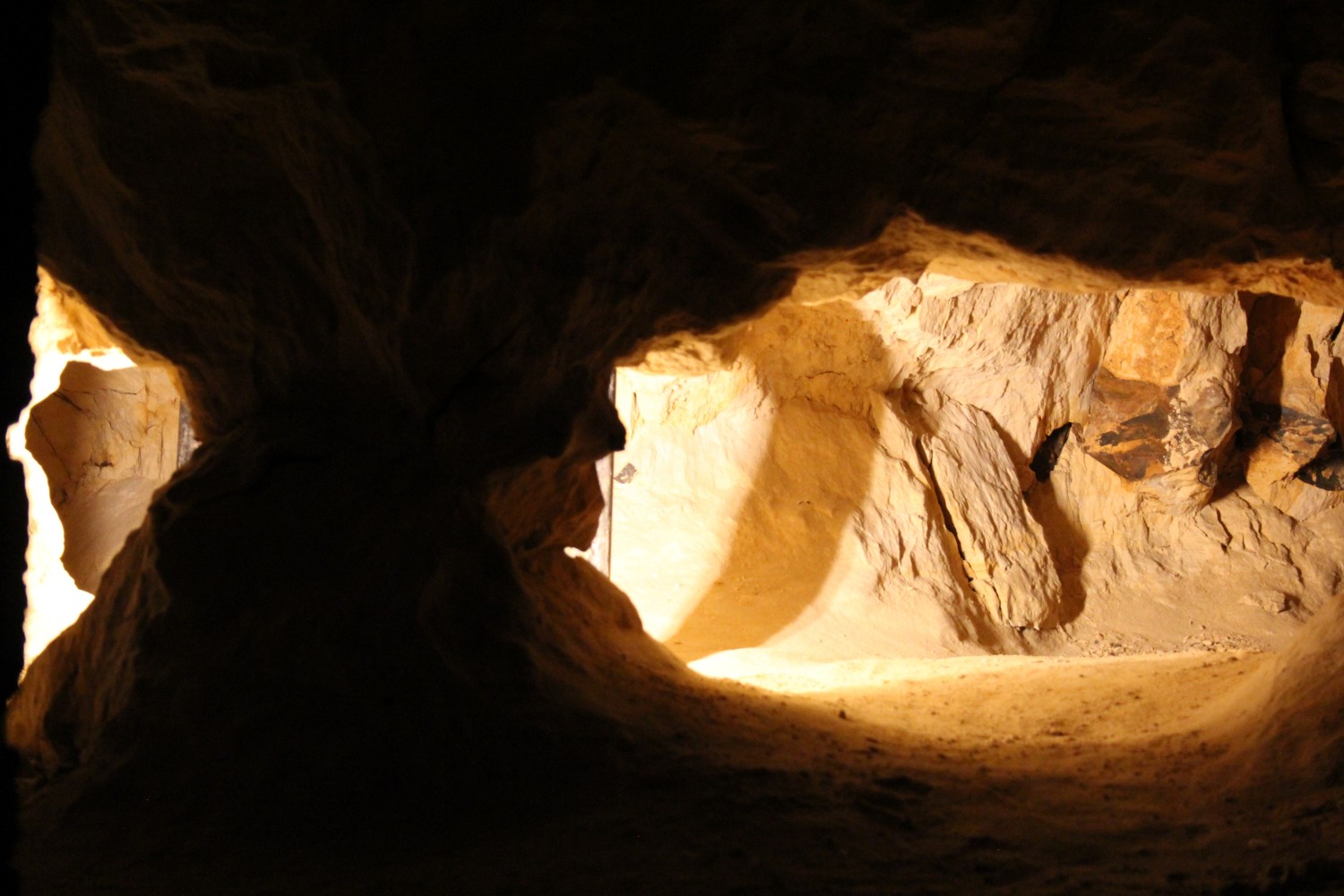
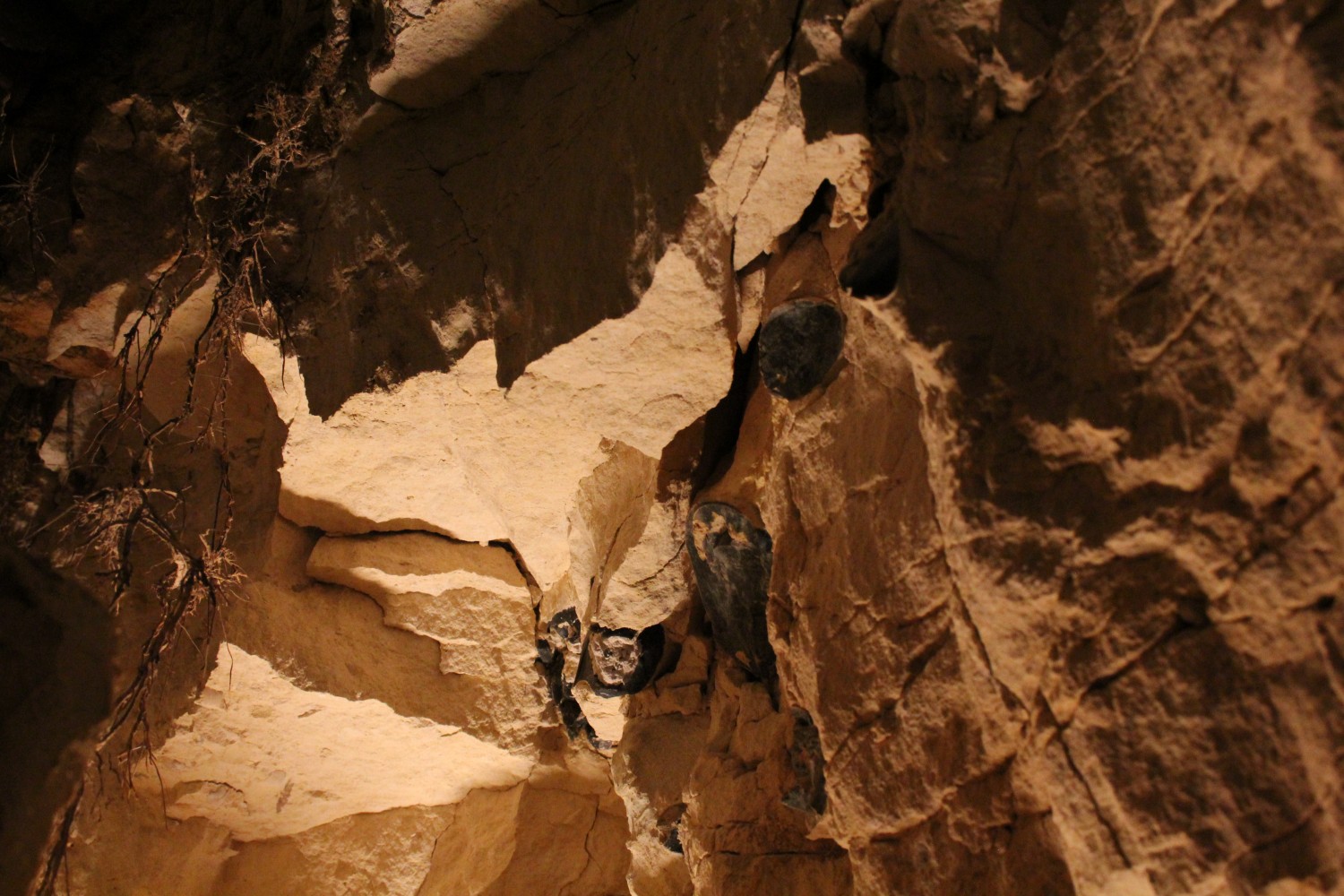
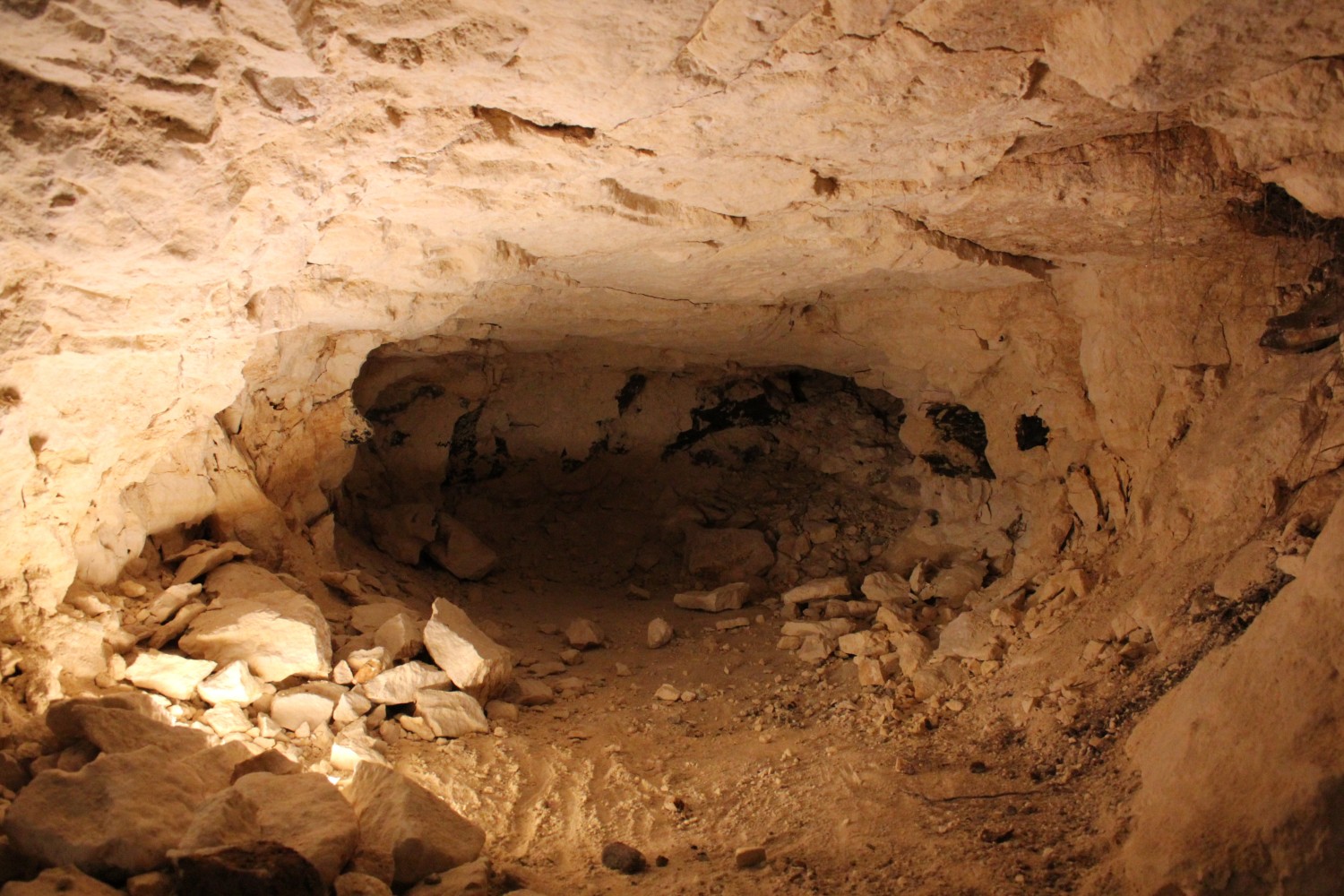
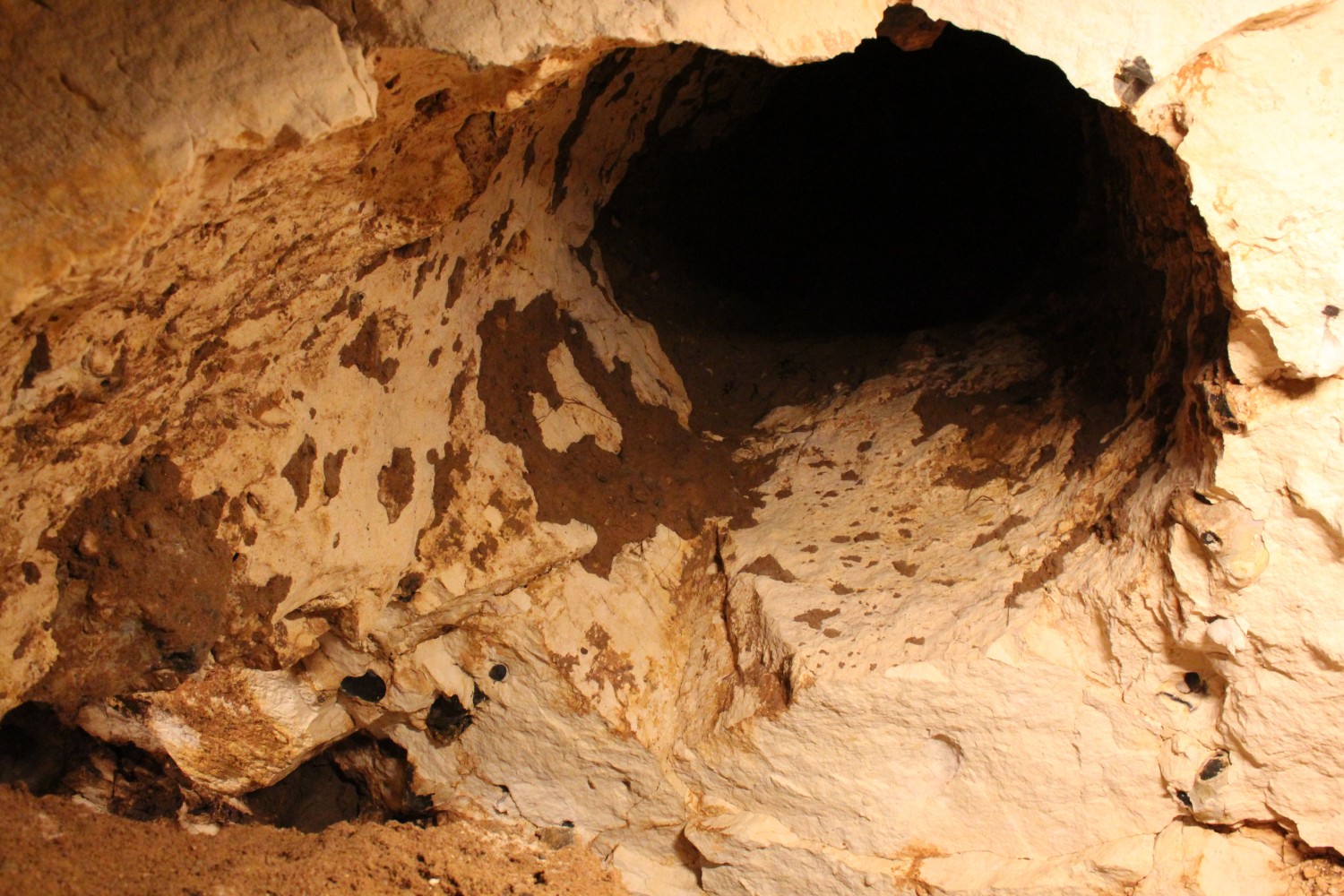
We exited the mines and the massive difference in humidity made my glasses fog UP. The guide then made a demo of striking iron on flint to make sparks. Apparently flint on flint doesn’t do anything at all? He lit a bit of tinder on a tin tray and had one of the kids pass it around to show everyone.
Then we headed back down the hill to the parking lot again. Along the way we passed the place where badgers do poop. And we passed another tree planted in commemoration of a royal event, I forget which event. I noticed a lot of little religious shrines dotted about during our walks; Tharash says this area is pretty religious but it’s not their “bible belt” (with all the associations that that name implies).
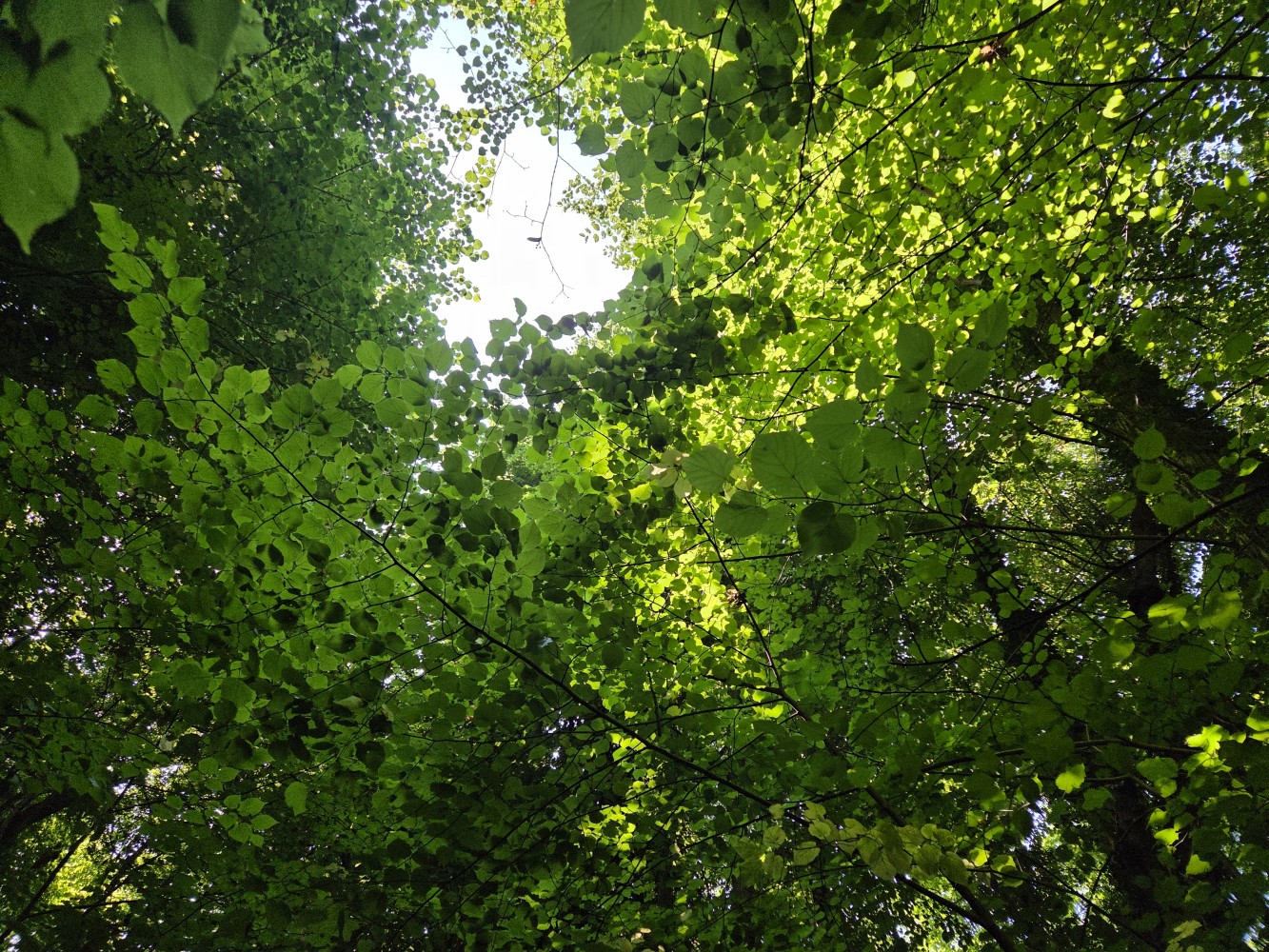
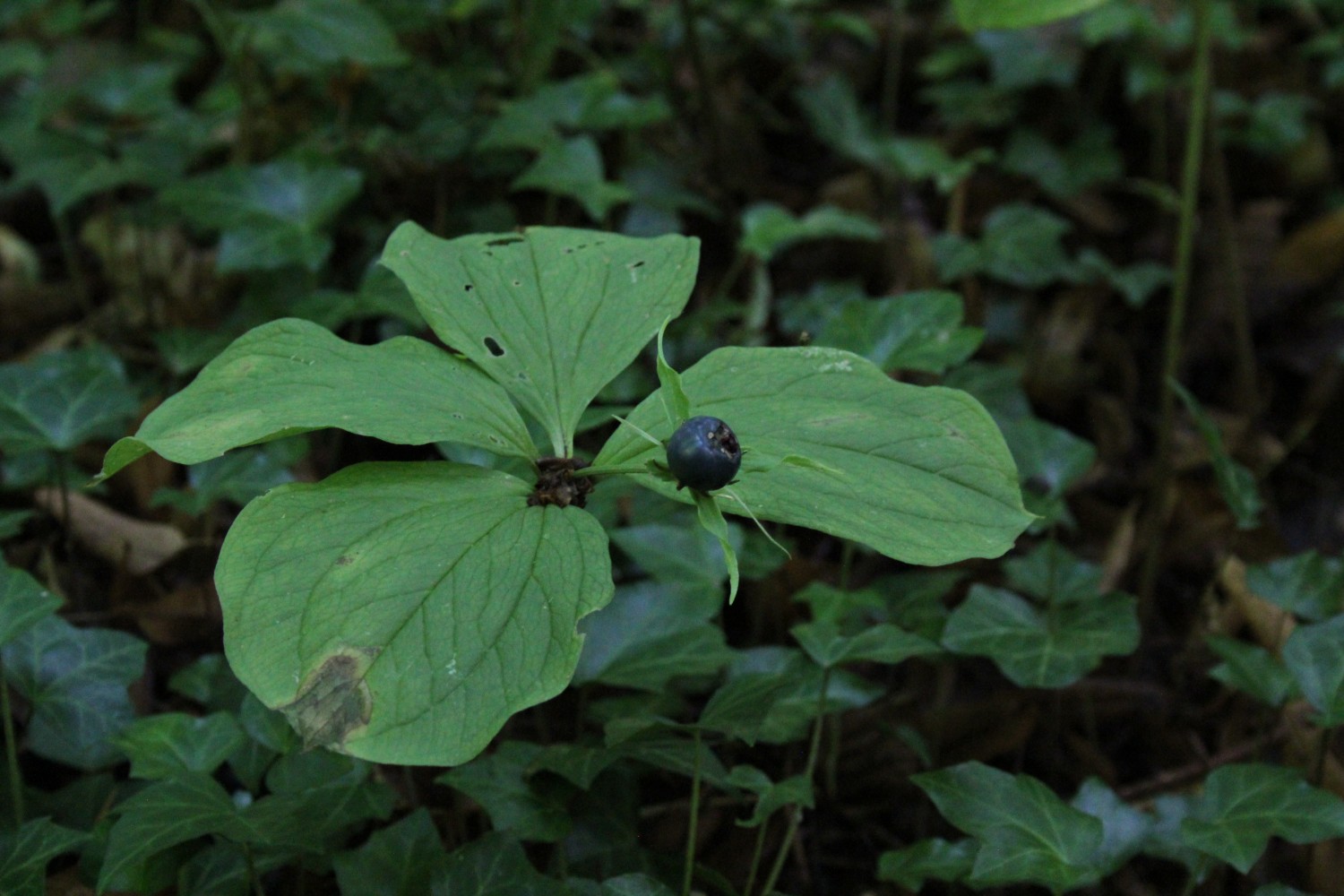
Photo by MH
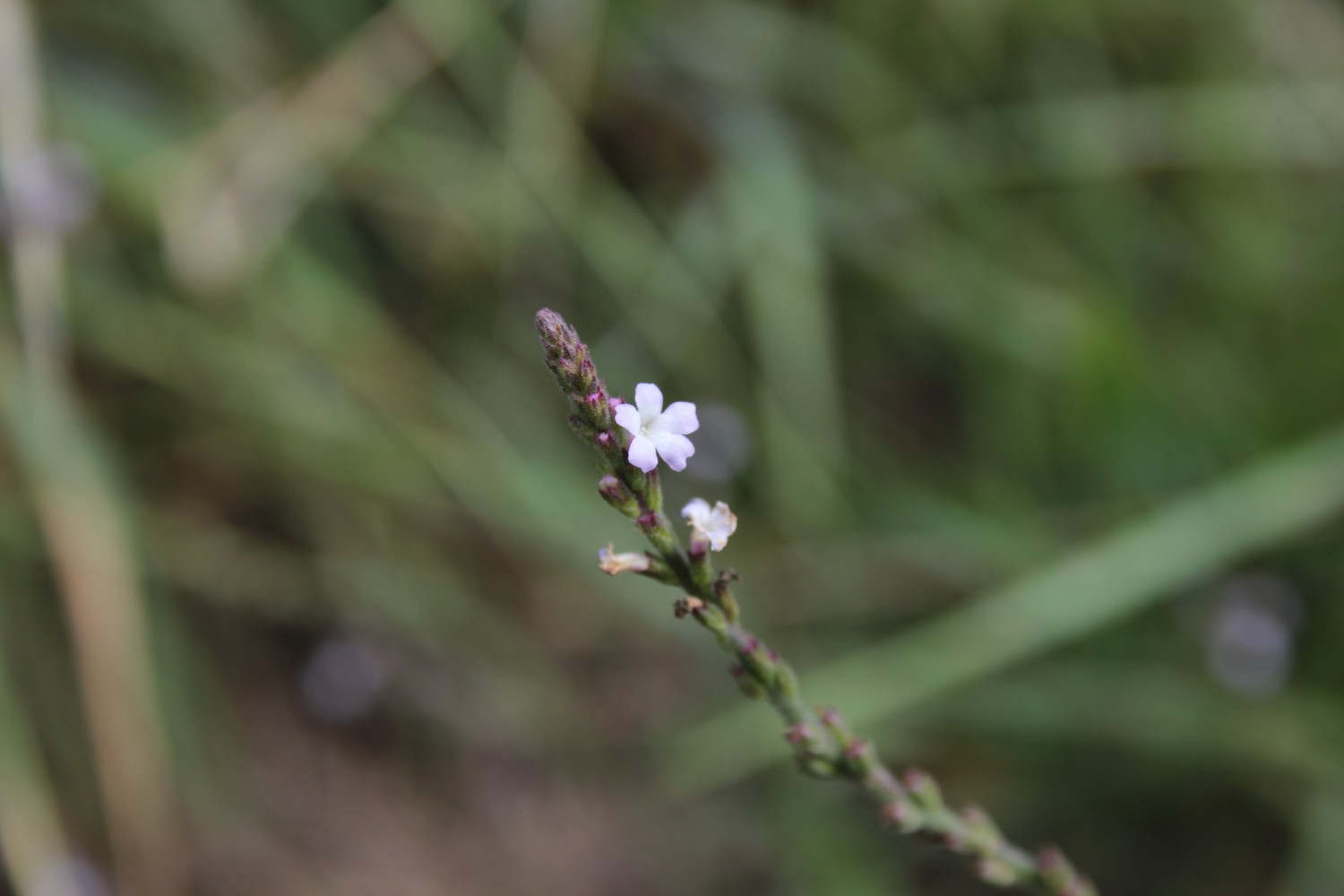
Photo by MH
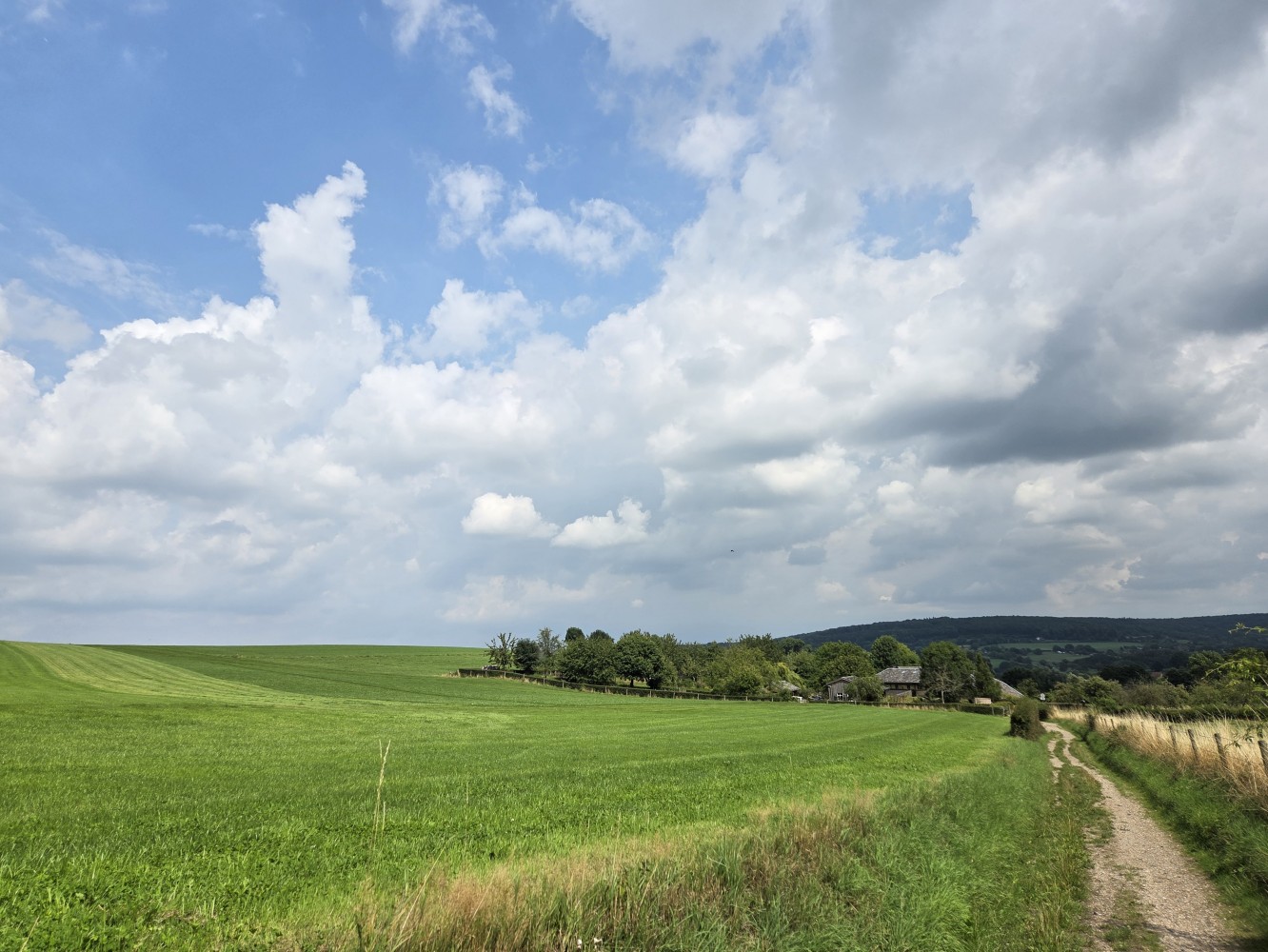
Then it was back to the bus stop to go even further up to the highlands and into the next valley, to the area that Tharash calls “the Dutch Shire” (around the village of Epen, which is actually closer to Aachen than it is to Maastricht). We got off the bus a bit early in case I wanted coffee at a restaurant nearby (I was feeling tired already after the morning walk), but instead we headed straight onto the trails, so we had lunch on a bench overlooking the whole valley. There was a beautiful field in front of us full of wildflowers for apiary bees to make honey from.
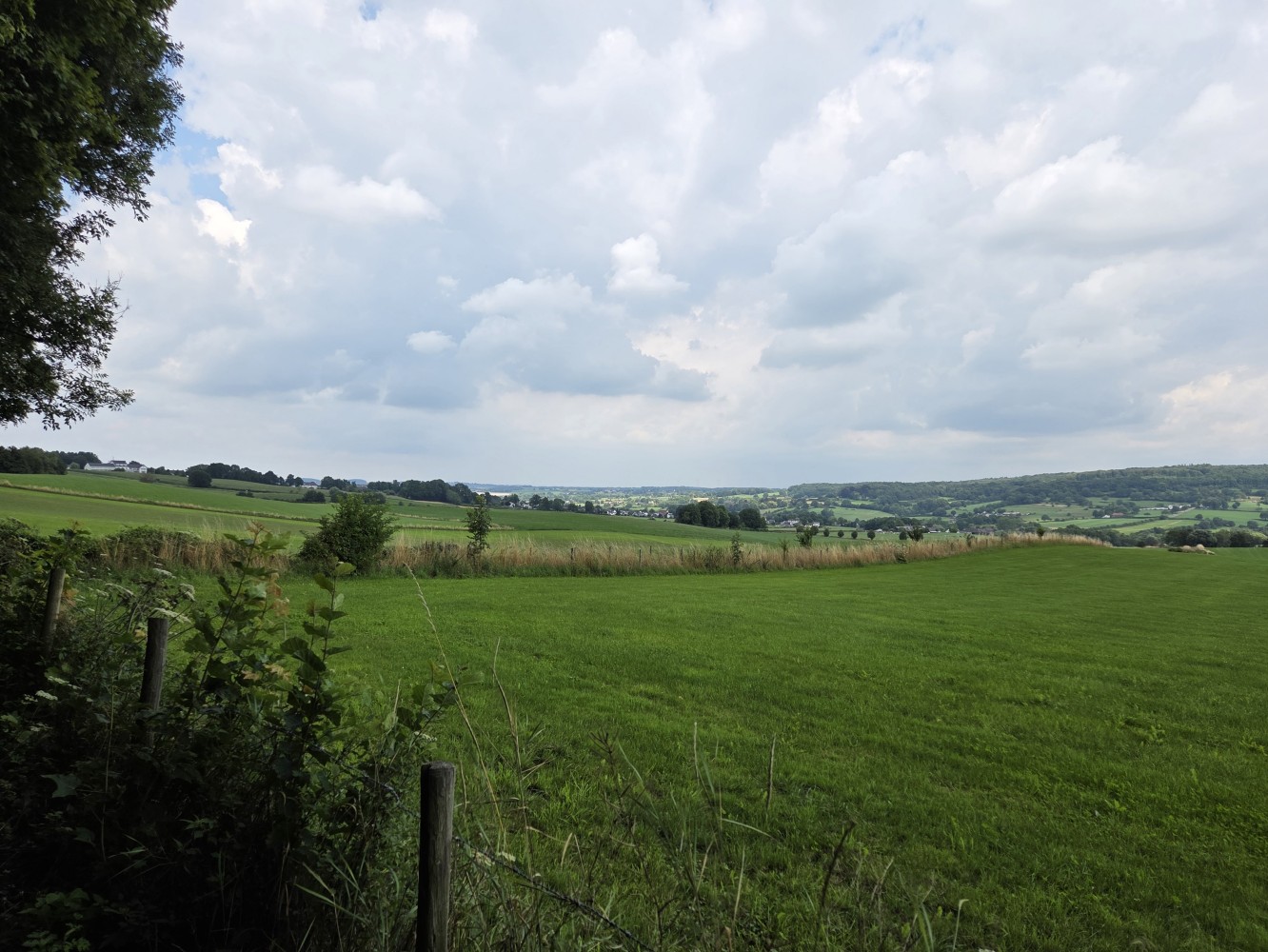
The hills look so low and smooth from a distance, it feels like you can just walk and not stop until you reach… the ocean. But I was kinda turned around because Tharash laughed and said “if you didn’t hit the Ardennes or the Alps, it would take a pretty long time to get to the Mediterranean”. …I thought I was looking north DX
This town is one of the the furthest south you can get in the Netherlands; it’s got borders with Belgium and Germany all around.
This map is not entirely accurate; it doesn’t include the path along the little stream Fröschebron, and we took a shortcut through the northeastern corner. But it’s pretty close. It was about 5k.
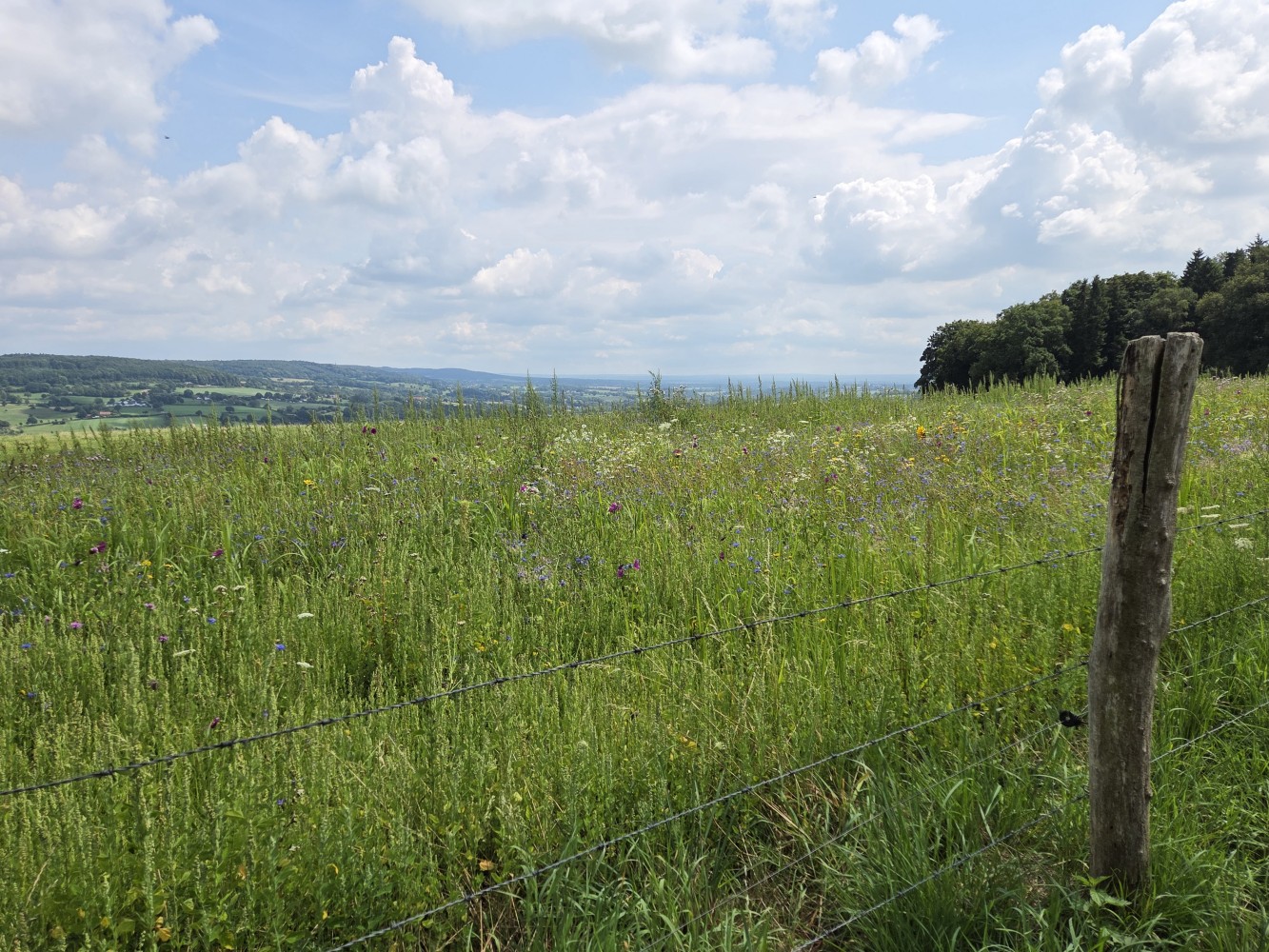
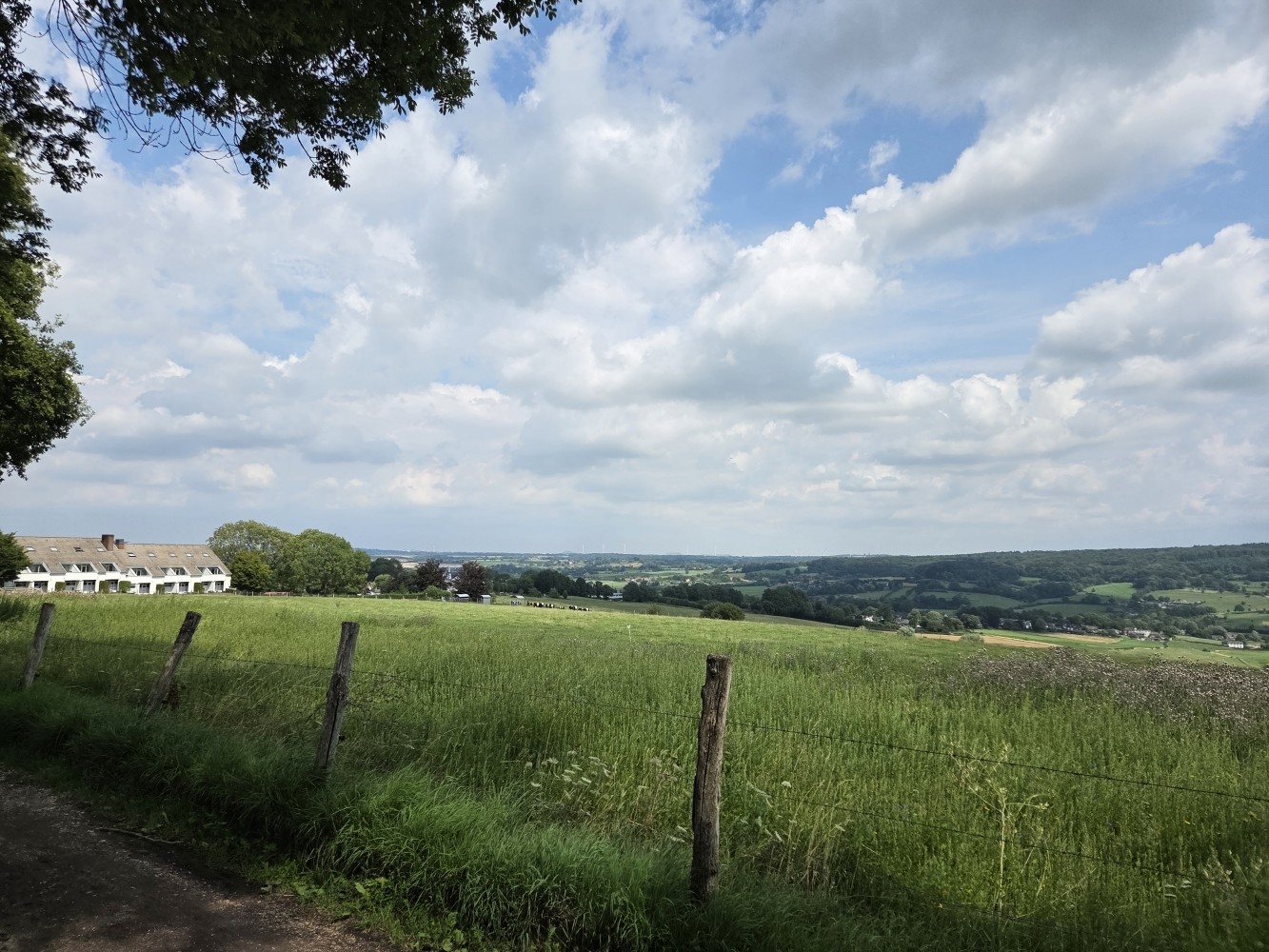
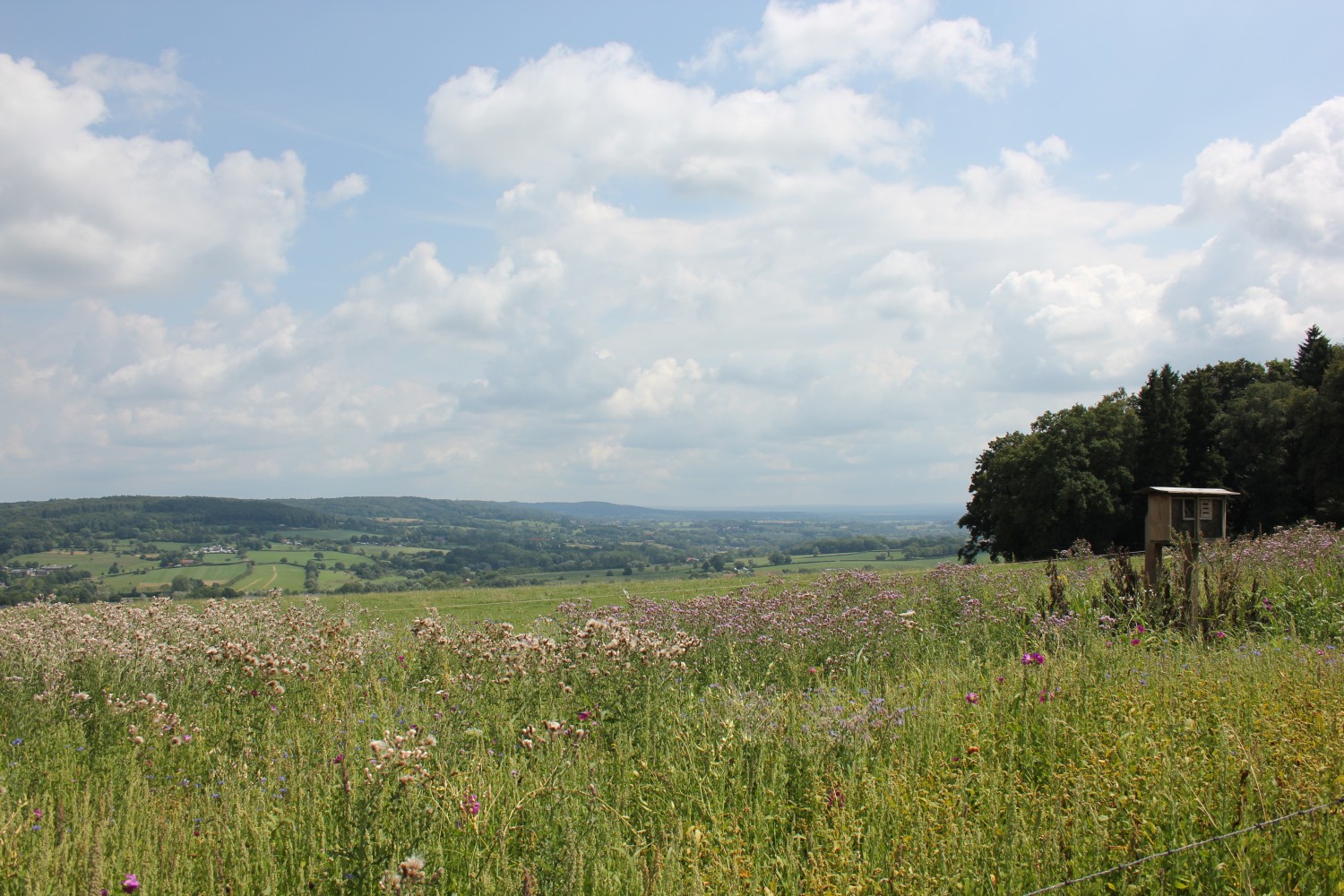
Photo by MH
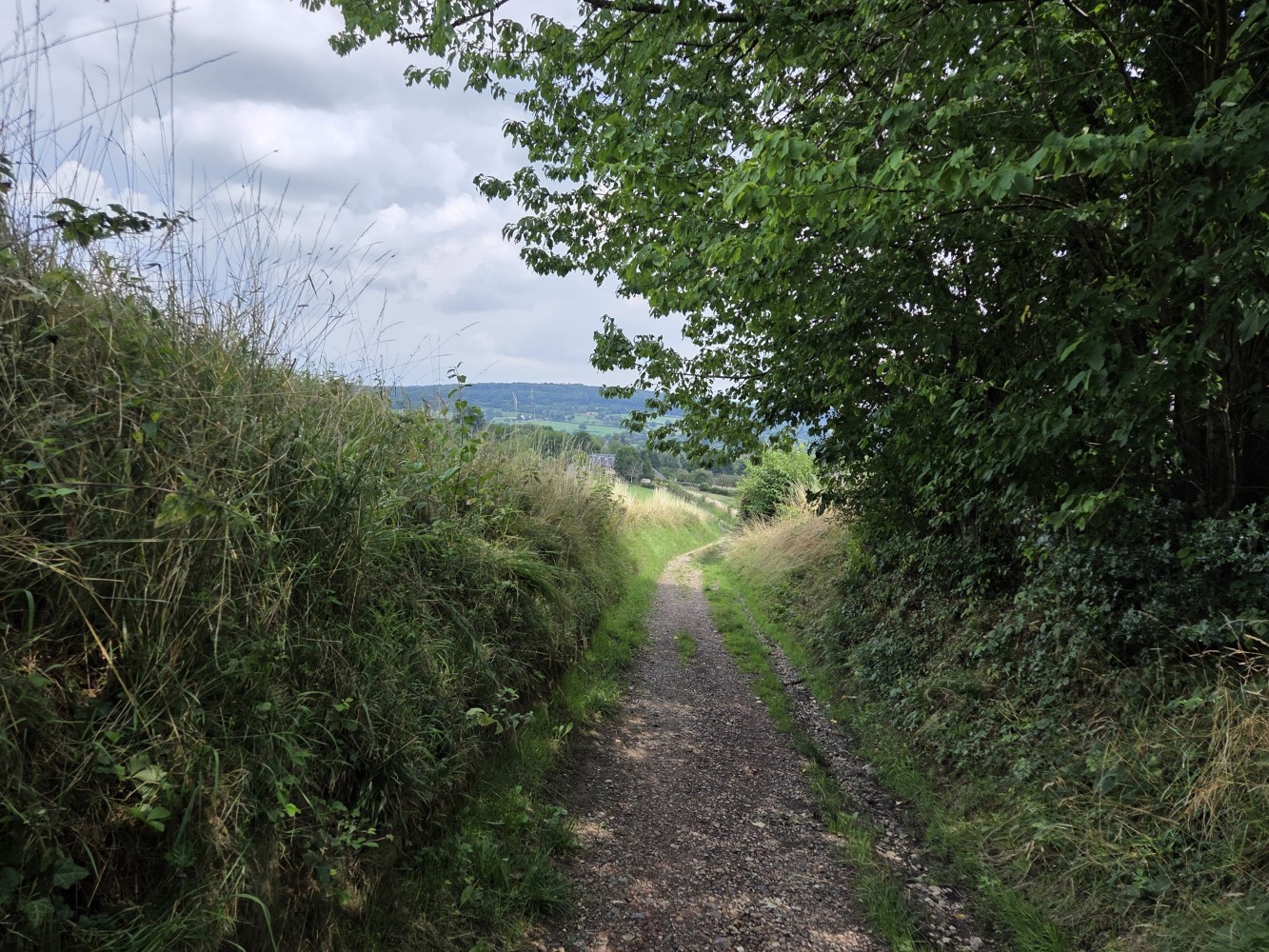
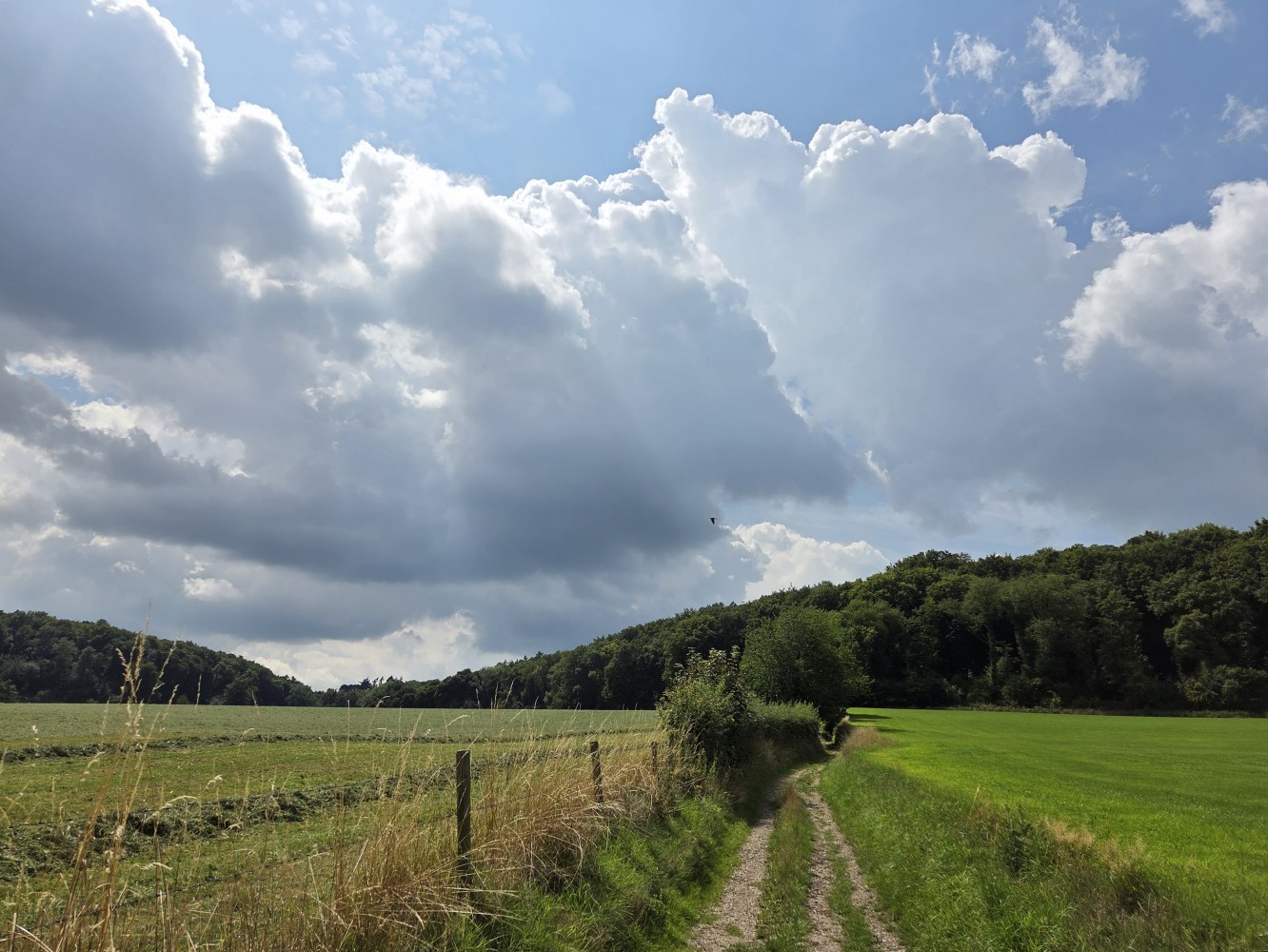
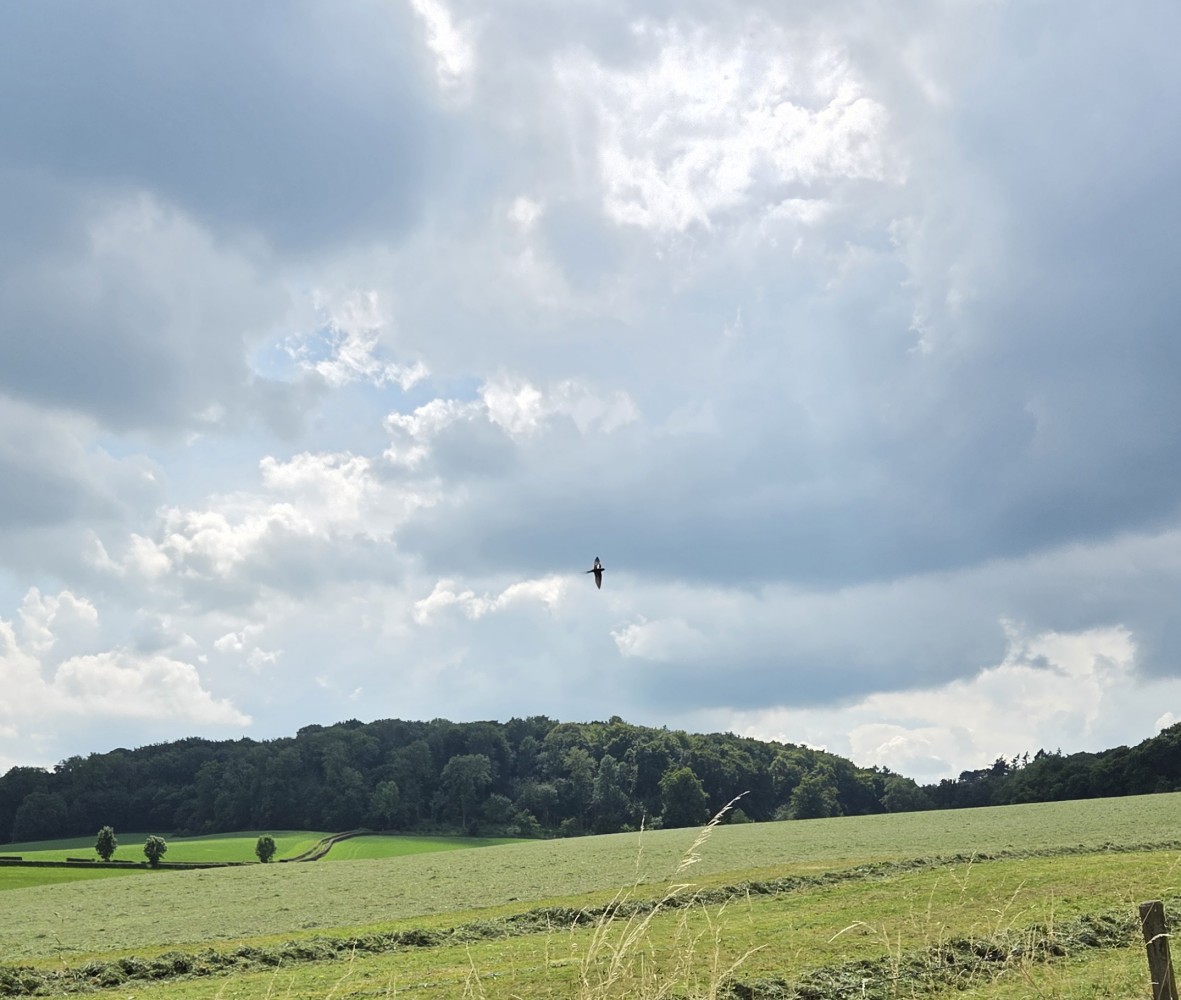
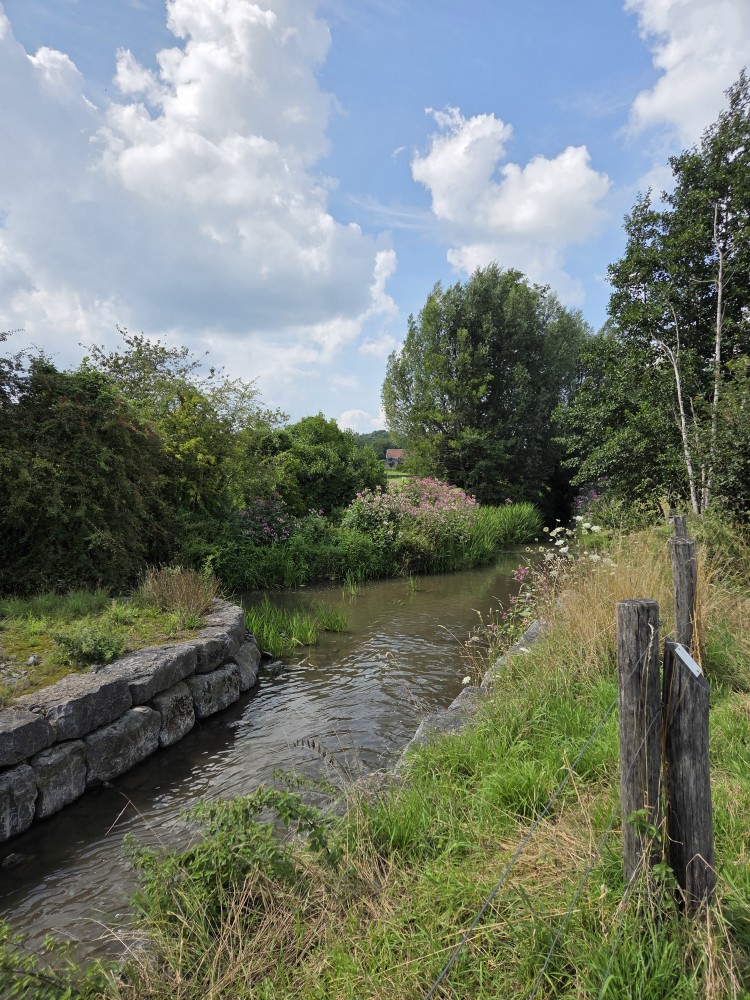
The path that we took led along a forest edge, and then straight down through the fields. We saw a ton of swallows diving for bugs. Then we headed off the road along a stream (the Fröschebron). It was muddy at first, and I did slip a little bit and lightly prick my hand on some barbed wire. (no blood, it just barely broke the top layer of skin, don’t worry.) This stream reputedly has the best-tasting water in the region, like other villages would send people over to get water from this stream because it’s better than their own streams. There was a ton of hawthorn along the sides of the path, also very prickly – a quick-growing way to keep livestock and tourists from wandering.
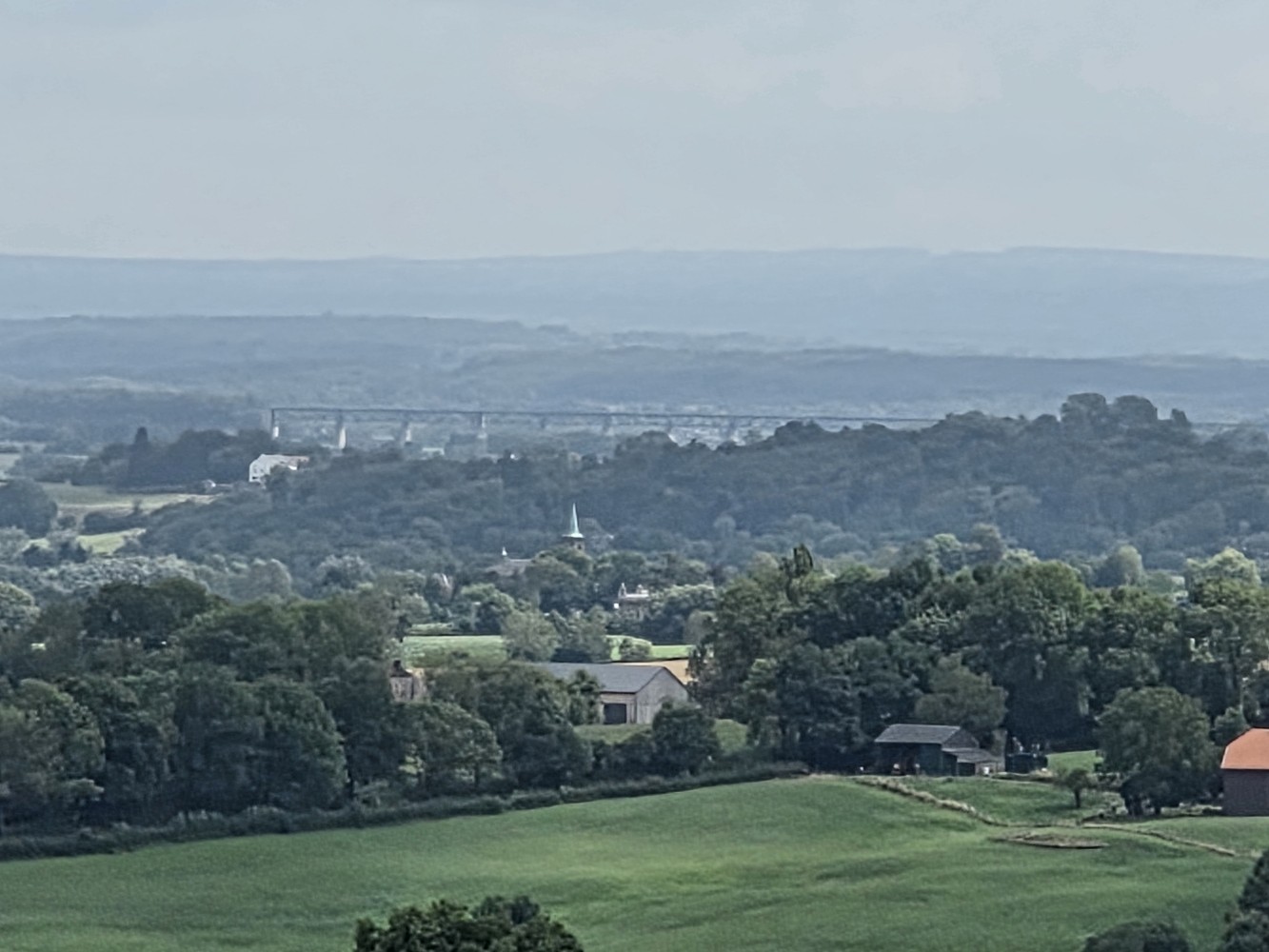
This castle is in Belgium
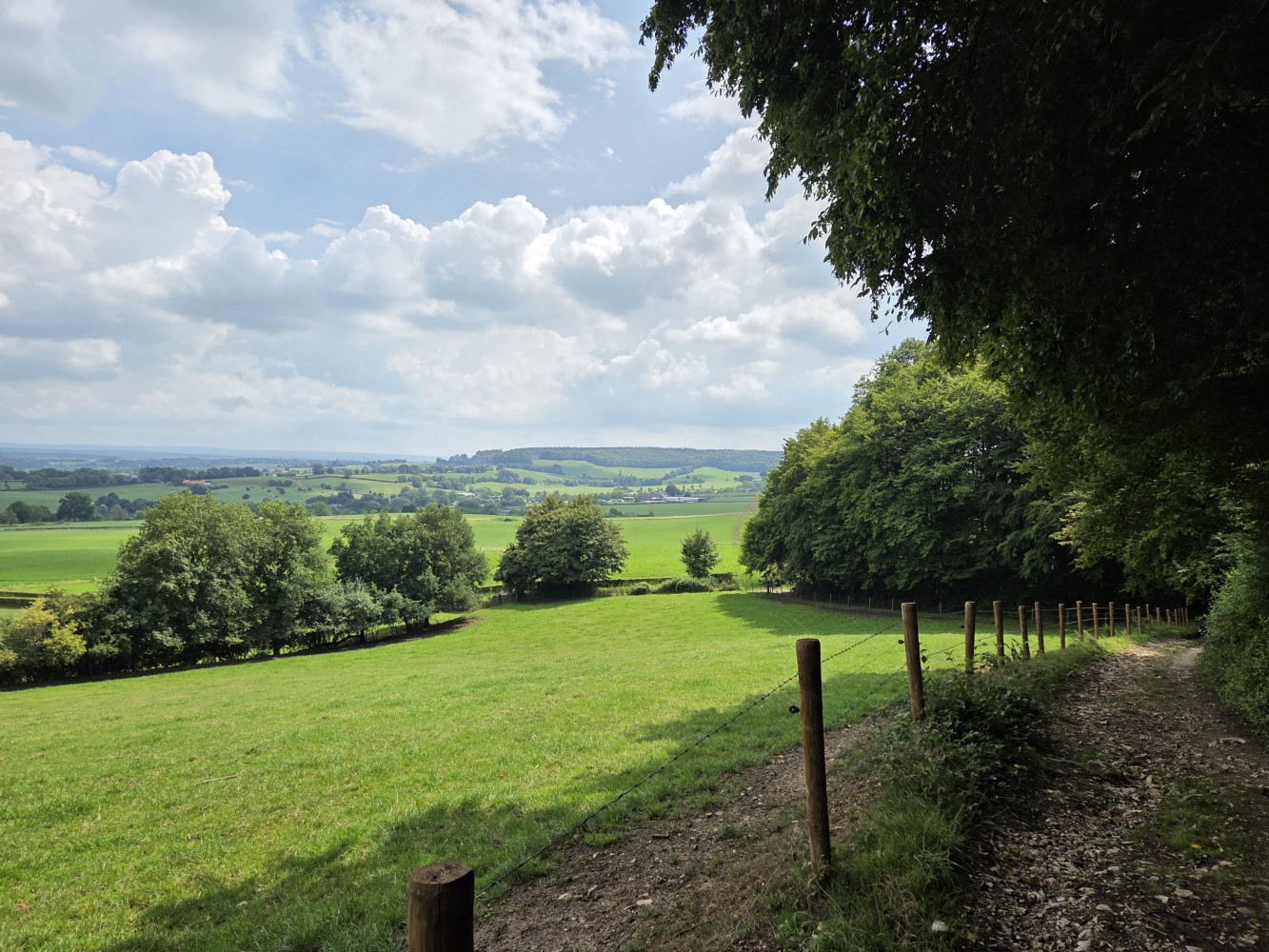
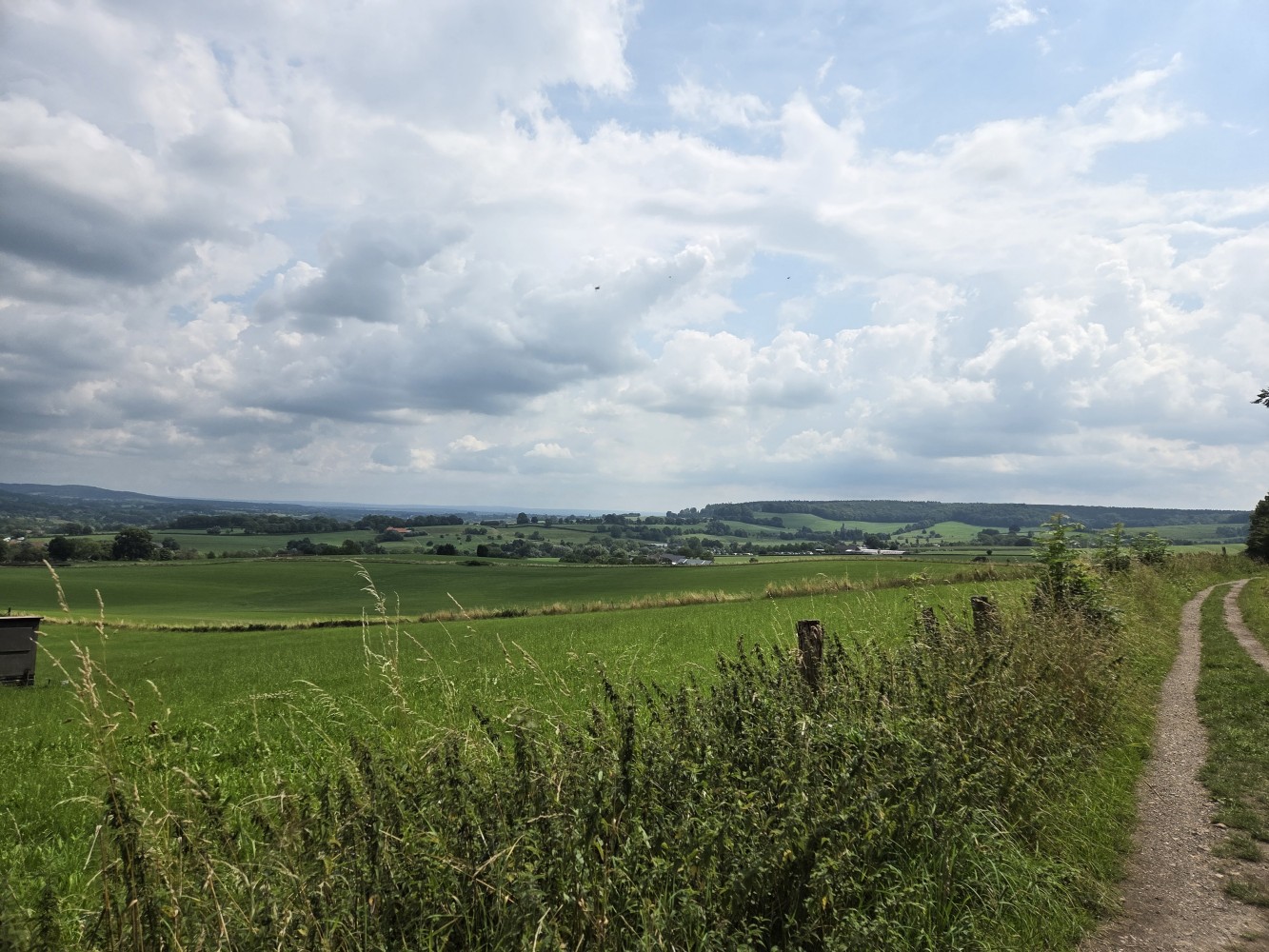
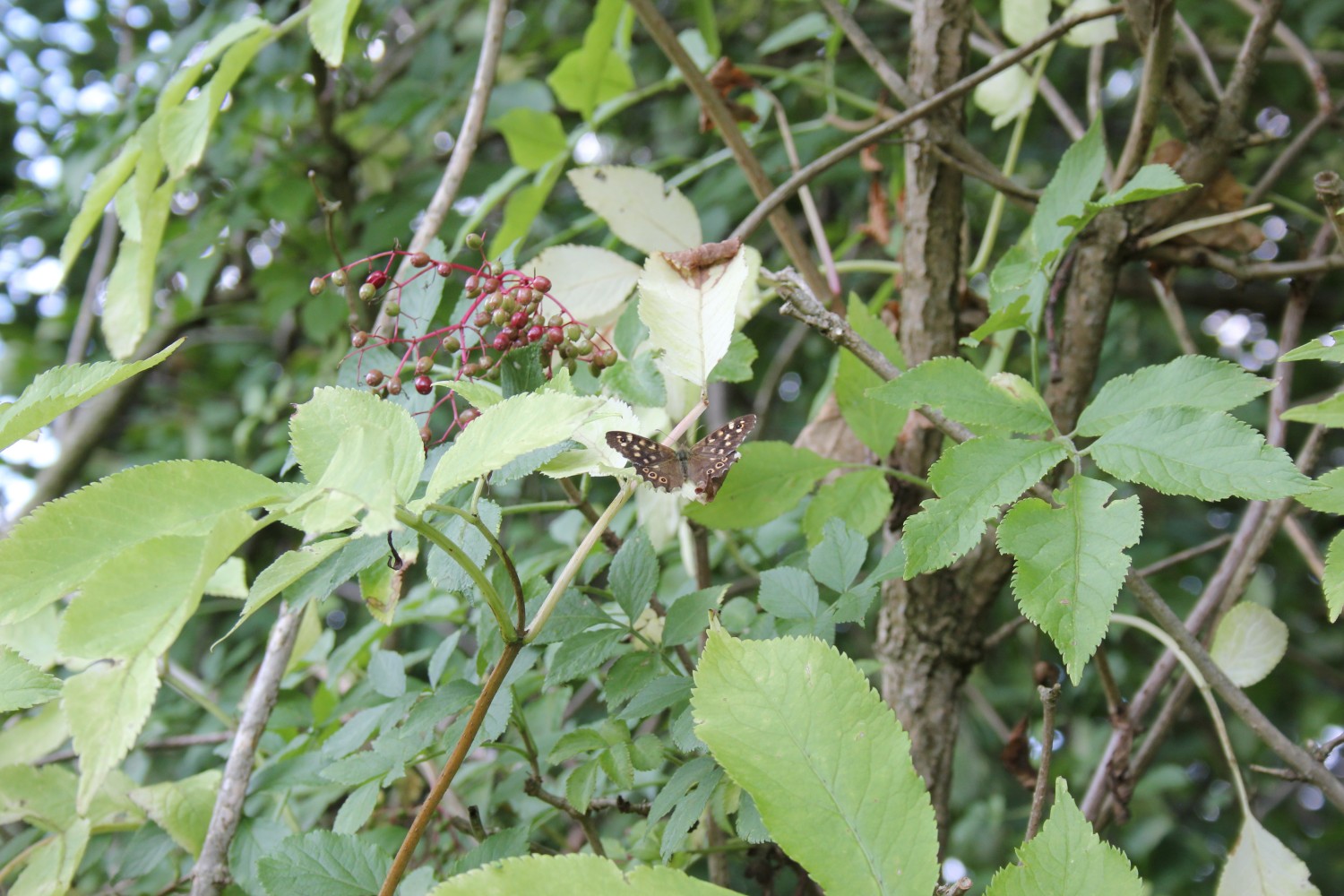
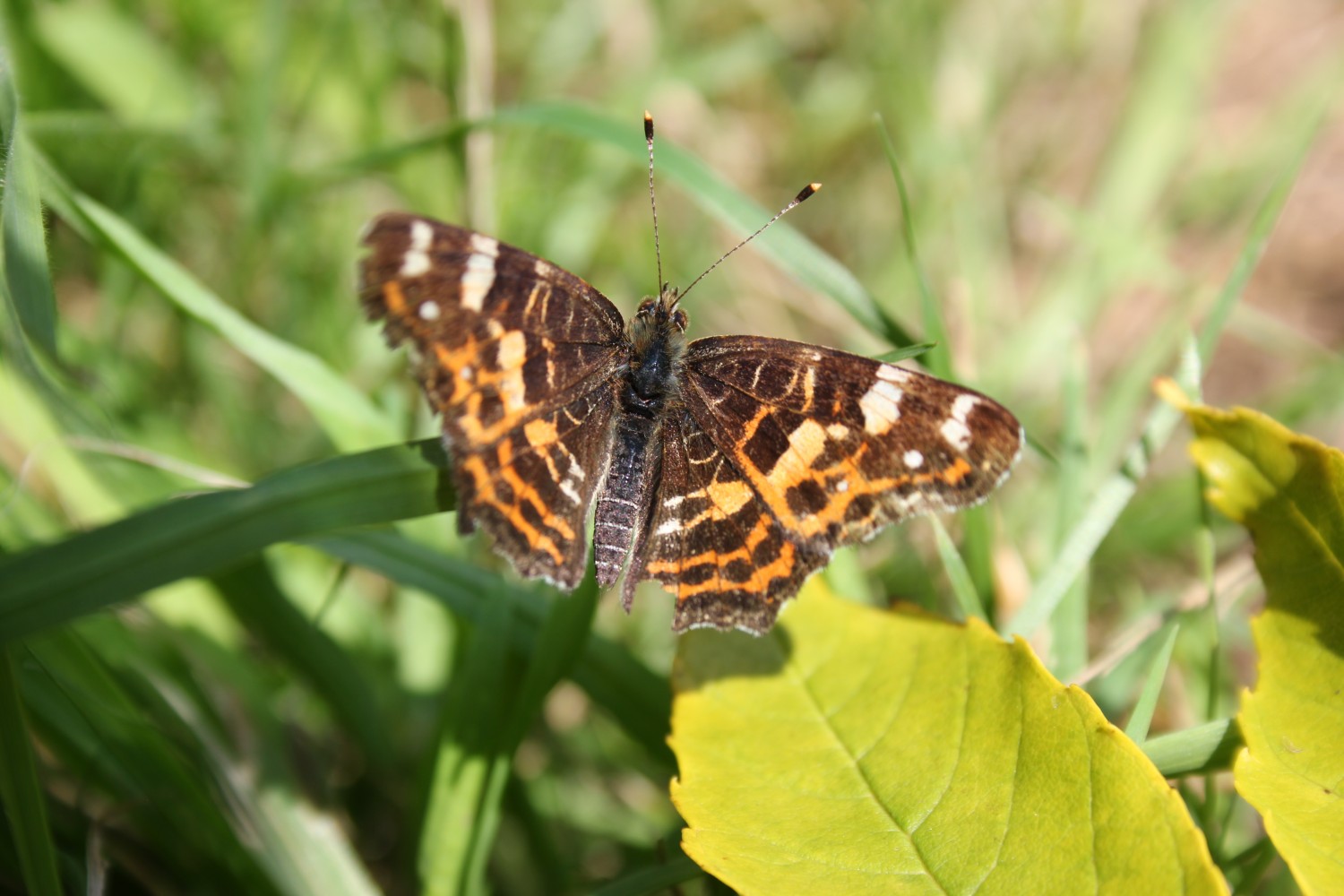
Next set of photos by MH
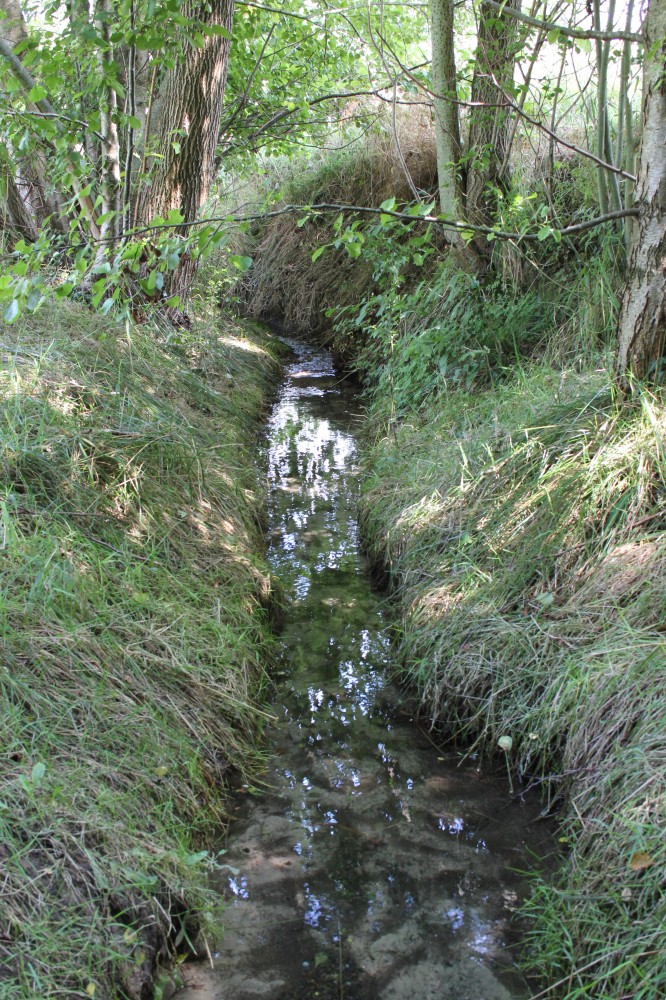
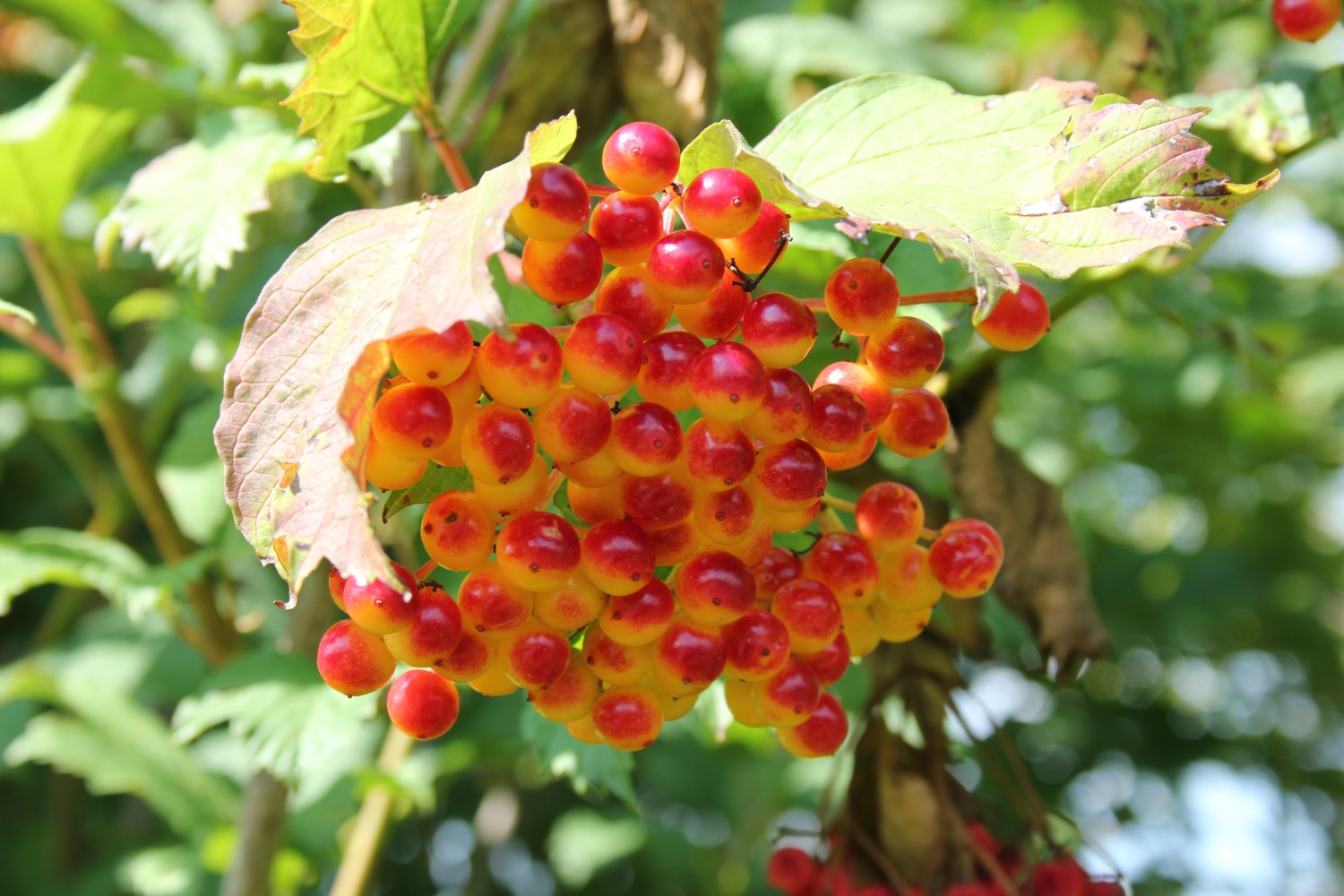
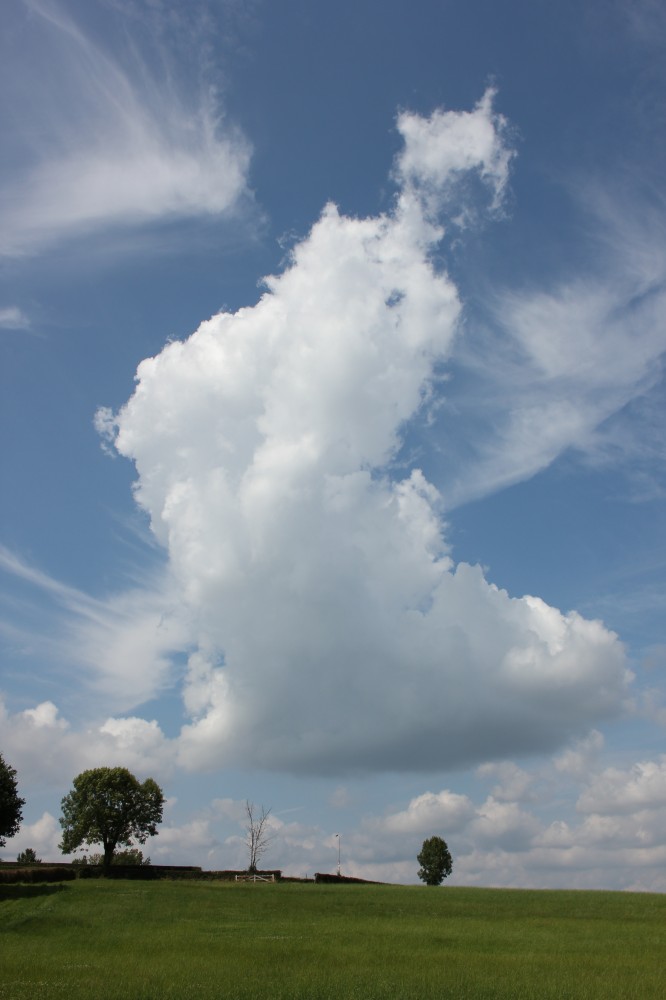
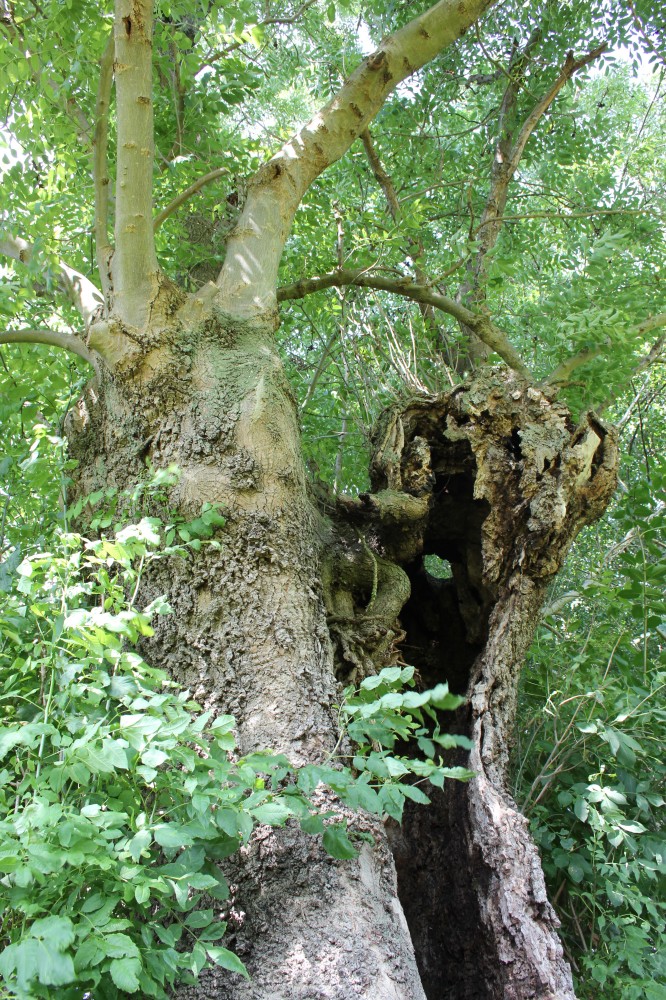
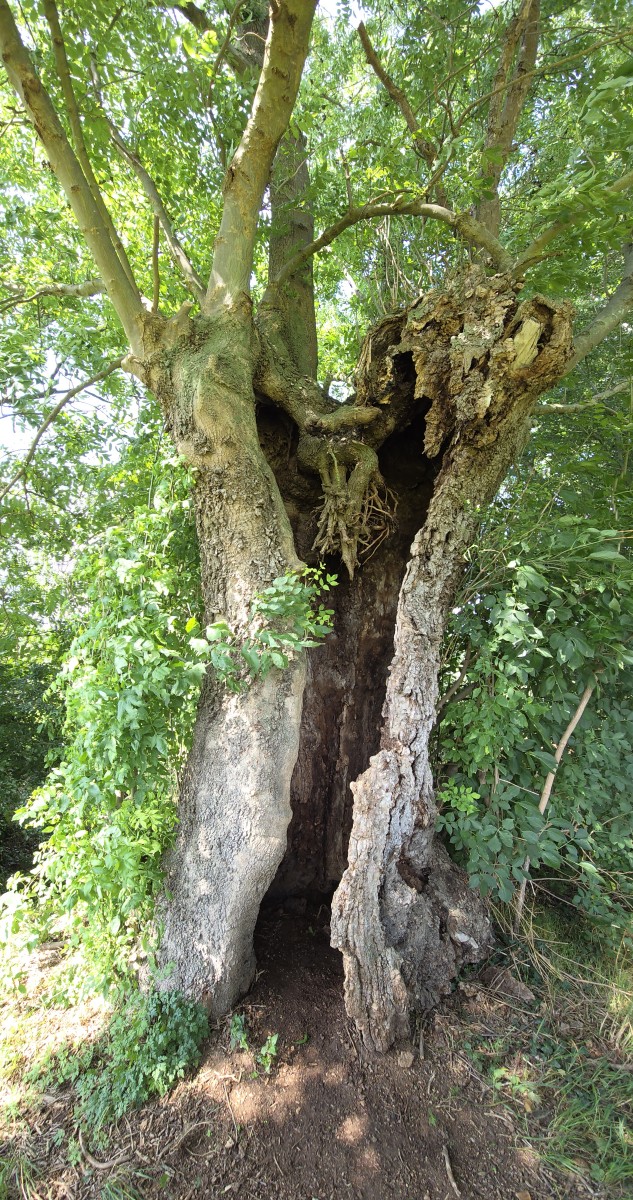
We followed the stream down to the bottom of the valley, and then left it and went up the other side. Tharash has memories of riding his bike as a boy through this area. The hills may have graceful curves, but they’re no joke either! But we went along until we came to a watermill. The museum part of it was closed that day, but the millstream was still nice.
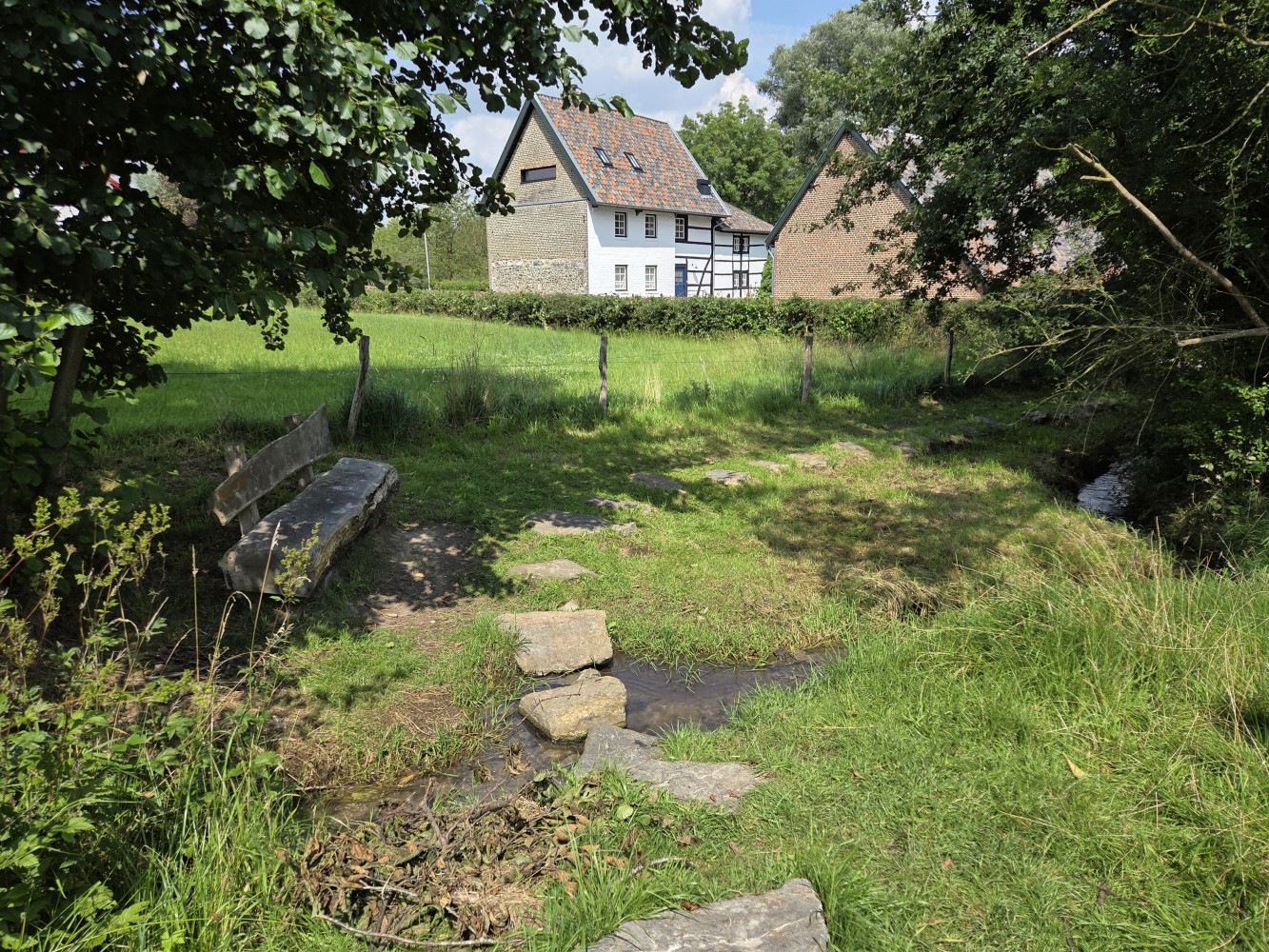
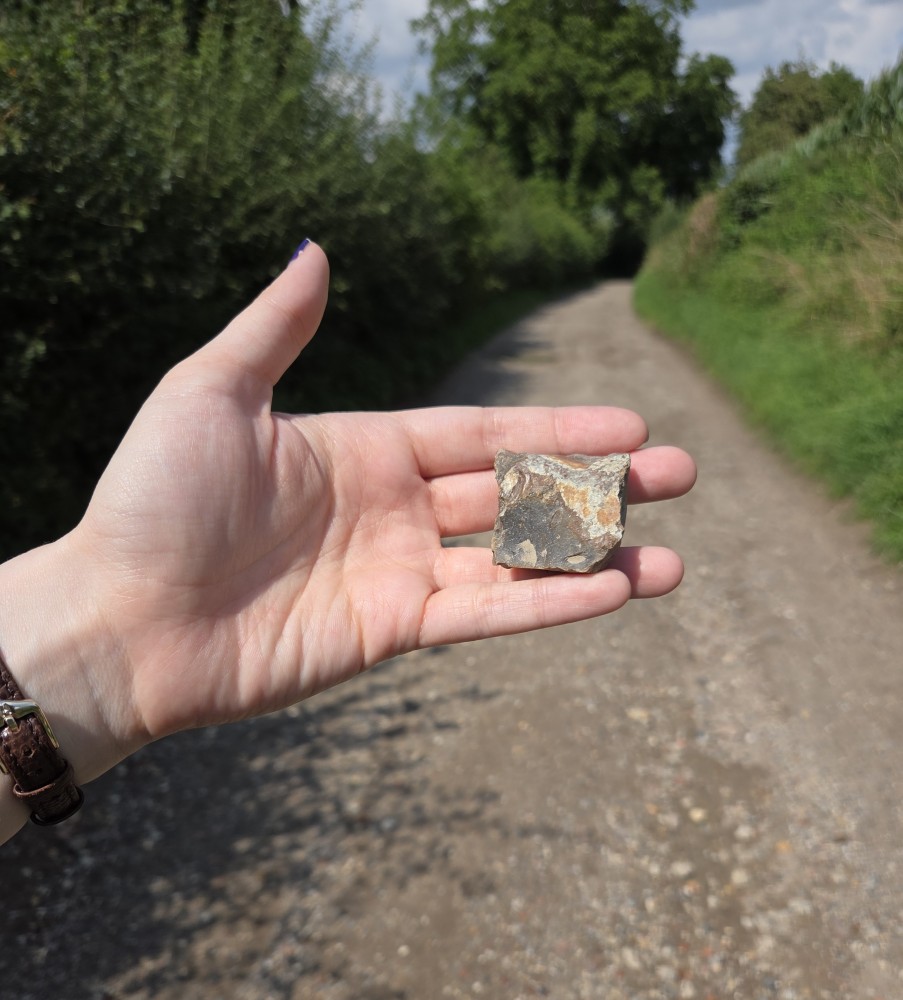
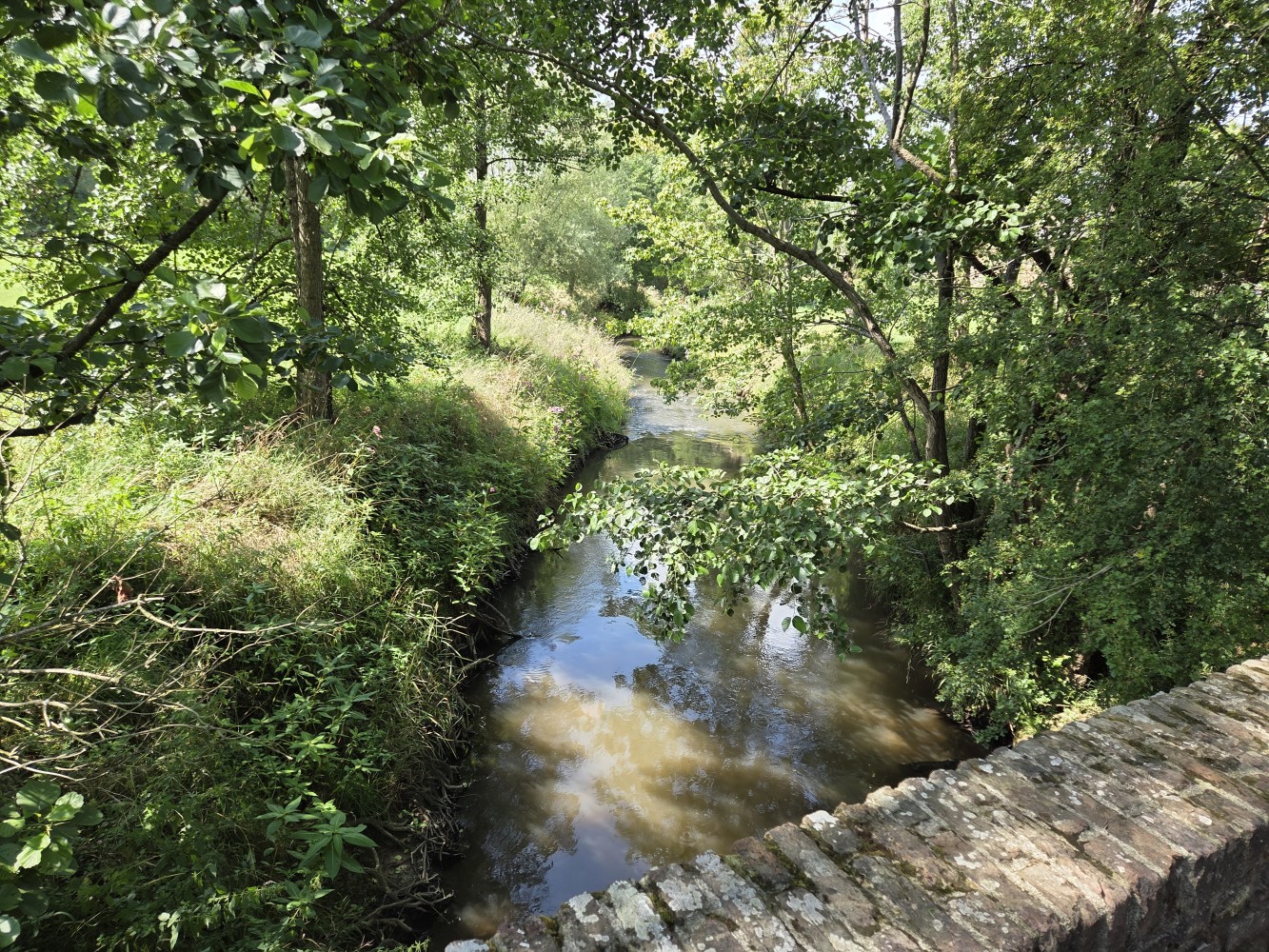
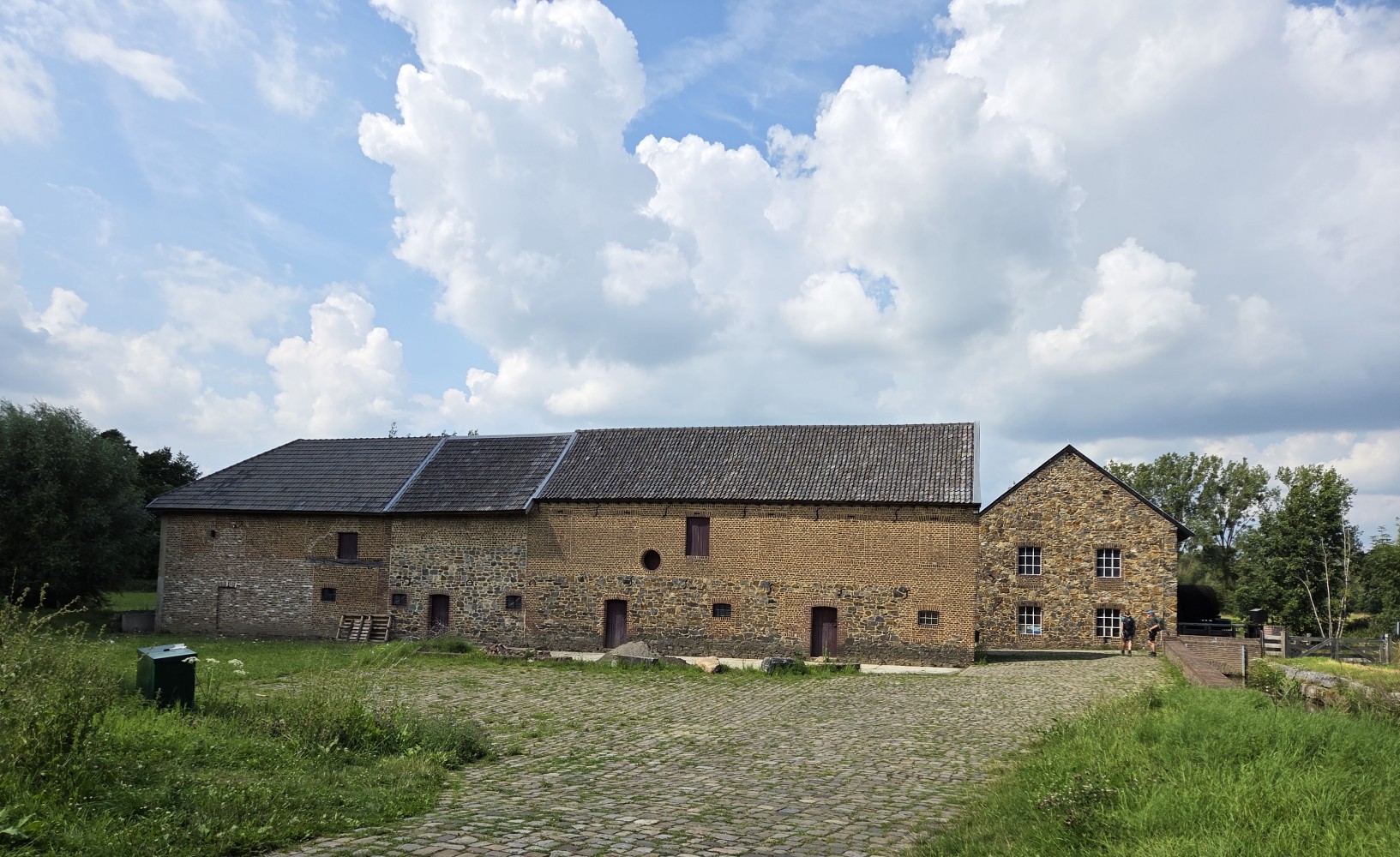
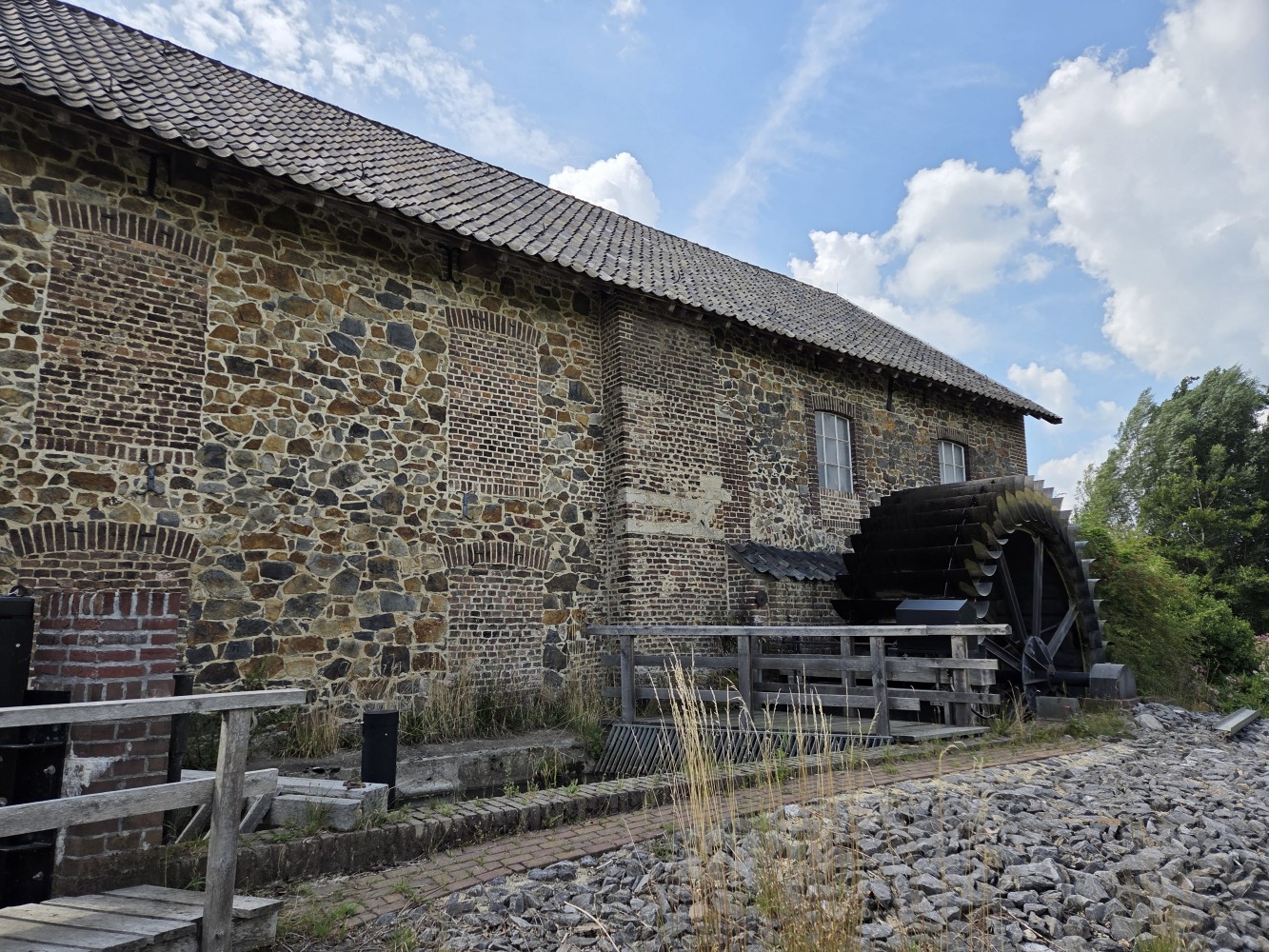
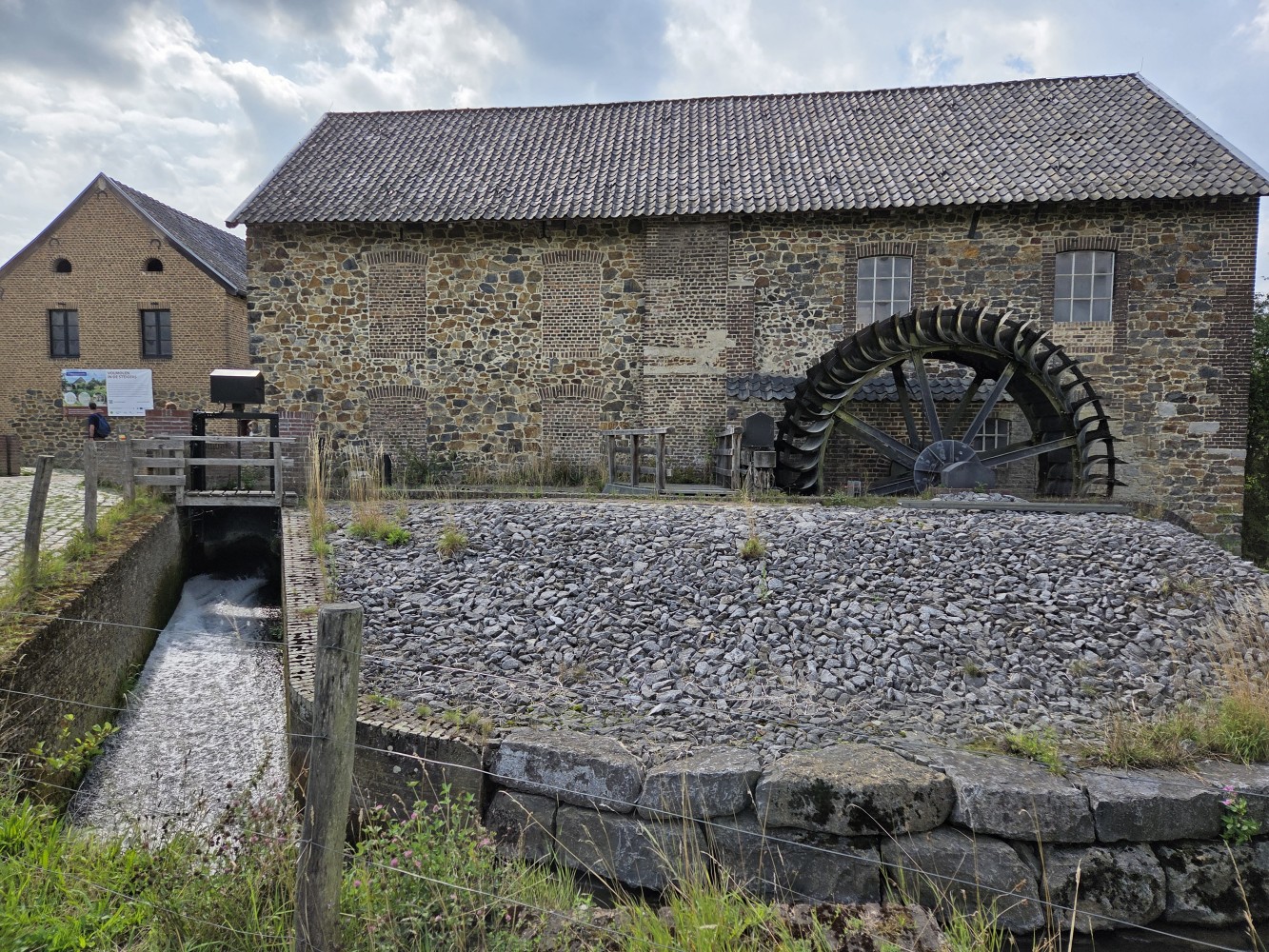
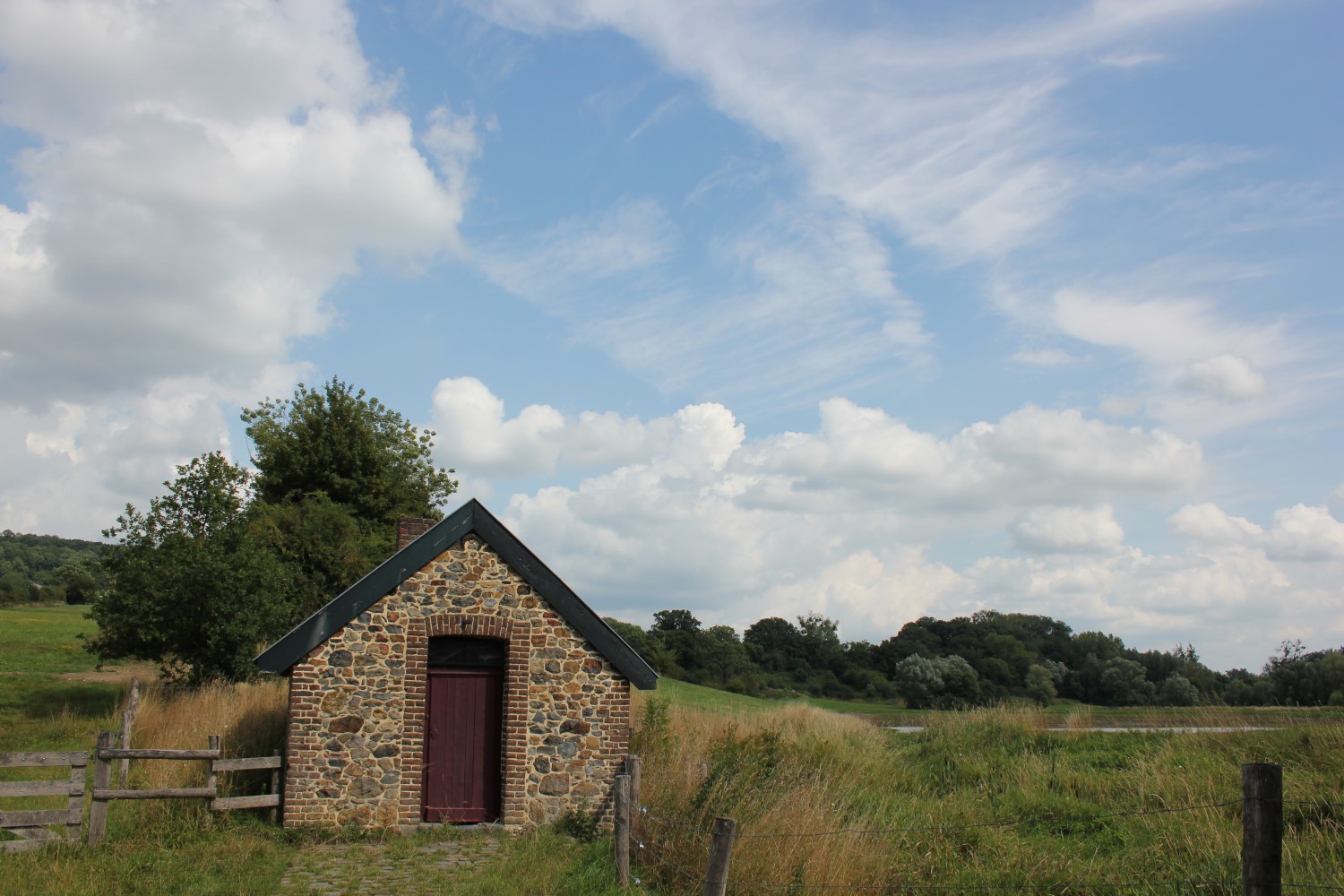
Photo by MH
Then Tharash asked if I’d like ice cream or vlaai. At first I picked ice cream, but then I changed my mind to vlaai. So he took me to a restaurant/inn, but unfortunately they were out of vlaai, so we got Liège waffles instead, with strawberries and whipped cream (and I had ice cream too). Best. F***ing. Waffles. that I’ve had yet. Hot from the griddle, crispy and slightly flaky and chewy, ahhhhhhhh heavenly.
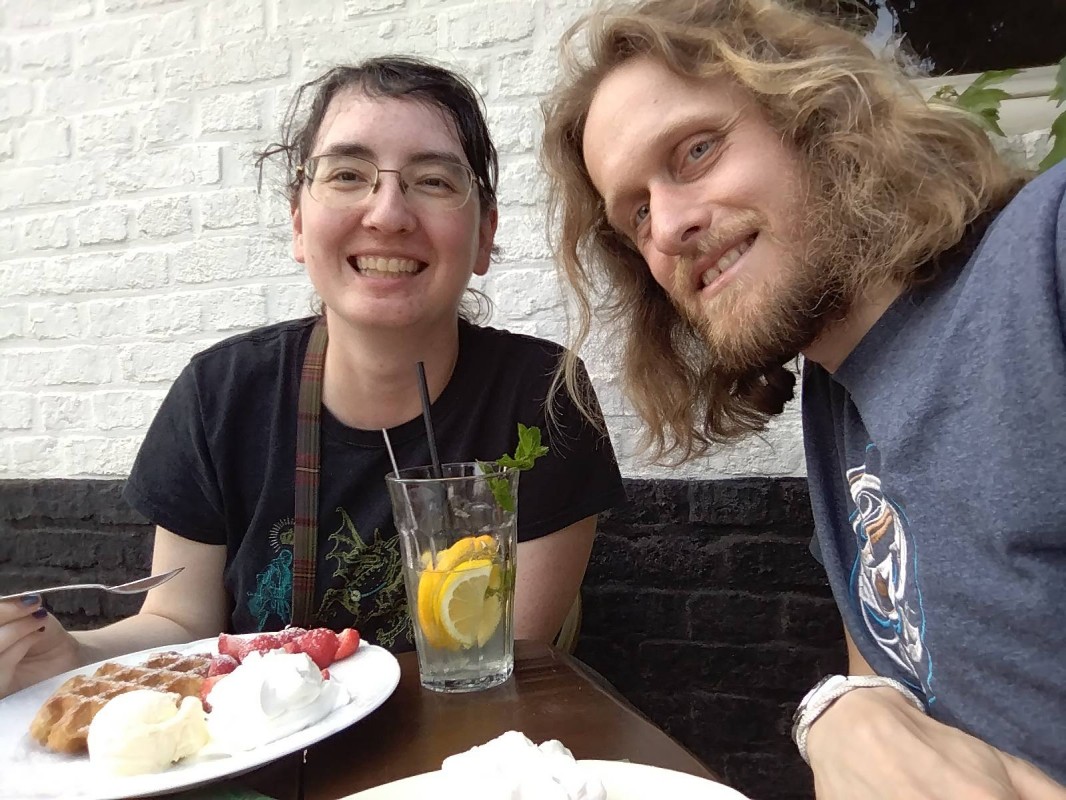
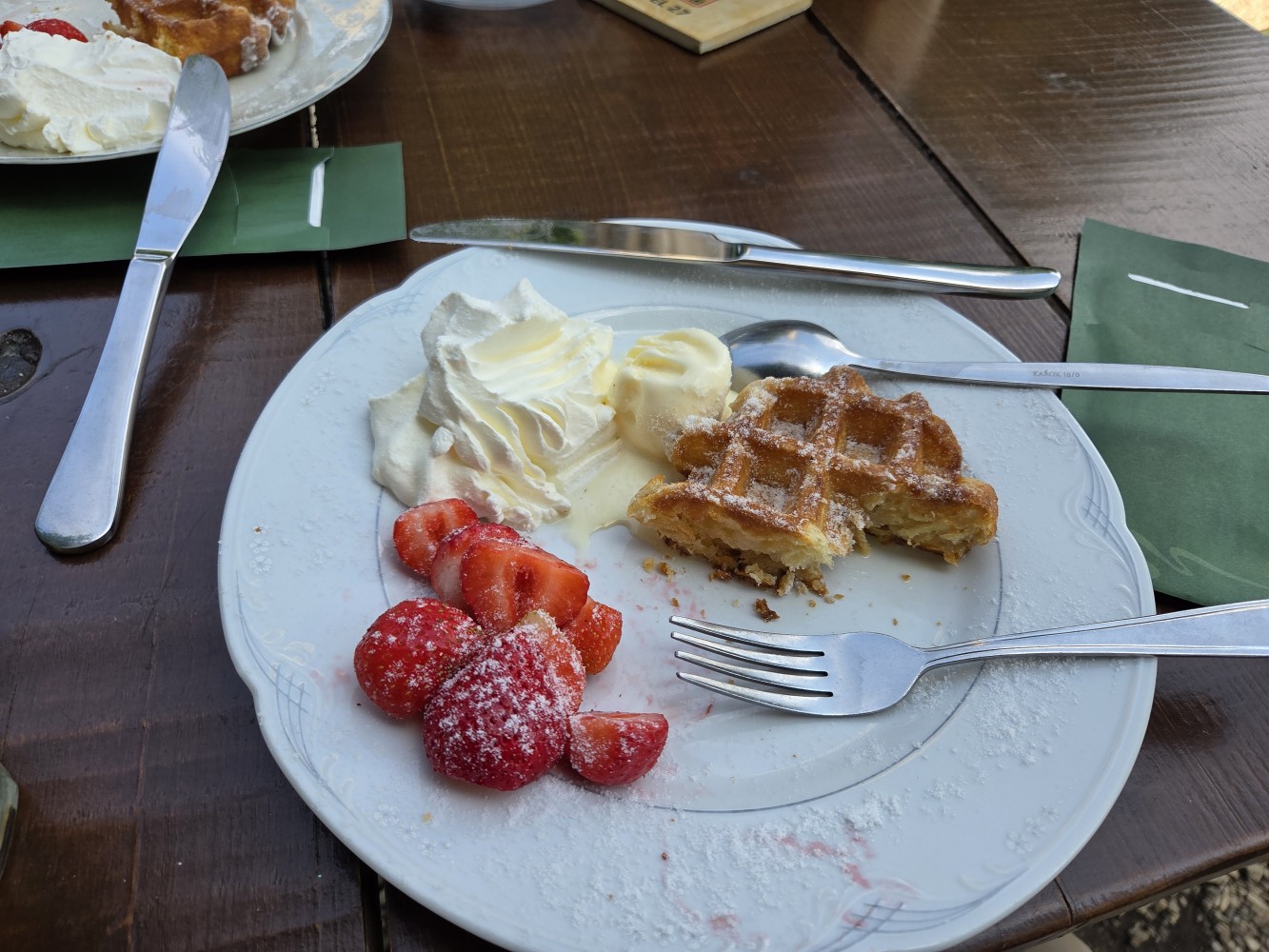
I was already this far before I remembered to commemorate this experience
Tharash messaged the above selfie of us with our waffles to his parents to see if they could guess where we were. Of course his mom got it right away, even though Tharash had only the plainest of walls for the background – but his parents stay at that inn every couple of years on vacation.
Then we headed back to Maastricht, which was quite a long bus ride by this point, and when we got back to the hostel we just flopped for an hour.
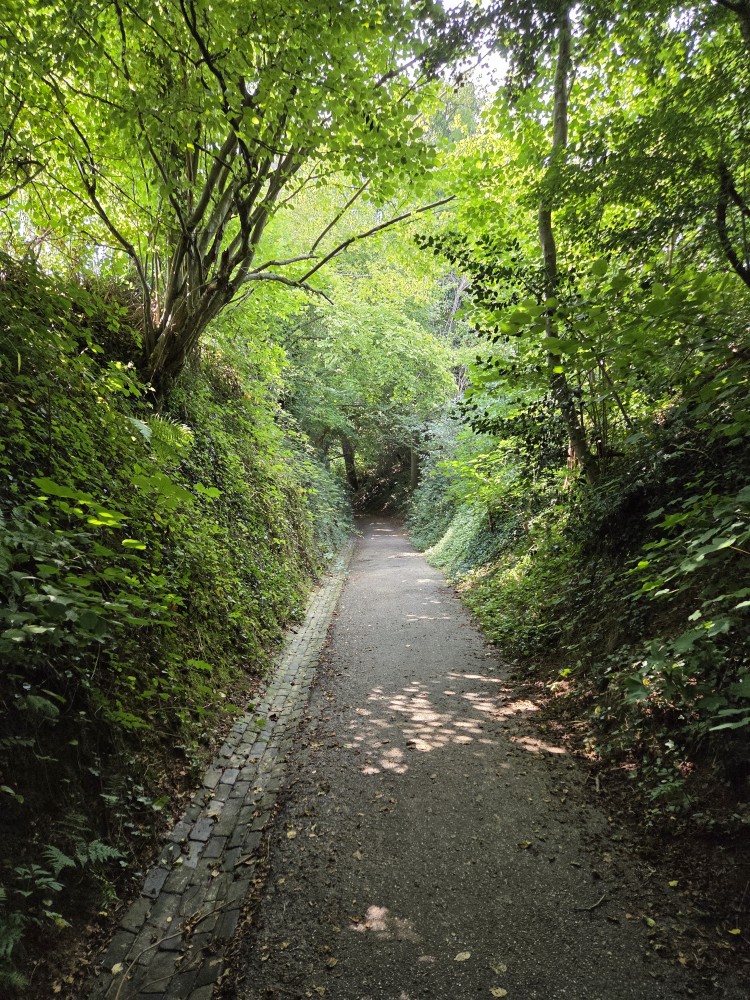
Even the lanes are hobbity
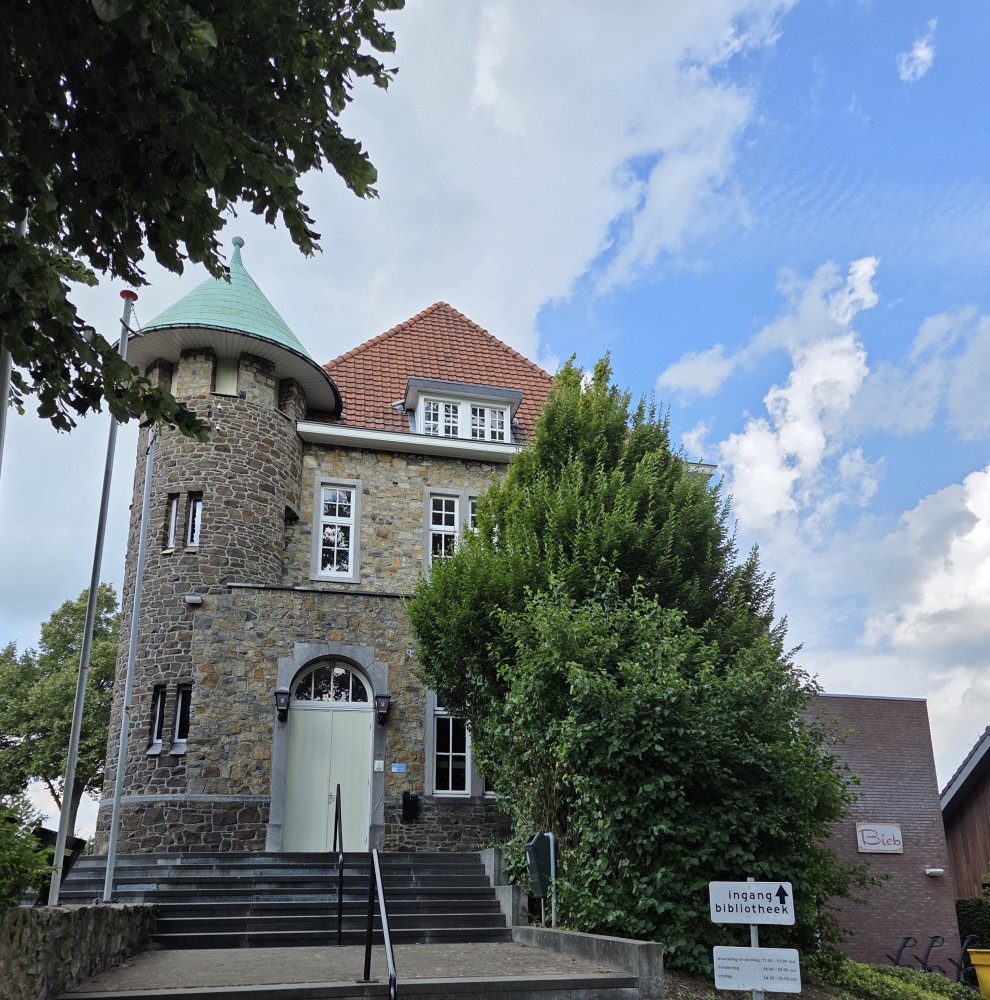
This is a freakin library
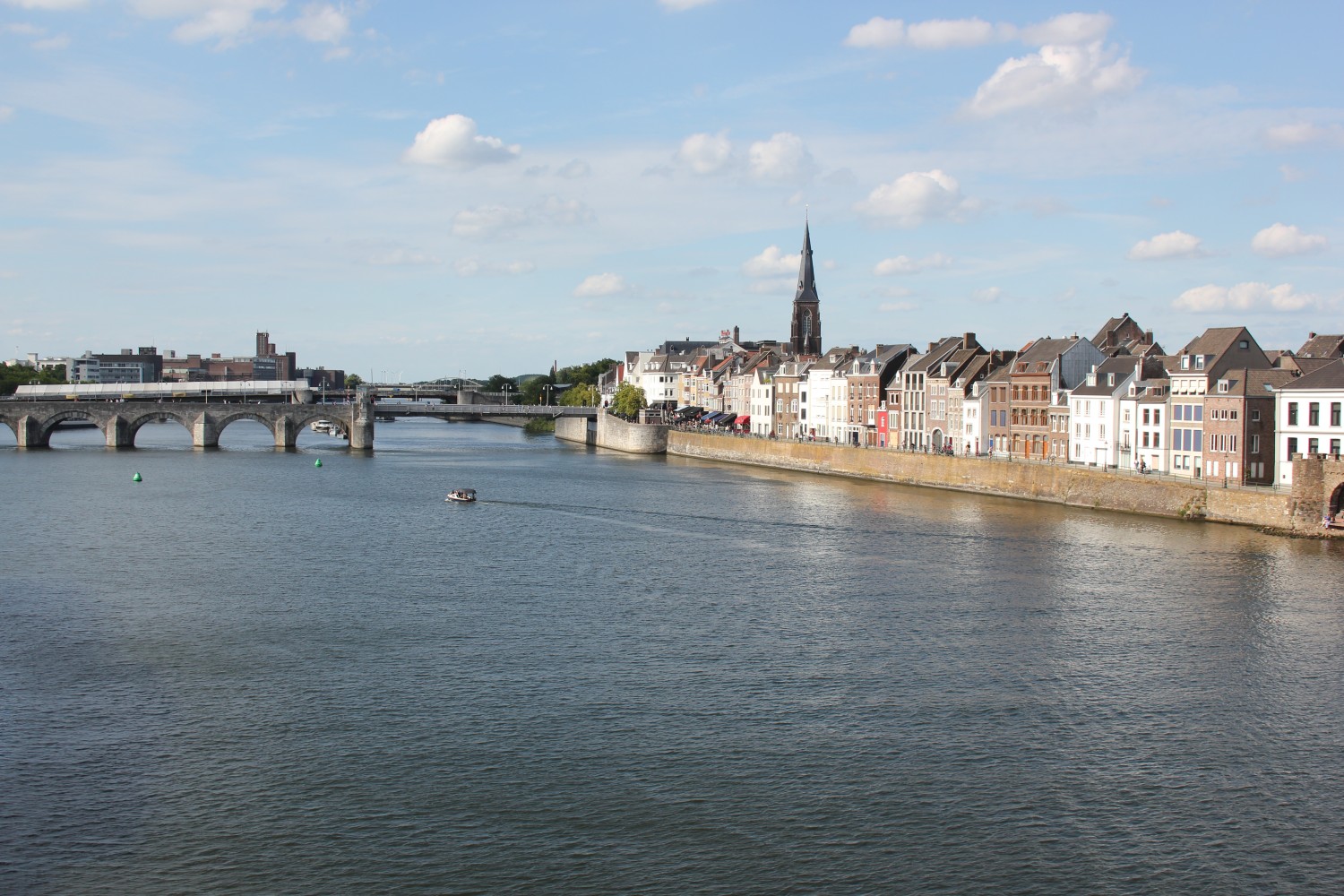
Looks even nicer than in the morning. Photo by MH
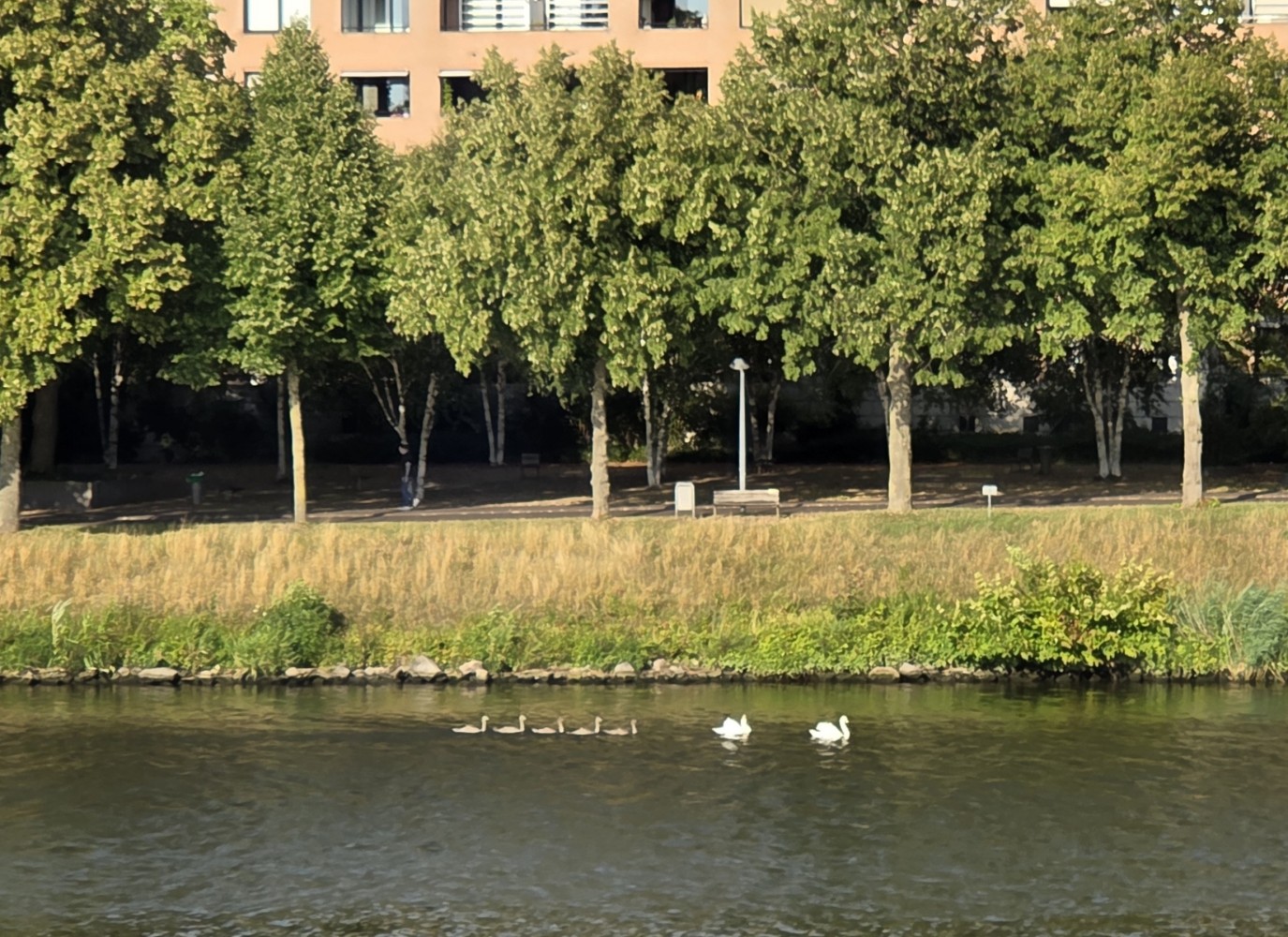
Swans across from our hostel!!
Then for dinner we went to a Japanese restaurant. They had a QR code for you to place your table order through their app, so the servers just have to bring the food to you, which is a pretty good system. I had tori miso ramen (fried chicken), and Tharash had the prawn ‘stone bowl’ which is a collection of shrimp, vegetables, and rice in a stone bowl heated to oven temperatures so it keeps cooking as you eat it. Also I had a watermelon lemonade, which was good but it… didn’t taste like either of those things. We were pretty full, but Tharash wanted to see how their Indonesian cake was – it’s a cake of thin layers, and they served it with green tea ice cream.
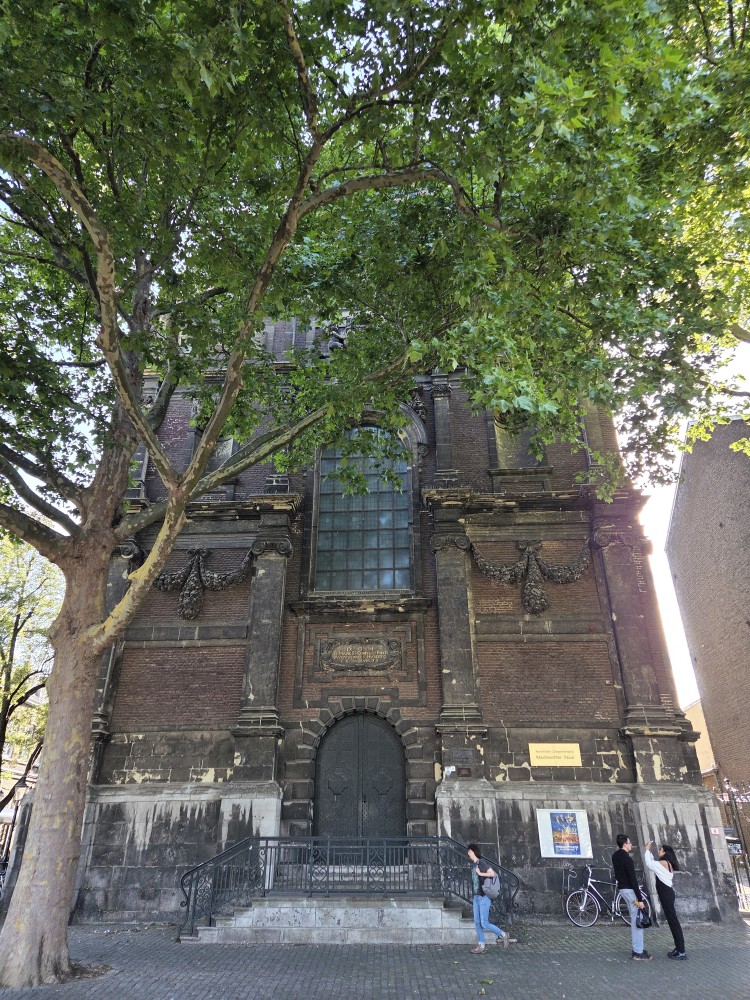
A nice building near the restaurant
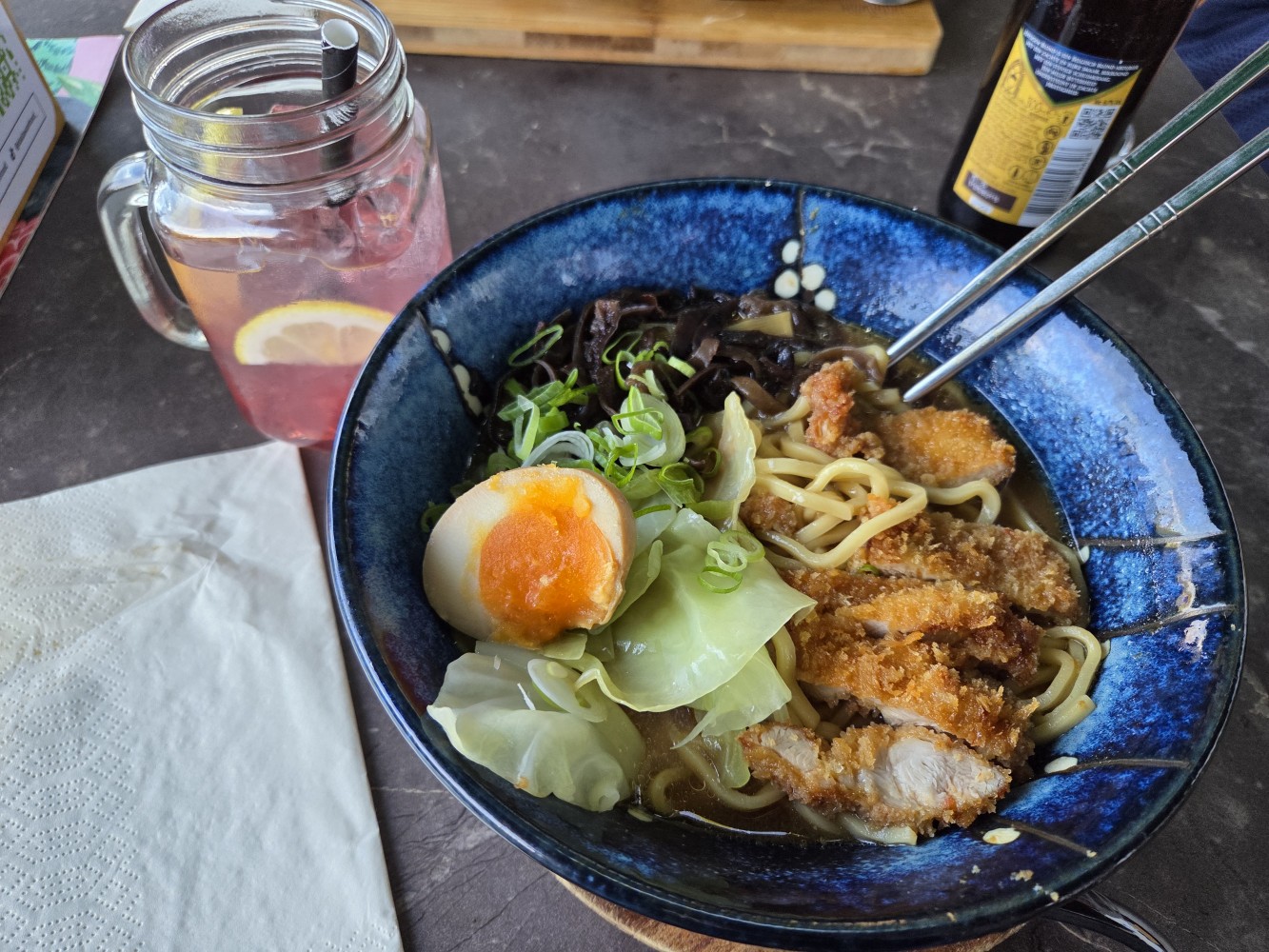
OM NOM NOM NOM (yes I know my chopsticks are in the rude position but I wasn’t thinking about that at the time)
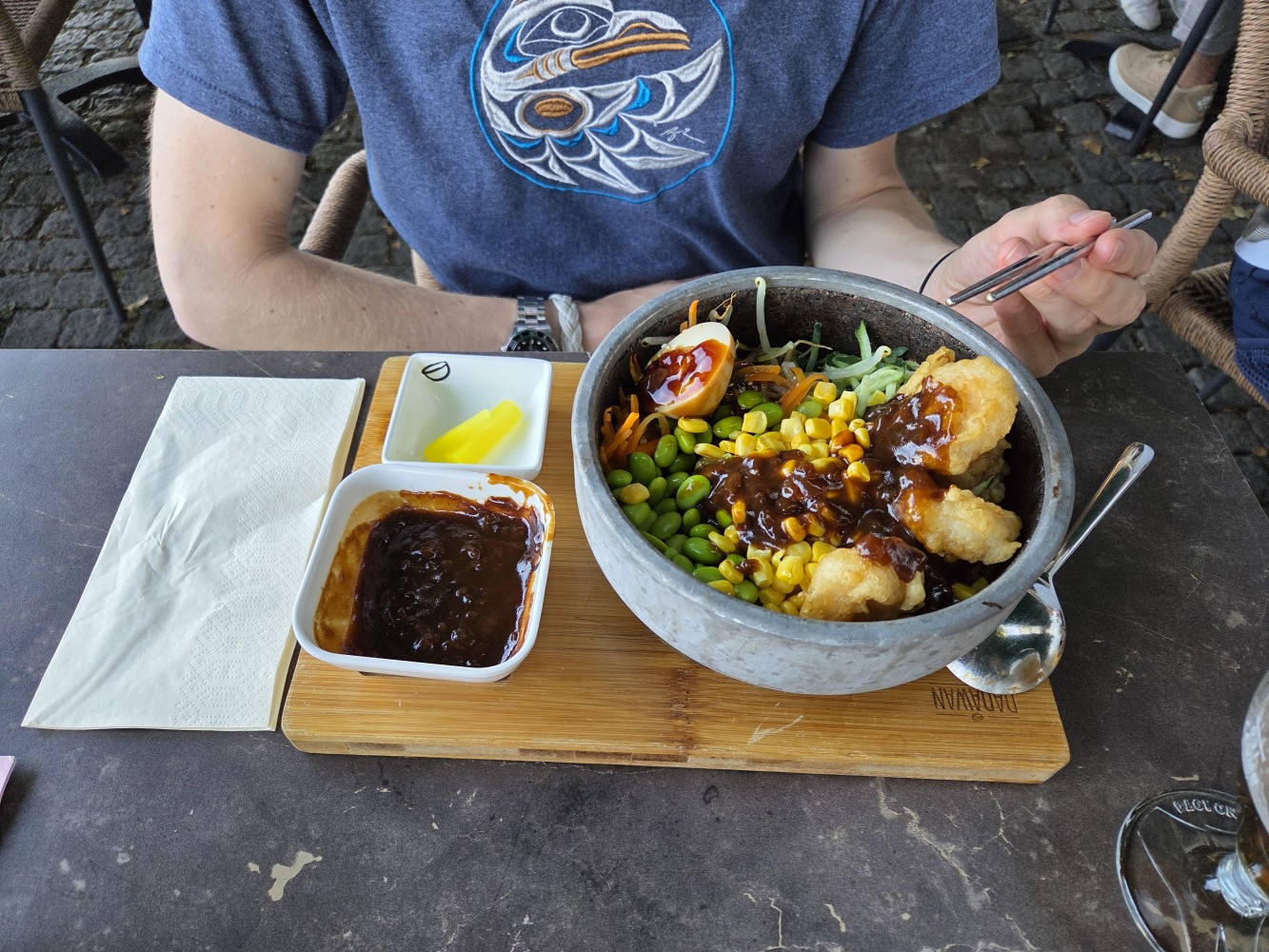
omnomnom
Then we walked around some more to take pictures of the city in the sunset since we knew the sunset was going to be good again. There are some eagle owls that are known to nest outside the city, and Tharash had been planning to go see them, but he decided he could do that on another visit. There was a restaurant by the medieval wall that had live latin music which was very groovy.
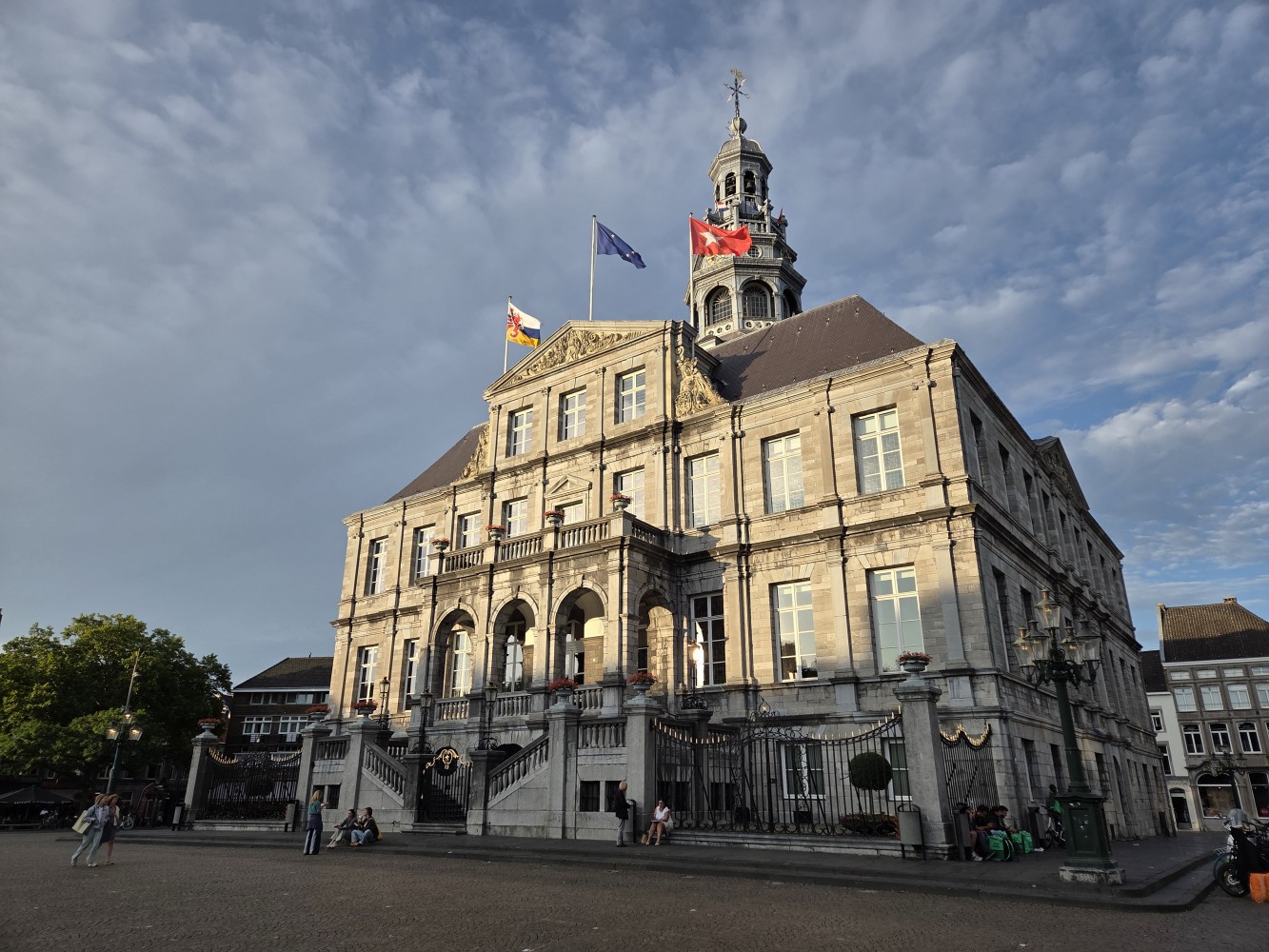
City hall
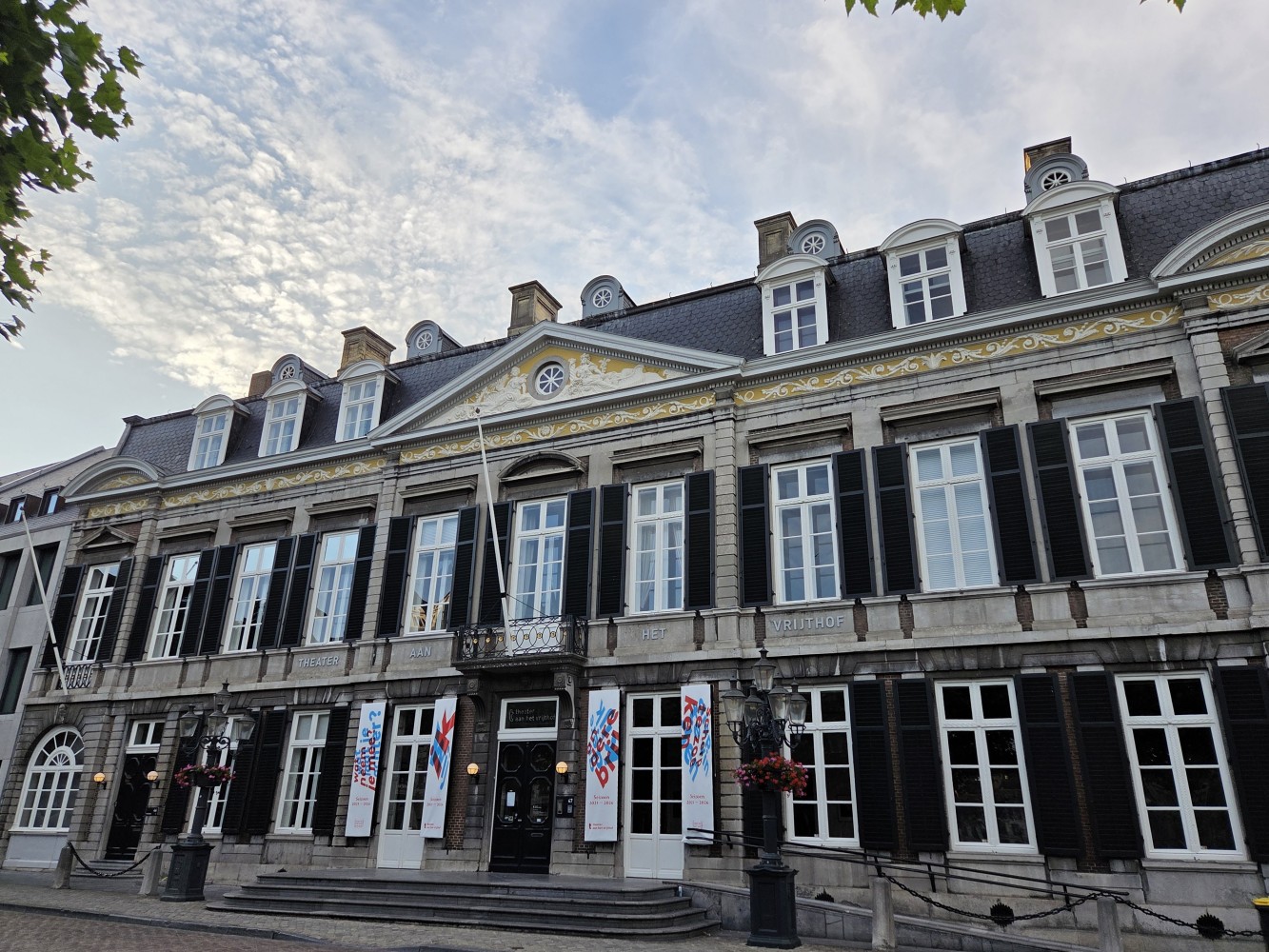
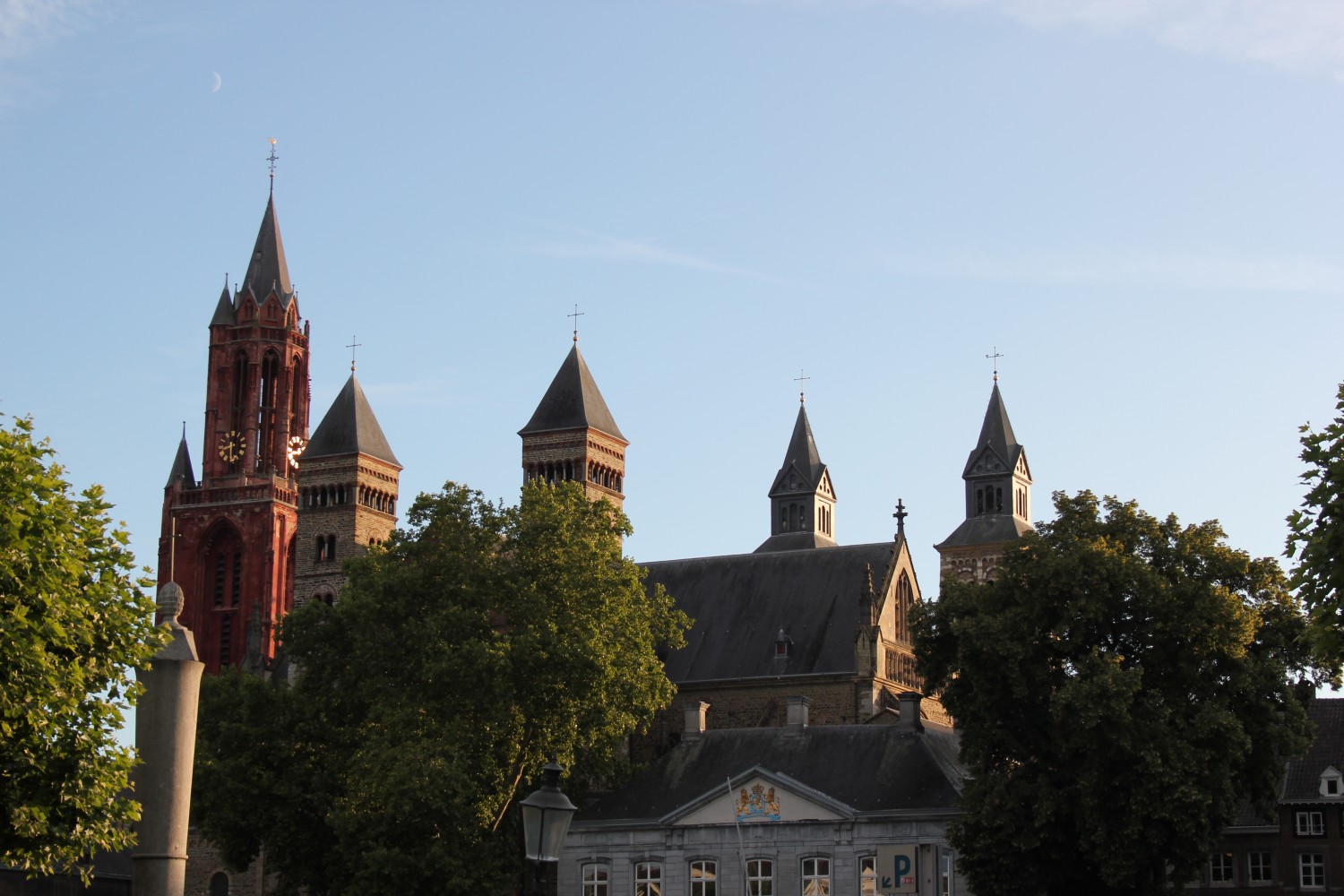
Photo by MH
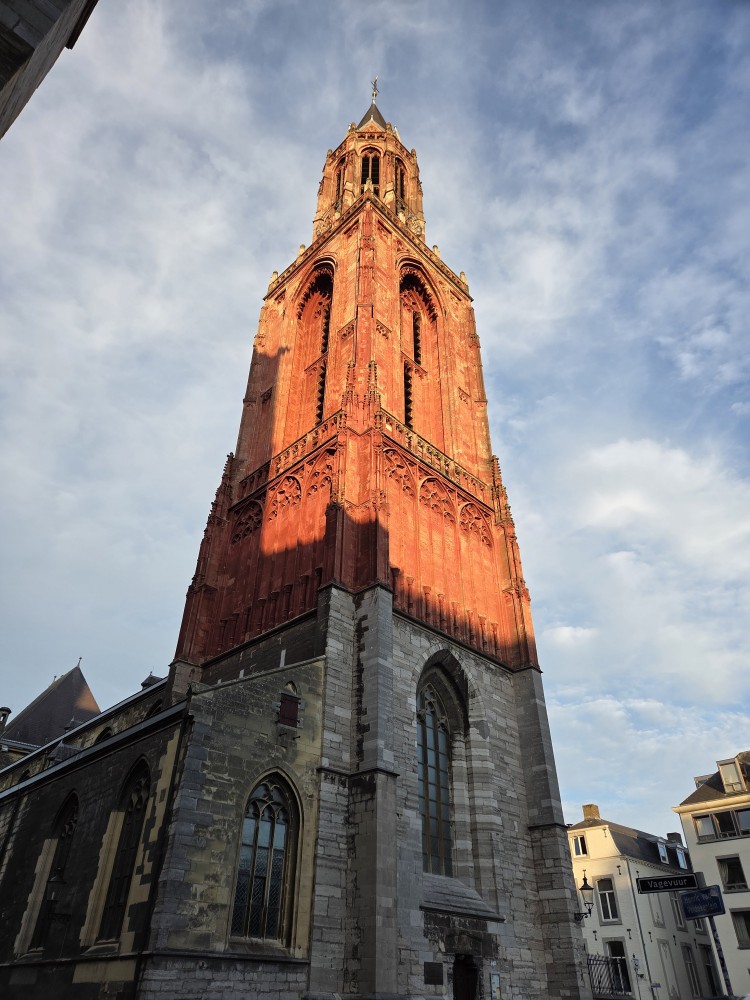
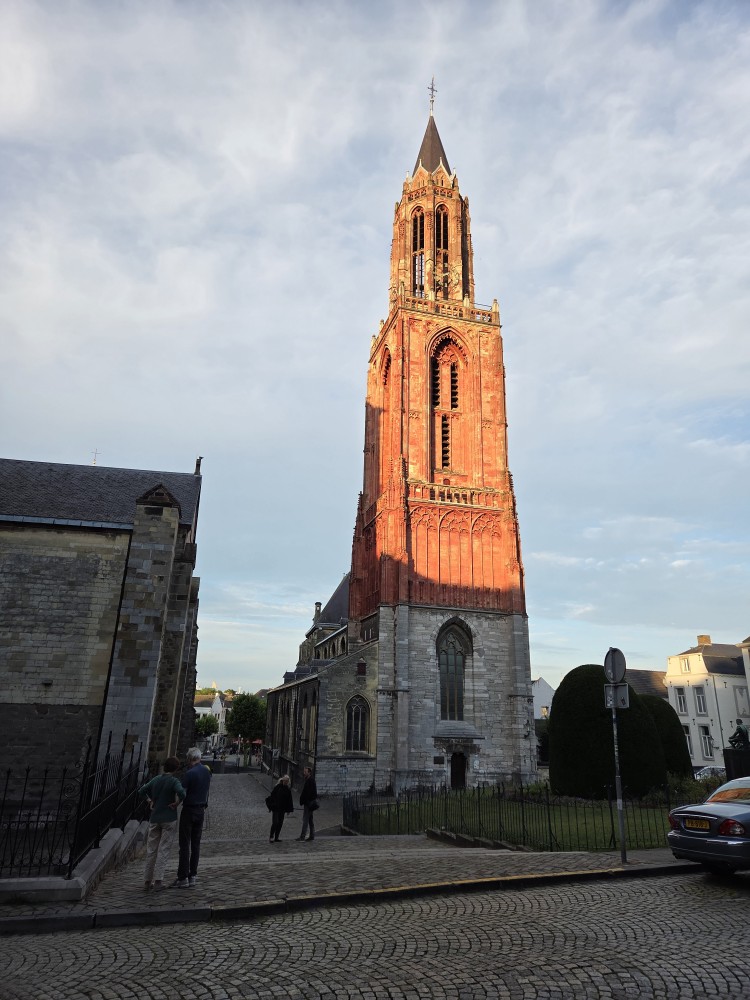
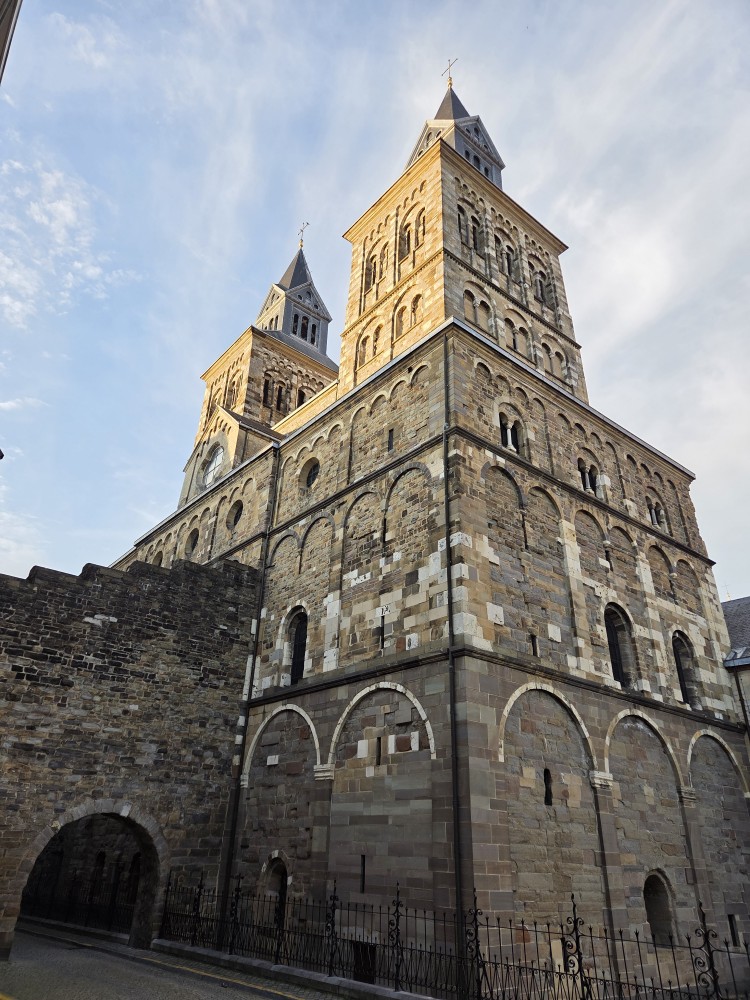
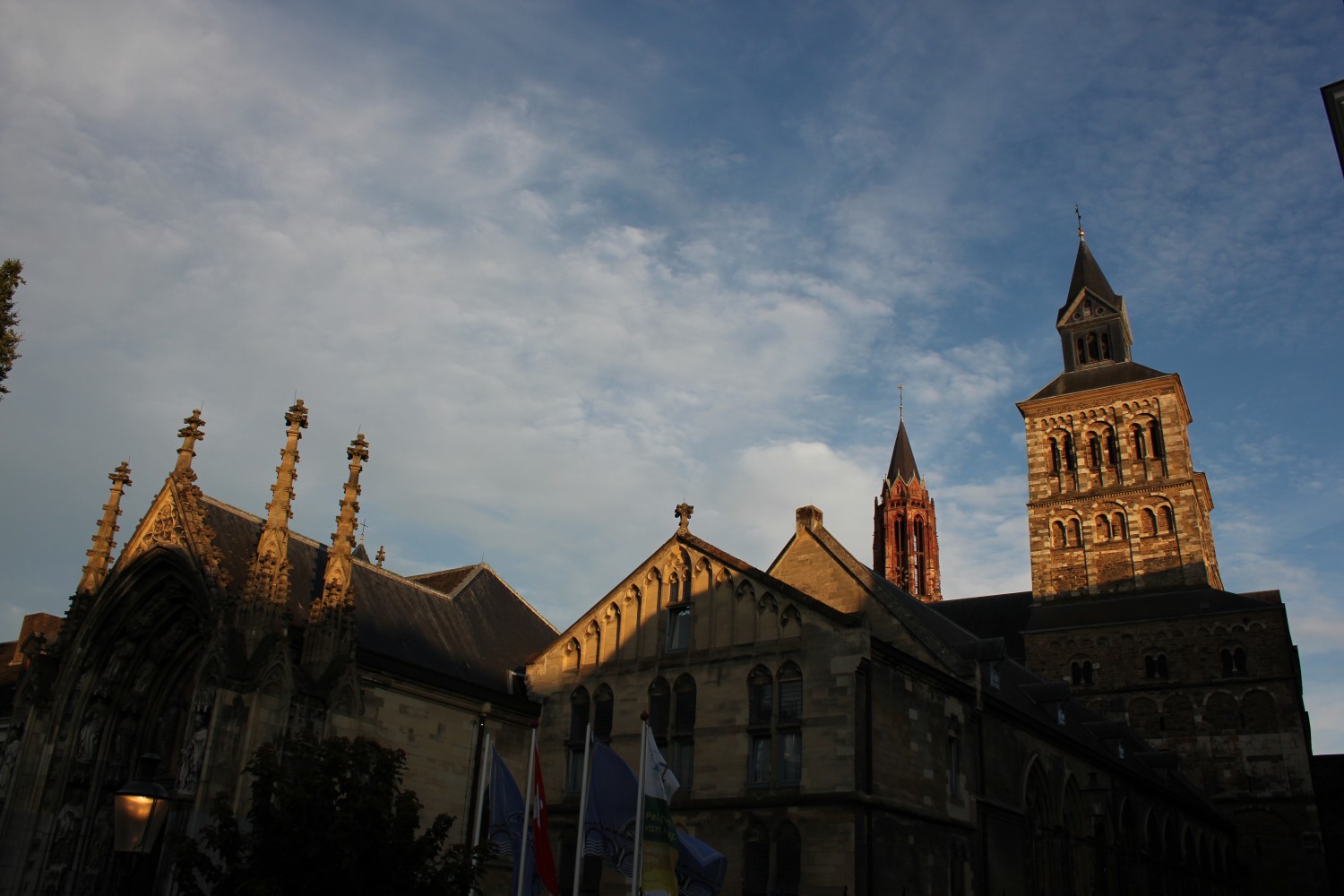
Photo by MH
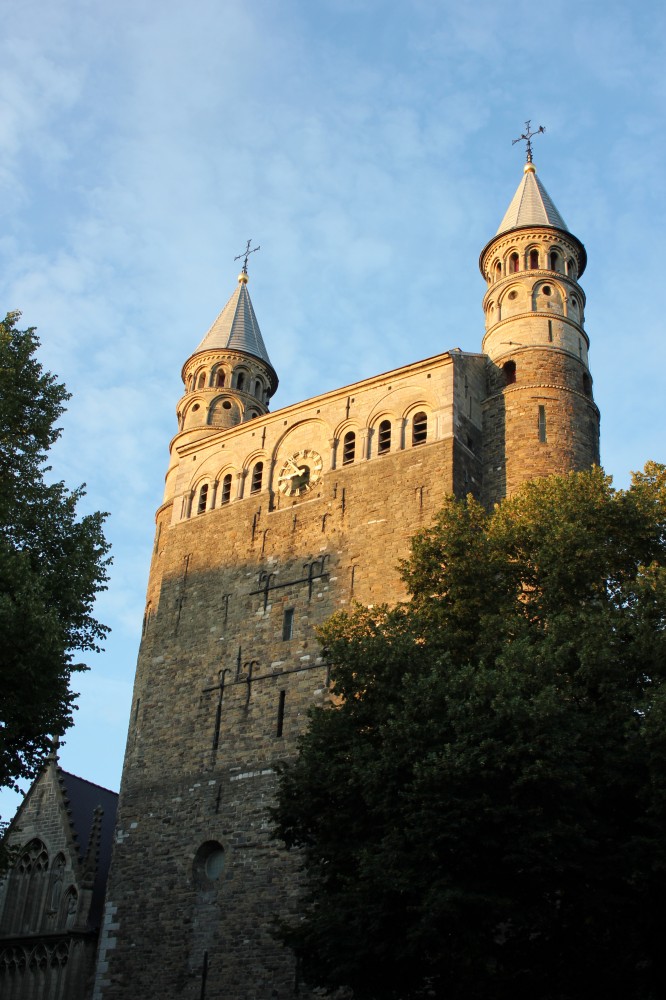
Photo by MH
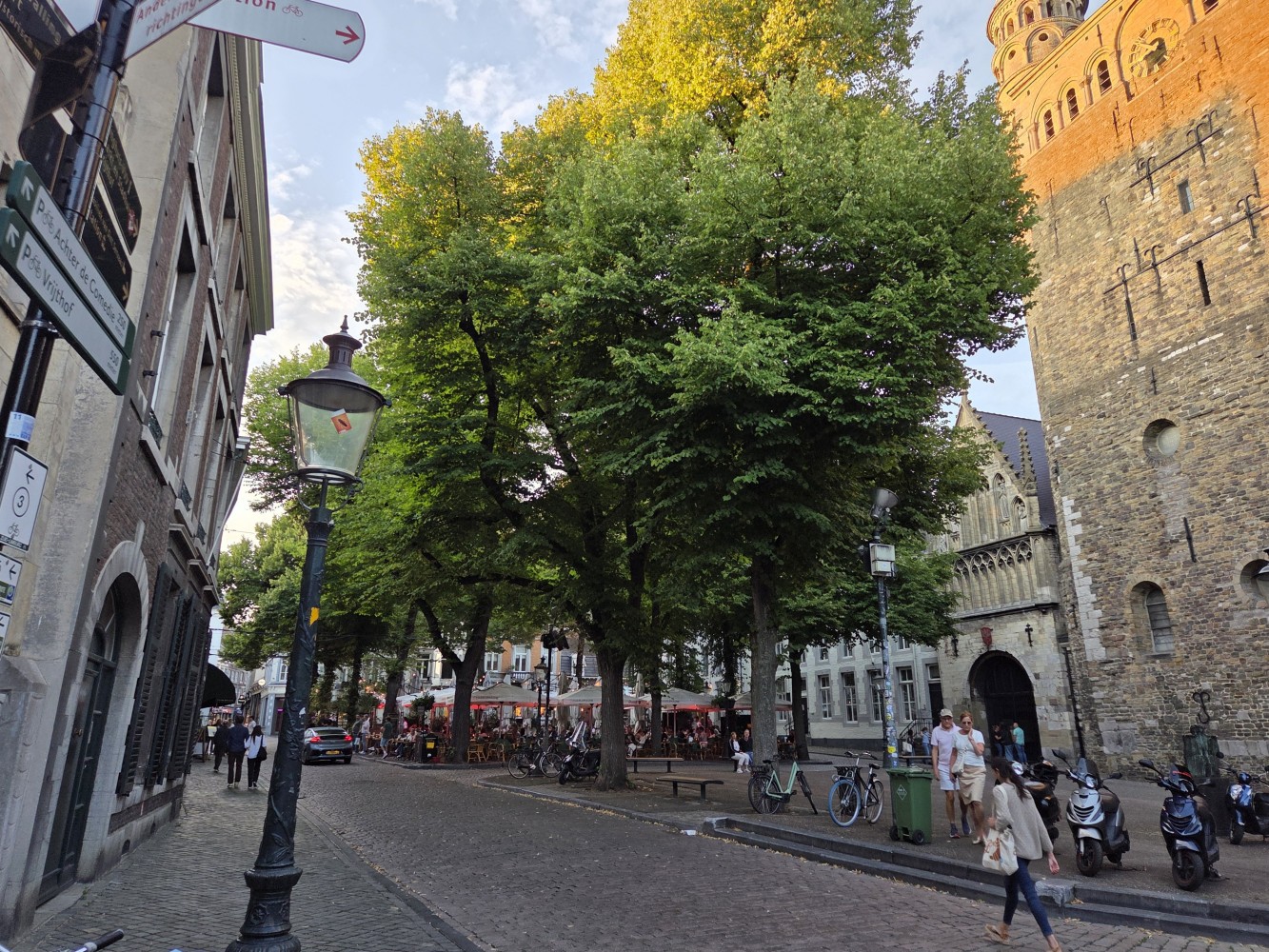
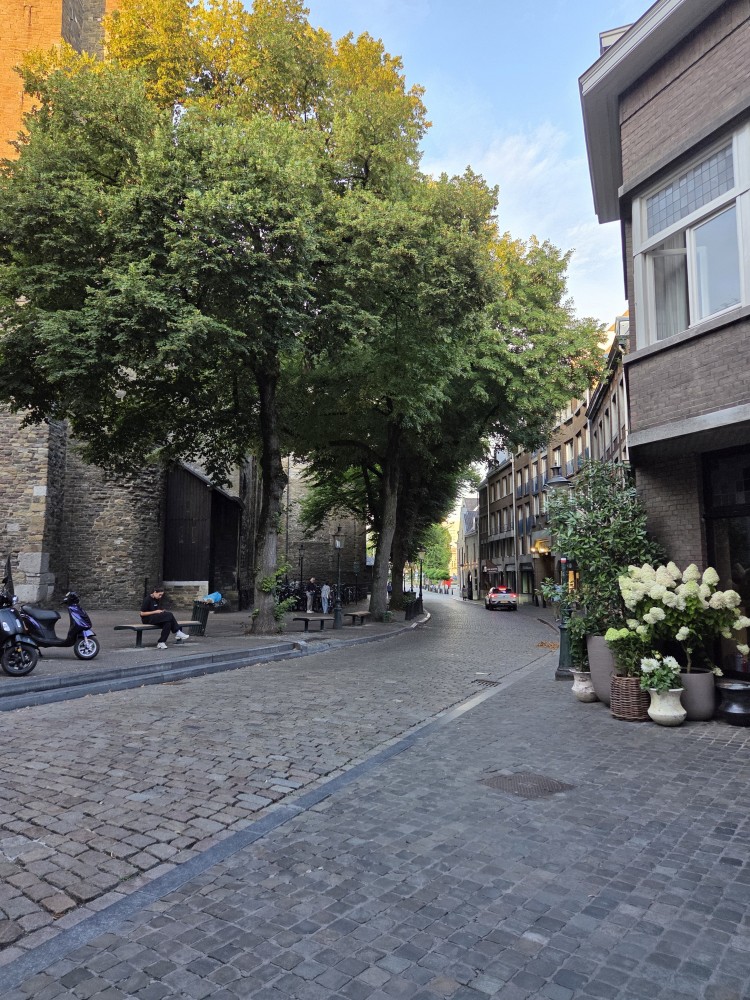
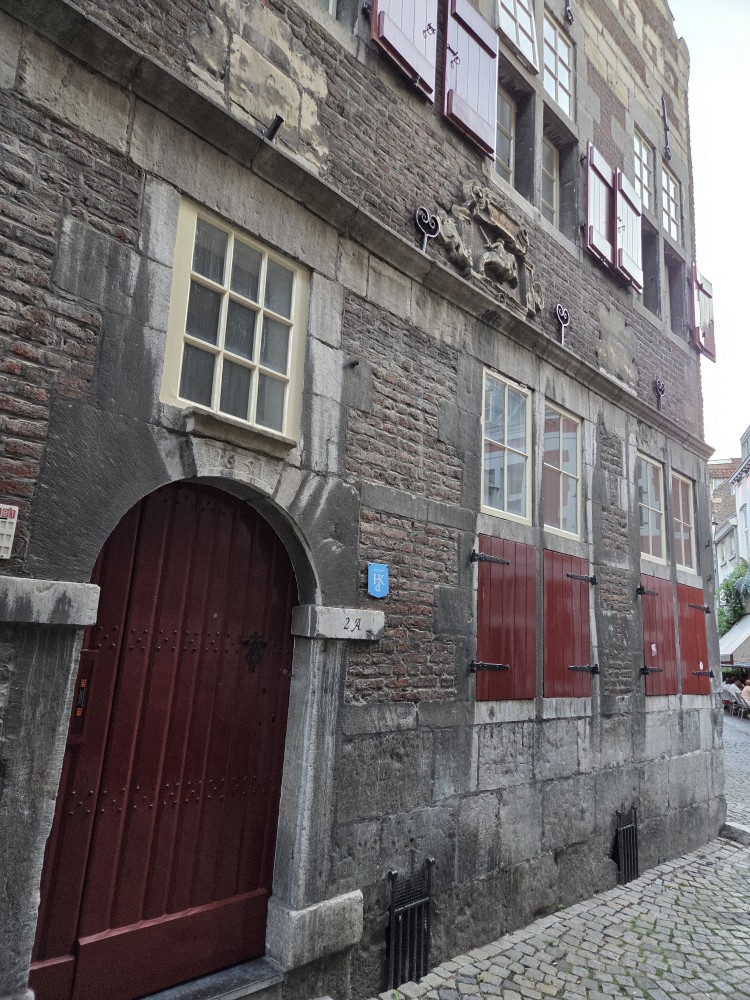
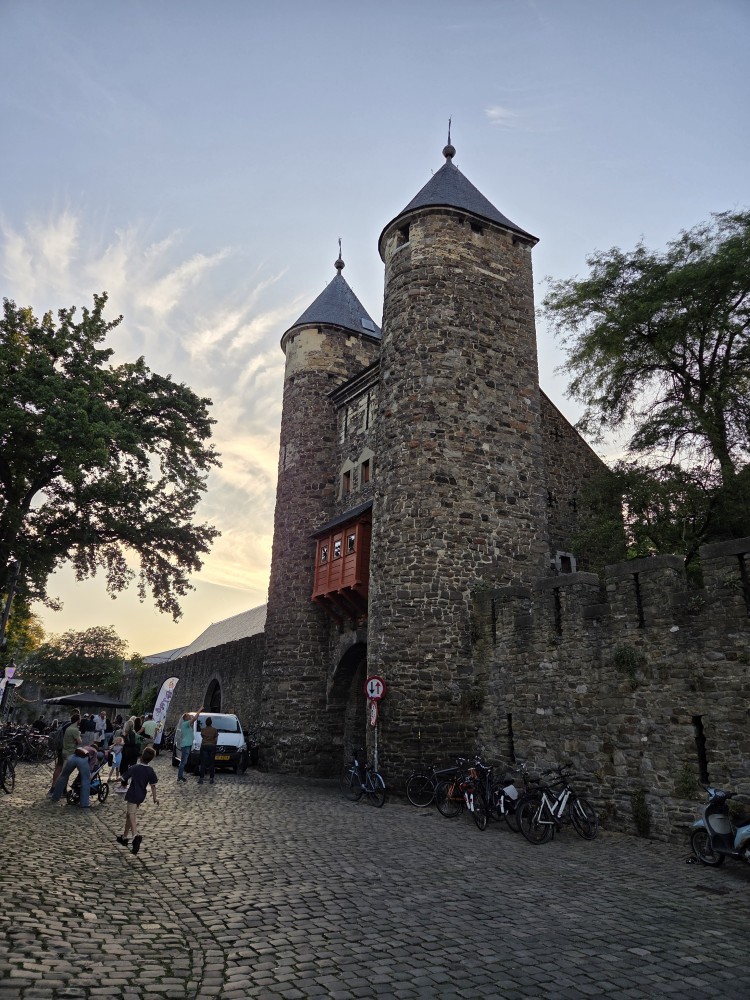
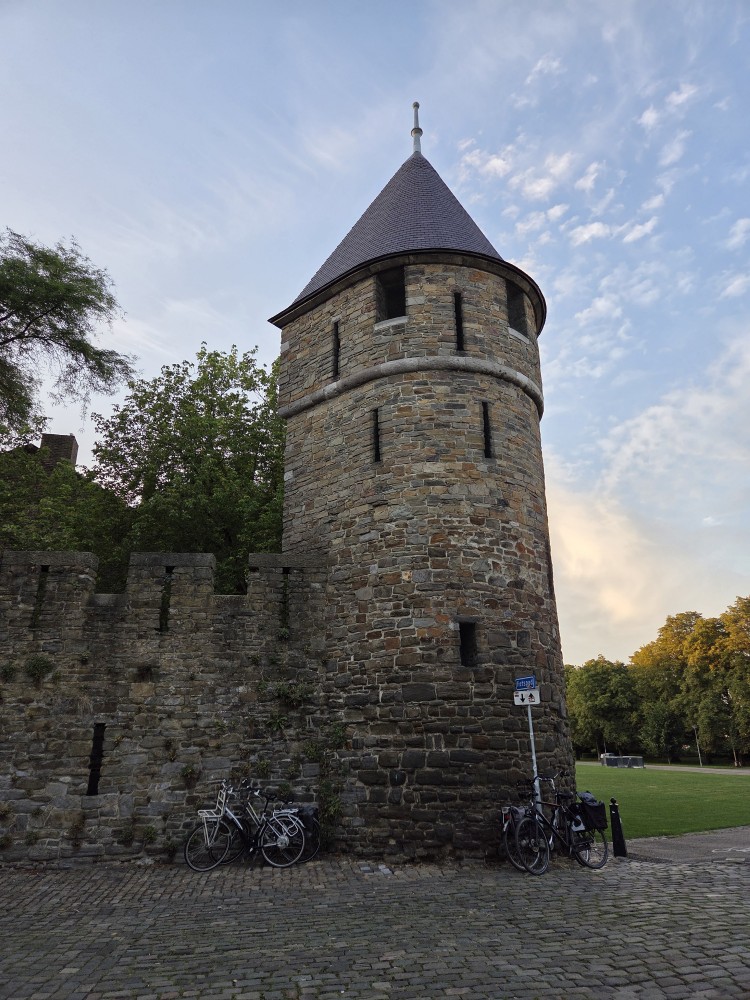
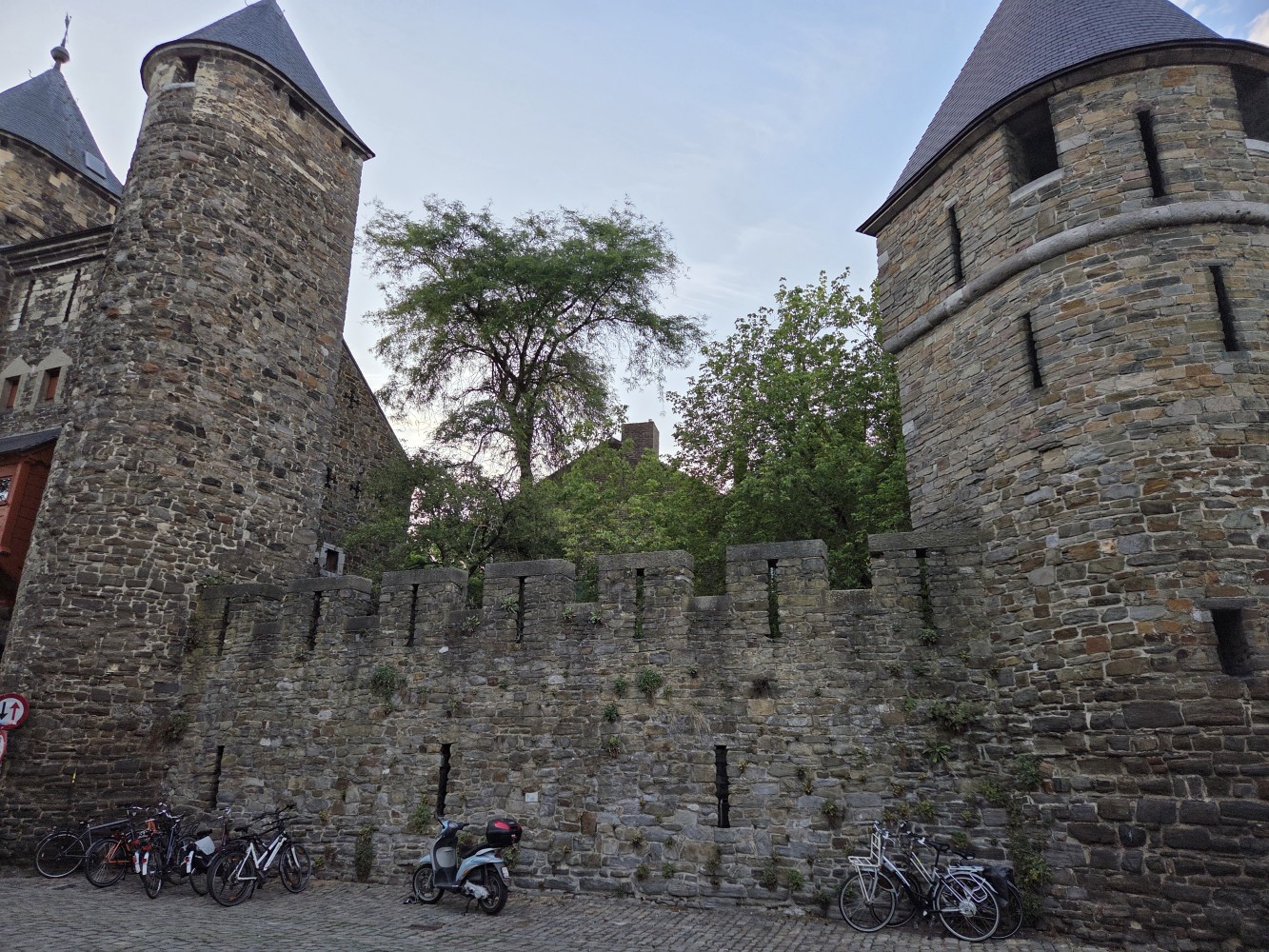
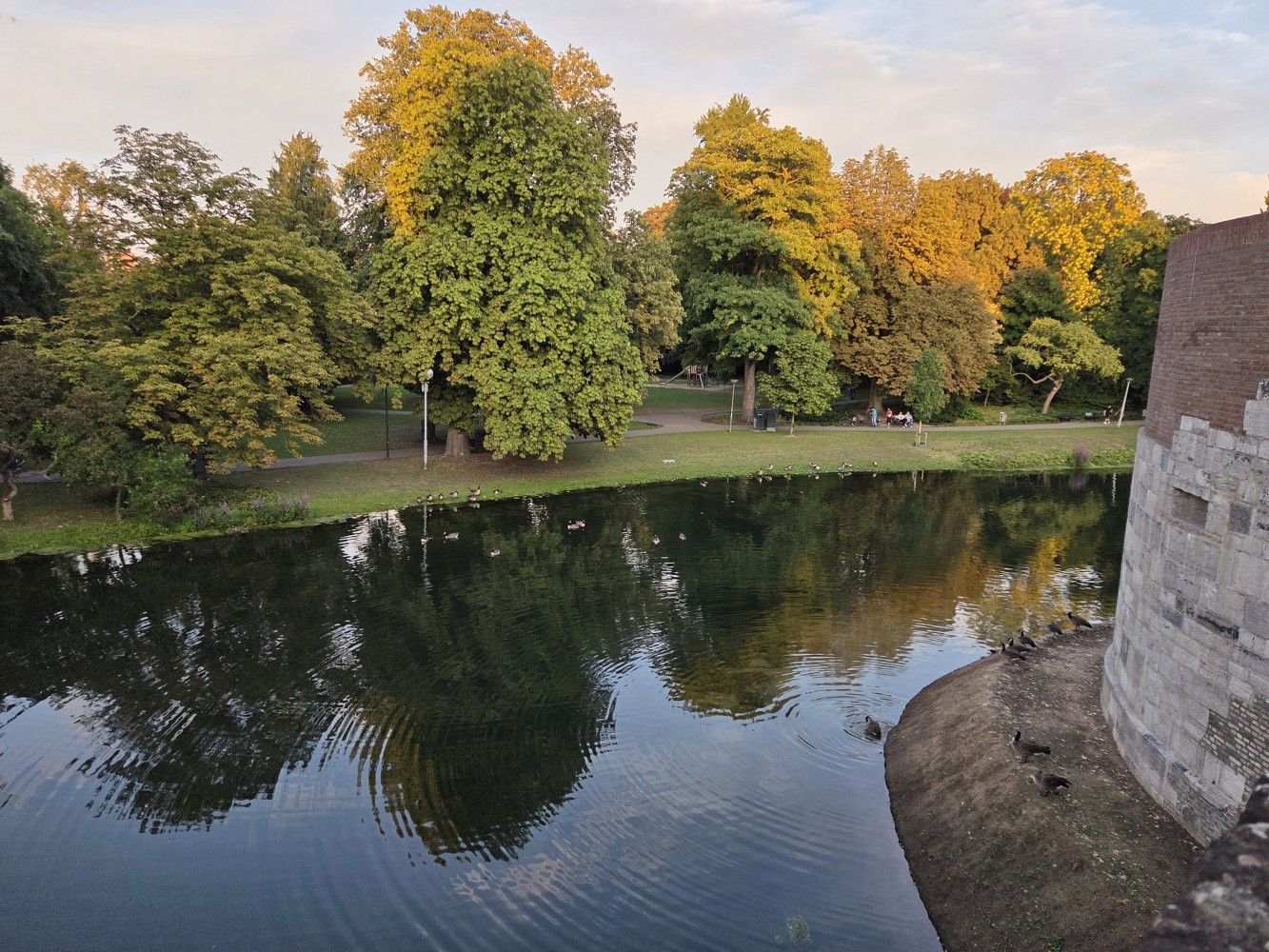
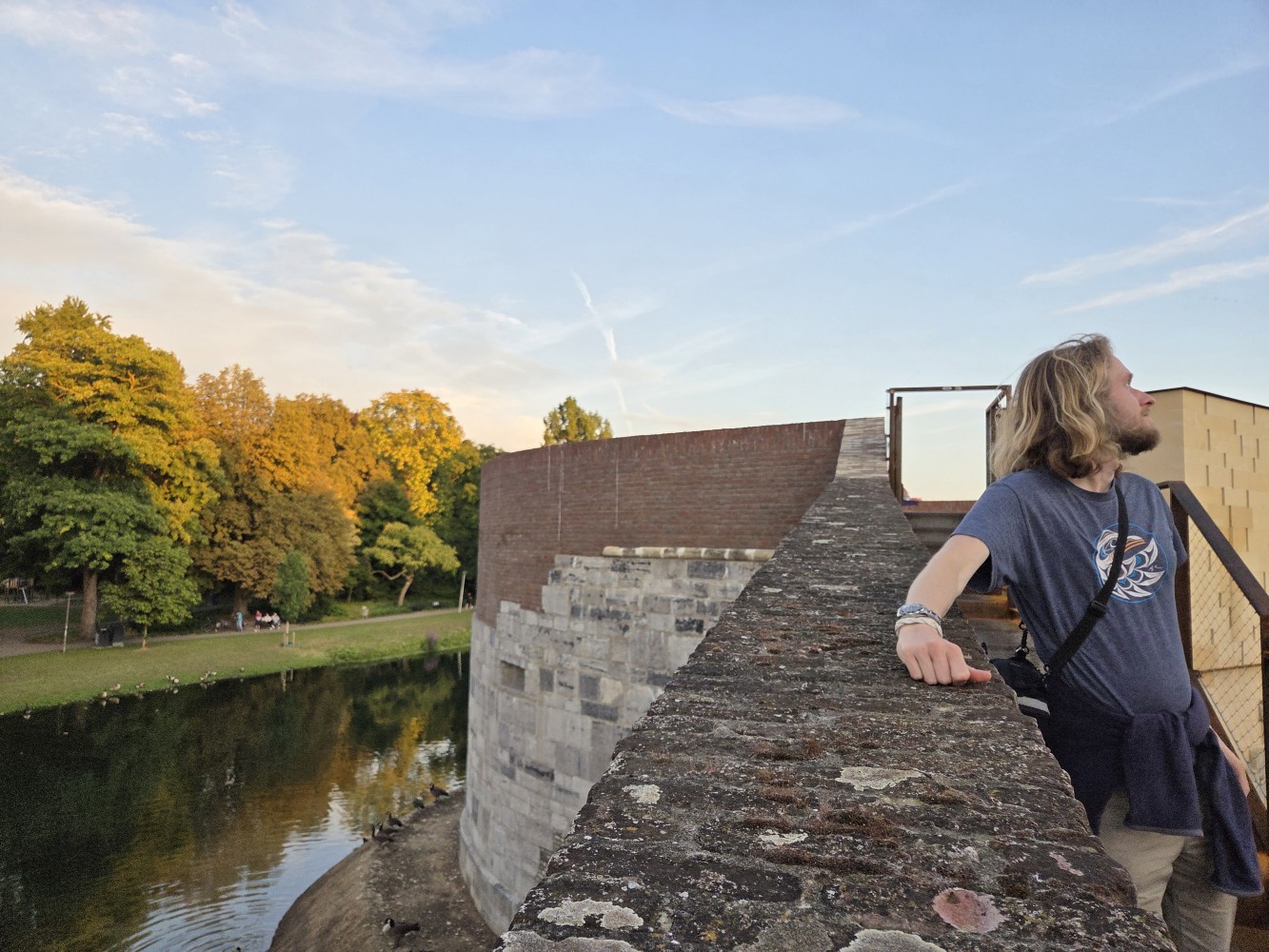
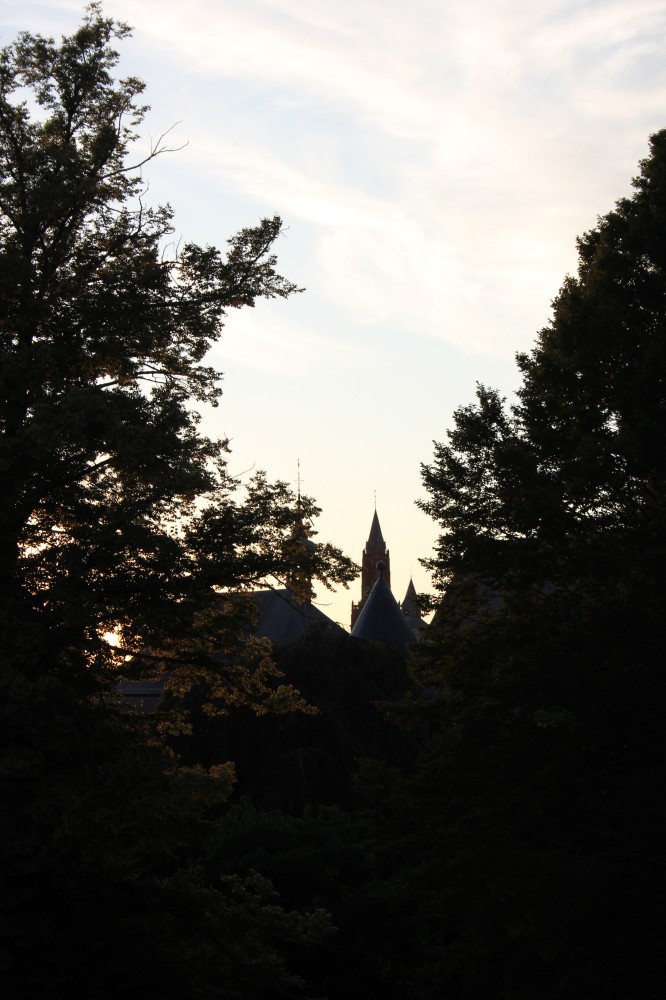
Photo by MH
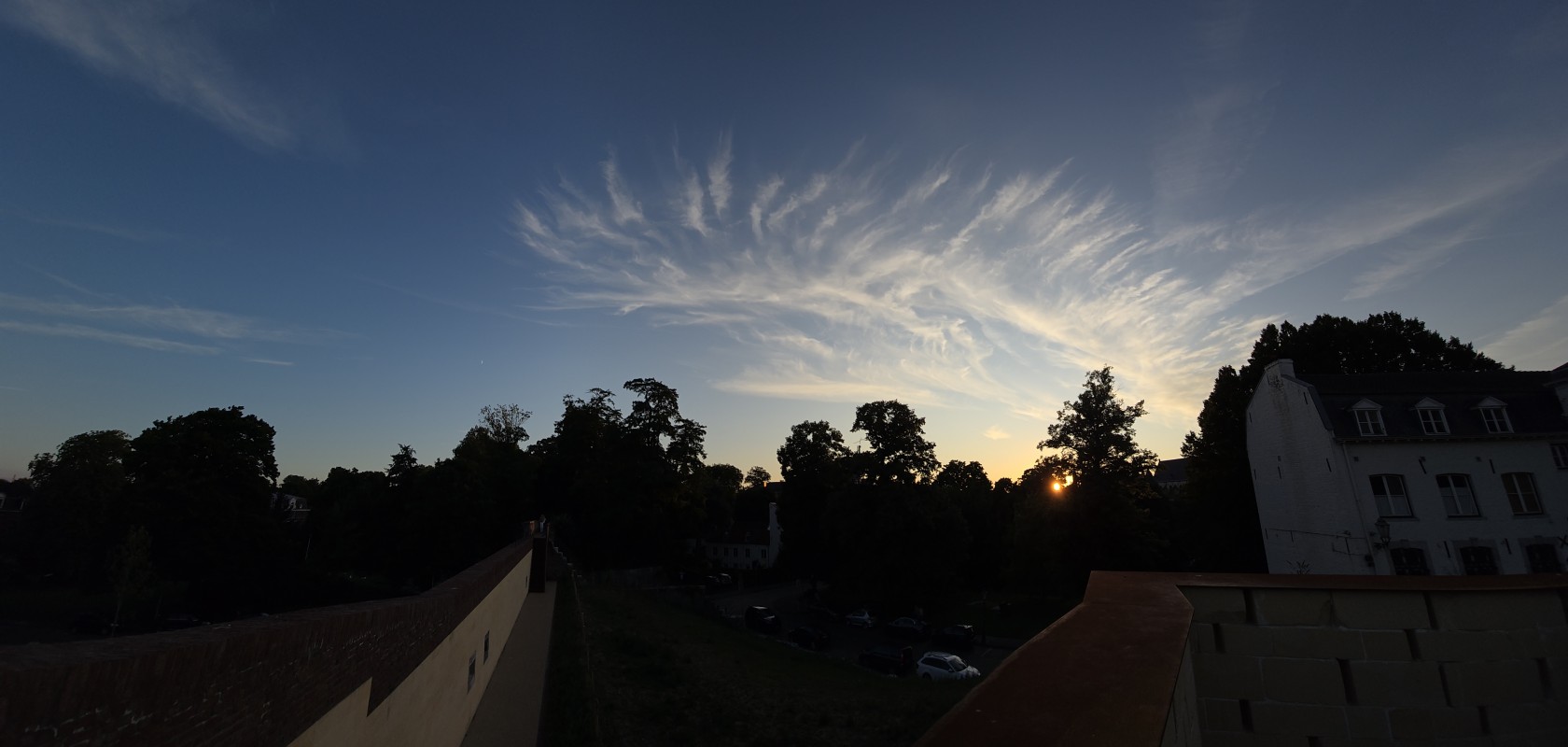
Panorama photos lose some brightness… but those clouds were real nice
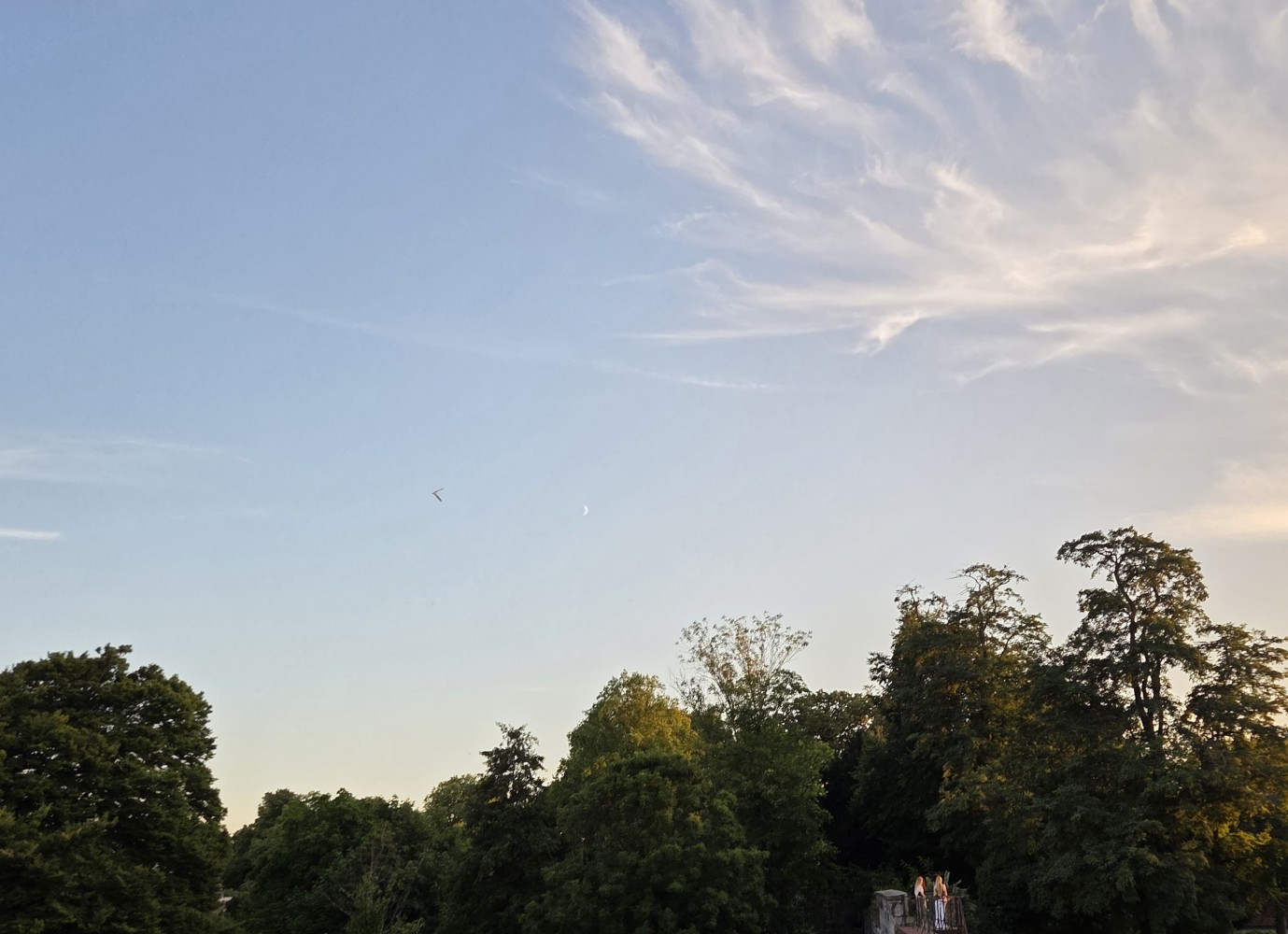
The moon and a bird
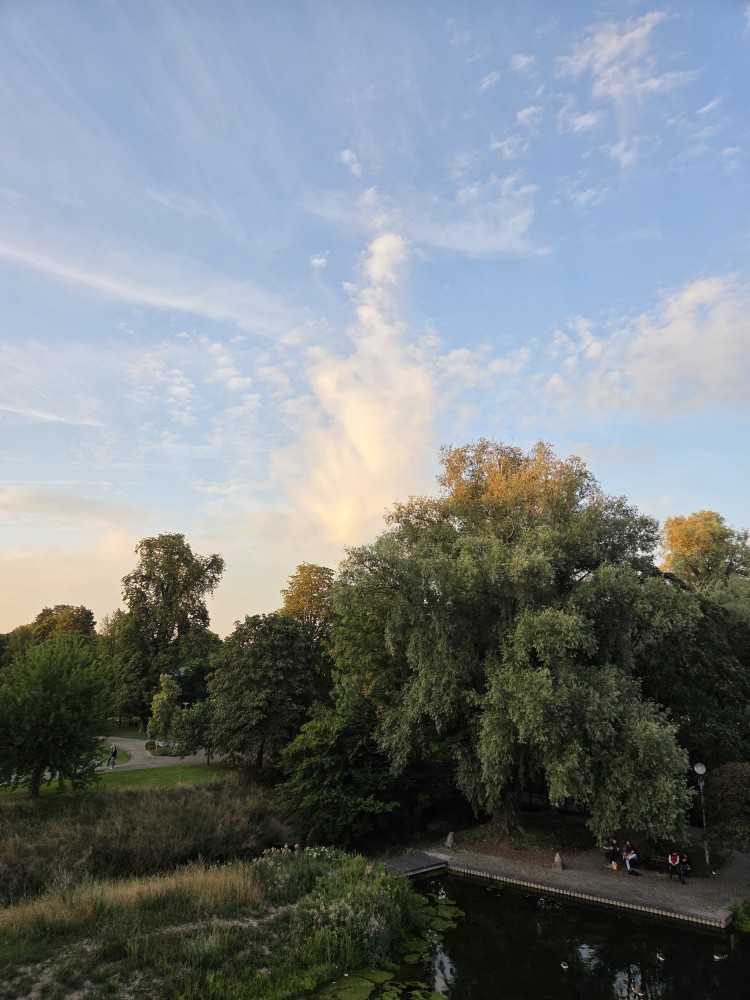
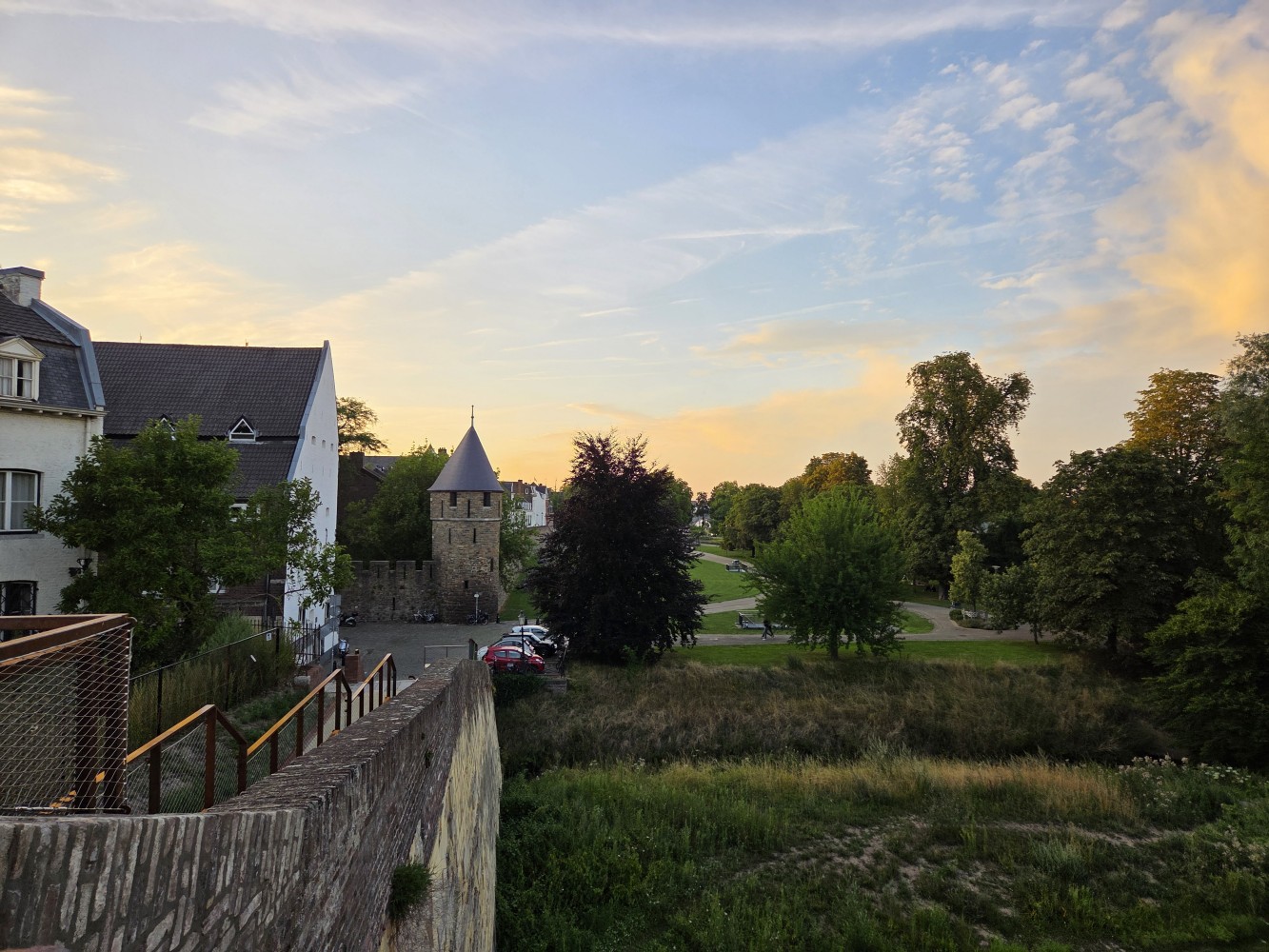
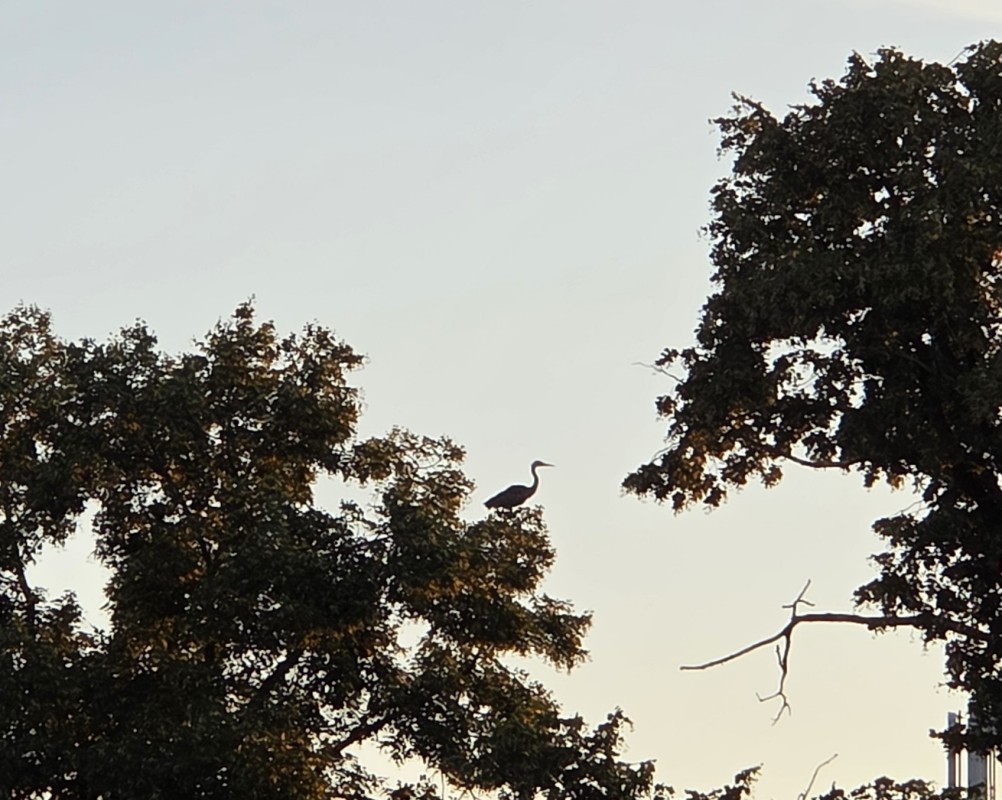
I’ve never seen a heron in a *tree* before, this feels illegal
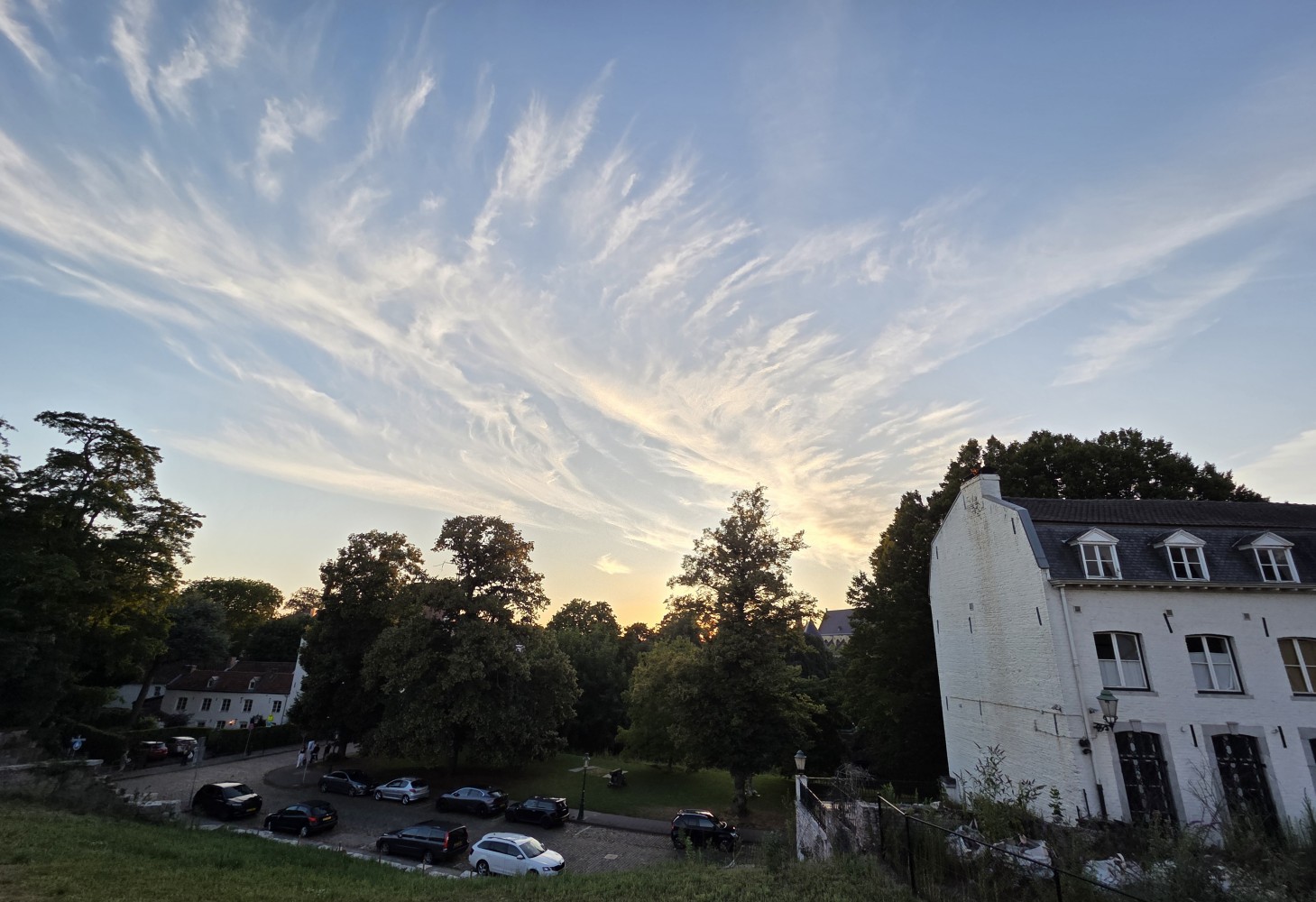
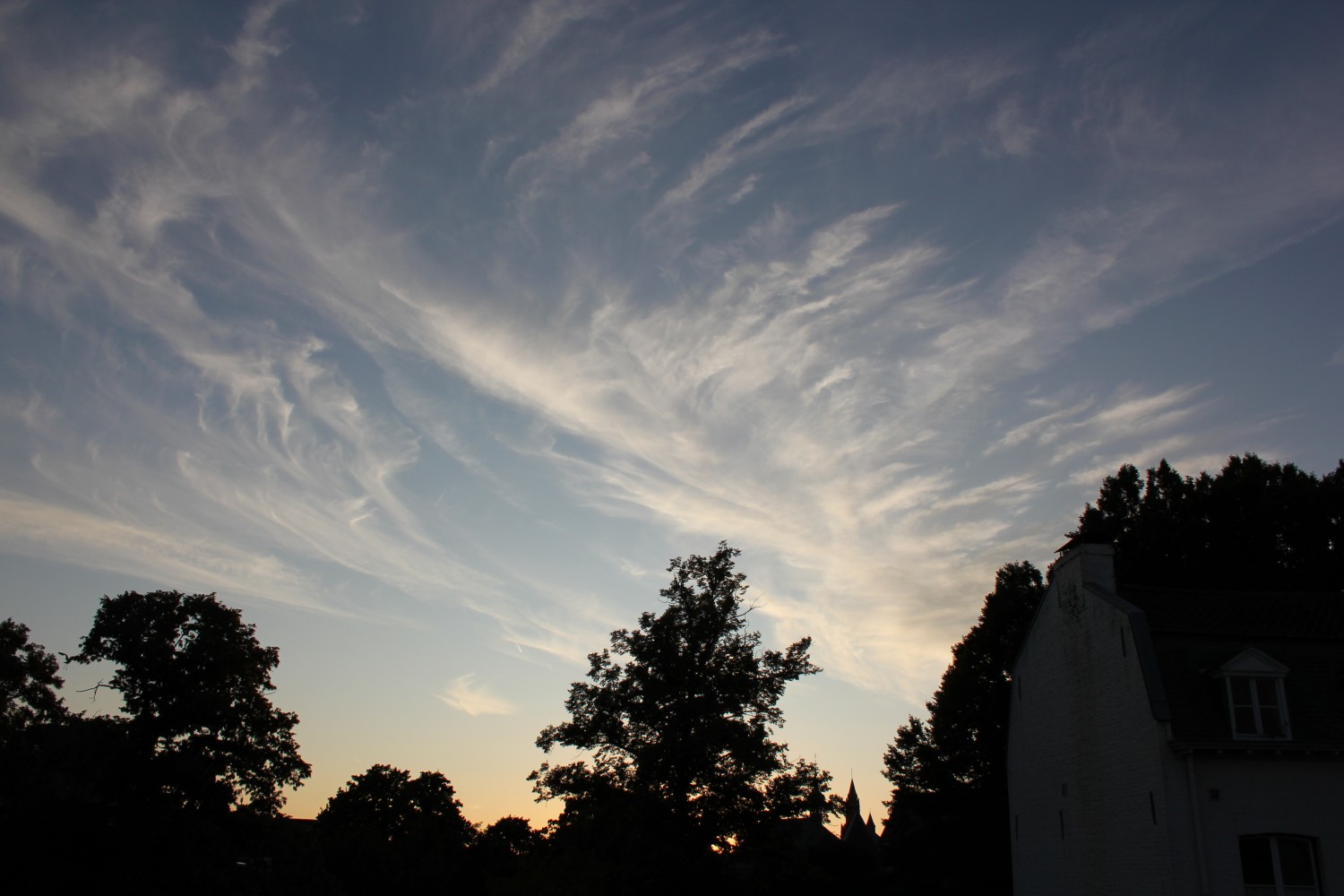
Photo by MH
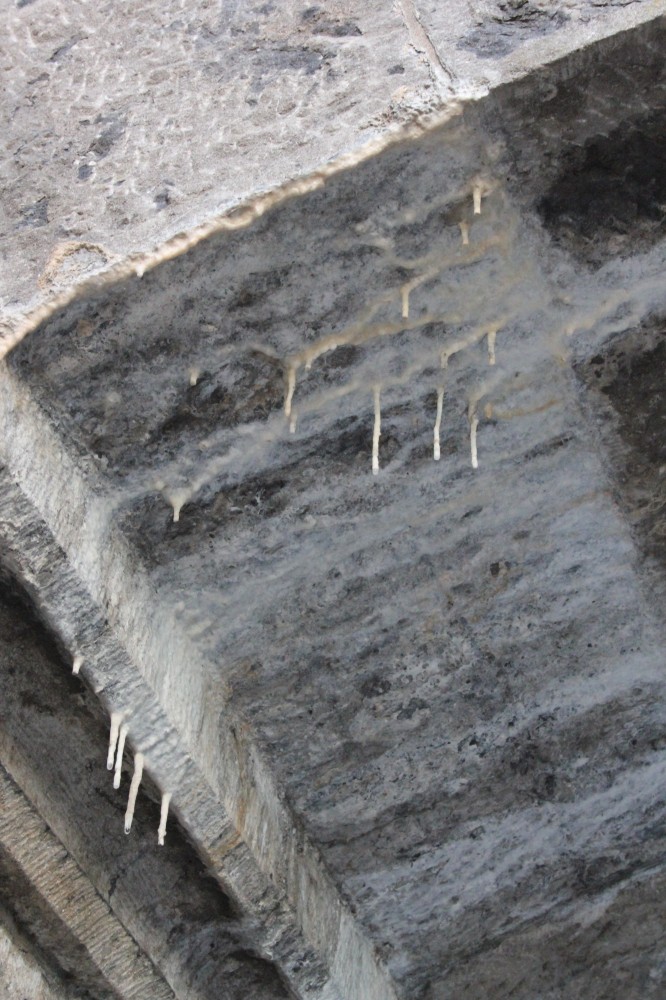
Tharash was very interested in this fungus thing stuff. Photo by MH
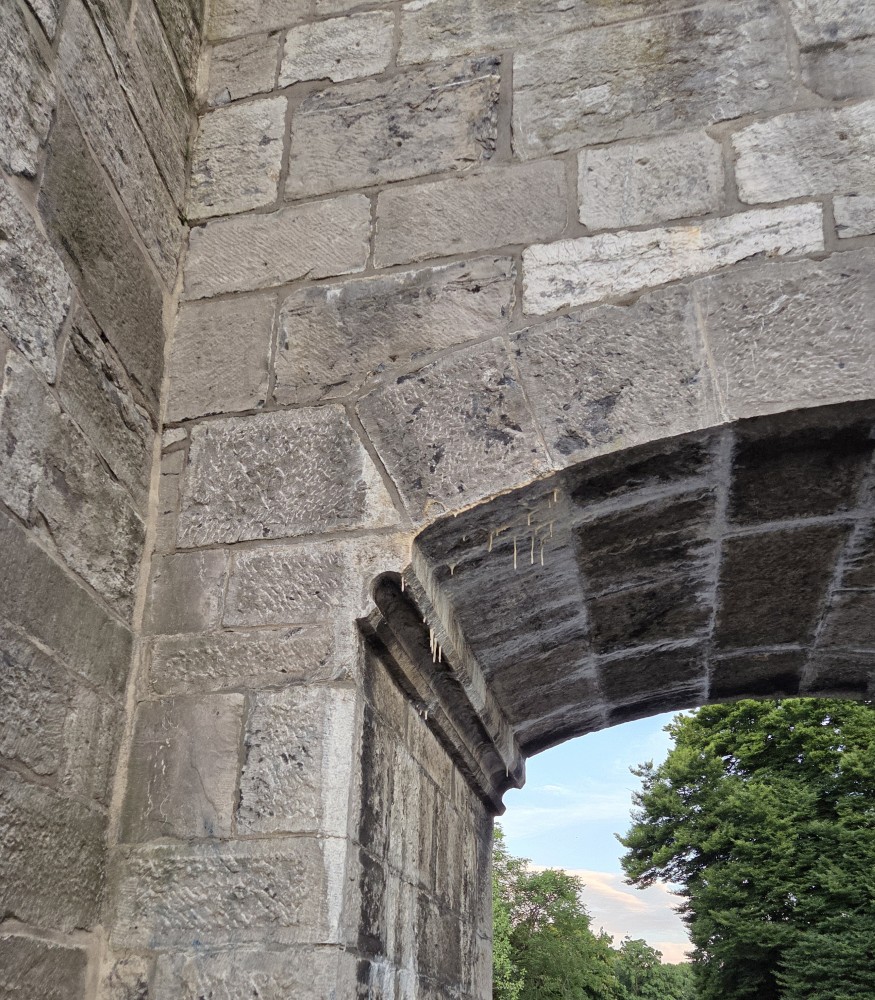
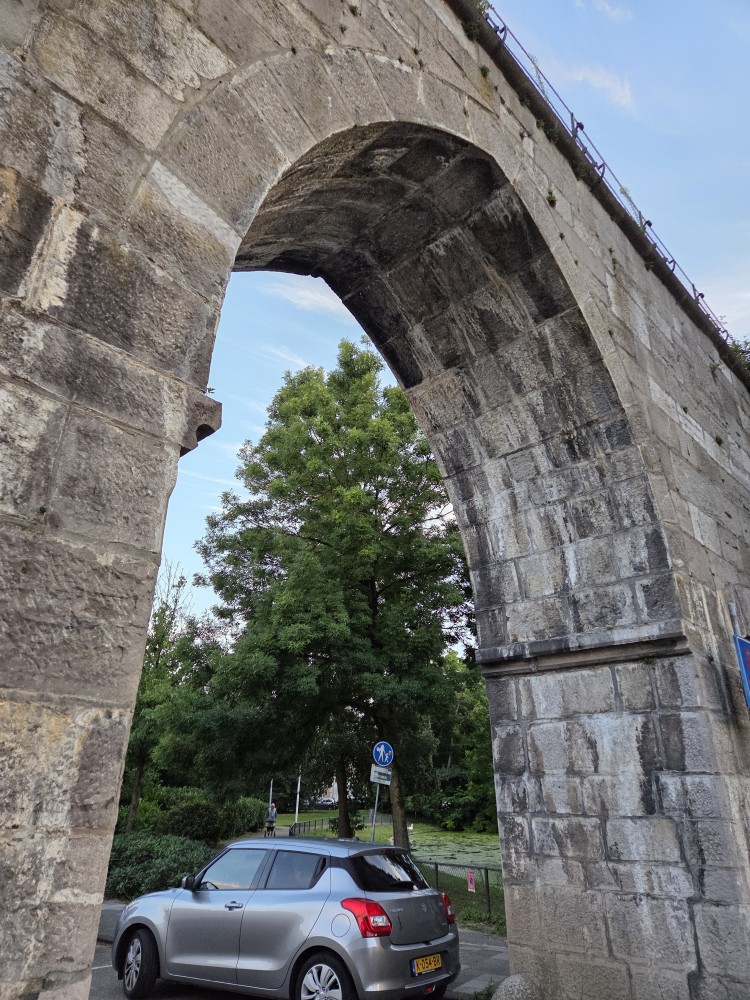
The gate was built in 1887-88. The designer might have been Cuypers (designer of the Rijksmuseum etc.)
When we got back to the hostel I stayed in the room to chill, but Tharash went for more tea.
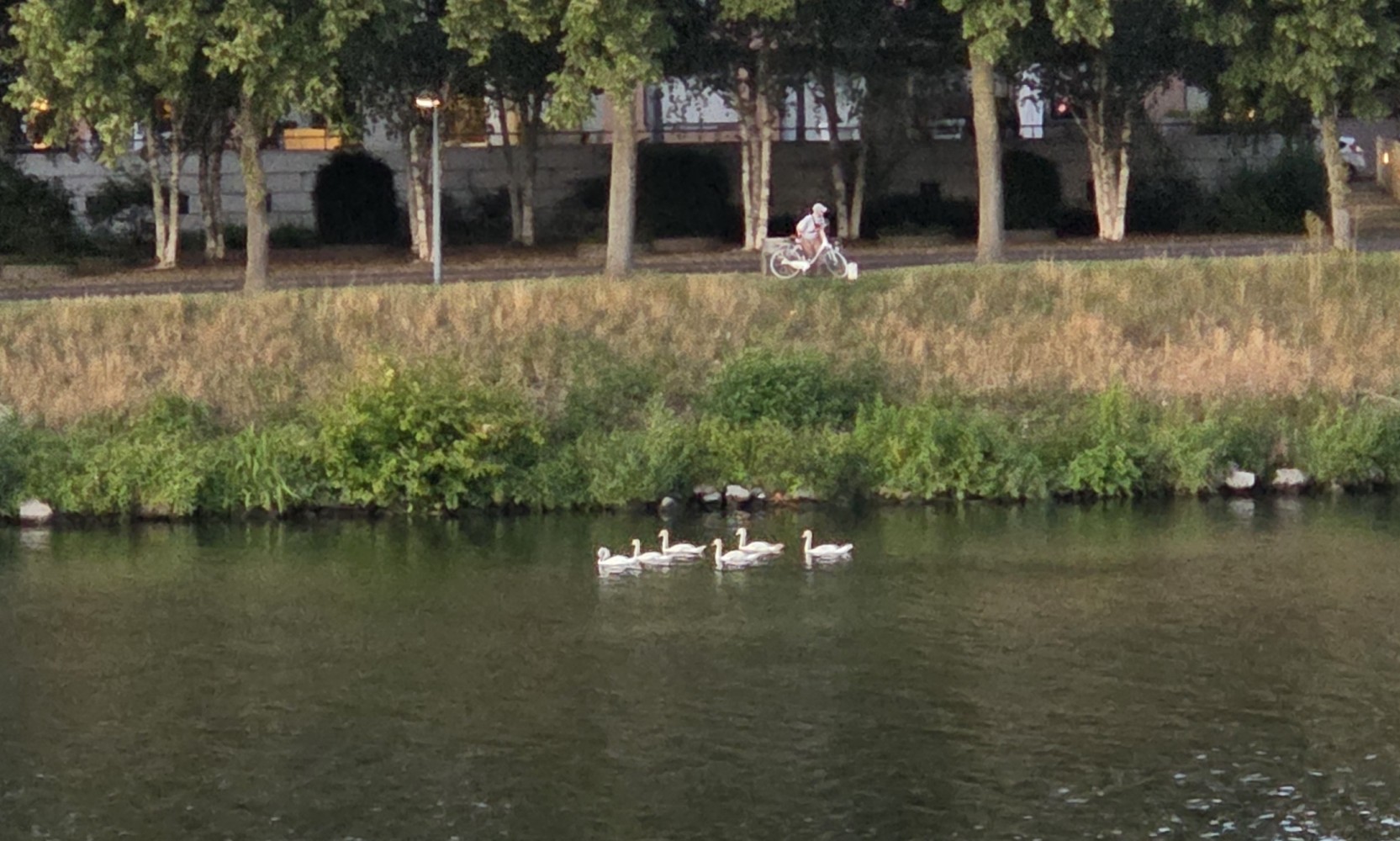
More swans!
Next – Valkenburg